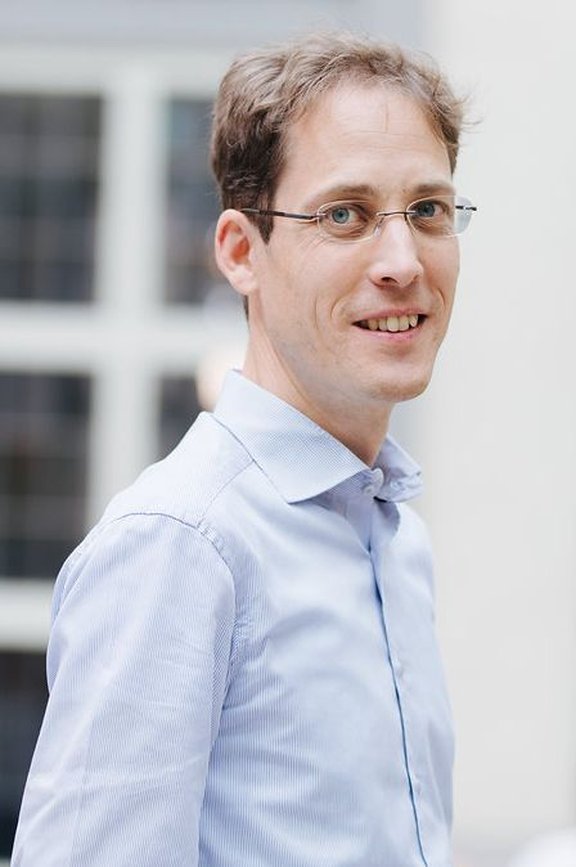
Prof. Martin Messner is a University Professor at the University of Innsbruck, leading the Controlling Institute within the Department of Organization and Learning. His work focuses on management accounting, performance measurement, and the intersection of accounting practices with organizational behavior. He holds editorial leadership roles, including Editor-in-Chief of Accounting, Organizations and Society (2021–present) and previously served on the Management Accounting Research editorial board (2015–2019). Prior to his current position, he was an Assistant Professor at HEC Paris (2006–2011). Research Interests: His research explores performance measurement systems, ethics in management control, and the evolving roles of accounting in organizational narratives and governance. He investigates topics like algorithmic decision-making, narrative reporting, and entrepreneurial governance structures. Professional Activities: Member of the European Accounting Association’s Publications Committee Co-organizer of the MASOP Workshops (2008–2023) His publications span academic journals and edited volumes, addressing themes such as zero-based budgeting, data scientist identities, and the ethical implications of control systems. He actively bridges theoretical and practical accounting issues through interdisciplinary collaboration.
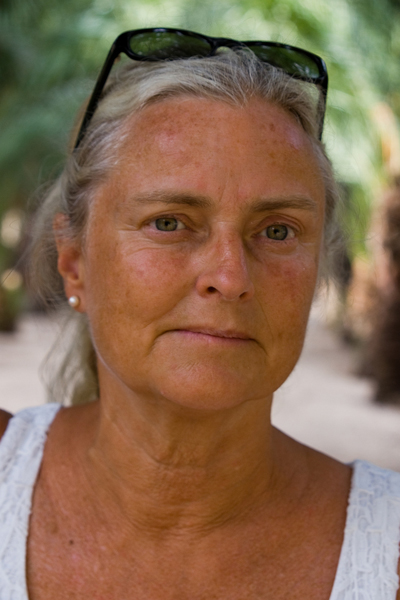
Barbara M. Kehm is a Research Fellow at the Leibniz Research Centre for Science and Society (LCSS) , affiliated with Leibniz University of Hannover since 2018. She previously held professorial roles as Professor of Leadership and International Strategic Development in Higher Education at the University of Glasgow (2013–2017) and Professor of Higher Education Research at the University of Kassel (2003–2011), where she also served as Director of the International Centre for Higher Education Research (INCHER-Kassel) from 2004 to 2011. Education: Ph.D. (summa cum laude) from Ruhr-University Bochum (1989). Her research focuses on internationalisation and globalisation in higher education, doctoral education reform, academic work and professions , and the Europeanisation of higher education . She has extensively examined governance, management, and policy in higher education systems, with particular emphasis on organisational change and stakeholder engagement. Her publications reflect a comparative analysis of higher education systems across Europe and beyond, including collaborations with institutions in China, Argentina, Australia, and the United States. Notable works include studies on university boards , the excellence initiative in Germany , and academic career development in Europe. Advising and Grants: She has led funded projects such as 'Transformation of European Universities' (2009–2012) supported by the European Science Foundation and German Research Association, and 'Lifelong Learning and the University in Europe' (1998–2000) under the European Commission’s 4th Framework Programme. She has also contributed to editorial activities, including co-editing Tertiary Education and Management and serving on academic journal boards. Labs and Teams: Kehm is associated with the LCSS and INCHER-Kassel, both leading centers for higher education research in Europe.
Carita Paradis is a Professor Emerita at Lund University's Centre for Languages and Literature, specializing in English Linguistics. She holds a PhD from Lund University (1997) and has held leadership roles including Chair of the Swedish Research Council's Linguistics panel (2010–2015). She coordinates the Language, Cognition and Discourse@Lund (LCD@L) research group, focusing on discourse meaning, language acquisition, and sociocultural variation. Her research spans cognitive linguistics, discourse analysis, semantics, and sensory language. She has authored/co-authored over 100 refereed publications, 5 books, and edited 10 journal volumes. Awards include membership in Academia Europaea (2016) and leadership roles in Scandinavian linguistic associations. She has supervised 14 PhD students and 8 postdocs, taught at all academic levels, and participated in numerous national/international research projects. Her editorial roles include serving on Cognitive Semantics, Languages, and Human Cognitive Processing series.
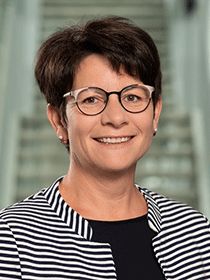
Associate Professor at the University of Klagenfurt , affiliated with the Department of Management Control and Strategic Management under the Faculty of Economics and Law . Research focuses on agent-based modeling applied to organizational dynamics , complex systems , and managerial economics . Holds a doctoral degree in Social Sciences and Economics (2012) and venia docendi in Business Economics (2018) . Core faculty member in the Self-Organizing Systems research cluster Academic editor for PLoS ONE and editorial board member for multiple journals Recipient of the 2021 Advancement Award (Humanities/Social Sciences) from Carinthian government Research integrates computational simulation with organizational theory , examining phenomena like decentralized task allocation , incentive mechanisms , and reproducibility in social sciences . Teaching portfolio includes business analytics , management control , and scientific modeling at undergraduate and graduate levels. Recent publications explore organizational resilience , team coordination dynamics , and financial modeling using agent-based simulation techniques. Active participant in international conferences like Social Simulation Conference and European Conference on Operational Research .
Dr. Eva Maria Bauer serves as a Course Director in the Department for Knowledge and Communication Management at the University for Continuing Education Krems, Austria. Her academic work focuses on leadership communication, organizational learning, and case study methodology within business and management education. Her research interests center around practical applications of leadership and communication theories: Developing case studies as learning challenges for leaders and organizations Transitioning from individual to organizational learning frameworks Managing change processes in public sector organizations, particularly in healthcare Mentoring students through case study development and MBA thesis writing Dr. Bauer's scholarly work demonstrates a consistent focus on bridging theoretical knowledge with practical business applications. Her publications from 2013 reveal a specialization in case study methodology as an educational tool, with particular attention to leadership development and organizational change management. She has contributed significantly to the understanding of how case studies can transform both individual and organizational learning processes. Her scientific contributions include several publications in the field of business education and leadership development: Research Case Studies as Learning Challenges for Leaders and Organisations (2013) From individual learning to organisational learning (2013) Change while the engine is running - management challenges during an extensive change process in the public health sector (2013) As a course director, Dr. Bauer oversees academic programs related to leadership communication and appears to be actively involved in supervising student work, particularly guiding MBA students through the thesis process using case study methodology. Her work with family businesses suggests a specialized interest in this sector's unique leadership challenges.
Mag. Dr. Doris Burger is a Senior Lecturer and Program Director at the Center for Business Specializations within the University for Continuing Education Krems. She leads the "International Business, Operations & Aviation" expertise area and oversees executive education programs such as the Executive MBA, MBA Aviation Management, and MBA International Business. Education: Master's (Mag.) in Business Administration from WU Wien Doctorate (Dr.) in Social and Economic Sciences from WU Wien's Institute for Business Administration and Information Management Research Focus: Her work centers on knowledge transfer mechanisms , innovation management , and environmental management in aviation contexts . She explores how computer-based systems enhance organizational learning and knowledge generation through expert-driven methodologies. Teaching: She teaches "Knowledge Management and Innovation" in both online and campus formats. Professional Contributions: Develops corporate programs for international clients in her areas of expertise Authored a monograph on computer-based knowledge transfer (2011) Supervised master's research on environmental management in Austrian air transport Labs/Teams: Operates within the Center for Business Specializations , collaborating on executive education and industry partnerships.
Prof. Walter Schwaiger is a Full Professor at TU Wien’s Faculty of Mechanical and Industrial Engineering, leading the Institute of Management Science. His academic roles include serving as Head of the Faculty Council since 2010 and holding various curriculum committee positions. He teaches critical courses such as Financial Management, Enterprise Risk Management, and IT-based Management across bachelor’s and master’s programs. His research focuses on three core areas: Financial Enterprise Management (stochastic NPV modeling for renewable energy investments), Enterprise Risk Management (risk maturity assessments via ERMMA studies), and IT-based Management (ontology-driven accounting frameworks like OntoREA). Recent work includes predictive analytics applications in credit risk scoring and pandemic-driven default prediction studies. Prof. Schwaiger has authored influential textbooks like IFRS-Finanzmanagement series and pioneered the REA-based ERP-Control system. He actively contributes to management control research, publishing in venues like Controlling and WingBusiness , and collaborates with institutions like Funk Stiftung on large-scale ERM maturity studies. His professional service includes leading faculty strategy groups and quality management initiatives at TU Wien, reflecting his commitment to institutional governance and academic excellence.
Vienna University of Economics and BusinessAustria
Dr. Alexander Engelmann is an Assistant Professor at the Institute for Strategy and Innovation Management (ISM) at WU Vienna University of Economics and Business. His research focuses on firm adaptation to environmental dynamics, particularly in mature industries transitioning to digital ecosystems. He examines strategy processes (dynamic capabilities, business model adaptation) and practices (framing, communication) to understand organizational resilience. Before academia, he worked in management consulting and as a certified Work & Organization psychologist. Education: PhD in Strategy and Innovation Management from WU Vienna University of Economics and Business Mag. rer. nat. (Master of Science equivalent) in Psychology from the University of Vienna Research Interests: Dynamic capabilities and SME innovation Ecosystem governance and platform strategies Sustainability-oriented business models Strategic framing in mature industries Recent work explores how automotive firms navigate platform-based transitions and how high-status OEMs maintain competitive edges. His 2025 Journal of Management Studies paper addresses innovation in politicized ecosystems, while 2024 Research Policy research introduced the 'slipstream strategy' concept. Team affiliations include collaboration with Prof. Werner H. Hoffmann, Dr. Georg Reischauer, and others in the ISM research group. Current projects focus on ecosystem resilience and stakeholder integration in sustainability innovation.
Vienna University of Economics and BusinessAustria
Reinhard Prügl is a Professor and Head of the Institute for Family Business at WU Wien (Vienna University of Economics and Business). He holds a doctorate from WU Wien and conducted postdoctoral research at MIT Sloan School of Management. Previously, he held a chaired professorship at Zeppelin University where he established the Friedrichshafen Institute for Family Entrepreneurship. His research focuses on the intersection of management, entrepreneurship, and strategy with emphasis on: Leadership and generational succession in family firms Family governance structures Innovation and marketing in family business contexts Identity and reputation management His publications demonstrate strong thematic consistency in family business dynamics while methodologically evolving from qualitative case studies (2000s) to experimental designs and cross-cultural comparisons (2020s). Research frequently addresses paradox resolution and crisis management in family enterprises. Awards & Honors: Best Paper Awards from IFERA, EURAM, AMA, and WU Wien Rudolf-Sallinger-Preis for doctoral dissertation Ehrenpreis for leadership in family business research Teaches courses on Family Business Management, Leadership, and Marketing at WU Wien. Leads research projects including comparative studies on family firm reputation across Germany, India, and the United States.
Vienna University of Economics and BusinessAustria
Alexander Kaiser serves as Associate Professor and Head of the Department of Knowledge Management at the Vienna University of Economics and Business (WU Wien). With over two decades of academic experience since his appointment in March 2000, he has established himself as a leading figure in knowledge management, organizational learning, and strategic vision development. His position as Head of Department and Deputy Director demonstrates his significant institutional leadership within the university. Dr. Kaiser completed his education at the University of Vienna, where he studied business informatics. He earned his doctorate with distinction from the Vienna University of Economics and Business, followed by his habilitation in Business Administration and Business Informatics in December 1999, which was awarded the prestigious Cardinal Innitzer Promotion Prize and Senator Wilhelm Wilfling Promotion Prize . His academic journey reflects a strong foundation in both business administration and information systems. His research focuses on the intersection of knowledge management, organizational learning, and spiritual dimensions of professional work. Kaiser has pioneered approaches to spiritual knowledge management, exploring how individuals and organizations can develop toward their 'best version' through meaningful knowledge processes. His work on vision development as a knowledge-creating process has significantly contributed to strategic management literature. He investigates how organizations can identify hidden needs, develop sustainable visions, and implement learning processes that incorporate future-oriented thinking, with recent work examining the connection between spirituality, calling, and knowledge management. Over his prolific career, Kaiser has published 91 scholarly works spanning from 1988 to 2025, with a noticeable acceleration in output since 2010. His publication pattern reveals a clear evolution from technical business informatics topics toward more holistic approaches integrating knowledge management with organizational psychology, spirituality, and sustainability. Recent publications (2023-2025) demonstrate his growing focus on wisdom, AI, and the integration of rational and non-rational knowledge in business contexts. Cardinal Innitzer Promotion Prize Senator Wilhelm Wilfling Promotion Prize Beyond his academic work, Professor Kaiser maintains strong practical connections through his role as founder and managing director of WaVe - Center for Growth and Change. His professional training as a systemic coach complements his academic research, creating a unique bridge between theoretical knowledge management frameworks and practical organizational applications. He has developed innovative methodologies like the 'Theory Wave' for sustainable vision development and tools for assessing transversal professional competences that have been implemented in both academic and business settings. As department head, Kaiser leads a research team focused on advancing knowledge management theory while maintaining strong connections to practical applications. The department hosts symposium series that foster interdisciplinary dialogue between academia and practice, reflecting Kaiser's commitment to ensuring knowledge management research remains relevant to real-world organizational challenges.
Professor Alison Fuller is a leading academic in vocational education and workplace learning, affiliated with the UCL Institute of Education . She has held prestigious roles including Pro-Director (Research and Development) at UCL and Professor of Vocational Education and Work at the University of London. Research Interests include workplace learning, apprenticeship, vocational education and training, skills policy, and education-work transitions. Her work bridges organizational development with personal growth, emphasizing communities of practice and social mobility through education. Publications span 185 works, including 13 books, with a focus on expansive learning environments, gender dynamics in apprenticeships, and compassionate care training in healthcare. Society for Educational Studies 2010 Book Prize Emerald Literati Network Award for Excellence (2005) She has secured £5.9m in research funding, contributed to policy reviews (e.g., UK Apprenticeships Bill), and served on editorial boards of journals like Journal of Vocational Education and Training .
University of Natural Resources and Life Sciences ViennaAustria
Daniel Dörler is a Senior Scientist at the Institute of Zoology, University of Natural Resources and Life Sciences, Vienna (BOKU), where he has been employed since 2019. His academic background includes a doctorate in Natural Resources and Life Sciences from BOKU and studies in Biology/Zoology from the University of Vienna. He is a leading figure in the Austrian and European citizen science movement, with a focus on biodiversity, road ecology, and public engagement in science. Institution: University of Natural Resources and Life Sciences, Vienna (BOKU) Department: Institute of Zoology Position: Senior Scientist (wissenschaftlicher Mitarbeiter) Email: daniel.doerler@boku.ac.at ORCID: 0000-0003-2056-4084 Daniel Dörler’s research interests center on citizen science, biodiversity monitoring, and ecological research, particularly in urban and road environments. He investigates the role of public participation in data collection for scientific research and conservation, with a focus on roadkill and amphibian populations. His work bridges ecology, social science, and science communication, emphasizing the transformative potential of citizen science for both science and society. He is deeply involved in methodological development, quality criteria, and the scalability of citizen science projects. His recent publications demonstrate a strong trend towards the integration of technology, policy, and community engagement in citizen science. Works such as automated species detection for anurans, roadkill hotspot analysis, and the development of scalability toolkits highlight a move towards data-driven, policy-relevant, and ethically sound citizen science. The articles consistently focus on practical applications, project design, and the societal impact of participatory research, spanning sub-fields like conservation biology, bioacoustics, and science policy. Daniel Dörler has received numerous scientific awards, reflecting his excellence in research, teaching, and public outreach: 2023: Ars Docendi Award for excellent teaching, Honorary Mention for the Roadkill project (EU Citizen Science Prize), and multiple awards for co-supervised Master’s theses. 2022: Sustainability Award from Austrian Federal Ministries. 2017: BOKU Sustainability Prize and recognition as a Pioneer of Open Innovation in Science. 2018: Nomination for the National Animal Welfare Prize. Dörler is a principal investigator and project leader on numerous research grants from the European Commission, Austrian Science Fund (FWF), and national agencies. He is a key figure in the Citizen Science Network Austria and the platform "Österreich forscht." He frequently presents at international conferences, contributes to policy discussions, and mentors students. His collaborative work with Florian Heigl and others has established a robust network for citizen science in Austria and beyond. Daniel Dörler is a core member of the Citizen Science Network Austria and leads multiple projects such as "Leading Lights," "STEM education," and "Explore Research from East to West in Austria." He is also deeply involved in the "Roadkill" project and the "AmphiBiom" initiative for amphibian conservation. His work fosters a collaborative environment that brings together researchers, citizens, and policymakers to address pressing environmental challenges.
Assoc. Prof. MMag. Dr. Alexandra Rausch is an Associate Professor at the Department of Controlling and Strategic Management , Institute of Management at Alpen-Adria-Universität Klagenfurt . Her research focuses on corporate decision-making, budgeting, controlling, and economics, with particular emphasis on agent-based modeling of organizational dynamics and team coordination. University: Alpen-Adria-Universität Klagenfurt Affiliation: Institute of Management Department: Department of Controlling and Strategic Management Rausch's research explores: Organizational behavior and individual-group interactions Coordination mechanisms in dynamic teams Strategic management and adaptive systems Controlling frameworks for corporate sustainability Agent-based modeling of distributed decision-making Recent publications demonstrate interdisciplinary work spanning both management science (team coordination, strategy-making) and pharmacological chemistry (indazole derivatives for autoimmune therapies). 2022-2025 work highlights coordination benefits in virtual teams, dynamic group adaptation, and pharmaceutical compound development. She teaches courses in controlling and strategic management, with consultation hours available by appointment via email at Alexandra.Rausch@aau.at . Contact details: Phone +43 463 2700 4032 | Office S.0.10 Main Building, South Wing West, Level 0.
Vienna University of Economics and BusinessAustria
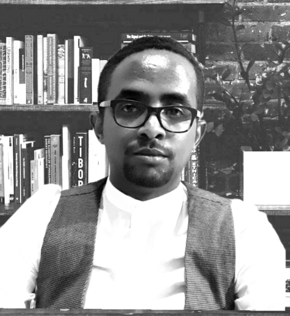
Wogene Berhanu Mena is a teaching and research assistant (prae doc) at the Institute for Gender and Diversity in Organizations at WU Vienna University of Economics and Business. His academic background includes BA/MA degrees in Political Science and International Relations from Addis Ababa University (Ethiopia) and an MA in Intercultural Conflict Management from Alice Salomon University of Applied Sciences Berlin. Current focus on diversity management through ethnic/gender/religious/class intersections Active in refugee integration and conflict management research Recipient of WU SoTL Scholarship and Civil Society Leadership Award His work examines labor control regimes in Ethiopian industrial parks and social class impacts on student interactions , with fieldwork-based publications on Eritrean/Somali refugee communities in Ethiopia. Research trends combine qualitative case studies and theoretical frameworks from organizational sociology, African studies, and migration research. Scientific Awards WU Scholarship for Teaching and Learning (SoTL), 2023 Civil Society Leadership Award, 2019
Barbara Schober is a full Professor in the Department of Developmental and Educational Psychology at the University of Vienna's Faculty of Psychology. Her research focuses on adolescent development, educational processes, and psychological well-being in school contexts. Key areas include motivation dynamics, self-regulated learning, gender role socialization, and pandemic-related educational challenges. She leads major research initiatives such as the COMET for Kids mental health literacy program and the 'Lernen unter Covid-19' project addressing pandemic learning disruptions. With 263 publications and 232 professional activities, her work bridges academic research with practical educational policy. Notable contributions include frameworks for school improvement, teacher competence development, and evidence-based policy implementation strategies. Her projects emphasize interdisciplinary collaboration, having partnered on initiatives funded by Austrian Science Funds and EU programs. Media engagement includes expert commentary on digital learning challenges and pandemic education strategies. Schober's work consistently addresses UN SDG 4 (Quality Education) through interventions promoting equitable educational opportunities and student well-being.