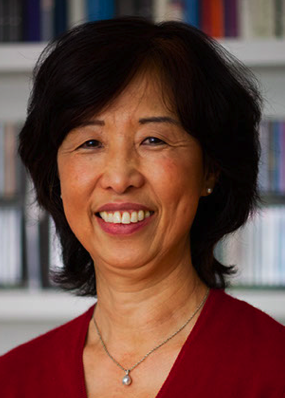
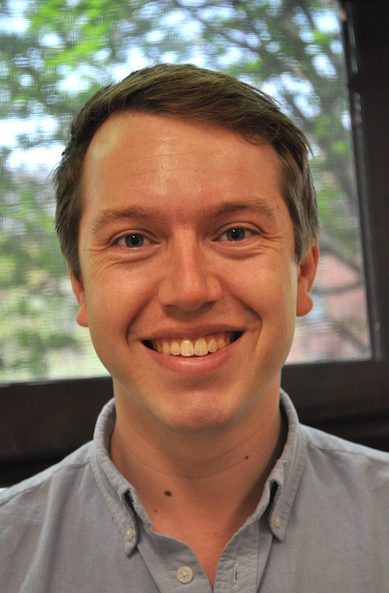
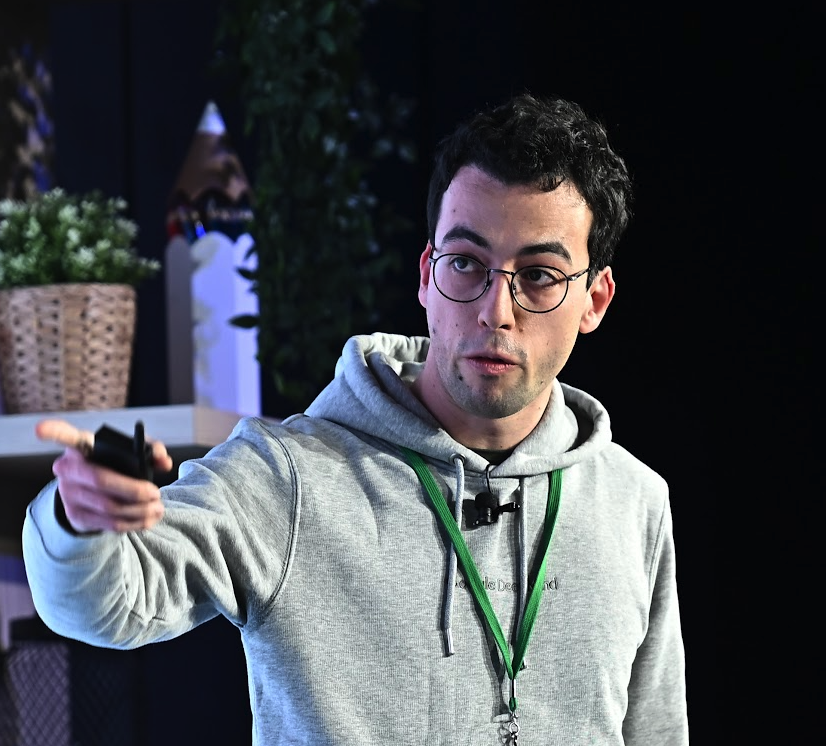
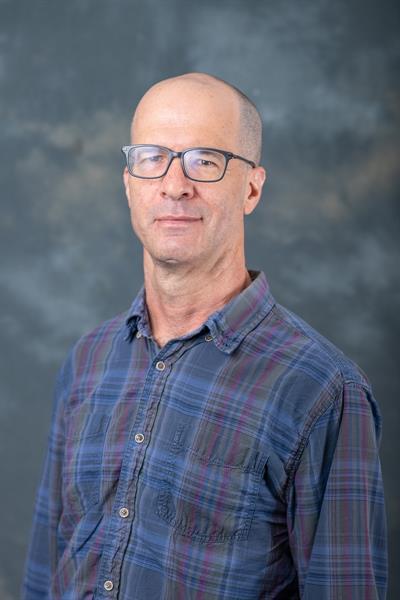
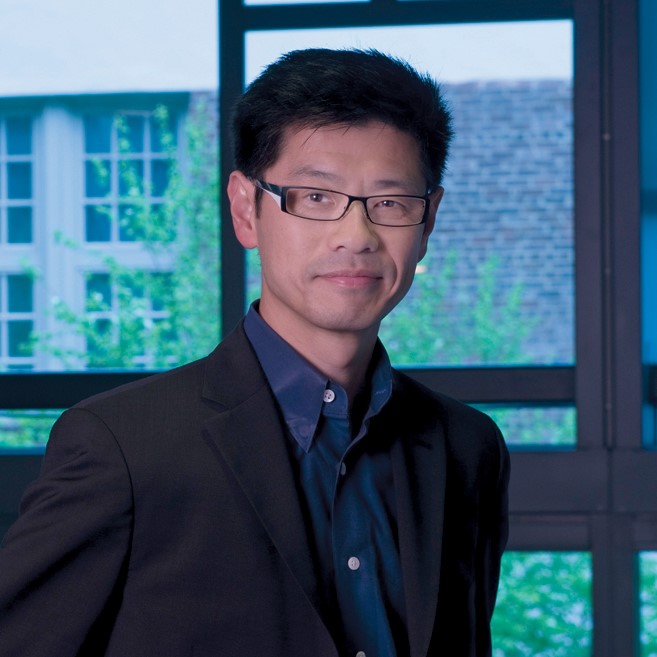
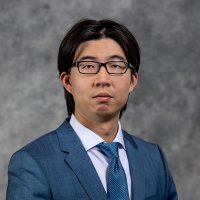
Jessica Brown is a Professor at the University of St Andrews within the School of Philosophical, Anthropological & Film Studies . Her work bridges epistemology, moral responsibility, and philosophical methodology, with a focus on both individual and collective epistemic practices. Institution: University of St Andrews School: Philosophical, Anthropological & Film Studies Research Outputs: 52 Research Overview Prof Brown's research spans three core domains: (1) Epistemology – examining evidence, knowledge transmission, fallibilism vs. infallibilism, contextualism, and norms of assertion; (2) Moral/Epicemic Responsibility – analyzing blame attribution for beliefs and actions at individual and group levels; (3) Philosophical Methodology – critiquing the role of intuitions, thought experiments, and ordinary language in philosophical inquiry, while addressing scepticism about the discipline's validity. Publication Trends Her articles reflect evolving focus from foundational epistemological concepts (2013-2018) to collective epistemic responsibility (2020-2023). Topics include group motivation, epistemic blame, and fallibilist frameworks, often intersecting with social philosophy and philosophical psychology. Scientific Recognition Fellow, Royal Society of Edinburgh (2018) Mentorship & Funding Supervised: 14 postgraduate students/researchers Major Grants: Leverhulme Trust Fellowship, Royal Society of Edinburgh Workshop Award, AHRC Standard Projects
Janet Chen is Professor of History and East Asian Studies at Princeton University, serving as Director of the East Asian Studies Program. Based in 302 Dickinson Hall, she maintains regular office hours on Thursdays from 9:30 am to 11:30 am and is contactable via jychen@princeton.edu. Her academic credentials include: Ph.D. in History, Yale University M. Phil in History, Yale University M.A. in History, Yale University B.A. in History and Asian Studies with highest honors, Williams College Chen specializes in twentieth-century Chinese social and urban history, examining marginalized populations during periods of war and revolution. Her research explores intersections of poverty, state formation, and cultural identity, with current work focused on Mandarin language standardization in China and Taiwan. This scholarship bridges historical analysis with sociological frameworks to understand how ordinary people navigate systemic upheaval. Her publication 'Guilty of Indigence: The Urban Poor in China, 1900-1953' (2012) exemplifies her methodological approach, revealing how destitution became criminalized amid political transformation. Collectively, her work demonstrates consistent focus on urban marginality, state-society relations, and historical memory in modern East Asia, establishing her as a significant voice in social history methodologies.
Dr. Soonja Choi is a Research Professor in the Comparative Psycholinguistics Group at the University of Vienna and Director of the Korean Studies Program at San Diego State University (SDSU), where she holds the title of Professor Emerita of Linguistics. She earned her Ph.D. in Linguistics from the University of Buffalo (1986) and holds advanced degrees from institutions in France and South Korea. Her research focuses on language and thought, semantics, spatial language, and Korean linguistics, with a particular emphasis on cross-linguistic studies of spatial categorization and its cognitive implications. Research Contributions: Her work has explored how language influences spatial perception and cognition, notably through long-term collaborations with the Max Planck Institute for Psycholinguistics and the National Science Foundation. Key contributions include studies on spatial term development in Korean/English children and cross-linguistic comparisons of spatial semantics between German, Korean, and English. Grants & Awards: Secured over $1.4M in grants including a EUR 600,000 Vienna Science Fund grant (2016-2020) and multiple NSF awards. Elected to the Academy of Europe (2019) as an Ordinary Member. Professional Roles: Served as Chair of SDSU's Department of Linguistics and Oriental Languages (1997-2000, 2001-2002), Graduate Advisor (multiple terms), and editorial board member for Language, Interaction, and Acquisition . Active in academic governance and international linguistic organizations.
David Duvenaud is an Associate Professor at the University of Toronto , holding a Canada Research Chair in Generative Models and a Schwartz Reisman Chair in Technology and Society . He is cross-appointed to the Department of Computer Science and Department of Statistical Sciences . A Sloan Research Fellow and founding member of the Vector Institute , his work bridges deep probabilistic models , AI safety , and scientific computing . PhD in Machine Learning (University of Cambridge, 2014) Postdoc in Hyperparameter Optimization (Harvard University, 2016) Co-founded Invenia (energy forecasting company) His research spans foundational Neural Ordinary Differential Equations (NeurIPS 2018 Best Paper) and Automatic Chemical Design (ACS Central Science 2018) to recent work on AGI governance (2025) and AI safety (2024). Key contributions include stochastic variational inference , implicit differentiation frameworks , and antisymmetrization layers for quantum Monte Carlo. Recent publications (2024-2025) focus on systemic existential risks from AI , many-shot jailbreaking attacks , and epistemic uncertainty quantification . His group trains energy-based models with scalable MCMC samplers and develops invertible neural architectures (e.g., Residual Flows NeurIPS 2019). He also explores human-AI alignment through LLM Processes (NeurIPS 2024) and Sycophancy in Language Models (ICLR 2024). Canada Research Chair (2025) NSERC Grant (2025) Sloan Research Fellow (2021) Schwartz Reisman Chair (2021) Best Paper Award (NeurIPS 2018) Distinguished Paper Award (ICFP 2021) His students include James Requeima , Jesse Bettencourt , and Raymond Douglas . He teaches courses on Statistical Methods for Machine Learning and Differentiable Inference . Current work (2025) investigates systemic human disempowerment through incremental AI capabilities and sabotage risk mitigation via hyperparameter-aware evaluations.
Ferdinando Fioretto is an Assistant Professor of Computer Science at the University of Virginia, leading the Responsible AI for Science and Engineering (RAISE) group. His research focuses on foundational challenges in AI, privacy, fairness, and the intersection of machine learning and optimization. He holds a dual PhD in Computer Science from the University of Udine and New Mexico State University. Affiliations: University of Virginia (current), Syracuse University (former), Georgia Institute of Technology (postdoc), University of Michigan (research fellow) Education: PhD (Udine & NMSU), B.S. (University of Parma) Research Interests: Machine Learning, Responsible AI, Optimization, Differential Privacy, Algorithmic Fairness. His work emphasizes practical applications in energy systems, court scheduling, and privacy-preserving machine learning. Recent projects include neuro-symbolic diffusion models, fairness-aware optimization, and privacy guarantees in LLMs. Grants & Funding: NSF CAREER Award, Google Faculty Research Award, Amazon Research Award, NVIDIA Academic Grant, and grants from the LaCross Institute and 4-VA. His group collaborates with institutions like George Mason University and Virginia Tech. Key Awards: NSF CAREER (2022), IJCAI Early Career Spotlight (2022), Caspar Bowden PET Award (2022), ACP Early Career Researcher Award (2021) Labs/Teams: RAISE group at UVA, focused on trustworthy AI, fair optimization, and privacy-preserving systems. Active in organizing workshops like NeurIPS Algorithmic Fairness and AAAI Privacy-Preserving AI.
Åsa Slotte is a researcher in the Faculty of Arts, Psychology and Theology, Department of Culture, History and Philosophy, with a PhD completed in 2008. Her work lies at the intersection of philosophy, medicine, and ethics, with a strong focus on the contextual and moral dimensions of illness and diagnosis. Research Interests: Her primary areas include Philosophy of Medicine, Medical Ethics, Philosophy of Language, Gender Studies, Eating Disorders, and Medical Humanities. She employs an interdisciplinary approach, integrating philosophy, psychology, psychiatry, and gender studies. Her recent publications reflect a blend of academic and public engagement, including a 2022 book Ur mammas mörker and contributions to Medical Humanities in Finland (2024). The works demonstrate a consistent focus on personal narratives, ethical critique of medical practices, and the philosophical implications of diagnoses—especially in relation to gender and mental health. Themes such as dehumanization in psychiatry, the role of family in illness, and autobiographical reflection recur across her recent articles. Scientific Activities: Co-organizer of the 'Medicinsk Humaniora' symposium (2023) Contributor to public discourse on migraine, Oliver Sacks, and existential philosophy Advising and Grants: While no formal students or grants are listed, her postdoctoral project on sexuality and diagnoses in men suggests ongoing research support. Her work contributes to UN Sustainable Development Goals, particularly in health and well-being. Labs and Teams: She collaborates within Nordic academic networks in Medical Humanities, indicating active participation in interdisciplinary research communities.
James Conant is the Chester D. Tripp Professor of Humanities, Professor of Philosophy, and Professor in the College at the University of Chicago. He also served as Humboldt Professor of Theoretical Philosophy at Leipzig University (2017–2022). He holds a BA (1982) and PhD (1990) from Harvard University. His academic roles include Interim Chair of the Department of Philosophy at the University of Chicago (2014–2015, 2025–2026), co-director of the Forschungskolleg Analytic German Idealism, and director of the Center for German Philosophy at Chicago. Education: Bachelor of Arts, Harvard University (1982) Doctor of Philosophy, Harvard University (1990) Research Interests: Focuses on Philosophy of Language, Philosophy of Mind, Aesthetics, German Idealism, and the History of Analytic Philosophy. He explores themes such as skepticism, Wittgenstein’s methods, rule-following paradoxes, and the interplay between German Idealism and analytic philosophy. Publications Trends: Conant’s recent work includes monographs on skepticism and film aesthetics, co-authored volumes on Wittgenstein, and edited collections of Hilary Putnam’s papers. His articles often critically engage with figures like Kant, Wittgenstein, Nietzsche, and Frege, emphasizing methodological rigor and historical context. Scientific Awards: Anneliese Meier Research Award (2012) Humboldt Prize (2017) Neubauer Collegium Award Grants and Advising: Co-recipient of Mellon Sawyer Seminar Grants (2006–2008) and Humboldt TransCoop Awards. Advised numerous postdoctoral and doctoral researchers through initiatives like the Leipzig-Chicago collaborative projects. Labs/Teams: Leads the Center for German Philosophy at Chicago and co-directs the Center for Analytic German Idealism in Leipzig. Collaborates internationally on projects bridging analytic and continental philosophy.
Camilla Kronqvist is a Senior Lecturer in the Department of Culture, History and Philosophy at the Faculty of Humanities and Social Sciences, Åbo Akademi University. She received her doctorate in philosophy from Åbo Akademi in 2008 with the thesis What We Talk About when We Talk About Love , which examined philosophical questions about emotions, identity, morality, and meaning through different ways of discussing love. Since her doctorate, she has worked as both a researcher and teacher in philosophy, and to some extent in university pedagogy, at Åbo Akademi University. Dr. Kronqvist's research focuses on the philosophy of love, Wittgenstein studies, ethics of sexual relationships, moral psychology, philosophy of emotions, and ordinary language philosophy. Her work explores how conversations about emotions help us understand their meaning and roles in our lives, with particular attention to moral certainty in intimate relationships. She has led significant research projects including Ethical Explorations: Rethinking Our Sexual Relations (2023-2026), Speaking of Love, Thinking with Wittgenstein (2019-), and Explorative Inquiries: Analytical Tools for Reflecting on Oneself, Others and the World in Kindergarten (2017-). Analysis of her 64 publications reveals a consistent trajectory connecting Wittgensteinian philosophy with contemporary ethical concerns, particularly regarding love, moral certainty, and intimate relationships. Her most recent works demonstrate increasing engagement with feminist philosophy and gender studies while maintaining her foundational focus on language and moral psychology. The publications show strong connections between emotional language, moral reasoning, and existential concerns in everyday life. Dr. Kronqvist serves as supervisor for multiple students including a master's thesis in philosophy, a master's thesis within the master's program Social exclusion, and doctoral theses for Salla Aldrin Salskov, Evelina Salo, and Christoffer Steffansson. During the academic year 2021-2022, she taught four courses in the minor subject Ethics in a Globalized World , as well as Social exclusion in a philosophical perspective , and examined Philosophical Aspects on Social Exclusion within the master's program Social exclusion.
Professor Andrew Klevan is a leading scholar in film aesthetics and close cinematic analysis, holding a professorial position at the University of Oxford's Faculty of English and serving as a Non-tutorial Fellow at St Anne's College. His work focuses on film form, performance, critical methodology, and pedagogy, advocating for detailed close analysis as a core practice in film studies. Research interests include the interplay between film medium and narrative structure, particularly exploring 'undramatic' forms that capture mundane experiences. He has authored monographs on film performance (e.g., Barbara Stanwyck studies), aesthetic evaluation frameworks, and the philosophy of film criticism. Recent work critiques theoretical approaches in film studies and develops 'ordinary language film studies' to emphasize practical criticism over abstract theory. Publications span over two decades, with notable contributions to journals like Movie , Film-Philosophy , and Aesthetic Investigations . His edited collection The Language and Style of Film Criticism (with Alex Clayton) remains influential in critical discourse. Teaching focuses on advanced film analysis and methodology. No formal academic awards are listed, though his contributions to film scholarship are widely recognized. He supervises Master’s and DPhil students in film studies, emphasizing close textual analysis and critical writing. His academic affiliations include the St Anne's College community and the broader Oxford film studies network.
Pierre Marion is a Researcher at INRIA Paris, working within the Sierra research team since September 2025. His work focuses on the theoretical foundations of deep learning and he is beginning to explore applications of AI in mathematics. Marion has established collaborations across multiple institutions including EPFL, Sorbonne Université, and Google DeepMind. His educational background includes: Engineering degree from École polytechnique (2015-2018) with specialization in Applied Mathematics Master's degree from Sorbonne Université (2019-2020) PhD from Sorbonne Université (2020-2023) under the supervision of Gérard Biau and Jean-Philippe Vert Postdoctoral research at EPFL (2024) supervised by Lénaïc Chizat Marion's research interests primarily focus on the theory of deep learning, where he investigates the optimization and statistical properties of various neural network architectures. His work spans from shallow networks to complex generative models, with a particular emphasis on understanding the mathematical foundations that govern deep learning performance. Recently, he has begun exploring applications of AI in mathematical research, aiming to bridge the gap between theoretical machine learning and mathematical discovery. His research often combines rigorous theoretical analysis with practical implications for training deep neural networks. Analysis of Marion's recent publications reveals several key trends in his research. He has made significant contributions to understanding the role of large learning rates in optimization dynamics, demonstrating how they can accelerate convergence in logistic regression and prevent memorization in score-based generative models. His work on attention mechanisms has provided theoretical guarantees for their effectiveness in specific tasks like single-location regression and clustering. Additionally, Marion has extensively studied the connections between residual networks and neural ordinary differential equations , establishing generalization bounds and exploring scaling properties in the large-depth regime. His earlier work included contributions to natural language processing and quasi-Monte Carlo methods, reflecting a broad mathematical foundation that informs his current deep learning research. Marion has received several notable scientific awards: Runner-up PhD Award of AFIA (French Association for Artificial Intelligence) in 2024 Google PhD Fellowship in 2022 Ecole polytechnique Grand Prize of Research Internships in 2018 As an advisor, Marion currently supervises PhD student Yu-Han Wu (since 2024), with whom he has co-authored multiple publications on large learning rates and denoising score matching. Previously, he co-supervised several Master's students including Seorim Park, Yerkin Yesbay, and Nathan Doumèche. Marion has been actively involved in the machine learning community through conference organization (NeurIPS@Paris meetups), session chairing (ICSDS 2022), and extensive reviewing activities. He has served as a reviewer for top journals including JASA and Annals of Statistics, and conferences including NeurIPS and ICLR, where he was recognized as a top reviewer at NeurIPS 2023. Marion is a member of the Sierra research team at INRIA Paris, which focuses on machine learning theory and applications. He has also collaborated with researchers at CREST (Center for Research in Economics and Statistics), as evidenced by his participation in seminars organized by Anna Korba and Karim Lounici. His work often bridges theoretical computer science, statistics, and applied mathematics, reflecting the interdisciplinary nature of modern machine learning research.
Toril Moi is the James B. Duke Distinguished Professor of Literature at Duke University, holding additional professorships in English, Romance Studies, Philosophy, and Gender, Sexuality & Feminist Studies. She directs the Center for Philosophy, Arts, and Literature (PAL). Her work bridges feminist theory, literary criticism, and philosophy, with a focus on modernism, existentialism, and ordinary language philosophy. Educated at the University of Bergen (Dr. Art., 1985), her research spans Simone de Beauvoir, Ibsen, and Cavellian thought. She has held fellowships at the Radcliffe Institute, Guggenheim Foundation, and Rockefeller Foundation. Recognized with honorary doctorates from four universities, her teaching emphasizes interdisciplinary approaches, including courses on Wittgenstein, existentialism, and feminist classics. Moi advises graduate students across disciplines and has supervised over 20 PhD dissertations, many winning top academic prizes. Her research explores intersections between literature and philosophy, particularly through feminist frameworks. Notable books include Sexual/Textual Politics (1985) and Henrik Ibsen and the Birth of Modernism (2006). Recent work addresses Beauvoir’s literary theory and crises in humanities education. Moi’s global lectures span 29 countries, and she advises institutions like Norway’s National Library. Awards highlight her contributions to feminist scholarship and mentorship.
Avner Baz is a Professor of Philosophy at Tufts University’s School of Arts and Sciences. He specializes in ethics, aesthetics, epistemology, and the philosophy of Wittgenstein and Kant, with a focus on ordinary language philosophy and philosophical method. His work critiques representationalist approaches and advocates for contextualist insights from ordinary language traditions. Recent research explores aspect perception through Wittgenstein and Merleau-Ponty’s phenomenology, emphasizing the interplay between perception and language. Education: PhD from University of Illinois at Chicago (2000) and MA from Tel-Aviv University (1994). His publications include When Words are Called For (2012) and The Crisis of Method in Contemporary Analytic Philosophy (2017). Current projects address transcendental idealism’s relevance and critique of moral modals in ethics. Teaching focuses on courses like Knowing and Being , Phenomenology and Existentialism , and seminars on Wittgenstein and ordinary language philosophy. Professional activities include conference presentations and administrative roles, including chairing the Department of Philosophy (2018-2024).
James C. Gee is a Professor of Radiologic Science in Radiology at the University of Pennsylvania's Perelman School of Medicine. He serves as Director of the Penn Image Computing and Science Laboratory and Co-Director of the Translational Biomedical Imaging Center , with affiliations in Bioengineering and Applied Mathematics graduate groups. His research focuses on biomedical image analysis, specialization in segmentation, registration, and morphometry applied to neurodegenerative diseases and multi-organ systems. Education : B.S. in Computer Science/Electrical Engineering (University of Washington, 1987), Ph.D. in Computer and Information Science (University of Pennsylvania, 1996) Research : Quantitative medical imaging methods, brain connectomics, neurodegeneration mapping, and translational imaging technologies Publications : 15+ recent works on AI-driven image analysis for Alzheimer's disease, cardiac amyloidosis, and radiomics applications Leadership : Directs MSE-DS Online Degree Program, co-chairs Radiology DCOAP Committee, and founded RISE (Radiology Initiative to Support Inclusive Excellence) His laboratory develops advanced computational tools like ITK-SNAP for biomedical imaging, with applications in both in vivo clinical imaging and ex vivo histology . The work spans cross-disciplinary collaborations in computer science, neuroscience, and clinical medicine.
Yoshiko Matsumoto is the Yamato Ichihashi Professor in Japanese History and Civilization and Professor of East Asian Languages and Cultures at Stanford University, with a courtesy appointment in Linguistics. She has been a faculty member at Stanford since 1992, progressing from Assistant Professor to her current distinguished position. Matsumoto also serves as coordinator of the Japanese Language Program and has held significant administrative roles including Chair of the Department of Asian Languages (2003-2005) and Interim Chair of the Department of East Asian Languages and Cultures (2016). Matsumoto earned her Ph.D. in Linguistics from the University of California, Berkeley (1989), following M.A. degrees in Linguistics from UC Berkeley and General and Applied Linguistics from the University of Tsukuba, an M.I.A. in American Studies from the University of Tsukuba, and a B.A. in English Language & Literature from Japan Women's University. Professor Matsumoto's research focuses on linguistic pragmatics from cross-linguistic perspectives, with particular expertise in Japanese language. Her work spans structural and sociocultural aspects of language in use, including noun-modifying clause constructions, honorifics, discourse markers, and the intersection of language with gender and aging. She has pioneered research on conversational narratives of older adults, examining how ordinary framing strategies help individuals navigate difficult experiences. Her current projects explore intergenerational communication through haiku, communicative abilities of people with dementia, and noun-modifying constructions across Eurasian languages. Matsumoto's scholarship consistently bridges theoretical linguistics with practical applications for understanding human communication in diverse social contexts. Matsumoto's recent publications reveal a growing focus on practical applications of linguistic research for social benefit, particularly in intergenerational communication and dementia care. Her work increasingly integrates arts-based approaches, especially haiku poetry, to bridge generational divides and enhance communication with elderly populations. The research shows a consistent trajectory from theoretical linguistic frameworks toward applied, human-centered language studies that address real-world challenges in aging societies, with particular attention to how ordinary language practices help individuals navigate life transitions and difficult experiences. Dean's Award for Distinguished Teaching, School of Humanities and Sciences, Stanford University (2000) Richard E. Guggenhime Faculty Scholar, Stanford University (2000-2003) Violet Andrews Whittier Fellow, Stanford Humanities Center (2019-2020) Faculty Research Fellow, Michelle R. Clayman Institute for Gender Research (2014-2015) Research Fellow, Japan Foundation (2002) Internal Fellow, Stanford Humanities Center (2005-2006) Presidential Fund for Innovation in the Humanities, Stanford University (2009-2011) Professor Matsumoto has mentored numerous students through her teaching in Japanese language and linguistics courses, including specialized offerings on language and aging, points in Japanese grammar, and haiku-based communication. Her research has been supported by prestigious grants from the National Endowment for the Humanities, the Japan Foundation, and Stanford's Presidential Fund for Innovation in the Humanities. She has served on multiple editorial boards including the Journal of Pragmatics since 1992, demonstrating long-standing leadership in her field. Matsumoto has also advised students through individual studies and thesis projects in East Asian Languages and Cultures. Matsumoto leads several collaborative research initiatives including the 'Sharing Conversations' project which examines intergenerational communication through haiku, and research on communicative abilities of people with dementia. Her work often involves interdisciplinary teams spanning linguistics, gerontology, and creative arts, with fieldwork conducted in both Japan and the United States. The 'Noun-Modifying Constructions in Languages of Eurasia' project represents a major international collaboration examining linguistic structures across cultural boundaries. She also directs the 'Language, Old Age and Gender in Japan' project supported by the Stanford University/Japan Foundation, and the 'Difficult Conversations Continue: Memories of the 3.11 Disaster and Bereavement Narratives' project focused on post-disaster communication.
Dr. Kaiqun Fu is an Assistant Professor in the McComish Department of Electrical Engineering and Computer Science at South Dakota State University (SDSU). He holds a Ph.D. and M.S. in Computer Science from Virginia Tech (2021 and 2016). His research focuses on spatial data mining, spatiotemporal event analysis, graph neural networks, and urban computing applications such as traffic impact prediction and social media-driven insights. He also explores physics-informed machine learning for power systems and interdisciplinary topics like 'deaths of despair' in rural areas. Education: Ph.D. in Computer Science, Virginia Tech, 2021 M.S. in Computer Science, Virginia Tech, 2016 Research Interests: His work emphasizes machine learning and deep learning applications in spatial-temporal domains, including: Graph neural networks for traffic incident prediction Social media analysis for urban challenges Physics-informed models for power grid stability Citation forecasting in scientific publications Grants & Projects: NSF CRII ($174,734): Spatiotemporal impacts of traffic events via graph neural networks (2024–2026) NSF EAGER ($300,000): Socio-economic impacts of emerging technologies (2024–2026) SDSU RSCA ($10,118): Graph transformer-based location learning (2023–2024) Professional Involvement: He chairs ACM SIGSPATIAL's SRC committee, serves on SDSU's Computer Science curriculum committees, and is an IEEE member. He co-edits Frontiers in Big Data and advises on interdisciplinary projects like climate-impacted grid security (NSF RII Track-2, $750,000). Labs/Teams: Collaborates with interdisciplinary groups focusing on smart cities, data-driven infrastructure resilience, and GeoAI applications.