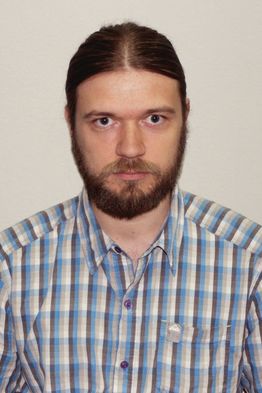
Dmitri Romanov is a Research Professor in the Department of Physics at Temple University. His research focuses on strong-field quantum control in complex systems, including femtosecond laser filamentation, nonlinear optics of filament wake channels, and electronic dynamics in molecules and nanostructures. He explores applications such as light scattering in turbid media and dispersion law engineering for quasiparticles. Key contributions include studies on Rabi sideband control, transient optical nonlinearities, and the development of machine learning algorithms for particle identification in high-energy physics experiments. Romanov has authored influential works on femtosecond laser-matter interactions and co-authored the textbook Modern Advanced Mathematics for Engineers (Wiley, 2001). His recent projects involve collaborations with the Electron-Ion Collider (EIC), focusing on detector design and real-time data processing using FPGA-based systems. Romanov’s work bridges theoretical physics, experimental optics, and applied nanotechnology, with implications for advanced materials and medical imaging.
Walter Lambrecht is a Perkins Professor of Physics at Case Western Reserve University. His research focuses on first-principles computational methods in condensed matter theory, particularly density functional theory (DFT) and many-body perturbation theory (GW method), applied to novel materials such as semiconductor nitrides, halide perovskites, and layered ultra-thin materials. Education: Lic. Sc., University of Gent (1977) Dr. Sc., University of Gent (1980) Research Interests: Theoretical modeling of electronic and vibrational properties in complex materials. Defects and doping effects in semiconductors. Development of computational tools for band structure and optical property analysis. Collaborations: Works closely with experimental groups, including a team at Victoria University in Wellington, New Zealand, on rare-earth nitrides. Collaborates with Mark van Schilgaarde at Arizona State University on computational method development. Key Projects: Investigation of II-IV-N2 semiconductors and their defect physics. Stability and electronic behavior of halide perovskites for solar cells. Spin-orbit effects in layered materials like MoS2 and V2O5. Magnetic exchange interactions in Mn-doped ScN and gadolinium pnictides.
Carlos Cabrelli is a faculty member at the University of Buenos Aires , where he conducts research in mathematical analysis and its applications. He is known for his work in frame theory, operator theory, and harmonic analysis. Affiliation: University of Buenos Aires Research Focus: Functional and harmonic analysis, frame theory, dynamical sampling His research lies at the intersection of pure and applied mathematics, particularly in the study of frames generated by iterative applications of operators and their connections to subspaces of the Hardy space. This work is motivated by the emerging field of dynamical sampling, which deals with reconstructing signals from sparse observations over time. The available article reflects a strong trend in modern mathematical analysis with applications in signal processing and data science. His work combines abstract operator-theoretic methods with concrete problems in sampling theory. While no specific awards or honors are mentioned in the provided text, his invitation to speak at academic seminars indicates recognition within the mathematical community. There is no information available about his advising activity, grants, or collaborations. He appears to be an active researcher in the field of mathematical analysis. No laboratory or research team details are provided.
Professor Andrew Cole is the Head of Discipline in Physics at the School of Natural Sciences, University of Tasmania. He leads the Greenhill Observatory, specializing in optical astronomy research using advanced telescopes. His research focuses on stellar populations in nearby galaxies, exoplanet detection via microlensing, and the evolution of galaxies. He has directed major projects like the Greenhill Observatory development and the TASSIE exoplanet search initiative. Education: PhD in Astronomy, University of Wisconsin-Madison (1999) BSc in Astronomy & Physics, Yale University (1994) Research Interests: Professor Cole investigates resolved stellar populations, exoplanet dynamics, and the interplay between star formation and galaxy evolution. His work combines observational data from ground/space telescopes with computational models to study stellar ages, chemistry, and motions. Funded Projects: "Lifting the Veil on Cold Planets" (Australian Research Council, 2024-2027) "Access to the Legacy Survey for Space and Time" (2022-2024) "Greenhill Observatory Development" (2021-2024) Advising & Grants: He currently supervises 2-3 PhD students annually, focusing on observational/experimental astrophysics. Recent grants total over $2.7M AUD, supporting exoplanet searches, telescope infrastructure, and international collaborations. Labs/Teams: Directs the Greenhill Observatory team and collaborates with global networks on microlensing surveys and JWST data analysis.
Cuma Yarım is an Assistant Professor in the Department of Astronautical Engineering at Istanbul Technical University, Turkey. His research focuses on plasma physics and nuclear fusion, with expertise in tokamak devices, plasma rotation dynamics, and spacecraft motion. Research interests include: Plasma Physics and Nuclear Fusion Edge Plasma Dynamics and Rotation Bifurcation Neutral Beam Injection Physics Tokamak Magnetic Perturbations Spacecraft Relativistic Effects Rotational Momentum Transport His 11 publications (1999-2009) reveal consistent contributions to fusion energy research through theoretical modeling of plasma behavior in tokamaks, with later expansion into spacecraft dynamics and satellite technology development. Dr. Yarım has supervised 3 students and actively participates in the İTÜ-PSAT I student pico-satellite program, a CubeSat initiative advancing space systems engineering education at Istanbul Technical University.
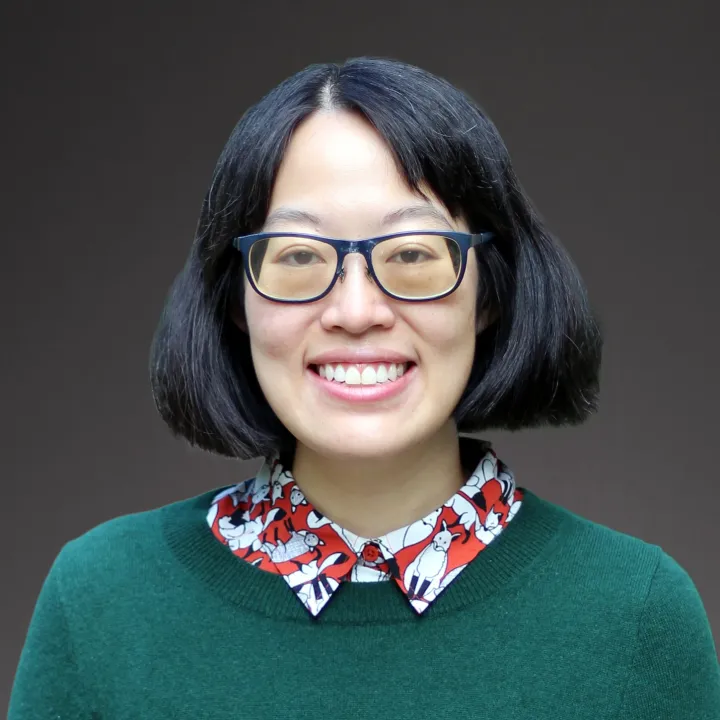
Diana Qiu is an Assistant Professor in the Department of Materials Science and the Applied Physics program at Yale University's School of Engineering & Applied Science. Her research focuses on quantum materials, computational methods, and light-matter interactions, with applications in optoelectronics, quantum information, and energy technologies. Research Interests: Dr. Qiu's work centers on understanding and controlling quantum excitations in materials through first-principles calculations. Her group develops and applies quantum many-body theories to predict electronic, optical, and excitonic properties of novel materials. Key areas include 2D materials, hybrid perovskites, topological systems, and defect engineering. She investigates how light interacts with electrons in solids, particularly focusing on exciton dynamics, ultrafast responses, and nonlinear phenomena. Her recent publications reveal a strong emphasis on exciton physics, dielectric screening, and many-body effects across diverse material platforms. Using high-performance computing, her group bridges theoretical models with real material behavior, enabling predictive design of tunable and transient quantum materials. Honors and Awards: Presidential Early Career Award for Scientists and Engineers (PECASE), 2025 NSF CAREER Award, 2023 Packard Fellowship for Science and Engineering, 2021 DOE Early Career Award, 2021 Rising Stars in Physics, 2018 Jackson C. Koo Award in Condensed Matter Physics, 2017 Advising and Grants: As a principal investigator, Dr. Qiu leads the Qiu Group and mentors graduate students and postdoctoral researchers in computational materials science. She has secured major funding through the NSF, DOE, and Packard Foundation, supporting her research in quantum materials and exciton engineering. Her group collaborates with experimentalists to validate theoretical predictions and guide material synthesis. Labs and Research Teams: The Qiu Group is based at the Energy Sciences Institute in West Haven, CT, and operates within Yale’s robust infrastructure for computational and materials research. The team leverages high-performance computing resources to perform large-scale simulations of quantum materials.
Rune Hylsberg Jacobsen is a Professor at the Department of Electrical and Computer Engineering, Aarhus University. His work bridges energy systems, drone technology, and blockchain applications, with a focus on smart grids, autonomous systems, and decentralized infrastructure. Research interests include: Security frameworks for prosumer-driven energy systems using blockchain mmWave and LEO satellite communication protocols Homomorphic encryption for smart meter privacy Cooperative drone swarm navigation and infrastructure inspection Earth observation via CubeSats for climate research His recent publications highlight advancements in: Zero trust security models for renewable energy certificates Transport protocol optimization in satellite networks AI-driven charging window scheduling for drone fleets Decentralized identity management in Web3 infrastructure Key projects include: DISCO-2: Student CubeSat for Arctic climate monitoring Drones4Safety: Safety-critical inspection systems VPP4SGR: Virtual Power Plant networks
Nemanja Rakić serves as an Associate Professor in the Department of General Physics at the Faculty of Science and Mathematics, University of Banja Luka. His academic appointment, confirmed by election on January 26, 2023, focuses on astronomy and astrophysics within the Serbian academic system where his title 'доцент' corresponds to Associate Professor rank. He teaches across multiple physics and astronomy programs including undergraduate courses in Physics 1 & 2, Basics of Astronomy, Fundamentals of Astrophysics, and graduate-level courses such as Astronomical Content in Physics Lessons and Computer Simulations in Physics Teaching. Dr. Rakić's research centers on active galactic nuclei (AGN) with particular emphasis on spectroscopic analysis of broad-line regions, the Baldwin effect in various galaxy types, and detection methods for supermassive binary black holes. His work combines observational data from surveys like SDSS with theoretical modeling to understand galactic nuclei kinematics. He has developed innovative approaches to physics education, integrating astronomical content and computer simulations into teaching methodology. His research spans observational astronomy, spectroscopy, and astrophysical modeling with applications in understanding black hole dynamics and galaxy evolution. His publication record shows consistent output in high-impact astronomy journals including Monthly Notices of the Royal Astronomical Society, Astronomy and Astrophysics, and Classical and Quantum Gravity. Recent publications (2020-2022) demonstrate expansion into science communication and educational methodologies, reflecting his dual commitment to research excellence and pedagogical innovation in astronomy education. Dr. Rakić has led significant research projects including 'Study of binary supermassive black holes in active galaxies in the optical and X-ray domains' (2016-2017) as principal investigator, and participated as a team member in 'Elastic electron scattering on a bismuth atom and a triethyl phosphate molecule' (2018-2020). His collaborative work involves researchers from multiple institutions across Serbia and internationally, with notable collaborations on gravitational wave research and AGN monitoring projects.
İLAYDA KORKMAZ FURUNDAOTURAN serves as a Lecturer in the Department of Ophthalmology within the Faculty of Medicine, dedicating her academic career to advancing ophthalmic research and clinical practice with a specialization in corneal and ocular surface disorders. Her research portfolio demonstrates deep expertise in amniotic membrane applications for corneal healing, pediatric ophthalmology, orbital tumors, and chemical injury management. She has pioneered experimental models for amniotic membrane extract standardization and its therapeutic efficacy in ocular surface reconstruction, while maintaining active investigation into scleral biomechanics, Fuchs endothelial dystrophy, and autoimmune ocular conditions like cicatricial pemphigoid. Her work bridges laboratory research with clinical translation, particularly in stem cell transplantation and corneal regenerative therapies. Analysis of her publication record reveals consistent focus on translational ophthalmology, with 10 peer-reviewed articles (2021-2023) emphasizing clinical problem-solving in corneal diseases, surgical outcomes, and pandemic-era epidemiological shifts in eye injuries. Her research methodology integrates biochemical analysis, experimental models, and advanced imaging techniques to address unmet needs in ocular surface rehabilitation. Scientific Awards: BEST RESEARCH FIRST AWARD She leads multiple active research initiatives including TUBITAK-funded projects on amniotic membrane extract standardization and biochemical stabilization, alongside university BAP projects examining corneal epithelial healing mechanisms. Her current grant portfolio reflects sustained investigation into optimizing amniotic membrane applications through lyophilization processes and transforming growth factor modulation, demonstrating significant institutional investment in her translational research program.
Dr. Craig Murray is an Associate Professor at the Department of Chemistry , University of California, Irvine . He earned his B.S. and Ph.D. in Chemistry from the University of Edinburgh , followed by postdoctoral work at the University of Bristol and University of Pennsylvania . Appointed as Royal Society University Research Fellow (2008–2012) and Camille and Henry Dreyfus Environmental Chemistry Fellow (2005–2008), he joined UCI in 2013. Education: Ph.D. in Chemistry, University of Edinburgh B.S. in Chemistry, University of Edinburgh His research focuses on fundamental gas-phase chemical processes using laser-based spectroscopic techniques , with applications in atmospheric chemistry . Key areas include Criegee intermediate reactivity , photodissociation dynamics , reactive intermediates , and weakly-bound molecular complexes . His work has been funded by a $394,638 NSF grant (CHE-1566064) for kinetic studies of Criegee intermediates and air quality monitoring outreach programs . Recent publications highlight temperature-dependent kinetics of Criegee intermediate reactions with pyruvic acid , hydroxyketones , and α-diketones , alongside UV photofragmentation studies of acetaldehyde cations and chlorodiiodomethane . Methodologies include velocity-map ion imaging , broadband transient absorption spectroscopy , and ab initio calculations . Scientific Awards: Royal Society University Research Fellow (2008–2012) Camille and Henry Dreyfus Environmental Chemistry Fellow (2005–2008) Dr. Murray has mentored numerous students, including Ph.D. graduates Kara M. Kapnas , Elizabeth S. Foreman , and Benjamin W. Toulson , with ongoing guidance for Aaron W. Harrison , Zachary A. Cornwell , and Johanna E. Rinaman . His team regularly participates in conferences such as the 36th Informal Symposium on Kinetics and Photochemical Processes in the Atmosphere (ISKPPA) and the UCI Undergraduate Research Symposium . The Murray Group operates from Rowland Hall at UCI, with dedicated laser spectroscopy laboratories for fundamental photochemistry and reaction kinetics studies. Collaborative efforts include Angewandte Chemie International Edition and ACS Earth and Space Chemistry publications, and the group maintains strong ties with institutions like MIT and Lawrence Berkeley National Lab through alumni placements.
Ben J. Glasgow, MD is a Professor of Pathology and Laboratory Medicine at the University of California, Los Angeles (UCLA). He serves as Chief of Ophthalmic Pathology and is affiliated with the Jules Stein Eye Institute and the ACCESS Program within the Department of Cellular & Molecular Pathology. His clinical expertise spans Ophthalmic Pathology and Surgical Pathology, with a focus on ocular surface diseases and corneal disorders. Education: MD from Johns Hopkins University School of Medicine (1979), followed by an Internal Medicine internship at UCSD Medical Center (1980), Anatomic & Clinical Pathology residency at UCLA (1988), Ophthalmology residency at UCLA (1991), and a fellowship in Ophthalmic Pathology at UCLA (1987). Certifications: Board-certified in Pathology-Clinical (1988) and Pathology-Anatomic (1987) by the American Board of Pathology. Affiliation: Practices at Ronald Reagan UCLA Medical Center (Los Angeles, CA 90095). Dr. Glasgow's research centers on tear biochemistry, particularly the structural and functional properties of tear lipocalin. His work explores lipid-protein interactions in tear film, corneal dystrophies, and ocular surface pathologies. He has contributed extensively to understanding tear film composition and its role in ocular health through 15 recent publications (2025-2021) covering topics such as: Lipocalin-ligand binding mechanisms Orbital tumor pathology and sarcomas Tear film lipid analysis Corneal dystrophy genetics Post-surgical complications like calcium deposition Novel ophthalmic device evaluations His scholarly output demonstrates a consistent focus on molecular ophthalmic pathology, lipid biochemistry, and advanced diagnostic techniques using fluorescence microscopy and polarization imaging. All publications are indexed in PubMed, reflecting his commitment to evidence-based ophthalmic research.
William Rush is an Assistant Professor in the Environmental Studies and Sciences Department at Santa Clara University, where he conducts research in paleoclimatology and climate modeling. His work focuses on understanding past climate dynamics through Earth system simulations and geological data analysis, with particular emphasis on extreme climate events and their hydrological implications. Dr. Rush's primary research interests include paleoclimate modeling of atmospheric rivers, hydrologic cycle responses during hyperthermal events like the Paleocene-Eocene Thermal Maximum (PETM), and regional climate change impacts. He integrates high-resolution climate model outputs with sedimentological and geochemical records to reconstruct past climate states, examining mechanisms of extreme precipitation, coastal hydroclimate shifts, and long-term climate transitions across geological boundaries. Analysis of his recent publications reveals consistent focus on PETM and Last Glacial Maximum simulations using models like CESM2. Key trends include atmospheric river behavior under altered climate states, model-data comparisons for paleoclimate validation, and applications of paleoclimate insights to contemporary flood risk assessment. His work demonstrates strong integration of cyclostratigraphy, astrochronology, and regional hydrologic modeling to address fundamental questions about climate sensitivity during past warming events.
Luis Rodriguez serves as Associate Professor in the Department of Agricultural and Biological Engineering within the College of Agricultural, Consumer and Environmental Sciences (ACES) at the University of Illinois at Urbana-Champaign. His academic leadership spans transdisciplinary research at the critical nexus of food, energy, and water systems, with particular focus on disaster resilience and community engagement initiatives. Dr. Rodriguez earned his educational foundation at Rutgers University with a B.S. (1995), M.S. (1999), and Ph.D. (2002) in Bioresource Engineering, complemented by doctoral work in Industrial and Systems Engineering. His professional trajectory includes progression from Assistant Professor (2005-2012) to Associate Professor (2012-present) at UIUC, with prior research appointments at NASA facilities and Orbital Space Sciences Corporation. His research program integrates Big Data analytics, modeling, and decision support systems to address food-energy-water security challenges, environmental impacts of agricultural production, and social constraints on engineered systems. Current projects emphasize reliability, resiliency, and sustainability in engineered solutions, particularly through his leadership of the INFEWS-ER (Innovation at the Nexus of Food, Energy, and Water Systems - Educational Resources) initiative. Recent scholarly output reveals strong concentration on biomass supply chain optimization, cyberGIS applications, microbial community modeling, and disaster resilience engineering, with significant methodological contributions to spatial analytics and transdisciplinary systems approaches. Dr. Rodriguez has received multiple teaching honors including the NACTA Teacher Fellow Award (2011), Engineering Council Outstanding Advisor (2012), consistent recognition as an Excellent Teacher (2012-2018), and the prestigious J. Kent Mitchell Teaching Excellence Award (2019). His service includes the ACES Research Policy Committee and Chief Advisor role for Agricultural and Biological Engineering. He directs the UIUC Puerto Rico Disaster Relief Program, which has conducted multiple service-learning trips following Hurricane Maria. This initiative exemplifies his commitment to community-engaged engineering, where students develop microgrids, remove invasive species, and implement sustainable solutions through partnerships with Amizade and Caras Con Causa. His course portfolio includes ABE 398 Disaster Relief Study Tour, ABE 452 Engineering for Disaster Resilience, and multiple Global Disaster Resilience courses across engineering and agricultural disciplines.
Sebastian Knauer is a researcher at the Faculty of Physics, University of Vienna, specializing in Nanomagnetism and Magnonics. His work bridges quantum technologies and materials science, focusing on magnonic devices, spin-wave spectroscopy, and magnetic heterostructures. Education: B.Sc., M.Sc., Ph.D. His research explores quantum magnonics, low-temperature magnetism, and inverse-design methodologies. Recent publications emphasize Yttrium-Iron Garnet (YIG) films, paramagnon propagation, and quantum Hamiltonian learning. Key trends in his publications include applications of magnonic computing, hybrid quantum systems, and nanostructured materials. Collaborations span projects like On-chip quantum MagNonIcs and Nanometer-thick YIG layers , with international partnerships in quantum technologies. Scientific awards include: Marie Skłodowska-Curie Individual Fellowship (2021) NFFA-Europe Research Infrastructure grant (2022) Top-10 MSCA Fellowship (2021) He contributes to experimental quantum model learning and advancing spin-wave-based computing architectures.
Prof. Dr. Gerd Rudolph is affiliated with the Institute for Theoretical Physics at the University of Leipzig , under the Faculty for Physics and Earth Sciences . His research focuses on symplectic geometry, quantization methods, dimensional reduction of gauge theories, and the mathematical structure of classical and quantum gauge theories. Research Interests : Symplectic geometry and its applications Quantization techniques in theoretical physics Dimensional reduction of gauge theories and model building Mathematical analysis of classical and quantum gauge fields Lattice-based quantum field theory Publication Trends : Rudolph's recent work (2022-2010) emphasizes symplectic methods in infinite-dimensional systems, deformation quantization, lattice gauge theory stratifications, and algebraic structures in quantum field theory. His contributions span mathematical frameworks for gauge orbit spaces, costratifications in SU(2) models, and geometric approaches to QCD and QED on lattices. Laboratory Affiliation : Rudolph conducts research within the Institute for Theoretical Physics at the University of Leipzig, specializing in geometric and algebraic methods for gauge and quantum field theories.