معرفی
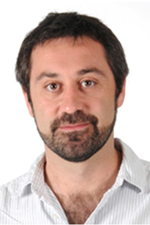
Dr. Craig Murray is an Associate Professor at the Department of Chemistry, University of California, Irvine. He earned his B.S. and Ph.D. in Chemistry from the University of Edinburgh, followed by postdoctoral work at the University of Bristol and University of Pennsylvania. Appointed as Royal Society University Research Fellow (2008–2012) and Camille and Henry Dreyfus Environmental Chemistry Fellow (2005–2008), he joined UCI in 2013.
- Education:
- Ph.D. in Chemistry, University of Edinburgh
- B.S. in Chemistry, University of Edinburgh
His research focuses on fundamental gas-phase chemical processes using laser-based spectroscopic techniques, with applications in atmospheric chemistry. Key areas include Criegee intermediate reactivity, photodissociation dynamics, reactive intermediates, and weakly-bound molecular complexes. His work has been funded by a $394,638 NSF grant (CHE-1566064) for kinetic studies of Criegee intermediates and air quality monitoring outreach programs.
Recent publications highlight temperature-dependent kinetics of Criegee intermediate reactions with pyruvic acid, hydroxyketones, and α-diketones, alongside UV photofragmentation studies of acetaldehyde cations and chlorodiiodomethane. Methodologies include velocity-map ion imaging, broadband transient absorption spectroscopy, and ab initio calculations.
Scientific Awards:
- Royal Society University Research Fellow (2008–2012)
- Camille and Henry Dreyfus Environmental Chemistry Fellow (2005–2008)
Dr. Murray has mentored numerous students, including Ph.D. graduates Kara M. Kapnas, Elizabeth S. Foreman, and Benjamin W. Toulson, with ongoing guidance for Aaron W. Harrison, Zachary A. Cornwell, and Johanna E. Rinaman. His team regularly participates in conferences such as the 36th Informal Symposium on Kinetics and Photochemical Processes in the Atmosphere (ISKPPA) and the UCI Undergraduate Research Symposium.
The Murray Group operates from Rowland Hall at UCI, with dedicated laser spectroscopy laboratories for fundamental photochemistry and reaction kinetics studies. Collaborative efforts include Angewandte Chemie International Edition and ACS Earth and Space Chemistry publications, and the group maintains strong ties with institutions like MIT and Lawrence Berkeley National Lab through alumni placements.