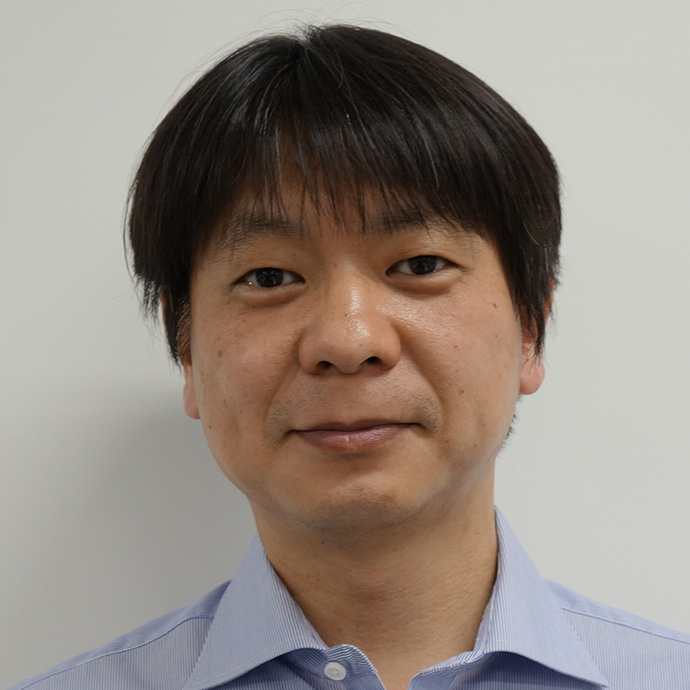
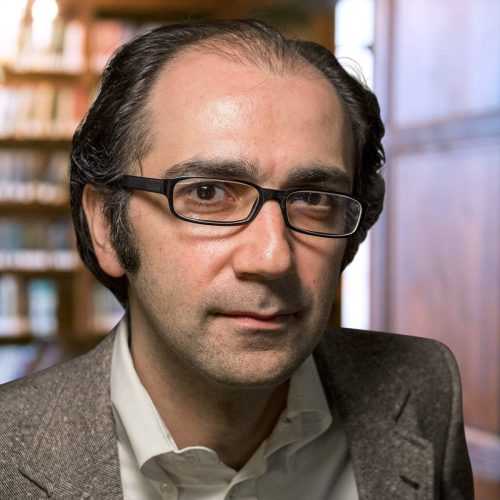
Farshad Moradi is a Professor at the Department of Electrical and Computer Engineering at Aarhus University, specializing in neuromorphic engineering, spintronics, and biomedical device design. His work focuses on integrating advanced materials and circuits for applications in neural interfaces, energy-efficient computing, and wireless biomedical systems. Research Interests include: Spintronic-based neuromorphic computing architectures Ultra-low power analog/mixed-signal integrated circuits Ultrasonically powered implantable medical devices Neural signal processing and seizure detection systems Wireless energy transfer and structural health monitoring Key Projects (2016-2026): SPICE: Spintronic-Photonic Integrated Circuit Platform PHOTON-NeuroCom: Photonic-assisted Neuromorphic Computing Neuro-Sense: Flexible bioinspired neuroprostheses CorroSense: Self-powered corrosion monitoring HERMES: Hybrid Enhanced Regenerative Medicine Systems Recent innovations include: Ultrasonically powered optogenetic implants Low-power neural amplifiers for deep-brain interfaces Spin-torque nano-oscillator-based neuromorphic hardware Energy harvesting systems for structural monitoring
Yiyu Ou is an Associate Professor in the Department of Electrical and Photonics Engineering at the Technical University of Denmark (DTU), where she leads research in optoelectronic devices, particularly light-emitting diodes (LEDs) and biomedical photonics. Her work bridges materials science, semiconductor engineering, and sustainable technology development. Department: Electrical and Photonics Engineering Institution: Technical University of Denmark (DTU) Research Focus: LED Systems, Silicon Carbide, Biomedical Implants Her research interests center on the development of advanced optoelectronic materials and devices, with a strong emphasis on nitride-based LEDs, fluorescent silicon carbide, and wireless optoelectronic biomedical implants. She explores novel packaging techniques, light extraction efficiency, and UV disinfection systems, contributing significantly to sustainable photonics and healthcare technologies. The recent trend in her publications shows a clear trajectory toward applied photonics in medicine and environmental health, including wireless implants, UV-B phototherapy, and wearable disinfection systems. Her work combines semiconductor physics with biomedical applications, demonstrating innovation in both materials and system integration. Scientific Awards and Recognition: No specific awards listed in the provided text. Yiyu Ou has served as Principal Investigator (PI) and supervisor on multiple research projects, including the DISOLE disinfection initiative and PhD supervision. Her grants focus on implantable UV-LED systems and innovative white LED light sources, often funded by Danish and European research councils. She collaborates extensively across disciplines, particularly with medical researchers and material scientists. She is affiliated with the Photonics group at DTU Fotonik, where her team works on diode lasers and LED systems. Research areas include porous SiC fabrication, hybrid white LEDs, and high-efficiency nitride devices, contributing to both fundamental science and commercial applications.
Rune W. Berg is an Associate Professor in the Promotion Programme at the Department of Neuroscience, Faculty of Health and Medical Sciences, University of Copenhagen. He leads the Berg Lab with research focused on Neuronal Signalling and maintains an active research profile with 66 publications to date. Dr. Berg's educational background includes a Ph.D. in Biophysics from the University of California, San Diego (2003), an M.S. in Physics from UC San Diego (2000), and Cand. Scient. and B.Sc. degrees in Biophysics from the Niels Bohr Institute at the University of Copenhagen (2000 and 1997 respectively). His research interests span Functional Neuronal Networks, Sensory and Motor processing, and Complex physics. The Berg Lab investigates neural signaling mechanisms with a strong emphasis on developing novel technologies for neural interfacing and brain research. Recent work demonstrates an interdisciplinary approach combining neuroscience, physics, and engineering to create advanced tools for neural monitoring and modulation. Analysis of Dr. Berg's recent publications reveals a strong focus on neural engineering technologies, particularly optical and electromagnetic approaches for brain research. His work bridges fundamental neuroscience with practical engineering solutions for neural interfaces, with applications in understanding brain function and developing neural prosthetics. The research spans from molecular-level interactions to circuit-level neural dynamics. Dr. Berg has participated in specialized training workshops including 'Construction of the brain' at Kristineberg Marine research station, 'Neurophysics' at the Institute of Theoretical Physics in Santa Barbara, and 'Neuron as a nonlinear oscillator' at the Salk Institute. His professional experience includes continuous work since January 2004 as a Post Doctoral member of Jorn Hounsgaard's Lab at the University of Copenhagen, following a Visiting Post Doctoral fellowship at Taipei Veterans General Hospital and National Yang-Ming University in Taiwan (September-December 2003).
Christos Markos is an Associate Professor and Group Leader of the Neural Devices & Gas Photonics group at the Department of Electrical and Photonics Engineering, Technical University of Denmark (DTU). His research integrates advanced photonics with biomedical and environmental applications, focusing on hollow-core fiber lasers, chalcogenide glasses, and multimaterial fiber optics for neural interfaces and sensing systems. His research interests lie at the intersection of photonics, materials science, and neuroengineering. He specializes in experimental optics , optical materials , fiber sensors , and multimaterial fiber devices , with applications in neurophotonics and gas sensing . His work emphasizes the development of biocompatible and biodegradable optical fibers for implantable neural devices and hollow-core fiber lasers for methane detection. The 15 most recent publications highlight a strong trend toward biomedical photonics and environmental sensing , combining infrared neural stimulation , calcium dynamics , and neurotoxicity studies with engineering advances in soft glass synthesis , fiber fabrication , and photoacoustic detection . The keywords span Neuroscience , Photonics , Materials Science , and Environmental Engineering , reflecting interdisciplinary innovation. Christos Markos has received no explicitly mentioned scientific awards in the provided text. He actively supervises multiple PhD students including Pouya Abdollahian, Kaiyuan Sui, and Cheng Zhang, and serves as main or co-supervisor on several funded research projects. His group has secured significant research grants related to neural devices , gas photonics , and quantum photonic systems , indicating strong external funding support. He also contributes to academic service as an editor for Optical Materials Express . Christos Markos leads the Neural Devices & Gas Photonics research group at DTU Fotonik, where he has established three advanced laboratories for soft glass synthesis, extrusion, and fiber fabrication, and two additional labs dedicated to neurophotonics. His team works on cutting-edge projects involving biodegradable optical fibers, infrared neurostimulation, and hollow-core fiber lasers, positioning the lab at the forefront of multifunctional fiber-based biomedical devices .
Nathalie Krauth serves as an Assistant Professor in the Department of Neuroscience within the Faculty of Health and Medical Sciences at the University of Copenhagen. Her research integrates neural circuit analysis with metabolic physiology to investigate fundamental brain mechanisms governing survival behaviors and energy regulation. Her work focuses on hypothalamic-brainstem circuits controlling safety prioritization over essential needs, melanocortin receptor signaling in energy homeostasis, and optogenetic techniques for precise neural manipulation. Key themes include obesity pathophysiology, reward circuit dynamics involving orexin/dynorphin systems, and neural adaptations to metabolic challenges like overfeeding. She develops innovative methodologies such as the TRACE system for mapping transient neural inputs. Analysis of her publications (2020-2025) reveals consistent emphasis on hypothalamic obesity pathways and neural circuit interrogation tools , with high-impact outputs in journals like Nature Neuroscience and Nature Communications. Her collaborative work frequently involves Clemmensen, Kiehn, and Nabavi laboratories, demonstrating strong integration within Copenhagen's neuroscience ecosystem.
Dr. Jia Ying Pearlyn Toh is a Research Fellow in the Kilpeläinen Group at the Faculty of Health and Medical Sciences, University of Copenhagen, specializing in optogenetic modulation of cellular pathways. Her core research interests include: Optogenetics for precise cellular control YAP signaling pathway mechanics Wound healing acceleration mechanisms Cell signaling dynamics in regenerative contexts Recent publications (2023-2025) reveal a dual focus: developing optogenetic tools to manipulate YAP in biological systems and advocating for structural reforms in scientific publishing. Her experimental work bridges molecular biology and tissue engineering, while her commentary contributions address systemic challenges in academic research dissemination. As an active member of the Kilpeläinen Group, Dr. Toh contributes to collaborative projects exploring cellular responses to optogenetic stimuli within regenerative medicine frameworks.
Marcello Meneghetti is an Assistant Professor at the Technical University of Denmark, Department of Electrical and Photonics Engineering. His research focuses on neural devices and gas photonics, with expertise in biodegradable optical fibers, infrared neurostimulation, and implantable optoelectronic interfaces. Department: Electrical and Photonics Engineering Email: mamen@dtu.dk His recent work involves biodegradable optical fibers for brain implants , infrared neural stimulation , and multimaterial fiber-based interfaces . Key projects include the Multifunctional Optical Fibers for Modulation, Sensing, and Imaging of the Brain , where he serves as a supervisor. Research trends highlight advancements in mid-infrared photonics , neuroimaging , and biocompatible fiber technology . Collaborations span neuroscience, biomedical engineering, and materials science. As a supervisor, he mentors PhD student Abdollahian, P. , with projects emphasizing neural safety , optogenetics , and electrophysiology . His work has been recognized in 23 publications and featured in 4 news outlets.
Hideki Ukai, Ph.D., is a Project Associate Professor at The University of Tokyo and Core Manager of the ES-Mouse/Virus Core facility. His research focuses on developing next-generation mammalian genetic technologies for organism-level systems biology, enabling high-throughput analysis of human gene networks and cellular circuits through genetically humanized mice. Previously, he held positions at RIKEN QBiC (Senior Researcher), RIKEN CDB (Researcher), and National Institute of Radiological Sciences (Postdoctoral Researcher). His work spans systems biology of circadian clocks, reverse genetics, and innovative mouse model production without traditional crossing. Key contributions include single-generation knock-in mouse protocols, temperature-insensitive circadian phosphorylation mechanisms, and CRISPR-based knockout-rescue strategies. Recent studies explore sleep-wake cycle regulation via kinase-phosphatase competition and anesthesia's molecular effects on circadian systems. Scientific awards and honors are not explicitly mentioned in the provided materials. His publication trends emphasize circadian clock dynamics, genetic engineering innovations, sleep regulation biochemistry, and humanized mouse models for systems-level biological analysis.
Kjeld Laursen is an Assistant Professor at the Department of Electrical and Computer Engineering, Aarhus University, Denmark. His research focuses on ultra-low power integrated circuits, biomedical devices, and energy harvesting systems for body implants. He holds a PhD in Electronics (2021) from Aarhus University, specializing in implantable systems. Education: PhD in Electronics Engineering, Aarhus University (2021) Research Interests: He designs ultra-low power ICs for medical implants, leveraging ultrasound-based wireless powering and compact microsystems. His work includes optogenetic stimulators, drug delivery systems, and multi-load regulation schemes for biomedical applications. Collaborations involve the Integrated Circuit and Electronics Laboratory at Aarhus University. Labs/Teams: Affiliated with the Integrated Circuit and Electronics Laboratory, focusing on biomedical microsystems and energy-efficient electronics.
Alipasha Vaziri is a Professor and Associate Director of the Kavli Neuronal Systems Institute at The Rockefeller University, where he leads the Laboratory of Neurotechnology and Biophysics. His research focuses on developing advanced optical imaging technologies to enable large-scale, high-speed, single-cell resolution recording of neuronal activity across entire brains of model organisms. Ph.D. in Quantum Physics, University of Vienna Postdoctoral Training, National Institute of Standards and Technology (NIST) Postdoctoral Training, University of Maryland Research Scientist, HHMI Janelia Research Campus Group Leader, Research Institute for Molecular Pathology (IMP), Vienna Faculty, The Rockefeller University (since 2015) Dr. Vaziri's research lies at the intersection of neuroscience, biophysics, and engineering. He pioneers novel optical neurotechnologies such as Temporal Focusing , Light Field Microscopy , HyMS Microscopy , and Light Beads Microscopy (LBM) , which allow unprecedented access to whole-brain functional dynamics . His work enables the study of how large-scale neuronal network activity relates to behavior and cognition, pushing the boundaries of speed, depth, and scale in neuroimaging. He is particularly interested in the dimensionality and geometry of population neural codes across cortical regions. The 15 most recent articles reflect a consistent trajectory toward higher spatiotemporal resolution , larger-scale recordings , and integrated computational analysis of brain-wide neuronal activity. His publications span model systems including zebrafish , Drosophila , and C. elegans , with increasing emphasis on behavioral contexts , population dynamics , and dimensionality reduction techniques to understand how information is represented in neural circuits. Dr. Vaziri has made transformative contributions to neurotechnology, though specific scientific awards are not listed in the provided text. He has advised numerous trainees through his lab at Rockefeller and previously at IMP Vienna, though specific names are not mentioned. His research has been supported by major funding bodies in neuroscience and biophysics, enabling the development of groundbreaking imaging platforms. As Associate Director of the Kavli Institute, he plays a key role in shaping systems neuroscience research directions. He leads the Laboratory of Neurotechnology and Biophysics , an interdisciplinary team of physicists, engineers, neuroscientists, and computational biologists dedicated to inventing and applying next-generation tools for observing and understanding brain function at the systems level.
Per Amstrup Pedersen serves as an Associate Professor in the Department of Biology at the University of Copenhagen, specifically within the Cell Biology and Physiology section. His research profile demonstrates extensive expertise in membrane transport proteins and structural biology, with 87 research outputs documented through 2025. His work spans multiple high-impact journals including Nature Communications, Structure, and Cellular Signalling. Dr. Pedersen's research interests focus on membrane protein structure and function, particularly transporter proteins including monocarboxylate transporters and P-type ATPases. His methodological approach combines structural biology techniques like cryo-EM with biochemical and cellular physiology approaches. His recent work examines the structural mechanisms of transport proteins, cellular signaling pathways, and the effects of compounds on cellular processes. Analysis of his recent publications reveals strong trends in structural characterization of membrane proteins, particularly using cryo-EM techniques, and investigations into how cellular metabolites like ATP regulate physiological processes. His research bridges basic molecular mechanisms with potential biomedical applications, as seen in studies examining drug effects on embryogenesis and cellular metabolism. Dr. Pedersen maintains an active research program with consistent publication output, demonstrating collaborations both within the University of Copenhagen and with international research groups across Europe. His work has garnered attention in academic circles with significant Mendeley readership and mentions in scientific news outlets.
Cesar Ramon Romero Leguizamon is a Colombian medical doctor and researcher currently serving as a postdoctoral research fellow at Region Hovedstadens Psykiatri under the supervision of Prof. Morgane Thomsen. He previously completed a postdoctoral fellowship at the National Institute on Drug Abuse (NIDA), part of the NIH in Baltimore, USA, and earned his PhD at the Kohlmeier Lab at the University of Copenhagen. His academic appointment is as a Guest Researcher in the Department of Drug Design and Pharmacology within the Faculty of Health and Medical Sciences at the University of Copenhagen. Dr. Romero-Leguizamon's research focuses on neuroscience, particularly investigating the relationship between stress and addiction through electrophysiological techniques. His work centers on the Laterodorsal Tegmental nucleus (LDT), examining hypercholinergic states, intracellular calcium dynamics, and the role of heteromers using in-vivo microdialysis and optogenetics. His research spans multiple areas including neuropharmacology, addiction mechanisms, stress circuitry, and the neural basis of sleep disorders in Parkinson's disease. His recent publications demonstrate a strong focus on α-synuclein's role in Parkinson's disease, particularly its effects on sleep-controlling neurons and sex-dependent neuronal responses. His work also explores the intersection of addiction and obesity through GLP-1 and nicotine pathways, as well as neuropeptide effects on neuronal excitability. The research consistently applies advanced techniques including patch clamp electrophysiology, calcium imaging, and optogenetics. Dr. Romero-Leguizamon has received significant attention for his research, with multiple publications picked up by news outlets and widely shared on social media platforms including X (formerly Twitter) and Facebook. His work has garnered substantial academic interest with numerous readers on Mendeley. Beyond his scientific work, Dr. Romero-Leguizamon has pursued artistic interests as an actor and theater director, specifically exploring the application of art in medical therapy through Humor Therapy (Doctor Clown) and art-based interventions for addicted patients. He also engages in painting and writing as personal creative outlets.
Milad Zamani is a Tenure Track Assistant Professor in the Department of Electrical and Computer Engineering at Aarhus University. His research focuses on integrated circuits, biomedical engineering, and wireless power systems with applications in neural engineering and sensor systems. He leads projects such as DONUT (European Doctoral Network for Neural Prostheses and Brain Research) and CorroSense (Self-powered corrosion monitoring). His work spans topics like bio-impedance sensing for wearables, ultrasonic energy transfer for implants, and high-precision analog circuits. Recent projects include thermally-powered leakage detection systems and optogenetic implantable devices. Zamani collaborates on advanced sensor technologies, neuromorphic hardware, and biomedical device miniaturization. His lab develops low-power circuits for medical applications, combining signal processing with cutting-edge microelectronic design.
Arto Rainer Heiskanen is a Senior Researcher at the Department of Biotechnology and Biomedicine, Technical University of Denmark (DTU), specializing in bioanalytical systems. Current projects focus on 3D brain-on-a-chip systems, optogenetic implants, and bioelectrochemistry. He collaborates internationally on topics like optogenetics, stem cell engineering, and biosensors. His research spans electrochemical sensing, neural interfaces, and microfabrication of carbon electrodes. Key subfields include dielectric spectroscopy, tissue engineering, and biomedical device development. Recent publications highlight advancements in pyrolytic carbon electrodes, wireless sensor platforms, and 3D bioprinting. He supervises multiple PhD students in projects related to neurotransmitter detection, cell replacement therapy, and environmental monitoring. Projects such as 3D biosensor development and LOCs for pathogens illustrate his interdisciplinary focus.
Gilles Claude Vanwalleghem is a Tenure Track Assistant Professor at Aarhus University, affiliated with the Department of Molecular Biology and Genetics (Neurobiology) and DANDRITE's Vanwalleghem Team. His research spans neuroscience, molecular biology, and zebrafish models. Department: Molecular Biology and Genetics - Neurobiology Institution: Aarhus University (Denmark) His research interests focus on neuro-immune interactions, oxytocin signaling, and brain network dynamics using zebrafish as a model organism. Specializations include calcium imaging, graph topology analysis, and developmental disorders like autism. Recent publications highlight interdisciplinary work in neuro-immune interactions in autism, optopharmacological tools for oxytocin control, and network neuroscience approaches to zebrafish visual habituation. Key themes include neurodevelopmental mechanisms and systems biology. Collaboration networks span neuroscience, molecular biology, and immunology, with strong emphasis on zebrafish models for studying pervasive developmental disorders and neural coding.