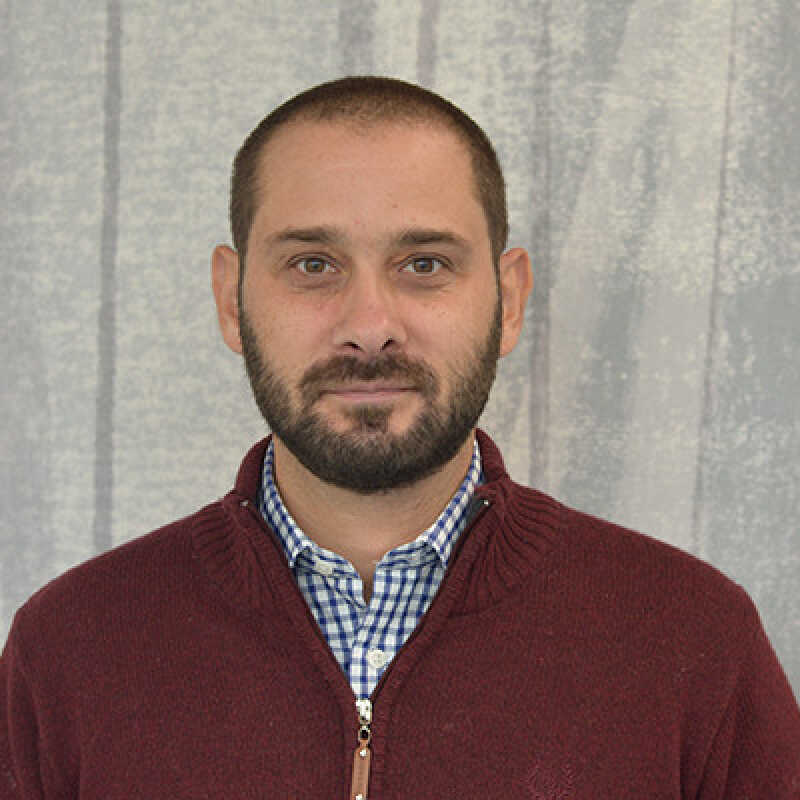
W. Brent Lindquist is a Professor in the Department of Mathematics and Statistics at Texas Tech University, affiliated with the TTU Mathematical Finance Program. His contact details include office location in the Mathematics & Statistics building (Room 104), phone (+1 806 834 2348), and email brent.lindquist@ttu.edu. His research spans computational financial mathematics, porous media flow, neuroscience applications, and quantum electrodynamics. Key contributions include dynamic asset pricing with market microstructure integration, pore-scale flow modeling using 3D micro-tomography, automated neuron morphology identification, and QED computations for electron magnetic moments. Recent work emphasizes ESG factor incorporation into financial models. Analysis of 2023–2025 publications reveals a dominant focus on sustainable finance, particularly ESG-integrated option pricing and portfolio optimization. Methodologies include random forests for market microstructure analysis, skew random walks for volatility modeling, and Lévy processes for Bitcoin dynamics. Cross-cutting themes involve hedonic real estate models with ESG factors and unified asset pricing frameworks bridging classical finance theories.
Allaudeen Hameed is the Tang Peng Yeu Professor in Finance at the National University of Singapore (NUS) Business School , where he has been a Professor since 2006. He also holds editorial roles at several leading finance journals and has previously held visiting positions at the Chinese University of Hong Kong, University of North Carolina at Chapel Hill, and University of Texas at Austin. Education: Ph.D. in Finance, University of North Carolina at Chapel Hill Bachelor of Business Administration (Honours), Second Class Upper Division, National University of Singapore Research Interests: His research spans a wide range of topics in finance, including return-based trading strategies , stock return co-movement , liquidity , the role of financial analysts , and international financial markets . These interests are deeply rooted in empirical asset pricing, market microstructure, and behavioral finance. His work often explores how market frictions, investor behavior, and institutional features affect asset prices and trading strategies, with a strong focus on cross-country and emerging market contexts. Scientific Awards & Honors: Asian Finance Conference Best Paper Award – 2024 Pacific Basin Finance Journal Best Paper Award – 2024 UM Distinguished Visiting Scholar, University of Macau – 2024 Best Paper of PERC Award – 2023 Tun Ismail Mohamed Ali Distinguished Chair, Universiti Kebangsaan Malaysia – 2022–2024 Teaching Excellence Team Award, NUS Business School – 2020 Best Paper Awards, FMA – 2016 & 2018 Outstanding Researcher Award, NUS Business School – 2015 & 2003 University of North Carolina Kenan-Flagler Alumni Merit Award – 2011 Professional Service: He serves as Editor of the International Review of Finance and Associate Editor of the Journal of Financial and Quantitative Analysis and Pacific-Basin Finance Journal . He is also a Senior Fellow at the Asian Bureau of Financial and Economic Research (ABFER) and a former Council Member of the Society for Financial Studies. Leadership Roles: He is currently Chair of the Faculty Promotion & Tenure Committee (FPTC) and Chair of the Faculty Promotion in Educator Track Committee (FPEC), both from 2025–2026.
George Skiadopoulos is a Professor of Finance at the University of Piraeus (Department of Banking and Financial Management) and Queen Mary University of London (School of Economics and Finance). He serves as Director of the Institute of Finance and Financial Regulation (IFFR) and holds an Honorary Senior Visiting Fellowship at Bayes Business School, City University of London. His research focuses on asset pricing, commodities, financial derivatives, climate finance, and ESG integration. He has published in prestigious journals like Management Science and Journal of Financial and Quantitative Analysis, and his work influences policy at institutions like the European Securities Markets Authority (ESMA). Education: PhD in Finance from the University of Warwick, M.Sc. in Mathematical Economics from LSE, and a Ptychion in Economics from Athens University of Economics and Business. He has advised financial institutions globally and received grants from the Chicago Mercantile Exchange and others. His notable award is the 2018 German Finance Association best paper prize for work on transaction costs and stock returns. He has also contributed to executive training and policy discussions on climate-related financial risks.
Assoc. Prof. Zehra Eksi-Altay holds a position at the Institute for Statistics and Mathematics at Vienna University of Economics and Business (WU). Her research focuses on financial mathematics, stochastic modeling, and partial information control problems in finance. She has expertise in credit risk modeling, derivatives pricing, and commodity markets. Eksi-Altay has a PhD in Financial Mathematics (2011) and completed her Habilitation in 2017. She has advised one doctoral thesis and has published extensively in top-tier journals like Quantitative Finance and Journal of Computational and Applied Mathematics . Her work bridges theoretical advancements with practical applications in areas such as regime-switching models, optimal portfolio strategies, and liquidity analysis. Education: BSc, MSc (2005), PhD (2011) Habilitation: 2017 Key Research Themes: Partial Information Models, Stochastic Control, Credit Risk, Algorithmic Trading Her recent work explores regime-switching affine term structures, optimal trading strategies under uncertainty, and dark pool liquidity analysis. Eksi-Altay has received one academic prize, though its specific name is not detailed in the provided text. Her contributions span both theoretical developments and applied finance, often collaborating with institutions like WU’s Institute for Statistics and Mathematics.
Associate Professor Ivan Guo is a faculty member at Monash University's School of Mathematics, where he leads research in mathematical finance and stochastic modeling. He obtained his PhD in Mathematics from the University of Sydney in 2014 and currently accepts PhD students. His work bridges theoretical mathematics and practical financial applications, with active projects spanning 2022-2026. Research Focus Dr. Guo's research centers on three interconnected areas: Optimal Transport Applications : Developing transport-based methods for financial model calibration and derivatives pricing Market Microstructure : Analyzing market-making strategies, liquidity, and high-frequency trading dynamics Sustainable Finance : Modeling green investment impacts and energy market transitions using game-theoretic approaches Active Projects Can green investors drive transition to a low-emission economy? (2022-2026) Integrating energy storage into electricity markets (2022-2024) Data61 CRP #46 - Risklab mathematical sciences (2020-2023) Efficient computational techniques for econophysics (2019-2021) The role of liquidity in financial markets (2017-2020) His research consistently addresses model uncertainty, volatility dynamics, and computational methods across 18+ publications since 2012.
Andrianos E. Tsekrekos is a Lecturer at the Department of Accounting and Finance, School of Business, Athens University of Economics and Business (AUEB). He earned his BSc in Operations Research and Marketing from AUEB, an M.Sc. in Finance from the University of Lancaster, and completed his PhD in Accounting & Finance at Lancaster in 2003. Prior to rejoining AUEB in 2006, he served as a lecturer at Lancaster University and Durham Business School in the UK.
Prof. HU Jianfeng is an Associate Professor of Finance at the Lee Kong Chian School of Business, Singapore Management University. He holds a Ph.D. in Finance from Baruch College, CUNY. His research focuses on asset pricing, capital markets, financial innovation, fintech, and quantitative finance. Notable contributions include studies on option trading's informational role, macro-news embargoes, and order flow volatility's impact on equity costs. Selected awards include the Lee Kong Chian Fellowship (2016-2017) and multiple best paper awards. He has secured research grants totaling over S$140k, including MOE Tier 1 funding for projects on order flow volatility and fiduciary duties. His work has appeared in top journals like the Journal of Financial Economics and Management Science. As a researcher and educator, HU advises students such as ZHONG Yiqiang. His research interests span strategic priorities like digital transformation and growth in Asia, reflecting Singapore's financial hub dynamics.
Dr. Lazaros Symeonidis is a Senior Lecturer in Finance at Essex Business School (University of Essex), specializing in financial econometrics, asset pricing, and commodities. He holds a PhD in Finance from the ICMA Centre, University of Reading, and has taught at the University of East Anglia and the University of Stirling. His research focuses on volatility modeling, commodity risk premia, and the economic drivers of market uncertainty. Education qualifications include a PhD in Finance (University of Reading), MSc in Mathematics for Finance (Athens University of Economics and Business), and BSc in Management Science and Technology (Athens University of Economics and Business). Research interests span financial econometrics, forecasting, empirical asset pricing, and commodities, with a focus on volatility dynamics, jumps, and market microstructure. His work has been published in journals like Journal of Financial Markets and Journal of Banking and Finance . Recent articles analyze convenience yield risk, factor models, and commodity market volatility, reflecting his expertise in energy and financial markets. He has secured grants from the British Academy and ESCP for research on commodity storage premiums. Academic supervision includes doctoral student Shengqiu Ma. Lazaros serves as an associate editor for the Journal of Commodity Markets and contributes to the Commodity Insights Digest.
Prof. Sander M. Bohte holds a part-time appointment as a Professor of Computational Neuroscience at the Swammerdam Institute for Life Sciences (SILS), University of Amsterdam, and is a researcher at the CWI Machine Learning group. His research focuses on computational models of neural information processing, emphasizing spiking neural networks, predictive coding, and reinforcement learning. He bridges computational neuroscience and machine learning, exploring how biological insights can improve neural network designs and vice versa. Key collaborations include work with Cyriel Pennartz (UvA), Pieter Roelfsema (NIN), and Steven Scholte (B&C). His applied research spans scientific machine learning applications in finance and genomics. He actively supervises MSc thesis students, prioritizing those from UvA, with projects ranging from biologically inspired neural architectures to efficient spiking network simulations. Research highlights include developing biologically plausible learning rules for deep networks, predictive coding models for sensory data, and spiking network models for working memory tasks. His work also addresses challenges in temporal dynamics and scalable neural computation, leveraging both theoretical and applied perspectives.
Prof. Dr. Maik Schmeling is a Professor of Finance at the Department of Finance, Goethe University Frankfurt, and a Research Fellow at the Centre for Economic Policy Research (CEPR) in London. His research focuses on empirical asset pricing, machine learning applications in finance, international finance, FX markets, monetary policy impacts on financial markets, and textual analysis in finance. He supervises BSc and MSc theses through a centralized allocation process, emphasizing empirical analysis and collaboration with institutions like the SAFE Data Room. Research Areas: Empirical Asset Pricing, Machine Learning in Asset Pricing, International Finance and FX, Monetary Policy and Financial Markets, Analysis of Option-Implied Information, Banks and Global Dollar Funding, Non-bank Financial Intermediation, Textual Analysis in Finance, Money Markets. His recent publications span geophysics topics like melt migration, mantle convection, and subduction zone dynamics, though these appear unrelated to his current finance role. All articles are classified under geophysics and geodynamics keywords. No scientific awards or student names are mentioned in the provided texts.
Prof. Dr. Rüdiger Weber is a Professor of Finance at Goethe University Frankfurt , affiliated with the Faculty of Economics and Business Administration and the Department of Finance . He holds the Endowed Chair for Alternative Investments at the House of Finance. Research Focus : Asset pricing, risk sharing between heterogeneous agents, institutional investor dynamics, cash-flow timing, discount rate variation, and behavioral finance. Recent Publications : Explored implied volatility duration, time-varying expected returns, belief-driven investment behavior, and methodological robustness in portfolio analysis. Contact : r.weber@finance.uni-frankfurt.de | Room HoF 2.57 | Office hours by appointment.
Antonio Mele is a Full Professor of Finance at the Università della Svizzera italiana (USI) and the Swiss Finance Institute (SFI), where he has held a Senior Chair since 2011. He is affiliated with the Faculty of Economic Sciences and the Institute of Finance (IFin) at USI. Additionally, he is a Research Fellow in the Financial Economics program at the Centre for Economic Policy Research (CEPR) in London. Education: PhD in Economics, University of Paris BSc in Economics, LUISS University, Rome Antonio Mele's research spans a wide range of topics in financial economics. His primary areas of expertise include capital market volatility, the interplay between financial markets and the macroeconomy, uncertainty and volatility in financial markets, interest rates and credit markets, and information in securities markets. He also works on econometrics and numerical methods in finance. His recent research interests extend to public debt sustainability, fiscal reforms and financial market behavior, and economic history since World War I. His work is characterized by a strong integration of theoretical modeling, empirical analysis, and practical applications in financial markets. His publications, featured in top journals like the Journal of Financial Economics, Review of Economic Studies, Review of Financial Studies, and Journal of Monetary Economics, reflect a consistent focus on volatility measurement and pricing. Key themes across his 15 most recent works include the development of model-free volatility indices for fixed income markets (such as SRVIX, TYVIX, VXTLT, and Credit VIX), variance swaps, the role of uncertainty in macroeconomic fluctuations, and the design of financial instruments for hedging interest rate and credit risk. His research bridges academic theory and real-world financial innovation. Scientific Awards and Recognition: Research Fellow, Centre for Economic Policy Research (CEPR), London Senior Chair, Swiss Finance Institute (SFI) Member, Group of Economic Advisers, European Securities Markets Authority (ESMA), 2014–2015 Member, Securities and Markets Stakeholder Group, ESMA, 2015–2017 Antonio Mele has had a significant impact beyond academia through his advisory roles and financial innovations. He consulted with central banks and regulatory bodies on capital market volatility, securitization, and credit regulation. He served on ESMA’s advisory bodies between 2014 and 2017. His most notable industry contributions include the co-invention of exchange-traded volatility indices for interest rate swaps, government bonds, and credit markets, adopted by the Chicago Board Options Exchange (Cboe) and S&P Dow Jones Indices. These tools provide real-time measures of uncertainty in fixed income markets and have become standard benchmarks for risk management and trading. He has also authored a major graduate-level textbook on Financial Economics (MIT Press, 2022) and several other books on volatility. Laboratories and Research Teams: Antonio Mele leads research initiatives in financial economics, particularly in the areas of volatility and fixed income markets. He has collaborated extensively with Yoshiki Obayashi on the development of volatility indices and pricing models. His work is associated with the Institute of Finance (IFin) at USI and the Swiss Finance Institute, which serve as hubs for research in finance and macro-finance.
Bing Han is a Professor of Finance and the TMX Chair in Capital Markets at the Joseph L. Rotman School of Management, University of Toronto. He holds a PhD in Finance from UCLA and a PhD in Mathematics from the University of Chicago. Research Interests : Behavioral Finance, Asset Pricing, Investment Strategies, Risk Management, and Real Estate Finance. His work bridges mathematical rigor with empirical finance, focusing on market anomalies, investor sentiment, and liquidity dynamics. Publication Trends : His recent work explores option pricing discrepancies, social transmission of consumption beliefs, and cross-border information flows. Articles highlight applications of behavioral biases, volatility modeling, and macroeconomic forecasting using financial instruments. Scientific Awards & Honors : Lifetime Achievement Award (2021) Outstanding Paper Award (2018) Best Paper Award (2016) Outstanding Paper in Asset Pricing Research (2013) CBA Foundation Research Excellence Award (2010) Advising & Grants : Available for Masters/PhD supervision and industry projects. Secured sponsored research funding on Sentiment Risk and Hedge Fund Returns (2016-2017). Previously taught at University of Chicago, Ohio State, and University of Texas at Austin.
Alex Weissensteiner is a Full Professor of Quantitative Finance and Rector at the Free University of Bozen-Bolzano (unibz). He previously held academic positions at Leopold Franzens University in Innsbruck, the University of Liechtenstein, and served as Professor of Financial Engineering at the Technical University of Denmark from 2013–2015. At unibz, he held leadership roles including Director of the Bachelor's Degree in Economics and Management (2015–2020) and Pro-Rector for Studies (2020–2024) before becoming Rector in 2024. His research focuses on Life-cycle asset allocation Parameter uncertainty in financial models Scenario generation for investment decisions Asset-liability management Market microstructure dynamics Information economics in financial markets Recent publications emphasize portfolio optimization under uncertainty, option-implied risk analysis, and agricultural risk management. His work combines theoretical finance with empirical validation, often applying quantitative methods to banking, insurance, and pension systems. Scientific recognition includes EU grants for "Understanding Pensions in Europe" (2016) and "Understanding Saving in Europe" (2019) Regular contributions to leading journals like Journal of Banking & Finance and Quantitative Finance Invited presentations at major finance conferences (Jackson Hole, AFA, DGF) As Rector, he maintains active research collaborations with scholars including Mogens Steffensen (University of Copenhagen), N. Branger, T. Dangl, and L. Garlappi. He serves on the editorial board of Risks journal and has consulted for provincial education policy bodies.
Dr. Nikolaos Voukelatos is a Senior Lecturer in Finance and Director of the MSc Finance Suite at the University of Kent's Kent Business School. He holds a PhD in Finance from Lancaster University (2009). His academic responsibilities include teaching modules such as Quantitative Methods, Fixed Income Markets, and Research Methods, alongside extensive PhD supervision. Research Focus Dr. Voukelatos's research explores the intersection of option markets, empirical finance, and predictive modeling. Core themes include: Extracting predictive signals from option-implied data Hedge fund strategy distinctiveness and performance Cross-sectional asset pricing anomalies Market microstructure dynamics in derivatives Publication Trends His scholarly output demonstrates consistent focus on option markets, volatility modeling, and hedge fund performance. Recent works (2022-2025) emphasize predictive analytics using options data and MIDAS econometrics, while earlier contributions (2010-2016) established foundations in market microstructure and behavioral aspects of derivatives trading. Student Advising Actively supervises doctoral candidates researching: Decomposition of option-implied information (Xiaohang Sun) Volatility forecasting applications (Eirini Bersimi) Industry default correlations (Alexander Lancaster) Policy uncertainty impacts (Andromachi Papachristopoulou, graduated)