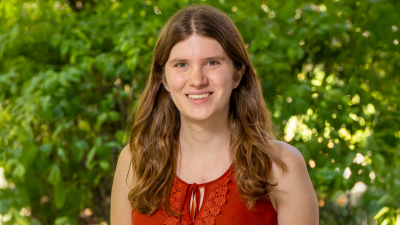
Mae Milano is an Assistant Professor in the Department of Computer Science at Princeton University. She joined in 2024 after earning her Ph.D. from Cornell University in 2020. Her research focuses on designing programming languages to address challenges in distributed systems, with particular emphasis on concurrency safety, language interoperability, and formal verification. Education: Ph.D. in Programming Languages and Systems, Cornell University, 2020 Research Interests: Milano's work bridges programming languages and distributed systems. She develops type systems for safe concurrency (e.g., fearless concurrency ), designs languages for distributed state management (e.g., Gallifrey, Hydro), and explores compiler techniques for interoperability between systems. Her projects include: Fearless Concurrency – Safe shared-memory programming Gallifrey – Language for geographically distributed applications Hydro – Cloud-native programming models Grants & Collaborations: Milano collaborates with researchers like Alvin Cheung (University of Washington) and Joseph M. Hellerstein (UC Berkeley). Her work has been supported by projects such as the Hydro Framework and the Gallifrey language initiative. Labs & Teams: She leads the Princeton Systems Group and collaborates with the Programming Languages Group , fostering interdisciplinary research between PL and distributed systems.
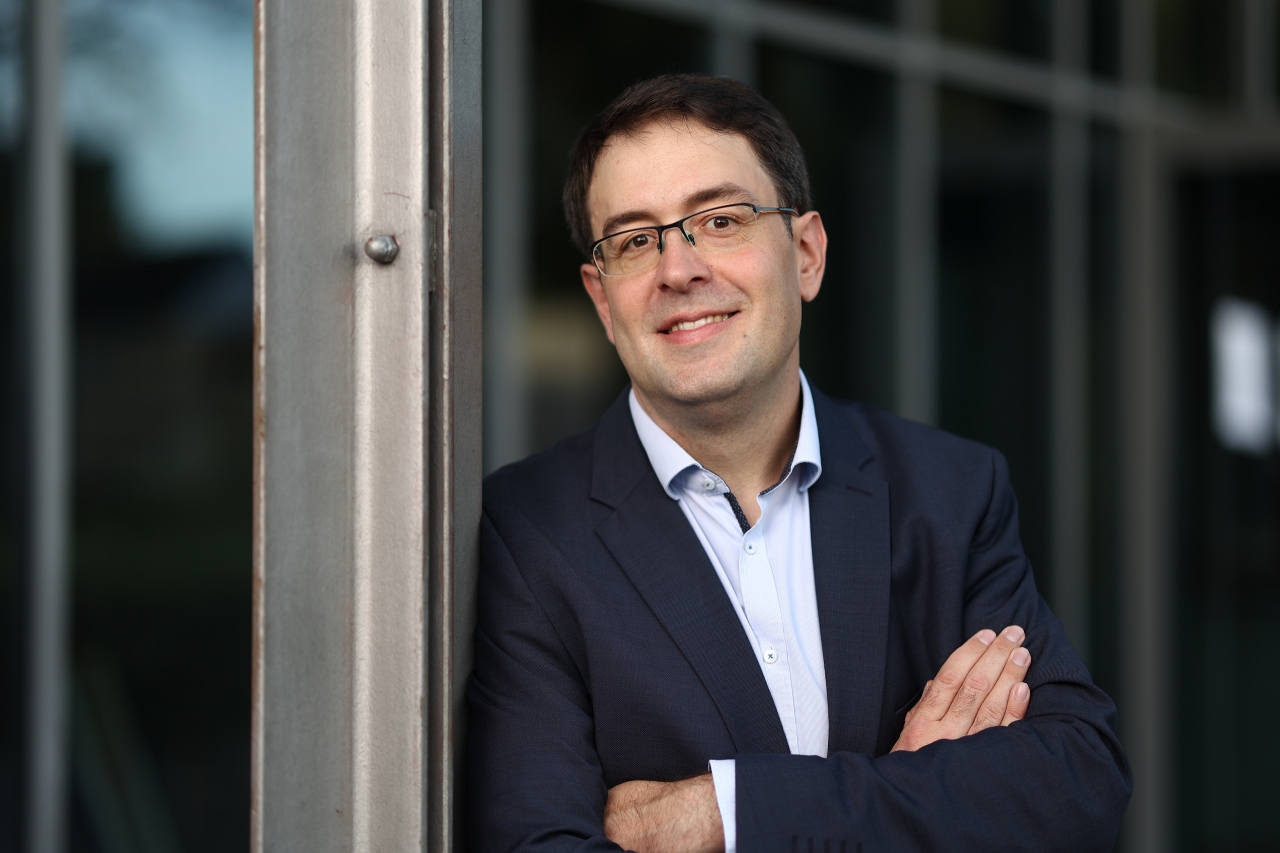
Welf Löwe is a资深 researcher and faculty member at Linnaeus University's Faculty of Technology, Department of Computer Science and Media Technology, and also teaches at Linköping University's Department of Computer and Information Science. His research focuses on data-intensive technologies, software metrics, design pattern detection, and context-aware systems. He leads the Data Intensive Software Technologies and Applications (DISTA) group and contributes to the Linnaeus University Centre for Data Intensive Sciences and Applications (DISA). He actively collaborates on projects like the Data Intensive Applications (DIA) graduate school and the High-Performance Computing Center (HPCC). His work spans machine learning applications in healthcare, forestry, and industrial automation. Recent research includes feature engineering in medical data, skeleton avatar technology for aging studies, and AI-driven diagnostics. He has authored over 150 peer-reviewed publications and participates in interdisciplinary initiatives such as the iSchool project.
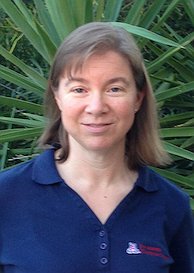
Georgios Manis is an Associate Professor in the Department of Computer Science and Engineering at the School of Engineering, University of Ioannina, Greece. He holds a PhD from the National Technical University of Athens and has been a faculty member at the University of Ioannina since 2002, progressing from Lecturer to Associate Professor in 2018. He has also served as temporary teaching staff at the University of Patras, University of Crete, and University of Ioannina in the late 1990s and early 2000s. Education: B.Sc. in Computer Engineering (Diploma), National Technical University of Athens (NTUA), 1987–1992 MSc in Advanced Methods in Computer Science (Distributed and Parallel Systems), Queen Mary, University of London, 1992–1993 PhD in Computer Engineering, NTUA, School of Electrical and Computer Engineering, 1993–1997 His research interests lie at the intersection of Biomedical Engineering and Computing Systems , with a strong emphasis on Biomedical Signal Processing , Entropy Analysis , and Machine Learning . He has pioneered work in Bubble Entropy —a parameter-free entropy measure—and developed fast algorithms for entropy computation. His work also extends to compiler design and parallel computing, particularly in the automatic parallelization of recursive functions and loops. The trends in his recent publications reflect a dual focus: (1) biomedical applications involving entropy, heart rate analysis, and disease diagnosis using machine learning (especially Random Forests and SVMs), and (2) high-performance computing, including parallelization techniques and compiler optimizations for multi-core and SVP architectures. His research is highly interdisciplinary, combining signal processing, algorithm design, and clinical applications. Scientific Leadership and Recognition: Guest Editor, Special Issue on “Entropy in Biomedical Engineering”, Entropy (MDPI) Member of the IPAN Laboratory, University of Ioannina Active contributor to IEEE, Elsevier, and MDPI journals He has supervised several graduate students and is involved in funded research projects such as Palimpsest and Homore , focusing on smart systems for cultural interaction and elderly monitoring. His advising contributions are evident in co-authored papers with students like Evanthia Tripoliti and Aristeidis Mastoras. He teaches both undergraduate and postgraduate courses, including Compilers I/II and Biomedical Data Analysis . Laboratories and Teams: He is a member of the IPAN lab at the University of Ioannina, which supports interdisciplinary research in informatics and biomedical applications. His collaborative network includes researchers from Greece and abroad, particularly in the fields of biomedical signal analysis and entropy-based methods.
Andrei Popescu is a Senior Lecturer (Associate Professor level) in the Department of Computer Science at the University of Sheffield, where he conducts research in formal methods, proof assistants, and information flow security. He previously held academic positions at Middlesex University and TU Munich. University: University of Sheffield Department: Department of Computer Science Previous Affiliations: Middlesex University, TU Munich His research focuses on the logical foundations and practical applications of proof assistants, particularly Isabelle/HOL. He has made foundational contributions to inductive and coinductive datatypes, syntax with bindings, higher-order logic, and the formal verification of secure systems. His work bridges theoretical logic with real-world systems such as conference management (CoCon) and social media platforms (CoSMeDis). The recent publications highlight a strong trend in formalizing deep logical results (e.g., Gödel’s incompleteness theorems), advancing datatype theory, verifying complex security properties, and applying formal methods to practical systems. His work consistently appears in top-tier venues such as POPL, CAV, ITP, and CSF. Distinguished Paper Award at POPL 2025 Distinguished Paper Award at POPL 2024 Distinguished Paper Award at POPL 2023 RS 3 Best Paper Award for 2012–2013 He has advised PhD students including Lorenzo Gheri and has been actively involved in organizing major academic events such as the Midlands Graduate School, CPP, ITP, and TABLEAUX conferences. He has served on numerous program committees including POPL, ITP, CSF, and CAV, and has led research projects funded by VeTSS and industrial partners. He is a key contributor to the Isabelle proof assistant ecosystem, particularly in the development of the (co)datatype package and foundational consistency results. His work combines deep theoretical insight with practical implementation, making significant impacts in both academia and applied security.
Daniel Höller is a researcher in the Foundations of Artificial Intelligence (FAI) Group at the Department of Computer Science, Saarland University, Germany. He joined the group in January 2020, having previously worked at the Institute of Artificial Intelligence at Ulm University from November 2013 to December 2019. He holds an M.Sc. in Computer Science from Bonn-Rhein-Sieg University, where he studied from 2007 to 2013. Ph.D., Computer Science, Ulm University M.Sc., Computer Science, Bonn-Rhein-Sieg University (2013) Daniel Höller's research lies at the intersection of theoretical and practical aspects of AI planning. His primary focus is on Hierarchical Task Network (HTN) planning, where he has made significant contributions to expressivity analysis, solver development, and the use of classical planning heuristics to guide HTN search. He also works on lifted planning, plan repair, plan recognition, and the integration of planning with deep reinforcement learning. His work often involves formal analysis, heuristic development, and the creation of practical planning systems. He is particularly interested in how planning can be made more efficient, reliable, and applicable to real-world problems, including human-aware applications. His recent publications demonstrate a consistent trend in advancing HTN planning through novel formalisms (e.g., HDDL), sophisticated solving techniques (e.g., progression search, SAT-based approaches), and the development of robust software frameworks (e.g., PANDA, TOAD, LiSAT). His work increasingly bridges planning with learning, exploring how learned models can inform planning and how planning can provide structure for learning. The subfields span formal methods, search algorithms, knowledge representation, and system building. ICAPS 2024 Best Dissertation Award for his thesis on hierarchical planning SoCS 2024 Best Student Paper Award (co-authored) Winner in 4 out of 6 tracks in the 2023 IPC HTN competition ICAPS 2018 Best Student Paper Award ICTAI 2018 Best Paper Award TCTS 2018 Best Paper Award Shortlisted for Best Paper at KI 2020 Daniel Höller has been actively involved in teaching and mentoring, having taught courses on Artificial Intelligence and AI Planning at Saarland University, and previously served as a teaching assistant for a wide range of AI and computer science courses at Ulm and Bonn-Rhein-Sieg Universities. He has received funding through his involvement in the Transregional Collaborative Research Center SFB/Transregio 62 at Ulm University. He has organized and contributed to numerous workshops and conferences, demonstrating strong service to the academic community. Daniel Höller is a core developer of the PANDA planning framework, the TOAD HTN solver, and the LiSAT system for lifted planning. These systems are state-of-the-art tools that implement his research on heuristic search, model transformation, and SAT-based compilation. His work is conducted within the FAI group at Saarland University, a leading research group in automated planning.
Sidharth Kumar is an Associate Professor in the Department of Computer Science at the University of Illinois at Chicago (UIC), where he leads research in high-performance computing and data visualization. He joined UIC in August 2023 after previously working at the University of Alabama at Birmingham. His research focuses on developing scalable algorithms and data structures for data-intensive applications, intersecting HPC, visualization, databases, and machine learning. Education: Ph.D. in Computing (2016) from the University of Utah's Scientific Computing and Imaging Institute, advised by Valerio Pascucci. Bachelor of Technology in Information and Communication Technology (2009) from DAIICT, Gandhinagar, India. Research Interests: Dr. Kumar's work centers on parallel I/O, GPU acceleration, big data processing, and scientific visualization. His projects include: 1) Exascale data management systems, 2) GPU-accelerated web visualization, 3) Declarative analytics frameworks, and 4) Topology-driven analysis for neuroscience and virology. He develops solutions for memory-constrained environments and heterogeneous systems. Publication Trends: Recent works (2023-2025) demonstrate strong focus on GPU-accelerated databases (Datalog optimizations), parallel communication algorithms (all-to-all collectives), memory-efficient visualization techniques (speculative raycasting), and applied topological analysis (brain networks, virus taxonomy). His publications consistently appear in top-tier HPC and visualization venues. Awards & Honors: Best Paper Awards: IEEE HiPC (2019), ISC Hans Meuer (2020), LDAV (2023) Honorable Mention: PacificVis (2025) Poster Awards: SC23 Finalist, HiPC SRS (2021) NSF EPSCoR Research Fellow (2022) Grants & Advising: NSF PPoSS Large: Declarative Analytics ($960K PI) NSF SHF: Scalable I/O Runtime ($300K PI) NSF EPSCoR: Relational Algebra ($265K PI) Advises 6 PhD students in HPC and visualization research Lab & Service: Leads a research team working on exascale computing challenges. Serves on technical committees for SC, ISC, IPDPS, and HiPC conferences. Teaches courses in Database Systems, Algorithms, and Data Visualization.
Dr. Alexander R. Block is an Assistant Professor at the University of Illinois at Chicago (UIC) , specializing in Cryptography and Coding Theory . He focuses on the concrete security and space-efficiency of SNARKs, error-correcting codes , and locally decodable codes . Before UIC, he was a postdoctoral researcher at Georgetown University and University of Maryland , advised by Justin Thaler and Jonathan Katz. His PhD from Purdue University (2022) was supervised by Jeremiah Blocki. His research bridges theoretical and applied aspects, including field-agnostic SNARKs (CRYPTO 2024) with expand-accumulate codes, Fiat-Shamir security analysis of FRI protocols (ASIACRYPT 2023), and memory-hard puzzles in the standard model (SCN 2022). He has contributed to insertion-deletion error codes (CCC 2023) and secure computation with leaky correlations (TCC 2018, CRYPTO 2017). Dr. Block has received multiple scientific awards , including the Emil Stefanov Fellowship (2021) and Purdue Three Minute Thesis Competition Finalist (2022). His teaching includes courses like UIC's CS 505 - Computability and Complexity Theory (Spring 2025), where he emphasizes interactive proofs and zero-knowledge systems . He actively serves on program committees for CRYPTO , EUROCRYPT , and ZKProof Workshop , and has reviewed for leading journals and conferences.
Wayne Kelly is an Associate Professor in the School of Computer Science at Queensland University of Technology (QUT), Faculty of Science. He has over 25 years of academic experience and serves as the Academic Lead for Teaching and Learning and Course Coordinator for the Bachelor of Information Technology degree. PhD in Computer Science, University of Maryland, College Park, 1996 BSc (Hons) in Computer Science, University of Queensland, 1989 His research expertise lies in Programming Languages, Compiler Construction, and Parallel Computing, with significant contributions to High Performance Computing, Big Data, and Bioinformatics. His work has led to collaborations with Microsoft Research and over $2 million in external funding. His recent publications reflect a strong trend in parallel and distributed systems, embedded computing, bioinformatics data analysis, and remote sensing. Key themes include optimization of computational systems, memory management, and scalable data processing. Wayne Kelly has made impactful contributions to both teaching and research, guiding numerous postgraduate students and leading curriculum development in information technology. Optimizing I/O cost and managing memory for bioinformatics A communication model for streaming applications on MPSoC Ruby.NET: a compiler for the Common Language Infrastructure He is actively engaged in real-world technology development, including a project with a vision-impaired student to improve public transportation accessibility, currently trialed by transport authorities in Australia and the US.
Anders Møller is a Professor at the Department of Computer Science , Aarhus University , Denmark. His career spans roles as an author , committee member , and session chair in conferences like SPLASH, OOPSLA, ECOOP, ISSTA, ICSE, and PLDI. Affiliation: Aarhus University Co-founder: Coana Research Focus : Specializing in static and dynamic program analysis for JavaScript, TypeScript, Java, and Node.js applications, his work addresses: Pointer analysis precision in Java Race condition detection in Node.js Library evolution and semantic patching Soundness improvements in static analyzers Type safety in modern languages Concolic execution for web testing Publication Trends : Recent work (2021–2024) emphasizes security-critical static analysis (taint specifications, Node.js security), soundness optimization (approximate interpretation), and program verification (channel-based communication). Earlier work (2013–2018) includes foundational contributions to JavaScript refactoring , Dart type safety , and AJAX race detection . Scientific Recognition : ISSTA 2019 Distinguished Paper Award Leadership Roles : Active in steering committees for SPLASH, ECOOP, and SIGPLAN, with chairs in OOPSLA, ECOOP, and PLDI program committees.
Michelle Strout is a Professor in the Department of Computer Science at the University of Arizona, where she has been faculty since August 2015. Her research focuses on high-performance computing with particular expertise in compiler technologies and parallel systems. Her research interests span multiple domains within computer systems: High Performance Computing for scientific applications Compiler design and optimization techniques Run-time systems for parallel execution Scientific computing methodologies Software engineering for performance-critical systems Dr. Strout has made significant contributions to the field including the Universal Occupancy Vector (UOV) for storage mappings in stencil computations and the Sparse Polyhedral Framework (SPF) for inspector-executor loop transformations. Her work addresses fundamental challenges in parallelization of irregular applications like molecular dynamics simulations. Her scientific recognition includes: NSF CAREER Award (2008) DOE Early Career Award (2010) Dr. Strout is actively involved in the programming languages and high-performance computing communities, serving on program committees for major conferences including PLDI, SPLASH, and PPoPP. She has demonstrated commitment to mentoring through her involvement with PLMW (Programming Languages Mentoring Workshop), where she has served as organizer, session chair, and presenter.
Ludovic Apvrille is a Professor at Telecom Paris (Institut Polytechnique de Paris), where he leads research in the Communications and Electronics (Comelec) department and previously headed the LabSoC (Laboratory on System on Chip). His work focuses on embedded systems design , with particular emphasis on safety, security, and formal verification of complex systems including automotive applications, drones, and cyber-physical systems. Research Areas: Embedded Systems, Cybersecurity, Model-Driven Engineering, Formal Verification, AI-assisted Design Key Tools: TTool, SysML-Sec, AVATAR, SMASHUP, DIPLODOCUS His recent publications analyze security vulnerabilities in RISC-V architectures using the gem5 simulator, while his ongoing work explores AI integration in system modeling and unified verification techniques for hardware/software co-designs. He actively supervises research projects in safety-security-performance trade-offs and microarchitectural security , with applications to autonomous vehicles and critical infrastructure systems. Grants & Projects: EVITA project, PEPR-5G HISEC, MoVe4SPS, PEPR-Security ARSENE
Philipp Schuster is a researcher at the University of Tübingen, Germany, specializing in programming languages, compiler design, and functional programming. His work focuses on effect handlers, type systems, and efficient code compilation, with a strong emphasis on lexical scope and formal verification. His research contributions include innovations in capability-passing style for effect handlers, direct-style compilation, and monomorphization techniques. He has actively participated in program committees and artifact evaluations for major conferences like ICFP, SPLASH, and APLAS. Key trends in his publications revolve around effect handling, lambda calculus, type safety, and compiler optimization. His work bridges theoretical foundations with practical implementations, aiming to improve modularity and runtime efficiency in functional programming languages. He has served on program committees and artifact evaluation panels for conferences such as ICFP, SPLASH, APLAS, and HOPE, demonstrating leadership and collaboration in advancing programming language research.
Dr. Muhammad Shahbaz is the Kevin C. and Suzanne L. Kahn New Frontiers Assistant Professor in Computer Science at Purdue University. He specializes in designing domain-specific abstractions, compilers, and architectures for emerging workloads such as machine learning and self-driving networks. His research bridges networking, machine learning, and computer architecture to create high-performance, scalable systems. Shahbaz holds a Ph.D. and M.A. in Computer Science from Princeton University and a B.E. in Computer Engineering from the National University of Sciences and Technology (NUST). Before joining Purdue, he conducted postdoctoral research at Stanford University and worked as a Research Assistant at Georgia Tech and the University of Cambridge. His research interests include Networking and Operating Systems, Artificial Intelligence, Machine Learning, Computer Architecture, Distributed Systems, and Programming Languages/Compilers. He has developed influential open-source systems like Pisces, SDX, and NetFPGA-10G, which are widely adopted in industry and academia. Shahbaz has received prestigious awards including the Facebook, Google, and Intel Research Awards; IETF/IRTF ANRP Prize; ACM SOSR Systems Award; and APNet Best Paper Award. His work focuses on advancing edge computing, smartNICs, in-network machine learning, and scalable distributed systems. His research portfolio includes contributions to network caching, hardware acceleration, and AI-driven network optimization. He leads projects like CAREER (per-packet AI on heterogeneous data planes) and EdgeScaler (smart auto-scaling for 5G edge networks). His systems address challenges in tail latency, resource harvesting, and scalable multicast in modern networks.
Elsa Gunter is a Research Professor and Senior Lecturer at the Siebel School of Computing and Data Science, part of the Grainger College of Engineering at the University of Illinois Urbana-Champaign. She holds a Ph.D. in Mathematics from the University of Wisconsin (1987). Her research focuses on programming languages, formal methods, software engineering, and interdisciplinary computing education. Key research areas include the semantics of programming languages, compiler optimization, formal verification frameworks, and integrating computing into interdisciplinary education. She teaches courses like CS 421 (Programming Languages & Compilers), CS 431 (Embedded Systems), and CS 477 (Formal Software Development Methods). Her work emphasizes practical applications of formal methods in software development and pedagogical innovations in computing education. Recent projects explore challenges in interdisciplinary computing curricula and the formal semantics of programming languages. Elsa’s academic contributions span over four decades, with notable work on theorem proving tools (e.g., HOL90), compiler correctness frameworks, and educational technologies for programming courses.
Talia Ringer is an Assistant Professor at the University of Illinois Urbana-Champaign, affiliated with the Grainger College of Engineering and the Siebel School of Computing and Data Science. Her research focuses on proof engineering, formal verification, and bridging neural and symbolic proof automation. She holds a PhD in Computer Science from the University of Washington and a BS in Mathematics and Computer Science from the University of Maryland. Prior to academia, she worked at Amazon as a software engineer. Ringer is known for founding initiatives like SIGPLAN-M and the Computing Connections Fellowship, fostering inclusivity in computer science research. She has received prestigious awards including the 2023 ACM SIGPLAN Distinguished Service Award and the DARPA Young Faculty Award. Education: PhD, University of Washington (2021); BS, University of Maryland (2012) Research Areas: Dependent Type Theory, Verification, Interactive Theorem Proving, Proof Automation, Formal Methods Awards: ACM SIGPLAN Distinguished Service Award (2023), ESEC/FSE Distinguished Paper Award (2023), DARPA Young Faculty Award (2023) Her work emphasizes making formal verification accessible to programmers through tools like Proof Repair and Baldur , while advocating for ethical AI research and LGBTQ+ inclusivity. She advises a diverse team of graduate and undergraduate students in the Illinois Theorem Provers (ITP) lab, exploring topics including proof repair, reinforcement learning for proofs, and quotient type equivalences.