
James R. Goodman is a Professor in the Department of Electrical and Computer Engineering at the University of Wisconsin-Madison, affiliated with the College of Engineering. His research focuses on transactional memory, speculative execution, cache coherence, and parallel computing. University: University of Wisconsin-Madison School: College of Engineering Department: Electrical and Computer Engineering Email: goodman@cs.wisc.edu Research Interests include transactional memory for concurrent programming, speculative execution techniques, and cache coherence protocols. He has contributed to advancements in parallel computing architectures and distributed systems. Scientific Awards ACM Fellow (2011) Eckert-Mauchly Award Recipient (2013) Publications span topics from computer architecture to interdisciplinary studies in biotechnology and history. His recent work emphasizes concurrency, memory systems, and high-performance computing. Advising and Contributions include mentoring students and leading research initiatives. He has received grants for projects in computer architecture and speculative execution technologies.
جستجوی استاد راهنمای دانشگاهی
برای مسیر پژوهشیتان، استاد راهنما، استاد دانشگاه و پژوهشگر مناسب را پیدا کنید و با آنها ارتباط بگیرید.
نمایش ۴۶-۶۰ از ۱۵۹ استاد راهنما
اطلاعات پروفایلها از صفحات عمومی دانشگاهها گرفته شده و ممکن است بهروز نباشد.
Alessandro Biondi serves as Associate Professor of Computer Engineering at the Scuola Superiore Sant'Anna in Pisa, Italy, where he conducts research at the Real-Time Systems (ReTiS) Laboratory. His expertise centers on real-time, safe, and secure cyber-physical systems with critical applications in automotive and railway domains. His academic credentials include: Computer Engineering degree, cum laude , University of Pisa (within excellence program) PhD in Emerging Digital Technologies (Embedded Systems curriculum), cum laude , Scuola Superiore Sant'Anna (2017) Biondi's research spans real-time systems design, operating systems, hypervisors, synchronization protocols, embedded optimization, and formal scheduling analysis. His work bridges theoretical foundations with industrial implementation, emphasizing safety and security for mission-critical infrastructure through rigorous mathematical modeling and practical system development. Recent publications (2023-2025) demonstrate concentrated advancements in real-time scheduling optimization, memory management for safety-critical systems, and adversarial defense mechanisms in vision applications. Key trends include deterministic communication protocols for AUTOSAR, end-to-end latency minimization in distributed systems, and hardware-aware security solutions for heterogeneous SoCs, reflecting strong industry-academia collaboration. His scientific contributions have earned significant recognition: ACM SIGBED Early Career Award (2019) IEEE TCCPS Early Career Award (2023) Six Best Paper Awards Best Journal Paper Award (IEEE Transactions on Industrial Informatics) EDAA Outstanding Dissertation Award (2017) Additional honors: Outstanding Paper Award, Best Presentation Award, Best Paper Nomination Biondi leads industrial research projects for automotive and railway safety-critical systems while participating in European Commission-funded initiatives. He co-founded spin-offs Accelerat (specializing in predictable cyber-physical systems) and Wriggle Solutions (acquired IP for real-time tire monitoring), demonstrating his commitment to translating research into commercial solutions. His editorial service includes Associate Editor roles for IEEE TETC, Journal of Real-Time Systems, and LITES. As a core member of the ReTiS Laboratory, Biondi collaborates within a high-impact research ecosystem focused on advancing real-time computing theory and practice. The lab maintains deep industry partnerships and drives innovation in scheduling algorithms, security protocols, and optimization techniques for next-generation embedded platforms.
Andrey I. Lyakhov is a Professor and Doctor of Computer Science at the Institute for Information Transmission Problems of the Russian Academy of Sciences. He serves as the Head of Laboratory №18 and has been active since 1959. His research focuses on wireless networks, particularly IEEE 802.11 and 802.16 protocols. Position: Laboratory Chief Affiliation: Institute for Information Transmission Problems, Russian Academy of Sciences Research Interests: Wireless Networks, MAC Protocol Analysis, Network Performance, Distributed Control, Multicast QoS, Channel Assignment His work includes analytical modeling of data transmission, beaconing in mesh networks, and studies on network unfairness and congestion. He has contributed to patents in wireless sensor networks and piconet beacon management. Notable publications span wireless LANs, WiMAX, and sensor network optimization. Lyakhov's research has involved collaborations with international conferences and journals, focusing on throughput estimation, channel contention, and quality of service in wireless systems. Recent publications include studies on bandwidth piggybacking (2010), intra-flow interference in mesh networks (2010), and multicast QoS support in WLANs (2007). Earlier works from 1983-2008 cover foundational topics in queueing theory, cache efficiency, and distributed control systems.
Guillaume Ducمشاهده پروفایل
دانشیار
Guillaume Duc is an Associate Professor (Maître de Conférences) at Télécom Paris , affiliated with the Information Processing and Communication Laboratory (LTCI) and the Department of Computer Science and Networks . His research focuses on embedded systems security, particularly hardware/software interaction, side-channel attacks, and resilient architectures. Education: PhD in Hardware, Software and Cryptographic Support for Secure Process Execution , École Nationale Supérieure des Télécommunications de Bretagne (2007) Master's (DEA) in CryptoPage – an architecture to run secure processes , Université de Rennes 1 (2004) Research Interests: His work spans embedded systems security , with a focus on: Hardware/Software Interaction: Exploring vulnerabilities and defenses at the intersection of hardware and software. Side-Channel Attacks: Investigating power analysis, electromagnetic attacks, and countermeasures, including organizing the DPA Contest . Resilient Architectures: Designing secure memory architectures, FPGA-based protections, and cloud-embedded system trustworthiness. Publications & Patents: He has published extensively in top-tier venues such as Journal of Cryptographic Engineering , ACSAC , and CARDIS , with recent works addressing AI-driven automotive security (2024) and system cost-optimization for security (2019). He holds multiple patents in non-intrusive fault detection and secure electronic component monitoring. Teaching & Leadership: Academic lead for the engineering program at Télécom Paris. Responsible for courses like INF107: From Logic Gates to Operating Systems and SE203: Microprocessor System Tools . Co-instructor for Rust programming modules in executive education. Labs & Teams: He leads research within the Autonomous Critical Embedded Systems (ACES) team at LTCI, collaborating on secure embedded systems for automotive and cloud applications.
Gaoyang Daiمشاهده پروفایل
استادیار
Dr. Gaoyang Dai is an Assistant Professor at Uppsala University's Department of Information Technology, specializing in Computer Systems research. His work focuses on real-time systems, embedded computing, and scheduling algorithms for complex task models. Research interests include: Deterministic timing analysis in distributed systems Priority inversion handling in multicore environments Non-preemptive node scheduling for DAG tasks Cyber-physical system design paradigms Deep learning applications in wireless networks Recent publications demonstrate expertise in IEEE Transactions and DATE conference proceedings, with particular emphasis on sporadic DAG task scheduling and resource sharing protocols. Collaborative work includes development of the TIMES-Pro toolchain for CPS implementation.
Prof. Dr. Matthias Rosenthal is a Professor of Multiprocessor and Real-Time Systems at the ZHAW School of Engineering, Zurich University of Applied Sciences (ZHAW), where he also serves as Head of the Research/Focus Area Realtime Platforms. He holds a PhD and MSc in Electrical Engineering from ETH Zurich (1993–1997). His research focuses on multiprocessor systems, hybrid multicore architectures, distributed signal processing, embedded GPU computing, and real-time embedded systems. Key projects include In-Flight GNSS Interference Detection, dAIrector (automated multi-camera live production), and novel AFM techniques for industrial quality control. He has led over 15 industry-focused projects, including collaborations with Innosuisse and companies like Harman International. His work emphasizes real-time systems, FPGA-GPU co-design, and embedded AI solutions. Education: PhD (ETH Zurich, 1997), MSc (ETH Zurich, 1993) Awards: CTI Startup Label (2005) Teaching: Lectures on digital systems, real-time computing, and information theory Notable contributions include advancements in embedded machine learning for food waste management, secure boot concepts for Zynq MPSoC, and low-latency wireless video systems. His research bridges theoretical computer engineering with practical industrial applications.
Mats Brorsson is a Professor at the Division of Software and Computer Systems , KTH Royal Institute of Technology. His research spans multiple areas of computer architecture and parallel computing, with a focus on system software, energy-aware architectures, and performance debugging tools. He is actively involved in projects like the PaPP ARTEMIS collaboration and coordinates the KTH-SICS Scalable Computing Systems initiative. Research Interests : Mats Brorsson's work primarily addresses parallel computing , task-based programming models (e.g., OpenMP), and energy-efficient computer architectures . He has made significant contributions to NUMA system optimization , work-stealing schedulers , and runtime systems for high-performance computing. Professional Activities : Mats Brorsson serves as coordinator for the PaPP ARTEMIS project and is a member of the KTH-SICS Collaboration in Scalable Computing Systems. His publications reflect deep engagement with task scheduling , cache coherence protocols , and adaptive resource management for parallel systems.
Manuel Eugenio Acacio Sanchez is a Professor in the Department of Computer Engineering and Technology at the University of Murcia's Faculty of Informatics. His research focuses on computer architecture, parallel systems, cache coherence, and hardware transactional memory. He earned his Ph.D. from the University of Murcia in 2003 with a thesis on directory-based coherence protocols for distributed-shared memory multiprocessors. Doctorate: Universidad de Murcia (2003) Academic Rank: Professor Research Interests include Hardware transactional memory Cache coherence protocols GPU and DNN accelerators Energy-efficient computing Parallel architectures Recent Article Trends emphasize cycle-level simulation tools (e.g., STONNE), hardware transactional memory optimizations, and neural network accelerator design. His work bridges microarchitectural improvements and application-specific efficiency in multicore systems. Labs & Teams : Affiliated with the Computer Architecture and Parallel Systems research group, previously part of the Architecture and Parallel Computing group.
Prof. Jesper Larsson Träff is a Full Professor and Head of the Research Unit in Parallel Computing at Technische Universität Wien (TU Wien). His academic role is centered within the Department of Computer Engineering. He holds an MSc and PhD, and has contributed extensively to the field of parallel computing through his research and leadership in international projects. His research focuses on parallel algorithms, scheduling, and optimization of the Message Passing Interface (MPI), with emphasis on high-performance computing (HPC) systems and distributed architectures. Key projects include the Process Mapping initiative (2019–2024), Autotune (2021–2025), and contributions to Exascale Programming Models. He has also led efforts in evaluating MPI performance tools and their reproducibility challenges. Research Areas: Parallel Algorithms, MPI Optimization, HPC, Process Mapping, Collective Communication, and Memory Models. Notable Achievements: Awarded the Best Paper at EuroMPI 2014 and recognized by the Innovation Radar for his work on PGAS-based MPI interoperability in 2018. Teaching: Teaches courses such as Advanced Multiprocessor Programming, Bachelor/Master Thesis supervision, and seminars in Computer Engineering and Theoretical Computer Science. Prof. Träff’s advising includes students researching topics like lock-free data structures, MPI datatype optimization, and task scheduling. His grants span Austrian and EU funding bodies, addressing challenges in exascale computing and reproducible experimental research. He is affiliated with the Vienna Mapping and Sparse Quadratic Assignment (Vienna Mapping) project and actively contributes to international workshops and conferences.
Wayne Kellyمشاهده پروفایل
دانشیار
Wayne Kelly is an Associate Professor in the School of Computer Science at Queensland University of Technology (QUT), Faculty of Science. He has over 25 years of academic experience and serves as the Academic Lead for Teaching and Learning and Course Coordinator for the Bachelor of Information Technology degree. PhD in Computer Science, University of Maryland, College Park, 1996 BSc (Hons) in Computer Science, University of Queensland, 1989 His research expertise lies in Programming Languages, Compiler Construction, and Parallel Computing, with significant contributions to High Performance Computing, Big Data, and Bioinformatics. His work has led to collaborations with Microsoft Research and over $2 million in external funding. His recent publications reflect a strong trend in parallel and distributed systems, embedded computing, bioinformatics data analysis, and remote sensing. Key themes include optimization of computational systems, memory management, and scalable data processing. Wayne Kelly has made impactful contributions to both teaching and research, guiding numerous postgraduate students and leading curriculum development in information technology. Optimizing I/O cost and managing memory for bioinformatics A communication model for streaming applications on MPSoC Ruby.NET: a compiler for the Common Language Infrastructure He is actively engaged in real-world technology development, including a project with a vision-impaired student to improve public transportation accessibility, currently trialed by transport authorities in Australia and the US.
Deniz Turgay Altılar is a Professor in the Department of Computer Engineering at Istanbul Technical University (ITU), Faculty of Computer and Informatics. He has been an active academic since 1988, progressing from Research Assistant to Associate Professor in 2013 and later achieving the rank of Professor. His work is centered on distributed systems, cloud computing, and computer networks, with expanding interests in AI applications for agriculture and healthcare. Education Bachelor of Science, Control and Computer Engineering, Istanbul Technical University (1984–1988) Master of Science, Computer Engineering, Istanbul Technical University (1988–1992) Research experience at Queen Mary and Westfield College, University of London (1998–2002) His research interests include parallel and distributed systems, cloud computing, secure computation, deep learning, and cybersecurity. He applies these to interdisciplinary domains such as corn yield prediction, radar identification, and medical diagnostics using ECG signals. His recent work emphasizes efficient and secure AI systems. The publication trends show a strong focus on distributed deep learning, straggler mitigation, secure multiparty computation, and hardware-based attack detection. His work bridges theoretical computer science with real-world applications in agriculture, medicine, and national security. Recent articles highlight innovation in lightweight AI models, privacy-preserving computation, and cross-layer system design. Scientific Awards No specific awards are mentioned in the provided text. He actively supervises students and leads major research projects, including those on cache side-channel attacks in multi-tenant clouds, distributed OpenCL platforms, real-time scheduling, and molecular communication in nano-networks. These projects reflect sustained external funding and leadership in cutting-edge computing domains. His research group collaborates across disciplines and institutions, contributing to both national and international scientific communities. Labs and Teams : While not explicitly named, his role as Principal Investigator on multiple projects suggests leadership in a research lab focused on distributed systems, cybersecurity, and applied AI at ITU.
- Large-scale Scientific Computing
- Computational Linear Algebra
- Parallel and Distributed Processing
- +۴ مورد دیگر
Professor Efstratios Gallopoulos is a faculty member at the Department of Computer Engineering & Informatics , University of Patras, where he holds the Division of Computer Software . He currently serves as Deputy Department Chair and Director of the High Performance Information Systems Laboratory (HPCLab) . His academic career spans multiple institutions including the University of Illinois at Urbana-Champaign, University of California Santa Barbara, and collaborations with INRIA Rennes and NASA Goddard Space Flight Center. Education : B.Sc. in Mathematics (First Class Honours) from Imperial College London (1979) Ph.D. in Computer Science from University of Illinois at Urbana-Champaign (1985) Research Focus : His work centers on Large-scale Scientific Computing with emphasis on Computational Linear Algebra , Parallel/Distributed Processing , and Data Mining . Recent publications highlight innovations in Randomized Numerical Linear Algebra , Heterogeneous Cluster Scheduling , and GPU-Accelerated Inversion Techniques . Article Trends : His research bridges High-Performance Computing with Data Science , focusing on scalable algorithms for Matrix Computations , Recommender Systems , and Biomarker Analysis . The work spans theoretical advancements (e.g., Givens Rotations ) and practical implementations (e.g., pylspack library). Scientific Awards : NASA Group Achievement Award for Massively Parallel Processor (MPP) development ACM SIGWEB Hypertext Ted Nelson Newcomer Award (2012) Advising and Grants : He has advised numerous research projects funded by European Research Council , Hellenic Foundation for Research and Innovation (HFRI) , and international bodies like the US National Science Foundation. Notably, he co-organized the 2015 Gene Golub SIAM Summer School and served as Chair of the SIAM Gene Golub Summer School Committee (2020-24). Labs and Teams : He leads the High Performance Information Systems Laboratory (HPCLab) and co-directs the interdisciplinary graduate program Data Driven Computing and Decision Making . His teams have contributed to the Cedar vector multiprocessor project at UIUC and Text-to-Matrix Generator (TMG) tools for data mining.
Chronopoulos Antonis is a Professor at the University of Patras, specializing in distributed computing, grid and cloud computing, numerical algorithms, high performance computing, and scientific computing. His research spans both theoretical numerical methods and practical applications in distributed systems. His primary research interests focus on Distributed Computing , Grid and Cloud Computing , Numerical Algorithms , High Performance Computing , and Scientific Computing . His work bridges theoretical numerical methods with practical distributed systems implementations, particularly in the areas of load balancing, parallel iterative methods, and computational efficiency. Analysis of his publication record reveals a career trajectory that began with foundational work in numerical linear algebra and iterative methods in the late 1980s and 1990s, then evolved toward distributed and cloud computing applications in the 2000s and 2010s. His recent work shows increasing focus on healthcare applications of AI and machine learning, particularly in medical diagnostics and decision support systems. His research demonstrates consistent contributions to both theoretical numerical methods and practical distributed computing systems, with recent work expanding into healthcare applications of artificial intelligence.
Francisco Tirado is a Full Professor of Computer Architecture at Complutense University of Madrid since 1986. He has held leadership roles including Vice-Chancellor for Research (2012-2015), Dean of the Faculty of Physics (1994-2002), and Director of the Complutense Supercomputing Center (2002-2007). He is a founding member of the Spanish Society for Computer Science (SCIE) and Spanish Society for Computer Architecture (SARTECO). His research focuses on power-aware computing, heterogeneous systems, bioinformatics, and hardware design automation. He has authored over 242 publications and supervised 15 PhD theses. His professional service includes chairing 138 international conferences and serving on numerous committees for EUROMICRO, IEEE, and national research agencies. Education: No explicit details provided, but has been active at Complutense University since 1978. Affiliations: Member of COSCE Executive Board (2012), IEEE Senior Member (2005), and EUROMICRO Board (1991-2004). Research Interests: - Optimizing energy efficiency in high-performance computing systems - Design of heterogeneous architectures and accelerators - Bioinformatics applications through hardware/software co-design - Parallel programming models for emerging architectures - Automation tools for FPGA and embedded systems development Conference Contributions: Played multiple roles (General Chair, Program Chair) for major events like ParCo, HPCA, and EUROMICRO PDP conferences. Delivered 64 keynote/plenary lectures globally. Scientific Awards: Doctor 'Honoris Causa' from universities in Spain, Paraguay, and Peru 2013 National Computer Science Award IEEE Senior Membership Advising: Supervised 15 PhD students. Active in technology transfer contracts with industry. Labs/Teams: Founder and leader of the ArTeCS research group at Complutense University, specializing in computer architecture and high-performance computing innovations.
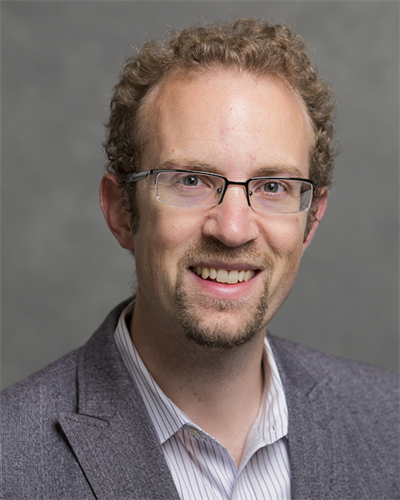
Mark Hempstead is a Professor in the Department of Electrical and Computer Engineering and Computer Science at Tufts University's School of Engineering. He leads the Tufts Computer Architecture Lab (TCAL) and has made significant contributions to computer architecture, systems research, and interdisciplinary applications of engineering tools to human subject research. Dr. Hempstead received his BS in Computer Engineering from Tufts University (Summa Cum Laude), and his MS and Ph.D. in Engineering from Harvard University, where he worked with Professors David Brooks and Gu-Yeon Wei. Prior to joining Tufts University in 2015, he was an Assistant Professor at Drexel University. His research focuses on increasing energy efficiency across circuits, architecture, and systems boundaries. Current research areas include: Computer architecture and systems Power-aware computing and embedded systems Mobile computing and machine learning systems Workload characterization and quantum computing Learning sciences and computer systems for human subjects research His group has published in several research communities including high-performance computer architecture, workload characterization, design automation, mobile systems, embedded systems, quantum computing, and Internet-of-Things. Recent publications show a strong trend toward machine learning systems, quantum computing architecture, and thermal management in modern processors, with applications spanning from embedded systems to high-performance computing platforms. Dr. Hempstead has received numerous scientific awards and honors: NSF CAREER award (2014) Allen Rothwarf Award for Teaching Excellence from Drexel University (2014) Excellence in Research Award from Drexel College of Engineering (2014) Winner of industry-sponsored SRC student design contest (2006) Best Paper Nominee in HPCA 2012 He has secured significant research funding including NSF Engineering Resource Center for Engineering Tools for Innovation and Research in Education (EnTIRE), multiple NSF grants including a CAREER award, DARPA funding, and industry collaborations with Google, Honeywell, and Facebook. His current research grants focus on hardware/software error detection, STEM education understanding, next-generation memory systems, and PCB assurance using thermal side-channel analysis. Dr. Hempstead leads the Tufts Computer Architecture Lab (TCAL), which investigates methods to increase energy efficiency across circuits, architecture, and systems. The lab has explored applications ranging from embedded systems and IoT to chip multiprocessors and high-performance computing. Current projects include systems support for machine learning, non-volatile memory design, thermal hotspot management, security implications of thermal side channels, automatic hardware accelerator generation, privacy-aware databases, and quantum computer architecture for ion-trap systems.