معرفی
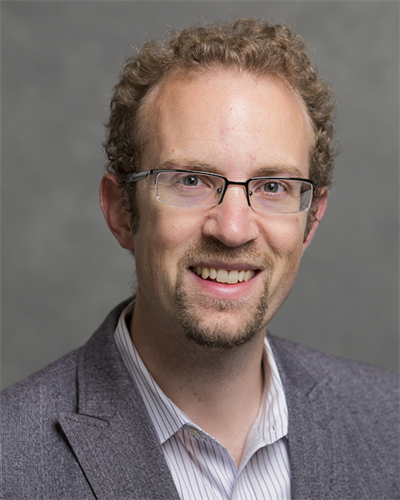
Mark Hempstead is a Professor in the Department of Electrical and Computer Engineering and Computer Science at Tufts University's School of Engineering. He leads the Tufts Computer Architecture Lab (TCAL) and has made significant contributions to computer architecture, systems research, and interdisciplinary applications of engineering tools to human subject research.
Dr. Hempstead received his BS in Computer Engineering from Tufts University (Summa Cum Laude), and his MS and Ph.D. in Engineering from Harvard University, where he worked with Professors David Brooks and Gu-Yeon Wei. Prior to joining Tufts University in 2015, he was an Assistant Professor at Drexel University.
His research focuses on increasing energy efficiency across circuits, architecture, and systems boundaries. Current research areas include:
- Computer architecture and systems
- Power-aware computing and embedded systems
- Mobile computing and machine learning systems
- Workload characterization and quantum computing
- Learning sciences and computer systems for human subjects research
His group has published in several research communities including high-performance computer architecture, workload characterization, design automation, mobile systems, embedded systems, quantum computing, and Internet-of-Things. Recent publications show a strong trend toward machine learning systems, quantum computing architecture, and thermal management in modern processors, with applications spanning from embedded systems to high-performance computing platforms.
Dr. Hempstead has received numerous scientific awards and honors:
- NSF CAREER award (2014)
- Allen Rothwarf Award for Teaching Excellence from Drexel University (2014)
- Excellence in Research Award from Drexel College of Engineering (2014)
- Winner of industry-sponsored SRC student design contest (2006)
- Best Paper Nominee in HPCA 2012
He has secured significant research funding including NSF Engineering Resource Center for Engineering Tools for Innovation and Research in Education (EnTIRE), multiple NSF grants including a CAREER award, DARPA funding, and industry collaborations with Google, Honeywell, and Facebook. His current research grants focus on hardware/software error detection, STEM education understanding, next-generation memory systems, and PCB assurance using thermal side-channel analysis.
Dr. Hempstead leads the Tufts Computer Architecture Lab (TCAL), which investigates methods to increase energy efficiency across circuits, architecture, and systems. The lab has explored applications ranging from embedded systems and IoT to chip multiprocessors and high-performance computing. Current projects include systems support for machine learning, non-volatile memory design, thermal hotspot management, security implications of thermal side channels, automatic hardware accelerator generation, privacy-aware databases, and quantum computer architecture for ion-trap systems.