Gregory Michael Peck is an Associate Professor and Director of Undergraduate Studies for the Plant Sciences Major at Cornell University's School of Integrative Plant Science, Horticulture Section. His research focuses on sustainable tree-fruit production, particularly in organic apple systems , cider apple germplasm evaluation , and crop-load management through pollen tube growth modeling . Award-winning educator (2021 Cornell Teaching, Advising & Mentoring Award) 2018 Grower Advocate of the Year (American Cider Association) Active in outreach through field days, extension publications, and social media Peck's work spans tree-fruit physiology , soil health , and mechanization of orchard practices . He co-teaches Cornell's popular cider appreciation course with microbiologist Kathy Arnink, combining apple production science with fermentation expertise. His research explores phenolic development , nitrogen management , and yeast interactions in cider production systems. Recent publications highlight collaborations in rootstock effects , compost applications , and fermentation chemistry . Peck's career has included work in California, Washington, New York, and Virginia, with training spanning horticulture, plant physiology, soil science, and agricultural economics.
John Harry Evans is the III Katz Alumni Professor of Accounting at the Department of Accounting, Katz School of Business, University of Pittsburgh. His research focuses on economic perspectives of accounting phenomena, analytical models of incentives, experimental studies in managerial and tax reporting, and empirical investigations of healthcare incentives. He teaches courses in Financial Accounting, Financial Statement Analysis, Managerial Accounting, and Strategic Cost Management. Research spans incentive design, corporate governance, healthcare accounting, and empirical methodologies. Recent publications address CEO turnover, physician compensation, tax reporting ethics, and organizational incentive structures. Awarded multiple honors including the Outstanding Management Accounting Paper Award (2012), Provost Award for Excellence in Mentoring (2011), and multiple Best Paper Awards across journals. Active in professional service as a financial consultant to the Department of Defense and expert witness in legal cases. Designed financial analysis training programs for healthcare managers at University of Pittsburgh Physicians and Highmark Insurance Company.
Benedikt Günther is a research scientist at the Technical University of Munich (TUM) working within the Chair of Biomedical Physics led by Prof. Dr. Franz Pfeiffer. His research focuses on the Munich Compact Light Source (MuCLS), a laboratory-scale inverse Compton X-ray source that provides synchrotron-like radiation for biomedical applications. Günther plays a key role in developing, optimizing, and characterizing this innovative technology, contributing to both its fundamental physics and practical medical applications. His primary research interests center around X-ray physics and imaging techniques, particularly laser enhancement cavities for inverse Compton X-ray sources, X-ray microscopy, dynamic phase-contrast imaging, and X-ray spectroscopy. Günther's work bridges fundamental physics with practical medical applications, developing instrumentation that brings synchrotron-quality imaging to conventional laboratory settings. His research has significant implications for improving medical diagnostics while making advanced imaging techniques more accessible. Analysis of Günther's publication record reveals a consistent focus on advancing compact X-ray source technology and its applications. His work demonstrates expertise in both theoretical modeling and experimental implementation, with publications spanning instrument development, imaging techniques, and specific medical applications. The research shows progression from fundamental source characterization to increasingly sophisticated biomedical applications, particularly in breast imaging, dental diagnostics, and materials science. 2019 Best Poster Award at the combined meeting of the 68th Denver X-ray Conference (DXC) & 25th International Congress on X-ray Optics and Microanalysis (ICXOM) for 'Full-Field Structured Illumination Super-Resolution X-ray Transmission Microscopy' Günther regularly presents his work at major international conferences including the International Particle Accelerator Conference, High-Brightness Sources and Light-driven Interactions Congress, and specialized X-ray imaging meetings. His research is conducted within the Munich Compact Light Source facility, a collaborative project involving physicists, engineers, and medical researchers working to develop laboratory-scale synchrotron technology for widespread biomedical use.
Scott McCabe is a Professor of Marketing at Birmingham Business School, University of Birmingham. He earned his PhD from the University of Derby in 2001, focusing on visitor motivations in the Peak District National Park, and holds an MA in Leisure and Tourism Studies from the University of North London (1993) and an HND in Leisure Studies from the University of Salford (1991). Current co-editor in Chief of the Annals of Tourism Research Editorial board member of Tourism Management Elected fellow of the International Academy for the Study of Tourism (2019+) His research spans social tourism , responsible tourism , tourist emotions , and socio-linguistic methodology , with significant work on wellbeing outcomes from supported holidays for disadvantaged families. He has contributed to Annals of Tourism Research , Journal of Travel Research , and other top-tier journals. Recent publications address topics like qualitative research sampling , tourism theory , dark tourism motivations , and smart destination engagement . His work combines tourism policy critique , consumer behavior analysis , and methodological innovation . Scientific awards include fellowships and leadership roles in international tourism research committees. He has served as VP for the International Sociological Association's Tourism Research Committee and co-chairs the Academy of Marketing's Tourism Marketing SIG.
Sunil K. Agrawal is a Professor of Mechanical Engineering and Professor of Rehabilitation and Regenerative Medicine at Columbia University, where he directs a highly interdisciplinary rehabilitation robotics program bridging the School of Engineering and Applied Sciences and the College of Physicians and Surgeons. His research focuses on developing robotic systems to restore and enhance human mobility for individuals with neurological disorders, pediatric conditions, and age-related decline. Education: PhD in Mechanical Engineering, Stanford University, 1990 MS in Mechanical Engineering, Ohio State University, 1986 BS in Mechanical Engineering, Indian Institute of Technology (IIT) Kanpur, 1984 Research Focus: Dr. Agrawal’s work centers on rehabilitation robotics , where he integrates dynamic systems, control theory, and optimization to create robotic devices that assist in gait training, balance improvement, and functional movement restoration. His studies span stroke, Parkinson’s disease, cerebral palsy, vestibular disorders, and spinal cord injury, using devices like the Tethered Pelvic Assist Device (TPAD) and robotic exoskeletons. Scientific Honors: Machine Design Award, ASME (2016) Robotics and Mechanisms Award, ASME (2016) Fellow, American Institute of Medical and Biological Engineering (AIMBE) (2016) Fellow, American Society of Mechanical Engineers (ASME) (2004) Alexander von Humboldt Foundation U.S. Senior Scientist Award (2007) Friedrich Wilhelm Bessel Research Award (2002) Presidential Faculty Fellow Award, The White House (1994) Research Collaborations & Funding: Dr. Agrawal collaborates with faculty across Neurology, Rehabilitation Medicine, Pediatric Orthopedics, Otolaryngology, Geriatrics, and Psychiatry. His work is supported by the National Science Foundation, National Institutes of Health, and the Spinal Cord Injury Research Board. Laboratory & Outreach: He leads an active research group focused on translational robotic systems, with ongoing clinical trials for stroke, Parkinson’s, cerebral palsy, and elderly fall prevention. His lab develops novel robotic braces, exoskeletons, and VR-integrated training platforms.
Swiss Federal Institute of Technology in LausanneSwitzerland
Anne-Sophie Chauvin is a Senior Lecturer and Researcher at École Polytechnique Fédérale de Lausanne (EPFL), School of Basic Sciences, within the Institute of Chemical Sciences and Engineering and the Supramolecular Chemistry Laboratory. She actively engages in supramolecular and inorganic chemistry, focusing on f-element (lanthanides and actinides) coordination polymers and luminescent bioprobes for biological and technological applications, including invisible inks and dye-sensitized solar cells. PhD in Bioinorganic Chemistry from University Paris V-René Descartes (thesis on Nitrile Hydratase mimetics) Postdoctoral work at University of Geneva on chiral alcohol configuration analysis Habilitation à Diriger des Recherches (HDR) from University René Descartes (2006) Her research spans Lanthanide and Actinide Chemistry , Luminescence , Coordination Polymers , Metallacages , and Photovoltaic Materials . Recent publications emphasize catalytic spiro stereocenter formation, actinide coordination polymers, and photoredox-enabled biomolecule functionalization. She has supervised PhD students including Andrei Andreichenko , Julien Andrès , Steve Comby , and Aurélien Willauer . Recognitions include Fellowship of the Royal Society of Chemistry (FRSC) and membership in the Swiss Chemical Society (SCS). Current roles include teaching General and Analytical Chemistry to first-year Pharmacy and Biology students at the University of Lausanne (UNIL), overseeing practical sessions, and serving on the EPFL School of Basic Sciences Faculty Council.
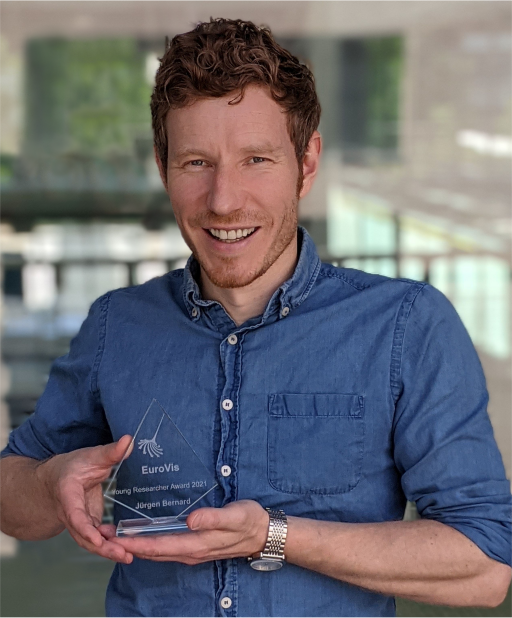
Jürgen Bernard is an Assistant Professor of Computer Science at the University of Zurich , leading the Interactive Visual Data Analysis (IVDA) Group . He is associated with the Digital Society Initiative (DSI) and holds a PhD in Computer Science from Technische Universität Darmstadt (2015) with a focus on time-oriented data analysis. His academic journey includes postdoctoral research at TU Darmstadt and the University of British Columbia. Education : Diploma in Computer Science (2009, TU Darmstadt) PhD in Computer Science (2015, TU Darmstadt) Research Interests : Dr. Bernard specializes in interactive visual data analysis , explainable machine learning , and human-centered AI . His work explores time series analysis , multivariate data exploration , and user-driven preference elicitation . He develops visual analytics systems for domains like healthcare , digital humanities , and industrial applications , with a particular focus on responsible AI and transparency in algorithmic systems . Research Trends : His publications emphasize interactive machine learning workflows , visual analytics for healthcare , and time-stamped event sequence analysis . Recent work includes LLM validation frameworks (Human-Data-Model Interaction Canvas) and personalized ranking systems funded by the Swiss National Science Foundation. He integrates temporal data with multivariate analysis across applications from medical manufacturing to chronic disease management . Scientific Recognition : EuroGraphics Young Researcher Award (2022) EuroVis Young Researcher Award (2021) Best Paper Awards at IEEE VIS (2021), EuroVA (2021, 2025) Dirk Bartz Prize (2017), Hugo-Geiger Preis (2016) Teaching & Grants : He teaches Interactive Visual Data Analysis (6 ECTS), Digital Health Seminars , and People-Oriented Computing . Currently leads a SNF Grant on Personalized Visual Analytics for multi-criteria decision support (2024-2028) with ETH Zurich's Prof. M. El-Assady.
Dr. Todd D. Murphey is a Professor of Mechanical Engineering at Northwestern University's Robert R. McCormick School of Engineering and Applied Science. He serves as Director of Transformative Research and Director of the Master of Science in Robotics Program at Northwestern, leading initiatives in computational dynamics, control systems, and robotics. His work bridges engineering, neuroscience, and biomedical applications, with a focus on developing systems that interact effectively with humans and their environments. Dr. Murphey received his Ph.D. in Control and Dynamical Systems from the California Institute of Technology in 2002, with a thesis titled "Control of Multiple Model Systems." Prior to that, he earned a B.S. in Mathematics, summa cum laude, from the University of Arizona in 1997. Dr. Murphey's research centers on computational methods in dynamics and control, with applications spanning neuroscience, health science, robotics, and automation. His work in the Interactive & Emergent Autonomy Lab focuses on computational models of embedded control, biomechanical simulation, dynamic exploration, and hybrid control. The group develops mathematical approaches that lead to orders of magnitude improvement in computational efficiency for real-time implementation. Key application areas include assistive exoskeleton control, stabilization of energy networks, bio-inspired active sensing, entertainment robots, robotic exploration, and software-enabled stroke rehabilitation. Analysis of Dr. Murphey's recent publications reveals a strong emphasis on human-swarm interaction, algorithmic matter, and control of cyber-physical systems in uncertain environments. His work increasingly integrates information theory with physical systems, exploring how both autonomous and biological systems interact with environments to learn and improve behaviors. Recent trends show growing applications in rehabilitation technology, with particular focus on human-machine interaction in biomedical devices and embodied intelligence. Dr. Murphey has received numerous honors and awards for his contributions to robotics and engineering: Named Director of Transformative Research at Northwestern University (2025) Appointed IEEE Robotics and Automation Society Vice President of Publication Activities (2022) Co-recipient of Best Paper Award for IEEE Transactions on Robotics (2020) Appointed to Air Force Scientific Advisory Board (2019) Recipient of ABB Best Student Paper Award for CPL-SLAM research (2019) Cole-Higgins Award from Northwestern Engineering (2015) Dr. Murphey has supervised numerous graduate students including Taosha Fan, Giorgos Mamakoukas, and Ian Abraham, with research spanning robotic exploration using electrosense and mechanical contact, human-in-the-loop control, and shared control for rehabilitation devices. His lab has secured significant funding from the National Science Foundation, DARPA, and industry partners including Siemens and Ekso Bionics, supporting research in algorithmic matter, emergent behavior, and human-swarm collaboration. The Interactive & Emergent Autonomy Lab, led by Dr. Murphey, investigates how both autonomous systems and biological systems interact with their environments to learn and improve behaviors. Current projects include active learning and data-driven control, active perception in human-swarm collaboration, algorithmic matter and emergent computation, control for nonlinear and hybrid systems, cyber physical systems in uncertain environments, harmonious navigation in human crowds, information maximizing clinical diagnostics, reactive learning in underwater exploration, robot-assisted rehabilitation, and software-enabled biomedical devices. The lab collaborates with researchers across Northwestern and institutions including Georgia Tech, MIT, and industry partners.
Duncan Wilson is a Professor of Connected Environments at the Bartlett Centre for Advanced Spatial Analysis (CASA) at University College London. His work bridges academia and industry, focusing on IoT, AI, and spatial analysis to enhance understanding of built and natural environments. Current role: Professor of Connected Environments at UCL Education: PhD in Artificial Intelligence and Machine Vision (UCL, 1997), BEng (Hons) in Electrical Engineering (Loughborough University, 1993) Research interests include: Cognitive computing at the network edge Extraordinary sensory systems for data capture Spatial reasoning and digital twins IoT for healthcare and biodiversity Edge AI and TinyML Recent articles span digital twin development , IoT for biodiversity monitoring , and smart healthcare infrastructure . He has received recognition for collaborative R&D approaches during his directorship at Intel's Sustainable Connected Cities institute. Teaching: Leads MSc Connected Environments and modules on IoT ethics, AI on microcontrollers, and sensor network deployment Projects: IoT Living Lab at UCL, Project Hercules for eye clinic analytics, and Shazam for Bats environmental monitoring Professional activities: Former Director of Intel Collaborative Research Institute (2012-2018), ex-member of Smart London Board (2017-2022)
Marianna Ivashina is a Professor and Head of the Antenna Systems Research Group at Chalmers University of Technology's Department of Electrical Engineering . Her work focuses on array antennas , antenna integration with electronics , optimal beamforming , and over-the-air measurement methods . The group has achieved international recognition for innovations in ultra-wideband (UWB) feeds , Gap waveguide antennas , and Doherty-power-amplifier-integrated antennas for 5G/6G and radio telescope applications. Key projects include the SSF Sweden-Taiwan collaboration , EU Horizon 2020 MyWave , and VINNOVA ENERGETIC initiatives. Her recent publications emphasize millimeter-wave (mmWave) communication and reconfigurable intelligent surfaces (RIS) , with applications in 5G/6G networks , satellite communication (SatCom) , and advanced antenna testing chambers . She explores beamforming optimization , self-interference mitigation , and hybrid OTA environments to enhance wireless system performance. The group's work bridges theoretical advancements with practical implementations, including RFSoC testbeds and high-efficiency antenna arrays . Marianna leads major research programs funded by Ericsson , VINNOVA , and EUREKA EURIPIDES2 , addressing challenges in beamforming , antenna-IC integration , and automated design for 5G/6G . These projects highlight her role in advancing millimeter-wave communication and sensor integration technologies.
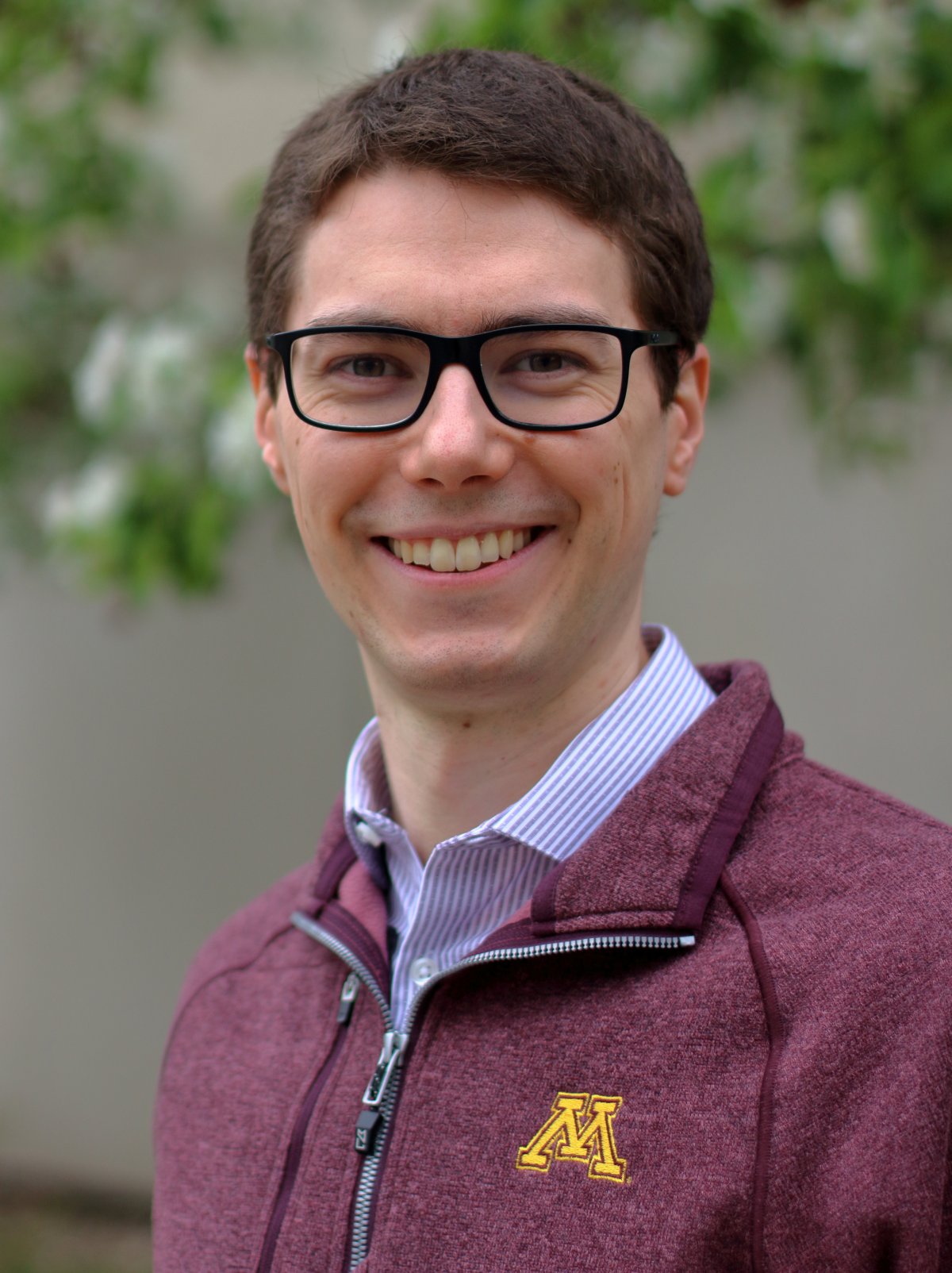
Ryan Caverly serves as an Associate Professor in the Department of Aerospace Engineering and Mechanics at the University of Minnesota, Twin Cities, holding the prestigious McKnight Land-Grant Professorship. His research bridges theoretical control frameworks with practical aerospace and robotics applications, focusing on dynamic modeling and system control. Education: BS in Honours Mechanical Engineering from McGill University MS in Aerospace Engineering from the University of Michigan PhD in Aerospace Engineering from the University of Michigan Professor Caverly's research centers on input-output stability, robust control of nonlinear systems, and computationally efficient modeling of flexible structures. His work spans aerospace vehicles, spacecraft, and robotic manipulators, emphasizing theoretical rigor alongside real-world implementation challenges in structural flexibility and control precision. Recent publications reveal strong emphasis on predictive control for orbital mechanics, hypersonic vehicle dynamics, and cable-driven systems. His work consistently integrates convex optimization, state estimation, and structural dynamics to solve complex problems in solar sail technology, UAV navigation, and hypersonic flow measurement. Scientific Awards: McKnight Land-Grant Professor Caverly leads multiple externally funded projects including NASA-sponsored research on solar sail momentum management, UAV state estimation with Honeywell, hypersonic bow shock measurements with the Air Force, and deployable space structure control. His grants portfolio demonstrates significant industry and government collaboration in aerospace innovation. He directs the Aerospace, Robotics, Dynamics, and Control (ARDC) Lab, which specializes in the intersection of dynamic modeling and control theory for flexible multi-body systems, with particular focus on cable-driven mechanisms and lightweight aerospace structures.
Swiss Federal Institute of Technology in LausanneSwitzerland
Daniel Sage is a Lecturer and Scientific Advisor at École polytechnique fédérale de Lausanne (EPFL) , affiliated with the Biomedical Imaging Laboratory (LIB) under the College of Engineering (STI) and School of Life Sciences (SV) . He specializes in bioimage informatics , structured-illumination microscopy , and deep learning applications for biomedical imaging. His work spans algorithm development for single-molecule localization microscopy (SMLM) , fluorescence imaging , and 3D reconstruction . His research group has developed open-source tools like FlexSIM for light inhomogeneity correction, DeepImageJ for integrating deep learning in ImageJ, and Steer'n'Detect for orientation-accurate template detection. His publications focus on correcting multiple-blinking artifacts in PALM, optimal transport metrics for SMLM evaluation, and contextual feature analysis for xenograft cell classification. He mentors PhD students and contributes to interdisciplinary education through courses such as Bioimage Informatics and Fundamentals of Image Analysis , emphasizing practical software solutions and Java programming for bioimage processing. His collaborations include institutions like Howard Hughes Medical Institute and Centre National de la Recherche Scientifique (CNRS) .
Professor Barry Porter is a faculty member at Lancaster University in the School of Computing and Communications . His research focuses on emergent software platforms that address software complexity through component models , meta-software platforms , and machine learning . Key areas include distributed systems, cloud integration with sensor nodes, green computing, and real-time visualization. Research Interests : Runtime adaptation in complex systems Self-assembling software architectures Machine learning for code optimization Distributed emergent systems at scale Green computing for multi-core environments Edge-cloud continuum integration Recent Publication Trends : His 2025 work explores genetic improvement for software using speciation algorithms , program geometry projection , and multi-agent decision frameworks . Earlier studies (2022-2024) investigate edge-cloud systems , neural transfer learning , and ecosystem curation in emergent software. Supervision & Projects : He supervises PhD student Ben Craine and leads projects like B-EGI (Bio-Enhanced Genetic Improvement) and BBC Prosperity Partnership for media delivery. Collaborations span environmental IoT, multi-agent learning, and fog computing. Labs & Groups : Affiliated with the Lancaster Intelligent, Robotic and Autonomous Systems Centre , Centre of Excellence in Environmental Data Science , and the Distributed Systems group.
Ada Gavrilovska is a Professor at Georgia Tech's School of Computer Science under the College of Computing. Her work focuses on systems software for emerging technologies, including hybrid memory systems, edge computing, and cloud infrastructure. She leads projects in the PRISM Center and ADA Center , with funding from NSF, DoE, SRC, and industry leaders like Cisco and VMware. Education: PhD in Computer Science, Georgia Tech (2004) Research Interests: Designing systems for new hardware and applications, including edge computing, heterogeneous memory management, and LEO satellite platforms. Her work bridges low-level OS mechanisms with high-level distributed systems challenges. Recent Publications highlight trends in LEO satellite resource scheduling Edge-based ML preprocessing Hybrid memory OS abstractions Disaggregated graph analytics Compiler-assisted performance optimization Scientific Awards: Best paper, NFV World Congress (2016) Spotlight paper, IEEE Transactions on Cloud Computing (2014) ISCA-50 25-year retrospective (2023) Advising & Grants: Ada has mentored over 15 PhD students and 10 MS students, with research supported by NSF, DoE, SRC, and industry grants. She serves as PI in the SRC/DARPA PRISM Center.
Carsten Rott is a Professor in the Department of Physics & Astronomy at the University of Utah and holds the Jack W. Keuffel Memorial Chair until December 2025. His academic journey began with a Ph.D. in Physics from Purdue University (2004), preceded by undergraduate studies at the Universität Hannover. Rott has held academic positions at institutions including The Ohio State University (CCAPP Senior Fellow 2009-2013), Penn State University (postdoc 2005-2008), and Sungkyunkwan University in South Korea (Assistant Professor 2013-2017, Associate Professor 2017-2025). He has been a member of the IceCube Neutrino Telescope collaboration since 2005 and serves on committees like the IceCube-Gen2 Coordination Committee and JSNS2 Speakers Board. His research spans Particle Physics , Neutrino Astronomy , and Dark Matter Detection . Key projects include analyzing IceCube data for sterile neutrino signatures, studying cosmic-ray anisotropy, and investigating terrestrial gamma-ray flashes. Notable achievements include the Bruno Rossi Prize (2021) for high-energy astrophysics contributions. Rott's work involves multimessenger observations (neutrinos, gamma-rays, radio signals) and detector calibration innovations, such as those for the JSNS2 experiment. Recent publications focus on atmospheric neutrino oscillation parameters, TGF spectroscopy, and dark matter constraints. He employs machine learning techniques (CNNs) for event reconstruction and leads initiatives like the IceCube Master Class for student engagement. Grants include funding for IceCube upgrades (2024-2026) and Hyper-Kamiokande collaborations (2023-2026). As department chair since 2023, Rott continues to bridge experimental particle physics with astrophysical discoveries.