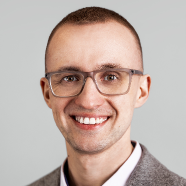
Professor Wojciech Kabaciński is a distinguished academic at the Poznań University of Technology, where he serves in the Faculty of Computer Science and Telecommunications within the Institute of Teleinformatics Networks. With the title of 'prof. dr hab. inż.', he holds the position of full professor with habilitation in engineering. His academic profile is marked by extensive research contributions and active supervision of doctoral students in the field of optical networking. Professor Kabaciński's research interests center on optical networks, with particular expertise in elastic optical switching, wavelength-space-wavelength switching architectures, network routing algorithms, and non-blocking network design. His work spans both theoretical foundations and practical implementations for telecommunications infrastructure and data center applications. He has made significant contributions to understanding WSW1 and WSW2 switching architectures, defragmentation algorithms, and control mechanisms for elastic optical networks. Analysis of Professor Kabaciński's recent publications (2017-2025) reveals a consistent focus on optimizing optical switching networks, with increasing emphasis on elastic optical networks and flexible switching architectures. His research demonstrates a progression from fundamental network theory to practical implementations addressing contemporary challenges in telecommunications. The trend shows growing complexity in network architectures and more sophisticated algorithms for resource allocation and connection management. Professor Kabaciński has supervised five doctoral dissertations and has been active in reviewing academic work. His research output includes 56 scientific articles, 60 book chapters, 3 books, and 14 research reports, demonstrating sustained scholarly productivity throughout his career. As an academic supervisor, Professor Kabaciński has guided doctoral students through research on simultaneous connections routing, non-blocking switching fabrics, multiplane banyan networks, self-controlling switching fields, and broadcast-capable switching architectures. His supervision reflects a commitment to advancing knowledge in optical networking while developing the next generation of researchers in the field. His current research continues to push boundaries in optical networking, with recent publications addressing cutting-edge challenges in rearrangeable wavelength-space-wavelength switches and flexible optical network architectures, positioning him at the forefront of developments in telecommunications infrastructure.