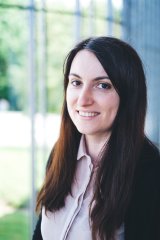
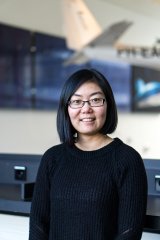
Lars van den Haak is a Lecturer in the Department of Mathematics and Computer Science at Eindhoven University of Technology, affiliated with the Algorithms and Logics for Verification research group. His academic role involves teaching courses including Discrete Mathematics and Discrete Structures. His research spans parallel computing and formal verification , with core interests in: Design and analysis of parallel algorithms Data parallelism and GPU programming (OpenCL) Software verification methodologies (deductive verification, soundness) Software development tools and annotation systems Recent publications focus on integrating verification frameworks (e.g., HaliVer) with scheduling languages, developing linear parallel algorithms for bisimulation, and applying formal methods to scientific pipelines like radio telescope data processing. His work consistently addresses challenges in concurrency, GPU optimization, and quantifier reasoning.
Akrati Saxena is a researcher in the School of Mathematics and Computer Science at Eindhoven University of Technology. She specializes in algorithmic fairness, social network analysis, and machine learning, with a focus on ethical AI and equitable data-driven systems. Active in fairness-aware algorithms and generative models Collaborates with colleagues like Geoffrey H.L. Fletcher and Mykola Pechenizkiy Research Interests span: Algorithmic Fairness in social networks Generative adversarial approaches Machine learning for social good Quantitative evaluation metrics Her work covers 11 research outputs (2021–2024), including studies on: Automated essay scoring fairness Explainable fake news detection Active learning techniques Media coverage and 13 Scopus citations highlight her impact in computational social science domains.
Giannis Delimpaltadakis is a Postdoctoral Researcher at the Control Systems Technology group within the Mechanical Engineering department at Eindhoven University of Technology. His research bridges control theory, optimization, and formal methods with applications in safety-critical systems. His core research interests include: Formal methods for dynamical systems and verification through finite abstractions Stochastic control with focus on Markov Decision Processes and Reinforcement Learning Optimization-based control techniques including control-barrier functions and projection-based control Feedback optimization for online dynamical systems Nonsmooth dynamics and information-theoretic control approaches Delimpaltadakis' recent publications demonstrate strong integration of theoretical control frameworks with practical safety applications. His 2025 work shows consistent focus on control barrier functions, projected dynamical systems, and stochastic abstractions, with growing emphasis on entropy regularization techniques for predictable decision-making under uncertainty. The research exhibits deep connections between formal verification methods and real-world control system constraints. He actively contributes to the Projection-based Control (PROACTHIS) project (2022-2028) at TU/e, developing cutting-edge systems engineering approaches for constrained dynamical systems. His academic background includes a Diploma in Electrical and Computer Engineering from NTUA (2017) and a Cum Laude PhD from Delft University of Technology (2022), followed by postdoctoral work at both Delft and Eindhoven institutions.
Maurice Pelt serves as a Lecturer and researcher at the Faculty of Technology (FT) within Amsterdam University of Applied Sciences, focusing on the intersection of data-driven methodologies and industrial maintenance systems. His work bridges theoretical analytics with practical applications in maintenance, repair, and overhaul (MRO) operations across aviation, manufacturing, and sustainable design sectors. Research interests center on advanced data analytics for industrial optimization, with emphasis on Machine Learning implementation in MRO environments and Industry 4.0 integration . His fingerprint reveals dominant expertise in Maintenance (100%), Repair (100%), and Data Analytics (66%), with significant contributions to Machine Learning methodologies (66%) and Maintenance Task engineering (50%). Recent projects demonstrate applied focus on digital twin technologies and residual resource utilization. Publication trends from 2019-2025 show progressive specialization in data-driven MRO solutions, evolving from foundational case studies toward integrated Industry 4.0 applications. The 2025 circular wood design research exemplifies this trajectory, merging sustainability objectives with digital processing technologies while maintaining core focus on maintenance optimization frameworks. No scientific awards were documented in the source material. Collaborative activities indicate active industry engagement through conference organization and research partnerships, though specific student supervision or grant details remain unreported. His 2019 co-organized event 'Wat te doen met onze data' and 2016 'Data mining in MRO' roundtable demonstrate knowledge transfer initiatives. Research operations involve cross-institutional teams, particularly evident in the multi-author 'Data mining in MRO' project involving Hogeschool van Amsterdam colleagues and industry partners, with emphasis on practical implementation of data systems within maintenance workflows.
Visara Urovi is an Associate Professor at Maastricht University's Data Science Institute within the Faculty of Science and Engineering. Her research focuses on blockchain applications, AI-driven healthcare solutions, and privacy-preserving data sharing frameworks. Education: PhD in Computer Science Key research areas include: Blockchain technology for secure health data exchange AI models in respiratory disease monitoring Regulatory compliance for digital health systems Speech analytics as diagnostic tools Recent publications highlight trends in: Blockchain-based accountability mechanisms Speech recognition for COPD and asthma tracking Responsible data science frameworks Scientific awards include the Grant for the Web (2020). She has supervised PhD candidate Yan Y. (2025 thesis) and organized academic events like the Women in Data Science Maastricht Datathon (2022).
Dr. Feijia Yin serves as an Associate Professor in the Operations & Environment department within the Faculty of Aerospace Engineering at Delft University of Technology. With an extensive research portfolio focusing on sustainable aviation solutions, Dr. Yin's work bridges aerospace engineering with climate science to develop practical approaches for reducing aviation's environmental impact. Current research activities demonstrate active leadership in climate-friendly flight planning methodologies and alternative propulsion systems. Dr. Yin's research interests center on mitigating aviation's climate impact through innovative engineering solutions. Specializing in aircraft trajectory optimization under climate considerations, the research program investigates how flight paths can be redesigned to minimize non-CO2 effects while maintaining operational efficiency. Additional focus areas include hydrogen-powered propulsion systems, climate effect modeling of alternative fuels, and development of decision support tools for eco-efficient air traffic management. The research fingerprint shows strong expertise in aircraft engineering (82%), aviation engineering (63%), and climate effects (57%), with significant contributions to understanding how aircraft emissions interact with atmospheric processes. Recent publications reveal a clear trend toward developing robust, climate-optimized flight planning systems that account for weather uncertainties and multiple climate impact metrics. The research increasingly integrates computational modeling with practical air traffic management applications, as evidenced by the development of tools like SolFinder 1.0 and CLIMaCCF V1.0. These efforts represent a growing emphasis on operational implementation of climate mitigation strategies within existing aviation infrastructure. Scientific recognition includes: Best paper award (2024) Best paper award for the Fuel and Emissions track of ICRAT 2018 conference Dr. Yin maintains active engagement with major international climate initiatives, serving as an Expert Reviewer for the IPCC WGIII Sixth Assessment Report. Editorial responsibilities include membership on the board of Frontiers in Aerospace Engineering (2022). Professional service extends to committee memberships in the ECATS Working Group on Sustainable Aircraft Propulsion Technology and program committee roles for the International Conference on Transport, Atmosphere and Climate. Media engagement demonstrates commitment to public discourse on sustainable aviation, with coverage in Dutch media discussing how aviation can leave fewer climate traces. Research activities are supported through active participation in major collaborative projects addressing sustainable aviation challenges. Current work focuses on developing practical implementation pathways for climate-optimized flight operations and advancing understanding of non-CO2 climate effects from aviation. The research program maintains strong connections with both academic and industry partners in the aviation sector, facilitating knowledge transfer between theoretical research and operational implementation.
Oliver Tse is an Associate Professor in the Applied Analysis group of the Centre for Analysis, Scientific computing and Applications (CASA) at Eindhoven University of Technology (TU/e). He leads the Calculus of Variations and Optimal Control group within CASA and is affiliated with both the Center for Quantum Materials and Technology Eindhoven and the Applied Analysis group. His office is located at MetaForum 5.059, and he can be contacted at o.t.c.tse@tue.nl or +31 40 247 4356. Oliver Tse earned his master's degree in Applied Mathematics at the University of Kaiserlautern (sponsored by the Fraunhofer Institute for Industrial Mathematics), followed by his doctorate (Dr. rer. nat.) in 2011 under the supervision of Prof. René Pinnau. He worked at the University of Kaiserlautern for five years, including two years as an Assistant Professor in the Industrial Mathematics group. Tse's research centers on nonlinear and nonlocal Partial Differential Equations (PDEs), with expertise spanning modeling and simulation, numerical methods, optimization, and stability analysis. His current interests focus on the connections between optimal transport, generalized gradient flows, and large deviations, as well as probabilistic methods for studying PDEs. He aims to develop new analytical tools by establishing these connections. His recent work demonstrates a strong interdisciplinary approach, bridging pure mathematical analysis with quantum computing applications, particularly in variational quantum optimal control and neutral atom quantum systems. His publication record from 2024-2025 shows a clear trend toward applying mathematical analysis to quantum computing challenges, with three 2025 papers focusing on quantum optimal control and qubit configuration optimization, while maintaining strong connections to his foundational work in PDE theory as evidenced by his 2024 Numerische Mathematik paper. This demonstrates his ability to translate abstract mathematical concepts into practical solutions for emerging quantum technologies. Tse is actively involved in the academic community, organizing and participating in workshops such as the Finite Volumes and Optimal Transport workshop in Paris (November 2024), the Oberwolfach mini-workshop on High-Dimensional Control Problems (December 2024), and the IPAM long program on Non-commutative Optimal Transport in Los Angeles (March-June 2025). He hosts academic visitors including Urbain Vaes from École des Ponts ParisTech and Riccarda Rossi from the University of Brescia in early 2025. In addition to research, Tse teaches several mathematics courses including Measure, Integration and Probability Theory, Calculus Variant 2, and Partial Differential Equations. His research has received funding from the Dutch Ministry of Economic Affairs and Climate Policy as part of the Quantum Delta NL program, the Horizon Europe program HORIZON-CL4-2021-DIGITAL-EMERGING-01-30 via Project No. 101070144 (EuRyQa), and the Netherlands Organization for Scientific Research (NWO) under Grants No. 680.92.18.05 and No. NGF.1582.22.009.
Dr. Pieter Bons serves as a Senior Lecturer at the Faculty of Technology, Hogeschool van Amsterdam, where he teaches Applied Mathematics and Data Science. His academic work spans urban analytics, smart charging systems, and geospatial modeling, with significant contributions to electric vehicle infrastructure and climate adaptation research. His research focuses on applying data science to urban challenges, particularly in smart charging for electric vehicles and neighborhood typology classification . Bons specializes in extracting actionable insights from complex urban datasets while addressing critical issues like data bias, quality, and privacy. His work bridges theoretical data science with practical urban applications, notably through projects like the Rijkswaterstaat charging infrastructure study and nationwide neighborhood typology mapping. Recent publications reveal a clear trajectory from fundamental physics (2010-2017) to applied urban analytics (2020-present), with current work emphasizing energy grid optimization through smart charging AI-driven climate adaptation tools geospatial analysis for urban planning His fingerprint analysis highlights strong connections to Smart Charging (95%), Public Charging Stations (36%), and Electric Vehicles (54%). Award highlights: HvA onderzoeksprijs 2021 for collaborative urban research Nominatie KennisDC Parel 2023 for innovation in zero-emission infrastructure Bons actively enhances data literacy across the faculty through educational initiatives like Data Studio, integrating students into real-world research cases. His activities include stakeholder presentations for Rijkswaterstaat, knowledge clips on neighborhood typologies, and academic talks on walkability and zero-emission corridors. He contributes to datasets like the Wijktypologie Buurtniveau 2023, supporting national climate adaptation efforts. His work occurs at the intersection of urban planning, energy systems, and AI, with current projects focusing on balancing urban energy grids through flexible EV charging and developing nationwide neighborhood classification systems for climate resilience.
Dr. Hugo E.M. Vereecke is an Assistant Professor in Anesthesiology at the University of Groningen and an Anesthesiologist at the University Medical Center Groningen (UMCG) and AZ Sint-Jan, Brugge, Belgium . With a 20% contract at UMCG/RUG and 80% at AZ Sint-Jan since 2016, he specializes in anaesthetic pharmacology , neurophysiological monitoring during anaesthesia , and pharmacokinetic/pharmacodynamic (PKPD) modeling . Medical Doctor (Ghent University, 1997) PhD in Medical Sciences (Ghent University, 2007) Dr. Vereecke's research focuses on improving anesthetic drug administration through neurophysiological monitoring , EEG and AEP indices , and drug interaction models . He has developed evidence-based approaches for "just-enough-to-do-the-job" anesthesia to enhance clinical outcomes. His recent articles highlight trends in: Environmental impact of anesthetic agents (propofol, sevoflurane) Pharmacodynamic modeling of opioid and hypnotic interactions Optimization of target-controlled infusion (TCI) systems Neurophysiological mechanisms during anesthesia Advancements in nociception-antinociception monitoring Medical device integration for anesthetic control Scientific awards include: Best publication awards (2006, 2012) from the Society for Anesthesia and Resuscitation of Belgium Non-restrictive educational grants (NeuroWave Systems Inc., 2014; Medtronic, 2015) Second prize at Euroanesthesia 2013 for drug interaction research Dr. Vereecke has supervised numerous PhD and medical students , including Laura Hannivoort (PhD promotor) and Marco Saginovic (co-promotor). He chairs the de-centralized incident reporting commission at UMCG and serves on its Medical Ethical Commission , while also leading the Board of Directors of ISAP (2014-2022).
Mathijs de Weerdt is a Full Professor at Delft University of Technology, leading the Algorithmics Group within the Faculty of Electrical Engineering, Mathematics and Computer Science. His research focuses on developing advanced algorithms for planning and scheduling under uncertainty, with applications in energy systems, railway logistics, satellite operations, and agricultural supply chains. He bridges fundamental AI research with practical implementations through collaborations with Dutch National Railways (NS), Shell Recharge, and industry partners. Education: PhD in Multi-Agent Plan Merging (2003), MSc in Computer Science (Utrecht University, cum laude) Research Interests: Robustness in AI, Scalability of Optimization Algorithms, and Multi-Party Coordination His work integrates Stochastic Programming , Reinforcement Learning , and Constraint Programming to address challenges in energy transition and transportation. Recent 15 most recent publications emphasize surrogate modeling for EV charging optimization, multi-agent pathfinding in railways, and dynamic programming for decision trees. Scientific Awards: Recipient of the Erasmus Energy Forum Science Award (2016), Best Teacher Award in Delft Computer Science (2015), and honorable mentions for dissertation and paper awards. As a promotor , he guides over 20 PhD candidates in projects spanning smart grid algorithms, train unit shunting, and strawberry supply chain optimization. He leads large-scale initiatives like the NWO ESI-FAR project and co-chairs the Dutch AI Coalition's Energy & Sustainability working group.
H.H. Weinans is a Professor in the Department of Mechanical Engineering at Delft University of Technology, leading the Biomaterials & Tissue Biomechanics research group. His work bridges engineering and clinical medicine with a focus on musculoskeletal disorders, particularly osteoarthritis and implant development. His primary research interests include Bone Mechanics , Implant Design , Cartilage Research , Osteoarthritis , Biomaterials , and Tissue Engineering . He investigates mechanical-biological interactions in bone and cartilage, emphasizing how biomechanical forces influence disease progression and tissue regeneration. His group develops computational models and experimental approaches to optimize implant integration and biomaterial performance. Recent publications (2025) reveal strong trends in clinical translation: large-scale meta-analyses of hip dysplasia, novel antibody/aptamer therapies for osteoarthritis, comparative cohort studies of knee OA, AI-driven MRI analysis for arthritis, and bone formation mechanisms. These works demonstrate interdisciplinary convergence of biomechanics, immunology, and data science to address joint degeneration. Professor Weinans co-leads international consortia including the World COACH consortium and collaborates on major cohort studies (CHECK, OAI, FNIH). His team's 3D-printed metamaterial hip research, featured in 2018 press coverage, exemplifies their focus on mechanically adaptive implants that improve patient outcomes through spring-like properties.
J. Dankelman is a Professor in Mechanical Engineering at Delft University of Technology. His work bridges biomedical engineering and surgical technology through innovative research on medical devices and bio-inspired systems. Active in surgical robotics, medical device design, and intraoperative visualization Led research on robotic catheters, electrosurgical knives with optical tissue readout, and tools for low-resource environments Recipient of three prestigious scientific awards including Netherlands Academy of Engineering fellowship His research focuses on improving surgical precision through advanced visualization, robotics, and sensor integration. Recent projects include interactive modalities for endovascular interventions and computer-aided decision support in pancreatic cancer surgery. Key trends in his publications reveal expertise in: Medical robotics with emphasis on deformable environments 3D modeling applications in oncology Low-cost, context-driven medical device design Temperature sensing for nerve function assessment Electrosurgical instrument innovation Scientific recognition includes: Fellow, Netherlands Academy of Engineering (2023) Open Education Award (2022) Professor of Excellence Award (2019) As editor and committee member, he contributes to translational engineering and scientific integrity initiatives.
M. Wisse is a Professor in the Department of Mechanical Engineering at Delft University of Technology, specializing in Robot Dynamics. His research spans robotics, motion planning, optimization, and control theory, with a focus on developing autonomous robotic systems for complex real-world applications. His primary research areas include Robotics, Motion Planning, Optimization, Robot Dynamics, Algorithms, and Machine Learning. Recent publications demonstrate significant contributions to nonholonomic mobile manipulation, active inference frameworks for reactive planning, and dynamic optimization fabrics for motion generation. These works collectively advance robot autonomy through novel control strategies that integrate learning, planning, and physical interaction. Wisse has supervised 10 students and leads the Robot Dynamics research group. His extensive publication record (84 research outputs) indicates active grant-funded projects in robotics, though specific funding sources aren't detailed in the provided text. Media engagements include contributions to new robotics master programs and public outreach on robotic snake applications.
Marco Giulini is a postdoctoral researcher at Utrecht University , affiliated with the Biomolecular Sciences department under the Science school. His work focuses on advanced computational methods for modeling protein-protein interactions, leveraging techniques like machine learning, integrative bioinformatics, and coarse-grained simulations. Expertise in Software Development , Machine Learning , and Computational Structural Biology Key research areas: Protein Complex Modeling , Antibody-Antigen Interactions , and Mapping Entropy Contributed to tools like HADDOCK3 and ARCTIC-3D for biomolecular simulations His recent publications highlight applications of machine learning in structural biology, integrative modeling of biomolecular complexes, and AI-driven approaches for drug discovery. Giulini collaborates extensively with experts in computational biophysics and structural biology.
Dr. Han Hoogeveen serves as an Associate Professor in the Department of Information and Computing Sciences within the Faculty of Science at Utrecht University. His research focuses on applied operations research, particularly in transportation systems and robust optimization. Hoogeveen obtained his PhD from Eindhoven University of Technology for research on Single Machine Bicriteria Scheduling problems, conducted at the Centrum voor Wiskunde en Informatica (CWI) in Amsterdam under Jan Karel Lenstra. His research interests center on developing robust solutions for real-world planning problems, especially in transportation systems. He has pioneered research on finding solutions that remain feasible during small disruptions, with applications in railway operations, airport management, and public transportation. His work combines theoretical algorithm development with practical implementation through collaborations with major Dutch companies including NS (Dutch Railways), KLM, Amsterdam Airport Schiphol, and Qbuzz. Hoogeveen co-founded an Operations Research group with Marjan van den Akker, which evolved into the AI and Mobility Lab. His research has produced significant practical applications including gate assignment systems for Schiphol Airport, bus scheduling for Qbuzz, and shunting plans for NS. In 2021, he was conducting research for improving planning of city hubs and KLM operations through the kickstart AI initiative. Dr. Hoogeveen has supervised multiple PhD students including Guido Diepen (gate assignment), Marcel van Kooten Niekerk and Jan Posthoorn (bus scheduling), and Roel van den Broek (shunting plans for NS). His work exemplifies his philosophy that successful research must address real-world problems where 'we are not interested in the color of the hood, but in what is running beneath it'.