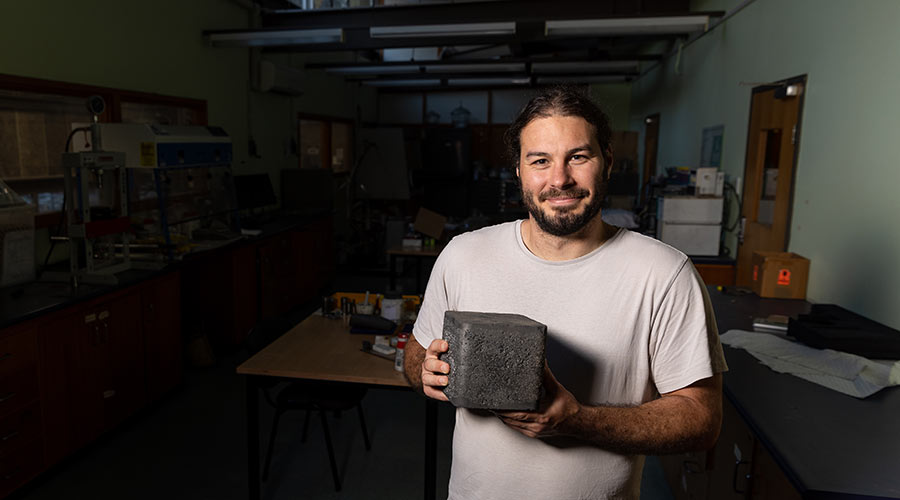
Dr Dylan Cuskelly is a Lecturer in the School of Engineering at the University of Newcastle, Australia. His research focuses on advanced materials development for energy storage and sustainable manufacturing, alongside STEM education innovation. He co-founded MGA Thermal, a company commercializing thermal energy storage materials derived from miscibility gap alloys (MGAs). Education: PhD in Mechanical Engineering (University of Newcastle, 2015) Bachelor of Engineering (Mechanical) (Hons) (University of Newcastle, 2009) Research Interests: Development of novel materials for energy storage applications Synthesis of MAX/MAB phase ceramics and metal alloys Economical material production processes Integration of renewable energy storage solutions STEM education pedagogy and curriculum design Grants & Awards: 2022: iSTEM Zero to Hero grant (Google Australia, $11,863) 2019: Optimisation of Thermal Energy Storage grant (MGA Thermal, $192,000) 2017: Excellence in Teaching and Learning Award (University of Newcastle) Collaborations: Active partnerships with industry (MGA Thermal, Sunburnt Space Co), academia (University of Melbourne), and international research networks. Labs/Teams: Leads the Advanced Materials Group at Newcastle, focusing on thermal energy storage materials and sustainable manufacturing processes.
Andrea Meilán-Vila is an Assistant Professor in the Department of Statistics at Universidad Carlos III de Madrid since 2021, holding a Juan de la Cierva Fellowship since 2023. She earned her PhD in Statistics from Universidade da Coruña (2021) and previously served as a Postdoctoral Fellow at Universidade de Santiago de Compostela's Department of Statistics, Mathematical Analysis and Optimisation. Her research focuses on nonparametric methods for analyzing complex data types, including directional, spatial, and functional data. Key areas include kernel smoothing techniques, goodness-of-fit testing for regression models, and spatial trend estimation. She serves as an Associate Editor for the Journal of Nonparametric Statistics . Recent work emphasizes applications in climate science (temperature curve modeling), fluid dynamics (wake flow control), and biomedical imaging (hippocampus shape analysis). Her methodologies address challenges like sparse data estimation and spatial correlation in regression frameworks. Key Projects: STENED (Stein-based goodness-of-fit tests for non-Euclidean data) Awards: Juan de la Cierva Fellowship (2023) Publications span journals like Journal of Fluid Mechanics , Statistical Papers , and TEST , with a focus on methodological advancements in statistical modeling and computational validation.
Dr Paulina Quintanilla is a Lecturer in Process Systems Engineering at Brunel University of London and an academic visitor at Imperial College London. She holds a PhD in Earth Science and Engineering from Imperial College London (2023), and MEng/MSc degrees in Chemical Engineering from Universidad Técnica Federico Santa María, Chile. Her research focuses on dynamic process modelling, control strategies, and optimisation with a sustainable emphasis, particularly in mineral processing and knowledge representation. She has contributed to the Advanced Minerals Processing Research Group and the Future Targeted Healthcare Manufacturing Hub . Key areas of expertise include: Modelling and simulation of chemical processes Control engineering and machine learning integration Mineral processing optimisation Supply chain systems for sustainable manufacturing She serves on the Early Career Advisory Board for Control Engineering Practice (IFAC/Elsevier) and has received the MEI Young Person's Award (2021) and Society of Chemical Industry Scholarship (2020). Scientific contributions are documented via ORCID 0000-0002-7717-0556 . Advisory and collaborative opportunities at Brunel University can be pursued by contacting her at paulina.quintanilla@brunel.ac.uk or p.quintanilla@imperial.ac.uk for Imperial-related work.
Dr Francesca Pianosi is an Associate Professor in Water & Environmental Engineering at the University of Bristol 's School of Civil, Aerospace and Design Engineering. She contributes to the Cabot Institute for the Environment and leads research on data analysis, mathematical modelling, and uncertainty quantification for hydrology and water engineering. Specialises in simulation and optimisation methods for water resource management Focuses on uncertainty propagation in natural hazard models Developed the open-source SAFE Toolbox for sensitivity analysis Research Trends Her recent publications (2023-2025) demonstrate expertise in: Groundwater flow and recharge in data-scarce regions Digital Twin applications for watershed management Climate change impact on landslides and droughts Multi-objective optimisation for reservoir operations Integration of machine learning with hydrological models Scientific Awards Arne Richter Award for Outstanding Young Scientists (2015) Best Research Oriented Paper - Journal of Water Resources Planning and Management (2024) Early Career Research Excellence (ECRE) award (2014) Francesca leads the Water Management and Adaptation based on Watershed Digital Twins project (2024-2027) and contributes to the USARIS project on uncertainty quantification for infrastructure systems (2023-2025).
Professor Ronny Pini is a Professor of Multiphase Systems at Imperial College London's Department of Chemical Engineering within the Faculty of Engineering. His research focuses on sustainable industrial processes, particularly carbon capture and storage (CCS), porous media dynamics, and imaging-based process design. He holds a PhD in Mechanical and Process Engineering from ETH Zurich and has held academic positions including Senior Lecturer and Reader at Imperial College since 2015. His educational background includes a Postdoctoral fellowship at Stanford University (2010-2013) and prior roles at the Colorado School of Mines. Research interests span multiphase flow mechanics, adsorption science, and environmental engineering applications. Key projects include the InFUSE Prosperity Partnership and Digital Rocks Lab, leveraging X-ray tomography, positron emission tomography, and computational models to study subsurface CO2 storage and sustainable materials. Professor Pini's work integrates chemical engineering with material science and earth sciences, addressing global challenges like industrial decarbonisation. He collaborates on developing advanced imaging techniques to characterise porous media behavior and optimise processes for energy transition. Current focus areas include direct air capture technologies and enhancing oil recovery via CO2 utilisation. His research outputs include over 150 peer-reviewed articles, with recent emphasis on adsorption-based CO2 capture systems, pore-scale transport phenomena, and sustainable process design frameworks. He is actively involved in training early-career researchers through Imperial College's Chemical Engineering programs and international collaborations.
Rakesh Nagi is a Professor and Head of the Engineering Systems and Design Pillar at Singapore University of Technology and Design (SUTD), where he joined in August 2023. He concurrently holds the Donald Biggar Willett Professorship at the University of Illinois, Urbana-Champaign (UIUC), on leave. His academic leadership includes serving as Department Head of Industrial and Enterprise Systems Engineering at UIUC (2013–2019) and as Interim Director of the Illinois Applied Research Institute (2016–2018). Previously, he was Chair of Industrial and Systems Engineering at the University at Buffalo (SUNY) from 2006 to 2012. Education: PhD (1991) and MS (1989) in Mechanical Engineering from the University of Maryland, College Park, with work at the Institute for Systems Research and INRIA, France. BE (1987) in Mechanical Engineering from the University of Roorkee (now IIT Roorkee), India. Research focuses on Data Science, Machine Learning, Operations Research, GPU-accelerated computing, and military applications. Key areas include Big Graphs, High-level Information Fusion, Production Systems, and Multi-Agent Systems. His work often leverages parallel computing and optimization techniques. Recipient of prestigious awards: IISE David F. Baker Award (2022), INFORMS Koopman Award (2021, 2018), and multiple DARPA Graph Challenge recognitions. Contributions span over 100 peer-reviewed articles in top journals (e.g., Operations Research, IEEE Transactions) and conferences. Research projects include Hybrid AI/ML-Optimization for cloud workflows, GPU-accelerated algorithms for multi-target tracking, and interventions against illicit supply chains. Active collaborations with IBM-Illinois and NSF-funded initiatives address strategic resource allocation and network analysis. Labs/Teams: Leads the Engineering Systems and Design Pillar at SUTD and coordinates interdisciplinary projects at UIUC’s Coordinated Science Laboratory.
Ida-Johanne Jensen is Associate Professor at the Department of Biotechnology and Food Science, Faculty of Natural Sciences, Norwegian University of Science and Technology (NTNU). Her work integrates food science, marine biotechnology and sustainability to valorise marine resources, improve food quality and develop novel functional products. Education & Doctoral Training Dr Jensen obtained her PhD from UiT The Arctic University of Norway (UiT Norges arktiske universitet) in 2014 with the dissertation "Health benefits of seafood consumption – with special focus on household preparations and bioactivity in animal models" , laying the foundation for her expertise in seafood bioactivity and nutrition. Research Interests Her research agenda centres on: Protein chemistry and functionality of marine raw materials and side-streams (brewer’s spent grain, sea cucumber, fish proteins). Development of functional foods and nutraceuticals with antihypertensive, antioxidative and cardioprotective properties. Sensory and technological quality optimisation of foods for extreme environments (military rations, Arctic field meals). Smart packaging and intelligent freshness indicators using natural colorants (anthocyanin-based hydrogel beads). Life-cycle assessment and environmental sustainability of aquaculture and fisheries. Publication Trends Jensen has an extensive publication record (>60 papers since 2009). Recent work (2023–2025) demonstrates a clear pivot towards valorisation of underutilised marine resources (sea cucumbers, brewer’s spent grain) and application-oriented food engineering (freeze-drying, microencapsulation, jerky processing). Reviews on military rations and marine antihypertensive peptides highlight her translational focus on human health and performance. Scientific Awards & Recognition No specific awards are listed in the provided material; however, sustained high-output publication in top-tier journals ( Food Chemistry , npj Science of Food , Marine Drugs ) attests to strong peer recognition. Student Supervision & Grants She has supervised numerous master’s students at NTNU on topics ranging from Arctic field-ration development to protein extraction from brewer’s spent grain, indicating robust external funding and industry collaboration. Laboratories & Collaborations Research is conducted within NTNU’s Department of Biotechnology and Food Science laboratories, with active collaborations across Europe and the Indian Ocean region for marine resource assessments.
Professor Nicholas Warren is a Chair in Sustainable Materials at the School of Chemical, Materials and Biological Engineering at the University of Sheffield. With a PhD from Sheffield and academic experience at Leeds University (2016-2024), his research integrates polymer chemistry with automation technologies. Education: University of Bristol (2005), University of Sheffield (PhD) Academic Positions: Postdoc at Sheffield (2005-2016), University Academic Fellow at Leeds (2016-2024), Associate Professor (2021-2024) Current Role: Chair in Sustainable Materials (2024-present) Research focuses on polymer science with flow chemistry , online monitoring , and artificial intelligence to advance sustainable materials. Key article trends include self-driving laboratories , multi-objective optimization , and nanostructured polymer systems . Scientific recognitions include: 2022 Macro Group UK Young Researchers Medal 2023 RSC Reaction Chemistry & Engineering Outstanding Early Career Paper Award Advisees span current and alumni PhD students like Dr Stephen Knox , Anna Morrell , and Dr Charlotte Pugsley . His team employs self-driving lab platforms that combine robotics, AI, and online analytics for accelerated materials discovery.
Dr Smitha Gopinath is a Lecturer in the School of Chemical, Materials and Biological Engineering at the University of Sheffield , where she leads research in sustainable engineering systems within the Sustainable Design Laboratory (SDL) . Education & Career Path PhD in Chemical Engineering, Imperial College London Post-doctoral researcher, Applied Mathematics and Plasma Physics Group, Los Alamos National Laboratory Research Focus Dr Gopinath’s interdisciplinary work centres on the design, calibration and operation of sustainable engineering systems . She develops high-fidelity models and large-scale optimisation algorithms tailored to energy and materials challenges. Core interests include: Thermo-mechanical energy conversion devices (heat pumps, organic Rankine cycles) Carbon-capture utilisation and storage (CCUS) via novel solvents and separation systems Power-grid expansion and operation for renewable integration and decarbonisation Methodologically, she integrates Integrated Molecular and Process Synthesis (IMPS) with Optimisation Accelerated by domain Knowledge (OAK) to co-design molecules, materials and flowsheets that meet stringent energy and environmental targets. Publication Landscape Across 2015–2025 her publications reveal a clear trajectory from fundamental thermodynamic measurements and molecular design toward rigorous optimisation of large-scale energy systems. Early work concentrated on CO₂ solubility and carbonation kinetics of steel slag, providing essential data for carbon-sequestration schemes. Subsequent papers introduced advanced optimisation frameworks—outer-approximation algorithms, exact reformulations and feasibility-based methods—applied to solvent-based CO₂ capture, organic Rankine cycle working-fluid selection and AC optimal power flow (ACOPF). Recent contributions benchmark global optimality certificates for ACOPF problems, underscoring her drive to bridge chemical process systems engineering with electrical power systems optimisation. Teaching & Mentoring Dr Gopinath teaches undergraduate modules: CPE440 (Particle Technology) CPE170 (Particle Technology) She actively invites prospective PhD students to join the Sustainable Design Laboratory, offering supervision on projects spanning sustainable process design, renewable energy systems and algorithmic optimisation. Laboratory & Collaborative Networks She directs the Sustainable Design Laboratory (SDL), a multidisciplinary team leveraging systems engineering, multi-scale modelling, process simulation and optimisation to re-imagine a sustainable chemical and energy industry. The SDL collaborates with international partners, including Los Alamos National Laboratory and leading researchers in applied mathematics and power systems engineering.
Dr Sanjeev Gambhir is a Senior Research Fellow at the Intelligent Polymer Research Institute, University of Wollongong. With over 30 years of experience in chemistry, he leads bioinks synthesis and scale-up activities at TRICEP (Translational Research Initiative for Cellular Engineering and Printing) facility. His work bridges academic research with commercial translation, particularly in 3D bioprinting of living tissues. B.Sc. and M.Sc. in Organic Chemistry from Garhwal University Ph.D. in Organic Chemistry from Indian Institute of Petroleum Research focuses on 3D bioprinting technologies, graphene composites, conducting polymers, and hydrogel engineering. Key challenges addressed include biomaterial diversity limitations, bioprinted construct characterisation, and scalable bioink formulation. His work spans tissue engineering, regenerative medicine, and industrial applications. Major publications appear in Nature Communications , Journal of the American Chemical Society , and Advanced Materials . With 60+ peer-reviewed papers and an H-index of 28, his research on graphene composites and conducting hydrogels has significant citations in biomedical and materials science domains. Frater Award (Australian National Fabrication Facility, 2013) Active in mentoring junior staff and students, Gambhir collaborates with Inventia Life Science Pty Ltd and Professor Fiona Wood at the University of Western Australia. Current funding includes MRFF grants for intraoperative skin regeneration systems and translational projects through University of Wollongong infrastructure grants.
Dhammika Jayalath is an Associate Professor at Queensland University of Technology (QUT) in the School of Electrical Engineering & Robotics within the Faculty of Engineering. He has been with QUT since 2007, initially as a Senior Lecturer and later promoted to Associate Professor. Prior to joining QUT, he worked as a Senior Researcher at National ICT Australia Ltd and held a Fellowship at the Australian National University. His educational background includes a PhD in Wireless Communications from Monash University and a Graduate Certificate in Higher Education from QUT. He is a Senior Member of IEEE and active in multiple IEEE societies including Communications, Signal Processing, and Vehicular Technology. Research Interests: Dhammika's research focuses on Smart Systems with particular expertise in wireless communications and networking. His work spans Physical Layer Security, Massive MIMO Systems, Internet of Things, Optimum Resource Allocation, Cooperative communications, Cognitive radio, and Vehicular communications. He has made significant contributions to 5G New Radio, Chaotic Communications, Orthogonal Frequency Division Multiplexing (OFDM), and Space-Time Signal Processing. Publication Trends: His recent publications demonstrate a strong focus on 5G/6G networking technologies, physical layer security for IoT devices, and optimization of wireless communication systems. His work bridges theoretical communications theory with practical implementation challenges, particularly in vehicular networks, secure communications, and resource allocation for heterogeneous networks. The articles show increasing interdisciplinary work, combining machine learning techniques with traditional communications engineering approaches. Scientific Awards: 2007: Early Career Academic Recruitment and Development (ECARD) award from QUT 2009: Elevated to Senior Member Grade of IEEE 2000: IEEE travel grant Multiple scholarships during graduate studies at Monash University Supervision and Grants: Professor Jayalath has supervised numerous PhD students to completion with research topics including chaotic communication systems, resource allocation in heterogeneous networks, and vehicular communication systems. He has secured multiple research grants totaling over AU $300,000, including projects from ARC, QUT internal grants, and industry partnerships with Queensland Fire and Emergency Services. His current research includes physical layer security frameworks for IoT devices and optimization of massive MIMO systems for dense mobile networks. Laboratory and Team Work: He has been instrumental in establishing wireless communications research capabilities at QUT, including securing equipment grants for Software Defined Radio platforms. His work often involves interdisciplinary collaboration with researchers in signal processing, cybersecurity, and transportation systems.
Dr. David Toal is an Associate Professor at the University of Southampton, specializing in the application of machine learning techniques to aerospace system design optimization. His research focuses on automated geometry creation, prediction of simulation outputs, and fundamental machine learning advancements. He is affiliated with the Computational Engineering and Design Group and the Institute for Life Sciences. His teaching interests include engineering design methods, optimization, reliability, and CAD integration. He supervises multiple PhD students in areas such as aerodynamic geometry generation and structural design automation. Dr. Toal has led projects funded by the European Union and EPSRC, including E-Break (FP7) and equipment grants for advanced computational tools. His work emphasizes multidisciplinary collaboration, leveraging CAD systems and deep learning for applications in advanced aerial mobility and turbine optimization. Recent publications highlight advancements in Kriging models, adversarial auto-encoders, and semantic segmentation for engineering design. Dr. Toal's research bridges computational methods with practical aerospace challenges, aiming to accelerate design processes through data-driven and AI-enhanced approaches.
Fernando Alvarez is a Full Professor in the Department of Pediatrics at the Faculty of Medicine, Université de Montréal, and a researcher at the CHU Sainte-Justine. His work centers on hepatic immune tolerance, autoimmune hepatitis, and viral infections (HBV/HCV), using murine models to develop immunotherapies. He collaborates with the National CIHR Hepatitis C Network and studies intercultural pediatric practices. Education: MD in Family Medicine, Universidad de Buenos Aires (1974) Residency in Pediatrics, Hospital for Children, Buenos Aires (1978) Postdoctoral Fellowship in Gastroenterology, Université de Paris (1982) Postdoctoral Fellowship in Cell Biology, New York University (1985) His research explores the breakdown of immune tolerance in liver diseases and molecular mimicry in autoimmunity. Key themes include: Hepatic immune homeostasis B-cell depletion therapies Impact of aging, genetics, and environment on disease He has supervised 15+ graduate students, including PhD candidates studying immunotherapies and disease pathogenesis. Grants include CIHR funding for hepatitis C networks and pediatric therapeutic effectiveness studies. Affiliations: Centre de recherche Azrieli (CHU Sainte-Justine), Observatoire des droits linguistiques, and Unité de pédiatrie interculturelle.
Dr. Tracey Sletten is an Associate Professor (Research) in Psychology at Monash University's Turner Institute for Brain & Mental Health. She specializes in sleep and circadian rhythm research, particularly focusing on shift work impacts, fatigue management, and light-based interventions. Her work contributes to UN Sustainable Development Goals related to health and well-being. Dr. Sletten holds a PhD from the University of South Australia and has held postdoctoral roles at the University of Surrey and Harvard Medical School. She has led major projects on sleep interventions for shift workers, including the 'Zest' digital app and studies on Antarctic expeditioners' circadian rhythms. Education: PhD, University of South Australia (2000s) Postdoctoral Fellowships: University of Surrey (UK), University of Zurich (Switzerland), Harvard Medical School Research Interests: Impact of circadian misalignment on neurobehavioral performance Shift work disorder treatment and prevention Light's role in alertness and mental health Personalized sleep management strategies Key Projects: Principal Investigator for 'Optimising sleep, alertness and safety in shift work industries' (2024–2027) Chief Investigator in international task forces on sleep and youth mental health (2024–2029) Co-developer of the Zest app for shift worker sleep management Honors: 2023 Australian Research Council Industry Fellowship 2012 Australasian Sleep Association Helen Bearpark Scholarship 2005 European Union Marie Curie Fellowship Media & Outreach: Active in public engagement through podcasts (e.g., Talklink ), radio (ABC, BBC), and media features on shift work solutions.
Professor Bo Chen holds a position in the Department of Materials at the University of Southampton, where he focuses on high-temperature structural materials and additive manufacturing. Previously, he served as a Professor of Engineering Materials at the University of Leicester (2019–2024), Senior Lecturer at Coventry University (2017–2019), and held postdoctoral roles at the University of Bristol and Manchester. He earned his BSc in Materials Engineering from Beihang University (2003–2007) and a PhD in Engineering from the University of Bristol (2007–2011). His research interests include creep/fatigue behavior, oxidation resistance, residual stress analysis, and advanced manufacturing techniques like electron beam melting. He is actively exploring digital twins and sustainable metallurgy to enhance engineering component durability. He currently supervises PhD student Qianyu Yao and has received an EPSRC Early-Career Fellowship (2018) and HEA Fellowship (2017). Recent publications emphasize additive manufacturing of superalloys, microstructural characterization, and fatigue mechanisms in materials. He has organized major conferences (e.g., ICF15, ESIA17–ISSI2023) and served as an external PhD examiner at several universities. His work bridges fundamental material science with industrial applications in aerospace and energy sectors.