Cara MacNish serves as an Associate Professor in the Department of Computer Science and Software Engineering at The University of Western Australia's School of Physics, Maths and Computing. Her academic role spans computational intelligence research and teaching with interdisciplinary applications in biomedical engineering and materials science. Her research expertise encompasses adaptive systems, artificial intelligence, neural networks, bioinformatics, cognitive science, evolutionary algorithms, machine learning, optimisation, and robotics. These converge in medical image processing (OCT denoising via GANs) and materials analysis (digital image correlation for displacement fields), reflecting her dual focus on algorithmic innovation and real-world engineering solutions. Recent publications demonstrate consistent advancement in two domains: deep learning applications for Optical Coherence Tomography enhancement (using GANs and deep feature loss) and novel digital image correlation techniques for materials science (handling discontinuities and nonlinear behavior). These areas show growing citation impact in medical imaging and fracture mechanics. MacNish has supervised 3 research students and secured 4 competitive grants, including Office for Learning & Teaching projects on engineering education (student experiences and gender inclusivity) and Defence Science and Technology Group funding for red teaming computational tools, alongside university research on evolutionary programming for code analysis. She maintains active collaborations across biomedical optics and materials engineering disciplines, evidenced by co-authorship with clinicians, computer scientists, and mechanical engineers on interdisciplinary projects addressing complex imaging and material behavior challenges.
Emran Ali is a Graduate Researcher (Ph.D. candidate) and Part-Time Lecturer at Deakin University's School of Information Technology within the Faculty of Science, Engineering and Built Environment. He holds concurrent faculty appointments at Hajee Mohammad Danesh Science & Technology University (HSTU) in Bangladesh where he teaches computer science courses while on study leave. His academic journey includes a Master of Science (Research) in Information Technology from Deakin University (2022) and a Bachelor of Science in Computer Science and Engineering from HSTU. Doctor of Philosophy (Ph.D.) in Information Technology, Deakin University (2023–present) Doctor of Philosophy (Ph.D.) in Machine Learning, Coventry University (Cotutelle program, 2023–present) Master of Science (Research) in Information Technology, Deakin University (2020–2022) Bachelor of Science in Computer Science and Engineering, HSTU Bangladesh (2007–2012) Ali's research focuses on algorithm development and applied machine learning in health informatics, specializing in biosignal processing for neurological and sleep disorder detection. His work integrates time-series data analysis with explainable AI techniques to develop clinical decision support systems. Current projects include ML/DL modeling of sleep-stage transitions in aging populations and causal relationship analysis in sleep disorders using EEG data. Analysis of his 10 recent publications reveals strong concentration in biomedical ML applications (60%), particularly EEG-based neurological disorder detection and mental health diagnostics. Secondary focus areas include environmental monitoring systems (20%) and foundational computer science (20%). His work consistently employs ensemble methods and feature optimization techniques across diverse datasets, with increasing emphasis on real-world clinical applicability in recent publications. Deakin University Post-graduate Research Scholarship (DUPRS) through Cotutelle program with Coventry University National Fellowship from Bangladesh Ministry of Science and Technology (2020) Best Presentation Award at Deakin School of IT Conference (2021) AWS AI/ML Scholarships (2023, 2024) Next Generation Tech Booster Scholarship (2024) Ali provides research supervision at HSTU while serving as a Graduate Research Teaching Fellow at Deakin University for Machine Learning and Data Analytics units. His industry collaborations include projects with Monash University, Alfred Health, and AETMOS Australia focused on health informatics applications. Current funding includes AWS-sponsored nanodegrees and Deakin University research scholarships supporting his sleep disorder research. His technical work integrates cloud-based AI/ML platforms (AWS, Azure) with biosignal processing pipelines, utilizing collaborations across Australian healthcare institutions to validate clinical applications. Recent projects emphasize explainability in deep learning models for medical diagnostics, particularly in resource-constrained environments relevant to Bangladesh healthcare contexts.
Dr. Chetan Arora is a Senior Lecturer in Software Engineering at Deakin University's School of Information Technology, part of the Faculty of Science Engineering and Built Environment. He holds a PhD from the University of Luxembourg where he received the best PhD thesis award in the ICT domain. His research focuses on applied Artificial Intelligence in Software Engineering, with particular emphasis on Empirical Software Engineering, Requirements Engineering, and Applied Natural Language Processing. PhD in Computer Science from University of Luxembourg Masters in Software Engineering from Technische Universitat Kaiserslautern (Germany) Bachelors in Engineering (CS) from Thapar University (India) Arora's research interests center on the intersection of AI and Software Engineering, particularly how machine learning and natural language processing can enhance software development processes. His work explores requirements engineering, test automation, software trustworthiness, and human-centric software development. He investigates how large language models can be effectively deployed for tasks like test case generation, requirements analysis, and traceability. His recent publications reveal a strong focus on practical applications of AI in software engineering, with numerous studies examining the real-world implementation challenges and benefits. His publication record shows significant activity in top software engineering venues, with a notable emphasis on AI applications in software engineering processes. His recent work demonstrates expertise in retrieval-augmented generation systems, requirements-driven testing, and human-centric software development approaches. The publications collectively highlight his focus on bridging theoretical AI advancements with practical software engineering challenges. Best Ph.D. thesis award in the ICT domain at University of Luxembourg Arora actively supervises doctoral students working on cutting-edge topics including satellite communication systems, extended reality applications, and human-centered AI requirements engineering. His industry collaborations include work with Department of Defence on projects like Contextually Situated Anomaly Detection and Planning and Optimisation of Resources in Defence Satellite Communication Systems. He previously worked at SES Satellites on applied AI for IoT and Satcom, and as an FNR-PPP research fellow at the University of Luxembourg in software quality assurance. His laboratory work focuses on developing practical AI solutions for software engineering challenges, particularly in requirements engineering and test automation. Current projects involve multi-orbit satellite constellation optimization, dynamic radio resource management, and extended reality enabled human-centric requirements engineering.
Dr. Catherine Lou is an Associate Professor in supply chain and logistics at Victoria University Business School, part of the College of Arts, Business, Law, Education & IT. She serves as Discipline Leader for Transformative Research in Policy, Economy and Business at the Institute for Sustainable Industries & Liveable Cities, and is the Global Head of the WiLAT Capacity Building Centre. Her academic journey began at Victoria University where she completed her PhD in Supply Chain Optimisation in 2015, after which she joined as a lecturer. Dr. Lou's educational background includes: PhD in Supply Chain Optimisation, Victoria University (2015) Graduate Certificate in Tertiary Education, Victoria University (2018) MSc, BUAA, China (2010) Dr. Lou's research spans multiple interdisciplinary areas with a strong emphasis on quantitative approaches including optimisation modelling, statistics, and advanced data analysis. Her primary research areas include Supply Chain Management (focusing on sustainability, operations management, and risk management), Green Tourism and Visitor Economy, Leadership and Diversity initiatives, International Education, and Business Information Systems. Her work consistently integrates quantitative methods to address complex challenges in sustainable development and supply chain optimization, with particular attention to practical applications that benefit industry and society. Dr. Lou's publication portfolio demonstrates a clear trajectory toward increasingly interdisciplinary research that bridges supply chain management with sustainability, social justice, and wellbeing. Her recent work shows a growing emphasis on regional disparities in green manufacturing, social procurement systems, and the intersection of international student experiences with mental health. The thematic evolution of her research reflects a deepening commitment to addressing complex societal challenges through supply chain innovation, with publications appearing in D1 (top 5%) and Q1 journals across multiple disciplines. Dr. Lou has received numerous prestigious awards recognizing her contributions to academia and professional practice: International Student of the Year - Postgraduate by Victoria State (2013) VU Outstanding Student Alumni Award (2015) Young Professional of the Year award by the Chartered Institute of Logistics and Transport in Australia (2018) Excellence in Women's Leadership (Supply Chain Education) Award at the IEOM conference (2024) As an active researcher and mentor, Dr. Lou has secured over $$1.3$$ million in competitive research funding from diverse sources including international foundations, national and state government agencies, philanthropic organizations, and industry partners. She currently supervises multiple PhD students across various topics including AI adoption in SMEs, ESG activities, environmental sustainability in sports, and insurtech innovation. Her leadership extends to significant roles in professional organizations, particularly as Australia Chairperson and Global Vice Chairperson for Women in Logistics and Transport (WiLAT), where she champions initiatives that foster diversity and inclusion worldwide. Dr. Lou plays a pivotal role in the WiLAT Capacity Building Centre, leading global initiatives that develop leadership capabilities and promote gender diversity in the logistics and transport sector. Her work bridges academic research with practical industry applications, creating meaningful impact across multiple sectors including tourism, infrastructure, and international education, with alignment to UN Sustainable Development Goals including Partnerships for the Goals, Good Health and Well Being, Industry Innovation and Infrastructure, and Sustainable Cities and Communities.
Michael Haythorpe is a Senior Lecturer at Flinders University's College of Science and Engineering, specialising in computational mathematics, graph theory, numerical optimisation, and algorithm development. He has been with the university since 2011, after completing his PhD in Mathematics at the University of South Australia in 2010. His research focuses on: Designing efficient algorithms for NP-complete problems Theoretical advances in graph theory and complexity theory Heuristic development for computational optimisation Recent research trends include domination problems in graphs, crossing number calculations for small graphs, and mixed-integer programming for fixture scheduling. His work bridges theoretical mathematics and practical algorithmic solutions. Scientific awards and grants : AustMS Lift-off Fellowship (2010) Executive Dean's Award for Teaching Excellence (2017) Defence Grant: AI4DM (2020-2022) Multiple student-nominated teaching awards (2021-2022) Early career recognitions for conference presentations (2008-2010) Teaching roles include coordination of Master of Science (Mathematics) and lecturing in Engineering Mathematics and Mathematics 1A/B courses. He prioritises conceptual understanding over procedural learning.
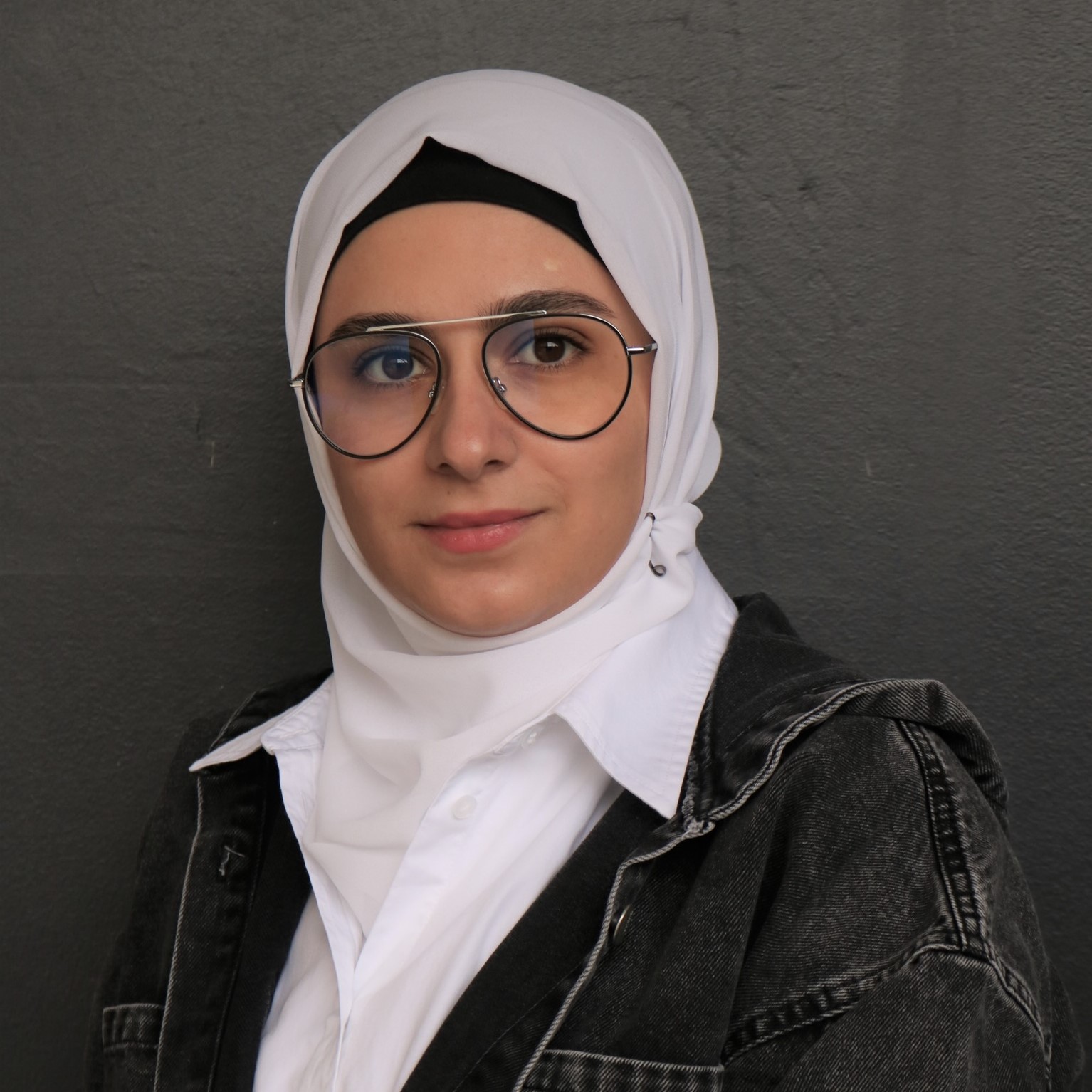
Dr. Maryam Bostanara is a Researcher at the City Futures Research Centre (CFRC) , part of the School of Built Environment at the University of New South Wales (UNSW Sydney). She completed her PhD in 2024 at the Research Centre for Integrated Transport Innovation (rCITI) , School of Civil and Environmental Engineering , UNSW Sydney, with a thesis titled "Urban Dynamics and Household Decisions: Advanced Statistical Methods in Relocation, Land Use, and Transport Planning." She holds a BSc and MSc in Industrial Engineering (Systems Optimization) from Sharif University of Technology, Iran (2016 and 2018). Maryam’s research focuses on the intersection of transport and land-use, emphasizing behavioral models and data-driven approaches to urban sustainability. Her work integrates data visualization , machine learning , and econometric methods to analyze residential relocation, transport planning, and urban dynamics. A notable trend in her publications is the application of advanced statistical frameworks (e.g., DDCM, survival analysis) to study relocation behaviors, cycling infrastructure, and time-use patterns during crises like the COVID-19 pandemic. She has also contributed to interdisciplinary topics, including AI-driven healthcare analytics. Recipient of UNSW Women in Engineering Research Top-Up Scholarship Awarded Best research demonstration at TRANSW 2021 Maryam is supported by the Digital Grid Futures Institute Seed Funding (DGFI) 2024 and is affiliated with the CFRC, a leader in urban futures research. Her expertise spans transport modeling, behavioral economics, and data science, with a growing focus on health-related applications.
Dr. Hadi Khorshidi is a Senior Research Fellow at the Cancer Health Services Research Unit within the Melbourne School of Population and Global Health at the University of Melbourne. He joined the CHSR Group in September 2021. Previously, he held roles as a Senior Data Analyst at the Institute for Safety, Compensation and Recovery Research (ISCRR) and as a Research Fellow in the School of Computing and Information Systems. His research focuses on medical data mining, optimization, machine learning, and uncertainty quantification applied to healthcare challenges, particularly in cancer research and injury outcomes. Dr. Khorshidi earned his PhD in Applied and Computational Mathematics from Monash University in 2016, with a thesis titled “System Reliability Optimisation via Uncertainty Quantification.” He holds prior academic and professional qualifications in related fields, including a Master’s and Bachelor’s degrees (specific details not provided in the text). His research interests span interdisciplinary domains, including medical data mining , optimization techniques , machine learning applications , and uncertainty quantification , with a focus on healthcare systems and cancer research. He has contributed to projects involving agent-based modeling for disease diagnosis, system dynamics modeling for genomic sequencing implementation, and improving decision-making through AI and collaborative human-machine approaches. Dr. Khorshidi has secured notable grants and awards, including the O&G Innovation Grant and a joint research grant through the Manchester-Melbourne Research Fund. These support his work on integrating advanced technologies into healthcare decision-making and cancer management strategies. In addition to his research, he serves as a Chief Investigator in the Manchester-Melbourne Research Fund project. His collaborative efforts include editorial roles in journals such as the International Journal of System Assurance Engineering and Management , and contributions to program committees for IEEE conferences. He is affiliated with the Cancer Health Services Research Unit and collaborates with the CHSR Group, contributing to interdisciplinary teams focused on advancing healthcare solutions through data-driven methodologies.
Nandini Sidnal serves as Senior Learning Facilitator and National Academic Course Coordinator for Torrens University's Master of Software Engineering program through the Centre for Artificial Intelligence Research and Optimisation (AIRO). With over 20 years of international teaching experience in Computer Science, Engineering, and Networking, she has established herself as a key academic figure in AI and blockchain applications. Her educational foundation includes: PhD in Computer Science and Engineering (Cognitive Computing using Intelligent Agents) from Visvesvaraya Technological University (2012) M.Tech in Computer Science and Engineering (Parallel and Distributed Computing using Intelligent Mobile Agents) (2003) Bachelor of Engineering (1993) Nandini's research spans Artificial Intelligence, Blockchain Security, and Cognitive Computing , with strong emphasis on practical implementations in agriculture and healthcare. Her work integrates intelligent agents with distributed systems to solve real-world problems like food supply chain security and medical diagnostics, demonstrating consistent innovation from her early best paper award-winning thesis to current cutting-edge applications. Recent publications reveal a pronounced trend toward AI-driven agricultural optimization (dairy quality, aeroponics, nut farming) and healthcare diagnostics (epilepsy detection), alongside critical work in edge security. These outputs consistently bridge theoretical frameworks with tangible industry solutions, particularly in blockchain-secured IoT systems and deep learning applications. Her scientific recognition includes: Best Paper Award at an international conference for distributed computing research Nandini actively mentors high-impact projects including 'Strengthening Mobile-Based Services for Agriculture' and 'Enhancing VANET Performance with Cloud and Edge Technology.' Her industry collaborations with Intel (Parallel Programming integration) and Nokia (Mobility Research Lab establishment in Finland) demonstrate exceptional academic-industry synergy. The AIRO Centre serves as her primary research hub where she guides PhD candidates in blockchain-secured agri-supply chains and semantic recommender systems. Her Mobility Research Lab in Finland remains a cornerstone of her practical innovation legacy, focusing on next-generation mobile application development that continues to influence current VANET and edge computing research directions.
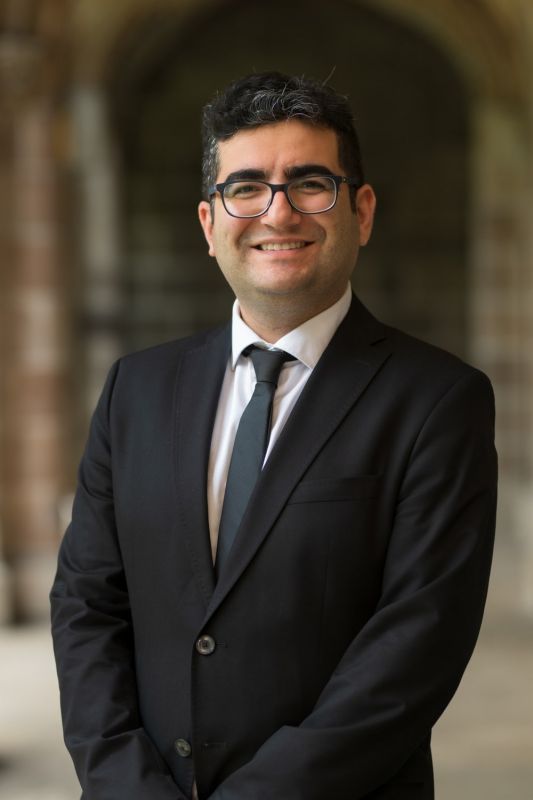
Bishnu Lamichhane is an Associate Professor at the University of Newcastle, Australia, within the School of Mathematics and the College of Engineering, Science and Environment. His research focuses on applied and computational mathematics, with interdisciplinary collaborations in engineering, statistics, physics, and environmental science. He holds a PhD in applied mathematics from the University of Stuttgart (Germany) and has a strong track record in cross-disciplinary projects, including coal blending models for BHP and neutron strain tomography for engineers. Education: M.Sc. (Industrial Mathematics) from University of Kaiserslautern (Germany), PhD from University of Stuttgart (Germany). He has taught at all levels, including AMSI Honours courses in 2011, 2014, and 2020. He has supervised 12 completed PhD students and currently supervises 8 more. Research Interests: Numerical methods for PDEs, finite element methods, data science, optimisation, and tomography. Collaborations span institutions in Australia, Germany, UK, USA, and India. He has held leadership roles in the Computational Mathematics Group (CMG), served on the AMSI Board, and organized major conferences like CTAC 2018. His work has been supported by grants from BHP, ACARP, and international bodies. Key Achievements: Gold Medal (Tribhuvan University), DAAD Scholarship, Honorary Professorship at IIT Bombay. His research has led to advancements in coke microstructure analysis, locust foraging models, and ice shelf dynamics under ocean waves.
Dr. Nameer Al Khafaf is a Lecturer in the School of Engineering at RMIT University, located at City Campus, Australia. His research focuses on renewable energy systems, smart grid technologies, and machine learning applications in energy management. He is actively involved in supervising research projects, including AI for Clean Energy and Sustainability and Multi-objective optimisation of battery storage systems . His research interests span photovoltaic generation forecasting, hydrogen hybrid energy systems, electric vehicle integration, and energy storage optimization. His work emphasizes leveraging deep learning and neural networks to address challenges in renewable energy integration and grid reliability. Dr. Al Khafaf’s recent articles highlight advancements in photovoltaic forecasting, hydrogen energy systems feasibility, and EV charge scheduling. These studies underscore his commitment to sustainable energy solutions and smart grid innovation. He is open to supervising Masters and PhD students in these areas. No scientific awards have been explicitly stated. His work involves collaborations with industry partners and international research teams, contributing to both academic and applied outcomes in energy systems.
Dr. Mahakim Newton is a Lecturer in Data Science at the University of Newcastle, Australia, and an Adjunct Senior Research Fellow at Griffith University’s Institute for Integrated and Intelligent Systems. He holds a PhD in Computer and Information Sciences from the University of Strathclyde, alongside degrees from Bangladesh University of Engineering and Technology (BUET). His research focuses on artificial intelligence, machine learning, bioinformatics, and computer education, with notable contributions to protein structure prediction and IoT interoperability. Education: Ph.D., University of Strathclyde M.Sc.Engg., Bangladesh University of Engineering and Technology B.Sc.Engg., Bangladesh University of Engineering and Technology Research Interests: Dr. Newton’s work bridges AI and computational biology, including protein-ligand binding affinity prediction, bioinformatics algorithms, and IoT edge networks. He explores machine learning techniques for environmental informatics and drug discovery, emphasizing scalable solutions for complex problems. Teaching: He coordinates courses like Computing Project , Algorithms , and Deterministic and Stochastic Optimisation at the University of Newcastle, integrating practical and theoretical insights. Grants and Labs: Involved in interdisciplinary projects on water quality prediction and edge computing interoperability. His collaborations span academic and industrial partners, advancing applications in healthcare and environmental monitoring.
Associate Professor Warren Smith is a faculty member in the School of Engineering and Information Technology at the University of New South Wales (UNSW) Canberra campus. He serves as the Naval Architecture Coordinator and has held various leadership positions including Head of School from 2003-2009. With a background in naval architecture and operations research, Professor Smith has established himself as a leading educator and researcher in maritime engineering and design education. Professor Smith holds a PhD in Operations Research from the University of Houston, an MS in Mechanical Engineering from the same institution, and a BE in Naval Architecture with First Class Honours from UNSW Sydney. His extensive professional experience includes 20 years as a Naval Architect with the Australian Department of Defence (1978-1998), where he held various specialist engineering, research and managerial positions. Professor Smith's primary research interests span Naval Architecture, Ship Design and Safety, Engineering Design Education, and Complex Systems. He has pioneered authentic and immersive experiential learning approaches, particularly through student design competitions. His work in systems modeling, decision-based design, and optimization methods has contributed significantly to both naval architecture and engineering education fields. Professor Smith has developed innovative frameworks for ship design optimization, particularly for high-speed planing craft, and has explored the application of evolutionary algorithms to complex engineering problems. His recent scholarly output demonstrates a continued focus on naval architecture education, maritime engineering, and interdisciplinary applications of optimization techniques. Professor Smith has expanded his research into aircraft proximity systems and air traffic management, showing the transferability of his systems engineering approach across domains. His work consistently bridges theoretical advances with practical applications in both maritime and aerospace contexts. AGM Michell Medal, Mechanical College Board of Engineers Australia for outstanding service to mechanical engineering (2018) Australian Council of Engineering Deans National Award for Engineering Education Excellence Re-Engineering Australia Foundation Founder's Award for Outstanding Contributions to the F1inSchools Program (2017, 2013) Australian Society for Operations Research Conference Best Paper Award (2016) UNSW Canberra Community Engagement Award for Services to the F1inSchools Program (2013) UNSW Canberra Rector's Commendation for Excellence in Classroom Teaching (2010) ALTC Citation for Outstanding Contributions to Student Learning (2008) AAEE Citation for Outstanding Contributions to Student Learning (2008) Ship Shape 2000, Royal Institution of Naval Architects Walter Atkinson Prize (1993) Professor Smith has been instrumental in developing and leading numerous student design competitions that provide authentic learning experiences. He has served as Faculty Advisor for the Formula SAE Student Design & Build Competition (2003-2013 at UNSW Canberra, 2013-2014 at University of Oklahoma) and as National Coordinator for the Warman Design & Build Project & Competition (2002-2021). He currently chairs the Re-Engineering Australia National Rules Committee and serves as Chair of Judges for F1inSchools and Subs in Schools competitions. His educational leadership extends to mentoring first-year engineering students and researching the development of student teamwork competencies. Professor Smith leads the UNSW Canberra Warman Design and Build Project & Competition (1998-present) and is actively involved with the Re-Engineering Australia Foundation as ACT Hub Chair (2007-present). His work connects academic research with practical engineering challenges through student competitions that engage thousands of participants annually. These initiatives form an integrated ecosystem for engineering education that spans from primary school through to university level.
Dr Manou Rosenberg is a Research Fellow at Curtin University's School of Electrical Engineering, Computing and Mathematical Sciences (EECMS), part of the Faculty of Science and Engineering. Their work focuses on optimization and energy systems, particularly in hydrogen infrastructure networks, electricity distribution networks, and evolutionary algorithms. Rosenberg is affiliated with the Centre for Optimisation and Decision Science. Research interests include applying optimization techniques to solve complex engineering problems in energy infrastructure, rural electrification, and renewable energy systems. Their work often integrates evolutionary algorithms with geospatial analysis and machine learning methods. Publications emphasize innovative solutions for hydrogen pipeline design, rural electricity networks, and microgrid optimization. Recent work explores multi-stage approaches for spatially-aware infrastructure planning and the application of genetic algorithms to network design challenges. Rosenberg collaborates with institutions and researchers in Australia, contributing to projects that bridge theoretical optimization and practical energy system applications. They are based at the Curtin Perth campus in the New Technologies Building, Room 463.
Niusha Shafi Abady is an Associate Professor at Charles Darwin University's Faculty of Science and Technology (Sydney Campus), specializing in Computational Intelligence and its real-world applications. Her expertise spans Machine Learning, Data Analytics, and Expert System Design, with a focus on bridging academia and industry through AI-driven solutions. She is the inventor of a computational optimization algorithm and founder of Ai-Labz (https://www.cognobit.com/ai-labz), a predictive analysis tool for businesses. Her research emphasizes smart decision-making systems for energy storage, healthcare, and sustainable development goals. Key research areas include Particle Swarm Optimization, Proton-Exchange Membrane Fuel Cells, Virtual Reality applications, and Fuzzy-Neural Systems. She has collaborated internationally on projects addressing energy efficiency, medical diagnostics, and agricultural monitoring. Awards: Fellow of the Higher Education Academy (UK) Labs/Teams: Ai-Labz (Cognobit) Grants/Advising: Supervised numerous HDR candidates and developed industry-academia partnerships. Her recent publications explore XAI in smart buildings, quantum machine learning, and AI ethics, reflecting her commitment to both technological innovation and societal impact.
Lindon Roberts is a Lecturer in the School of Mathematics and Statistics at the University of Sydney . He holds a DPhil (Doctor of Philosophy) from the University of Oxford and previously served as an MSI Fellow at the Australian National University. His research focuses on numerical optimization, including nonconvex, derivative-free, and stochastic optimization, with applications in machine learning. He currently teaches courses such as MATH2070 (Optimization and Financial Mathematics) and FMAT3888 (Projects in Financial Mathematics). Education & Professional Background: PhD (DPhil) in Mathematics, University of Oxford MSI Fellow, Australian National University Research Interests: Numerical optimization techniques Derivative-free and stochastic optimization methods Algorithm design for machine learning applications Nonconvex optimization challenges His work bridges theoretical optimization and practical implementation, particularly in imaging and data-driven fields. Funding & Grants: 2024: 'Robust Derivative-Free Algorithms for Complex Optimisation Problems' (Australian Research Council DECRA) 2022: 'Theory and Algorithms for Numerical Optimisation' (University of Sydney Faculty Startup) Key Research Trends in Publications: Recent articles emphasize optimization algorithms for imaging (e.g., X-ray and neutron beam techniques) and bilevel learning frameworks. His work on inexact hypergradients and scalable subspace methods highlights advancements in handling complex optimization landscapes.