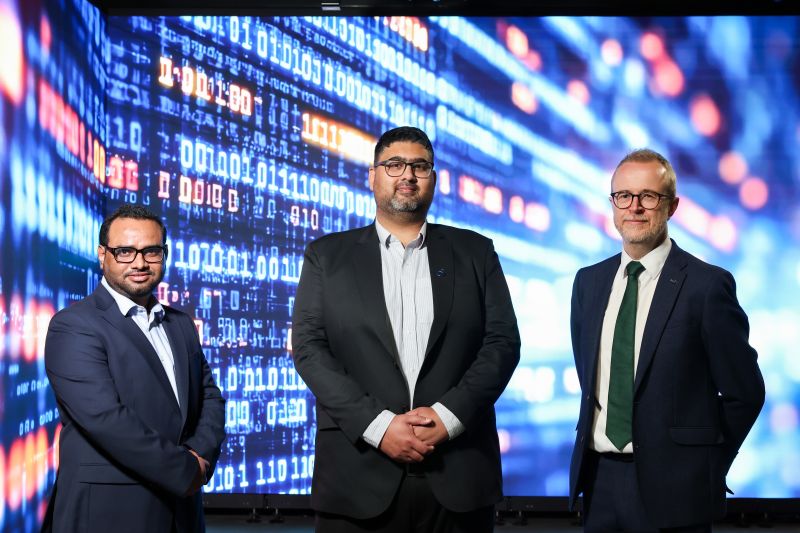
Qiao Cheng is a Lecturer in Electronic and Communication Engineering at Brunel University London, affiliated with the College of Engineering, Design and Physical Sciences and the Electronic and Electrical Engineering Department. His academic career focuses on advanced antenna systems and radar technologies. Research Interests include: Antenna Design for wireless communications Radar Imaging and subsurface detection Metasurfaces and hyperuniform disorder applications 3D Printing in microwave devices Compressive Sensing for imaging systems Key Article Trends demonstrate expertise in reconfigurable antennas, dielectric materials, and machine learning integration in radar imaging. Publications from 2023–2019 highlight innovations in phase-adjustable arrays, scattering reduction, and UWB applications. Teaching Activities encompass courses like Digital Logic Techniques, Electronic System, Autonomous Networks, and Design of Intelligent Systems.
Professor Nila Nilavalan is Head of the Department of Electronic and Electrical Engineering at Brunel University London, College of Engineering, Design and Physical Sciences. He holds a PhD in Near-field Microwave Imaging from the University of Bristol (2001) and a B.Sc. in Electrical Engineering from the University of Peradeniya (1995). His research spans wireless communications, RF systems, antennas, and non-destructive testing, with active grants including EU projects on 6G networks (Optic 6G, 6G BRAINS). Research Focus: His work integrates 5G/6G optimization, quantum networking, reconfigurable antennas, and RF-based biomedical diagnostics. Key areas include: Energy-efficient Open RAN architectures MIMO antenna design and mutual coupling reduction Eddy current sensing for industrial pipelines UWB antennas for solar-integrated RF energy harvesting Awards & Honors: Fellow of IET, IEEE Senior Member, HEA Fellow Patent for microwave object-structure measurement (EP 1850743) Advising & Grants: He has supervised 18+ PhD students on topics like wireless sensor networks and antenna design. Major grants include: Biotechnology Research Council: Portable pathogen detection (2018-2021) EU Horizon: 6G BRAINS (2021-2023) Innovate UK: Fire-alarm communications (2019-2021)
Dr. Muhammad Usman Hadi serves as a Lecturer (Assistant Professor) of Electronics and Communication Engineering in the School of Engineering at Ulster University, Belfast campus. With extensive experience in both academia and industry, he previously worked as a Post-Doctoral researcher at Aalborg University and as an External Research Engineer at Nokia Bell Labs in Denmark (2019-2021). His research focuses on cutting-edge areas including machine learning applications for IoT, optical communication systems, wireless networks, UAV/drones, and next-generation 5G/6G technologies. His specific interests include Time Sensitive Networks, microwave photonics, Radio over Fiber (RoF) systems, and wireless sensor networks. Dr. Hadi has made significant contributions to the field, being recognized as a top 2% cited researcher worldwide for three consecutive years (2021-2023). His recent publications demonstrate a strong trend toward AI-enhanced communication systems, particularly for 6G networks, with emphasis on MIMO detection, signal processing, and drone-based communication systems. His work bridges theoretical advancements with practical applications in next-generation wireless infrastructure. Top 2% Researcher 2021 Top 2% Researcher 2022 Top 2% Researcher 2023 Research and Impact Fund (2023) Dr. Hadi currently supervises two PhD students: Ms. Cara Rose (funded by the Department of Economy) and Mr. M.Y. Daha (funded by the Vice Chancellor's Research Studentship). He leads innovative research projects including drone-based climate resilience initiatives and IoT-driven cybersecurity frameworks for drone networks. His laboratory has developed the MADNI (Made in UU) drone platform equipped with state-of-the-art 5G connectivity, object detection, and facial recognition capabilities, which serves as a testbed for many of his research initiatives in wireless communications and drone networking.
Frédéric Nabki is a Professor in the Department of Electrical Engineering at École de technologie supérieure (ÉTS) in Montreal, Canada. Holding a B.Ing. and Ph.D. from McGill University, he maintains an active research program focused on microelectromechanical systems, RF circuits, and integrated photonics. His work bridges fundamental research with practical applications in avionics, wireless communications, and sensing systems. Dr. Nabki's research interests span microelectromechanical systems (MEMS), radio frequency integrated circuits, sensor design, microfabrication techniques, and optical communications. His laboratory, LACIME (Communications and Microelectronic Integration Laboratory), focuses on three primary research axes: Sensors, Networks and Connectivity; Innovative materials and advanced manufacturing; and Quantum Engineering. His work encompasses analog and RF microelectronics, MEMS and MOEMS devices, microfabrication, system-on-chip design, integrated sensors and actuators, interface circuits for sensors, wireless and optical communication circuits, energy harvesting microsystems, silicon photonics, and embedded systems for avionics applications. Analysis of Dr. Nabki's recent publications reveals a strong focus on MEMS technology with applications spanning multiple domains. His work demonstrates expertise in piezoelectric MEMS devices, optical switching solutions using silicon nitride photonics, ultrasonic transducers for sensing applications, and RF front-ends for avionics. The research increasingly incorporates machine learning techniques for signal processing and fault detection, showing an interdisciplinary approach that combines hardware design with advanced algorithms. His work maintains strong ties to practical applications, particularly in aerospace, industrial monitoring, and biomedical imaging. Dr. Nabki has successfully supervised numerous graduate students through their master's and doctoral research. His supervision portfolio includes over 30 theses covering diverse topics from MEMS resonators and energy harvesters to optical switching systems and avionics RF front-ends. His research has been supported through significant funding that has enabled the filing of 48 patents, numerous peer-reviewed publications (116 journal articles), and multiple book chapters. The extensive patent portfolio demonstrates the translational nature of his research with practical commercial applications. Dr. Nabki leads the LACIME research laboratory, which focuses on the integration of communication systems with microelectronic technologies. The laboratory maintains strong collaborations with industry partners, particularly in the aerospace sector, and has developed specialized facilities for MEMS design, fabrication, and testing. Current research directions include quantum-based security for connected objects, advanced MEMS for avionics applications, and silicon photonics for optical switching solutions.
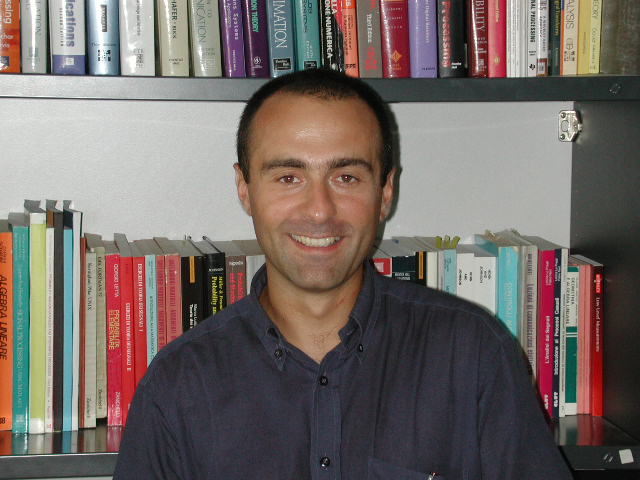
Giulio Colavolpe is a Full Professor of Telecommunications at the Department of Engineering and Architecture, University of Parma, Italy, where he coordinates the SPADiC (Signal Processing for Advanced Digital Communications) research group. He received his Laurea (cum laude) in Telecommunications Engineering from the University of Pisa in 1994 and his PhD in Information Technologies from the University of Parma in 1998. His academic career includes positions as Researcher (1999-2002), Associate Professor (2002-2016), and Full Professor (2016-present) at the University of Parma, with a visiting period at Institut Eurecom in France (2000). Professor Colavolpe's research focuses on digital communications systems, adaptive signal processing, iterative detection techniques for memory channels, channel coding, and information theory. His work has significant applications in satellite communications, optical systems, and wireless networks. He has coordinated numerous research projects funded by the European Space Agency, the Italian Ministry of Education, Universities and Research, and international telecommunications companies. His recent publications demonstrate expertise in OTFS modulation, phase noise channels, time-frequency packing, and non-terrestrial networks. His publication record includes two authoritative books ( Wireless Communications: Algorithmic Techniques and Detection Algorithms for Wireless Communications ), over 80 journal articles, more than 120 conference papers, and 21 industrial patents. His work on phase noise channels, time-frequency packing, and satellite communications has been particularly influential, with several papers evaluated as 'Excellent' in the Italian VQR assessment. Best paper award at SoftCOM'05 Best paper award for Optical Networks and Systems at ICC 2008 Best paper award at ASMS&SPSC 2010 Included in World's Top 2% Scientists by Stanford University Professor Colavolpe has served as an Editor for IEEE Transactions on Wireless Communications, IEEE Wireless Communications Letters, and IEEE Transactions on Communications. He has supervised 12 PhD students and over 100 Master's theses, and currently supervises one PhD student. His SPADiC research group maintains collaborations with leading institutions including USC, University of Michigan, CNIT, and Politecnico di Torino.
Hieu P. Nguyen is an Associate Professor in the Department of Electrical & Computer Engineering at Texas Tech University's Whitacre College of Engineering. He directs the Wide/Ultrawide Bandgap Semiconductors Laboratory, focusing on cutting-edge semiconductor research and development. Dr. Nguyen earned his PhD in Electrical Engineering from McGill University (2012), MS in Electrical Engineering from Ajou University (2009), and BS in Physics from Vietnam National University (2005). His academic journey reflects a strong foundation in both physics and electrical engineering, which informs his interdisciplinary research approach. His research spans wide/ultrawide bandgap semiconductors with particular emphasis on epitaxial growth, fabrication, and characterization of oxide and nitride semiconductors. He investigates nanostructured photonics including LEDs, laser diodes, waveguides, and photodetectors, with applications in flexible electronics, micro-displays, and AR/VR technologies. His work also addresses surface/air/water disinfection, quantum photonics, and III-nitride/oxide-based memory devices and transistors. Analysis of his recent publications reveals a strong focus on gallium oxide (β-Ga 2 O 3 ) and III-nitride semiconductor systems, with significant contributions to HEMT technology, UV LEDs, and nanowire-based optoelectronic devices. His research demonstrates consistent innovation in device architecture and performance enhancement. Dr. Nguyen teaches several key courses including ECE 4362/5362 Modern Optics, ECE 3311 Electronics, ECE 4381 VLSI Processing, and ECE 5381 Introduction to Semiconductor Processing, bridging his research expertise with classroom instruction. His laboratory is equipped with advanced facilities including Molecular Beam Epitaxy (MBE) Systems, Metal Organic Chemical Vapor Deposition (MOCVD), Microwave Plasma Chemical Vapor Deposition (MPCVD) Systems, and comprehensive optical/electrical characterization tools, enabling comprehensive materials research and device development.
Roberto Di Candia is an Academy Research Fellow at Aalto University's Department of Information and Communications Engineering, specializing in quantum information engineering with microwave-based implementations. His work bridges theoretical quantum physics and practical communication technologies. Research focuses include: Critical quantum sensing leveraging phase transitions for enhanced metrology Quantum illumination protocols for radar/lidar applications Covert backscatter communication systems with MIMO security Waveguide QED and superconducting circuit implementations Dissipative quantum systems and noise resilience Analysis of his 2022-2025 publications reveals a cohesive trajectory toward quantum-enhanced detection systems. He pioneers criticality-based sensors that overcome classical limits, develops practical quantum illumination receivers, and creates stealth communication methods using quantum backscatter. His work consistently appears in top-tier journals including Nature Communications and PRX Quantum, demonstrating both theoretical rigor and experimental relevance in microwave quantum engineering. While specific awards or student supervision details aren't documented in available sources, his extensive collaborative publication record across quantum physics and engineering domains indicates significant contributions to advancing quantum communication and sensing technologies.
K.G. Langendoen is a Professor in the Department of Embedded Systems within the Faculty of Electrical Engineering, Mathematics and Computer Science, specializing in cutting-edge research at the intersection of communication systems and sustainable computing. His research portfolio centers on: Wireless Communication protocols (Visible Light Communication, LoRaWAN) Energy-constrained sensor networks and battery-less systems Embedded systems design for intermittent power environments Scalable IoT architectures and spectrum utilization Recent publications (2020-2023) reveal a strategic focus on passive communication techniques and energy-harvesting systems. His work bridges theoretical modeling with practical implementations, particularly in VLC and LoRaWAN optimization, addressing critical challenges in sustainable networking infrastructure and pervasive sensing. Langendoen has supervised 22 research students through thesis projects and collaborative works, significantly contributing to advancements in energy-efficient communication protocols. His academic service includes editorial roles for ACM publications and Lecture Notes in Computer Science, along with peer review activities. As a core member of the Embedded Systems research group, he drives initiatives in pervasive computing and sustainable networking architectures, with ongoing projects focused on passive sensor networks and spectrum-aware communication systems.
Guido Montorsi is a Full Professor in the Department of Electronics and Telecommunications at the Polytechnic University of Turin. He is affiliated with the College of Electronic, Telecommunications and Physics Engineering and the College of Computer, Film and Mechatronics Engineering. His scientific disciplinary sector is IINF-03/A - Telecommunications (Area 0009 - Industrial and Information Engineering). Professor Montorsi has been actively involved in teaching across multiple academic programs since 2005, including the PhD program in Electrical, Electronics and Communications Engineering through the current 39th cycle. He teaches courses such as Signal Processing and Wireless Transmission Lab, Advanced Wireless Communications, and Information and Communication Theory at both Master's and Bachelor's levels. His research focuses on telecommunications with emphasis on wireless communications, digital signal processing, and communication theory. Professor Montorsi leads the Advanced techniques for digital transmission (CommGroup) research group and has been the scientific manager for numerous research projects including RESTART - Spoke 3 (2023-2025) and WiMAGIC (2008-2011), along with multiple commercial research projects extending through 2026. His recent publications demonstrate a trend toward applying machine learning techniques, particularly recurrent neural networks, to traditional communication problems like channel estimation and signal detection. The research spans both theoretical communication concepts and practical implementations for next-generation wireless systems. Signal overlay design and detection for satellite broadband channels (patent) Topcom++ Software (copyright) A method and a node for detecting phase noise in MIMO communication systems (patent) A method for the construction of codes for the frame header of adaptive coding and modulation systems (patent) Analog-digital belief propagation (patent) Professor Montorsi supervises several PhD students including Martina Magnaldi (39th cycle, 2023-present), Barbara Ripani (37th cycle, 2021-2025), and Majid Mosavat (35th cycle, 2019-2023). His research grants span both competitive public funding and commercial contracts with organizations interested in advanced wireless communications, deep space communications, and satellite broadband technologies. He is actively involved in the Advanced techniques for digital transmission (CommGroup) research group, focusing on next-generation wireless communication systems, optical communications, and error correction coding techniques for challenging channel conditions.
Jo Arve Alfredsen is a Professor at the Department of Engineering Cybernetics, Norwegian University of Science and Technology (NTNU), where he has worked since 2004. His research focuses on applying automation, mathematical modeling, and sensor systems to enhance marine production and aquaculture technologies. He coordinates the Fisheries and Aquaculture Systems research group and teaches courses including industrial computer systems design and fish telemetry. PhD in Engineering Cybernetics, NTNU MSc in Engineering Cybernetics, NTNU Alfredsen's research integrates systems biology with cybernetic principles to develop advanced monitoring and control systems for marine environments. His work addresses challenges in aquaculture through numerical simulations, telemetry technology, and sensor network design, aiming to optimize fish welfare and production efficiency. Recent publications demonstrate expertise in underwater robotics, fish behavior analysis, and environmental monitoring. Key topics include wave-propelled unmanned vehicles, dissolved oxygen modeling, and telemetry-based stress indicators. All 15 most recent articles focus on marine automation, sensor integration, and aquaculture optimization. He has developed specialized tools for feed distribution analysis, fish health monitoring, and current flow assessment, contributing to precision aquaculture frameworks. His team's work on acoustic telemetry systems and biometric sensors has advanced real-time monitoring capabilities in commercial marine farms.
Slavko Šajić serves as an Associate Professor in the Department of Telecommunications at the Faculty of Electrical Engineering, University of Banja Luka. His academic career spans over a decade with continuous research contributions in wireless communications and signal processing. He teaches telecommunications courses at both undergraduate and graduate levels while leading research initiatives in advanced communication systems. His research interests focus on telecommunications engineering with specialization in wireless communication systems , speech recognition technologies , and secure communication protocols . Current work emphasizes practical implementations of frequency hopping spread spectrum, visible light communication, and data augmentation techniques for speech processing. His departmental role includes developing curriculum for telecommunications engineering programs. Analysis of his 15 most recent publications reveals strong trends in real-time communication systems (60% of works), signal processing innovations (35%), and security applications (25%). Notable thematic clusters include VHF synthesizer optimization (2025), audio quality assessment in visible light communication (2024), and FPGA-based synchronization for FH-SS systems (2022). His work consistently bridges theoretical algorithms with hardware implementations. Professor Šajić actively participates in research funding initiatives including the national Smart City project (2018) addressing Banja Luka's infrastructure, and the Erasmus+ project (2017-2021) focused on modernizing telecommunications engineering education. He mentors graduate students through thesis supervision and research projects within the Department of Telecommunications laboratory environment.
Majed Jarrar serves as a Part Time Professor at the School of Engineering Design and Teaching Innovation, teaching graduate course GNG5120 with office hours held Tuesdays from 2:00 pm to 5:00 pm in SITE 0110B. His research spans six core domains: Energy Networks and Distribution (focusing on transformation and usage systems) Telecommunication networks (specializing in communication infrastructure) Smart Cities (addressing urban engineering challenges) Engineering Education (innovating pedagogical approaches) Social Entrepreneurship (bridging business and societal impact) Engineering Design (integrating natural sciences principles) His 2015-2017 publications reveal dual expertise: engineering education research examines entrepreneurship integration and time-sensitive design pedagogy, while telecommunications work advances Radio-over-Fiber technologies for smart grids and wireless services. This cross-disciplinary approach connects infrastructure engineering with educational innovation. No scientific awards, student advising records, grant funding details, or laboratory affiliations were documented in the source materials.
Serhiy Serhiyovych Samoilyk is an Associate Professor at the Department of Radio Engineering and Telecommunications within the Faculty of Information Security and Electronic Communications at Zaporizhzhia National Technical University. He has been active at the university since 2007 and holds the academic degree of Candidate of Physical and Mathematical Sciences, which he obtained in 2019 with a thesis on waveguide-resonator systems. His primary research focuses on microwave resonator systems, mathematical modeling, and optimization of microwave systems. He teaches a diverse range of courses including Service platforms of information systems, Fundamentals of graphic and geometric modeling, Modeling and optimization of systems and networks, and Telemedicine. His expertise spans both theoretical and applied aspects of radio engineering and telecommunications. Samoilyk's recent publications (2016-2024) demonstrate a strong trajectory in electromagnetic theory, microwave engineering, and emerging applications in telecommunications. His work shows a progression from fundamental electromagnetic modeling to practical applications in radar systems, wireless communications, and even interdisciplinary areas like telemedicine and payment systems. The publications reveal consistent contributions to both Ukrainian and international scientific communities. He maintains active research collaborations, as evidenced by his co-authorship on numerous papers across different domains. His work bridges traditional radio engineering with modern applications in IoT, blockchain, and assistive technologies, demonstrating adaptability to evolving technological landscapes. Samoilyk has taught various courses related to radio engineering, circuit design, and communications technology, contributing to the education of future engineers at the university. His academic journey from graduation in 2004 to becoming an Associate Professor reflects dedication to both research and teaching in his field.
Тетяна Іванівна Бугрова is an Associate Professor at the Department of Radio Engineering and Telecommunications within the Faculty of Information Security and Electronic Communications at Zaporizhzhia Polytechnic National University. With over four decades of academic experience since commencing her work at the university in 1979, she has established herself as a prominent researcher in microwave and antenna technologies. Her career spans both teaching and significant research contributions in specialized areas of radio engineering. Her research interests focus on microwave equipment and antennas, quasi-optical devices, mobile communication equipment, and particularly fractal antennas with applications of metamaterials in antenna technology. Dr. Bugrova has authored approximately 30 scientific works including 1 patent, 2 monographs, 3 textbooks, and 10 publications indexed in Scopus. Her research output demonstrates consistent focus on advanced antenna design, with particular emphasis on millimeter wave applications and innovative fractal structures integrated with metamaterials. Her recent publications reveal a strong trend toward hybrid antenna systems combining fractal geometry with metamaterial properties to achieve enhanced performance characteristics. These works explore spectral properties, directional characteristics, and frequency behaviors of novel antenna designs that push the boundaries of conventional antenna technology. Her research bridges theoretical electromagnetic principles with practical applications in wireless communications and radar systems. As an educator, Dr. Bugrova teaches specialized courses including Satellite information systems, Special purpose antennas and automated antenna design systems, Signals and processes in radio engineering, and Fundamentals of information transmission theory and statistical radio engineering. Her academic journey began with a diploma with honors from Zaporizhia Institute of Mechanical Engineering in 1979, specializing in Radio Engineering, and culminated in her Candidate of Technical Sciences degree in 2009 with a thesis on quasi-optical integrated pattern-forming circuits of multi-band antennas in the millimeter wave range.
Dr. Milan Vesković is an Assistant Professor at the Department of Computer and Software Engineering, Faculty of Technical Sciences in Čačak, University of Kragujevac, Serbia. He has been employed at the Faculty since October 2007, progressing from research associate to his current position. His academic journey includes teaching courses in mechatronics, electronics, radio systems, and electronic components and assemblies. Graduated from Faculty of Technical Sciences in Novi Sad, March 11, 2002 (Electrical Engineering and Computer Science) Master's degree from Technical Faculty in Čačak, December 2009 (Electromagnetism) PhD from Faculty of Technical Sciences in Čačak, April 2018 (Electronics) Dr. Vesković's research spans multiple domains within electrical engineering and computer science. His primary interests include the application of numerical methods in electromagnetism (particularly the method of fictitious sources) for solving electrostatic conductor problems, signal processing techniques in electronics, and the application of electronic components in education, ecology, and hardware/software development. His work demonstrates a strong interdisciplinary approach, bridging theoretical electrical engineering concepts with practical applications in computing and environmental sustainability. His recent publications reveal a growing interest in emerging technologies including nanotechnology applications, waste management systems, educational technology (particularly Micro:bit applications), and optimization algorithms for energy management. There's also a clear trend toward interdisciplinary research combining electrical engineering principles with computer science, environmental science, and educational methodologies. Dr. Vesković has served as a UNIDO Consultant for Cleaner Production (CP) Programme following his successful engagement with the "Cleaner Production 2011" project in collaboration with UNIDO and the city of Čačak. As an educator, Dr. Vesković has contributed significantly to curriculum development and teaching in electrical engineering and computer science. His research has been supported through various academic and industry collaborations, particularly in the areas of cleaner production methods and educational technology implementation. He has been actively involved in numerous international conferences and has published 59 papers in domestic and international journals and conference proceedings. His work spans multiple laboratories and research groups within the Faculty of Technical Sciences, particularly those focused on electronics, computer engineering, and interdisciplinary applications of technology in environmental and educational contexts.