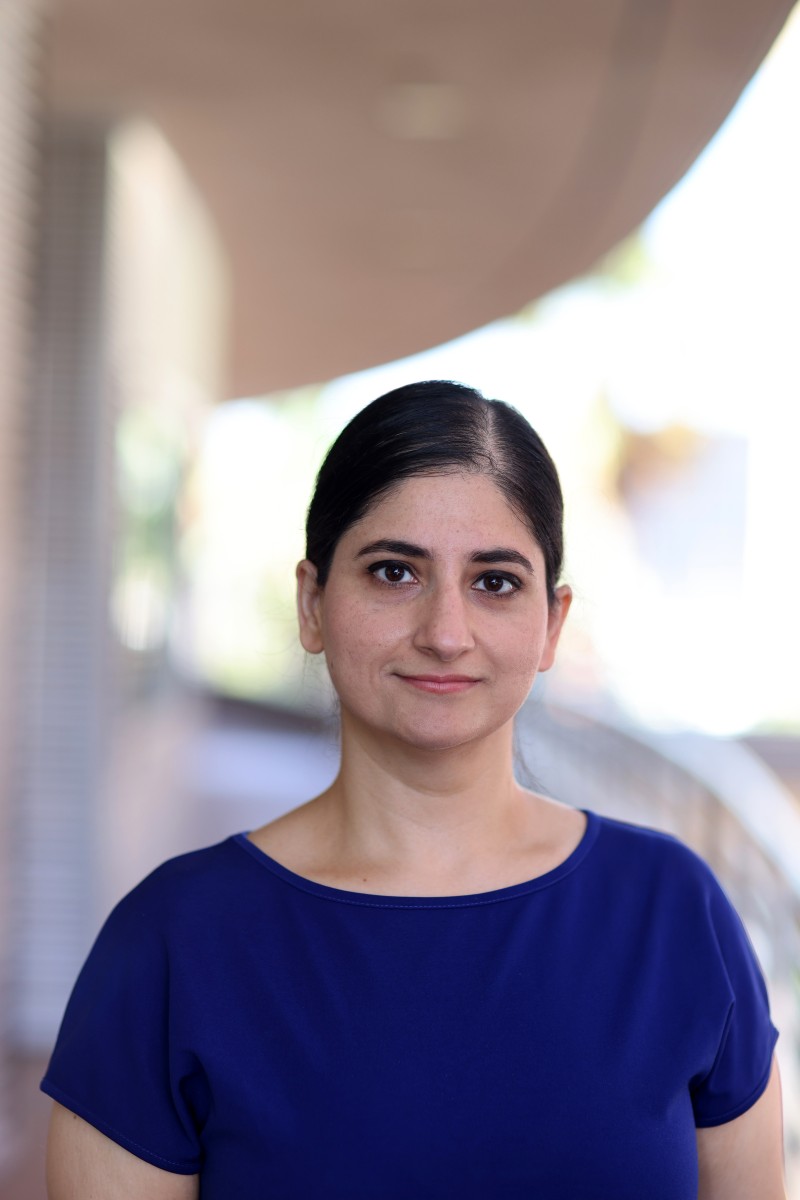
Disha Purohit is a Research Fellow at the Scientific Data Management Research Group of TIB (German National Library of Science and Technology) and a Ph.D. candidate in Computer Science at Leibniz Universität Hannover. She holds an MSc in Internet Technology and Information Systems from Leibniz Universität Hannover and a BSc in Computer Engineering from Dwarkadas J. Sanghvi College of Engineering, India. Current research focuses on Transparent AI over Knowledge Graphs with Causality Collaborates in TrustKG (Leibniz Association-funded) and P4-LUCAT (ERAMed-funded) projects Key research areas: Artificial Intelligence, Data Mining, Hybrid AI systems, and Medical Informatics Contact: disha.purohit@tib.eu , Phone: 0511 762-12153 Her recent publications prioritize neuro-symbolic AI integration, knowledge graph validation frameworks, and medical applications of hybrid systems. She has contributed to open-access datasets for lung cancer research and bias detection mechanisms in ML pipelines. Current projects emphasize explainability and causal reasoning in healthcare knowledge graphs. Research infrastructure includes the Leibniz Universität Hannover's Data Science & Digital Libraries framework and TIB's Scientific Data Management lab. Her work bridges symbolic reasoning with machine learning for clinical decision support systems.
Manveen Kaur is an Assistant Professor in the Department of Computer Science at California State University, Los Angeles, within the College of Engineering, Computer Science, and Technology. She serves as Lab Director of the Applied Research in Computing Systems (ARCS) Lab, driving innovation in Internet-of-Things and Cyber-Physical Systems through experimental testbeds and theoretical design. Education: Ph.D. in Computer Science, Clemson University, 2022 M.S. in Electrical and Computer Engineering, The Ohio State University, 2012 Her research pioneers software and systems engineering for emergent cyber-physical systems, with current focus on drone swarm communication frameworks using Named Data Networking (NDN) extended with AI/ML for intelligent decision-making. She addresses critical challenges in data dissemination, security, and performance for applications ranging from UAV swarms to connected vehicles, emphasizing real-world implementability of theoretical advances. Analysis of her publication trajectory reveals consistent focus on solving communication challenges in resource-constrained wireless environments. Early work established foundations in vehicular network security and performance, evolving toward drone swarm frameworks where AI/ML integration optimizes data-centric communication. Recent publications demonstrate convergence of NDN, edge computing, and security protocols for next-generation IoT applications. Dr. Kaur actively mentors undergraduate and graduate researchers, evidenced by participation in the CAHSI Local Research Experiences for Undergraduates (LREU) program welcoming students for Spring 2023 projects. She teaches courses including CS 3035 (Programming Language Paradigms), CS 5035 (Functional Programming), and CS 5540 (IoT and Cyberphysical Systems). As co-director of the ARCS Lab, she leads projects like autonomous drone swarms for pathfinding and airport patrol rovers with collision avoidance. The lab develops hardware testbeds to validate communication frameworks while addressing open research questions in IoT data sharing, latency-sensitive applications, and security for sensitive data streams.
Mehmet Ilter is a Visiting Faculty member in the Department of Information and Communications Engineering at Aalto University, affiliated with the Risto Wichman Group. He holds a PhD in Engineering and Technology from Carleton University (awarded February 16, 2018) and previously earned his Bachelor’s and MSc degrees from Istanbul Technical University in 2009 and 2012, respectively. His research expertise lies in advanced wireless communication systems, with a focus on full-duplex relaying, wireless power transfer, physical layer security, visible light communication, software-defined radio, and machine learning applications at the physical layer. His work bridges theoretical analysis with practical implementation, particularly in next-generation wireless networks and IoT systems. Wireless Power Transfer Full-Duplex Communication Physical Layer Security Index Modulation Energy Harvesting Beamforming for Intelligent Surfaces His recent publications (2020–2024) in top IEEE journals demonstrate a consistent focus on information and energy co-design, with applications in massive IoT and large intelligent surfaces. Key themes include data-oriented communication, delay-outage tradeoffs, near-field beamforming, and RF-based information harvesting, reflecting a strong trend toward integrated sensing, communication, and energy systems. He led the postdoctoral research project Information Harvesting (2020–2023) at Aalto University, funded under the RCF Postdoctoral Researcher program. This project explored innovative methods for simultaneous data and energy transmission, contributing to sustainable wireless networks. Mehmet Ilter has also contributed two significant research datasets: Irregular Constellations for Full-Duplex Relaying (2019) and Data Oriented Communication Irregular Constellations (2021), supporting open science in wireless communication research.
Prof. Pai-Yen Chen is a tenured Professor at the Department of Electrical and Computer Engineering , University of Illinois at Chicago (UIC), and a leading figure in applied electromagnetics, wireless sensors, and nanophotonic systems. His work bridges physics, device engineering, and circuit design for applications in IoT , telemedicine , and quantum information processing . Education : PhD (2013), University of Texas at Austin; MS (2006) and BS (2004), National Chiao Tung University, Taiwan. Research Interests : Applied electromagnetics, non-Hermitian systems, graphene nanoelectromagnetism, antenna-on-chip design, plasmonic metamaterials, and hardware security. His 150+ journal papers (including in Nature , Nature Electronics , and IEEE Transactions ) emphasize exceptional points in sensors , stretchable bioelectronics , and quantum-inspired security protocols . Recent work explores machine learning for electromagnetic design and 3D IC heterogeneous integration . Scientific Awards : IEEE Fellow (2024), NSF CAREER (2018), SPIE Rising Researcher (2018), IEEE Technical Achievement Award (2024). Editorial Roles : Senior Editor of IEEE Journal of Selected Areas in Sensors , Associate Editor for multiple IEEE journals and Optics Express . Students : Mentored 8 PhD graduates (e.g., Dr. Liang Zhu at X-wave Innovations Inc., Dr. Mehdi Hajizadegan at UI Health) and actively recruits postdocs in nanophotonics and RF sensor design .
Professor Yang Hao is a distinguished academic at Queen Mary University of London, where he holds the position of Professor of Antennas and Electromagnetics. He serves as Deputy VP for Strategic Research and Deputy Head and Research Lead of The Centre for Electronics within the School of Electronic Engineering and Computer Science. His research group spans multiple centers including the Centre for Electronics, Centre for Multimodal AI, and Centre for Networks, Communications and Systems. Professor Hao earned his Ph.D. from the Centre for Communications Research at the University of Bristol in 1998, followed by postdoctoral research at the University of Birmingham (1998-2000). He joined Queen Mary University of London in 2000 as a lecturer, was promoted to Reader in 2005, and to Professor in 2007. He currently holds the QinetiQ/Royal Academy of Engineering Research Chair and has completed executive leadership training at Oxford's Saïd Business School. His research spans antenna engineering, transformation optics, material discovery, bioengineering, metamaterials, and communication engineering. Professor Hao's pioneering work in metamaterials and transformation optics has reshaped electromagnetic device possibilities. His research laid the foundation for discovering unconventional material properties through AI/ML and robotic-controlled lab automation, enabling precise wave control. Beyond theoretical advancements, he has made significant contributions to wireless communication, wearable electronics, and in-body radio channels for medical applications, demonstrating the societal impact of his work. His recent publications reveal a strong focus on metamaterials, AI-driven material discovery, and practical applications in satellite communications and medical devices. There's a clear evolution from fundamental electromagnetic theory toward integrated systems with machine learning components, particularly in antenna design, material characterization, and wireless communication for next-generation (6G) systems. Fellow of the Royal Academy of Engineering (2020) Fellow of the IEEE (2013) Fellow of the IET (2010) Fellow of the ERA Foundation (2007) Royal Society Wolfson Research Merit Award (2013-2018) IET AF Harvey Research Prize BAE Chairman's Silver Award Professor Hao has supervised over 70 PhD students and postdocs since 2000, with many now working at leading global institutions and companies including Samsung, Airbus, and Isotropic Systems. He has secured approximately £60M in research funding from UKRI, Royal Society, Royal Academy of Engineering, ERC, and EU. Current projects include an EPSRC prosperity partnership project of £2.6M. His leadership extends to editorial roles including Editor-in-Chief for EPJ Applied Metamaterials and past Editor-in-Chief for IEEE Antennas and Wireless Propagation Letters (2014-2017). His research group operates across multiple domains including the Centre for Electronics, where they develop advanced antenna systems and metamaterials; the Centre for Multimodal AI, focusing on AI-driven material discovery; and the Centre for Networks, Communications and Systems, working on next-generation wireless communication architectures. The team has successfully translated research into practical applications, including co-founding Isotropic Systems (All.Space), which has created over 100 engineering jobs in Reading.
Dr. Kok Chiang Liang is a Lecturer and Program Coordinator for Electrical and Electronic Engineering at the School of Engineering , part of the College of Engineering, Science and Environment at Newcastle Australia Institute of Higher Education (NAIHE). He previously worked at DSO National Laboratories and SUSS, receiving multiple awards including the Design Innovation Award and Teaching Excellence Gold Awards . He holds a PhD and BEng (Honours) from Nanyang Technological University (NTU). Education PhD, Electrical & Electronic Engineering, NTU (2014) BEng (Honours), Electrical & Electronic Engineering, NTU As a researcher, Dr. Kok focuses on ASIC design for power management , robotics , artificial intelligence , and energy harvesting applications . His work bridges IoT and sustainable engineering, with over 50 publications in Q1/Q2 journals and conferences. Notably, he has pioneered innovations in medical device design, urban sustainability, and educational technology. His recent articles highlight trends in sustainable electronics and AI integration across domains. He has received significant recognition, including two Best Paper Awards and substantial research seed funding (over S$260,000). Dr. Kok also contributes to community service as a District Councillor and Grassroots Volunteer in Singapore, and serves on the STEM Industrial Advisory Board and IEEE committees . Scientific Awards Design Innovation Award (Individual), DSO National Laboratories (2018) Teaching Excellence Gold Award, SUSS (2020, 2025) Best Paper Award, 3rd ICESA (2021) Best Paper Award, 6th ICPEE (2024) Dr. Kok’s leadership extends to research grants as Principal Investigator and Co-PI, and to policy advisory roles for Singapore’s Ministry of Education. His interdisciplinary approach combines technical innovation with societal impact, reflected in his roles at People’s Action Party Meet-the-People Sessions and Ang Mo Kio Town Council .
Professor Hamed Al-Raweshidy is a distinguished Professor of Communications Engineering at Brunel University London, where he serves as Director of the Wireless Networks and Communications Centre (WNCC) and Director of Postgraduate Studies in Electronic and Computer Engineering. With over three decades of academic and industry experience, he has established himself as a leading researcher in wireless communications and networking technologies. His educational background includes a BEng and MSc from the University of Technology in Baghdad (1977 and 1980), a Post Graduate Diploma from Glasgow University (1987), and a PhD from Strathclyde University (1991). Prior to his current position, he worked with prestigious organizations including Space and Astronomy Research Centre in Iraq, PerkinElmer in the USA, Carl Zeiss in Germany, British Telecom in the UK, and several renowned universities. Professor Al-Raweshidy's research focuses on next-generation wireless technologies, particularly in the areas of 6G networks, quantum communications, artificial intelligence applications in networking, radio over fibre technologies, Internet of Things (IoT), edge computing, and cybersecurity. He has published over 370 papers in international journals and conferences, demonstrating his prolific contribution to the field. His recent work shows a strong emphasis on integrating quantum technologies and AI with wireless communications, particularly for healthcare applications, secure network operations, and efficient resource management. The trend in his publications indicates a strategic shift toward practical implementations of theoretical concepts in real-world scenarios, with particular attention to energy efficiency and security in next-generation networks. Member of NETworld 2020 Network, advising the European Commission on research directions Principal investigator for EPSRC and European projects including the MAGNET EU project (2004-2008) Editor of the first book on Radio over Fibre Technologies for Mobile Communications Networks Guest editor for the International Journal of Wireless Personal Communications As an academic leader, Professor Al-Raweshidy serves on numerous editorial boards, conference committees, and review panels including the EPSRC peer Review College and panels for the EU Commission, Hong Kong, and Cyprus. He is frequently invited to deliver lectures at prestigious institutions worldwide and serves as an external examiner for several top universities. His leadership extends to industry collaboration, where he acts as a consultant for major telecommunications companies including Vodafone, Ericsson, Nokia, Siemens, and others, bridging the gap between academic research and commercial applications.
Qiao Cheng is a Lecturer in Electronic and Communication Engineering at Brunel University London, affiliated with the College of Engineering, Design and Physical Sciences and the Electronic and Electrical Engineering Department. His academic career focuses on advanced antenna systems and radar technologies. Research Interests include: Antenna Design for wireless communications Radar Imaging and subsurface detection Metasurfaces and hyperuniform disorder applications 3D Printing in microwave devices Compressive Sensing for imaging systems Key Article Trends demonstrate expertise in reconfigurable antennas, dielectric materials, and machine learning integration in radar imaging. Publications from 2023–2019 highlight innovations in phase-adjustable arrays, scattering reduction, and UWB applications. Teaching Activities encompass courses like Digital Logic Techniques, Electronic System, Autonomous Networks, and Design of Intelligent Systems.
Professor Nila Nilavalan is Head of the Department of Electronic and Electrical Engineering at Brunel University London, College of Engineering, Design and Physical Sciences. He holds a PhD in Near-field Microwave Imaging from the University of Bristol (2001) and a B.Sc. in Electrical Engineering from the University of Peradeniya (1995). His research spans wireless communications, RF systems, antennas, and non-destructive testing, with active grants including EU projects on 6G networks (Optic 6G, 6G BRAINS). Research Focus: His work integrates 5G/6G optimization, quantum networking, reconfigurable antennas, and RF-based biomedical diagnostics. Key areas include: Energy-efficient Open RAN architectures MIMO antenna design and mutual coupling reduction Eddy current sensing for industrial pipelines UWB antennas for solar-integrated RF energy harvesting Awards & Honors: Fellow of IET, IEEE Senior Member, HEA Fellow Patent for microwave object-structure measurement (EP 1850743) Advising & Grants: He has supervised 18+ PhD students on topics like wireless sensor networks and antenna design. Major grants include: Biotechnology Research Council: Portable pathogen detection (2018-2021) EU Horizon: 6G BRAINS (2021-2023) Innovate UK: Fire-alarm communications (2019-2021)
Professor Teng Long is a Professor of Power Electronics at the University of Cambridge , where he leads the Advanced Power Electronics Laboratory (The Long Group) . His research focuses on power electronics for transport electrification , renewable energy , and healthcare applications . PhD, University of Cambridge (2013) MEng, University of Birmingham (2009) BEng, Huazhong University of Science and Technology (2009) His work spans power semiconductor packaging , high-frequency magnetics , and multiscale energy conversion systems . He has secured over £3 million in research grants, with half from the UK government and half from industrial sponsors like STMicroelectronics and Siemens . Recent publications highlight advancements in SiC power modules for low thermal stress , self-adaptive switching technologies , and high-efficiency converter designs for AI accelerators and renewable energy systems . He is a Chartered Engineer with over 70 academic papers and 5 international patents. His group includes 3 postdoctoral researchers and 7 PhD students, fostering innovation in power electronics and transport electrification .
Frédéric Nabki is a Professor in the Department of Electrical Engineering at École de technologie supérieure (ÉTS) in Montreal, Canada. Holding a B.Ing. and Ph.D. from McGill University, he maintains an active research program focused on microelectromechanical systems, RF circuits, and integrated photonics. His work bridges fundamental research with practical applications in avionics, wireless communications, and sensing systems. Dr. Nabki's research interests span microelectromechanical systems (MEMS), radio frequency integrated circuits, sensor design, microfabrication techniques, and optical communications. His laboratory, LACIME (Communications and Microelectronic Integration Laboratory), focuses on three primary research axes: Sensors, Networks and Connectivity; Innovative materials and advanced manufacturing; and Quantum Engineering. His work encompasses analog and RF microelectronics, MEMS and MOEMS devices, microfabrication, system-on-chip design, integrated sensors and actuators, interface circuits for sensors, wireless and optical communication circuits, energy harvesting microsystems, silicon photonics, and embedded systems for avionics applications. Analysis of Dr. Nabki's recent publications reveals a strong focus on MEMS technology with applications spanning multiple domains. His work demonstrates expertise in piezoelectric MEMS devices, optical switching solutions using silicon nitride photonics, ultrasonic transducers for sensing applications, and RF front-ends for avionics. The research increasingly incorporates machine learning techniques for signal processing and fault detection, showing an interdisciplinary approach that combines hardware design with advanced algorithms. His work maintains strong ties to practical applications, particularly in aerospace, industrial monitoring, and biomedical imaging. Dr. Nabki has successfully supervised numerous graduate students through their master's and doctoral research. His supervision portfolio includes over 30 theses covering diverse topics from MEMS resonators and energy harvesters to optical switching systems and avionics RF front-ends. His research has been supported through significant funding that has enabled the filing of 48 patents, numerous peer-reviewed publications (116 journal articles), and multiple book chapters. The extensive patent portfolio demonstrates the translational nature of his research with practical commercial applications. Dr. Nabki leads the LACIME research laboratory, which focuses on the integration of communication systems with microelectronic technologies. The laboratory maintains strong collaborations with industry partners, particularly in the aerospace sector, and has developed specialized facilities for MEMS design, fabrication, and testing. Current research directions include quantum-based security for connected objects, advanced MEMS for avionics applications, and silicon photonics for optical switching solutions.
Armando Vannucci is a tenured Researcher in Telecommunications at the University of Parma's Department of Engineering and Architecture, where he has been active since 2002. His academic journey began with honors in Electronic Engineering from University of Rome La Sapienza in 1993, followed by a PhD in Information Technology from University of Parma in 1998. He progressed from Technical Collaborator (1998-1999) to Research Fellow (2000-2002) before securing his current position. His research spans multiple domains with evolving focus: starting with speech signal processing during his undergraduate studies, moving to radio transmissions for nonlinear channels during his PhD (resulting in two patents), shifting to fiber optic transmissions in the new millennium (focusing on PMD, nonlinear WDM propagation, and optical amplifiers), then to nonlinear polarization attraction, and most recently returning to digital receiver design using AI techniques like variational inference. His work has been conducted within various institutional, third-party, and European projects, with him serving as coordinator for some. Vannucci's recent publications (2022-2025) demonstrate continued research productivity, with significant contributions to expectation propagation algorithms for communication systems, satellite communications, and optical transmission systems. His work shows a clear transition from traditional optical communications toward integrating AI techniques into communication theory. Member of IEEE, OSA, and other scientific societies since 1995 Reviewer for major journals including IEEE PTL, T-COM, JLT, and OSA publications Expert evaluator for national (VQR) and international (FRS-FNRS) panels Visited Alcatel Labs (France), Université Laval (Canada), and Hochschule Karlsruhe (Germany) Administratively, Vannucci has served on the Department Council (2005-2010, 2017-2019), as elected member of the Board of Directors (2009-2012) and Academic Senate (2012-2016), and as DIA Director's Delegate for General and International Affairs (2017-2019). His teaching excellence is evidenced by consistent student evaluations above 90% (faculty average 75%).
Giulio Colavolpe is a Full Professor of Telecommunications at the Department of Engineering and Architecture, University of Parma, Italy, where he coordinates the SPADiC (Signal Processing for Advanced Digital Communications) research group. He received his Laurea (cum laude) in Telecommunications Engineering from the University of Pisa in 1994 and his PhD in Information Technologies from the University of Parma in 1998. His academic career includes positions as Researcher (1999-2002), Associate Professor (2002-2016), and Full Professor (2016-present) at the University of Parma, with a visiting period at Institut Eurecom in France (2000). Professor Colavolpe's research focuses on digital communications systems, adaptive signal processing, iterative detection techniques for memory channels, channel coding, and information theory. His work has significant applications in satellite communications, optical systems, and wireless networks. He has coordinated numerous research projects funded by the European Space Agency, the Italian Ministry of Education, Universities and Research, and international telecommunications companies. His recent publications demonstrate expertise in OTFS modulation, phase noise channels, time-frequency packing, and non-terrestrial networks. His publication record includes two authoritative books ( Wireless Communications: Algorithmic Techniques and Detection Algorithms for Wireless Communications ), over 80 journal articles, more than 120 conference papers, and 21 industrial patents. His work on phase noise channels, time-frequency packing, and satellite communications has been particularly influential, with several papers evaluated as 'Excellent' in the Italian VQR assessment. Best paper award at SoftCOM'05 Best paper award for Optical Networks and Systems at ICC 2008 Best paper award at ASMS&SPSC 2010 Included in World's Top 2% Scientists by Stanford University Professor Colavolpe has served as an Editor for IEEE Transactions on Wireless Communications, IEEE Wireless Communications Letters, and IEEE Transactions on Communications. He has supervised 12 PhD students and over 100 Master's theses, and currently supervises one PhD student. His SPADiC research group maintains collaborations with leading institutions including USC, University of Michigan, CNIT, and Politecnico di Torino.
Dr. Ines Stassen Böhlen is a researcher at the Zurich University of Applied Sciences (ZHAW) School of Engineering , focusing on Scientific Computing & Algorithmics . Her work bridges computational methods with industrial laser manufacturing technologies. Her research interests include: Laser micromachining of optical components CAD/CAM software integration for manufacturing tools Algorithm development for precision engineering Photonics applications in industrial settings Contact: ines.stassenboehlen@zhaw.ch ZHAW School of Engineering, Technikumstrasse 71, 8400 Winterthur, Switzerland
Serap Altay Arpali is an Associate Professor at Başkent University's Department of Electrical and Electronics Engineering. Her research focuses on optics, photonics, and biomedical imaging with structured illumination techniques. Education: PhD (2007) from Gazi University, MS (2003) from Çankaya University, BS (1999) from Dumlupınar University Research interests include laser beam propagation through turbulent media, optical wireless communication, and on-chip fluorescence imaging for medical diagnostics. Her recent work has emphasized underwater optical communication systems and biological tissue imaging. Scientific contributions span atmospheric optics, beam shaping, and biomedical device development. Key article trends examine beam propagation in turbulent environments, fluorescent imaging for high-throughput blood screening, and adaptive optics algorithms. Publications range from 2003 to 2022, with recent emphasis on practical biomedical applications. Current affiliations include: Department of Electrical and Electronics Engineering, Başkent University Postdoctoral Researcher at University of California Los Angeles (2012)