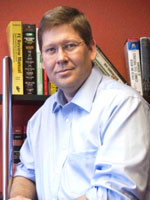
Jie Sun is a Guest Researcher at the Quantum Component Physics department of Chalmers University of Technology, focusing on graphene integration and micro-LED display technologies. Active in semiconductor processing and nanomaterials for optoelectronic applications Specializes in transfer-free graphene synthesis and bump-fabrication methodologies Research Trends: Recent work emphasizes micro-LED fabrication (Au-Au micro-bumps, indium bumps), graphene transparent electrodes , and plasmon-enhanced light extraction . Collaborative projects address quantum dot color conversion and localized surface plasmon resonance in nanorod structures. Projects: Involvement in grants from Formas , ÅForsk , and Carl Tryggers Stiftelse for sustainable wastewater treatment, graphene-based microbial fuel enhancement, and 2D material transfer methods.
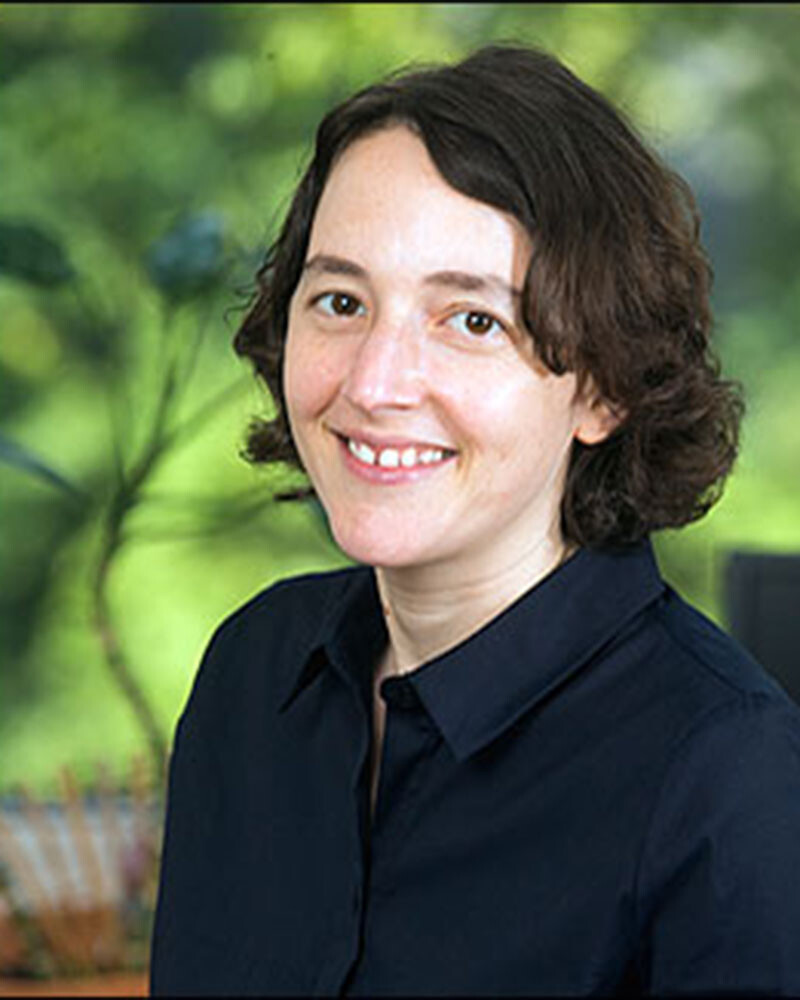
Heike Riel serves as IBM Fellow, Head of Science of Quantum and Information Technology, and Lead of IBM Research Quantum Europe at IBM Research. Her work focuses on quantum computing, nanoscale electronics, and optoelectronic device innovation. PhD in Physics (University of Bayreuth, 2003) MBA (Henley Business School, 2010) Research interests center on quantum computing hardware, nanoscale device engineering, and neuromorphic computing technologies. Her publications demonstrate expertise in semiconductor-metal interfaces, superconducting quantum devices, and nanowire-based systems. Article keywords include Quantum Physics , Nanotechnology , and Materials Science with sub-fields spanning spin qubit control , Josephson junction dynamics , and hybrid quantum systems . TR100 (2003) IEEE Andrew S. Grove Award (2022) National Academy of Engineering (2022) Riel advises academic institutions as member of review committees and serves on Germany's Forschungszentrum Jülich Scientific Advisory Council. She has filed over 50 patents in semiconductor technologies and led the development of 20" full-color OLED displays.
Nicolas Godbout is a Full Professor and Department Director of the Department of Engineering Physics at Polytechnique Montréal. He holds a Ph.D. from Polytechnique Montréal and serves as Head of the Fiber Optics Laboratory and as a Researcher at the Center for Optics, Photonics and Lasers (COPL). His academic leadership extends to teaching courses including Fundamentals of Photonics, Waveguide Optics, Lasers, Quantum Optics, and Current Subjects in Photonics. Dr. Godbout's research spans multiple areas of photonics with particular emphasis on optical fiber components, quantum cryptography, quantum information, optical telecommunications, and nonlinear optics. His work bridges fundamental theoretical investigations with practical applications in telecommunications, biomedical imaging, and quantum technologies. He has made significant contributions to photonic lantern development, quantum key distribution systems, and optical fiber component design. Analysis of his recent publications reveals a strong trend toward interdisciplinary research combining photonics with biomedical applications, quantum information processing, and advanced computational modeling. His work demonstrates consistent innovation in optical fiber technology, with increasing focus on quantum applications and biomedical instrumentation over the past decade. The development of open-source tools like SuPyMode and PyMieSim highlights his commitment to advancing research methodology in the field. $377,000 awarded for Quantum Photonics Quebec projects (2022) Appointment as director of INTRIQ (2019) Dr. Godbout has supervised an extensive number of graduate students, with 9 completed Ph.D. theses and 21 Master's theses under his guidance, plus one currently in progress. His research has been supported by significant funding, including semiconductor research initiatives that received $120 million from the Canadian government as recently as July 2024. He actively collaborates with industry through Castor Optics, a company he co-founded with Professor Caroline Boudoux that specializes in optical fiber components. As Head of the Fiber Optics Laboratory and researcher at COPL, Dr. Godbout leads a dynamic research team focused on advancing photonics technology. His laboratory work spans from fundamental quantum optics research to practical applications in telecommunications and biomedical imaging. Recent activities include significant contributions to semiconductor research initiatives at Polytechnique Montréal, reflecting his leadership in positioning the institution at the forefront of advanced technology development.
Guifang Li is a Professor of Optics and Electrical & Computer Engineering at the University of Central Florida (UCF), affiliated with CREOL, The College of Optics and Photonics. He holds the position of Editor-in-Chief of Advances in Optics and Photonics . His academic journey includes a Ph.D. from the University of Wisconsin-Madison and leadership roles such as Director of the NSF IGERT program in Optical Communications and Networking at UCF. Dr. Li's research focuses on optical communication and networking , RF photonics , and all-optical signal processing . His innovations include pioneering work on photonic computing architectures and high-capacity optical communication systems. He co-founded Optium, UCF's first venture startup, which became a public company (OPTM) in 2006 and later part of II-VI. His scientific contributions are recognized through prestigious awards, including the NSF CAREER Award, Office of Naval Research Young Investigator Award, and fellowships from IEEE, OSA, SPIE, and the National Academy of Inventors. He has advised over 20 Ph.D. students and leads a multidisciplinary research group involving postdoctoral scholars and graduate students. Recent research trends in his publications emphasize photonic computing (e.g., photonic matrix processors, floating-point arithmetic) and advanced optical systems (e.g., quantum cascade lasers, MPLC-based demultiplexers). His work bridges fundamental optics with practical applications in telecommunications and sensing. Labs/Teams: His research team specializes in optical communication systems, photonic integrated circuits, and computational optics.
Jian Shi is a Professor in both the Department of Materials Science and Engineering and the Department of Physics, Applied Physics, and Astronomy at Rensselaer Polytechnic Institute (RPI). He also holds a Simons Foundation Pivot Fellowship and has been a Visiting Scholar at the Pritzker School of Molecular Engineering at the University of Chicago. Ph.D. in Materials Science, University of Wisconsin-Madison (2012) Postdoc in Applied Physics, Harvard University (2014) His research focuses on understanding and engineering the optical, electronic, and spintronic properties of novel materials, particularly van der Waals solids, polar/ferroelectric crystals, chiral systems, and materials with tunable Berry parameters. His group develops experimental approaches for energy-efficient quantum and spintronic devices, utilizing strain engineering, symmetry manipulation, and heterostructure design. Recent publications highlight advancements in halide perovskite engineering, strain-induced topological phases, and quantum device applications. Key trends include spin-orbit coupling, ferroelectricity, and 2D materials for computing and energy conversion. Simons Foundation Pivot Fellowship (2023) IEEE Ferroelectrics Young Investigator Award (2023) School of Engineering Outstanding Research Team Award (2024) Early Career Editor roles at Journal of Applied Physics (2020–present) His group has advised numerous Ph.D. students and postdocs now placed at institutions like Applied Materials, Apple, and Micron Technology. Funding sources include NSF, AFOSR, ARO, and IBM. Key lab equipment includes customized ALD, PLD, and CVD systems, cryogenic transport and optical stages, high-pressure reactors, and advanced spectroscopy tools. Collaborative research spans quantum computing, neuromorphic devices, and energy materials.
Lei Tian is an Associate Professor in the Department of Electrical and Computer Engineering and the Department of Biomedical Engineering at Boston University's College of Engineering. He leads the Computational Imaging Systems Lab and maintains affiliations with the Neurophotonics Center, Photonics Center, Center for Information & System Engineering, Rafik B. Hariri Institute for Computing, and Nanotechnology Innovation Center. His educational background includes: PhD, Massachusetts Institute of Technology, 2013 MS, Massachusetts Institute of Technology, 2010 Professor Tian's research integrates optics and computation to overcome physical limitations in imaging systems. His work spans computational imaging and sensing, computational microscopy, imaging in scattering media, phase retrieval, and neurophotonics. He develops next-generation imaging systems with applications in biomedical microscopy, neuroscience, semiconductor metrology, and advanced vision applications, emphasizing the joint design of optical components and computational algorithms. His publication record shows a strong progression from fundamental computational imaging techniques to practical applications, with increasing integration of deep learning approaches to solve challenging imaging problems in scattering media and neural environments. His work consistently bridges theoretical advances with real-world applications. Professor Tian has received numerous prestigious awards: Boston University Provost's Scholar-Teacher of the Year Award (2025) Optica Fellow (2025) Early Career Excellence in Research, BU College of Engineering (2021) NSF CAREER Award (2019) Dean's Catalyst Award (2018) The Fumio Okano Best 3D Paper Prize (2018) As an advisor, he has successfully mentored at least 10 PhD students to completion as of mid-2025, with recent graduates including Jeffrey Alido, Jiabei Zhu, Chang Liu, Hao Wang, and Joseph Greene. His research is supported by substantial funding including a $2 million NIH grant for the Computational Miniature Mesoscope (CM2), a $1.75M grant from NIBIB for cancer cell metabolism research, and funding from the Chan Zuckerberg Initiative. His Computational Imaging Systems Lab pioneers innovative imaging techniques that synergistically combine optical hardware with computational algorithms, making significant contributions to computational microscopy, intensity diffraction tomography, neural imaging systems, and deep learning applications in optical imaging for both biomedical and industrial applications.
Marco Farina is a Full Professor in Electromagnetics at the Department of Information Engineering, College of Engineering, Polytechnic University of Marche, Italy. His research spans electromagnetic modeling, scanning microwave microscopy, and nanotechnology, with applications in 2D materials, biosensors, and advanced measurement systems. He is a Senior Member of IEEE and actively contributes to Technical Committees on RF Nanotechnology. Laurea and Ph.D. in Electronic Engineering from University of Ancona Research interests focus on quantitative scanning microwave microscopy, electromagnetic analysis of active/passive components, and nanoscale characterization techniques. His work bridges theoretical modeling with practical implementation, including the development of the EM3DS software suite and novel inverted SMM systems. Recent publications highlight interdisciplinary applications in biomedical analysis and semiconductor physics. Scientific recognition includes the 3M-Nano Best Conference Paper Award and grants from US Army Research Laboratory and US Air Force Office of Scientific Research. He holds an ESA-funded patent for VNA calibration and has co-authored a book on planar structure analysis. Collaborative projects emphasize RF device optimization and biological imaging.
James Dickens is a Professor at the Whitacre College of Engineering , Texas Tech University , where he also serves as the Charles Bates Thornton Professor and Co-Director of the Center for Pulsed Power and Power Electronics (P3E) . He holds a PhD (1995), MS (1993), and BS (1991) in Electrical Engineering from Texas Tech University, and is a registered Professional Engineer in Texas. Research Interests: Grounding & Shielding, Explosive Pulsed Power, High-Power Microwaves, Electric Space Propulsion, Aerospace Electronics Key Contributions: Development of semiconductor opening switches, investigation of gas insulation performance, optimization of nonlinear transmission lines, and analysis of multipactor phenomena in waveguides Awards: Fellow of the Japanese Society for the Promotion of Science (1996) His recent publications focus on solid-state switching technologies , high-voltage gas insulation , and multipactor suppression in microwave systems. His work bridges theoretical modeling (LTspice, ANSYS Maxwell) with experimental validation in extreme environments, including studies on explosive emission cathodes, nanocrystalline transformer cores, and vacuum insulator flashover physics.
Jan Stake is a Professor of Terahertz Electronics and head of the Terahertz and Millimeter-Wave Laboratory at Chalmers University of Technology. He holds a MSc (1994) and PhD (1999) in electrical engineering and microwave electronics from Chalmers. His research focuses on terahertz technology for space missions, climate science, and industrial applications. Key projects include developing THz components for the Jupiter Icy Moons Explorer (Juice) and MetOp satellites, and creating sensors for pharmaceutical manufacturing. He has authored 388+ publications, served as Editor-in-Chief of IEEE Transactions on Terahertz Science and Technology , and is an IRMMW-THz board member. Current work emphasizes integrated THz components for space science and wireless communication. Awards include visiting research fellowships at the UK’s National Physical Laboratory (2023). Teaching includes semiconductor physics and microwave engineering, with a weekly journal club for PhD students. Research Interests: Terahertz fundamental science and applications Space instrumentation (e.g., SWI instrument for Juice mission) Climate monitoring via atmospheric THz measurements Graphene-based THz detectors and amplifiers THz radar systems for industrial process monitoring Recent Work Trends: Recent articles (2023–2025) emphasize high-precision quantum-cascade lasers , antenna alignment optimization , industrial THz sensing systems , and space-borne receiver reliability . Key themes include improving THz component integration, enhancing spectral resolution for molecular analysis, and advancing THz applications in manufacturing and environmental science. Awards & Roles: Editor-in-Chief, IEEE Transactions on Terahertz Science and Technology (2016–2018) Chair, IEEE THz Best Paper Award Committee (2019–2021) Elected IRMMW-THz Board Member (2017–2024) Visiting Research Fellow, UK National Physical Laboratory (2023) Grants & Collaborations: Active in EU and industry partnerships for space instrumentation (e.g., Juice mission) and pharmaceutical sensing. Lab develops THz components with companies in aerospace and medical sectors. Labs/Teams: Leads the Terahertz and Millimeter-Wave Laboratory, collaborating with National Physical Laboratory (UK) and ESA on space instrument development.
Xiuling Li is the Donald Bigger Willett Professor in Engineering at the University of Illinois at Urbana-Champaign, holding appointments in the Department of Electrical and Computer Engineering and serving as Interim Director of the Holonyak Micro and Nanotechnology Laboratory. Her research focuses on semiconductor nanostructures and devices. Her work spans nanomaterials, RF/microwave circuits, and semiconductor fabrication. Key interests include nanowire growth, self-rolled membrane nanotechnology, and metal-assisted chemical etching. These innovations enable miniaturized electronics and novel device architectures. Li's recent articles demonstrate advancements in 3D nanofabrication, wide-bandgap semiconductors, and heterogeneous integration. Her group consistently publishes in high-impact journals like ACS Nano and Nature Electronics. IEEE Fellow (2017) APS Fellow (2018) OSA Fellow (2019) National Academy of Inventors Fellow (2020) NSF CAREER Award She leads substantial research initiatives including NSF and DARPA projects, advising doctoral students in nanofabrication and device physics. Her laboratory develops cutting-edge semiconductor processes and characterization techniques.
Professor Vishal Saxena is a faculty member in the Department of Electrical and Computer Engineering at the University of Delaware since 2019. Previously, he held positions at Boise State University (2010–2016) as Assistant and Associate Professor, and served as the Micron Endowed Professor of Microelectronics at the University of Idaho (2016–2019). His research focuses on analog electronic and photonic integrated circuits (ICs), particularly in sustaining IC design advancements post-Moore scaling through hybrid CMOS-photonic integration, neuromorphic computing, and energy-efficient embedded intelligence. Dr. Saxena earned his B.Tech. in Electrical Engineering from IIT Madras (2002), followed by M.S. and Ph.D. in Electrical and Computer Engineering from Boise State University (2007–2010). He has industry experience in semiconductor and telecommunication engineering. His work is supported by NSF, AFOSR, DARPA, NASA, and industry collaborators. Notable awards include the NSF CAREER (2015), AFOSR YIP (2016), and DARPA YFA (2019). His research interests span silicon photonic ICs for optical interconnects, RF photonic systems, neuromorphic circuits using emerging NVM devices, and high-speed analog-to-digital converters. He has pioneered compact modeling techniques for photonic components and developed energy-efficient architectures for spiking neural networks. Dr. Saxena’s publications reflect advancements in photonic integration, neuromorphic hardware, and mixed-signal IC design. He actively contributes to the IEEE community through editorial roles and conference steering committees, including MWSCAS and ISCAS.
Professor Simon Ringer is the Pro-Vice-Chancellor (Research Infrastructure) at The University of Sydney and a Professor of Materials Science and Engineering in the School of Aerospace, Mechanical & Mechatronic Engineering. He is also an academic member of the Australian Centre for Microscopy & Microanalysis and a member of The Net Zero Institute. With an international career spanning Sweden, Japan, the USA, and Australia, Professor Ringer has established himself as a leading researcher in atomic-scale materials design. His research focuses on how atomic clusters create materials with remarkable properties for applications in semiconductors, photovoltaics, catalysis, and lightweight metal alloys. Professor Ringer's work particularly addresses 'property conflicts' in materials engineering, such as balancing strength and ductility or superconductivity and magnetism. His research group has achieved significant breakthroughs in atomic-level characterization, advanced steels development, computer memory technologies, and nanoelectronics, with publications in high-impact journals including Nature Materials, Physical Review Letters, and Advanced Materials. Professor Ringer leads the University's Core Research Facilities program, overseeing strategic planning and implementation of high-end research infrastructure initiatives. His leadership extends to national research infrastructure strategy engagement, positioning the University of Sydney as a leader in Australia's research facilities landscape. Current research projects in his group focus on atomic-scale materials design, functionalized photovoltaic surfaces, additive manufacturing, and new frontiers in microscopy techniques. Professor Ringer has published over 100 papers, authored two significant books ( Atomic-Scale Analytical Tomography in 2022 and Atom Probe Microscopy in 2012), and holds patents in steel and nanomaterial design. His research has practical implications for reducing CO2 emissions through lightweighting technologies and advancing computer memory capacity. He currently supervises several research students including Kirk CHEN, Jeffrey LU, and Samia RAZZAQ, and actively recruits for Honours, Master's, PhD, and postdoctoral positions. Former team members have gone on to work at prestigious institutions worldwide including Texas A&M University, University of Oxford, Max Planck Institute, and various multinational corporations. Professor Ringer's research team utilizes advanced tools including atom probe microscopy, transmission electron microscopy, density functional theory, and computational modeling techniques to gain insights into materials behavior at the atomic scale. His qualifications include BAppSc from Uni SA, PhD from UNSW, and numerous professional designations including CMatP, FIEAust CPEng APEC Engineer IntPE(Aus), FRSN, and FTSE.
Omid Habibpour is an Assistant Professor at the Microwave Electronics lab within Chalmers University of Technology. His research focuses on graphene-based devices and MMICs for high-frequency applications. B.Sc.: Electrical Engineering (Telecommunication Systems), Sharif University of Technology (2002) M.Sc.: Optical Telecommunication Systems (with honors), Amirkabir University of Technology (2004) His research spans Graphene Electronics , Microwave Engineering , and Terahertz Technology , emphasizing material characterization, device modeling, and MMIC design for high-data-rate communication systems. Recent work includes voltage-dependent mobility studies and zero transconductance resistance analysis in graphene FETs. Projects include the Graphene Core Project 3 (European Commission) and Quad Band Infrared Detector (VINNOVA). Publications trend toward graphene integration in microwave/THz systems and SiC substrate applications.
Dr. Florian Merget is a senior researcher ( Oberingenieur ) at the Institut und Lehrstuhl für Integrierte Photonik at RWTH Aachen University since 2011. His research spans silicon photonics , photonic integrated circuits (PICs) , and their applications in biomedical imaging , quantum optics , and optical communication systems . Education : Diplom-Ingenieur and PhD in Electrical Engineering from RWTH Aachen University Research Areas : Photonic device design (grating couplers, modulators, external cavity lasers), optical packaging, quantum interfaces, and biomedical photonics His recent publications focus on silicon nitride components for biomedical and quantum applications, alignment-tolerant optical couplers , and nonlinear optical transmission systems . Collaborations include work with Jeremy Witzens, Alvaro Moscoso Martir, and other photonics experts. Key contributions involve photonic interposer technology , resonant modulator design , and spin qubit-photon interfaces . He has also filed patents related to optical alignment and photonic integration .
Sharon M Weiss is the Cornelius Vanderbilt Professor of Engineering and holds joint appointments in Electrical Engineering, Materials Science & Engineering, and Physics at Vanderbilt University's School of Engineering. She directs the Vanderbilt Institute of Nanoscale Science and Engineering. Her research focuses on light-matter interaction, silicon photonics, porous silicon biosensors, and nanotechnology. She earned a B.S., M.S., and Ph.D. in Optics from the University of Rochester. Her work spans advanced photonic crystal designs, ultra-sensitive biosensors, and radiation-tolerant optical components for aerospace applications. Recent projects include photonic metacrystals for high-Q cavities and porous silicon sensors for rapid diagnostics. She has pioneered integration of phase-change materials like VO₂ in silicon photonics for ultrafast optical switching. Publications emphasize subwavelength photonics, biosensing innovations, and space-qualified optoelectronics. Her lab develops hybrid waveguides, nanobeam cavities, and AI-enhanced sensing systems. Collaborations include NASA and industry partners for biomedical and defense applications.