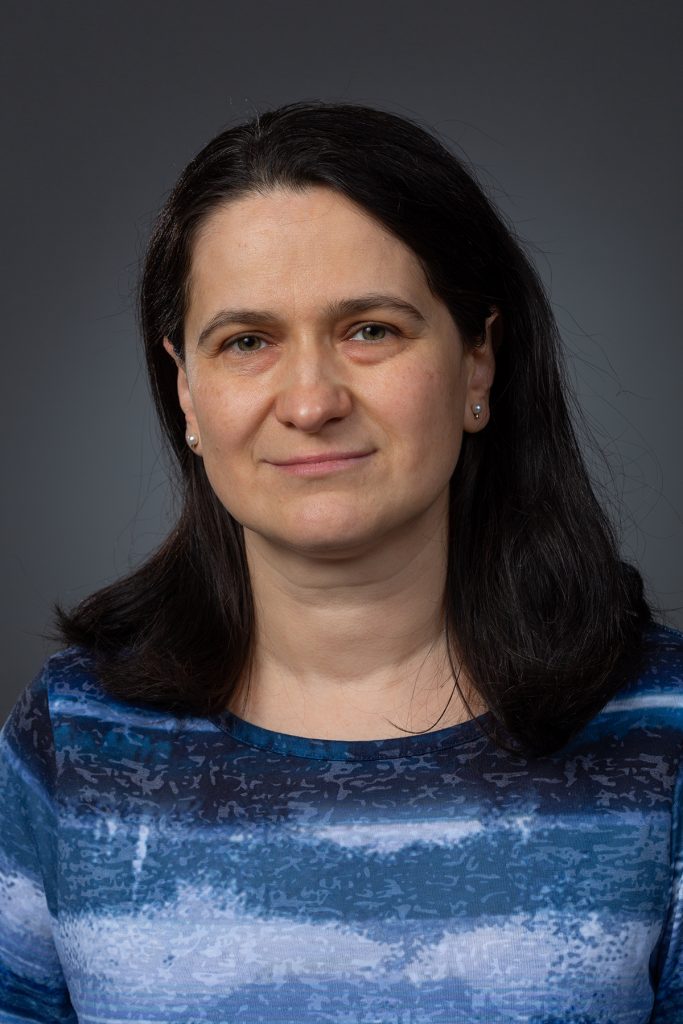
Eline Tolstoy is Professor of Astronomy at the University of Groningen , Faculty of Science and Engineering. She leads a research program devoted to understanding the formation and evolution of dwarf spheroidal galaxies through detailed chemo-dynamical studies of resolved stellar populations. Research Interests Tolstoy’s work centers on the astrophysics of dwarf galaxies , using multi-wavelength, high-resolution spectroscopic data to trace star-formation histories, metallicity evolution, and dark matter content. Her expertise spans: Dwarf spheroidal galaxy dynamics and dark matter halos Chemical tagging of stellar populations via spectroscopic surveys Star formation histories inferred from color-magnitude diagrams and spectroscopy Next-generation instrumentation (WEAVE, WST, Euclid, MICADO) Galactic archaeology and near-field cosmology Recent Research Trends Recent publications demonstrate a strong focus on 3D chemo-dynamical mapping of Local Group dwarf galaxies, leveraging Gaia astrometry and VLT/FLAMES spectroscopy to derive precise kinematics and metallicities for thousands of individual stars. Collaborative papers on the WEAVE and WST facilities highlight her leadership in designing future wide-field spectroscopic surveys that will extend these studies to larger galactic samples and higher redshifts. Scientific Awards George Darwin Lectureship, Royal Astronomical Society (2013) Pastor Schmeits Prize (2007) NWO VICI Research Grant under the Innovational Research Incentives Scheme (2007) Data, Grants & Collaborations Tolstoy has secured major funding through the highly competitive NWO VICI program and participates in large international consortia including the Euclid space mission, the WEAVE spectroscopic survey, and the MICADO first-light imager for the ELT. She has released 31 curated datasets via the Strasbourg and Groningen astronomical data centers, underpinning reproducibility and open science. Labs & Teams She heads a dynamic research group within the Kapteyn Astronomical Institute at Groningen, supervising post-docs, PhD students, and international visitors. The group operates at the intersection of observation, theory, and instrumentation, fostering strong collaborations with ESO, ESA, and institutes across Europe and North America.