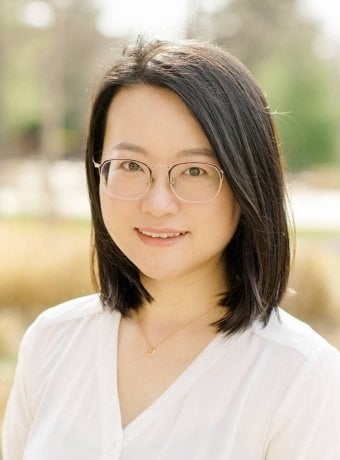
Dr. Yixin Liu is an Assistant Professor in Chemical Engineering and Affiliated Assistant Professor in Biomedical Engineering at Michigan Technological University. She holds a PhD from the University of Connecticut and previously worked at ABB US Corporate Research Center. Her research specializes in chemical/biosensors, nanomaterials, and data-driven sensor optimization. Key areas include non-enzymatic glucose detection, cortisol monitoring, and gas/explosive sensing using advanced materials (e.g., laser-induced graphene, carbon nanotubes). She develops electronic nose/tongue systems and applies machine learning for sensor analytics. Liu teaches Fundamentals of Chemical Engineering and serves as a reviewer for leading materials science journals. Her industrial experience informs product-translatable sensor designs.
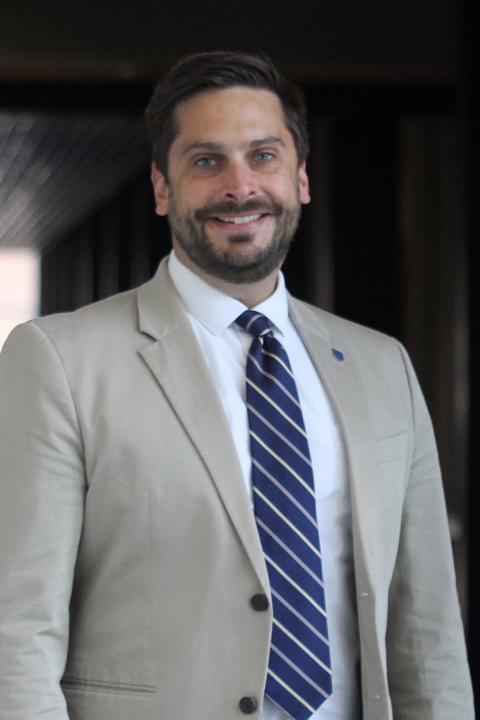
Nicholas J. Kirsch is a Professor of Electrical and Computer Engineering at the University of New Hampshire (UNH). He holds a B.S. from the University of Wisconsin-Madison and M.S./Ph.D. from Drexel University. His research focuses on next-generation communication systems, wireless sensor networks, cognitive radio, and transparent antenna technologies, supported by NSF, ONR, and industry. He serves as Vice President of Finance for the IEEE Vehicular Technology Society and teaches courses like ECE 541, 603, 757/857, 920, 992, and 999. Education: B.S. (UW-Madison, 2003), M.S. (Drexel, 2006), Ph.D. (Drexel, 2009). Early work included fiber optic modules at W.L. Gore & Associates and contributions to Drexel’s Wireless Systems Lab. Research interests span spectrum sensing, vehicular networks, and marine mammal acoustics. Collaborates on bioacoustic signal processing for dolphins and whales using EMD/VMD algorithms. Publications highlight innovations in RF localization (e.g., phantom car attack detection), transparent antenna design, and marine mammal vocalization analysis. Active in interdisciplinary projects combining electrical engineering with environmental science. Recognized as member of IEEE, Eta Kappa Nu, and AAAS.
Dan S. Wallach is a Professor at Rice University's Department of Computer Science, focusing on computer security, cryptography, and electronic voting systems. His work bridges technical rigor with real-world applications, particularly in election integrity and privacy-preserving technologies. Key research areas include Security protocols for verifiable voting systems (STAR-Vote, ElectionGuard) Privacy in social media and censorship-resistant communication Authentication mechanisms and memory safety Secure network design and peer-to-peer incentives Recent publications highlight longitudinal analysis of Android ad libraries, privacy-preserving near-neighbor search, and networked remote voting precincts. His collaborations span institutions like Microsoft Research and academic labs in Europe and Asia.
Dr. Yazan Alqudah is a Professor in the Department of Electrical and Computer Engineering at the University of West Florida, part of the Hal Marcus College of Science and Engineering. He holds a Ph.D. in Electrical Engineering from Pennsylvania State University (2003) and has held roles at Intel Corporation and multiple universities, including Princess Sumaya University for Technology and Western Carolina University. His research focuses on optical wireless communication, mobile networks, and embedded systems, with contributions to machine learning applications in transportation and healthcare. Education: Ph.D., Electrical Engineering, Pennsylvania State University, 2003 M.S., Electrical Engineering, Pennsylvania State University, 1997 B.S., Electrical Engineering and Computer Science, University of Jordan, 1993 Research Interests: His work spans broadband optical wireless communication, next-generation mobile networks, embedded systems design, and machine learning applications in healthcare and transportation. Notable areas include autonomous vehicle sensing, wearable health monitoring, and fault-tolerant automotive systems. Publications Trends: Recent articles emphasize machine learning for driving behavior analysis, sensor fusion in autonomous systems, and optimization of wireless communication protocols. Earlier work includes contributions to WiMAX technology, optical wireless MIMO systems, and energy storage solutions for solar PV arrays. Awards: Intel Recognition Awards (2005, 2007) Best Researcher Award at PSUT (2014) Labs & Projects: Developed hands-on labs for broadband wireless technology and embedded systems education. Current projects include a mobile application for breathing abnormality detection and tools for facial thermography-based lie detection.
Dr. Laura Justham is a Reader in Human Centric Inclusive Engineering at Loughborough University, serving as Co-Director of Undergraduate Admissions and Academic Liaison Officer for the Women’s Engineering Society (WES). She holds a PhD from Loughborough University (2007) and a MPhys DIS (2003). Her career includes postdoctoral research and a lectureship since 2012. She leads the Intelligent Automation Centre and focuses on advanced manufacturing, robotics, and human-centric engineering solutions. Research interests span advanced manufacturing processes, tactile sensor integration, human-robot interaction, and automation systems. Her work emphasizes precision engineering, metrology, and biomimetic sensor design. Recent publications address robotic calibration, hardness prediction, and friction estimation. No scientific awards are listed. She actively contributes to undergraduate admissions strategy and promotes women in engineering through WES collaborations. Her research is supported by grants (details unspecified), with a focus on practical applications in manufacturing and robotics. Laura leads interdisciplinary teams in the Intelligent Automation Centre, integrating machine vision, control systems, and instrumentation. Her labs explore electroadhesives for robotic material handling and 3D printing precision. Future work includes sustainable manufacturing and human-centric technology design.
Orlando Oliveira is a Full Professor of Physics at the University of Coimbra, Portugal, affiliated with the Center for Physics (Centro de Física) within the Faculty of Sciences and Technology. His academic career spans over three decades, starting as an Assistant Professor in 1990 and advancing to his current rank of Professor Catedrático since 2024. He holds a PhD in Particle Physics from the University of Edinburgh (1996) and an Agregação in Physics (2016) from the University of Coimbra. His research focuses on theoretical and computational particle physics, particularly lattice Quantum Chromodynamics (QCD) and condensed matter systems like graphene. Key areas include the study of gluon propagators, quark-gluon vertices, and phase transitions in QCD using lattice simulations. He has led multiple research projects funded by the Portuguese Foundation for Science and Technology (FCT), including initiatives on deconfinement dynamics, exotic hadrons, and quantum field theory applications to condensed matter. Oliveira has authored over 100 peer-reviewed articles in high-impact journals such as *Physical Review D*, *European Physical Journal C*, and *Solar Physics*. His work bridges lattice QCD with mathematical morphology for solar feature detection, showcasing interdisciplinary innovation. He maintains collaborations across Europe, including with institutions in Lisbon, Porto, and the UK. His contributions to GPU-accelerated lattice simulations and spectral analysis methods have advanced computational physics methodologies. Academically, he has supervised numerous graduate students and postdocs, contributing to the training of the next generation of theoretical physicists. His research group actively participates in international conferences, presenting findings on gluon vertices, confinement mechanisms, and QED dynamics. Despite no explicit awards listed, his sustained leadership in QCD lattice studies underscores his impactful contributions to the field.
Dr. Gonzalo Arce is the Charles Black Evans Professor and JPMorgan-Chase Senior Faculty Fellow at the University of Delaware. His research spans computational imaging, signal processing on graphs, and machine learning, with applications in biomedicine, Earth science, and lithography. He leads interdisciplinary projects in computational compressive lidar, spectral tomography, and hypergraph neural networks, collaborating globally with institutions in Finland, China, and beyond. Dr. Arce has held the Nokia-Fulbright Distinguished Chair and is a Fellow of IEEE, SPIE, and the National Academy of Inventors. His research focuses on advancing imaging technologies through compressive sensing, generative AI, and hypergraph structures. Notable contributions include SpectralCam (low-cost spectral imaging) and super-resolution techniques for satellite LiDAR. He advises on patent litigation involving signal/image processing and QR codes. With over 800 publications and 30 patents, he actively contributes to the Data Science Institute and IFSAN at UD. Awards: National Academy of Inventors Fellow, IEEE Life Fellow, SPIE Fellow, AAIA Fellow Teaching: Courses on machine learning and deep learning in imaging Labs/Teams: Collaborates with global research groups in computational imaging and financial analytics
Dr. Kwang Jun Lee is an NHMRC Grant-Funded Researcher at the University of Adelaide's School of Physics, Chemistry and Earth Sciences. He holds a Ph.D. in Chemical Science from the University of Adelaide (2019), where his doctoral research focused on designing organic compounds for novel antibiotics. Currently based at the Institute for Photonics and Advanced Sensing (IPAS), his research integrates optical fiber sensors, vibrational spectroscopy, and analytical chemistry to advance bio-sensing and materials science. His core research interests include: Development of novel optical fiber probes for biological sensing Vibrational spectroscopy techniques including Raman and autofluorescence analysis Advanced solid-phase extraction methods for ultra-trace metal detection ZBLAN glass fabrication purity optimization Dr. Lee's recent publications demonstrate a strong focus on analytical method development, with applications spanning from whisky authentication using portable Raman spectroscopy to antibacterial drug discovery targeting tuberculosis and staphylococcus pathogens. His work consistently bridges fundamental chemistry with practical sensing technologies. As a co-supervisor for Masters and PhD candidates, Dr. Lee contributes to academic training while leading NHMRC-funded research on advanced material purification methods at IPAS laboratories.
Chi Ho Chan is a Research Fellow at the University of Surrey's Centre for Vision, Speech and Signal Processing (CVSSP). His work focuses on biometrics, computer vision, and pattern recognition with emphasis on face recognition, 3D morphable models, and illumination-invariant systems. He has contributed to developing robust facial recognition techniques under varying lighting conditions and resolutions, as well as speaker authentication using lip dynamics. Research interests include: 3D face reconstruction and pose/illumination normalization Deep learning for cross-resolution face recognition Biometric performance analysis over time Kernel fusion of visual descriptors Optimization of 3D morphable models for low-resolution images Key publications explore resolution-aware 3D models (2012), NPT-loss for face recognition (2022), and adaptive biometric systems (2015). His work bridges theoretical computer vision with practical applications in surveillance and authentication systems.
Christian Nansen is an Assistant Professor in the Department of Entomology and Nematology at the University of California, Davis. His research focuses on applied insect ecology, integrated pest management (IPM), and the use of hyperspectral imaging and machine vision systems to develop sustainable agricultural practices. He explores how optical sensing technologies can reduce pesticide reliance while maintaining crop health and economic viability. Recent publications highlight his work in hyperspectral imaging , plasma-activated water for pest control, and AI-driven ecological predictions . His studies span diverse areas such as light-based pest suppression , UAV precision agriculture , and insect vector migration modeling , all aligned with the UN Sustainable Development Goals (SDGs) in controlled environment agriculture. His research integrates remote sensing , optical data analytics , and sustainable nitrogen management to address critical challenges in crop protection and environmental health. He also contributes to educational tools for insecticide resistance and economics in pest management.
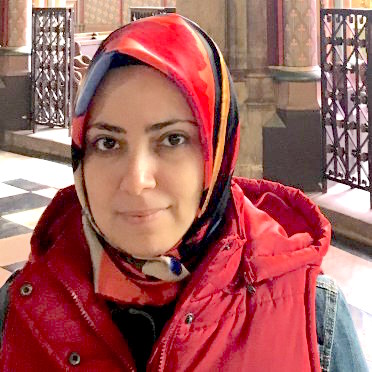
Meryem Ayşe Yücel serves as a Research Associate Professor in the Department of Biomedical Engineering at Boston University's College of Engineering, where she also holds the position of Technical Director for the Neurophotonics Center. Her work bridges engineering innovation with clinical neuroscience applications, focusing on advancing functional Near-Infrared Spectroscopy (fNIRS) technology for real-world implementation. Dr. Yücel earned her PhD in Biomedical Engineering from Bogazici University in Turkey. Her educational foundation supports her interdisciplinary approach to neuroimaging research. Her research centers on developing and refining fNIRS methodologies for brain imaging, with particular emphasis on clinical translation and accessibility. She investigates cortical activation patterns during naturalistic activities like walking, conversation, and cognitive tasks, applying these insights to conditions including knee osteoarthritis, aphasia, stroke recovery, and pediatric development. Her work consistently addresses critical barriers in neuroimaging such as signal quality across diverse skin and hair types, driving inclusive research practices. Recent publications highlight her leadership in standardization efforts through projects like the fNIRS glossary and NIRS-BIDS data framework. Analysis of her recent publications reveals a strong trajectory toward mobile, high-density fNIRS systems operating in natural environments. Her research increasingly integrates multimodal approaches (fNIRS-EEG), develops open-source hardware (ninjaNIRS, ninjaCap), and establishes reproducibility standards for the field. Clinical applications dominate her output, particularly in pain assessment, rehabilitation, and cognitive neuroscience. Dr. Yücel's scientific recognition includes: Society of Functional Near-Infrared Spectroscopy Community Award (2022) Light of the Lab Award for Functional Inclusiveness (2022) TUBITAK Fellowships for Visiting Scientists (2022) Facebook Award for Engineering Approaches to Responsible Neural Interface Design (2021) SfNIRS Early Investigator Award Finalist (2016) Britton Chance Symposium Travel Award (2013) TUBITAK Integrated Doctoral Fellowship (2006-2010) As Technical Director of the Neurophotonics Center, she leads a multidisciplinary team developing next-generation optical brain imaging systems. Her leadership extends to community-building initiatives that promote open science and methodological rigor in fNIRS research, while her Facebook-funded project demonstrates successful translation of engineering solutions to neural interface challenges. The Neurophotonics Center under her technical direction pioneers wearable fNIRS technologies for naturalistic neuroscience, with recent innovations including flexible circuit-based imaging systems and 3D-printable headgear that enable high-density measurements during real-world activities. This work directly supports her research on brain function during daily movements and clinical applications.
Ruishan Liu is an Assistant Professor in the Department of Computer Science at the University of Southern California (USC), appointed since Spring 2024. He holds a Ph.D. in Electrical Engineering from Stanford University (2022) and a B.Sc. in Physics from Peking University. Prior to USC, he was a postdoctoral scholar in Biomedical Data Science at Stanford University (2022–2023). His research focuses on the intersection of machine learning and biomedical applications, particularly in oncology, genomics, and clinical trials. Notable projects include Trial Pathfinder, which uses AI to enhance clinical trial inclusivity, and work on data-driven subgroup identification in healthcare. He leads the Laboratory for Machine Learning, Health and Biomedicine at USC, developing algorithms for precision medicine, deep learning, and large language models with real-world translational goals. Education: Ph.D. in Electrical Engineering, Stanford University (2022) Bachelor's in Physics, Peking University His research interests emphasize interpretable algorithms for cohort selection, RNA dynamics modeling, and translational AI solutions for healthcare challenges. Awards include recognition as a Rising Star in Data Science, Next Generation in Biomedicine, and finalist for the Global Pharma Award 2021. Awards: 2022 Top Ten Clinical Research Achievement Rising Star in Engineering in Health He actively recruits Research Interns (Summer 2025) and Ph.D. students (Fall 2026) focused on ML & Biomedical AI. Current projects aim to address challenges in clinical trial design, precision oncology, and genomics data analysis. His lab collaborates on impactful applications such as AI-driven clinical trial optimization and genomic treatment interaction modeling, reflecting a commitment to bridging algorithmic innovation and real-world healthcare solutions.
Allan Kermode is a Clinical Professor of Neurology at The University of Western Australia (UWA) and Adjunct Professor of Neuroimmunology at Murdoch University. He is the Director of the Demyelinating Diseases Centre at the Perron Institute and previously served as Head of Neurology at Sir Charles Gairdner Hospital. His affiliations include visiting roles at Sun Yat Sen University (China) and leadership positions in organizations like the Pan Asian Committee for Treatment and Research in Multiple Sclerosis. Education : Graduated from UWA, awarded the Medicinae Studii Princeps (Australian Medical Association Gold Medal), and holds Fellowships from the Royal Australasian College of Physicians and Royal College of Physicians (London). Research Focus : Multiple Sclerosis (MS), Neuroimmunology, clinical trials, neuroimaging, and disease pathogenesis. Key contributions include establishing a WA clinical database of 2,400+ MS patients and advancing global MS treatment guidelines. Recent Articles : Focus on MS progression modeling, therapy prescribing patterns during pandemics, and diagnostic innovations in neuromyelitis optica spectrum disorders. His work emphasizes machine learning applications and standardized clinical metrics. Awards : NHMRC CJ Martin Scholar, Australian Medical Association Gold Medal, and multiple international recognitions. Grants & Projects : Current initiatives include pediatric MS prediction (WA Health) and immune target discovery (National MS Society). Past projects include MS drug trials and genetic consortium research (IMSGC).
Pinaki Sarder, Ph.D., is an Associate Professor in the Department of Medicine – Section of Quantitative Health at the University of Florida (UF), with affiliate roles in the Department of Electrical & Computer Engineering and Biomedical Engineering. He also serves as Associate Director for Imaging at the Intelligent Critical Care Center. Previously, he held tenure as an Associate Professor at the University at Buffalo (UB) in Pathology & Anatomical Sciences and Biomedical Engineering. His academic journey includes postdoctoral training in optical radiology at Washington University in St. Louis (WUSTL) and a Research Fellowship at Harvard University's School of Public Health. He earned his B.Tech. from IIT Kanpur and M.Sc./Ph.D. in electrical engineering from WUSTL. Dr. Sarder's research focuses on computational fusion of spatial omics data, particularly in diabetic kidney disease, leveraging AI and digital pathology. His work is funded by NIH, KPMP, and HubMAP. Key contributions include developing tools like ComPRePS for automated image analysis and the HistoLens platform for accessible pathology visualization. He is an editorial board member of the Journal of the American Society of Nephrology and Associate Editor of IEEE Journal of Biomedical Health Informatics. His awards include UB’s 2018 Exceptional Scholars – Young Investigator Award. He leads NIH-funded projects exploring kidney disease mechanisms, including the Cosmic Kidney Disease initiative investigating spaceflight-induced renal dysfunction. Dr. Sarder also contributes to educational initiatives, such as internship curricula promoting STEM diversity and consensus-based evaluation metrics for NIH programs. Research interests span computational pathology, AI-driven diagnostic tools, kidney disease biomarker discovery, and translational medical imaging. His lab develops open-source tools like DUET for collagen/elastin quantification and FUSION for multi-omics data integration with histology. Grants: NIH, KPMP Consortium, HubMAP Consortium Labs: Computational Microscopy Imaging Laboratory Teams: Intelligent Critical Care Center, Kidney Precision Medicine Project (KPMP)
Tom Asijee is a PhD researcher at the University of Twente's Production Technology department and an external PhD Researcher at the ThermoPlastic Composites Research Center (TPRC) from October 2021 to November 2025. His work focuses on fiber engineering, thermoplastic composites, and laser-assisted fiber placement processes. Primary Affiliation: University of Twente, Production Technology External Affiliation: TPRC (ThermoPlastic Composites Research Center) Asijee's research explores how fiber orientation , optical properties , and surface conditions affect temperature distribution and interlaminar toughness in laser-assisted fiber placement (LAFP). He also investigates out-of-autoclave consolidation and reflectance patterns in composite materials. His recent publications focus on thermoplastic composites and fiber-reinforced materials, with key subfields including laser processing , heat distribution , and tape engineering . Asijee has received recognition for his work through two EM Poster Contest Prizes in 2023 and 2024. Scientific Awards: EM 2023 Poster Contest Prize EM 2024 Poster Contest Prize Research Outputs: 8 peer-reviewed papers and datasets 4 publications in 2024 alone