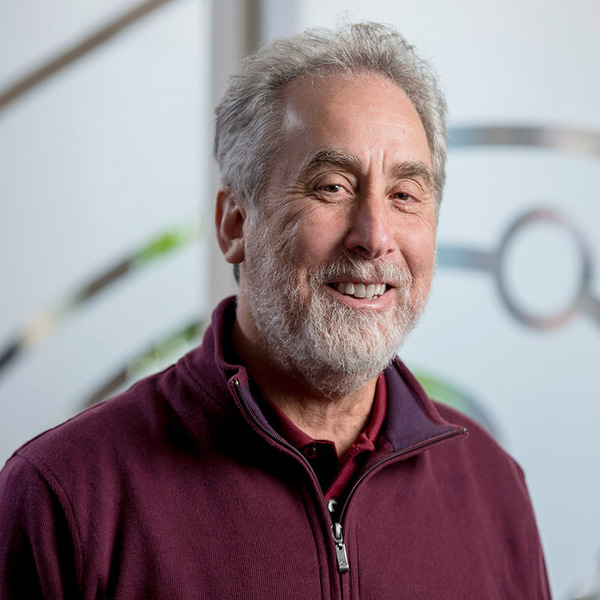
Mitchell Wayne is a Professor in the Department of Physics and Astronomy at the University of Notre Dame. His research centers on proton-proton collisions at the CMS detector at CERN's Large Hadron Collider, including Higgs boson studies and searches beyond the Standard Model. Honors include American Physical Society Fellowship and multiple teaching awards. His detector R&D focuses on fiber tracking, calorimetry, and Silicon Photomultipliers for CMS upgrades. Awards: Fellow of APS, Joyce Teaching Award (2019), Shilts-Leonard Teaching Award (2002), Kaneb Teaching Award (1999) Student Advising: Supervised 5 PhD students in particle physics and detector development
Herb Winful is a Professor of Optics at the University of Michigan's College of Engineering, Department of Electrical and Computer Engineering. He specializes in nonlinear optics, laser physics, quantum tunneling , and photonics , with a focus on phenomena like superluminal group velocities, frequency comb generation, and light storage via stimulated Brillouin scattering. Research areas span quantum tunneling times , nonlinear photonic materials , and coherent beam combining in fiber laser arrays. His work includes frequency comb spectroscopy using quantum-well diode lasers, ultrafast erbium fiber lasers , and negative group delay engineering in birefringent waveguides. The article list reveals expertise in supercontinuum generation , evanescent wave dynamics , photonic crystals , and nonlinear pulse manipulation . Key subfields include stimulated Brillouin/Raman scattering , parabolic similaritons , and time-domain modeling of optical systems. Award-winning scientific contributions include resolving the Hartman effect paradox and optimizing fiber laser arrays for high-power applications. His research bridges theoretical insights with practical innovations in optical engineering and quantum optics .
Univ.-Prof. Dr. Bernadett Weinzierl is a Professor in the Department of Aerosol Physics and Environmental Physics at the Faculty of Physics, University of Vienna. She leads the Aerosol Physics and Environmental Physics research group, focusing on aerosol dynamics, atmospheric processes, and their impacts on climate and air transport systems. Her research interests include airborne aerosol measurements, long-range aerosol transport, and the optical/microphysical properties of mineral dust, black carbon, and volcanic ash. She investigates aerosol effects on atmospheric radiation, clouds, and climate dynamics, as well as their implications for aviation safety and emissions. Key Projects: Coordinator of ACTRIS National Facility (2020–ongoing), AEROMMA (NOAA 2023), A-LIFE (2015–2021), and SABRE (NASA/NOAA 2022–2025). Publications: Over 86 peer-reviewed articles, with recent works addressing aerosol classification using Raman lidar, microplastic detection via machine learning, and dust-pollution interactions in the Eastern Mediterranean. Grants/Advising: Active in interdisciplinary collaborations, including the European Aerosol Conference and NASA-funded initiatives. Her research group operates advanced instrumentation for in-situ aerosol measurements and contributes to global atmospheric monitoring networks like ACTRIS.
Dr. Jens Voigtländer is a Research Fellow in the Department of Atmospheric Microphysics at the Leibniz Institute for Tropospheric Research (TROPOS) in Leipzig, Germany. Affiliated with the Cloud Working Group since completing his PhD in 2010, his work centers on cloud-aerosol interactions, droplet activation processes, and instrumentation development for atmospheric measurements. His research directly contributes to understanding climate-relevant microphysical processes through laboratory and field studies. His academic background includes teacher training in mathematics and physics at the University of Leipzig (1999-2000), followed by meteorology studies culminating in a 2005 diploma thesis on traffic impacts on urban particle distributions. He earned his PhD in 2010 with research on hygroscopic growth and cloud condensation nuclei activation of organic/inorganic compounds using LACIS experimental data and computational modeling. Voigtländer's research spans cloud microphysics, aerosol-cloud-turbulence interactions, and spatiotemporal aerosol distribution analysis. He specializes in droplet activation mechanisms, ice nucleation processes, and miniaturization of atmospheric instrumentation. His work bridges laboratory experiments with real-world atmospheric observations to improve climate model parameterizations. Analysis of his 2014-2018 publications reveals dominant themes in ice nucleation instrumentation (notably the SPIN spectrometer development), aircraft-based aerosol characterization (CARIBIC program), and fundamental studies of Criegee intermediate chemistry. His work consistently integrates experimental measurements with computational modeling to address aerosol impacts on cloud formation. Scientific contributions include: Development of the SPIN ice nucleation spectrometer Parameterization of sea-salt hygroscopic growth Characterization of biological ice nuclei from pollen Investigation of Criegee intermediate reaction kinetics As a core member of TROPOS' Cloud Working Group, Voigtländer leverages the LACIS facility for controlled microphysical studies while contributing to international collaborations like CERN's CLOUD experiment. His instrumentation miniaturization efforts enable novel spatiotemporal atmospheric measurements critical for climate research.
Valiulis Gediminas serves as an Associate Professor at Vilnius University's Šiauliai Academy within the Department of Informatics Engineering. His academic career spans both engineering fundamentals and advanced environmental applications, with a pronounced shift toward bioaerosol monitoring and computer vision systems since 2018. His research interests focus on Environmental Informatics and Automatic Bioaerosol Detection , particularly developing computer vision models for pollen classification using light scattering techniques. This work bridges Environmental Science , Computer Vision , and Public Health through real-time pollen monitoring systems that serve allergy sufferers. His methodology combines fluorescent particle analysis , clustering algorithms , and sensor calibration to advance aerobiological research. Analysis of his publication trends reveals a strategic evolution: early work (2004-2012) centered on control systems engineering (granulation processes, microinverters), while recent output (2018-2024) demonstrates deep specialization in bioaerosol informatics . Key contributions include the Rapid-E particle counter validation, ozone-pollen interaction studies, and real-time pollen forecasting systems for clinical applications. His interdisciplinary approach connects atmospheric science with machine learning to solve environmental monitoring challenges. Automatic pollen recognition systems development Fluorescent bioaerosol characterization Real-time environmental data applications Computer vision for ecological monitoring While no formal advising relationships or scientific awards are documented in the source material, his collaborative research consistently involves multi-institutional teams across Lithuania and Europe. Current projects focus on enhancing bioaerosol sensor accuracy and developing clinical decision-support tools for allergy management through real-time environmental data integration.
Lucio Pancheri is an Associate Professor at the Department of Industrial Engineering , University of Trento. His research focuses on semiconductor devices, CMOS sensors, and radiation detection technologies. 1996: Scientific School Certificate at Liceo 'B. Russell', Italy 2002: M.S. in Materials Engineering, University of Trento (cum laude) 2006: PhD in Information and Communication Technologies, University of Trento Research Interests: Design and characterization of silicon photodetectors for high-resolution radiation detection, SPADs in CMOS for time-resolved imaging, and fully depleted CMOS sensors for medical and particle physics. Collaborates with INFN, FBK, and international institutions. Key Article Trends: Recent work emphasizes 4D particle tracking , radiation hardness in advanced CMOS, and hybrid perovskite/organic detectors . Applications span medical imaging , high-energy physics , and flexible electronics . Scientific Roles & Awards: IEEE Senior Member (2022) Chair, IEEE IEDM ODI Subcommittee (2023) Technical Committee, IEEE IEDM (2021-2022) Associate Editor, IEEE Transactions on Electron Devices (2018-present) Collaborations & Projects: Leads the ARCADIA project for customized fully depleted CMOS processes. Works with University of Munich on hybrid CMOS-organic sensors and integrates detectors for UAV-based radiation monitoring ( DRAGoN ).
Szymon P. Malinowski is a full Professor at the Department of Atmospheric Physics, Institute of Geophysics, Faculty of Physics, University of Warsaw, and a corresponding member of the Polish Academy of Sciences since 2020. He served as Director of the Institute of Geophysics from 2016 to 2024 and previously as Head of the Department of Atmospheric Physics (2002-2013). His institutional affiliations include the Polish Academy of Sciences (2020-present) and research collaborations with institutions like Université de Lille (2023-2024) and Johannes Gutenberg-Universität Mainz (2013-2014). Master of Science in Physics (University of Warsaw, 1982) Doctor of Natural Sciences in Geophysics (Institute of Geophysics PAN, 1988) Habilitation in Physical Sciences (Institute of Geophysics PAN, 1998) Professor of Earth Sciences (2008) Malinowski's research centers on atmospheric physics with emphasis on cloud processes and turbulence. His work integrates laboratory experiments (e.g., Π Chamber), field campaigns (EUREC 4 A, ACORES), and numerical modeling to investigate turbulence dynamics in boundary layers, cloud microphysics using shadowgraph imaging, and climate-relevant processes like aerosol-cloud interactions. He pioneered fractal reconstruction techniques for turbulence modeling and developed novel optical hygrometers for airborne measurements. His experimental approach bridges fundamental fluid dynamics with atmospheric applications, particularly in marine stratocumulus systems. Analysis of his 15 most recent publications (2022-2025) reveals three dominant research thrusts: (1) High-resolution turbulence characterization using aircraft and laboratory data, focusing on dissipation scaling and non-equilibrium states; (2) Advanced measurement techniques for cloud microphysics, including low-cost optical sensors and shadowgraph systems; (3) Climate science communication through book chapters on Earth's energy balance and climate crisis mitigation. His work increasingly integrates machine learning approaches for turbulence analysis while maintaining strong connections to observational campaigns. 2017: National 'Science Popularizer' award (team category) for naukaoklimacie.pl 2022: Foundation for Polish Science Award for public science communication 2023: Honorary membership in Chapter Zero Poland Malinowski has supervised 14 PhD students across atmospheric physics and cloud dynamics, with recent graduates including Stanisław Król (2025) on turbulent mixing and Moein Mohammadi (2023) on shadowgraph imaging. He leads the Climate Education Foundation (founded 2021) which produces educational materials reaching over 500,000 annual visitors. His grant portfolio includes EU-funded projects like EUREC 4 A and national initiatives on climate crisis mitigation. He co-founded and directs the Climate Education Foundation, which operates the naukaoklimacie.pl platform and develops educational materials for schools. His research group participates in the European Turbulence Conference organizational committee and conducts field work at the Umweltforschungsstation Schneefernerhaus. Current projects focus on turbulence-cloud interactions in marine environments using data from the EUREC 4 A campaign and developing machine learning tools for atmospheric data analysis.
Richard Kaye is a Research Fellow in the Microfluidics and Microengineering Research Group at the University of Hertfordshire , affiliated with the Wolfson Centre for Biodetection and Instrumentation Research and the Department of Engineering and Technology . A Chartered Engineer (CEng) and member of the Institution of Engineering and Technology (MIET), he specializes in microfluidic systems and aerosol detection technologies. Research Interests : Richard's work focuses on microfluidic platforms for biodetection , including optical particle counters (OPCs) , personal aerosol samplers , and autonomous pathogen detection systems . His projects span applications in agriculture , defense , and public health , integrating DNA analysis and 3D printing in medical and environmental contexts. Article Trends : His recent publications emphasize 3D printing in healthcare, microfluidic diagnostics , and DNA-based detection systems . Collaborative projects highlight bioaerosol monitoring , novel cyclone designs , and fieldable biodetection prototypes . Collaborations : Richard collaborates with the Defence Science and Technology Laboratory , Alphasense Ltd , and institutions in the UK , USA , and Europe . His work is linked to European Commissioned projects and initiatives like the Aerosol Society .
Ogochukwu Enekwizu is an Atmospheric Scientist at Brookhaven National Laboratory's Environmental Science and Technologies Department, specializing in black carbon (BC) microphysical, hygroscopic, and optical properties from fossil fuel and biomass burning sources. She leads research on aerosol-cloud interactions and serves as associate mentor for DOE Atmospheric Radiation Measurement (ARM) User Facility instruments. Ph.D., Chemical Engineering (New Jersey Institute of Technology, 2020) M.S., Chemical Engineering (University of Houston, 2013) B.Eng., Chemical Engineering (Nnamdi Azikiwe University, 2009) Her research integrates aerosol instrumentation and climate modeling, focusing on BC aging processes and their impacts on cloud formation. Recent work with the ARM facility examines CCN activation trends in coated particles. 2020 APERG Grant (MASS-AWMA) 2020 Sustainability Award (AWMA) 2018 Stoller Award (NJWEA) As AAAR Chair for Combustion and Materials Synthesis Group (2024-present), she advances aerosol research standards. Her instrumentation expertise spans CCN counters and soot particle analyzers.
Gloria Orchard is an Assistant Professor in the Department of Physics and Astronomy at York University, Faculty of Science. Her research focuses on experimental physics in radiation science and medical physics, alongside pedagogical innovations in physics education. She emphasizes active learning strategies such as in-lecture activities, group discussions, and hands-on laboratory experiences to enhance student engagement and problem-solving skills. Her experimental work involves detector development in radiation science, microdosimetry, and neutron field characterization at facilities like CERN. She also explores applications of optoacoustic systems for subsurface imaging and medical diagnostics. Orchard is eligible to supervise graduate students in the Physics and Astronomy program. Gloria Orchard’s research areas include Biological Physics, Pedagogical Research, and Science Education. She has contributed to advancing detector technologies and radiation measurement techniques through collaborations with institutions like CERN. Her educational initiatives aim to refine laboratory curricula and improve teaching methodologies in physics education.
Dr Ellen Sirks is an academic researcher affiliated with the School of Physics at the University of Sydney. Her work focuses on astrophysical phenomena such as dark matter dynamics, gravitational lensing, and high-altitude astronomical observations. She contributes to projects like the SuperBIT (Super Pressure Balloon-borne Imaging Telescope), advancing stratospheric telescope technology and data retrieval systems. Her research integrates computational simulations with observational data, particularly in galaxy cluster mergers and self-interacting dark matter studies. Recent work includes analyzing weak gravitational lensing effects and improving balloon-borne instrument performance. She has published extensively in journals like Monthly Notices of the Royal Astronomical Society and the Astronomical Journal. Sirks collaborates on international initiatives involving NASA and academic consortia, emphasizing next-generation telescope design and data analysis techniques. Her contributions bridge theoretical astrophysics with engineering solutions for observational astronomy.
Marie-Cécile Piro is an Associate Professor in the Department of Physics at the University of Alberta, affiliated with the McDonald Institute. Her research focuses on astroparticle physics, particularly dark matter (DM) detection and coherent neutrino scattering (CEvNS). She leads international collaborations like NEWS-G and SBC, developing advanced detector technologies such as scintillating bubble chambers and radon mitigation systems. Education: BSc/MSc/PhD in Physics from Université de Montréal (2006–2012), followed by postdoctoral research in France and Italy. She has held roles at RPI (2015–2017) before joining the University of Alberta in 2017, becoming Associate Professor in 2023. Research interests include improving detector directionality, microphysics studies, and low-energy detector calibration. She is Principal Investigator for projects like the SBC lab at UofA and the NEWS-G experiment at LSM (France). Her work addresses challenges in radon removal, detector purity, and background discrimination. Teaching includes courses on dark matter, experimental physics, and wave optics. She emphasizes mentorship, career development, and equity, diversity, and inclusion (EDI) initiatives. Awards include the JELF award, and she actively participates in outreach activities, including public lectures and high school engagement. Key labs and facilities: Piro Lab at UofA, collaborations at SNOLAB (Canada), LSM (France), and LNGS (Italy). Her research bridges particle physics and engineering, with applications in low-background detection and novel calibration tools.
Dr. George Biskos is a Professor at The Cyprus Institute (CyI) and Delft University of Technology. He holds a PhD in Engineering from the University of Cambridge and an MSc in Environmental Engineering from Imperial College London. His research focuses on aerosol science and technology, including instrumentation development, atmospheric aerosol behavior, and nanotechnology applications. He leads a research group active in projects funded by national and international grants, with over 50 journal publications to his name. Education: PhD in Engineering, University of Cambridge MSc in Environmental Engineering, Imperial College London Research interests include aerosol measurement techniques, nanoparticle synthesis via spark ablation, and environmental applications of nanomaterials. His work bridges fundamental science and practical solutions, such as air quality monitoring using unmanned aerial vehicles (UAVs) and stone conservation materials. Key contributions include the development of the Unmanned Systems Research Laboratory (USRL) at CyI and collaborations with institutions globally. His research addresses critical issues like urban pollution, climate change impacts, and sustainable nanotechnology.
Maria Kezoudi is an Associate Research Scientist in Atmospheric Aerosol Sciences at the EMME-CARE group within the Climate and Atmosphere Research Center (CARE-C) at The Cyprus Institute. She holds a BSc in Physics from the University of Cyprus (2015), an MSc in Applied Meteorology and Climate with Management from the University of Reading, UK (2016), and a PhD in Atmospheric Physics from the University of Hertfordshire, UK (2019). Her work focuses on experimental characterization of atmospheric aerosols, particularly mineral dust, using advanced techniques such as UAV-based in-situ measurements and remote sensing. Research interests include aerosol size distribution profiling, dust transport dynamics, instrument development (e.g., UCASS and OPC-Pod), and validation of satellite missions (e.g., EarthCare, Aeolus). She has led field campaigns in Cyprus, Greece, Spain, and Cabo Verde to study dust outbreaks and their environmental impacts. Her contributions span aerosol optics, particle charging mechanisms, and interdisciplinary applications in climate modeling. Publications highlight UAV integration with remote sensing for aerosol profiling, lidar depolarization analysis, and dust mineralogy studies. She is affiliated with the Unmanned Systems Research Laboratory (USRL), advancing UAV technologies for atmospheric observations. No scientific awards are explicitly mentioned, but her research has led to collaborations with international agencies and institutions. Maria’s work bridges laboratory instrumentation, field campaigns, and global climate studies. Current projects involve improving dust aerosol quantification and understanding their role in Mediterranean and tropical climate systems. Future efforts aim to expand UAV applications in environmental monitoring and satellite validation.
Herbert Winful is the Arthur F. Thurnau Professor of Electrical Engineering & Computer Science and Joseph E. and Anne P. Rowe Professor of Electrical Engineering at the University of Michigan's College of Engineering. He holds a joint appointment in the Department of Physics and Applied Physics. With a BS from MIT (1975) and a PhD from USC (1981), he has been a faculty member since 1987, advancing to full professor in 1992. His research focuses on nonlinear optics, photonic crystals, ultrafast optics, tunneling time, and laser arrays. He has pioneered studies on single-cycle pulse propagation, tunneling dynamics, and photonic crystal applications. His work bridges foundational physics and applied technologies, with contributions to fiber optics, laser arrays, and quantum phenomena. Awarded fellowships from the Optical Society of America, American Physical Society, and IEEE, Winful has received numerous accolades including the Thurnau Professorship (1993) and the IEEE Photonics Society Quantum Electronics Award (2020). His teaching excellence is recognized through awards like the Amoco/University Teaching Award and the Tau Beta Pi Distinguished Professorship. His research spans theoretical and experimental domains, addressing superluminal tunneling paradoxes, stimulated Brillouin scattering, and frequency comb generation in diode lasers. Recent work emphasizes ultrafast laser systems and nonlinear dynamics in periodic structures, with applications in telecommunications and spectroscopy.