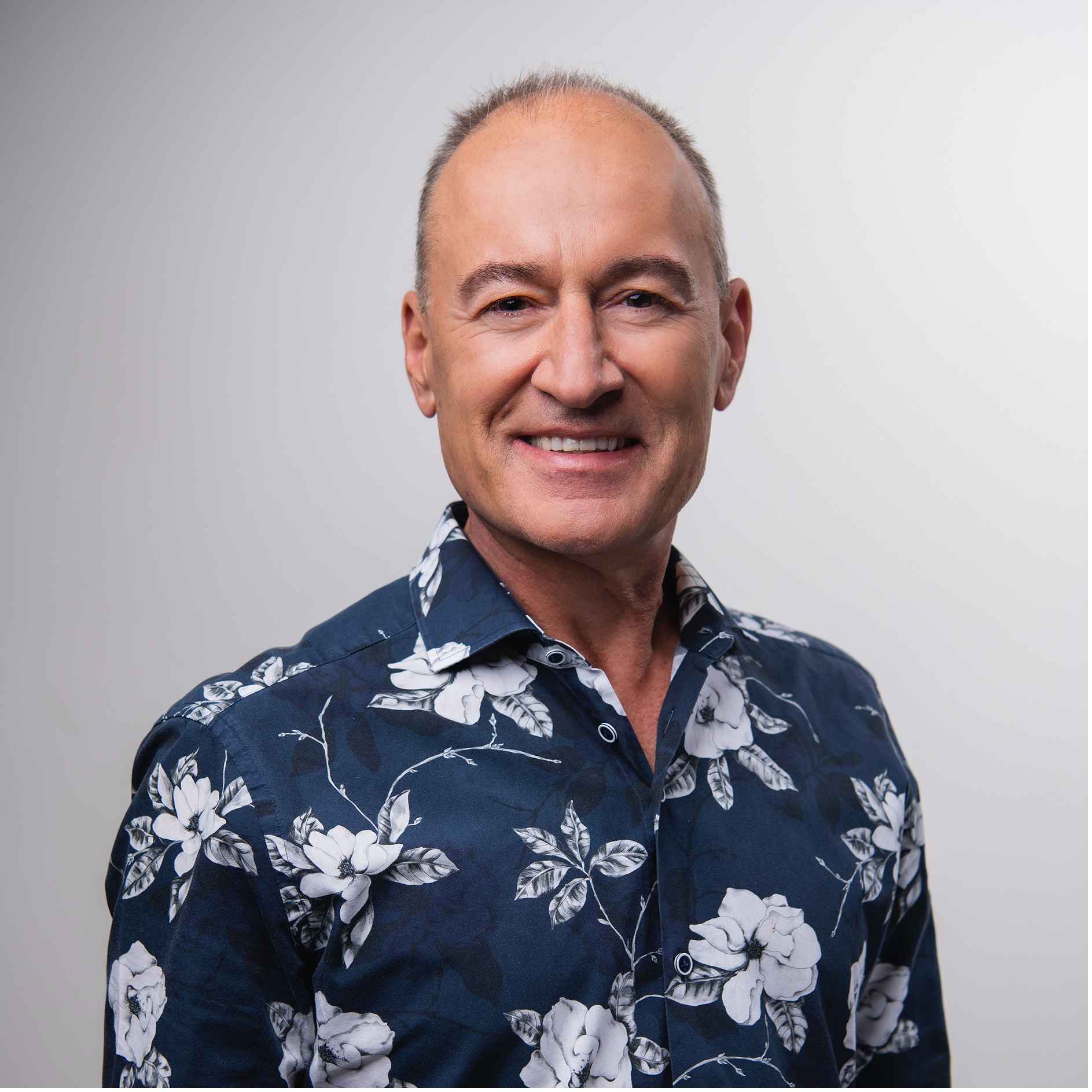
Carlo Fantoni is a researcher at the Department of Life Sciences, University of Trieste, focusing on visual perception, cognitive psychology, and multisensory integration. His work spans developmental psychology, human factors, and computational modeling, with a particular emphasis on how visual and cross-modal cues influence perception and decision-making. His research trends include studies on visual perception (e.g., amodal completion, 3D surface orientation), developmental psychology (e.g., age correction in preterm infants), and human factors (e.g., acoustic comfort in ship cabins, BUS design framework). He has developed advanced tools like the Active Multisensory Perception tool (AMPt) for immersive studies in ergonomics.
Christina Lioma is a Full Professor at the Department of Computer Science (DIKU), University of Copenhagen . She has held academic positions including Associate Professor (2014-2018) and Freja Fellow/Assistant Professor (2012-2013) at the same institution. M.Hons (University of Glasgow, 2001) M.Sc. (University of Manchester, 2003) Ph.D (University of Glasgow, 2007) Her research focuses on Information Retrieval , Text Analytics , and Recommender Systems within Applied Machine Learning and Natural Language Processing . Recent work examines fairness-relevance tradeoffs in recommendation systems and neural mechanisms for knowledge conflict tracing. Recent publications in Nature Communications and top conference proceedings (WWW, SIGIR) explore hybrid computation architectures, brain-based language generation, and fairness evaluation metrics. She actively participates in academic conferences as organizer and speaker, including the European Conference on Information Retrieval.
Lasse Bjørn Kristensen is a Research Fellow at the Department of Computer Science, University of Copenhagen, specializing in Machine Learning with a focus on quantum computing applications. Research Interests His work bridges quantum computing, machine learning, and computational biology, with contributions to: Quantum neural networks and spiking neurons Quantum error correction and circuit robustness Quantum chemistry simulations Information flow in parametrized quantum systems Notable Research Trends Kristensen's publications reveal a strong emphasis on quantum-classical hybrid models, entanglement-enhanced devices, and computational methods for chemistry and physics. His recent work explores error-driven learning paradigms and quantum eigensolvers. Contact Email: lakr@di.ku.dk Address: Universitetsparken 1, 2100 Copenhagen Ø
William Henrich Due serves as a Lecturer at the Department of Computer Science (DIKU), University of Copenhagen, within the Machine Learning section. His work intersects with the SCIENCE AI Centre and leverages the department's high-performance compute cluster for research in quantum computing, sustainable AI, and medical applications. Research focuses span quantum machine learning (biomolecular simulations, photonic processors), sustainable AI systems (energy efficiency, climate impact), and clinical applications (EEG analysis, medical imaging). His recent publications reveal strong activity in quantum-classical hybrid systems, with 8/15 recent papers addressing quantum computing challenges. The work emphasizes practical implementations in medical imaging and resource-constrained environments. His research aligns with DIKU's Machine Learning section priorities including medical imaging biomarkers and sustainable computing. Key infrastructure includes TreeSense for remote sensing and the department's dedicated compute cluster. No scientific awards were explicitly documented in the provided materials. Due contributes to DIKU's teaching mission as a Lecturer while engaging with the SCIENCE AI Centre's interdisciplinary initiatives. His work connects with medical imaging applications and quantum computing infrastructure development. Active in the Machine Learning section's research ecosystem, his work intersects with medical imaging analysis and quantum computing applications, utilizing specialized resources like TreeSense for environmental monitoring.
Caslav Brukner is a Professor at the University of Vienna, affiliated with the Department of Quantum Optics, Quantum Nanophysics and Quantum Information. His research spans foundational aspects of quantum mechanics, quantum gravity, and the interplay between spacetime physics and quantum theory. He has taught courses such as Theoretical Physics III for teacher students and seminars on quantum foundations. His recent work explores quantum superpositions of spacetime geometries, indefinite causal orders, thermodynamic observables in quantum gravity, and the role of observers in quantum measurements. Key themes include reconciling quantum mechanics with general relativity, analyzing temporal and causal structures, and studying quantum thermodynamics. While no explicit scientific awards are listed, his research has produced numerous publications across quantum reference frames, entanglement, and relativistic quantum mechanics. His teaching emphasizes advanced topics in quantum theory, including foundational debates and practical applications.
Markus Gross is a Professor of Computer Science at ETH Zurich, where he founded the Computer Graphics Laboratory in 1994. He also serves as the Chief Scientist of the Walt Disney Studios and Director of DisneyResearch|Studios, a position he has held since 2008. His work bridges academia and industry, with research that has been applied in Hollywood films, sports broadcasting, and medical applications. Professor Gross received his Master of Science in electrical and computer engineering and his Ph.D. in computer graphics and image analysis from Saarland University in Germany in 1986 and 1989. His research spans multiple domains of computer graphics and visual computing. Early in his career, he pioneered point-based graphics techniques that offered alternatives to traditional triangle-based rendering pipelines. More recently, his work has focused on digital humans, AI characters, and machine learning applications for visual computing. His research has led to significant practical applications, including the Medusa capture system used in Hollywood films, the blue-c immersive telepresence system, and the Liberovision technology now used by major sports broadcasters. Analysis of his recent publications reveals a strong focus on neural rendering techniques, particularly around Gaussian splatting and diffusion models. His work increasingly integrates AI with traditional computer graphics methods, with applications in digital humans, medical visualization, and video processing. Many papers demonstrate practical applications in film production, medical treatment planning, and interactive systems. Professor Gross has received numerous prestigious awards throughout his career: 2024 Eurographics Gold Medal 2021 Steven Anson Coons Award for outstanding creative contributions to computer graphics 2019 Technical Achievement Award from the Academy of Motion Picture Arts and Sciences 2013 Karl Heinz Beckurts-Preis 2013 Konrad-Zuse-Medaille für Informatik 2013 Technical Achievement Award from the Academy of Motion Picture Arts and Sciences 2012 Academy Sci-Tech Oscar award for Wavelet Turbulence Professor Gross has mentored numerous Ph.D. students throughout his career, with 20 Ph.D. students contributing to his blue-c project alone. His research has been supported by significant funding from both academic and industry sources, enabling the creation of multiple startups including Cyfex, Novodex, LiberoVision, Dybuster, and Animatico (acquired by Nvidia in 2022). He leads the Computer Graphics Laboratory at ETH Zurich and DisneyResearch|Studios, fostering collaboration between academic research and practical industry applications. His teams have developed groundbreaking technologies that have impacted film production, sports broadcasting, medical visualization, and educational technology.
Dr. Akhil Kallepalli is a Lecturer in Biomedical Engineering at the University of Strathclyde, United Kingdom. He holds professional memberships as Senior Member of IEEE (SMIEEE) and Member of the Institute of Physics (MInstP). His research spans biophotonics, optical imaging, and computational microscopy with applications in medical diagnostics and tissue analysis. Dr. Kallepalli actively accepts PhD students and maintains an active research profile with numerous publications and projects. Dr. Kallepalli's research interests focus on biophotonics and optical imaging techniques with applications in medical diagnostics. His work spans several key areas including Fourier ptychography for digital pathology, polarized light microscopy for identifying malaria-related hemozoin crystals, modular microscopy systems for volumetric imaging, and light transport through biological tissues. His research demonstrates a strong interdisciplinary approach combining physics, engineering, and biomedical applications, with recent work emphasizing computational imaging techniques and deep learning enhancements to traditional optical methods. His publications reveal an evolving research trajectory from remote sensing applications in earlier career stages to more focused biomedical optics in recent years. Dr. Kallepalli's publication record shows significant contributions to biophotonics and optical imaging. His recent work (2023-2025) focuses on advanced microscopy techniques including polarized Fourier ptychography, modular microscopy systems, and light transport through tissues. These publications demonstrate his expertise in developing innovative optical solutions for biomedical challenges, particularly in digital pathology and point-of-care diagnostics. The research spans both theoretical developments in computational imaging and practical implementations of optical hardware, with increasing integration of deep learning methods in recent work. Active participation in the scientific community with numerous conference contributions Multiple publications in high-impact journals including Journal of Microscopy, Scientific Reports, and Journal of Biophotonics Development of open-source hardware solutions for optics education and microscopy Book publication on Laser Beam Profiling: Cost-Effective Solutions (2022) Dr. Kallepalli collaborates extensively with researchers across multiple institutions, particularly with colleagues at the University of Strathclyde including Dr. Graham Gibson and others in the optics and biophotonics community. His work on modular microscopy (ModMicro) and modular light sources (ModLight) represents significant contributions to making advanced optical techniques more accessible. His research has practical applications in medical diagnostics, particularly for malaria detection, tissue ischemia monitoring, and non-invasive cardiovascular assessment. Dr. Kallepalli's work bridges fundamental optical physics with practical biomedical applications, demonstrating strong translational potential.
Iris Agresti is a researcher affiliated with the Faculty of Physics at Politecnico di Milano , specializing in quantum computing, quantum information, and machine learning. Her work bridges quantum optics and computational advancements, with recent publications in high-impact journals like Nature Photonics and Physical Review Research . Education: PhD in Physics. Research focuses on photonic processors for quantum machine learning, quantum state superposition, and integrated photonic systems for generating GHZ entangled states. Her 2025 article explores kernel-based quantum-enhanced machine learning, while 2024 work investigates time-reversed quantum evolution and high-fidelity photon entanglement. She has participated in international collaborations and workshops, including visits to Politecnico di Milano, and is part of funded projects like Photonic Reservoir Computing for Quantum Correlation Sets (2022–2025). Her work garners attention from news outlets, social media, and academic platforms like Mendeley.
Amelia Carolina Sparavigna is a Tenured Assistant Professor at the Department of Applied Science and Technology (DISAT), Politecnico di Torino . Her research spans image processing , liquid crystal physics , and thermal conductivity in solids, with interdisciplinary applications in archaeology , cultural heritage protection , and environmental studies . She leads the Image Processing for Physics and Environmental Studies research unit, applying fractional calculus and variational methods to satellite imagery analysis. Research Themes : Mesophase transitions in liquid crystals, entropy-based image analysis, thermal modeling for energy/environmental applications (phase change materials, solar radiation simulation), and satellite archaeology (geoglyphs, desert kites, ancient settlements). Academic Contributions : Over 15 years of publications on thermal conductivity of diamond, nematic-smectic phase transitions, and electromagnetic shielding textiles. Recent work focuses on κ-statistics for epidemiology and entropy in image analysis. Labs & Collaborations : Member of the Institute of Fundamental Physics and Materials for Nanotechnology and Generalized Statistical Mechanics of Complex Systems research group at DISAT. Teaching : Delivers Fisica II (Physics II) for Computer Engineering at Politecnico di Torino.
Shu-Wei Huang is an Associate Professor in the Department of Electrical, Computer, and Energy Engineering at the University of Colorado Boulder, affiliated with the College of Engineering and Applied Science. His research focuses on advanced photonics and quantum engineering, with specialties in nonlinear optics, frequency combs, and ultrafast laser systems. He holds affiliations with both the ECEE department and the Photonics and Quantum Engineering group. His work emphasizes novel laser designs, microresonator-based systems, and applications in optical sensing and quantum technologies. Dr. Huang's research interests include the development of high-performance laser systems, such as counterpropagating all-normal dispersion (CANDi) fiber lasers, and the creation of advanced frequency comb technologies. He explores topics like dissipative soliton generation, parametric oscillation, and the integration of machine learning for predictive modeling in nonlinear optics. His experimental work involves cutting-edge platforms such as lithium niobate microresonators and graphene-enhanced devices. His recent contributions span innovations in photonic flywheel systems for stable frequency combs, broadband magnetometry using magnetic nanoparticles, and lidar measurement techniques. He has pioneered methods for deterministic microcomb generation and explored applications in high-resolution imaging and biochemical sensing. His research bridges fundamental physics with engineering applications, addressing challenges in precision metrology and quantum-enabled technologies. Dr. Huang's lab is located in ECEE 1B79, and his work is supported by grants focusing on nonlinear optics, ultrafast lasers, and integrated photonics. His team actively collaborates on projects involving coherent dual-comb spectroscopy, electrically tunable frequency combs, and nanophotonic devices for next-generation optical systems.
Elena Favaro is a Research Fellow at the European Space Agency (ESA), specializing in planetary science with a focus on aeolian geomorphology. She utilizes geographic information systems and high-resolution imagery to study landforms (yardangs, periodic bedrock ridges) and bedforms (megaripples, dunes, transverse aeolian ridges) on Earth and Mars, with current emphasis on Oxia Planum—the designated 2030 landing site for ESA's ExoMars Rosalind Franklin rover mission. Her research reconstructs Martian climatic history through analysis of aeolian features using remote sensing, 3D image analysis, and GIS. Key interests include landscape evolution, sediment transport processes, and wind dynamics, with specific focus on how yardangs, periodic bedrock ridges, and dust devils record past and present environmental conditions. Current work integrates deep learning for terrain classification to support mission planning at Oxia Planum. Recent publications reveal concentrated research on Oxia Planum, featuring high-resolution geological mapping, wind regime modeling, and classification of aeolian bedforms. Studies emphasize periodic bedrock ridges as paleowind indicators, secondary cratering for stratigraphic dating, and megaripple architecture for sediment transport analysis. This work provides critical context for rover operations by linking surface features to ancient climate conditions and contemporary aeolian processes.
Professor Geoff Pryde is a quantum physicist at Griffith University, leading the Quantum Optics and Information Laboratory. He holds a PhD from The Australian National University (2001) and a BSc (Hons) from The University of Queensland (1995). His research focuses on quantum information science, quantum computing, and optical quantum technologies, with emphasis on experimental exploration of quantum phenomena and development of quantum technologies. He is a member of the Queensland Quantum and Advanced Technologies Research Institute (QUATRI) and the ARC Centre of Excellence for Quantum Computation and Communication Technology (CQC2T). Affiliations: Queensland Quantum and Advanced Technologies Research Institute (QUATRI), Centre for Quantum Dynamics, ARC Centre of Excellence for Quantum Computation and Communication Technology. Education: PhD in Physics, The Australian National University, 2001 BSc (Hons) in Physics, The University of Queensland, 1995 His research interests include quantum optics, quantum measurement, entanglement, and applications of quantum technologies. He has led projects funded by ARC and international grants, totaling over AUD 8 million. Key contributions include experimental work on quantum steering, noiseless amplification, and quantum network protocols. Professor Pryde teaches quantum physics and supervises over 20 doctoral students, many of whom have contributed to high-impact research in quantum information science. Grants & Collaborations: ARC Discovery Projects (DP210101651, DP160101911) ARC Future Fellowship (FT110100378) U.S. Asian Office of Aerospace Research and Development (AOARD) Labs & Teams: Quantum Optics and Information Laboratory at Griffith University, collaborating with global teams on photonic quantum computing and quantum metrology.
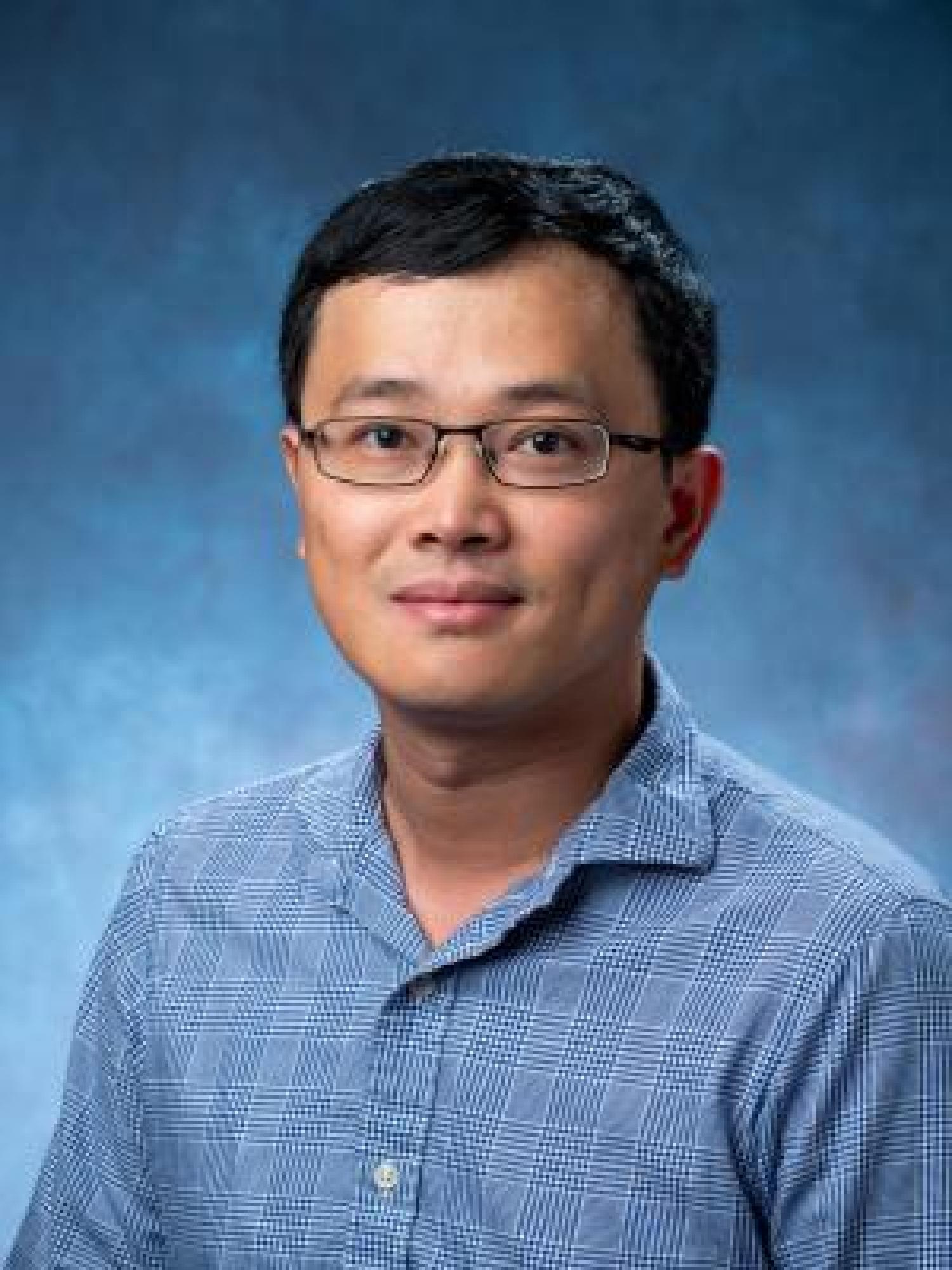
Dr. Seungbae Park is a SUNY Distinguished Professor in the Department of Mechanical Engineering at Binghamton University's Watson College of Engineering and Applied Science. He serves as Director of the Integrated Electronics Engineering Center (IEEC) and leads the Opto-Mechanics and Physical Reliability Laboratory. With over two decades of experience since joining Binghamton in 2002, Dr. Park has established himself as a leading expert in electronics packaging reliability. Dr. Park's educational background includes: BS and MS from Seoul National University PhD from Purdue University Dr. Park's research focuses on electronics packaging reliability, with particular expertise in micro/nanomechanics, optomechanics, and digital image correlation techniques. His work addresses critical challenges in electronic device reliability including thermal cycling, mechanical shock, moisture effects, and electromigration. He has pioneered methods for in-situ warpage measurement and deformation analysis of electronic packages using advanced optical techniques. Dr. Park's recent publications demonstrate a strong focus on emerging packaging technologies including 2.5D/3D integration, through-glass vias, and advanced thermal management solutions. His work increasingly incorporates machine learning approaches for process optimization and reliability prediction, reflecting the evolving nature of electronics packaging research. Dr. Park has received numerous prestigious honors: Elevated to SUNY Distinguished Professor Named IEEE Fellow for electronics packaging research Named ASME Fellow for three decades of electronics packaging innovations Outstanding poster award from ASME InterPACK 2013 Dr. Park has successfully advised over 30 PhD students and numerous Master's students, many of whom now work at leading technology companies including Apple, Intel, Samsung, and Google. His research has been supported by significant funding from industry partners such as IBM, Samsung, Intel, Analog Devices, and Corning, as well as government agencies including NASA and the Department of Energy. Dr. Park directs the Opto-Mechanics and Physical Reliability Laboratory, which features state-of-the-art equipment including a 3D printer, Digital Image Correlation system, high-speed camera, Wyko surface profiler, Bose tester, and nano-characterization system. The lab collaborates with the Integrated Electronics Engineering Center (IEEC) and the Center for Advanced Microelectronics Manufacturing (CAMM).
Robin Camphausen is a Postdoctoral Researcher at the Institute of Photonic Sciences (ICFO) , specializing in the Optoelectronics research group. He holds a PhD in Photonics from the Universitat Politècnica de Catalunya (Spain). His work focuses on quantum imaging, entangled photon sources, and advanced optical systems, with applications in fields like medical diagnostics and quantum communication. Camphausen’s research employs cutting-edge technologies such as SPAD cameras, multipass phase imaging, and dual-displacement interferometric configurations. His key contributions include developing high-quality entangled photon sources, real-time quantum imaging systems, and super-sensitive phase imaging techniques. These advancements prioritize field deployability and scalability while enhancing sensitivity and resolution. Camphausen’s publications from 2021–2025 consistently explore quantum-enhanced imaging, nonlinear optics, and photonics applications, reflecting a strong emphasis on bridging theoretical quantum principles with practical optical systems. No scientific awards or grants are explicitly mentioned in the provided texts, but his active research portfolio indicates significant engagement with quantum technologies. Camphausen collaborates within ICFO’s Optoelectronics group, contributing to both foundational and applied research at the intersection of quantum optics and photonics.
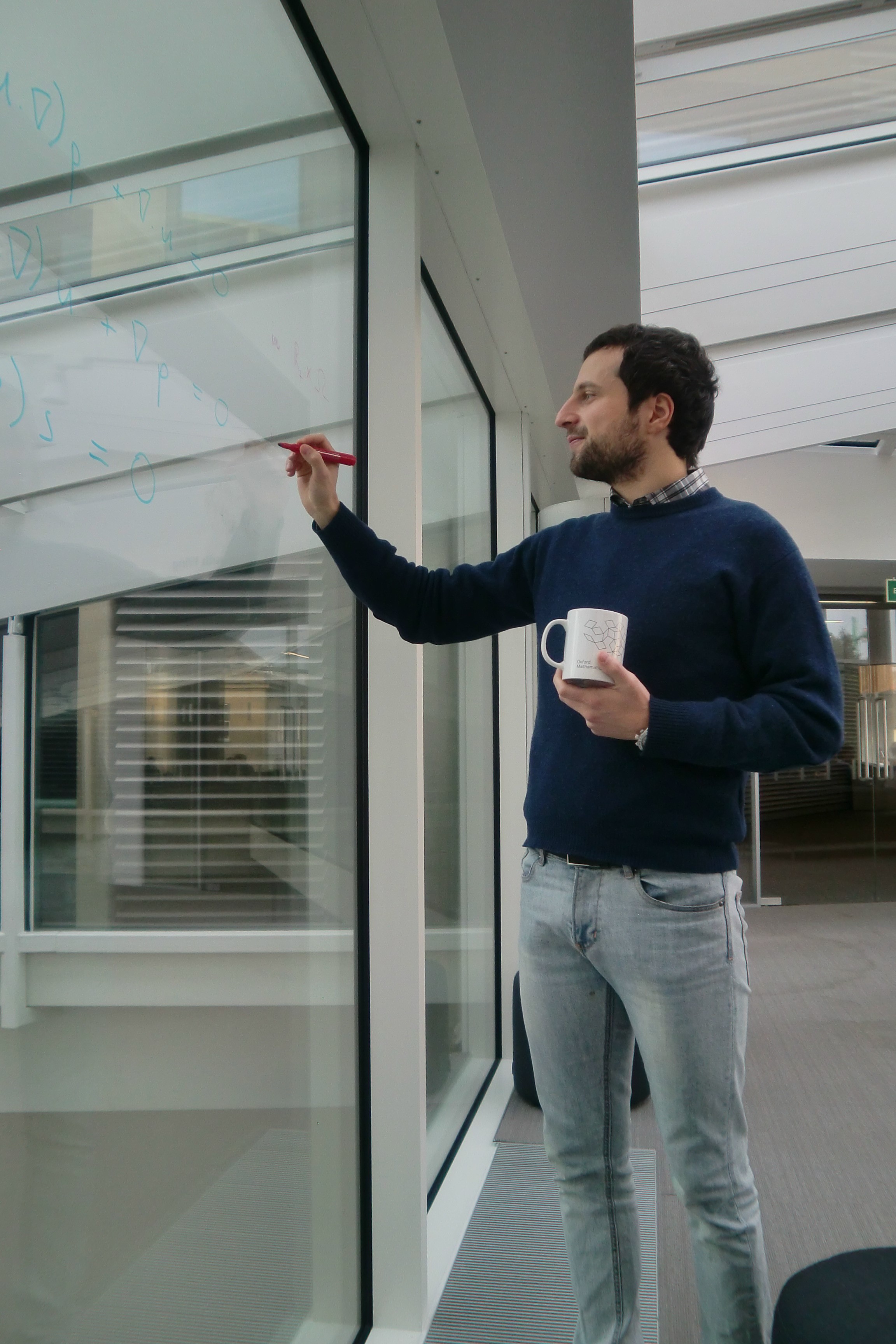
Giovanni Alberti is a Full Professor in Mathematical Analysis at the Department of Mathematics (DIMA) of the University of Genoa. He earned his D.Phil. at the University of Oxford and completed postdoctoral positions at École Normale Supérieure (Paris) and ETH Zurich. His research focuses on partial differential equations, applied harmonic analysis, inverse problems, and machine learning. University of Genoa MaLGa Center (Machine Learning Genoa) Mathematical Institute, Oxford Maths Department, ETH Zurich His work bridges mathematical analysis with computational methods, particularly in inverse problems , compressed sensing , and machine learning . He has developed algorithms for real-time geotechnical predictions, sparse optimization for scatterer localization, and continuous generative models. Recent publications emphasize physics-data-driven integration and low-dimensional manifolds. He received the Gioacchino Iapichino Prize (2017), Eurasian Association on Inverse Problems Young Scientist Award (2018), and an ERC Starting Grant (2021). He serves on editorial boards for journals including Inverse Problems and SIAM Journal on Imaging Sciences.