

Pedro Fardim is a Professor at the KU Leuven , affiliated with the Faculty of Engineering Sciences, Department of Chemical Engineering , and leads the Chemical and Biochemical Reactor Technology and Safety (CREaS) division. He also serves as President of EPNOE (European Polysaccharide Network of Excellence) and is a member of multiple institutes including KU Leuven Brain Institute (LBI) , Institute for Single Cell Omics (LISCO) , and Institute for Micro- and Nano-scale Integration (LIMNI) . PhD in Chemistry, State University of Campinas (UNICAMP), Brazil Habilitation in Chemical Engineering, Åbo Akademi University, Finland Pedro’s research focuses on topochemical engineering —mimicking natural bioassembly processes in trees and microorganisms to create sustainable materials and biofabrication technologies . His work spans drug delivery , regenerative medicine , biopolymer engineering , and green chemistry , with applications in pharmaceuticals , cosmetics , and energy . Recent projects include hydrogels for wearable sensors , biohybrid materials for bone tissue engineering , and lignin valorization using hydrotropic solvents. His scientific awards include Fellowships from the Royal Society of Chemistry and the International Academy of Wood Science , along with membership in the American Chemical Society . He teaches Chemical Engineering for Human Health , Biochemical Process Engineering , and Biopolymer-based Sustainable Technologies .
جستجوی استاد راهنمای دانشگاهی
برای مسیر پژوهشیتان، استاد راهنما، استاد دانشگاه و پژوهشگر مناسب را پیدا کنید و با آنها ارتباط بگیرید.
نمایش ۱-۱۵ از ۱۹۳ استاد راهنما
اطلاعات پروفایلها از صفحات عمومی دانشگاهها گرفته شده و ممکن است بهروز نباشد.
Dong-Bo Wangمشاهده پروفایل
پژوهشگر
Dong-Bo Wang is a Researcher at imec, a research hub affiliated with Ghent University in Belgium. His current employment at imec began in March 2020 and continues to the present. He holds a doctoral degree (PhD), as indicated by the title 'Dr.' associated with his profile. His research focuses on advancing photonics technologies, particularly in the areas of quantum cascade lasers, silicon photonics integration, and micro-transfer printing techniques. His work bridges optoelectronics and materials science to develop novel photonic integrated circuits and heterogeneous systems. Recent publications highlight contributions to the integration of quantum cascade lasers on silicon platforms and the application of micro-transfer printing for creating advanced photonic devices. These efforts aim to enhance performance and scalability in optoelectronic systems. No academic awards or grants are explicitly listed in the provided information. Collaborations include researchers from imec and affiliated institutions, reflecting a team-oriented approach to solving complex photonics challenges.
- Photonics
- Optoelectronics
- Quantum Devices
- +۳ مورد دیگر
Wouter Van Gompelمشاهده پروفایل
استادیار
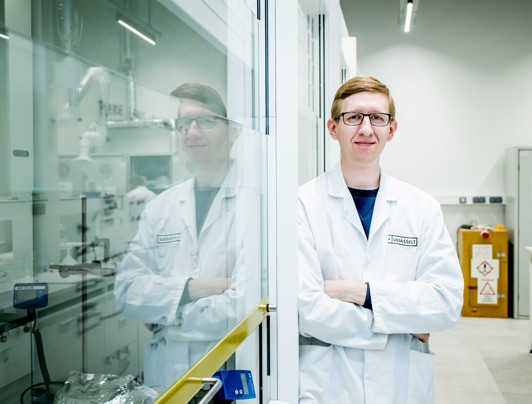
Prof. Dr. Wouter Van Gompel is an Assistant Professor (Tenure Track) at Hasselt University's Faculty of Sciences, leading the Hybrid Materials Design (HyMaD) research group. His work focuses on designing hybrid materials for optoelectronics, particularly low-dimensional hybrid perovskites. He holds a PhD from Hasselt University (2019) and completed postdoctoral research at EPFL and the University of Cambridge, supported by FWO and BOF grants. Education: Master in Chemistry, Ghent University (2015) PhD in Chemistry, Hasselt University (2019) Research Interests: Hybrid perovskite design and synthesis Optoelectronic applications (solar cells, photovoltaics) Charge transfer dynamics and energy funnelling Material stability and structural engineering Organic-inorganic interfaces Grants & Projects: FWO-SB PhD grant (2015–2019) FWO-SBO project collaboration with imec and Belgian universities (postdoc) BOF postdoctoral mandate (2022) Current projects include optoelectronic materials for neuromorphic computing and solar cells Teaching & Supervision: Coordinating lecturer for courses like Fundamentals of Materials Chemistry and Hybrid Materials and Functional Interfaces Supervising PhD students in areas like perovskite stability, chirality, and neuromorphic applications Labs & Groups: Head of HyMaD expertise group at Hasselt University Collaborates with IMOMEC institute and international labs
Lucca Geurtsمشاهده پروفایل
مدرس ارشد
Lucca Geurts is a Senior Lecturer at the Faculty of Industrial Engineering Sciences at KU Leuven, where he is affiliated with the Department of Computer Science. He serves as chairman of the Leuven Centre for Accessible Health Technology, subdivision head of Subdivision 3, Campus Group T Leuven, and Head of Education of the OC Innovative Health Technology. Additionally, he is an active member of DigiSoc – KU Leuven Institute for Digital Society. His research focuses on Technology for Tangible and Playful Interactions, particularly in healthcare applications. Dr. Geurts leads numerous research projects including therapeutic games for children with visual disorders, flexible activity measurement systems, intimate interactive systems, and early-stage glaucoma screening platforms. His work bridges human-computer interaction with accessible health technology, emphasizing user-centered design principles and practical healthcare solutions. Dr. Geurts' publication record demonstrates a consistent trajectory from fundamental interaction techniques to applied healthcare contexts. His recent work shows increasing sophistication in squeeze interactions, emotion regulation through tangible interfaces, and medical applications of interactive technology. The research trends indicate a growing focus on accessible medical diagnostics, therapeutic applications, and user experience in healthcare technology. As an educator, Dr. Geurts teaches across multiple domains including Electronics, Computer Architectures, Health Entrepreneurship, Sensors and Circuits for Healthcare Applications, and Extended Reality. His educational leadership extends to Master's theses and internships in health engineering, reflecting his commitment to training the next generation of healthcare technologists. Committee for Culture, Art and Heritage Faculty Council of Industrial Engineering Sciences Evaluation Committee of the Faculty of Industrial Engineering Sciences POC Advanced Education Faculty of Industrial Engineering Sciences Secretary of the OC Innovative Health Technology Departmental Council for Computer Science Interfaculty Council for Global Development (as substitute member) Dr. Geurts maintains an active research profile with numerous publications in top-tier human-computer interaction conferences and journals. His work shows a clear progression toward increasingly impactful healthcare applications, with strong emphasis on accessibility and user experience in medical technology development.
Patrick Wagner is a full professor at the Catholic University of Leuven (KU Leuven), affiliated with the Faculty of Sciences and the Department of Physics of Soft Matter and Biophysics. His research focuses on biosensors, soft matter physics, and nanotechnology, often intersecting with biomedical and environmental applications. Head of the Department of Physics of Soft Matter and Biophysics Member of Leuven One Health and LIMNI institutes Active in interdisciplinary projects involving sensor development and biophysical systems His current projects include PFAS contamination monitoring, thermally responsive biosensors, and advanced electrode systems for lab-on-chip integration. While no explicit awards or students are listed in the provided text, his publications highlight collaborations across Europe and involvement in clinical, environmental, and materials science domains. Recent works emphasize electrochemical sensing, molecular imprinting, and temperature-driven cell adhesion techniques.
- Biophysics
- Soft Matter Physics
- Biosensors
- +۳ مورد دیگر
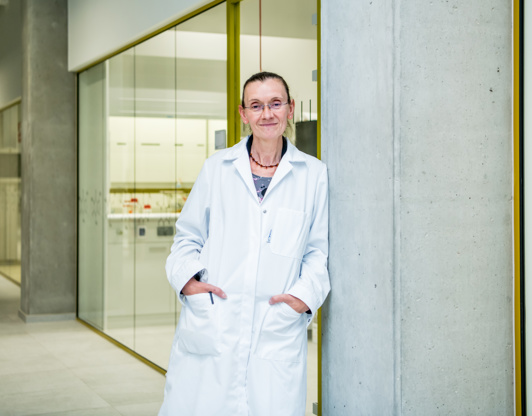
Dr. Laurence Lutsen is a Strategic Research Manager at IMEC-IMOMEC and Project Manager at UHasselt-MATCHEM, affiliated with Hasselt University in Diepenbeek, Belgium. She holds a PhD in Chemistry from the University of Montpellier II (1994) and has over 200 peer-reviewed publications with an H-index of 56 and over 10,900 citations. Her research focuses on designing and synthesizing novel semiconductors for organic and hybrid electronic devices, including solar cells, transistors, sensors, and light-emitting diodes. **Education:** PhD in Chemistry, University of Montpellier II (1994) Postdoctoral research at the University of Kent (1995) Joined Limburgs Universitair Centrum (now UHasselt) in 1997 **Research Interests:** Her work emphasizes organic and hybrid semiconductor materials, particularly layered hybrid perovskites, organic electrochemical transistors (OECTs), and photovoltaic technologies. Key areas include optimizing material stability, charge transport, and device performance in applications like solar cells and biosensors. She explores advanced synthesis techniques and defect engineering to enhance material reliability. **Labs & Teams:** Lutsen leads research initiatives at IMOMEC and MATCHEM, collaborating on interdisciplinary projects involving materials chemistry, nanotechnology, and device fabrication. Her contributions bridge fundamental material science and applied optoelectronics.
Tegoeh Tjahjowidodoمشاهده پروفایل
مدرس ارشد
Tegoeh Tjahjowidodo is a Senior Lecturer at the Faculty of Industrial Engineering Sciences , KU Leuven , affiliated with the Department of Mechanical Engineering and the Manufacturing Processes and Systems (MaPS) unit at Campus De Nayer. He serves as Head of Education for Electromechanics programs and leads Subdivision 17 at the campus. Research Areas: Additive Manufacturing (Wire-Arc Additive Manufacturing), Process Monitoring, Control Systems, Laser Micromanufacturing, Wear Analysis, Robotics, and Condition Monitoring. Publication Trends: Focus on in-situ monitoring of laser micromanufacturing, machine learning for abrasive belt grinding, WAAM parameter optimization , and multi-sensor fusion for process control. Scientific Contributions: Co-promotor for MultiTRIBO (tribology), Promotor for WAAM structural integrity and pedicle screw surgical simulators . Active in international collaborations (e.g., 25th International Symposium on Laser Precision Microfabrication, Spain 2024).

Heidi Ottevaere is a Professor at the Faculty of Engineering of the Vrije Universiteit Brussel (VUB) since October 1, 2009. She serves as the head of the Instrumentation and Metrology platform at the Photonics Innovation Center and leads the 'biophotonics' research unit of the Brussels Photonics Team (B-PHOT), which is chaired by Prof. Hugo Thienpont. Her work focuses on the design, fabrication, and characterization of photonic components and systems for diverse applications in medical diagnostics, environmental monitoring, and industrial processes. Dr. Ottevaere earned her Electrotechnical Engineering degree with majors in Photonics from Vrije Universiteit Brussel in 1997 and completed her PhD in Applied Sciences at the same institution in 2003. Her doctoral research focused on 'Refractive microlenses and micro-optical structures for multi-parameter sensing: a touch of micro-photonics.' Professor Ottevaere's research spans multiple cutting-edge areas of photonics with particular emphasis on biophotonics, micro-optics, and optical metrology . Her work bridges fundamental science with practical applications, developing novel photonic components and systems that address real-world challenges. She has pioneered research in miniaturized optical systems for medical diagnostics, environmental monitoring, and industrial applications. Her current research focuses on advancing lab-on-a-chip technologies, microfluidic optical sensors, and novel optical fiber systems for biomedical applications. She has developed microminiaturized, integrated plastic detection units for absorbance and laser-induced fluorescence measurements in microfluidic channels, enabling portable, robust, and disposable diagnostic systems. Her recent publications demonstrate a strong trend toward integrated optical sensing systems with applications in medical diagnostics and environmental monitoring. There's a clear progression from fundamental optical component design to complete system integration, with increasing emphasis on artificial intelligence for data analysis and computational imaging techniques. Her work bridges photonics with biomedical engineering, materials science, and data science, reflecting the interdisciplinary nature of modern photonics research. Dr. Ottevaere has been recognized with several prestigious awards: Best Application award (2008) Educational award - Bronze (2019) MOC09 Contribution Award Winners (2009) As an educator and mentor, Professor Ottevaere has promoted 9 PhD students and supervised numerous master's theses. She has secured substantial research funding from diverse sources including the Fund for Scientific Research Flanders (FWO), the Institute for the Promotion of Innovation by Science and Technology in Flanders (IWT), and multiple European Framework Programs. Her current portfolio includes projects on miniaturized biosensors for drinking water screening, precision manufacturing, and photonics education initiatives in Uzbekistan. She has coordinated multiple strategic research and networking projects with regional, national, and international funding bodies. Professor Ottevaere leads the biophotonics research unit within the Brussels Photonics Team (B-PHOT), one of Europe's leading photonics research groups. Her team includes researchers working on optical metrology, micro-optics fabrication, and biophotonic applications. She collaborates extensively with industry partners including Melexis, Umicore, and Anteryon, as well as academic institutions across Europe through various EU-funded projects. She has been instrumental in developing the interuniversity engineering curriculum 'Master in Photonics' which received the EC Erasmus Mundus quality label in 2006, and continues to be the driving force behind photonics education at VUB.
- Photonics
- Biophotonics
- Optical fiber sensors
- +۷ مورد دیگر
Prof. Wim Desmet is a full professor at the Faculty of Engineering Science and head of the Department of Mechanical Engineering at KU Leuven . His research focuses on advanced modeling techniques for mechanical systems, including: noise and vibration control in automotive and industrial systems computational acoustics and interval field uncertainty modeling metamaterials for broadband vibroacoustic performance AI-driven diagnostic systems in renewable energy and manufacturing Current research projects address challenges in electric vehicle drivetrains, wind turbine monitoring, and multi-physical digital twin development. He actively contributes to academic governance as: Managing Director of KU Leuven Head of Subdivision HIST Chair of multiple executive committees Member of 15+ academic and administrative councils
Wout Joseph is a Professor in the domain of Experimental Characterization of wireless communication systems at Ghent University (Belgium), where he has been working since October 2009. He is also an IMEC Principal Investigator since 2017. His research is conducted within the wireless, acoustics, environment & expert systems (WAVES) research unit at the Department of Information Technology (INTEC). Dr. Joseph was born in Ostend, Belgium on October 21, 1977. He received his M.Sc. degree in electrical engineering from Ghent University in July 2000. From September 2000 to March 2005 he was a research assistant at the Department of Information Technology (INTEC), where his scientific work focused on electromagnetic exposure assessment around base stations for mobile communications related to health effects. This work led to his Ph.D. degree in March 2005. Professor Joseph's research expertise spans multiple domains within wireless communications and bioelectromagnetics. His primary research interests include electromagnetic field exposure assessment, in-body electromagnetic field modeling, electromagnetic medical applications, propagation for wireless communication systems, IoT, antennas and calibration. He also specializes in wireless performance analysis, industry 4.0 applications, wireless localization, and Quality of Experience metrics. His work is particularly notable for its focus on dosimetric studies in the radiofrequency range, where his research is ranked first in number of peer-reviewed studies. His research has practical applications in wireless network planning, occupational safety, and public health policy related to electromagnetic fields. His extensive publication record (over 886 publications with an h-index of 45 in ISI Web of Science and 66 in Google Scholar) demonstrates a clear trajectory from fundamental electromagnetic field measurements to applied research in industrial wireless networks and bioelectromagnetic applications. Recent work shows a strong emphasis on 5G exposure assessment across multiple European countries, millimeter-wave channel modeling, and the application of machine learning techniques to exposure assessment and wireless localization. EBEA council board member (2015-2018) EBEA board member at large (2019) Bioelectromagnetics Society board member (2022) Bioelectromagnetics Society board member (2024) 24 research awards Professor Joseph leads significant research efforts in electromagnetic field exposure assessment, with particular emphasis on developing measurement methodologies and computational models for real-world exposure scenarios. His work bridges theoretical electromagnetic modeling with practical applications in wireless communications and bioelectromagnetics. His research group within the WAVES unit is highly active in both theoretical and experimental aspects of wireless communications and bioelectromagnetics, with current projects focusing on 5G exposure assessment across Europe, millimeter-wave channel modeling for data centers and industrial environments, and the development of novel exposure assessment methodologies using advanced signal processing and machine learning techniques.

Lien Smeestersمشاهده پروفایل
پژوهشگر
Lien Smeesters is a postdoctoral researcher at the Department of Applied Physics and Photonics, Vrije Universiteit Brussel (VUB). Her work focuses on advancing optical technologies for applications in climate monitoring, food safety, and industrial photonics. She is part of Brussels Photonics, a research group specializing in optical design and engineering. Her research interests include spectroscopy, LiDAR systems, space-based imaging, and the development of novel optical devices. Notably, she contributed to projects like the GRADΞD SBO initiative aimed at additive manufacturing process control. She has presented at international conferences such as SPIE Photonics Europe and organized events like the Belgian Photonics Online Meetup 2022. Education: Master's and PhD in Applied Physics and Photonics (VUB). Her awards include the Best Student Paper Award (2014), Photonics21 Student Innovation Award (2017), and EO Educational Award Finalist (2016). She has supervised master’s theses on topics like optical design for climate monitoring and tunable lenses in camera systems. Her lab work involves collaborations on projects such as wide-field-of-view cameras for Earth radiation monitoring and polymer lightguide fabrication.
Konstantinos Gryllias is a Professor in the Department of Mechanical Engineering at KU Leuven's Faculty of Engineering Sciences. He leads research in the Mechatronic System Dynamics (LMSD) unit at the Arenberg campus. His academic affiliations extend across multiple KU Leuven institutes including Leuven.AI, Leuven.AM (Additive Manufacturing), and the Gravitation Institute. He serves on important governance bodies as a member of the Faculty Council of Engineering Sciences, Faculty Doctoral Committee of Engineering Sciences, and Departmental Council of Mechanical Engineering. Dr. Gryllias specializes in signal processing, fault detection and diagnosis of rotating machinery, condition monitoring, and machine learning applications in structural health monitoring. His research spans linear and nonlinear vibrations, anomaly detection, rotordynamics, and pattern recognition. His work bridges theoretical signal processing with practical engineering applications in wind turbines, marine propulsion systems, and industrial machinery. His recent publications demonstrate strong focus on deep learning approaches for wind turbine anomaly detection, bearing diagnostics, stern bearing lubrication optimization, and structural health monitoring using advanced signal processing techniques. The research shows increasing integration of explainable AI methods with traditional vibration analysis. Dr. Gryllias teaches advanced courses including Monitoring & Prognostics, Structural Dynamics, Smart Sensing Technologies, and Applied AI perspectives. His teaching portfolio reflects the interdisciplinary nature of his research, connecting mechanical engineering fundamentals with cutting-edge AI methodologies. He currently leads multiple research projects through 2025-2029, primarily as Promotor, focusing on fault detection in gears using fiber optic sensors, multi-sensor monitoring of drivelines, physics-inspired machine learning for condition monitoring, and digital twin applications for wind turbine efficiency improvement.

Jef Vandemeulebroucke is a researcher at the Department of Electronics and Informatics , Vrije Universiteit Brussel (VUB) , specializing in medical imaging, computer vision, and augmented reality applications in healthcare. His work bridges artificial intelligence with radiology and biomechanics , focusing on automated segmentation, predictive modeling, and real-time surgical navigation systems. Research interests include: Medical image analysis for disease prognosis (e.g., COVID-19 severity , neurosurgical drains ) Development of MedShapeNet , a 3D medical shape dataset for computer vision Augmented reality systems in orthopedic and neurosurgical interventions AI-driven fluorescence endoscopy and dynamic CT for joint kinematics Key trends in his 140+ publications emphasize deep learning , image registration , and 4D-CT applications . Supervised theses include brain age prediction and chest radiography automation. Active in 38 projects (e.g., AI-NIMO , TumorScope ), he collaborates with institutions like the Universitair Ziekenhuis Brussel (UZB) and FWO (Fund for Scientific Research-Flanders).
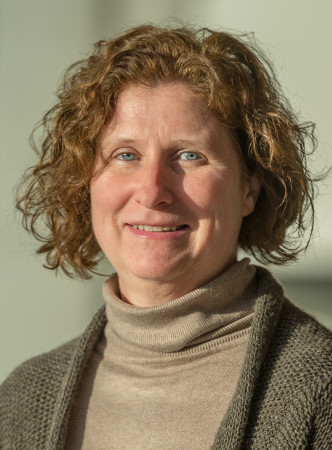
Ingrid Moerman is a part-time Professor at Ghent University and a staff member at the Internet Technology and Data Science Lab (IDLab), a core research group of imec embedded within Ghent University and the University of Antwerp. She coordinates mobile and wireless networking research and leads a team of over 30 researchers at Ghent University, with extensive involvement in European and national funding initiatives. She received her Electrical Engineering degree (1987) and Ph.D. (1992) from Ghent University. Her research spans collaborative networks, cognitive radio, software-defined radio, IoT, LPWAN, and high-density wireless access, emphasizing experimentally-supported development of next-generation wireless systems with practical implementations in spectrum management and real-time control. Recent publications (2024-2025) reveal a strong pivot toward AI-integrated wireless networking, featuring OFDMA scheduling innovations, Wi-Fi 6/7 interference mitigation, and time-sensitive networking for industrial applications. Key trends include 5G/6G convergence, vehicular communication enhancements, and digital twin frameworks for network observability, reflecting her focus on mission-critical industrial use cases. Her accolades include: 9 Best Paper Awards 2 FWO Prizes (Research Foundation - Flanders) IMEC Prize of Excellence 2001 MSc Thesis Award (as promoter) Best Demo/Exhibit Award at ICT 2013 DARPA Spectrum Collaboration Challenge Prize ($750,000) She has coordinated major EU projects (FP7/H2020: CREW, WiSHFUL, eWINE, ORCA) with industry partners, securing substantial funding for experimental wireless research. Her grant portfolio emphasizes collaborative innovation in spectrum sharing and neutral-host architectures for multi-operator environments. At IDLab, she directs advanced wireless testbeds supporting real-world validation of technologies like openwifi and White Rabbit, with active experimentation in time-sensitive networking and spectrum collaboration for industrial IoT deployments.

Wout Weijtjensمشاهده پروفایل
پژوهشگر ارشد
Wout Weijtjens is a Research Fellow at Vrije Universiteit Brussel, affiliated with the Acoustics & Vibration Research Group in Applied Mechanics. His research focuses on structural health monitoring (SHM) of offshore wind turbines, fatigue analysis, and vibration-based damage detection using advanced signal processing and machine learning techniques. Current projects include FIRMEST (fatigue assessment of offshore wind turbine substructures) and FOOS (Forced Oscillations in turbines). His research interests span: Operational modal analysis for offshore structures Machine learning applications in SHM Fatigue life prediction under environmental variability Sensor networks for infrastructure monitoring Wind turbine dynamics under harsh conditions Recent publications demonstrate a consistent focus on developing predictive maintenance frameworks through multivariate sensor data analysis, uncertainty quantification in SHM systems, and validation of computational models against full-scale field measurements. Article trends emphasize machine learning integration with physical models for improved fatigue life assessment. Awards and recognitions include: Best Paper Award (2nd place, 2022) Poster Award (2017) Solvay Award (2015) As principal investigator on multiple grants including VLADBC7 and VLADBC9 projects, he supervises PhD candidates in vibration-based SHM and leads experimental validation at OWI-Lab's Large Climate Chamber. His team develops IoT monitoring solutions for civil infrastructure through the SMART TOWERS initiative.