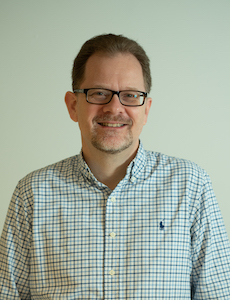
Professor Ulrik Lund Andersen heads the quantum information group at DTU Physics, Technical University of Denmark. His research develops quantum technologies including quantum computation, secure communication, and quantum-enhanced measurement systems. His group generates entangled optical states and investigates diamond-photon interactions for quantum nonlinearities. Key research areas: Quantum computing architectures Continuous-variable quantum information Quantum key distribution Quantum-enhanced sensing Solid-state quantum systems Recent work advances error correction, quantum state engineering, and quantum sensing algorithms. Publications demonstrate consistent focus on practical quantum technology implementation. Awards include multiple Sapere Aude research grants and the Eliteforsk Award from the Danish Ministry of Science.
Seth Lloyd is a Professor of Mechanical Engineering at the Massachusetts Institute of Technology (MIT), where he directs the Center for Extreme Quantum Information Theory (xQIT). His work bridges theoretical physics, quantum information science, and complex systems theory. He has made significant contributions to the foundations of quantum computing and quantum information processing. Lloyd received his education from prestigious institutions: B.A. from Harvard College (1982) M.Phil from Cambridge University (1984) as a Marshall Scholar Ph.D. in Physics from Rockefeller University (1988) Lloyd's research focuses on quantum information science, particularly quantum computation and quantum communications. He has pioneered work in quantum analog computation, quantum error correction, and quantum metrology. His research explores how quantum mechanics can be harnessed for information processing tasks, with applications ranging from quantum computing to understanding biological processes like photosynthesis. Lloyd is also known for his work on complex systems and the relationship between information and physical systems, arguing that the universe itself can be viewed as a quantum computer. His publication record shows a clear progression from foundational quantum computing work to applications in quantum machine learning and quantum biology. The most recent articles reveal a strong focus on quantum algorithms for machine learning, quantum metrology, and the intersection of quantum mechanics with biological systems. His work on the HHL algorithm for solving linear systems has been particularly influential in quantum machine learning, though its practical advantages have been debated following Ewin Tang's classical algorithms. Lloyd has received numerous scientific honors: Lindbergh Fellow (1994) Finmeccanica Professorship (1996) Edgerton Prize (2001) Fellow of the American Physical Society (2007) Quantum Communication Award (2012) International Quantum Communication Award (2012) Throughout his career, Lloyd has mentored numerous students and researchers in quantum information science. He has secured significant research funding for his work in quantum computing and complex systems. His research has been supported by various foundations and government agencies interested in advancing quantum technologies. Lloyd has also been involved in interdisciplinary collaborations, particularly with biologists studying quantum effects in photosynthesis. Lloyd directs the Center for Extreme Quantum Information Theory (xQIT) at MIT, which brings together researchers from physics, computer science, and engineering to tackle fundamental challenges in quantum information processing. His lab has been at the forefront of developing theoretical frameworks for quantum computing and exploring practical implementations of quantum information protocols.
Klaus Mølmer is a Professor at the Niels Bohr Institute, University of Copenhagen, specializing in Quantum Optics and Photonics. His research spans quantum information, entanglement, and cavity QED, leveraging machine learning and Grover's algorithm for quantum state engineering. His recent work focuses on spin squeezing, Rydberg atom interactions, and mechanical resonator cooling. A leader in quantum simulation and superradiance, he collaborates on cavity-mediated emission and quantum network design. The 15 most recent articles highlight advancements in quantum state manipulation, entanglement protocols, and robust differential phase sensing. These studies bridge theoretical frameworks with experimental applications in cavity QED, Rydberg arrays, and zero-photon detection.
Asbjørn Moltke is a Postdoctoral Researcher at the Department of Electrical and Photonics Engineering at the Technical University of Denmark (DTU), working within the Fiber Sensors & Supercontinuum research group. His research is centered on advanced photonic technologies, including supercontinuum generation, ultrafast lasers, and nonlinear optical phenomena, with applications in renewable energy and biosensing. His research interests span nonlinear optics , fiber photonics , UV light generation , and laser-based material processing . He applies these technologies to areas such as solar cell fabrication , optical sensing , and metasurface engineering . His work contributes to UN Sustainable Development Goals related to clean energy and responsible innovation. The recent publications highlight a strong trend in developing high-power, low-noise UV and visible supercontinuum sources through pump modulation techniques, as well as their application in solar cell processing and biomolecular detection . These works reflect a multidisciplinary approach combining theoretical modeling, numerical simulation, and experimental validation in advanced photonic systems. No scientific awards were mentioned in the provided text. Asbjørn Moltke has been involved in significant research projects and has served as a supervisor in a PhD project focused on UV supercontinuum sources and metasurfaces. He has presented his work at international conferences, demonstrating active engagement in the scientific community. While no specific grants are listed, his participation in funded PhD projects indicates involvement in competitively supported research. He is affiliated with the Fiber Sensors & Supercontinuum group at DTU, a leading team in nonlinear fiber optics and advanced light source development. This team focuses on pushing the boundaries of supercontinuum technology for industrial and biomedical applications.
Mikkel N. Schmidt is an Associate Professor in the Department of Applied Mathematics and Computer Science at the Technical University of Denmark (DTU). His research focuses on statistical modeling, Bayesian methods, and their applications in science and industry. He has held visiting roles at Columbia University (2007) and Cambridge University (2008-2009). His work integrates probabilistic modeling with computational inference to address complex problems in diverse fields such as molecular discovery, optical communication, and brain connectivity analysis. Education highlights include visiting scholar and postdoctoral experiences at top-tier institutions. Research interests span statistical methodology development, machine learning applications, and interdisciplinary problem-solving. Current projects involve Bayesian neural networks for molecular discovery and federated learning optimization. Advising efforts include supervising multiple PhD students in areas like molecular discovery and denoising diffusion models. Notable collaborations involve work on materials science, quantum communication, and medical signal processing. His contributions bridge theoretical advancements with practical industrial applications, emphasizing interdisciplinary innovation.
Thomas J. D. Jørgensen is an Associate Professor and Head of the Research Section of Biomedical Mass Spectrometry at the Department of Biochemistry and Molecular Biology, University of Southern Denmark. He leads an active research group focusing on protein structural dynamics using mass spectrometry and hydrogen/deuterium exchange methodologies. His research interests lie at the intersection of biochemistry, structural biology, and systems biology, particularly in understanding how protein dynamics govern function and dysfunction in diseases such as Parkinson’s and metabolic disorders. He employs advanced mass spectrometry techniques to study conformational changes, protein-protein interactions, and enzyme regulation, with a strong emphasis on lipoprotein metabolism and neurodegenerative disease mechanisms. The most recent articles highlight a consistent focus on protein dynamics in lipid metabolism, conformational diseases, and glycoprotein analysis, utilizing hydrogen/deuterium exchange mass spectrometry (HDX-MS) and related techniques. Themes include allosteric regulation of enzymes, protein unfolding, and structural phenotyping of disease-related aggregates. Member of the evaluation committee at the Swedish Research Council (2015) Chairman of multiple PhD evaluation committees (2014) Editorial and peer-review contributions to the scientific community He currently supervises PhD students and is involved in several major research projects funded by organizations such as the Michael J. Fox Foundation and Novo Nordisk Fonden. His lab, the Thomas J. D. Jørgensen Lab, includes postdoctoral researchers, academic staff, and industrial PhD students, fostering a collaborative and interdisciplinary research environment focused on biomedical mass spectrometry and systems biology.
Martin Nordal Petersen is an Associate Professor at the Department of Electrical and Photonics Engineering , Technical University of Denmark (DTU) . His work spans Internet of Things (IoT) , optical networking , and wireless communication systems, with notable contributions to LoRa , NB-IoT , and LPWAN technologies. He actively supervises PhD projects on topics such as machine learning in IoT edge devices , secure 5G communication , and smart community architectures . Active projects (2024–2027): Machine Learning in IoT Edge Devices , Deterministic and Secure 5G Communication Finished projects (2021–2024; 2018–2021; 2015–2018): Reliable M2M/IoT Communication , Smart Communities , IoT 100% , Network Slicing His research explores: IoT Reliability : Multi-RAT communication, backup systems, and signal propagation Optical Networks : Alien wavelength integration, SDN control, and network emulation platforms Wireless Innovation : GPS-free geolocation, maritime NB-IoT use cases, and multimode fiber distribution Current collaborations emphasize cross-disciplinary applications of IoT in healthcare , industrial ergonomics , and smart environments .
Kohei Nakajima is an Associate Professor at the Department of Intelligent Mechano-Informatics, Graduate School of Information Science and Technology, The University of Tokyo. He holds concurrent positions at the Department of Creative Informatics and the Next Generation Artificial Intelligence Research Center (AI Center). As an Endowed Chair in Advanced Artificial Intelligence Education, he leads the Physical Intelligence Lab, which focuses on the intersection of soft robotics, nonlinear dynamics, and physical computing. His research interests center on Physical Reservoir Computing (PRC), a paradigm that exploits the natural dynamics of physical systems for computation, with applications in soft robotics, spintronics, and quantum machine learning. Nakajima's work demonstrates how physical systems can inherently process information without traditional digital computation, leveraging phenomena like chaos, bifurcations, and embodied intelligence. Nakajima's publications reveal a strong focus on understanding how physical systems can perform computational tasks. His recent work spans from biological applications (jellyfish cyborgs, ostrich-inspired robotics) to fundamental theoretical advances in reservoir computing. The research demonstrates how physical phenomena can be harnessed for information processing, with implications for energy-efficient computing and novel robotic control paradigms. As the organizer of the Reservoir Computing Seminar, Nakajima has built a vibrant research community exploring the nature of information processing across disciplines. His lab actively recruits graduate students and postdocs, indicating strong research momentum and institutional support for his work in physical intelligence.
Hao Hu is a Senior Researcher at the Department of Electrical and Photonics Engineering at the Technical University of Denmark (DTU). He leads the Photonic Integrated Circuit based Systems Group and is active in the field of silicon photonics for optical communications. His research focuses on integrated photonic systems, including optical phased arrays, LiDAR, and neural network applications. Research Interests: Hao Hu's work spans optical beam steering , integrated photonics , silicon photonics , and optical wireless communications . He explores energy-efficient photonic components and optical computing platforms for machine learning, contributing to advancements in LiDAR and optical signal processing. Recent Publications: His recent articles highlight innovations in digital optical computing , thermo-optic phase shifters , and solid-state beam steering , reflecting expertise in silicon photonics and machine learning applications. The ACS Photonics 2025 article emphasizes ultra-low loss design methodologies, while the Journal of Lightwave Technology 2025 paper addresses 2D beam steering for LiDAR systems. Students: Hao Hu supervises multiple PhD students, including T. E. Rude, X. Zhu, Y. Han, X. Long, and P. Nay, across projects like integrated optical phased arrays and silicon photonics for neural networks.
Peter Behrensdorff Poulsen serves as Solar Photovoltaic Systems Group Leader at the Department of Electrical and Photonics Engineering, Technical University of Denmark (DTU). His work spans photovoltaic research, solar-powered lighting systems, and drone-based inspection technologies within DTU's College of Engineering. His research focuses on Solar Cell Engineering , Photovoltaic Modules , and Drone Applications for renewable energy systems. Key areas include bifacial photovoltaics, electroluminescence imaging diagnostics, building-integrated photovoltaics, and ultra-efficient solar-powered lighting solutions. His work significantly contributes to UN Sustainable Development Goals related to affordable clean energy and sustainable cities. Recent publications reveal strong trends in AI-driven PV diagnostics , bifacial module performance in northern climates, and dark-sky compatible lighting systems . His research bridges fundamental photovoltaic science with practical applications in urban infrastructure and environmental sustainability. Best Poster Award at 44th IEEE Photovoltaic Specialists Conference Best Poster Award at 48th IEEE Photovoltaic Specialists Conference Characterizing the Performance of Daylight Filters for Electroluminescence Imaging Poster Award at 35th European Photovoltaic Solar Energy Conference Poster Prize at Sustain 2017 Poulsen leads multiple research grants including the Ultra-efficient Dark Sky-compatible Solar-powered Outdoor Lighting project (2024-2026) and previously managed the DronEL project (2017-2019) for drone-based PV inspection. His work connects photovoltaic engineering with practical lighting applications through the Lighting Color and Radiation Laboratory. He actively collaborates with industry partners on building-integrated photovoltaics and solar-powered infrastructure solutions, with notable projects including the Plateau Sun Hub public charging stations and Black Si BIPV panel development.
Lars Dittmann is a Professor at the Department of Electrical and Photonics Engineering at the Technical University of Denmark (DTU), leading the Networks Technology and Service Platforms section. His work bridges advanced networking technologies with real-world applications in healthcare and transportation. Academic Role: Professor, Head of Section University: Technical University of Denmark (DTU) Department: Networks Technology and Service Platforms Research Interests: Professor Dittmann specializes in Software-Defined Networking (SDN) , 5G and IoT technologies , and energy-efficient network design , with a focus on applications in telemedicine and transportation systems . His work integrates machine learning for privacy-preserving traffic analysis and explores optical networks for high-bandwidth scenarios. Scientific Contributions: His recent publications emphasize green cellular networks using SDN/NFV/C-RAN, IoT benchmarking for coverage and mobility, and secure edge architectures for railways. Collaborative projects like the Future Patient telerehabilitation program highlight his interdisciplinary impact. Supervision: He supervises PhD candidates such as Radheshyam Singh, focusing on SDN-based IoT security and 5G network optimization. Labs & Projects: Leads initiatives like EXplorative network PLAnnINg and Broadband Trial Integration , addressing challenges in network reliability , emergency communication , and optical data center scaling .
Jens Hjorth is a Professor of Astrophysics at the University of Copenhagen's Niels Bohr Institute, where he leads research in the DARK center. With over 400 refereed publications, more than 35,000 citations, and an h-index of 96, he is a prominent figure in modern astrophysics. His work spans cosmology, dark matter research, and high-redshift galaxy studies, with approximately 33 papers published in Nature or Science journals. Professor Hjorth's primary research focuses on astrophysical transients, very high-redshift galaxies, cosmology, and the origin of universality in dark-matter halos. His work bridges theoretical modeling with observational data, particularly through his involvement with the Euclid space mission. His research often explores the intersection of astrophysics with art and science, demonstrating a commitment to interdisciplinary approaches. His recent publications reveal a strong emphasis on dark matter halo structure, galaxy evolution across cosmic time, and the development of sophisticated simulations for cosmological studies. His publication record shows consistent high-impact contributions, with recent work heavily focused on the Euclid mission's instrumentation and data analysis. These publications span theoretical cosmology, observational techniques, and the development of advanced simulation methods for understanding large-scale structure formation. The research demonstrates both depth in specialized areas like dark matter physics and breadth across related astrophysical disciplines. Villum Investigator: Time in Astrophysics Member of the boards of the Carlsberg Foundation Member of the boards of the Tuborg Foundation Approximately 33 scientific papers in Nature or Science journals Most cited lead-author paper: J. Hjorth et al. Nature 423, 847–850 (2003) with ~1300 citations As a Villum Investigator, Professor Hjorth leads significant research initiatives focused on time-domain astrophysics. He also serves as Co-lead of the UCPH Forward career development program, demonstrating his commitment to academic leadership and mentorship. His extensive publication record and high citation count reflect substantial research impact across multiple funding cycles and collaborative projects. Professor Hjorth is deeply involved with the DARK research center at the Niels Bohr Institute, which focuses on cosmology, dark matter, and dark energy research. His work with the Euclid mission places him at the forefront of international space-based cosmological surveys. The research teams he participates in combine observational astronomers, theoretical physicists, and computational scientists to tackle fundamental questions about the universe's structure and evolution.
Eugene Simon Polzik is a Professor of Physics at the Niels Bohr Institute, University of Copenhagen , and the founder of the Quantum Optics Center (QUANTOP) . He currently leads the Copenhagen Center for Biomedical Quantum Sensing and has held significant roles including Head of the Quantum Optics and Atomic Physics Division (2012-2021). PhD and MSc from Leningrad University Research Interests: polzik specializes in quantum physics, focusing on quantum communication , quantum sensing , and quantum information technologies . His groundbreaking work includes: Quantum teleportation between material objects Quantum memory for light Optical radio wave detection using nanomechanical oscillators Measurements beyond Heisenberg uncertainty limits Recent Publications span quantum sensing, optomechanics, and biomedical applications. Key articles include hybrid quantum networks, squeezed light generation, and advanced magnetometry techniques. Awards: Herbert Walther Award (2020) ERC Advanced Grants (2011, 2018) Villum Investigator (2019) Knight of Dannebrog (2018) Scientific American Research Leadership (2007) Grants: polzik has secured major funding including 150 MDKK Novo Nordisk Center for Biomedical Quantum Sensing (2024-2030) and 125 MDKK for QUANTOP.
Karsten Rottwitt is a Professor and Group Leader at the Department of Electrical and Photonics Engineering, Technical University of Denmark. He leads the Fiber Optics, Devices and Non-linear Effects research group and is affiliated with the Centre of Excellence for Silicon Photonics for Optical Communications. His work contributes to UN Sustainable Development Goals related to sustainable innovation in technology. Research Focus: Fiber optics, nonlinear effects, quantum photonics, and silicon-based photonic platforms. Key Projects: Includes quantum communication systems, mode-division multiplexing, and advanced fiber sensor technologies. Research Interests: Rottwitt’s expertise spans intermodal four-wave mixing, single-photon manipulation, and integrated photonics. His recent work emphasizes applications in quantum communication, high-dimensional entanglement, and novel materials like silicon carbide for photonic devices. Articles Trends: Recent publications focus on efficient frequency conversion using intermodal Bragg scattering, quantum state preservation in fibers, and sensor technologies leveraging few-mode fibers. These studies address challenges in nonlinear optics and quantum information processing. Advising: Supervises PhD students in projects such as Silicon Carbide Quantum Photonics and Effects of Higher-Order Modes on Optical Amplifiers. Grants: Active and completed projects include funding for quantum communication systems and photonic device development. Labs/Teams: Part of the leading research group at DTU, collaborating on integrated silicon carbide photonics and advanced fiber technologies.
Ingemar Johansson Cox serves as a Professor within the Machine Learning section at the Department of Computer Science, University of Copenhagen. His research bridges theoretical machine learning foundations with practical applications across medical data analysis, information retrieval, remote sensing, and sustainability initiatives. His research portfolio emphasizes machine learning applications in high-impact domains, particularly medical data analysis (e.g., early detection of gynecological malignancy using online search activity) and sustainability (e.g., reducing AI's carbon footprint). The Machine Learning section actively contributes to the university's SCIENCE AI Centre, focusing on both algorithmic innovation and real-world problem-solving in biological modeling and environmental monitoring. Recent publication trends reveal expanding work in quantum computing applications for biomolecular modeling, sustainable AI frameworks, and cross-cultural NLP systems. His 2024-2025 output demonstrates strong interdisciplinary collaboration, especially in medical informatics and climate-related AI research. Professor Cox operates within the Department of Computer Science's robust research ecosystem, which includes dedicated compute clusters and specialized initiatives like TreeSense for global tree resource monitoring through remote sensing and deep learning. The department's infrastructure supports large-scale machine learning projects requiring significant computational resources.