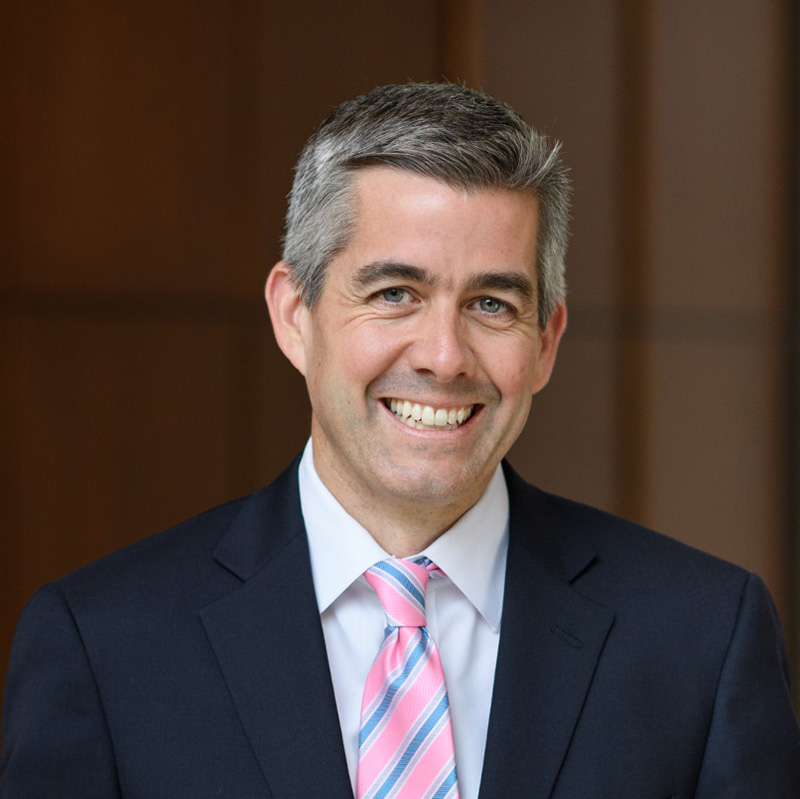
Federico Fagundes Soares is a part-time lecturer and doctoral student in criminology at the University of Ottawa’s Department of Criminology. His research focuses on penal reforms in Canada since the mid-20th century and modern penal rationality observed across different political governments. He also investigates police sociology and violence, particularly in Brazil, where he conducted fieldwork with law enforcement agencies. Education Master’s in Social Sciences, Universidade Federal da Bahia (2019) Bachelor of Law, Universidade Federal da Bahia (2014) Research Interests Police practices and militarization Penal reform dynamics State violence and accountability Criminal justice systems in Brazil and Canada Ethical frameworks in policing Publications His work examines police violence justifications, penal policy analysis, and the socio-political dimensions of criminal justice reforms. Recent studies include analyses of Brazilian military police narratives and Canadian penal system reforms. Advising & Grants Academic Supervisor: Richard Dubé No grants explicitly mentioned in provided texts
Mark Nevitt is an Associate Professor of Law at Emory University School of Law, specializing in environmental law with a focus on climate change's impact on legal frameworks and national security. He joined Emory Law faculty in summer 2022 after serving as an associate professor at Syracuse University College of Law and as the Distinguished Professor of Leadership and Law at the US Naval Academy in Annapolis, MD. His academic journey includes being a Sharswood Fellow and Lecturer-in-Law at the University of Pennsylvania Law School from 2017-2019, where he taught climate change law and policy, and a seminar on national security law and society. Before entering academia, Nevitt served as both a tactical jet aviator and attorney (JAG) in the United States Navy, achieving the rank of commander and serving as a White House Military Social Aide. Nevitt's research focuses on the intersection of environmental law, climate change, and national security. His work addresses how climate change destabilizes traditional legal frameworks and creates new security challenges, particularly examining legal issues associated with climate adaptation, managed retreat from coastlines, and constitutional dimensions of climate policy. His scholarly work has appeared in top journals including Stanford Law Review, Vanderbilt Law Review, Washington University Law Review, and Harvard Environmental Law Review. As a frequent contributor to NYU Law's Just Security blog, Lawfare, and Penn Law's Regulatory Review, Nevitt provides expert commentary on contemporary legal issues. He is a member of the Truman National Security Project and recently completed grant-funded research via the Kleinman Center at the University of Pennsylvania addressing legal issues associated with climate adaptation. Nevitt's military background informs his legal scholarship, having flown 1,000+ flight hours as a naval aviator and served as an environmental attorney, criminal defense attorney, and ethics attorney in the Navy JAG Corps. Notably, he served as the senior legal advisor for the U.S. investigation into the Iranian detention of U.S. sailors in Farsi Island, Iran. His military awards include the Air Medal and Meritorious Service Medal (four awards). He holds a J.D. and LL.M. (with distinction) from Georgetown University Law Center and a B.S.E. from the Wharton School, University of Pennsylvania. His expertise is frequently sought for commentary on legal issues at the intersection of environment, security, and constitutional law, as evidenced by recent media appearances discussing the Posse Comitatus Act and National Guard deployment issues.
Noshin Haque serves as a Teaching Fellow at Aston University within the Aston Pharmacy School, part of the College of Health and Life Sciences. She holds the position of MPharm Stage Lead for 4th year students and delivers instruction across MPharm and OSPAP (Overseas Pharmacists' Assessment Programme) curricula. Her professional foundation combines academic training with extensive frontline pharmacy management experience at major UK retail chains. Her educational background includes an MPharm degree earned at Aston University between 2011 and 2015. She maintains active professional standing as a General Pharmaceutical Council registrant, ensuring alignment with contemporary pharmacy practice standards. Her academic focus centers on pharmacy education innovation, clinical application of pharmaceutical knowledge, and medicines management systems. This expertise is directly informed by her seven years of industry experience where she progressed from Relief Manager to Cluster Manager roles at Lloyds Pharmacy and Boots UK, providing authentic context for her teaching. In her current academic role, she shapes future pharmacists through curriculum leadership and instruction, emphasizing the translation of classroom theory into community pharmacy practice. Her industry background uniquely bridges academic training with operational realities of patient care and pharmacy management.
Veysi Başhan serves as an Assistant Professor in the Department of Marine Engineering within the Faculty of Naval Architecture and Ocean Engineering at Istanbul Technical University (ITU). His academic profile demonstrates active engagement in maritime engineering research with current publications extending through 2025 and an active research project on hybrid renewable energy systems analysis. Professor Başhan's research spans critical maritime engineering domains with particular emphasis on renewable energy integration, risk assessment methodologies, and marine propulsion systems. His work innovatively combines fuzzy logic, Bayesian networks, and multi-criteria decision-making approaches to address complex challenges in maritime operations, energy systems, and safety protocols. This interdisciplinary approach bridges traditional marine engineering with modern computational techniques for risk analysis and system optimization. His publication portfolio reveals a clear trajectory toward sustainable maritime technologies, with increasing focus on wind-solar hybrid systems, alternative fuels like methanol, and autonomous navigation reliability. The research demonstrates consistent application of fuzzy-based analytical frameworks across diverse maritime contexts from engine performance to ballast water treatment systems. Current research activities include the 2024 project "Hibrit Yenilenebilir Enerji Sistemlerinde Arızaların Analizi ve Çözüm Önerileri" (Analysis of Failures in Hybrid Renewable Energy Systems and Solution Proposals), indicating ongoing commitment to solving practical engineering challenges in renewable energy integration for maritime applications. His scholarly impact is evidenced by 32 research outputs, 366 Scopus citations, and an h-index of 9.
Helena Mentis is a Professor in the Department of Information Systems and Affiliate Professor in the Department of Computer Science and Electrical Engineering at the University of Maryland, Baltimore County (UMBC). She directs the Bodies in Motion Lab (BiMLab) and is a core member of the Human Centered Computing graduate program and the Interactive Systems Research Center. Her work focuses on sociotechnical systems in healthcare, including telemedicine, surgical collaboration, and technologies for older adults with cognitive impairments. Mentis holds a PhD from Penn State, an MS from Cornell, and a BS from Virginia Tech. Her research spans human-computer interaction (HCI) , computer supported cooperative work (CSCW) , and health informatics . Key projects include developing telemedicine systems for surgical training, sensor-based systems for Parkinson’s patients, and online safety tools for older adults with mild cognitive impairment. She has received significant NSF funding, including a $518k CAREER grant for surgical telementoring systems and $499k for cybersecurity research with older adults. Her articles analyze topics like the effectiveness of telementoring in surgery, ethical design of medical systems, and collaborative security settings for couples facing cognitive challenges. Mentis has pioneered frameworks for responsible computing education and peer-led ethics training in computing curricula. Prior to UMBC, she held postdoctoral roles at Harvard Medical School, Microsoft Research, and the University of Cambridge. Current initiatives include expanding healthcare workforce access via telemedicine and designing inclusive systems that address marginalized groups in digital health. Her work emphasizes participatory methods, ensuring often-overlooked stakeholders (e.g., trainee surgeons, motor disability patients) shape technological solutions.
Jasmien Khattab is an Assistant Professor of Innovation Management at the Rotterdam School of Management, Erasmus University. She holds a Ph.D. in Organizational Behavior from Erasmus University and previously served as a post-doctoral researcher at the Darden School of Business, University of Virginia. Prior to academia, she worked as a policy officer at the Permanent Representation of the Netherlands to the E.U. and the Dutch Ministry of Security and Justice. Education: Ph.D. in Organizational Behavior, Erasmus University (201X) Post-Doctoral Researcher, Darden School of Business, University of Virginia (201X-201X) Research Interests: Her work focuses on innovative strategies to reduce structural inequality in organizations, particularly exploring stereotypes & leadership, social networks & diversity, and diversity & inclusion practices. Her research aims to bridge theoretical insights with practical best practices to foster inclusive organizational environments. Publications Trends: Her articles emphasize organizational behavior dynamics, leadership challenges, and systemic diversity issues. Recent work highlights interventions to shift diversity beliefs (e.g., testimonial approaches) and examines how communication strategies influence employee responses to inclusion policies. Professional Background: Her pre-academic policy experience in EU-Netherlands relations and security justice informs her research on institutional policies and organizational practices.
Dr. Jordan Shropshire is the Lawrence Minto Sylvestre Endowed Chair in Computing and a Professor in the Information Systems and Technology Department at the University of South Alabama's School of Computing. His academic journey includes a Ph.D. in Management Information Systems from Mississippi State University (2008) and a B.S. in Business Administration from the University of Florida (2004). Dr. Shropshire's research focuses on cybersecurity, data center management, cloud computing, IoT ecosystems, and systems architecture. His work addresses critical challenges such as post-quantum cryptography, embedded system vulnerabilities, and compliance frameworks for autonomous systems. He has also contributed to studies on developer platform risks, real-time operating system security, and AI-driven systems hardening. Education: Ph.D. – Management Information Systems, Mississippi State University, 2008 B.S. – Business Administration, University of Florida, 2004 His teaching career spans roles at the University of South Alabama (2008–present) and Georgia Southern University, where he held tenure (2008–2014). His publications emphasize practical cybersecurity solutions, including tools for drone compliance and frameworks for secure cloud infrastructure. He has also explored behavioral aspects of security policy adherence and IT professional retention. Dr. Shropshire's work often bridges theoretical research and real-world implementation, with a focus on mitigating emerging threats in cloud systems, IoT, and embedded devices. His research has been supported by grants such as the NSF TWC Small Grant for hypervisor security detection techniques.
Salvatore Livatino is an Associate Professor in Virtual Reality and Robotics at the University of Hertfordshire, UK. He holds a MSc in Computer Science from the University of Pisa (1993) and a PhD in Computer Science and Engineering from Aalborg University, Denmark (2003). His academic journey includes roles as Research Fellow and Associate Professor at Aalborg University, as well as visiting positions at institutions like INRIA Grenoble and the University of Edinburgh. He leads the Communications and Intelligent Systems research group and directs the Virtual Reality and Robotics Laboratory. His research focuses on immersive technologies (VR/AR/XR), stereoscopic 3D visualization, and teleoperation systems for applications in robotics, healthcare, and command-and-control interfaces. He has contributed to over 30 peer-reviewed publications and secured funding for projects such as the Innovate UK-backed 'iDOC: AI Empowered Document Authoring' (2023–2025) and 'Immersion for Care: Using Extended Reality in Healthcare Training' (2025–2027). Teaching expertise includes problem-based learning, 3D visualization, and immersive game design. His work spans interdisciplinary collaborations in robotics, AI, and healthcare, emphasizing practical applications of virtual environments.
Gerhard Hillmer is a Professor and Program Director of the Industrial Engineering & Management Master's program at the Management Center Innsbruck. He holds a Dr.-Ing. in Chemical Engineering from Friedrich-Alexander-University Erlangen-Nuremberg (1993) and an MSc in Management from Management Center Innsbruck (2008). His career spans over 25 years in academia and industry, including leadership roles as Department Head (2009-2023) and Study Coordinator in Process Engineering. Prior to academia, he held strategic roles in ExxonMobil and Esso Italiana focusing on business planning and operations optimization. His research focuses on leadership development in engineering education, interdisciplinary competency models, and organizational change management. He has authored textbooks such as Key Competencies in Leadership and Project Work (2022) and pioneered training concepts for engineering graduates' soft skills and responsible management practices. His work emphasizes integrating non-technical competencies like conflict resolution, project management, and ethical decision-making into engineering curricula. Recent publications address global business strategies in Africa, AI-driven HR practices, and corporate ethics expectations. Hillmer has supervised over 50 theses on topics ranging from cross-cultural leadership to resilient supply chains. His presentations at international conferences highlight trends in engineering education reform and organizational transformation in VUCA environments. Notable contributions include developing the PRiME-based Responsible Management certificate and advancing qualitative research methods for change processes in manufacturing. His work bridges academic research with practical industry challenges, emphasizing sustainable career development for engineers and leadership excellence in multinational contexts.
Bettina Grün is an Associate Professor and Deputy Head of the Institute for Statistics and Mathematics at Vienna University of Economics and Business (WU). Her research focuses on Bayesian mixture models, cluster analysis, and applying statistical methods to sustainability, tourism, and environmental studies. She has led multiple research projects, including studies on environmental behavior in tourism and advanced text modeling in economics. Grün holds a PhD in Technical Mathematics from TU Wien (2006) and a Habilitation in Statistics from Johannes Kepler University Linz (2012). She has authored over 150 publications in top journals like Journal of Environmental Management and Expert Systems with Applications . Her work emphasizes practical applications, such as reducing hotel waste through behavioral interventions and developing R packages like movMF and circlus for statistical clustering. Grün has received awards including the AIEST Best Contribution Award (2019) and the MRS Silver Medal (2016). Grün teaches courses on statistical modeling and leads projects like Analysis of Central Bank Communication (2022–2026) and Environmentally Friendly Behavior in Tourism (2019–2024).
Pasi Väliaho is a Professor in the Department of Philosophy, Classics, History of Art and Ideas at the University of Oslo, Faculty of Humanities. His research sits at the intersection of art history, media theory, and epistemology, exploring how visual media shape knowledge, power, and economic systems across historical periods. He is a key member of the Visual Studies research group and the Screen Cultures research initiative at UiO. His academic background includes a doctorate from the University of Turku, Finland, where he also holds the title of Docent in Media History and Theory. Prior to joining the University of Oslo, he served as Reader in Film and Screen Studies at Goldsmiths, University of London. His educational path reflects a strong foundation in European media and art history. Väliaho’s research focuses on the historical and political dimensions of visual culture, particularly how optical media, cinema, and digital technologies intersect with epistemic shifts, colonialism, and neoliberal capitalism. He examines topics such as camera obscuras, magic lanterns, military drones, video games, and deep-sea visualization, analyzing how images function as instruments of knowledge, governance, and capital. His work is deeply interdisciplinary, drawing from philosophy, science studies, and critical theory. The trends in his recent publications reveal a sustained engagement with the materiality and politics of images—from early modern optical devices to contemporary data-driven visualizations. His scholarship consistently links historical media forms with current digital and neuroscientific developments, emphasizing continuity in how vision is instrumentalized for power and control. Themes of embodiment, affect, biopolitics, and speculative economies recur across his work. 2023 Limina Award for the Best International Book in Film Studies (for Projecting Spirits ) Choice Outstanding Academic Title for 2015 (for Biopolitical Screens ) Väliaho actively supervises doctoral and postdoctoral researchers, including Rasmus Rodineliussen, William Wessel Nore, and Nanna Lenander. He is currently co-leading the Research Council of Norway-funded project 'Visualizing the Deep Sea in the Age of Climate Change' (2023–2027), which explores the political ecology of oceanic imaging. His teaching includes courses such as 'Archaeology of the Moving Image' and 'Philosophies of the Image,' reflecting his broad theoretical and historical expertise. He is embedded in collaborative research environments, notably the Visual Studies group at IFIKK and the international Screen Cultures initiative, fostering interdisciplinary dialogue on media, aesthetics, and epistemology.
Dr. H.M. Veluwenkamp is a Lecturer at the University of Groningen's Faculty of Philosophy, specializing in Ethics, Social and Political Philosophy. His affiliations include the Ethics Committee for Data and Technology at the Municipality of Groningen, the Centre for Meaningful Human Control in Delft, and the NTA Committee on Risk Profiling Algorithms. He is also a Jantina Tammes School Scholar and a member of the Humane AI Sector Plan. His research focuses on Conceptual Engineering, Meaningful Human Control in technology, and Responsibility Gaps in AI systems. He explores how philosophical methodologies can address ethical challenges posed by emerging technologies like AI and disruptive algorithms. His recent articles emphasize ethical design principles for autonomous systems, responsibility frameworks for AI, and the integration of conceptual engineering with value-sensitive design. His work bridges theoretical philosophy with applied ethics, reflecting a commitment to socially responsible technological development. Veluwenkamp teaches courses such as Ethics of AI, Social Contract Theory, and Practical Philosophy, contributing to academic training in applied ethics and social-political philosophy.
Alessandra Buonanno is a Research Professor at the University of Maryland, College Park, and Director at the Max Planck Institute for Gravitational Physics (Albert Einstein Institute) in Potsdam. Her primary affiliation is with the Department of Physics at UMD, and she holds honorary professorships at Humboldt University and Potsdam University. She leads the Astrophysical and Cosmological Relativity department at the Max Planck Institute. Education: PhD in Physics from the University of Pisa (1996), following a Master's in Physics (Laurea, 1993). Postdoctoral work included stints at the Institut des Hautes Études Scientifiques (France), Caltech, and CNRS institutes in Paris. Research focuses on gravitational physics, including theoretical and phenomenological aspects of gravitational waves, general relativity, and astrophysical applications. She contributed to the LIGO Scientific Collaboration's groundbreaking detection of gravitational waves, earning numerous accolades such as the Balzan Prize (2021), Dirac Medal (2021), and Gottfried Wilhelm Leibniz Prize (2018). Publications emphasize high-field superconducting magnets for particle colliders, quantum gravity, and gravitational wave modeling. She leads projects like the Muon Collider's magnet design and coordinates international collaborations in particle physics and cosmology. Awards include the European Research Council's Synergy Grant (2024), Oskar Klein Medal (2023), and membership in prestigious academies like the US National Academy of Sciences and Leopoldina. Service roles include roles on the Kavli Prize Committee, the LISA Consortium Board, and the European Space Agency's Voyage 2050 committee. She is a Principal Investigator for the LIGO collaboration and actively contributes to advancing quantum-resistant cryptography and superconducting technologies.
Professor Felix Schmid holds the position of Honorary Professor in the School of Civil Engineering at the University of Birmingham. He specializes in railway systems engineering, focusing on train control, signaling, economics, and strategic management. He directs the MSc in Railway Systems Engineering and Integration and has developed short programs for organizations like Bechtel and London Underground. His professional affiliations include memberships in the Institution of Mechanical Engineers and the Institution of Railway Signalling Engineers, with roles such as Councillor in the Union of European Railway Engineers’ Associations. Education and Qualifications: Dip.El.Ing.ETH (Swiss Federal Institute of Technology Zurich) PhD in Civil Engineering Chartered Engineer (CEng) European Railway Engineer (EurailIng) Research interests revolve around railway safety, operational efficiency, and systems integration. His work addresses challenges in mega railway projects, urban rail innovation, and infrastructure resilience. He has contributed to over a dozen peer-reviewed articles on topics such as reliability management, accident analysis, and safety-performance relationships. Prof. Schmid’s academic contributions extend to external examining roles at institutions like the University of East London and Kingston University. He delivers lectures on railway capacity management and straw-bale construction. His professional service includes committee roles at Brunel University and the Union of European Railway Engineers’ Associations. Notable awards include Fellowships from the Institution of Mechanical Engineers and the Institution of Railway Signalling Engineers. His external engagements emphasize promoting railway transport and advancing training facilities in the West Midlands.
Mimi Choy-Brown is an Associate Professor in the School of Social Work at the University of Minnesota, Twin Cities. Her work centers on implementation science, mental health services research, clinical supervision, and organizational strategies to reduce health disparities. She is actively involved in multiple NIH- and SAMHSA-funded research projects addressing HIV stigma, telehealth access for marginalized populations, and workforce retention in mental health care. University: University of Minnesota School: School of Social Work Department: Social Work Rank: Associate Professor Her research interests focus on improving mental health equity through systemic interventions. Key areas include implementation science , person-centered care , clinical supervision , organizational culture , and healthcare access for vulnerable populations such as refugees, immigrants, and people who inject drugs. She applies mixed methods and implementation frameworks to evaluate and enhance service delivery models. The most recent articles (2019–2025) reflect a strong trajectory in implementation science and mental health policy. Common themes include workforce retention, fidelity monitoring, trauma-informed care, and digital health tools like clinical decision support systems. Her work often involves collaborative, interdisciplinary teams and real-world settings such as primary care clinics, syringe service programs, and child welfare agencies. Scientific contributions include: Development of multilevel frameworks for implementation trials Strategies for reducing HIV stigma using standardized patients Integration of telehealth in harm reduction settings Organizational investments to promote mental health equality She has served as Principal Investigator and Co-Investigator on multiple federally funded grants, demonstrating leadership in securing external funding. These projects emphasize community engagement, resilience-building for refugee and immigrant youth, and scalable models for mental health service delivery. Although student advisees are not listed, her supervisory focus in research suggests mentorship in clinical and organizational research methods. She leads the LIFT Project for Northwest MHTTC and contributes to national initiatives aimed at improving mental health systems. Dr. Choy-Brown is actively engaged in research teams and collaborative networks focused on implementation science, mental health equity, and public health innovation. Her work spans academic, clinical, and community-based settings, emphasizing practical solutions to systemic challenges in mental health care.