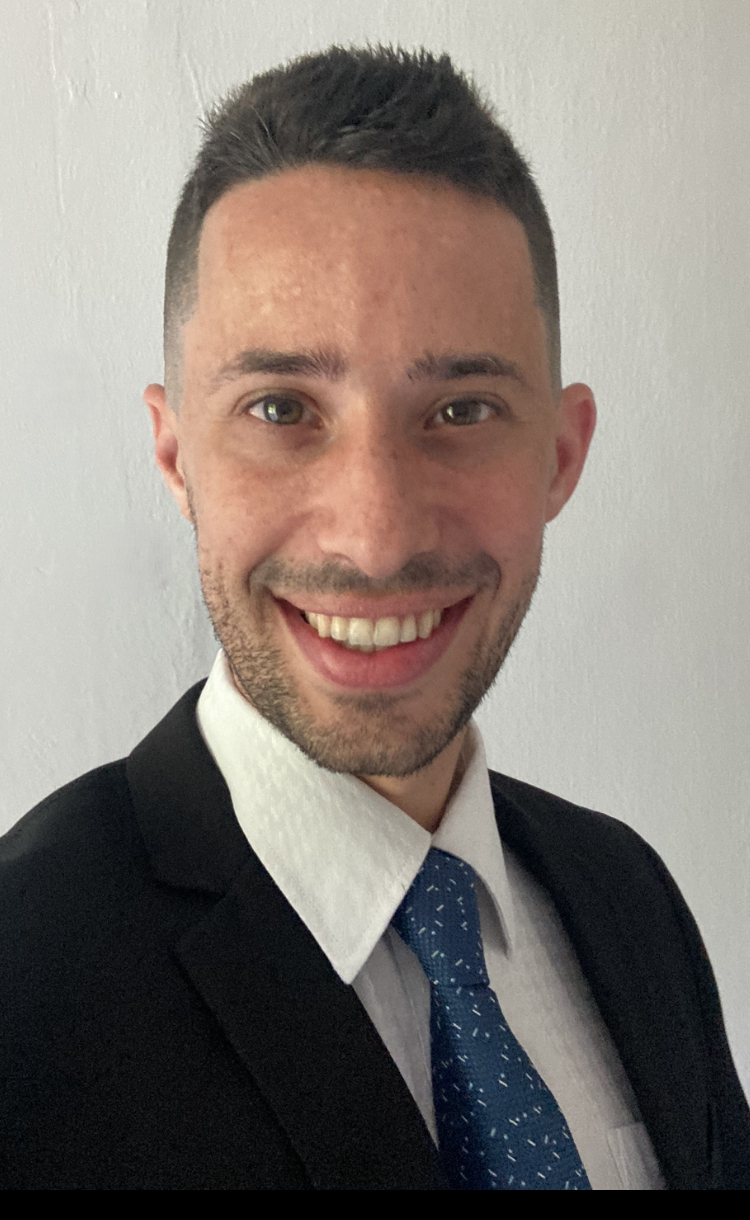
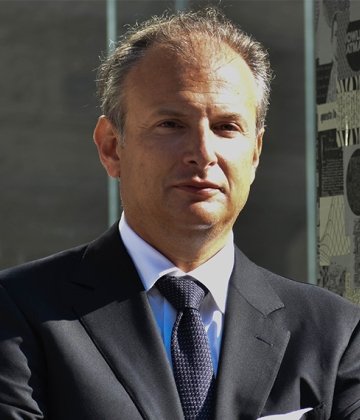
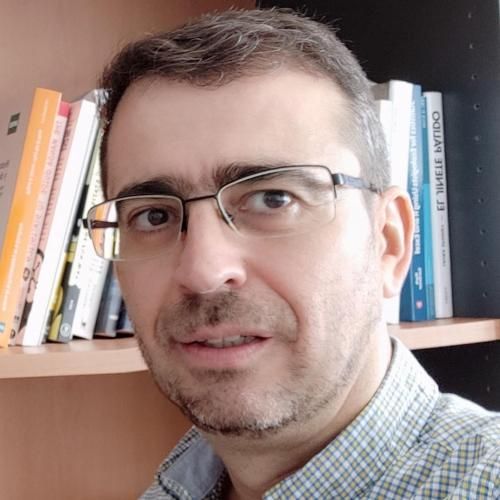
Apostolos Batsidis is an Associate Professor in the Department of Mathematics at the University of Ioannina, Greece. He holds a PhD in Statistics from the same institution (2005) and has held academic roles including Assistant Professor (2014–2022) and various lecturer positions since 2004. His affiliations include the Probability, Statistics, and Operations Research Section within the Department. Education: B.Sc. (1999), M.Sc. (2001), and Ph.D. (2005) in Mathematics from the University of Ioannina. His research focuses on multivariate statistical analysis, goodness-of-fit tests, model selection, monotone missing data, and weighted distributions. He has authored textbooks on probability-statistics and nonparametric methods for undergraduate studies. His recent work emphasizes statistical methodology for distributional analysis, bias correction in sampling, and applications in biostatistics and financial modeling. Over 30 peer-reviewed articles demonstrate contributions to statistical theory and applied problems.
Ariel Neufeld is a tenured Associate Professor in mathematics at Nanyang Technological University (NTU), Singapore. His research focuses on machine learning algorithms, model uncertainty in finance, financial mathematics, stochastic analysis, and applied probability. He received his PhD from ETH Zurich in 2015 under the supervision of Prof. Marcel Nutz and Prof. Martin Schweizer. His current research is supported by MOE AcRF Tier 2 Grant (MOE-T2EP20222-0013) and MOE AcRF Tier 1 Grant (RG74/21). He leads an active research group with several postdocs, PhD students, and research interns working on stochastic optimization, PDE approximation, and financial mathematics. Dr. Neufeld's work bridges theoretical mathematics with practical applications in finance and operations research, developing novel algorithms to solve high-dimensional problems in stochastic control and machine learning.
Adrien MERLINI is a Researcher at IMT Atlantique's Microwave Department in Brest, France. His work focuses on computational electromagnetics, integral equation methods, and neuroimaging applications. He specializes in developing numerical techniques for low-to-high-frequency electromagnetic modeling, preconditioning strategies for integral equations, and machine learning-enhanced solutions for inverse problems. His research bridges fundamental theory and applied engineering, addressing challenges in medical imaging, material characterization, and high-performance computing. Key areas of expertise include: High-frequency spectral analysis of boundary integral operators Stabilized formulations for low-frequency electromagnetic simulations Supervised learning approaches for electrical source imaging Quasi-Helmholtz projector-based preconditioning techniques Fast direct solvers for integral equations His innovations in numerical methods have advanced applications in brain-computer interfaces, microwave-based medical imaging, and terahertz dosimetry. Collaborative projects include developing the simBCI framework for EEG simulation and the Pythran compiler for accelerating scientific Python codes. Research contributions span over 30 peer-reviewed articles since 2015, with recent emphases on conditioning analysis of electromagnetic integral equations and regularization strategies for neuroimaging inverse problems.
Chris Schwiegelshohn is an Associate Professor at the Department of Computer Science, Aarhus University, specializing in theoretical computer science and algorithm design. His research focuses on clustering algorithms, coresets, approximation algorithms, and fairness in machine learning. He has contributed significantly to the development of efficient algorithms for large-scale data analysis and privacy-preserving techniques. Key research interests include optimization in k-means clustering, distributed privacy protocols, and fair recommendation systems. His work bridges theoretical foundations with practical applications in data mining and machine learning. Publications span topics such as PAC learning for k-means, dynamic facility location, and fair projections for balanced recommendations. He has explored tradeoffs between computational efficiency and accuracy in big data clustering, as well as low-distortion clustering techniques for ordinal data. No scientific awards or grants are explicitly listed in the provided texts. His advising record remains unspecified.
Oliver Sutton is a researcher specializing in artificial intelligence, machine learning, and computational methods. His work focuses on adversarial attacks, robustness of AI systems, high-dimensional data analysis, and finite element methods for solving complex equations. He collaborates with experts in mathematics and computer science to address challenges in AI reliability and model security, including stealth edits in large language models and feature space optimization. Sutton's recent contributions include developing frameworks to handle AI errors with theoretical guarantees and improving numerical methods for transport equations. Research interests include adversarial machine learning, neuromorphic computing, and mathematical foundations of few-shot learning. His publications span topics from theoretical guarantees in AI to practical implementations of discontinuous Galerkin methods. Sutton's work highlights interdisciplinary approaches to advancing both theoretical understanding and applied solutions in computational science and AI security.
Douglas Cochran is a Research Professor in the School of Mathematical and Statistical Sciences and an Emeritus Professor in the School of Electrical, Computer and Energy Engineering at Arizona State University (ASU). He has held roles such as Program Manager for Mathematics at the U.S. Air Force and DARPA, and served as a Visiting Faculty Fellow at the ASU Barrett Honors College. His research focuses on mathematical aspects of remote sensing, particularly for national security applications, with expertise in signal processing, radar systems, and information theory. Education: Ph.D. Applied Mathematics (Harvard, 1990), S.M. Applied Mathematics (Harvard, 1986), M.A. Mathematics (UC San Diego, 1980), S.B. Mathematics (MIT, 1979). Key Roles: Program Manager (U.S. Air Force, DARPA), Consultant (Australian Defense Science), Editor (IEEE Transactions on Signal Processing, Sampling Theory in Signal and Image Processing). His research interests include radar signal processing, multi-channel detection, and information-geometric foundations of sensing systems. Recent work addresses topics like cyclostationary signal analysis, radar clutter cancellation, and eigenvalue distributions in statistical signal processing. Notable awards include the IEEE Fellowship (2015), U.S. Department of Defense Medal for Exceptional Public Service (2005), and multiple teaching excellence recognitions. He has led over 20 grants, including NSF-funded projects on mathematical methods in medical imaging and MURI initiatives on information theory for adaptive systems. Cochran has advised numerous students and contributed to industry through consulting roles at companies like Motorola and Raytheon. His academic service includes editorial roles and organizing IEEE conferences, reflecting his broad impact in academia and defense applications.
Saeed Ghadimi is an Assistant Professor at the University of Waterloo, with affiliations in Data Analytics, Applied Operations Research, and Energy Market research groups. His work focuses on developing advanced optimization algorithms for stochastic systems, machine learning applications, and decision-making under uncertainty. He is particularly noted for contributions to bilevel programming, quantum optimal control, and robust regression techniques with missing data. Research interests include optimization theory, stochastic programming, and interdisciplinary applications in energy systems and public policy. His methodologies often address nonconvexity, nonstationarity, and high-dimensionality challenges. Recent work emphasizes projection-free algorithms, adversarial robustness in regression, and parametric cost function approximations for multistage problems. He maintains a personal webpage at https://sites.google.com/view/sghadimi .
Enrique del Castillo is a Distinguished Professor of Engineering at Pennsylvania State University, holding dual appointments in the Department of Statistics and the Industrial & Manufacturing Engineering Department. He specializes in Engineering Statistics, focusing on process optimization, quality control, and advanced data analysis techniques for complex datasets such as manifold and image data. His work bridges statistical methodology, engineering metrology, and machine learning. Education: B.S. Mechanical/Electrical Engineering (National University of Mexico, 1986), M.Eng. Operations Research (Cornell, 1988), Ph.D. Industrial Engineering (Arizona State, 1992). Research Interests: Process optimization, experimental design, time series control, Bayesian statistics, manifold learning, and applications in manufacturing, biology, and nutrition. Notable contributions include geometrical approaches to statistical process control and active learning methods for engineering systems. Awards: Fulbright Scholar (2006, 2019), NSF CAREER Grant (1996-1999). He has held visiting professorships at institutions worldwide, including Politecnico di Milano and National University of Singapore. Over 120 refereed papers and two textbooks to his name. Teaching: Courses in regression analysis, design of experiments, reliability engineering, and response surface methods. Active in editorial roles for journals like Technometrics and Journal of Quality Technology.
Martin Ludvigsen is a Professor and manager of the Applied Underwater Laboratory (AUR-Lab) at NTNU's Department of Marine Technology. He also holds an adjunct professorship at Svalbard University Centre (UNIS) and is affiliated with NTNU AMOS. His research focuses on underwater robotics, unmanned vehicles, Arctic technology, and autonomous systems. He teaches courses like TMR4120 Underwater Engineering and leads the AUR-Lab, which develops robotic platforms for marine research. Research interests include vehicle control, autonomy, acoustic navigation, and Arctic observation systems. Collaborations involve deploying robotic vehicles in the Arctic and deep-sea environments. He has advised multiple PhD students and contributed to projects on ocean mapping, environmental monitoring, and robotic sampling. Key contributions include advancing underwater hyperspectral imaging, developing adaptive sampling strategies, and improving AUV navigation. His work bridges engineering and environmental science, addressing challenges in marine exploration and resource management.
Lars-Johan Åge is a Professor of Business Administration at Gävle University. His research focuses on negotiation processes, B2B marketing, organizational behavior, and digitalization challenges in business environments. He holds a doctoral degree (ekon.dr) from the Stockholm School of Economics. Education: PhD in Economics from the Stockholm School of Economics (2009). His work integrates grounded theory with practical managerial applications, emphasizing strategic balancing, real estate brokerage dynamics, and inter-organizational coordination. Research Interests: His studies explore complex selling processes, digital transformation, interactional negotiation strategies, and the role of trust in organizational settings. He has contributed to frameworks like 'Goal-Oriented Balancing' and 'Business Manoeuvring.' Publications: Over 15 peer-reviewed articles in journals such as Journal of Business & Industrial Marketing and Industrial Marketing Management , alongside edited volumes and conference contributions. His books include Happy Happy (2019) and Omtyckt (2021), addressing negotiation and business authenticity. Grants & Awards: No specific grants or awards mentioned. However, his extensive publication record reflects sustained academic engagement. Labs/Teams: Collaborations with researchers at institutions like the Stockholm School of Economics and participation in IMP conferences highlight his network in business studies.
Emanuele Borgonovo is a Full Professor and Director of the Department of Decision Sciences at Bocconi University. He holds a PhD from MIT and an MSc in Nuclear Engineering from Politecnico di Milano. As a Research Affiliate at MIT's Department of Nuclear Science and Engineering, he contributes to interdisciplinary research. His roles include Co-editor-in-Chief of the European Journal of Operational Research and former President of the Decision Analysis Society of INFORMS. His research focuses on sensitivity analysis methodologies, including the development of Differential Importance Measures adopted by NASA. Applications span risk assessment (e.g., space systems, climate models), machine learning, and optimal transport theory. Key contributions include methods for feature importance, interaction quantification, and probabilistic sensitivity measures. Education: PhD, Massachusetts Institute of Technology, 2001 MSc in Nuclear Engineering (Mathematics/Physics focus), Politecnico di Milano Recipient of the 2020 Bocconi Teaching Innovation Award, Borgonovo teaches courses in quantitative methods, analytics, and computer experiments across undergraduate, graduate, and PhD programs. He pioneered the Bachelor in Economics, Management, and Computer Science at Bocconi. His work bridges theoretical advancements with practical applications in sustainability, business analytics, and policy, leveraging collaborations with institutions like NASA and the Silvio Tronchetti Provera Foundation.
Carlos Javier Pérez González serves as an Associate Professor in the Department of Mathematics, Statistics and Operations Research at the University of La Laguna, Spain. He is affiliated with The Institute of Mathematics and Applications and contributes to two PhD programs: Mathematics and Statistics, and Industrial Engineering, Informatics and Environmental Engineering. Education PhD in Mathematics and Statistics from University of La Laguna (2009), thesis: "Avances en el diseño óptimo de planes de muestreo en fiabilidad" (Advances in Optimal Design of Sampling Plans in Reliability), supervised by Dr. Arturo Javier Fernández Rodríguez Research Focus His primary expertise spans Statistics and Operations Research with emphasis on reliability engineering, acceptance sampling methodologies, and censoring techniques. He develops advanced statistical models for multi-component reliability systems, stress-strength analysis, and risk-based quality control frameworks. His work bridges theoretical statistics with industrial applications through Bayesian approaches and optimization algorithms. Publication Trends Recent publications (2020-2025) demonstrate consistent innovation in reliability test planning under censoring constraints, multi-component system analysis, and adaptive sampling schemes. His research increasingly incorporates real-world applications including marine conservation studies in the Canary Islands and emergency management data analysis using R programming. Research Integration As an active member of the Statistics research group at the Institute of Mathematics and Applications, he bridges methodological development with interdisciplinary collaborations across industrial engineering, environmental science, and public safety domains through data-driven approaches.
Theofanis Sapatinas is a Professor in the Department of Mathematics and Statistics at the University of Cyprus, within the School of Natural and Applied Sciences. He has maintained this position since 2010, following his progression from Assistant Professor (2001-2005) to Associate Professor (2005-2010) at the same institution. His educational background includes: BSc in Mathematics (1989) from the Department of Mathematics, University of Athens, Greece MSc in Statistics (1991) from the Department of Probability and Statistics, University of Sheffield, United Kingdom PhD in Statistics (1994) from the Department of Probability and Statistics, University of Sheffield, United Kingdom Professor Sapatinas has established himself as a leading researcher in several specialized areas of statistics. His primary research interests focus on Functional Data Analysis and Functional Time Series Analysis , where he has made significant contributions to methodological development and theoretical understanding. He has also conducted important work in Signal Detection and Goodness-of-Fit Checks in Ill-Positioned Inverse Problems , addressing challenging statistical problems where traditional methods fail. His research extends to Non-Parametric Regression techniques, particularly through wavelet-based approaches, and the theoretical investigation of Characteristics and Structural Properties of Probability Theoretical Distributions . Much of his work bridges theoretical statistics with practical applications, especially in signal processing and time series forecasting. Analysis of Professor Sapatinas' publication record reveals a consistent focus on functional data analysis, wavelet methods, and inverse problems. His research trajectory shows an evolution from foundational theoretical work on probability distributions to increasingly sophisticated applications in functional time series and signal detection. A notable pattern is his extensive collaboration with researchers across Europe, particularly in Greece, France, and the UK. His work frequently appears in top-tier statistics journals including Annals of Statistics, Biometrika, and Journal of the Royal Statistical Society. Over time, there's been a clear shift toward more applied problems while maintaining strong theoretical underpinnings, with recent work focusing on bootstrap methods for functional data and practical implementations in fields like power systems forecasting. Professor Sapatinas has held postdoctoral positions at the University of Exeter (1993-1996) and the University of Bristol (1996-1998), followed by a Lecturer position at the University of Kent at Canterbury (1998-2000) before joining the University of Cyprus. His research has been supported through various academic appointments and collaborations across European institutions, though specific grant information is not detailed in the available materials. As a professor, he has likely supervised numerous graduate students, though specific names are not provided in the current information.
Holger Hermanns is a Professor at Saarland University , holding the Chair for Dependable Systems and Software within the Faculty of Mathematics and Computer Science on the Saarland Informatics Campus. He has held academic positions at Universiteit Twente (Netherlands), INRIA Rhône-Alpes (France), and Universität Erlangen-Nürnberg (Germany), with part-time roles at INRIA (2007-2010) and Universiteit Twente (2001-2006). His research spans modeling and verification of concurrent systems , resource-aware embedded systems, compositional performance evaluation , and energy informatics . Recent work focuses on satellite network architectures, AI-driven system management, and ethical considerations in algorithmic accountability. Authored over 200 peer-reviewed papers (ha-index 92, h-index 56) Co-chaired program committees for CAV, CAV, CONCUR, TACAS, and QEST Keynote speaker at numerous international conferences Honors include the ERC Advanced Grant (2016), Preis des Fakultätentages Informatik (2013), and membership in Academia Europaea (2013). He serves on steering committees for ETAPS and TACAS, and has led Dagstuhl Foundation initiatives.
Dr. Chris J. Nicholls is a Senior Research Associate and Junior Research Fellow at Trinity College, University of Oxford, affiliated with the Oxford Thermofluids Institute. He holds a DPhil in Active Flow Control from Lincoln College (2016) and an MEng from Hertford College (2016). His research bridges fluid mechanics and control theory, focusing on fluidic devices, acoustically-excited flows, and aerodynamic control. Notable projects include fluidic oscillator development for aerospace applications, boundary layer control in wind tunnel experiments, and hydrogen-fuelled aviation technologies through the £31.4M Liquid Hydrogen Gas Turbine (LH2GT) project. He collaborates with industry partners like Rolls-Royce and Reaction Engines. Current projects involve acoustic modulation of fluid jets, stall prevention via flow injection, and sensor-integrated fluidic oscillators. He contributes to the Active Flow Control Group and Thermal Propulsion Systems initiatives. Recent work explores closed-loop control methodologies and nonlinear flight control systems for tiltwing VTOL aircraft. Affiliated with multiple colleges (Pembroke, St Catherine’s, Trinity, Jesus College), his work addresses challenges in thermal propulsion and zero-carbon aviation. Publications span Physics of Fluids , AIAA Journal , and other journals/conferences, emphasizing analytical modeling and experimental validation of fluid dynamics phenomena.