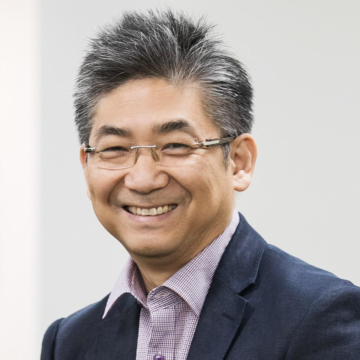
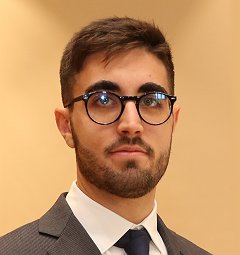
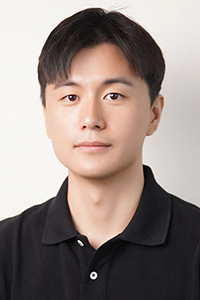
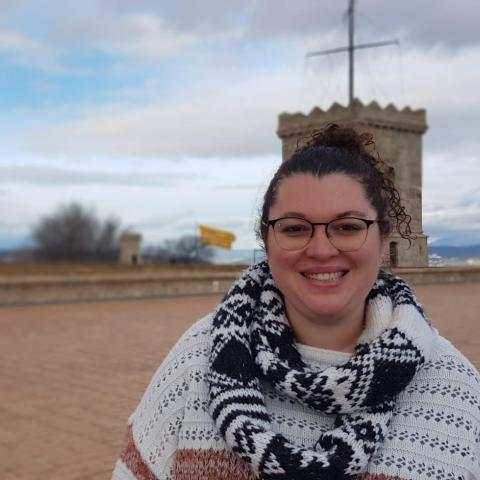
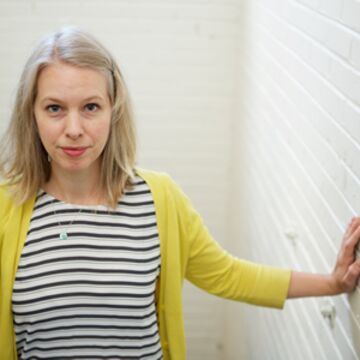
Yongtae Kim is the Robert and Barbara McCullough Professor of Accounting at Santa Clara University’s Leavey School of Business. He served as Associate Dean (2022-2024) and Accounting Department Chair (2015-2018). His research focuses on managerial opportunism, strategic disclosure, capital markets, and ESG/CSR. Dr. Kim teaches financial/managerial accounting at graduate and undergraduate levels. Education: Ph.D. in Accounting from State University of New York at Buffalo (2001). Pre-academic career: CPA in Korea and two years at KPMG Korea. Research highlights include examining disclosure strategies, corporate governance, and the intersection of language/time encoding with investment decisions. Over 40 publications in top journals like The Accounting Review and Journal of Financial Economics. Editorial roles include Editor of Journal of Accounting and Public Policy and board memberships at prominent journals. Awards: 2018 University Award for Sustained Excellence in Scholarship (highest honor), 2014 Recent Achievement Award. Active in policy discussions on accounting standards and regulatory frameworks.
Michele Chiari is a researcher at TU Wien (Vienna University of Technology) specializing in formal methods, software verification, and approximate computing. With active contributions to academic conferences like SPLASH, ICFP, and ECOOP, they combine theoretical rigor with practical applications in programming language design and analysis. Research Focus Temporal logic and model checking Probabilistic program inference Floating-point verification techniques Parallel parsing algorithms Conference Involvement 2025: Member of OOPSLA Review Committee (SPLASH conference) 2025: Program Committee member for VORTEX-track 2024: Committee Member in VORTEX conference 2023: External Reviewer for ECOOP Research Papers-track Publications 2025: Boosting Parallel Parsing through Cyclic Operator Precedence Grammars (SLE track) 2025: Exact Inference for Nested Discrete Probabilistic Programs (LAFI track) 2021: Verification of Floating-Point C/C++ Programs with math.h/cmath Functions (ICSE Journal-First Papers)
John Gronbeck-Tedesco is Professor of American Studies at Ramapo College of New Jersey's School of Humanities and Global Studies, where he has taught since 2010. He holds a PhD in American Studies from the University of Texas at Austin (2009) and teaches courses including Pursuing the American Dream, Introduction to American Studies, American Empire, and Cultures of the American Left. His research focuses on U.S. Cultural History, Race and Ethnicity, U.S. Foreign Relations, Social Movements, and U.S. & Latin American Politics, with particular emphasis on 20th Century Culture. His scholarly work demonstrates consistent engagement with issues of American identity, transnational politics, and cultural representation, particularly regarding Cuba and Latin America. Gronbeck-Tedesco's publications reveal a strong pattern of interdisciplinary scholarship spanning American Studies, History, Political Science, and Cultural Studies. His recent work shows increasing engagement with contemporary political issues including immigration policy, U.S.-Cuban relations, Critical Race Theory, and the intersection of social media with political movements. His publications appear in prestigious journals such as American Quarterly, Journal of Social Philosophy, and Journal of Language, Literature, and Culture, as well as in prominent media outlets including The Washington Post, The Hill, and Talking Points Memo. His scholarly contributions include three major books: Operation Pedro Pan: The Migration of Unaccompanied Children from Castro's Cuba (Potomac Books), Cuba, the United States, and Cultures of the Transnational Left, 1930-1975 (Cambridge University Press, 2015), and Screening Images of American Masculinity in the Age of Postfeminism (co-edited with Elizabeth Abele, Lexington Books, 2015). Professor Gronbeck-Tedesco maintains active engagement with current political discourse through regular contributions to major media outlets, demonstrating how academic scholarship can inform public debate on contemporary issues ranging from refugee policy to U.S.-Cuban relations to Critical Race Theory debates. His work bridges academic scholarship and public intellectual engagement in meaningful ways.
Kangwook Lee serves as an Associate Professor in the Electrical and Computer Engineering Department with a courtesy appointment in Computer Sciences at the University of Wisconsin-Madison, where he also holds a Discovery Fellowship. He concurrently leads deep learning research initiatives at KRAFTON, bridging academic and industry innovation in artificial intelligence. His academic foundation includes a PhD in Electrical Engineering and Computer Sciences from UC Berkeley (2016), preceded by research assistant and postdoctoral positions at KAIST's Information and Electronics Research Institute. Hailing from Seoul, South Korea, Lee maintains active research operations through his laboratory in Madison's Discovery Building. Lee's research program centers on Large Language Models and LLM agents, with rigorous theoretical and empirical investigations into their operational mechanisms and improvement pathways. His work spans in-context learning dynamics, agent-based social simulations, multi-domain reward modeling, and efficient inference techniques, emphasizing both fundamental understanding and practical enhancement of AI capabilities. Recent publications reveal a concentrated effort on overcoming length generalization barriers, enabling compositional reasoning with rare concepts, and developing robust feature selection frameworks. His 2025 publications demonstrate significant advancements across LLM architecture, evaluation methodologies, and application domains. Key trends include the emergence of task vector representations in in-context learning, development of superposition techniques for multi-task processing, and innovative approaches to speculative decoding for multimodal systems. These works collectively advance the field toward more efficient, generalizable, and interpretable language models. Lee's research excellence is recognized through prestigious accolades: NSF CAREER Award (premier early-career grant) IEEE Joint Communications Society/Information Theory Society Paper Award Amazon Research Award KSEA Young Investigator Grant Award As principal investigator of the Lee Lab, he directs a dynamic research group focused on cutting-edge AI challenges. His work integrates theoretical analysis with empirical validation to address fundamental limitations in modern language models, while industry collaborations through KRAFTON ensure real-world impact. Current projects emphasize agent-based social dynamics modeling, efficient inference architectures, and robustness frameworks for diverse deployment scenarios.
Celise Haldin is a Post-Doctoral Fellow at the Laboratoire de Psychologie et NeuroCognition (LPNC) at Grenoble Alpes University, France. Her research centers on neurocognitive mechanisms of language and speech, with emphasis on rehabilitation strategies for post-stroke aphasia and speech disorders. Her academic background includes a PhD in Cognitive Sciences, Psychology and Neurocognition (2019-2023) from Grenoble Alpes University, preceded by a Master 2 in Neuropsychology and Clinical Neuroscience (2016-2017), Master 1 in Molecular and Cellular Biology (2015-2016), and Bachelor in Biology (2012-2015), all from Grenoble institutions. She also served as a Research Engineer Assistant at LPNC from 2017-2019. Haldin's research explores neurocognitive functioning of language/speech, disorders thereof, and innovative sensorimotor rehabilitation approaches. She investigates how visual feedback of articulators and multisensory integration can enhance speech therapy outcomes in chronic non-fluent aphasia, utilizing multimodal assessment techniques including behavioral, acoustic, and neuroimaging methods. Her publication record (2016-2025) demonstrates consistent focus on aphasia rehabilitation, particularly multifactorial studies of language recovery after left-hemisphere stroke, sensorimotor therapy case reports, and neuroimaging investigations of speech production. This work bridges cognitive neuroscience, clinical linguistics, and rehabilitation science with strong translational potential. Scientific Awards: None documented in source material. Advising and Grants: No information provided regarding student supervision or research funding. She operates within the interdisciplinary framework of LPNC, contributing to cognitive neuroscience research groups focused on language processing and neurorehabilitation. Her work intersects with clinical teams specializing in stroke recovery and speech pathology at Grenoble Alpes University's medical research ecosystem.
Emily Schroeder Willis serves as an Adjunct Associate Professor in the Ceramics Department at the School of the Art Institute of Chicago (SAIC), where she teaches across multiple levels of the ceramics curriculum including Wheel Throwing Fundamentals, Clay and Culture, and Senior Critique Studio. Her educational background includes a BFA from the University of Minnesota (2000), Special Studies in Ceramics at Australia National University (2001), and an MFA from the University of Colorado, Boulder (2006). Her teaching philosophy emphasizes both technical skill development and conceptual understanding of ceramics within contemporary art contexts. Willis's research interests focus on the intersection of traditional ceramic techniques with contemporary artistic practice, cultural contexts of clay across civilizations, and the evolving role of ceramics in fine art. Her work explores vessel forms as cultural artifacts while pushing boundaries of material expression through innovative surface treatments and structural approaches. Her recent publications and artistic output demonstrate consistent engagement with ceramic materiality, with particular focus on glaze chemistry, firing techniques, and the cultural significance of ceramic objects throughout human history. Her 2022-2024 works show continued experimentation with stoneware forms that balance functional references with sculptural expression. Jerome Grant, Northern Clay Center, Minneapolis Sage Fellowship, Archie Bray Foundation, Montana Residency at Zentrum für Keramik, Berlin Watershed Center for the Ceramic Arts Residency, Newcastle, ME As an educator, Willis guides students through comprehensive ceramic practice from foundational wheel throwing to advanced conceptual development. Her courses integrate technical instruction with critical discourse about craft's place in contemporary society, drawing on historical precedents while encouraging individual artistic voices. Her professional practice demonstrates the integration of teaching, making, and scholarly engagement that characterizes successful contemporary ceramic artists. Willis maintains an active studio practice with recent works exhibited internationally, including at the Dubai Design Fair and Ohio Craft Museum, and represented in collections such as the Minnesota Historical Society and Australia National University.
Emmanuel Grolleau is a Full Professor at ISAE-ENSMA (Institut Supérieur de l'Aéronautique et de l'Espace - École Nationale Supérieure de Mécanique et d'Aérotechique) specializing in real-time systems. He is affiliated with the LIAS laboratory (Laboratoire d'Ingénierie des Applications de la Sensorique) where he leads the Real Time Team. His work bridges theoretical scheduling principles with practical embedded system implementations across multiple domains. Professor Grolleau's primary research interests include: Real-Time Scheduling: uniprocessor, multiprocessor, and distributed scheduling with practical considerations like transactions and precedence constraints Model-Based Systems Engineering (MBSE): developing bridges between UML-MARTE and AADL to real-time scheduling tools Unmanned Aerial Vehicles (UAVs): autopilot architecture design and optimization Energy Systems: co-heading the LabCom ANR Laboratoire d'Insertion des Énergies Nouvelles et d'Optimisation des Réseaux (LIENOR) His publication record demonstrates a clear progression from fundamental scheduling theory to applied work spanning avionics, drone technology, and power systems. Recent work shows strong focus on UAV autopilot architectures, model-based frameworks for real-time systems, and energy management in power distribution networks. Professor Grolleau serves on multiple prestigious program committees including Real-Time Networks & Systems (RTNS) since 2012, ACM/SIGAPP Symposium On Applied Computing (SAC) since 2015, DETECT since 2018, and DroneSE in 2023. He has led significant research projects such as PIA CORAC Panda and FUI WARUNA, which developed the Time4Sys pivot meta-model to connect theoretical scheduling with practical implementation. His collaborative work extends across multiple institutions and industries, with publications spanning real-time scheduling theory, UAV systems, energy management, and avionic architectures. The consistent thread through his work is the practical application of real-time scheduling principles to solve complex engineering problems in safety-critical systems.