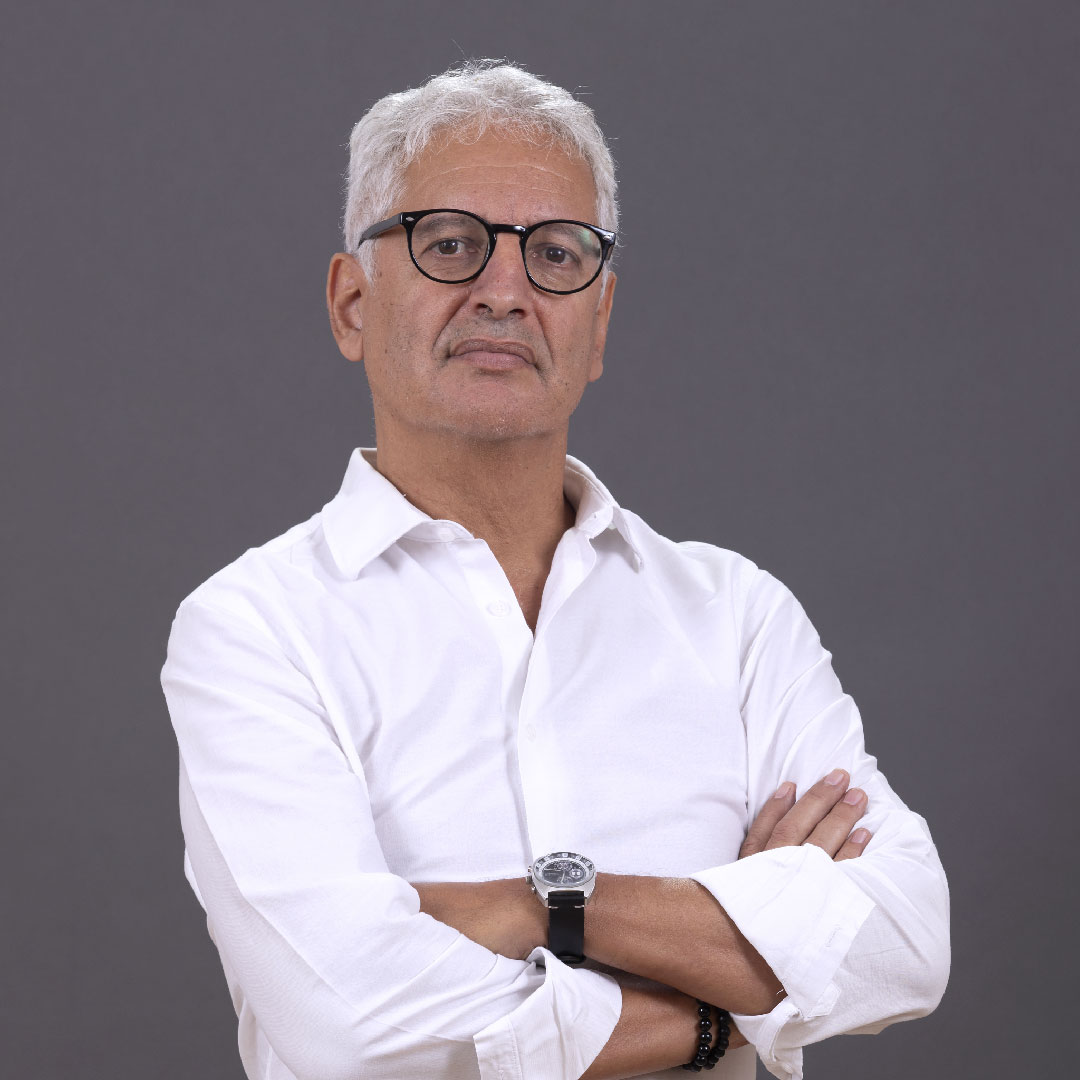
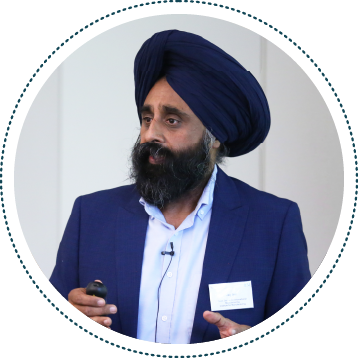
Sofia Almeida is an Assistant Professor at the Faculty of Social Sciences and Technologies, Universidade Europeia. She serves as Coordinator of the Tourism Management Master's program and Director of the Tourism and Hospitality area. Holding a PhD in Tourism from the Institute of Geography and Spatial Planning (IGOT) at Universidade de Lisboa, her expertise spans Tourism Marketing, Digital Communication, Brand Management, and Sustainable Tourism practices. Her research focuses on hotel marketing consortia, sustainability impacts in tourism, and post-pandemic industry recovery. She has organized major events like the UNESCO Winter School 2024 and contributed to international projects such as the 'Tourism: Empowering Sustainability' R&D initiative. Almeida’s work emphasizes interdisciplinary approaches, combining academic research with practical industry engagement through consulting and training programs. She actively participates in international journals as an author and editor, contributing to special issues on sustainable tourism practices and policies.
Sajib Chakraborty is a Researcher at the MOBI - Electromobility Research Centre and the Department of Electrical Engineering and Power Electronics. His research focuses on condition monitoring, reliability assessment of power electronic systems, and advanced battery management systems (BMS). He has contributed to projects like HARPOONERS and FLEXMCS, aiming to optimize electric powertrain systems and vehicle-to-grid technologies. His work spans over 80 research outputs since 2018, with a strong emphasis on multi-objective optimization, physics-of-failure modeling, and digital twin technologies for electric vehicles. Collaborations include institutions in Europe and beyond, addressing challenges in renewable energy integration and high-voltage electric mobility. Advised 5 Master's theses on topics like DC-DC converter design and SiC MOSFET reliability. Active in editorial roles for IEEE Transactions on Transportation Electrification . Led projects funded by EU grants, totaling € multi-million investments. Key research themes include battery thermal management, EV charging infrastructure, and multi-physics modeling for power electronics reliability.
Manuel Duarte Mendes Monteiro Laranja is a Full Associate Professor with Agregação at ISEG (Lisbon School of Economics and Management), University of Lisbon, where he has been a longstanding faculty member since at least 2000. He earned his PhD in Economic Policy of Science, Technology, and Innovation from the University of Sussex in 1997. His academic roles include teaching in Master’s programs such as Industrial Management, Operations and Sustainability, and Innovation and Research for Sustainability, where he has also served as course coordinator. Education: PhD in Economic Policy of Science, Technology, and Innovation, University of Sussex (1997) Current Affiliation: ISEG - Lisbon School of Economics and Management, University of Lisbon Academic Rank: Associate Professor His research centers on science, technology, and innovation policy (STI), with a strong emphasis on smart specialization, entrepreneurial discovery, social innovation, and innovation ecosystems. He has published extensively in journals and contributed chapters to academic books on innovation policy evaluation, transformative innovation, and regional development. His work often explores governance structures, policy mixes, and the systemic challenges in implementing innovation strategies, particularly in Portuguese and Brazilian contexts. The most recent publications show a consistent trend toward transformative innovation policy, smart specialization, and the role of participatory processes in regional development. His articles span topics from industrial resilience to the digital transformation of cities, reflecting a broad interdisciplinary approach that combines economic policy, governance, and sustainability. He frequently investigates innovation modes (STI and DUI), entrepreneurial ecosystems, and the adaptation of European innovation frameworks to developing regions. Scientific Contributions and Leadership: Founder of LCreation - ISEG’s Center for Entrepreneurship and Innovation (2014–2018) Vice-Director of the Interdisciplinary Research Institute (3is), University of Lisbon (2013–2016) Member of the Management Board, KIC EIT Health, University of Lisbon (2014) Executive Innovation Manager, BTEN – Business Talent Enterprise Network (2012–2015) Advisor to the Portuguese Government (Prime Minister’s Office and Secretary of State of Innovation) on technology and innovation policy Manuel has supervised over 70 Master’s students at ISEG, covering diverse topics such as circular economy, Industry 4.0, innovation ecosystems, and sustainability transitions. His advising reflects a strong commitment to applied research and policy-relevant thesis work. He has not held formal grants listed in the text, but his leadership in policy advisory roles and research centers indicates significant involvement in funded initiatives. He has been involved in several research labs and innovation initiatives, including ULab ISEG and Policy Lab, and has contributed to EU-level innovation programs. His leadership in LCreation and 3is highlights his role in fostering interdisciplinary research and entrepreneurial culture within the university.
Dr. Ahmed Mohammed is an Associate Professor in Supply Chain Management and Programme Director for the MSc Supply Chain Management at the University of Birmingham, Dubai Campus. He is affiliated with the Management Department and brings over 13 years of combined academic and industrial experience from the UK and the Middle East. Educational Background: Ph.D. in Engineering, University of Portsmouth, UK (2017) MSc in Communication Network Planning and Management, University of Portsmouth, UK (2010) Lean Six Sigma – Black Belt (2022) Fellow, Higher Education Academy, UK (2022) Dr. Mohammed's research focuses on the modeling and optimization of supply chains with an emphasis on sustainability and resilience. His work spans areas such as multi-tier supplier selection, circular economy, food waste management, Industry 4.0 integration, and last-mile logistics. He employs advanced methodologies including multi-criteria decision-making (MCDM) techniques like AHP, TOPSIS, and VIKOR, and develops hybrid optimization models for complex supply chain challenges. His recent publications, spanning from 2021 to 2023, reflect a strong trend in resilient and sustainable supply chain network design, pandemic-related disruptions, digital sourcing, and risk modeling under uncertainty. These works appear in high-impact journals such as International Journal of Production Research , Transportation Research Part E , Computers & Industrial Engineering , and Expert Systems with Applications . Scientific Awards and Recognitions: Fellow, Higher Education Academy, UK (2022) Lean Six Sigma Black Belt (2022) Fellow Member, Chartered Institute of Logistics and Transport (CILT) Member, MCDM Society Dr. Mohammed has secured multiple research grants from MOHERI, Oman, including projects on last-mile logistics sustainability, supply chain resilience, and online food waste management. He actively supervises research students and serves as a reviewer for leading journals including International Journal of Production Economics (IJPE) , Transportation Research Part D (TRD) , Omega , and International Journal of Production Research (IJPR) . He is also an external academic program reviewer for logistics-related programs and contributes to the academic community through peer review and collaborative research.
Dr. Camille Warrington serves as an Honorary Fellow in Social Work at the University of Edinburgh, working part-time as Research Fellow on Scotland's first Barnahus (Bairns Hoose) evaluation. She concurrently leads the Young Researchers Advisory Panel at the Safer Young Lives Research Centre (University of Bedfordshire), integrating lived experience into child abuse research. Her research centers on children's rights within interpersonal, domestic, and sexual violence contexts through qualitative and participatory methodologies. Key interests include child sexual abuse, domestic abuse, extra-familial harms, and the critical interplay between protection and participation rights in child-friendly justice systems. She specializes in trauma-informed practices and service response evaluations for young victims. Recent publications (2015-2022) reveal consistent focus on participatory approaches in child protection, emphasizing youth voice integration in research design and service implementation. Collaborations with the University of Bedfordshire dominate her work, addressing practical interventions for sexual abuse victims through Barnahus models, online safety frameworks, and mental health support systems. Dr. Warrington directs the Young Researchers Advisory Panel while securing grants from People's Postcode Lottery, Scottish Government, AHRC, Samworth Foundation, NSPCC/ESRC, and Children's Commissioner for England. Projects span Bairns Hoose evaluation, online sexual harm analysis, participatory photography studies, and mental health initiatives for abuse survivors. She operates through the Safer Young Lives Research Centre (Bedfordshire) and Edinburgh's Social Work department, driving multi-agency partnerships to transform child protection systems via youth participation and evidence-based practice.
Dr. Tatenda Lemann is a Senior Research Scientist at the Centre for Development and Environment (CDE) of the University of Bern, Switzerland. Her work focuses on sustainable land systems, integrating climate adaptation, erosion modeling, and water resource management. She contributes to global projects like WOCAT and LANDMARC, operating in regions such as Ethiopia, Tanzania, and the G5 Sahel countries. Research Areas: Water Resources Management, Sustainable Land Management, Climate Change Mitigation Projects: WOCAT, OPTAIN, GEF-7 Drylands Program, LANDMARC Expertise: Erosion modeling, hydrological dynamics, knowledge exchange frameworks Her recent publications emphasize transdisciplinary approaches to soil conservation, digital tools for environmental research, and operational frameworks for land degradation neutrality. She has field experience in Switzerland, Ethiopia, and Tanzania, and is proficient in German, English, French, and Amharic. In collaborations across Europe and Africa, she focuses on stakeholder-driven solutions for soil threats and climate-resilient land use. Her work bridges scientific research with practical implementation through initiatives like the Water and Land Resource Centre (WLRC).
Franco Lombardi is a Full Professor at the Department of Management and Production Engineering (DIGEP) , Polytechnic of Turin , with affiliations to the J-Tech@PoliTO Interdepartmental Center . He has been a PhD college member for the Production Systems & Industrial Design program since the 19th cycle (2003/2004) and served as a course lecturer in Production Systems (Management Engineering) and Graphic Communication and Mechanical Manufacturing (Industrial Production Engineering) since 2019/2020. Research Focus: Manufacturing technologies, product lifecycle management (PLM), Industry 4.0, sustainable production systems, joining processes, and human-centric knowledge management frameworks. Article Trends: Recent work spans friction stir welding of industrial alloys (2025), sustainability evaluation of AI in product lifecycles (2024), integration of Industry 4.0 in agriculture (2024), and additive manufacturing eco-design (2024). Earlier projects include reconfigurable production systems (2009) and real-time production planning (2019). Grants and Projects: Scientific manager for PNRR-funded initiatives like AGRITECH Spoke 6 (2022-2025) and MANAGE5.0 (2022-2024), alongside regional projects such as TECNOPROTEO (2024-2027) and DynLab4JMat (2018-2021). Collaborated on national patents for gear machining processes. PhD Advisees: Temur Turgunboev (Ingegneria Gestionale), Nicolo Grasso (Gestione, Produzione E Design), Giovanni Marongiu (Gestione, Produzione E Design), Benedetta Fasciolo (Gestione, Produzione E Design), Luigi Panza (Gestione, Produzione E Design), Alberto Faveto (Gestione, Produzione E Design).
Assoc Prof Geraldine Torrisi is the Deputy Head of School (Learning & Teaching) at the School of Information and Communication Technology at Griffith University. With a PhD in Educational Studies and degrees in Science (Physics/Mathematics) and Education, she focuses on Human-Computer Interaction (HCI) , User Experience , and Learning Theory . She is a Senior Fellow of the Higher Education Academy and Griffith Learning and Teaching Academy . Education: PhD in Educational Studies (Griffith University) Masters of Educational Studies (James Cook University) Bachelor of Education (Secondary Science and Maths) (James Cook University) Bachelor of Science (Physics/Mathematics) (James Cook University) Research Interests include Interactive Digital Media , Educational Technology , and Data Literacy . Her 2025 book chapters explore AI's role in education, while 2024-2023 articles address data literacy frameworks and hybrid teaching models. Scientific Awards include Griffith Award for Excellence in Teaching (2011) , Excellence in Teaching Award (2015) , and Senior Fellow of the Higher Education Academy (2018) . She also received multiple Group Learning and Teaching Commendations (2009, 2017, 2019). Grants include The Dignity Project (2024-2025), Promoting Renewable Energy Adoption (2022-2025), and Smart Environmental Sensing (2022-2023). She supervises PhD students on topics like Human-Machine Teaming and Instructional AR Design .
Dr. Craig Douglas Albert is a Professor of Political Science and Graduate Director of the PhD in Intelligence, Defense, and Cybersecurity Policy and the Master of Arts in Intelligence and Security Studies at Augusta University. His work bridges academic research and real-world policy, with expertise in global security threats and digital warfare. Education: PhD in Political Science and Government, University of Connecticut (2009) Master of Arts in Political Science and Government, University of Connecticut (2003) Bachelor of Arts in Political Science and Government, Augusta State University (2001) Research Focus: Dr. Albert's work centers on the evolving landscape of international conflict, with emphasis on: Information warfare tactics and propaganda dissemination across social media platforms Geopolitical implications of artificial intelligence in military and security operations Cybersecurity policy frameworks for major powers (US, China, Russia) Ethnic conflict dynamics and political philosophy in security contexts His research consistently examines how technology transforms traditional power structures and conflict mechanisms. Publication Trends: Recent works (2022-2024) demonstrate a strong focus on AI-driven information warfare, social media manipulation, and great-power competition. Over 60% of publications analyze technological impacts on security, while 30% address propaganda mechanics. Emerging themes include TikTok's national security risks, pandemic intelligence systems, and Middle Eastern disinformation campaigns. Media & Policy Engagement: Testified before US Congress Joint Subcommittee on Foreign Affairs Regular commentator for Fox News, Forbes, CTV Canada, VOA, and international outlets Council on Foreign Relations Higher Education Ambassador Advised US Army Cyber Center of Excellence workshops on AI threats Labs & Teams: Leads research initiatives on disinformation detection and cybersecurity policy through Augusta University's intelligence programs, collaborating with military cyber units on threat analysis.
Prof. Dr. Gerrit Sames is a Professor of General Business Administration at Mittelhessen University of Applied Sciences (THM), specializing in Organization with a focus on ERP systems. He has held leadership roles in industry, including Managing Director positions at Buderus Heiztechnik GmbH and Schott-Rohrglas GmbH, and served on the Board of Schott Solar AG. His research focuses on digitalization, Industry 4.0, and SMEs, with publications analyzing digital maturity models, business process transformation, and workforce implications. Affiliation: Mittelhessen University of Applied Sciences (THM) Email: gerrit.sames@w.thm.de Research Interests: Digitalization, Industry 4.0, ERP systems, SME transformation, IT maturity models, and business process optimization. His work emphasizes practical frameworks for digital positioning and addressing organizational challenges. Recent Publications: 15+ studies on digitalization trends in SMEs, including comparative analyses between Germany and Japan, maturity models for Industry 4.0, and IT security classifications. Conference Contributions: Expert panelist at Bundestag discussions, Hannover Messe presentations, and contributions to IoT and automation congresses.
Zoltán Sütő is an Associate Professor at the Budapest University of Technology and Economics, affiliated with the Department of Automation and Applied Informatics. His research focuses on advanced power electronics and control systems, with expertise in real-time implementation using FPGA technology. He maintains an active presence through institutional contacts at Budapest 1117, Magyar tudósok krt. 2., Q.B114, and can be reached via phone (+36 1 463-2337) or email (Suto.Zoltan@aut.bme.hu). Dr. Sütő's research encompasses: Design and optimization of power converters (dual active bridge, multilevel inverters) Real-time control algorithms for grid-connected systems and microgrids FPGA-based hardware-in-the-loop simulation methodologies Nonlinear dynamics in power electronic systems Artificial intelligence applications for fault diagnosis in drive systems His work bridges theoretical control models with practical implementations in renewable energy integration and power quality management. Recent publications demonstrate a strong focus on predictive control techniques, adaptive compensation methods, and optimization of power converter topologies. Research trends emphasize real-time validation, FPGA implementation, and AI-enhanced diagnostics across applications ranging from energy storage systems to industrial drives. Articles consistently address efficiency improvements, stability challenges, and novel modulation strategies in power conversion.
Olga Chkanikova is a Researcher at the University of Borås , affiliated with the Faculty of Textiles, Engineering and Business and the Department of Business Administration and Textile Management . Her work focuses on digital transformation in the fashion industry, sustainability-oriented innovations, and supply chain dynamics, with a particular emphasis on cultural and operational shifts driven by technologies like 3D modeling and digital twinning. As a co-supervisor for doctoral students, she contributes to advancing research in these areas. Key research themes: Digital Fashion, Circular Economy, Business Model Innovation Contact: olga.chkanikova@hb.se Her recent publications analyze the intersection of technology, sustainability, and institutional frameworks in fashion and retail sectors. She has explored the scalability of fashion-tech solutions, the role of third-party certifications in supply chains, and the cultural dimensions of digital transformation.
Dr. Jagjit Singh Srai is a Director of Research (Professor equivalent) in the Department of Engineering at the University of Cambridge and Head of the Centre for International Manufacturing at the Institute for Manufacturing (IfM). His research focuses on the analysis, design, and operation of international manufacturing supply networks, with an emphasis on advanced production and digital technologies. He leads IfM’s Digital Supply Chains Consortium, collaborating with global firms like Caterpillar, IKEA, and Unilever, and teaches on the course 'Digitalisation of End-to-End Supply Chains.' Dr. Srai is Co-Chair of the World Economic Forum Council on the Future of Advanced Manufacturing and Production and contributes to UNCTAD’s annual industrial development reports. His interdisciplinary work spans healthcare and food/FMCG sectors, supported by grants including EPSRC Made Smarter Innovation projects and Innovate UK Smart Pharma Supply Chain. He has held senior roles at Unilever prior to academia, managing complex supply chains across global operations. Expertise Areas: Supply Chain Management, Digital Manufacturing, Sustainable Supply Chains, Advanced Manufacturing, Network Design, Food Security. Selected Scientific Awards: Fellow, Institute of Chemical Engineers (FIChemE) Chartered Engineer (CEng) Highly Commended Paper Award, Emerald Publishers (2016)
Leila Ahmadpour is a Postdoctoral Fellow at Luiss University and the University of Bologna, holding a PhD in Management from the University of Bologna. She serves as an Adjunct Professor in master's programs at Luiss University's Department of Business and Management, teaching courses on healthcare innovation and circular economy. Education: Postdoctoral Fellow (2023-present) at University of Bologna and Luiss University, Rome Visiting Scholar (2022-2023) at San Jose State University, California, USA PhD in Management (2017-2022) from University of Bologna, Italy M.Sc in Industrial Engineering, Supply Chain Management (2011-2013) from Islamic Azad University, Qazvin, Iran Her research spans two critical domains: surgical team dynamics with focus on technology integration (particularly 3D printing in orthopaedic workflows), and circular business model implementation in startups. She examines knowledge sharing, boundary blurring, and performance in temporary medical teams while investigating sustainable investor support for circular economy practices in entrepreneurial ventures. Her work bridges organizational theory with practical healthcare and sustainability challenges. Publication analysis reveals a methodological shift from early supply chain risk modeling (2015-2017) toward contemporary studies on surgical teams and circular business models (2022-2025). Recent work demonstrates strong emphasis on 3D printing technology adoption in healthcare settings and circular economy applications, utilizing case studies across surgical environments, construction industries, and Iranian manufacturing sectors. Dr. Ahmadpour has no documented scientific awards. Her academic contributions include teaching master's level courses and participating in research projects at Luiss University and the University of Bologna, though specific grant funding or student advising roles remain unreported. Her operational base is Luiss University's Department of Business and Management, where she applies interdisciplinary approaches to organizational innovation.
Helena Forslund is a Senior Lecturer at Linnaeus University's School of Business and Economics, Department of Management. With extensive experience teaching logistics and supply chain management at advanced levels, she serves as research leader for the Supply Chain Studies research group and holds the prestigious position of Senior Editor for the Journal of Business Logistics. Her research focuses on supply chain collaboration, efficiency, and innovation, particularly within the transportation industry, and she has pioneered work on closed-loop supply chains for recycling flat glass. With approximately 120 scientific publications (37 in major journals like International Journal of Operations & Production Management), her work bridges academic rigor and practical application in sustainable logistics. Analysis of her recent publications reveals a strong emphasis on sustainable transportation systems, circular economy applications, and performance measurement frameworks across various supply chain contexts. Her research increasingly addresses paradoxes in green logistics implementation, humanitarian supply chain challenges, and the integration of digital technologies in logistics operations. Senior Editor, Journal of Business Logistics Forslund has secured research funding from diverse sources including TripleF, EU, Vinnova, Kamprad Foundation, Växjö Municipality, and Crafoord Foundation. Her collaborative approach extends to active participation in Logistikföreningen Plan (Swedish APICS society) and numerous cross-institutional research projects addressing sustainability challenges in transportation and retail supply chains. As research leader of the Supply Chain Studies group, she fosters interdisciplinary collaboration focused on sustainable co-creation through practical solutions to complex logistics challenges, particularly in circular supply chains for materials like flat glass and sustainable transportation systems.