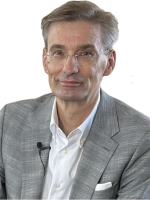
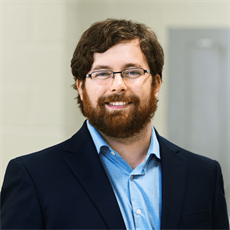
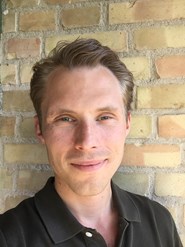
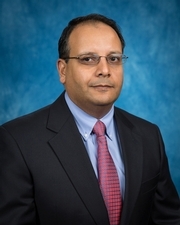
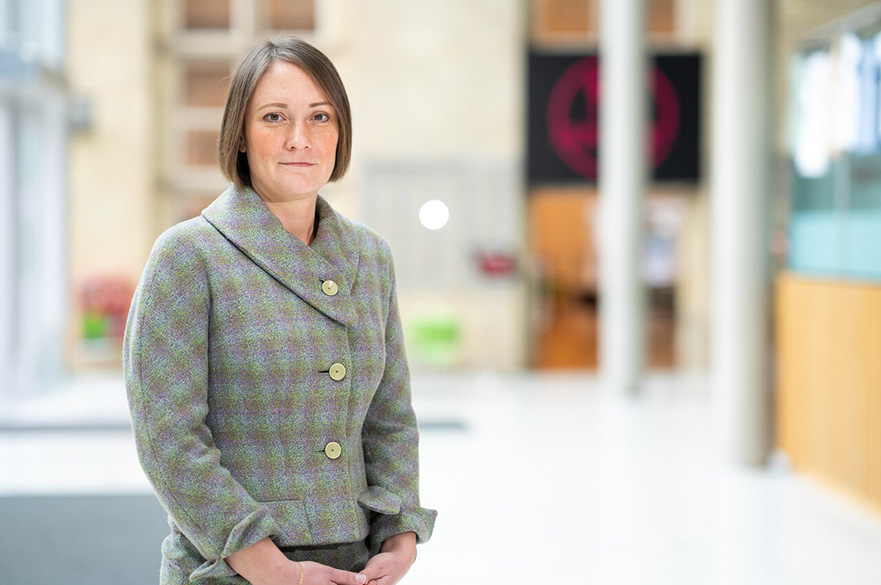
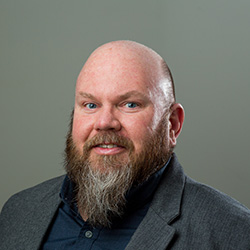
Professor Gernot Sieg holds the Chair of Industrial Organization with a focus on Infrastructure and Transport Economics at the University of Münster, leading the Institute of Transport Economics. He previously served as Director of the Institute of Economics at TU Braunschweig and has held visiting positions at institutions like the University of Southern California. His academic background includes a Dr. rer. pol. (1993–1999) and Habilitation (1993–1999). Prof. Sieg’s research focuses on transport markets, regulatory economics, and infrastructure policy. Notable projects include the CRC 1385 on Law and Literature, evaluating bicycle traffic optimization (Leezenflow), and analyzing aviation slot regulations. He advises the Federal Ministry for Digital and Transport’s Scientific Advisory Board. His research interests span transport infrastructure financing, traffic flow dynamics, and environmental policy. Recent work addresses vehicle value externalities, phantom jam costs, and the economic impact of speed limits. He teaches courses on competition regulation, transport economics, and industrial organization. Prof. Sieg frequently engages with public policy debates, contributing to media discussions on infrastructure rehabilitation, climate policy, and mobility transitions. His work bridges academic research with practical policy solutions, emphasizing sustainable and equitable transport systems.
Prof. Walter Schwaiger is a Full Professor at TU Wien’s Faculty of Mechanical and Industrial Engineering, leading the Institute of Management Science. His academic roles include serving as Head of the Faculty Council since 2010 and holding various curriculum committee positions. He teaches critical courses such as Financial Management, Enterprise Risk Management, and IT-based Management across bachelor’s and master’s programs. His research focuses on three core areas: Financial Enterprise Management (stochastic NPV modeling for renewable energy investments), Enterprise Risk Management (risk maturity assessments via ERMMA studies), and IT-based Management (ontology-driven accounting frameworks like OntoREA). Recent work includes predictive analytics applications in credit risk scoring and pandemic-driven default prediction studies. Prof. Schwaiger has authored influential textbooks like IFRS-Finanzmanagement series and pioneered the REA-based ERP-Control system. He actively contributes to management control research, publishing in venues like Controlling and WingBusiness , and collaborates with institutions like Funk Stiftung on large-scale ERM maturity studies. His professional service includes leading faculty strategy groups and quality management initiatives at TU Wien, reflecting his commitment to institutional governance and academic excellence.
Sofie Haesaert is an Assistant Professor in the Control Systems group at the Department of Electrical Engineering, Eindhoven University of Technology. Her work focuses on formal verification and control synthesis methods for cyber-physical systems, particularly through stochastic simulation relations and temporal logic specifications. Education: BSc (cum laude) and MSc (cum laude) in Mechanical Engineering and Systems & Control from Delft University of Technology; PhD from Eindhoven University of Technology (2017) Experience: Postdoctoral researcher at Caltech (2017-2018), then returned to TU/e as Assistant Professor Her research interests include: Cyber-physical systems verification Stochastic control methods Temporal logic specification Markov decision processes Formal methods in control engineering Model abstractions and simulation relations Recent publications show strong focus on: Stochastic temporal logic control Robust and risk-aware control Multi-agent system verification Formal synthesis via simulation relations AI integration in control systems Software tools for formal control Scientific achievements: Veni Grant recipient (2020) Co-developer of the SySCoRe toolset for stochastic control synthesis Contributor to formal verification benchmarks through ARCH-COMP reports She contributes to education through courses on: Control principles for engineered systems Control challenges in autonomous racing Supervisory control of cyber-physical systems Haesaert collaborates across disciplines including computer science, applied mathematics, and robotics, with over 750 citations and significant contributions to formal control theory for stochastic systems. Her work bridges theoretical developments with practical applications in autonomous systems and complex control architectures.
Abbas Jessani, DDS, MSc, PhD, is an Assistant Professor at the Department of Restorative Dentistry within Schulich School of Medicine and Dentistry at the University of Western Ontario. He also holds cross-appointments in the Department of Epidemiology and Biostatistics and is affiliated with research clusters focused on Behavioral and Environmental Risk Factors, Global Health, and Mental Health and Addiction. Dr. Jessani serves as the coordinator for community dental outreach and course director for preclinical operative dentistry. Education: DDS (Doctor of Dental Surgery) MSc in Public Health Dentistry, University of British Columbia PhD in Public Health Dentistry, University of British Columbia Dr. Jessani’s research focuses on barriers to healthcare access and oral health disparities in marginalized communities, including people living with HIV/HCV, LGBTQ2S+, Indigenous populations, refugees, and pregnant women. His work examines the stigma and discrimination faced by these groups and integrates community-based participatory research methods to address systemic inequities. Globally, he investigates oral health access in low-income African countries like Uganda and Southern Africa. His recent publications highlight trends in LGBTQ+ oral health , pregnancy-related dental care , and barriers in underserved populations . He advocates for service-learning programs to train socially-conscious dentists and has contributed to Canada’s first national oral health research strategy.
Dr. David R. Themens is an Associate Professor in Space Environment within the Space Environment and Radio Engineering (SERENE) group in the School of Engineering at the University of Birmingham. He specializes in modeling and mitigating the impacts of space weather on radio communications and navigation systems, with a particular focus on the ionosphere's effects on these technologies. Dr. Themens earned his academic credentials from Canadian institutions: BSc (Hons) in Physics from the University of New Brunswick (2011) MSc in Atmospheric and Oceanic Science from McGill University (2013) PhD in Physics from the University of New Brunswick (2018) His research primarily focuses on four interconnected areas: ionospheric modeling, ionospheric physics, measurement techniques, and radio propagation. Dr. Themens is particularly interested in the interaction between the ionosphere and the atmosphere, specifically how lower atmospheric forcing drives variability within the ionosphere and the interactions between the ionosphere and thermosphere. He is the principal developer of the Empirical Canadian High Arctic Ionospheric Model (E-CHAIM) , a high-latitude alternative to the International Reference Ionosphere (IRI) used for HF/UHF signal propagation modeling. His work includes exploring synergistic properties of different earth observation instruments, measurement technique development, data assimilation, and empirical modeling. Analysis of Dr. Themens' recent publication record reveals a strong emphasis on space weather phenomena, ionospheric modeling, and radio propagation. His work spans from fundamental ionospheric physics to practical applications in navigation and communication systems. Key themes include the development and validation of ionospheric models, analysis of space weather events (including the May 2024 geomagnetic superstorm), and the impact of solar phenomena on Earth's upper atmosphere. His research increasingly incorporates advanced data assimilation techniques and leverages multiple observational platforms including radar systems, GNSS networks, and satellite measurements. Dr. Themens holds significant leadership positions in the international space science community: Co-Chair of IAG-GGOS Joint Study Group on Understanding Ionospheric and Plasmaspheric Processes (2023-present) Chair of URSI Data Assimilation Working Group (2023-present) Co-Chair of IAGA Geospace Data Assimilation Working Group (2023-2027) URSI Commission G Early Career Representative (2023-2029) Chair of Canadian Association of Physicists Division of Atmospheric and Space Physics (2022-present) Dr. Themens actively mentors graduate students and is 'always looking for new Ph.D. students interested in the ionosphere, data assimilation, and radio propagation.' His research has been supported through contracts with Defence Research and Development Canada (DRDC) and various international collaborations. He leads the Canadian High Arctic Ionospheric Models (CHAIMs) project, which builds upon his doctoral work developing the E-CHAIM model. At the University of Birmingham, he teaches courses in Space System Engineering and Design, Space Mission Analysis and Design, and Space Environment.
Mark CHRISTENSEN is a Professor in the Accounting and Management Control Department at ESSEC Business School, Singapore , where he has worked since 2016. His career spans academia, public sector work, and consultancy. Holding a PhD from The University of Adelaide and a BA (Hons) from Macquarie University , his research explores accounting as a socio-technical construction , with a focus on public sector accrual accounting , performance reporting , and consultancy roles in accounting change . He has held academic appointments at institutions including the University of New South Wales, Copenhagen Business School, and Hokkaido University, and has been a visiting scholar at the University of Nordland and Nanzan University. Research Interests include public sector accounting reforms , environmental sustainability in accounting , and audit as an instrument of blame . His work addresses global accounting trends , epistemic communities , and power dynamics in budget processes , often through comparative international studies . Recent publications examine animal welfare accounting , neocolonial research practices , and accountants’ portrayals in popular culture . Professional Contributions include serving on the editorial boards of the Accounting, Auditing & Accountability Journal and Financial Accountability and Management , organizing conferences like the 10th Australia-Pacific Colloquium on Qualitative Research Methods , and delivering keynotes at international events such as the 15th International Conference on Business & Management . He has reviewed for over 15 journals and participated in global research networks.
Giovanni Pantuso is an Associate Professor at the Department of Mathematical Sciences, University of Copenhagen, specializing in stochastic programming and optimization under uncertainty . His work bridges mathematical methods with practical applications in transportation, logistics, and production planning. Education : PhD in Operations Analysis from the Norwegian University of Science and Technology (Feb 2014) Research Focus : Developing mathematical frameworks for decision-making under risk, with applications to maritime fleet renewal, car-sharing systems, and ride-sharing logistics. Teaching : Courses in Advanced Operations Research: Stochastic Programming, Risk Optimization, and Introduction to Numerical Analysis. His methodological contributions include novel algorithms for stochastic programming and decomposition methods, while applied work spans electric car-sharing systems, first-mile transportation challenges, and production planning under uncertainty. Current research explores dynamic fleet management and cost-service tradeoffs in shared mobility.
Mattias Brunström serves as Assistant Professor of Cardiology and Associate Professor of Epidemiology at Umeå University's Faculty of Medicine within the Department of Public Health and Clinical Medicine, Section of Cardiology. He is concurrently a resident physician at Norrlands University Hospital and holds leadership roles as chairman of Sweden's national hypertension working group and scientific secretary of the Swedish Society for Hypertension, Stroke and Vascular Medicine, with active participation in the European and International Societies of Hypertension. His academic foundation includes a 2018 PhD thesis examining blood pressure-lowering treatment effects across different blood pressure levels through systematic reviews and meta-analyses of randomized clinical trials. This doctoral work established his expertise in evidence-based cardiovascular therapeutics and epidemiological methodology. Dr. Brunström's research program centers on cardiovascular disease risk factors, with specialized focus on hypertension pathophysiology and aortic diseases. His group investigates how adolescent blood pressure levels predict future cardiovascular events, examining interactions with obesity, physical fitness, and diabetes to improve risk stratification. They also analyze differential effects of antihypertensive drug classes on cardiovascular outcomes and study risk factors for aortic dissection/rupture to optimize preventive surgical interventions. This work addresses critical gaps in managing the world's leading cause of death, where uncontrolled hypertension contributes to 10 million annual fatalities despite effective treatments. Analysis of his 2024-2025 publications reveals dominant themes in hypertension guideline development, treatment threshold controversies, and cardiovascular risk assessment. His work frequently challenges conventional approaches (e.g., questioning excessive treatment of 'elevated' blood pressure in elderly patients) while advancing evidence for lifestyle interventions and beta-blocker utility. Methodologically, his research leverages large cohort studies (including 1.4 million enlistee data), systematic reviews, and international collaborations through societies like ESH and ISH to translate epidemiological findings into clinical practice. Dr. Brunström leads multiple funded research initiatives including 'Remission of type 2 diabetes through eHealth' (2022-2028) and 'VIPviza' (2013-2027), directing a multidisciplinary team that bridges clinical cardiology, epidemiology, and public health. His advisory role extends to national guideline committees and international hypertension societies where he shapes clinical practice through evidence synthesis and position papers. Based at Norrlands University Hospital's Cardiology Section, his research group operates within Umeå University's strong cardiovascular research ecosystem, maintaining active collaborations with the Swedish National Diabetes Register and international consortia. Their work emphasizes real-world applicability, examining topics like bedtime dosing of antihypertensives and self-report diagnostic tools to overcome barriers in hypertension control where only 25% of affected individuals achieve target blood pressure levels.
Dr. Ahmed F. Abdelghany is the Associate Dean for Research and Professor of Operations Management at the David O'Maley College of Business, Embry-Riddle Aeronautical University, since January 2006. He specializes in commercial airlines, airports, big data cloud computing, business analytics, and operations research models. Prior to his academic career, Dr. Abdelghany worked in enterprise optimization at United Airlines, Chicago. Education: Ph.D. in Civil Engineering (Transportation Systems) from the University of Texas at Austin (2001) Dr. Abdelghany’s research focuses on airline network planning, flight scheduling, simulation of complex transportation systems, and NextGen air traffic management. He has authored two influential books: Modeling Applications in the Airline Industry (Routledge 2010) and Airline Network Planning and Scheduling (Wiley 2018). His publications analyze airline operations, competitive dynamics, and crowd management in transportation facilities. He teaches courses like Airline Management (BA 315) and Airline Operations & Mgmnt (BA 609), and participates in industry short courses. Dr. Abdelghany contributes to research projects such as NextGen air traffic implementation, integrated airport initiatives, and benefit-cost analysis of arrival management systems. His work bridges academic theory with real-world airline and transportation challenges.
Rowena Hill is a Professor of Psychology at Nottingham Trent University's School of Social Sciences, specializing in disaster psychology and emergency response systems. She holds key roles including ESRC Policy Fellow for Climate Change, Honorary Research Lead for the Fire Fighters Charity, and Chair of the National Fire Chiefs Council's Academic Collaboration Group. Her work bridges academic research with policy, focusing on resilience strategies for emergency responders, community risk management, and mental health support systems. Education: Not explicitly stated in provided texts Her research emphasizes psychological health in emergency contexts, including pandemic response, climate adaptation, and familial impacts of frontline work. She has led over 60 evidence-based reports for UK pandemic policy during her 2020–21 secondment to the C19 National Foresight Group. Key interests include humanitarian assistance frameworks, public risk communication, and organizational resilience in critical sectors. Recent publications analyze firefighter wellbeing, police resilience training, and extreme weather preparedness. Notable achievements include establishing evaluation frameworks for fire service interventions and advising national security inquiries. Awards: Fellow of the British Psychological Society, Fellow of the Higher Education Academy Dr. Hill collaborates with governmental bodies and emergency services, contributing to policy development through evidence synthesis. Her work addresses systemic challenges in emergency service collaboration, climate change adaptation, and psychological support structures for responders and affected communities. She leads the NTU Emergency Services Research Unit, focusing on operational learning and health strategies for emergency personnel. Current projects explore long-term resilience in post-pandemic recovery and climate-related disaster preparedness.
Tarmo Lipping is a Professor in the Department of Computer Science and Engineering at the Faculty of Information Technology and Electrical Engineering, University of Oulu. His work bridges computing sciences with biomedical engineering, environmental modelling, and data-driven societal applications. Doctor of Science (Technology), Information Technology – Awarded 14 Feb 2001 Master of Science (Technology), Information Technology – Awarded 10 Sept 1993 His research focuses on electroencephalography (EEG) , mental workload assessment , depth of anesthesia monitoring , and machine learning applications in healthcare and human-computer interaction. He also contributes to environmental informatics , particularly in land uplift modelling and radionuclide transport , aligning with UN Sustainable Development Goals. Recent publications highlight trends in transformer networks for EEG analysis , wearable HCI systems , data-driven food safety , and participatory municipal governance . His work integrates deep learning, signal processing, and real-world deployment. Scientific awards include: CIMO opettajavaihto (2017) Lipping has supervised numerous master’s students and served as an examiner in diverse topics including data vault modelling , telecom revenue estimation , and EEG hyperscanning . He has evaluated funding applications, acted as a journal reviewer (65 times), and contributed to editorial work. His activities reflect strong engagement in academic service and interdisciplinary research mentorship. He has contributed datasets on Fennoscandian land uplift , lake isolation , and archaeological shorelines to PANGAEA, supporting open science in geosciences and environmental history.
Larry D. Wigger serves as Teaching Professor of Supply Chain Management and Faculty Director of Assessment and Accreditation at the Henry W. Bloch School of Management, University of Missouri-Kansas City. With over twenty years of industry experience spanning strategic leadership, operations, and global project management, he integrates practical expertise into academic instruction. His educational background includes: MA in Economics from University of Missouri-Kansas City MS in Supply Chain Management and general MBA from Elmhurst University BA in Business Administration from William Jewell College He is currently completing his PhD dissertation in Economics at UMKC with a co-discipline in Public Affairs and Administration. Wigger's research bridges supply chain visibility through blockchain technology, public policy responses to automation-induced unemployment, and modern monetary theory constraints. His work examines systemic economic structures while addressing practical industry challenges in labor markets and capital allocation. Recent publications demonstrate consistent thematic focus on securing supply chains via traceability systems, analyzing labor-housing dynamics in critical materials networks, and developing holistic economic frameworks for supply chain analysis. His scholarship uniquely connects theoretical economics with tangible supply chain disruptions and policy interventions. Though no formal advisees are documented, Wigger's industry leadership included equity positions in construction startups serving petroleum, retail, and hospitality sectors, plus three years managing post-earthquake reconstruction in Port-au-Prince. His accreditation role indicates significant administrative responsibilities within the business school.
Elena Niculina Dragoi is a Lecturer at the Faculty of Chemical Engineering and Environmental Protection 'Cristofor Simionescu' at Gheorghe Asachi Technical University in Iasi, Romania. Her academic work integrates Artificial Intelligence and Machine Learning tools for solving complex problems in Chemical Engineering and Environmental Protection . With over 30 published papers and six active research projects, her contributions span process optimization, nanomaterials, and sustainable technologies. Teaches Applied Informatics (Years 1 & 4) and Artificial Intelligence at the Faculty of Chemical Engineering Contributes to Programming Engineering at the Faculty of Computer Science, University 'Alexandru Ioan Cuza' Engaged in interdisciplinary courses at the Faculty of Automatic Control and Computer Engineering Research Interests : Elena's work focuses on modelling and optimization (90% emphasis) of chemical processes using AI methodologies, with cross-disciplinary applications in environmental engineering (70%) and chemical engineering (95%). Her recent publications highlight innovations in: 3D-printed nanocomposite adsorbents for pollutant removal Metaheuristic optimization algorithms for industrial processes Hydrogen generation via nanocatalysts Electrochemical biosensors for environmental and health monitoring AI-driven wastewater treatment systems Green chemistry applications in pharmaceutical and dye removal
Dr. Kerri Thom serves as Professor in the Department of Epidemiology and Public Health and Department of Medicine at the University of Maryland School of Medicine, holding the administrative role of Associate Dean for Student Affairs while directing the Office of Student Research and advising medical students through the Office of Student Affairs. Education: M.D. from University of Florida College of Medicine Internal Medicine Residency and Infectious Disease Fellowship at University of Maryland Medical Center and Baltimore VA Medical Center M.S. in Epidemiology and Clinical Research from University of Maryland School of Medicine Her research concentrates on infection prevention, antimicrobial resistance mechanisms, and transmission dynamics of multidrug-resistant pathogens—especially Acinetobacter baumannii —in healthcare environments. She develops evidence-based interventions for antimicrobial stewardship and infection control, addressing critical gaps in reducing healthcare-associated infections through clinical epidemiology and translational research. Analysis of Dr. Thom's publication record reveals sustained focus on healthcare epidemiology, with methodological diversity spanning clinical trials, observational studies, and mathematical modeling. Her work evaluates interventions across varied clinical contexts—from trauma resuscitation to transplant surgery—emphasizing practical strategies to combat multidrug-resistant organism transmission and antibiotic resistance. Dr. Thom actively mentors medical students through curriculum development and research supervision via the Office of Student Research. She has secured significant competitive funding from NIH, CDC, and AHRQ for projects targeting antibiotic resistance transmission and infection prevention. Selected Grants: CDC: "Transmission of Antibiotic Resistant Bacteria from Patient-to-Patient in Healthcare Setting and the Impact of Contact Precautions" (PI, 9/2018-9/2019) CDC: "Epicenters for the Prevention of Healthcare Associated Infections" (Co-Investigator, 9/2018-9/2020) AHRQ: "Removing barriers to hand hygiene and glove compliance: evaluation of two novel, time-efficient interventions" (PI, 8/2015-5/2019) CDC: "Epicenters for the Prevention of Healthcare Associated Infections (HAI) Cycle II" (Investigator, 9/2015-9/2018) ARLG: "ESBL-producing Enterobacteriaceae in solid organ transplant recipients" (Investigator, 7/2016-7/2018) CDC: "Impact of Post-antibiotic Prescription Review on Antibiotic Use and Resistance" (Co-PI, 9/2013-12/2016) NIH K23: "Epidemiology of Acinetobacter baumannii: An Emerging Nosocomial Pathogen" (9/2010-12/2016) As a key contributor to the CDC Epicenters program, Dr. Thom collaborates with national researchers on healthcare-associated infection prevention while leading student research initiatives that cultivate future clinician-scientists in infectious disease epidemiology.
Stephen Rowe serves as an Associate Professor in the Accounting Department at the Walton College of Business, University of Arkansas. With extensive industry experience including nine years at KPMG culminating as Audit Manager, he maintains an active CPA license in Washington State while teaching intermediate accounting at graduate and undergraduate levels. His scholarly work focuses on auditing and financial reporting, published in premier journals including The Accounting Review and Review of Accounting Studies . Rowe holds a PhD from the University of Illinois at Urbana-Champaign, a Master's degree from Loyola University Chicago, and a Bachelor's degree from Covenant College. His educational journey bridges rigorous academic training with practical industry experience, informing his teaching approach that emphasizes conceptual understanding through real-world case studies. Research interests span auditing quality, financial reporting practices, and capital market interactions. Recent investigations examine index fund ownership effects, auditor switching dynamics, and media influence on audit markets. His methodological toolkit combines traditional econometric analysis with machine learning techniques, particularly evident in predictive models for auditor behavior. Rowe's work consistently addresses regulatory concerns while exploring market-driven phenomena in accounting ecosystems. Analysis of his publication trajectory reveals increasing focus on market-based audit quality indicators, with growing emphasis on passive investing impacts and regulatory compliance mechanisms. The 2021-2025 period shows heightened attention to technological disruption (machine learning applications) and non-traditional monitoring forces (media scrutiny, index fund activism) within audit markets. Professional recognition includes multiple teaching awards and extensive litigation support consulting engagements. Rowe leverages his expertise as a founding member and CFO of White River Capital Advisors LLC (2020-present), providing expert witness services that connect academic research with real-world accounting disputes. His industry background enables practical translation of complex accounting concepts for diverse audiences. Rowe maintains active engagement with professional practice through ongoing litigation consulting since 2016 and continuous CPA licensure. His balanced commitment to academic rigor and professional relevance exemplifies the practitioner-scholar model, with research directly addressing contemporary challenges in financial reporting and auditing ecosystems.