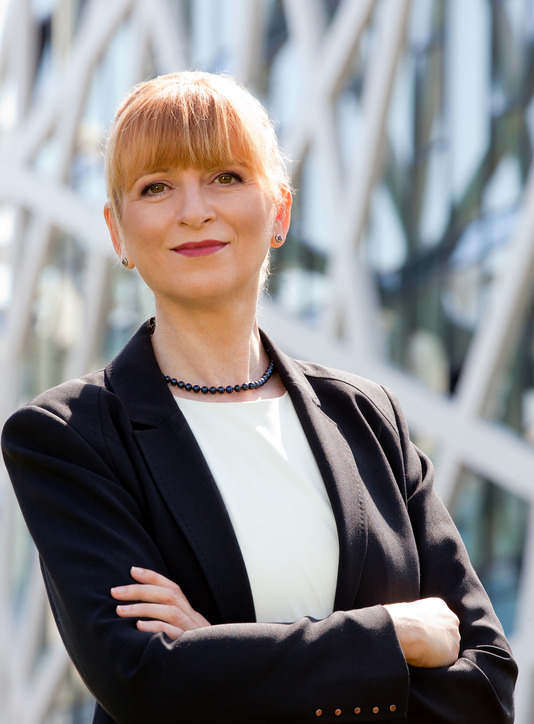
Prof. Dr. Heike Schinnenburg is a Professor of Business Administration with a focus on Human Resource Management at the Faculty of Economics and Social Sciences, Osnabrück University of Applied Sciences. She directs the Master's program in Business Management and specializes in talent management, international HRM, career research, and change management. Her research explores AI's impact on jobs, gender dynamics in careers, and organizational resilience in global contexts. She holds a PhD from Leibniz University Hannover and has extensive industry experience as a consultant and HR director. Her academic career includes guest professorships at Shanghai University of International Business and Economy. Key research projects include inclusive education's impact on workforce development and cultural factors in change management. Her publications span over 50 articles in journals like Employee Relations and Personalquarterly , addressing topics such as frontline work challenges, virtual leadership, and global talent strategies. She frequently presents at international conferences and collaborates on EU-funded research initiatives.
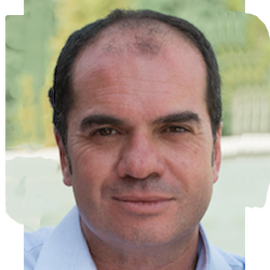
Alberto Santini is an Associate Professor of Operational Research and a Ramon y Cajal fellow at Universitat Pompeu Fabra in Barcelona, Spain. He is also an affiliate professor at the Barcelona Graduate School of Mathematics and the Data Science Centre at the Barcelona School of Economics. During 2025-2027, he coordinates the Transportation group of the Spanish O.R. Society. His research focuses on optimization methods applied to transportation, logistics, and sustainability, including scheduling, vehicle routing, and heuristic algorithms. He has contributed to solving complex problems like last-mile delivery integration with public transport, airline flight scheduling, and energy-efficient vertical farming. His work often employs advanced techniques like column generation and decomposition strategies. Notable contributions include decomposition strategies for vehicle routing heuristics and the application of metaheuristics such as Adaptive Large Neighbourhood Search (ALNS). He is the founder of EUROYoung and AIROYoung, youth branches within prominent operational research societies. His GitHub repositories, such as cvrp-decomposition , provide open-source implementations of his algorithms. Santini’s research addresses real-world challenges like epidemic resource allocation and sustainable logistics, reflecting his commitment to both theoretical and applied operational research. Awards: Ramon y Cajal Fellow Labs/Teams: Leads Transportation group (Spanish O.R. Society), Founded EUROYoung/AIROYoung.
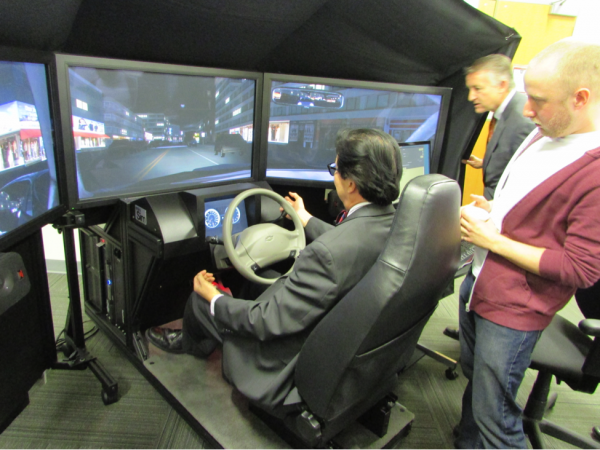
Professor Chris Lee is a faculty member in the Department of Transportation Science and Engineering at the University of Windsor's Faculty of Engineering. His research focuses on advancing transportation safety through the analysis of driver behavior, traffic flow dynamics, and the integration of emerging technologies like autonomous vehicles and machine learning. Key areas include collision risk prediction, driver vigilance assessment, and the development of advanced car-following models. He has contributed to initiatives such as the Transportation Science and Engineering scholarship program, supporting student research in innovative technologies like driving simulators for lane change behavior studies. His work bridges engineering and human factors, addressing challenges such as driver response to autonomous systems, heavy vehicle traffic management, and cross-cultural automotive design. Lee's interdisciplinary approach leverages data analytics, physiological signals, and machine learning to solve real-world transportation problems. His research has implications for policy-making, infrastructure design, and vehicle safety standards. Lee has collaborated extensively on projects analyzing crash precursors, variable speed limits, and the impact of ITS (Intelligent Transportation Systems) on safety. His publications span over two decades, demonstrating a commitment to both academic rigor and practical applications in transportation engineering. Notable contributions include refining car-following models, studying driver aggression, and evaluating the effectiveness of traffic management strategies.
Laura A Rice is an Associate Professor in the Department of Kinesiology and Community Health at the University of Illinois. She also serves as Associate Head for Graduate Studies and Associate Director of the Center on Health, Aging, and Disability (CHAD) within the College of Applied Health Sciences. Additionally, she holds affiliations with Disability Resources and Educational Services (DRES), the Beckman Institute for Advanced Science and Technology, and the Interdisciplinary Health Sciences Institute. Her research focuses on mobility device users, particularly wheelchair and scooter users, examining fall prevention, functional independence, and quality of life. Key areas include developing clinical assessment tools (e.g., the Fall Concerns Scale for Wheelchair/Scooter Users), investigating behavioral interventions via mHealth applications, and analyzing risk factors for falls among individuals with spinal cord injury and multiple sclerosis. Recent work emphasizes interdisciplinary collaboration, with studies on attentional demands during wheelchair operation, fire preparedness strategies, and the design of inclusive assistive technologies. Her research has been widely covered in media, including studies on fear of falling and fall-related injuries among wheelchair/scooter users. Rice’s contributions extend to academic leadership, including graduate program oversight and disability resource advocacy. She collaborates globally and has published over 90 peer-reviewed articles, systematically reviewing topics like mHealth strategies and seated postural control assessments. Lab and team affiliations include the Center on Health, Aging, and Disability (CHAD), where she leads projects addressing aging and disability intersections, and the Beckman Institute, focusing on advanced science and technology applications in health.
Dr. Jose Escribano is a Lecturer in Aviation & Logistics at the Department of Civil and Environmental Engineering within the Faculty of Engineering at Imperial College London. His research focuses on humanitarian logistics optimization, AI-driven airspace management, and urban resilience strategies. He holds a First Class Honours bachelor’s degree (2015) and a PhD (2021) from Imperial College London. Dr. Escribano is affiliated with the Centre for Transport Engineering and Modelling and the Transport Systems and Logistics Project D-Risk SHIFT. His academic qualifications include a BEng in Engineering and a PhD in Civil Engineering, both from Imperial College London. His professional affiliations include the Institution of Civil Engineers, Chartered Institute of Logistics and Transport, and the American Institute of Aeronautics and Astronautics. He has received the 2023 Transportation Research Board Best Paper Award and a JSPS Fellowship for urban evacuation modelling. Dr. Escribano’s research integrates stochastic modelling, machine learning, and simulation to address challenges in humanitarian response, UAV coordination for disaster relief, and airspace safety. His work emphasizes endogenous value-of-information analysis and the application of cutting-edge technologies to enhance societal resilience. He has collaborated with the United Nations World Food Programme on UAV deployment models for humanitarian contexts. His recent publications span topics like air traffic network resilience, autonomous vehicle optimization, and last-mile delivery mechanisms. He advises doctoral candidates in transportation systems, logistics, and air traffic management, offering opportunities for PhD research in these domains.
Fernando Sánchez-Figueroa is a Full Professor at the University of Extremadura's Department of Computer Systems Engineering and Telematics. He is a co-founder of Homeria Open Solutions, a spin-off engaged in R&D projects under EU frameworks. His research focuses on Software Engineering, Machine Learning, Data Visualization, and Ambient Intelligence. He has authored over 50 scientific articles and led numerous R&D contracts with public and private entities. Key roles include: Academic: Full Professor at University of Extremadura Entrepreneur: Co-founder of Homeria Open Solutions Research: Participation in EU-funded projects and development of AI-driven solutions for healthcare, smart cities, and education Research Interests: Machine Learning applications in healthcare, predictive analytics for education, and sustainable smart city technologies. His work bridges theoretical advancements with practical implementations, such as medical image segmentation using SAM models and cost-efficient UAV systems. Publications: Recent works include decision support systems for employability analysis, zero-shot learning in medical imaging, and recommender systems for education. He emphasizes data-driven approaches and model-driven engineering in software development. Impact: Developed tools like CompareML for preliminary data analysis and LiveSankey for advanced web visualization. His contributions span academia and industry, addressing challenges in healthcare, urban sustainability, and educational technology.
Dr. Ahmed ATIL is an Assistant Professor in the Management and Organisation department at Rennes School of Business. His research focuses on Management Science, Operations Management, and Sustainable Development. He holds a Doctorat from Université de Rennes 1 and has conducted extensive work on environmental responsibility in SMEs, nonlinear analysis of resource impacts, and financial market dynamics. Academic Background: Doctorat (PhD) in Management Science from Université de Rennes 1, France. Non-academic Experience: Consultant at Satisf-Action (2002–2009). Research Contributions: Over 5 peer-reviewed articles in journals such as Resources Policy and Finance Research Letters . His work explores the intersection of environmental policy, resource management, and financial systems, with a focus on developing countries like Pakistan and China. He has presented at international conferences on sustainability and corporate responsibility in Algeria and France.
Haitham Al-Deek is a Professor in the Department of Civil, Environmental, and Construction Engineering at the University of Central Florida's College of Engineering and Computer Science. He leads the Intelligent Transportation Systems and Data Analytics Lab and has over 32 years of experience in transportation engineering, planning, and operations. His work is nationally recognized, particularly in freeway operations and intelligent transportation systems (ITS). Ph.D., Civil Engineering-Transportation Engineering, University of California, Berkeley (1991) M.S., Civil Engineering-Transportation Engineering, University of California, Berkeley (1987) B.S., Civil Engineering (with Honors), University of California, Berkeley (1985) Dr. Al-Deek's research focuses on wrong-way driving countermeasures, connected and automated vehicles, traffic safety, and data analytics. He pioneered innovative ITS solutions for detecting and preventing wrong-way driving, including the development of a high-success-rate detection system in partnership with the Central Florida Expressway Authority (CFX). His work extends to freight transportation, electronic toll collection, and sustainable transportation systems. He has also contributed to safety performance functions and driver behavior modeling. His recent publications highlight advanced methodologies in network screening for crash modeling, the use of crowdsourced data (e.g., Waze) for incident detection, optimization of wrong-way driving countermeasures, and benefit-cost analyses of safety technologies. These works reflect a strong trend toward data-driven, real-time, and cost-effective solutions in transportation safety and operations. Scientific awards and recognitions include: TRB Chairman Award (2018, 2012) Multiple TRB Best Paper Awards (Freeway Operations and Regional TSM&O, 2023–2003) TRB Best Student Paper Awards (2022, 2019, 2018, 2017) UCF Excellence in Research Award (2018) UCF Researcher of the Year (1999) Distinguished Researcher, UCF College of Engineering (2003) Dr. Al-Deek has supervised 15 Ph.D. students and 29 M.S. theses and has secured over $10.3 million in research funding from agencies including FDOT, TRB, USDOT, and CFX. He serves as a technical editor for TRR and associate editor for the Journal of Intelligent Transportation Systems. He also chaired key TRB paper review subcommittees and is an active professional engineer in Florida. He leads the Intelligent Transportation Systems and Data Analytics Lab, which focuses on real-world applications of ITS, data warehousing, and advanced analytics for transportation safety and efficiency.
Jonathan L. Goodall is a Professor of Civil and Environmental Engineering and Director of the Link Lab at the University of Virginia. His research focuses on hydroinformatics, urban hydrology, and flood modeling, leveraging data science and cyber-physical systems to enhance resilience in coastal urban environments. He leads efforts in reproducible environmental modeling through integration of platforms like HydroShare, emphasizing open science and computational workflows. His work includes advancing machine learning techniques for real-time flood forecasting, integrating IoT and sensor networks for smart city applications, and assessing climate change impacts on coastal communities. Notable contributions involve developing surrogate models for flood prediction in Norfolk, VA, and studying compound flooding effects using hydrodynamic modeling paired with crowdsourced data. Collaborations span universities, national labs, and agencies like CUAHSI, focusing on environmental data interoperability and infrastructure resilience. Goodall’s research often addresses socio-technical challenges in urban flood management, combining engineering solutions with community engagement strategies. His lab explores reinforcement learning for real-time stormwater control, IoT education initiatives, and geospatial tools for flood vulnerability analysis. Projects frequently involve interdisciplinary teams and emphasize reproducibility through containerized environments and metadata standards.
Professor Aris Syntetos is a Distinguished Research Professor and DSV Chair of Logistics and Manufacturing at Cardiff Business School, Cardiff University. He is the founder and Director of the PARC Institute of Manufacturing, Logistics and Inventory, which includes the RemakerSpace, and leads the university’s strategic partnership with DSV. Previously, he held faculty positions at the University of Salford and Copenhagen Business School. His research focuses on the integration of forecasting and inventory optimization, particularly in the context of intermittent demand, spare parts, closed-loop supply chains, and additive manufacturing. He is renowned for the Syntetos-Boylan Approximation and the Syntetos-Boylan-Croston classification method. His work is driven by sustainability and social impact, aiming to reduce inventory obsolescence and support circular economies. The 15 most recent publications highlight a strong trend toward integrating forecasting with inventory and maintenance decisions, with increasing emphasis on sustainability, social good, and advanced analytics. His work spans healthcare, automotive, retail, and humanitarian logistics, often employing machine learning and empirical validation. 2024 Goodeve Medal (Operational Research Society) 2016 Cardiff University Outstanding Doctoral Supervisor Award 2016 & 2019 Cardiff University Innovation and Impact Awards He has secured over £5 million in research funding as Principal Investigator from EPSRC, Innovate UK, and the Welsh Government, leading projects on remanufacturing, 3D printing, and sustainable supply chains. He advises major firms like Ocado, BT, and DSV, and his methods are used in commercial software. He supervises PhD students and actively promotes knowledge transfer. He is Editor-in-Chief of the IMA Journal of Management Mathematics and serves as Vice-President of the International Society for Inventory Research (ISIR). He has taught in the UK, China, Colombia, Denmark, France, Greece, Italy, and Latvia, primarily in Operations Management and Applied Statistics.
Professor Carsten Rudolph serves as Deputy Dean at Monash University's Faculty of Information Technology and directs the Oceania Cyber Security Centre (OCSC). He holds a PhD in Information Security from Queensland University of Technology (2002) and a Diplom in Computer Science from Goethe University Frankfurt (1997). His interdisciplinary research focuses on cybersecurity foundations, including cryptographic protocols, AI-driven security, human factors, and national cybersecurity policy. Key areas include securing smart grids, digital health systems, and transnational energy networks. Notable contributions include establishing the OCSC, leading Pacific region cybersecurity maturity reviews with Oxford University, and advancing frameworks for firmware security in virtual power plants. He chairs major projects like RAI4IoE (Responsible AI for Energy) and Post-Quantum Cryptography initiatives. Teaching responsibilities include cybersecurity modules like FIT3173 and FIT3168. Rudolph's research outputs (137+ publications) emphasize phishing detection via AI, blockchain-based energy trading, and resilient smart grid systems. He collaborates internationally on policy development and has advised 12 major research projects funded by agencies like the U.S. Bureau of East Asia and Pacific Affairs.
Prof. Dr. Gerrit Remane is a full-time professor at Wedel University of Applied Sciences since 2018, leading the Bachelor's program in IT Management, Consulting, and Auditing (IMCA) and the Master's program in Business Information Systems / IT Management (WIM). He specializes in IT management, business intelligence, and digital transformation, integrating his industry experience from Roland Berger and academic research on digital business models and innovation. Education: Dr. rer. pol (Digital Business Models in the Mobility Sector), Georg-August-University Göttingen (2014–2017) M.Sc. Business Information Systems, Technical University of Munich (2008–2011) B.Sc. Business Information Systems, Wedel University of Applied Sciences (2005–2008) Research Interests: Digital transformation and business model innovation Agile methodologies in enterprise IT Strategic data acquisition and analytics Sustainable IT practices and Green Technology DevOps, BizDevOps, and hybrid project management His recent publications focus on digital business models, agile transformations, and sustainability in IT. He has supervised numerous student seminars on topics like ITIL maturity assessments, data privacy, generative AI use cases, and metaverse applications. While no specific scientific awards are documented, his work has been presented at conferences including AMCIS, ECIS, and WI. Gerrit Remane collaborates with scholars such as S. Schneider, A. Hanelt, and L.M. Kolbe, and his research underscores the integration of IT with organizational strategy.
Sami Repo is a Professor in Electrical Engineering, focusing on power distribution systems and smart energy technologies. His work spans distribution network automation, flexibility services, and integration of distributed energy resources. Doctor of Science (Technology) in Electrical Engineering (2001) Master of Science (Technology) in Electrical Engineering (1996) His research interests include smart grids, congestion management, and cyber-physical energy systems. Recent publications address challenges in electric vehicle charging, green hydrogen regulation, and photovoltaic revenue optimization. He serves as an examiner and doctoral dissertation opponent, contributing to academic evaluation in electrical engineering programs. Key subtopics include EV charging control, EU energy policy, and renewable energy integration. Examiner for Wenlong Liao (2023): Modelling and optimization of active distribution networks Opponent for Etherden Nicholas (2012): Distributed energy resource hosting capacity
Bruce Saxman is a Senior Lecturer in Adventure Education at Fort Lewis College, where he coordinates the interdisciplinary Fort Lewis on the Water (FLOW) program. With over two decades of experience in outdoor education, he has held administrative and teaching roles at multiple institutions, developing competency-based training systems and adventure curriculum. Education: M.A. in Recreation Administration, University of Nebraska-Omaha B.S. in Parks, Recreation, and Tourism Management (Resource Management Emphasis) with Anthropology Minor, Clemson University Research Interests focus on outdoor education methodology , adventure program administration , and experiential learning systems . His work explores digital education platforms, risk management protocols, and leadership development frameworks in outdoor settings. Professional Affiliations include the American Institute for Avalanche Research and Education (AIARE), American Canoe Association (ACA), and American Mountain Guides Association (AMGA). His publications address technical training systems, program development, and safety innovations in adventure education.
Sean Robson is a Professor of Policy Analysis at the RAND School of Public Policy and a Senior Behavioral/Social Scientist at the RAND Corporation. He serves as Associate Director of the Workforce, Development, and Health Program within RAND Project AIR FORCE, where he leads research on manpower, personnel, training, and readiness issues for the U.S. military. Robson holds a Ph.D. in industrial-organizational psychology from the University of Tulsa and a B.S. from James Madison University. His research expertise lies in the scientific validation of assessment and selection systems, physical and psychological fitness standards, and workforce development in military contexts. His research interests span military education and training, operational readiness, gender integration in the military, workforce diversity, enlisted personnel management, leadership, and competency modeling. He has led numerous projects to establish evidence-based physical fitness tests for Air Force Special Warfare and combat specialties in the Army, and has contributed to reforms in recruiting, classification, and resilience programs. Recent publications highlight a strong trend in applying data science, machine learning, and policy analysis to improve human resource management in the Air Force and Department of Defense. His work increasingly integrates artificial intelligence and optimization models to modernize workforce systems, while maintaining a core focus on human performance, resilience, and readiness. Assessment and selection for special operations Physical and behavioral fitness standards Military workforce development Machine learning in HR STEM talent in defense Robson has made significant contributions through RAND’s research portfolio, with over 37 research publications and multiple expert insights. His scientific work informs high-level defense policy and operational practices, particularly in the U.S. Air Force and Army. He has also advised on diversity initiatives, abuse prevention in training, and energy-sector workforce development. He is actively involved in current defense research, with recent and forthcoming publications in 2024 and 2025, indicating ongoing leadership and scholarly impact. He is based at RAND and can be contacted at Sean_Robson@rand.org.