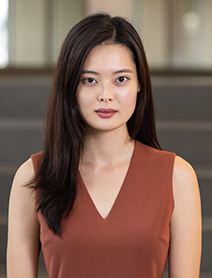
Sarah Hernandez is an Associate Professor in the Civil Engineering Department at the University of Arkansas , specializing in transportation systems engineering. Her research focuses on advanced data collection and analysis for freight planning, and she teaches graduate courses in transportation planning and data analysis. Ph.D. in Civil and Environmental Engineering, University of California, Irvine M.S. in Civil Engineering, University of California, Irvine B.S. in Civil Engineering, University of Florida Her research integrates Intelligent Transportation Systems (ITS) technologies to address freight data gaps, including: Development of tools for freight performance measures Fusion of GPS, WIM, and lock performance data Weather impact on freight traffic Lidar-based truck classification Key trends in her publications include: Advancing sensor technologies for freight analytics Improving long-range infrastructure planning Addressing data gaps in commercial vehicle operations Enhancing freight network efficiency through modeling Scientific awards: Private Sector Applicability Award, TRB Intermodal Freight Committee (2018) As founder of the Freight Transportation Data Research Lab , she leads initiatives on unbiased freight planning and workforce diversity. Her outreach includes mentoring middle and elementary school STEM programs.
Sherif Khattab is a Teaching Assistant Professor in the Department of Computer Science at the University of Pittsburgh's School of Computing and Information. With a Ph.D. in Computer Science from the University of Pittsburgh (2008), he brings extensive expertise in cybersecurity systems with applications across cloud computing, Internet of Things, electronic voting, and Big Data security. His research focuses on the systems aspects of cybersecurity, maintaining an h-index of 16 (Google Scholar) and 10 (Scopus) with over 60 publications. Khattab has successfully supervised more than 15 graduate students throughout his academic career. Prior to his position at Pitt, he served as an Associate Professor at Cairo University's Department of Computer Science, Faculty of Computers and Information. Professor Khattab teaches numerous undergraduate and graduate courses, with particular emphasis on hands-on ethical hacking and security education. His current teaching portfolio includes Algorithms and Data Structures (CS 0445) and Network Security (CS 1653), with extensive experience teaching operating systems, formal methods, and computer networks across multiple semesters. His research publications reveal consistent focus on practical security solutions for emerging technologies, with recent work addressing IoT security frameworks, blockchain-based voting systems, and cloud security challenges. The publication trend shows increasing emphasis on practical implementation aspects alongside theoretical security models. With industry experience from internships at Google Inc., Ericsson Data Networks, and Bosch Research, Khattab bridges academic research with real-world security challenges. His educational background includes a Bachelor's in Computer Engineering from Cairo University (1998) and both M.Sc. and Ph.D. in Computer Science from the University of Pittsburgh (2004 and 2008).
Zachary Aman is a Professor in the School of Engineering , Chemical Engineering department at the University of Western Australia . His research focuses on gas hydrates , flow assurance , and subsea pipeline management , with applications in petroleum engineering and hydrocarbon processing . Research Output: 127 publications Grants: 53 funded projects H-index: 39 Research interests include: Hydrate formation kinetics and rheology Subsea flowline stability and inhibition Hydrocarbon separation under high-pressure Novel composite materials and ionic liquids for hydrate management Article Trends highlight his work on hydrate probability models , flowloop experiments , and environmental applications like oil spill modeling and CO 2 capture. His recent work explores nanostructured additives and transient simulation tools for energy and environmental systems. Grants and Supervision reflect 53 funded projects and 19 supervised works, indicating active mentorship and industry collaboration.
Edwin Romeijn holds the Jill Stewart Archer Family Chair and Professor position in the H. Milton Stewart School of Industrial and Systems Engineering at Georgia Institute of Technology. He served as School Chair from 2015-2024, overseeing the nation's top-ranked industrial engineering program. Previously, he held faculty positions at the University of Michigan, University of Florida, and Erasmus University Rotterdam, and served as Program Director at the National Science Foundation. Education: Ph.D. in Operations Research (1992), Erasmus University Rotterdam M.S. in Econometrics (1988), Erasmus University Rotterdam Romeijn's research centers on optimization theory and applications , with dual focus areas in radiation therapy treatment planning and supply chain management . His radiation therapy work develops algorithms for cancer treatment planning and clinic scheduling, while his supply chain research addresses integrated optimization of production, inventory, and transportation under demand flexibility, resource constraints, perishability, and uncertainty. His methodologies bridge theoretical operations research with real-world healthcare and logistics systems. His publication portfolio demonstrates consistent contributions to optimization methods across diverse application domains, with recent work spanning healthcare systems, renewable energy, sports analytics, and unconventional logistics. The research exhibits strong methodological continuity in stochastic programming, network optimization, and decision-making under uncertainty. Scientific Awards: Fellow of IISE and INFORMS (2017) Richard C. Wilson Faculty Scholar (2012-2013) Multiple best paper awards in industrial engineering conferences Pierskalla Best Paper Award (2003) Young Investigator’s Award at ICCR (2004) Romeijn has advised numerous graduate students and secured significant research funding through NSF and other agencies. His leadership extends to program direction at NSF and chairing Georgia Tech's Industrial and Systems Engineering school. He maintains active collaborations with healthcare institutions and manufacturing enterprises, translating theoretical advances into practical solutions for radiation oncology and supply chain resilience.
Günter J. Hitsch is the Kilts Family Professor of Marketing at the University of Chicago Booth School of Business, where he has been a faculty member since 2001. His academic leadership extends to editorial roles as Co-Editor of the Journal of Quantitative Marketing and Economics and Associate Editor at Marketing Science and Management Science. Hitsch's educational journey includes an undergraduate degree from the University of Vienna (1995), followed by master's degrees in economics (1997, 1998), and a PhD in economics from Yale University (2001). This strong foundation in economics informs his approach to marketing research. His research program focuses on quantitative marketing and industrial organization, with particular emphasis on dynamic models of firm and consumer decision-making. Key areas include advertising effectiveness, pricing strategies, sequential learning and experimentation, and intertemporal consumer choice. Hitsch is pioneering in applying causal inference and machine learning to solve practical marketing problems such as optimal customer targeting. His work on dating and marriage markets demonstrates innovative application of economic theory to social phenomena. Hitsch's publication trajectory shows evolution from foundational work on consumer choice and switching costs to more recent applications of machine learning in marketing contexts. His research spans theoretical development and practical application, examining everything from private label demand during economic recessions to television advertising effectiveness across hundreds of brands. Co-Editor, Journal of Quantitative Marketing and Economics Associate Editor, Marketing Science Associate Editor, Management Science Hitsch's editorial leadership has significantly shaped the direction of quantitative marketing research. His commitment to methodological rigor and generalizable results ensures his work provides reliable inputs for both marketing practitioners and academic researchers. As an educator, Hitsch teaches advanced courses in quantitative marketing and business analytics, with scheduled courses for 2024-2026. He emphasizes that 'good marketing isn't fluffy,' challenging students to develop analytical approaches to marketing problems. His research philosophy prioritizes providing generalizable results that apply beyond specific case studies, serving as inputs for both practitioner decision-making and academic advancement.
Prof. Dr. Harald Ritz serves as Professor of Practical Computer Science, especially Business Informatics, at the Technical University of Central Hesse (THM) within the Department of Mathematics, Natural Sciences and Computer Science since 2003. He holds leadership roles as Chair of Examination Committees for B.Sc. and M.Sc. Business Information Systems and Spokesperson for the MNI department in the Business Informatics Working Group (AKWI). His educational background includes a Diplom in Business Informatics (Dipl.-Wirtsch.-Inform.) and doctorate (Dr. rer. pol.) from the Technical University of Darmstadt, following professional experience at SAP SI AG and a professorship at Heilbronn University of Applied Sciences. Ritz's research centers on AI-driven digital transformation for data-driven enterprises, with focus on the “Data to Decision” value chain encompassing Framing, Allocation, Analytics, and Preparation phases. His work integrates business intelligence, data warehousing, machine learning, and SAP ecosystems to address challenges in SME digitalization, operational IT management, and educational technology. Current projects emphasize AI applications in higher education, including intelligent tutoring systems and automated feedback mechanisms. Analysis of his 15 most recent publications reveals a consistent trajectory toward applied AI solutions in business contexts, particularly in intelligent chatbots for educational support, financial trading algorithms, and cloud-based data infrastructure. The research demonstrates increasing integration of no-code platforms, real-time analytics, and domain-specific AI applications across logistics, banking, and procurement sectors. No scientific awards were documented in the source materials. Professor Ritz actively supervises academic development through bachelor’s and master’s theses, doctoral research, and collaborative projects. Current initiatives include the “Winfy” AI chatbot (v4.0, 2025), AI-based feedback systems for educational content (Freiraum 2025 grant), the frits intelligent tutoring project with Prof. Kammer, and doctoral research on AI adoption in SMEs. His work bridges theoretical research with practical implementation in SAP environments and cloud platforms. He operates within THM’s MNI department infrastructure, collaborating through the Business Informatics Working Group (AKWI) and contributing to the Digital Classroom communication platform for online education.
Maria Rita D’Orsogna is a Professor of Mathematics at California State University, Northridge (CSUN) and holds an Adjunct Associate Professor appointment in the Department of Computational Medicine at UCLA. She earned her PhD in Theoretical Physics from UCLA in 2003 and has since bridged mathematical modeling with interdisciplinary research in biology, social dynamics, and criminology. Her work utilizes statistical mechanics and applied mathematics to study collective behavior, viral dynamics, and societal challenges. Her research spans Biological swarming and self-organization Crime pattern modeling and policy analysis Drug addiction relapse dynamics Environmental activism against offshore oil drilling Recent publications focus on Medical decision-making optimization Age-specific overdose mortality forecasting Radicalization and social network dynamics Criminal career empirical studies Hematopoiesis modeling . She has secured funding from the NSF and Army Research Office. Teaching experience includes differential equations, multivariable calculus, and mathematical biology at CSUN and UCLA. She has mentored students through RIPS, IPAM, and PUMP programs. As Associate Director of UCLA’s Institute for Pure and Applied Mathematics (2018–2021), she promoted interdisciplinary research. Her environmental advocacy in Italy led to national policy changes banning coastal oil drilling, earning her recognition as the "Erin Brockovich of Italy".
Kenneth C. Wilbur is a Professor of Marketing and Analytics at the University of California, San Diego's Rady School of Management. He holds the Sheryl and Harvey White Chair in Management Leadership and serves as Associate Editor for Marketing Science and the Journal of Marketing Research. Research focuses on quantitative marketing, customer analytics, and digital platform phenomena 18 award-winning papers across marketing, economics, and interdisciplinary journals Organizer of the Workshop on Platform Analytics with YouTube archives His work bridges empirical analysis with practical applications in advertising, blockchain technology, and regulatory compliance. Recent publications examine digital advertising inefficiencies, platform pricing algorithms, and policy impacts on consumer behavior. Scientific Awards John D. C. Little Award Finalist Don Morrison Long-Term Impact Award Finalist Frank M. Bass Award Winner Multiple Best Paper Finalists Teaching materials include UCSD courses: Customer Analytics and Introduction to Marketing Analytics. Publicly shares Quarto source files for educational reuse.
Novi Quadrianto is a Professor of Machine Learning at the School of Engineering and Informatics, University of Sussex, where he joined as a Lecturer in February 2014. He is currently a Principal Investigator on three active EU grants: BayesianGDPR (ERC), TANGO (EU Horizon RIA), and Act.AI (ERC Proof of Concept). He also holds an Adjunct Professor position in Data Science at Monash University, Indonesia, and serves as Strategic Lab co-Leader of the BCAM Severo Ochoa Strategic Lab on Trustworthy Machine Learning in Bilbao, Spain. His educational background includes a PhD in Machine Learning from the Australian National University (2012) and a BEng in Electrical and Electronics Engineering from Nanyang Technological University, Singapore. During his PhD, he conducted research at multiple international institutions including HIIT-Finland, Yahoo! Research-US, University of Alberta-Canada, Fraunhofer IAIS-Germany, and IST Austria. From 2012-2014, he was a Newton International Fellow of the Royal Society at the University of Cambridge. Professor Quadrianto directs the Predictive Analytics Lab (PAL) since 2017, which focuses on "Responsible AI" research developing AI models that embed fairness, accountability, transparency, and trustworthiness. His research spans algorithmic fairness, federated learning, and computer vision, with applications in sustainable development, healthcare, and finance. His work has been funded by prestigious organizations including the European Research Council, EPSRC, and HM Treasury. His publications reveal a strong focus on addressing challenges in AI fairness, robustness, and privacy, particularly in dynamic environments and heterogeneous data settings. Recent work explores performative prediction, diversity-driven learning, and efficient vision transformer inference, demonstrating his leadership in cutting-edge machine learning research. European Research Council ERC Proof of Concept Grant (2023) Guarantor Researcher for BCAM Severo Ochoa Excellence Accreditation (2023) European Lab for Learning and Intelligent Systems (ELLIS) Scholar/Fellow (2020) European Research Council ERC Starting Grant (2019) Newton International Fellowship (2012) Microsoft Research Asia Fellowship (2009) Professor Quadrianto currently supervises six PhD students and five postdoctoral researchers. He has served as Action Editor for Transactions on Machine Learning Research since 2022 and as Associate Editor for IEEE Transactions on Pattern Analysis and Machine Intelligence since 2016. He has also been an Area Chair for major conferences including NeurIPS, ICML, and AAAI. His PAL laboratory hosts a team of 15 members focused on inter-disciplinary AI research with domain experts across various sectors. The PAL Lab operates three innovation strands: AI for Sustainable Development (supporting UN SDGs), AI for Healthcare (transforming health outcomes), and AI for Finance (personalized loan decision-making). The lab also leads initiatives in Diversity & Inclusion in AI and offers Pro-Bono Office Hours to organizations seeking guidance on machine learning aspects.
Prof. Dr. Julia Rieck is a Full Professor of Business Administration at the University of Hildesheim , leading the Department of Business Administration and Operations Research within the Faculty of Mathematics, Natural Sciences, Economics and Computer Science. As Dean of the Faculty , she oversees academic programs, quality management, and research initiatives. Her roles include academic advising for the Business Information Systems (B.Sc./M.Sc.) programs and active participation in examination boards and quality committees. Education: PhD in Political Science (Dr. rer. pol.) with summa cum laude (2008), Habilitation at Clausthal University of Technology (2014), and studies in Business Mathematics (Diploma, University of Hamburg, 2003) and Mathematics (Georg-August-University Göttingen, 2000). Research: Focuses on Operations Research , Supply Chain Management , Project Planning , and Logistics . Her work integrates mathematical modeling , machine learning , and real-world applications , particularly in disaster response , dynamic transportation , and sustainable e-commerce . Projects: Leads third-party funded initiatives like "IT für die sorgende Gesellschaft" (AI in healthcare/social sectors) and contributes to the HULLS real-lab (AI in aging societies). Collaborates with regional companies (e.g., Youco, ADITUS) and institutions (HAWK, University of Hannover). Teaching: Emphasizes practical application through case studies, industry partnerships, and the IT-Speed Dating event for student-company connections. Her courses cover project resource planning , logistics , and digital transformation . Labs & Teams: Active in the Institute of Business Administration & Business Information Systems , contributing to the KET Kompetenzwerkstatt (entrepreneurship support) and interdisciplinary teams in AI and sustainability research.
Professor Alexander Slocum holds the Walter M. May (1939) and A. Hazel May Chair in Emerging Technologies at MIT's Department of Mechanical Engineering within the School of Engineering. A distinguished educator and researcher, Slocum has made significant contributions across precision machine design, medical device innovation, and renewable energy systems. His research interests span precision machine design for medical devices and energy industry applications, with particular focus on offshore renewable energy storage systems and kinematic couplings. Slocum's work bridges theoretical mechanical engineering principles with practical applications that address real-world challenges in healthcare and sustainable energy. His recent publications demonstrate a strong emphasis on bio-inspired engineering, underwater energy storage systems, and medical device innovation. The articles reveal a consistent pattern of applying fundamental mechanical engineering principles to solve problems in healthcare delivery and renewable energy storage, often with a focus on practical implementation in resource-constrained environments. NSF Presidential Young Investigator (1987) MacVicar Faculty Fellow (1999) Massachusetts Professor of the Year Award (2000) Multiple R&D 100 Awards (1994-2010) ASME Leonardo da Vinci Award (2004) ASME Machine Design Award (2008) ASME Ruth and Joel Spira Outstanding Design Educator Award (2018) National Academy of Inventors Fellow (2021) Slocum actively mentors students through MIT's Experimental Study Group (which he directs) and his renowned 2.75/2.750 Precision Machine Design courses. His educational approach emphasizes hands-on learning and real-world problem solving, particularly through medical device design projects developed in collaboration with Boston-area clinicians. His research has been supported by significant grants from the NSF, Department of Energy, and military research agencies. His PERG (Precision Engineering Research Group) lab fosters interdisciplinary collaboration, bringing together mechanical engineers, materials scientists, and medical professionals to develop innovative solutions for healthcare and energy challenges. The lab is particularly known for its work on kinematic couplings, hydrostatic bearings, and bio-inspired engineering solutions.
Rui Teixeira is an Assistant Professor in the School of Civil Engineering at University College Dublin (UCD). He leads UCD's Centre for Critical Infrastructure Research (CCIR) and focuses on Uncertainty Quantification, Safety, and Risk in civil engineering systems, with applications to infrastructure resilience. His research emphasizes reliability analysis, multi-fidelity modeling, and AI-driven risk assessment. Education: MSc in Civil Engineering, University of Porto, Portugal PhD in Civil Engineering, Trinity College Dublin Professional Certificate in University Teaching and Learning, UCD Research Interests: Development of novel reliability analysis techniques Resilience of infrastructure systems Artificial intelligence applications for risk assessment Probabilistic system evaluation and safety standards Grants & Projects: Smart Enforcement of Transport Operations (SETO), Horizon Europe (2023–2026) Optimality-Tracking Civil Engineering Systems, Enterprise Ireland (2023–2025) Floating Offshore Wind Dynamic Cables (FlOWDyn), Sustainable Energy Authority of Ireland (2024–2027) Teaching: Coordinates courses such as 'Civil Engineering Systems' and 'Design of Structures 1'. Labs/Teams: Director of the Centre for Critical Infrastructure Research (CCIR), focusing on interdisciplinary approaches to infrastructure resilience.
Dr. Jackie Cha serves as an Assistant Professor in the Department of Industrial Engineering within Clemson University's College of Engineering, Computing and Applied Sciences. Her research bridges human factors engineering with healthcare innovation, focusing on surgical robotics, physiological signal analysis, and wearable medical technologies to enhance clinical performance and safety. Her academic foundation includes advanced degrees from leading institutions: Ph.D. in Industrial Engineering from Purdue University M.S.E. in Biomedical Engineering from the University of Michigan B.S.E. in Biomedical Engineering from the University of Michigan Cha's research program centers on quantifying human performance in high-stakes medical environments through sensor-based metrics. She investigates nontechnical skills in surgical teams, mental workload during robotic procedures, and ergonomics of exoskeleton implementation in operating rooms. Her work integrates physiological signals, eye-tracking, and proximity sensors to develop objective assessment tools for surgical proficiency and team dynamics. Analysis of her 2023-2025 publications reveals consistent thematic focus on human-robot collaboration in surgery, with emerging trends in AI-driven workload detection (s-DResNet), neural correlates of surgical expertise, and environmental factors affecting robotic surgery outcomes. Key methodological approaches include scoping reviews of human-robot interaction metrics, mixed-methods evaluations of exoskeleton efficacy, and extended reality applications for nontechnical skills training. She leads the ECHO Lab (Engineering for Clinical and Human Outcomes) at Clemson, which develops translational solutions for healthcare human factors challenges. Her lab's work spans from fundamental physiological signal analysis to applied interventions in operating rooms and emergency medical settings.
Stephen E. Still is a Professor of Practice in the Department of Civil, Structural and Environmental Engineering at the University at Buffalo (UB), affiliated with the Institute for Sustainable Transportation and Logistics. His roles include teaching applied transportation planning and technology courses, advising students, and collaborating across disciplines between the School of Engineering and Applied Sciences and the School of Management. Prior to academia, he served as founder and managing director of Seabury Airline Planning Group and Diio, LLC, specializing in aviation consulting and IT. With over 30 years of industry experience, he held leadership roles at US Airways and United Airlines, focusing on strategic route planning, fleet management, and alliance development. Dr. Still holds a PhD in Civil Engineering and Operations Research from Princeton University, with a focus on transportation systems and economics, and a BS in Engineering (magna cum laude) from UB with a concentration in transportation planning. He has also completed advanced coursework in demand modeling at MIT. His research interests emphasize sustainable transportation systems and logistics, integrating engineering principles with operational efficiency. While his academic contributions primarily reside in transportation engineering, his interdisciplinary work incorporates wearable technology and sensor-based solutions for health monitoring, as evidenced by his extensive publication record in smoking cessation and behavioral health research. Scientific awards and grants are not explicitly mentioned in the provided information. Dr. Still’s advising and teaching focus on fostering student engagement in transportation innovation and real-world problem-solving. His professional experience bridges academia and industry, reflecting a commitment to practical applications of engineering and logistics principles.
Tae Eun Kim is an Associate Professor in Maritime Safety Management at UiT The Arctic University of Norway, working within the Department of Technology and Security. Her research, teaching, and industrial collaboration focus on maritime safety and human factors, with particular expertise in maritime safety management, accident analysis, Maritime Autonomous Surface Ships (MASS), and human factors in maritime operations. Dr. Kim's research spans four interconnected domains: maritime safety management and leadership, maritime accident and casualty analysis, Maritime Autonomous Surface Ships (MASS), and human factors in maritime operations. She has developed assessment instruments like the Safety Leadership Self-Efficacy Scale (SLSES) and conducted STAMP-based causal analyses of maritime accidents. Her work on MASS addresses safety challenges in mixed navigational environments and examines leadership competencies for autonomous shipping operations. Her human factors research explores how technological advancements impact navigators' performance, crew dynamics, and safety outcomes, including gender parity issues in the maritime industry. Dr. Kim's publication record reveals a strong focus on the intersection of maritime safety, technology, and human performance. Her recent work increasingly addresses autonomous shipping technologies, with numerous publications on AI decision transparency, learning analytics in maritime simulator training, and multi-modal data analysis for nautical skill development. She has conducted systematic reviews on simulator training approaches and scenario design, contributing significantly to methodology development in maritime education and training. Her research demonstrates a clear trajectory toward integrating emerging technologies with traditional maritime safety practices as the industry transitions toward greater automation. Dr. Kim is actively involved in several significant research projects, including the i-MASTER EU Horizon Europe Research and Innovation Project, the REFRAME project, and the SPRICE project (Multidisciplinary approach for spray icing modelling). She is a member of both the Advanced Maritime Ship Operations research group and the Maritime Safety Science (MARSCI) Research Group, demonstrating her commitment to collaborative research in maritime safety science. Dr. Kim teaches several specialized courses at UiT, including SVF-3206 Safety Management and Accident Investigation, TEK-3014 Navigation Technology, MFA-2100 Maritime Digitalization, MFA-8010 Maritime HTO (Human-Technology-Organisation) and Innovation, and MFA-2018 Maritime Administration and Leadership. Her teaching portfolio reflects the interdisciplinary nature of her expertise, bridging engineering, safety science, and organizational behavior in maritime contexts.