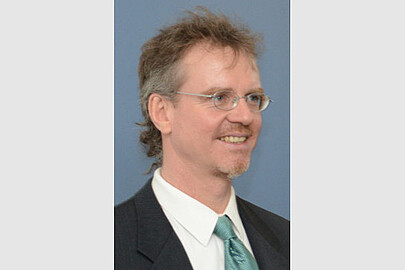
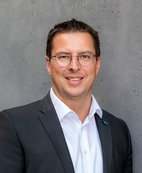
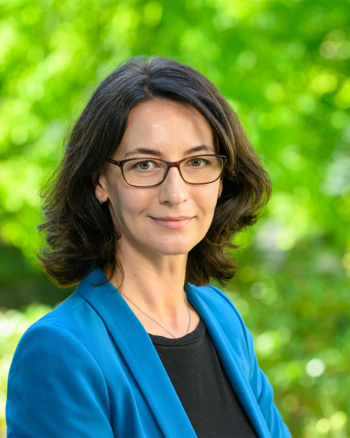
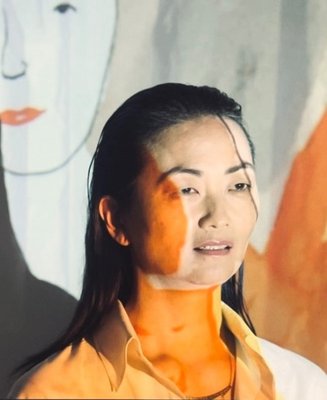
Prof. Dr.-Ing. Katharina Schmitz serves as Institute Director and Vice Dean at the Institute for Fluid Power Drives and Systems, RWTH Aachen University. Her leadership within the Production Technology Cluster and extensive contributions to fluid power engineering establish her as a leading authority in mechanical engineering research and education. Her research spans fluid power systems, hydraulic component design, tribology, and physics-informed machine learning applications. She pioneers sustainable propulsion solutions through bio-hybrid fuels research while addressing fundamental challenges in polymer material behavior under hydraulic stresses. Current work focuses on carbon-neutral heavy-duty transportation, physics-based neural networks for lubrication modeling, and advanced control systems for electro-hydraulic actuators. Analysis of her 15 most recent publications reveals a dominant trend toward integrating physics-based modeling with deep learning to solve complex engineering problems. Her team consistently develops novel frameworks for cavitation prediction, flow rate determination, and material compatibility assessment - significantly advancing fluid power system reliability, efficiency, and digitalization. Scientific recognition includes: GfT Förderpreis 2023 for experimental and simulative investigation of partially hydrostatic relieved contacts in variable speed axial piston machines As head of the Institute for Fluid Power Drives and Systems, she leads cutting-edge research in sustainable fluid power technologies. The institute maintains strong industry partnerships while driving innovation in hydraulic component design, digital twins for condition monitoring, and next-generation propulsion systems through its position within RWTH Aachen's Production Technology Cluster.
Prof. Dr. Annette Upmeier zu Belzen is a Professor at the Institute of Biology at Humboldt University of Berlin, where she has been serving since October 2005. She leads the working group on Biology Didactics and Teaching/Learning Research within the Department of Biology Didactics. Her academic work is situated in the Faculty of Mathematics and Natural Sciences at one of Germany's most prestigious research universities. Her educational background includes: Promotion Dr. paed. from the Institute for Biology Education at Westfälische Wilhelms-University Münster (1997) Master of Arts in School Management from Technical University of Kaiserslautern (2005) Studies in biology, education and psychology at the University of Münster, culminating in the First State Examination (1992) Prof. Upmeier zu Belzen's research primarily focuses on biology education, with special emphasis on models and modeling in science education. Her work explores how students develop scientific reasoning skills through model-based learning approaches. She investigates the cognitive processes involved in understanding biological phenomena through modeling activities and examines how these processes can be effectively supported in classroom settings. Her research has significant implications for science teacher education, as she develops frameworks for assessing and fostering model competence among pre-service teachers. Through her work, she bridges theoretical perspectives on scientific modeling with practical classroom applications, contributing to both educational theory and practice in science education. Her recent publications reveal a strong focus on model-based learning, scientific reasoning, and teacher education. She has been increasingly investigating the role of abductive reasoning in modeling biological phenomena as complex systems. Her work spans formal classroom settings, museum education environments, and teacher professional development contexts. A notable trend in her recent work is the integration of cognitive science perspectives with educational research to better understand how students and teachers engage with scientific models and practices. Prof. Upmeier zu Belzen holds several significant professional roles: Deputy spokesperson of the Interdisciplinary Center ProMINT-Kolleg Scientific Director of Humboldt Explorers Editor of Science Education Review Letters (SERL) Member of the Council of the Humboldt University of Berlin She is actively involved in educational policy and standards development, serving as a consultant for various national and international organizations including the Organisation for Economic Co-operation and Development (OECD) for the PISA Science Framework 2025. Her expertise is sought after for developing educational standards and frameworks across multiple German educational institutions. Prof. Upmeier zu Belzen leads and participates in several research teams and laboratories focused on science education. Her work with the Humboldt Explorers program creates innovative learning environments, while her involvement with the Interdisciplinary Center ProMINT-Kolleg supports STEM education initiatives across Berlin and Brandenburg.
Andreas Strohmayer is a Professor and Managing Director of the Institute of Aircraft Design at the University of Stuttgart, leading research in aircraft design, electric/hybrid propulsion, and lightweight construction. His work focuses on sustainable aviation solutions, including electric aerotow systems, hydrogen tank integration, and hybrid-electric regional aircraft. He previously held senior industry roles at Grob-Werke, Sky Aircraft, and SST Flugtechnik before joining academia in 2015. Education & Career: 1989–1995: Studied Aerospace Engineering at TU Munich 1995–2002: Research Assistant at TU Munich's Aerospace Chair 2002–2009: Managing Director of Grob Aerospace GmbH 2009–2013: Deputy Director at Sky Aircraft (Metz) 2013–2015: Vice President at SST Flugtechnik GmbH 2015–Present: Full Professor at University of Stuttgart Research Focus: Electric and hybrid-electric propulsion systems Lightweight structural design and simulation Flight testing of demonstrators like the e-Genius-Mod Hydrogen storage integration in aircraft fuselages Aerodynamic optimization and wing tip propulsion Open-source tools for aircraft design (SUAVE) Recent Projects: Development of the e-Genius-Mod for electric aerotow and autonomous flight Hydrogen tank modeling for zero-emission aviation FUTPRINT50 initiative for 50-seat regional aircraft sustainability Investigation of distributed electric propulsion systems Academic Contributions: Over 50 peer-reviewed publications since 2015 Active in industry-academia collaborations (EASN, European projects) Supervisor of numerous master's and Ph.D. students Teaching courses on aircraft design and propulsion systems
Sebastián Ferrada is an Assistant Professor at the Data & Artificial Intelligence Initiative of Universidad de Chile. He also serves as Young Researcher at the Institute for Foundational Research on Data (IMFD) and Collaborating Researcher at the National Center for Artificial Intelligence Research (CENIA). His research focuses on Knowledge Graphs, with special emphasis on extraction, management, and applications for querying, browsing, and AI systems. His academic background includes: PhD in Computer Science (2021), Universidad de Chile MSc in Computer Science (2017), Universidad de Chile BEng in Computer Science (2017), Universidad de Chile Sebastián's research explores several key areas: Multimedia Databases with applications to Wikimedia Commons images Graph Databases and Knowledge Graphs construction Federated Data Management across heterogeneous RDF sources SPARQL query extensions for similarity-based operations Graph data management and compression techniques His recent publications demonstrate strong trends in knowledge graph construction, similarity-based querying, and efficient graph data management. These works combine theoretical advancements with practical implementations in real-world systems like IMGpedia and MillenniumDB. Scientific achievements include: Best Paper Award at CoopIS 2023 Best Demonstration Award runner-up at SIGMOD/PODS 2024 Best Student Paper (Resources Track) and Best Poster at ISWC 2017 First prize in CLEI 2017 for his Master's thesis Sebastián currently leads the Fondecyt project on graph data management and contributes to the U-Inicia project on AI processes in graph databases. He serves on the editorial board of Transactions on Graph Data and Knowledge.
Kamyar Sarshar is a Professor of Business Informatics at the Hamburg School of Business Administration (HSBA) since January 2014, serving as Academic Director of the Bachelor's program in Business Informatics within the Department of Technology & Markets. His educational background includes: Computer Science degree from the University of Hamburg MBA from Cardiff University, United Kingdom PhD from the Institute of Business Informatics in Saarbrücken Prior to HSBA, he worked as a Managing Consultant at Logica (now CGI), leading cross-industry process management projects. Research interests focus on: Business Process Management E-Business IT in Healthcare His work emphasizes empirical evaluation of modeling techniques like Event-driven Process Chains and Petri nets, particularly in healthcare applications and end-user usability. Publications from 2004-2008 reveal consistent contributions to business process modeling methodology, with strong empirical validation across healthcare, energy, and construction sectors, highlighting practical applicability and user-centered design principles. No scientific awards are documented in the provided materials. Information regarding student supervision, research grants, laboratories, or collaborative teams is not specified in the source text.
Matthias Becker is a Professor at the Institute for Practical Computer Science within the Faculty of Electrical Engineering and Computer Science at Leibniz University Hannover, where he has been a core member of the Human-Computer Interaction group since 2019. He serves as Internship Coordinator for Computer Science and Computer Engineering and holds key roles in the Computer Science Examination Board and Selection Committee, actively shaping academic governance and student development. His academic journey began with PhD studies at the University of Bremen (1996-2000) supported by a DFG grant, followed by a postdoctoral permanent position at Leibniz University Hannover (2000-2019), an Associated Assistant Professor role at École des Mines de Nantes (2000), and a Habilitation in Computer Science in 2013. This foundation enabled his transition to a full professorship in 2019. Becker's research spans Human-Computer Interaction, Simulation and Modeling, and Bio-inspired Computing, with applications in agriculture, renewable energy, and manufacturing. His work integrates distributed systems, optimization algorithms, and wireless sensor networks to solve complex real-world problems, such as greenhouse monitoring, wind farm logistics, and tire noise reduction. Recent publications reveal a strategic focus on practical validation of simulation models and cross-domain applications of nature-inspired algorithms. His 15 most recent publications (2018-2024) demonstrate consistent innovation in applying simulation techniques to offshore wind farm installation, agricultural pest management, and sports science. These works emphasize real-world validation, collaborative problem-solving, and the development of domain-specific optimization frameworks that bridge theoretical algorithms and industrial implementation. As Internship Coordinator, Becker facilitates critical industry-academia connections for students, while his examination board responsibilities ensure rigorous academic standards. His leadership in the Human-Computer Interaction group drives research on interactive systems for agriculture, energy, and health, with particular emphasis on user-centered design in complex operational environments like wind farm logistics and greenhouse automation.
Prof. Dr. Thomas Farrenkopf is a full-time Professor in the Department of Business Informatics at the Technische Hochschule Mittelhessen , serving as Dean of Studies . He leads the Business Informatics Bachelor program and specializes in digitalization, multi-agent systems, and AI-driven decision support. Expertise Areas : Industry 4.0, Smart Factory, Semantic Web, full-stack software development Contact : thomas.farrenkopf@mnd.thm.de Research Focus : His work bridges knowledge-based methods with practical applications in artificial intelligence, particularly through multi-agent systems for traffic modeling and business simulations. He developed AGADE Traffic (a knowledge-based traffic simulator) and ATHOS (a domain-specific language for multi-agent simulations), focusing on scalability and complexity reduction. Recent studies explore individual preferences' impact on traffic policies and agent-based feedback mechanisms in business contexts. Academic Contributions : With over 15 publications since 2013, his research spans agent-based modeling, semantic web applications, and smart manufacturing - notably improving throughput times in toolmaking by 90% through Industry 4.0 implementations. Teaching & Supervision : Actively supervises Bachelor's Practical Projects (BPP), providing guidance for internship-related academic work through structured evaluation processes and electronic reporting systems. Collaborations : Works with international researchers like Johannes Nguyen, Simon T. Powers, and Michael Guckert, publishing in venues such as SN Computer Science , Lecture Notes in Computer Science , and Journal of Artificial Societies and Social Simulation .
Prof. Dr.-Ing. Jürgen Melzner is a Professor at the Faculty of Civil and Environmental Engineering at Bauhaus-Universität Weimar. His research focuses on construction operations, occupational health and safety, and BIM integration. He leads projects in lean construction management, noise pollution modeling, and safety planning using BIM. His work emphasizes digital transformation in construction processes and legal aspects of building permits. Education includes a Dr.-Ing. (Doctor of Engineering) with extensive career contributions to construction safety and process optimization. His teaching and research involve BIM applications, IoT integration, and interdisciplinary methods in construction education. Research interests span BIM-based safety systems, predictive noise simulation, ontology networks for construction data, and lean principles in project management. Recent articles address stakeholder management in permits, machine learning for site monitoring, and metaverse applications in urban planning. Notable advising includes guidance of master's students like Mahshid Birkholz and Nasim Babazadeh. His work bridges academic research with practical implementation through projects like BIMwissT and DROHNIS. Labs/teams: Active in the Chair for Construction Management and BIM, focusing on digital tools and safety innovation.
Prof. Dr. Natalia Kliewer is a Professor of Business Informatics at the Free University of Berlin, where she leads the Professorship for Business Information Systems within the Department of Business Informatics in the Faculty of Economics and Business Administration. She has been serving in this position since 2009, following a Junior Professorship at the University of Paderborn from 2005-2009. Free University of Berlin (2009-present): Professor of Business Informatics University of Paderborn (2005-2009): Junior Professorship for Business Informatics and Operations Research Doctorate from University of Paderborn (2005) Studies in Information Systems at Kirgisischen Technischen Universität and Business Informatics at Münster and Paderborn (until 2000) Prof. Kliewer's research focuses on optimization in transport and traffic systems, with particular expertise in robust planning approaches, delay management, and airline revenue management. Her work bridges business informatics with practical transportation challenges, developing algorithms and decision support systems that enhance efficiency in public and air transportation networks. She has made significant contributions to integrated vehicle and crew scheduling, timetabling, and resource deployment planning that can withstand disruptions and uncertainties in real-world operations. Her recent publications demonstrate a strong trend toward addressing sustainability challenges in transportation, particularly through the integration of e-mobility solutions in public transport systems. Her research increasingly combines traditional operations research methods with data-driven approaches, including machine learning for travel time prediction and robust schedule generation. The work spans multiple transportation modes including buses, trains, and aircraft, with a consistent focus on developing integrated optimization approaches that consider multiple planning stages simultaneously. Member of the Advisory Board of the German Society for Operations Research (since 2013) Mentored students receiving prestigious awards including the GOR Bachelor Prize (Felix Becker) Prof. Kliewer has supervised numerous doctoral students including Dr. Lucas Mertens and Dr. Max Gerlach, and has advised multiple bachelor's and master's theses. Her research is supported by significant grants from the German Research Foundation (DFG), including multiple projects on robust efficiency in resource deployment plans for air transport and public transportation. She leads the BERLIN MOBILITY DATA HUB initiative and has secured funding for projects on e-mobility infrastructure planning and smart mobility solutions. She leads a research team that includes doctoral students, postdoctoral researchers, and student assistants working on various aspects of transportation optimization. Her group collaborates closely with transportation operators and industry partners to ensure practical relevance of their research. Current projects focus on AI-enhanced hybrid optimization for personnel scheduling, robust planning in public transport, and blockchain applications for secure documentation in aviation maintenance.
Julia Lawall is a Senior Research Scientist (Directrice de Recherche) at Inria-Paris, where she leads research in the Whisper group. She has made significant contributions to the fields of programming languages, operating systems, and software engineering, with a particular focus on program transformation and Linux kernel development. Her work bridges theoretical computer science with practical software engineering challenges. Dr. Lawall's research primarily centers on the design and implementation of domain-specific languages for operating system problems, program transformation techniques, and automated software evolution. Her most notable contribution is the Coccinelle framework, which has been instrumental in automating the evolution of Linux device drivers for over a decade. Her work spans from theoretical foundations in optimal reduction of the lambda calculus to practical tools that address real-world software maintenance challenges in large-scale systems like the Linux kernel. Her publication record demonstrates consistent contributions across multiple domains, with recent work focusing on Android API evolution, Linux kernel bug detection, and program transformation techniques. The trajectory of her research shows a progression from theoretical programming language concepts to increasingly practical applications in system software maintenance and evolution. EuroSys Test of time award for 'Documenting and Automating Collateral Evolutions in Linux Device Drivers' at EuroSys 2008 Best paper award for 'Diagnosys: Automatic Generation of a Debugging Interface to the Linux kernel' at ASE 2012 Most Influential ICFP Paper Award for foundational work on lambda calculus Best Reviewer at GPCE 2020 and Distinguished Reviewer at ASE 2020 Dr. Lawall has been actively involved in the academic community, serving as program co-chair for numerous prestigious conferences including ASE 2019, FSE 2026, and EuroSys 2025. She has also contributed to community initiatives as the Linux kernel coordinator for Outreachy (2015-2018) and as a member of the advisory board for Software Heritage. Her leadership extends to editorial roles, including associate editor for Higher-Order and Symbolic Computation and membership on the editorial board of Science of Computer Programming. She leads the Whisper research group at Inria-Paris, which focuses on program transformation techniques and their applications to system software. The group has developed several influential tools including Coccinelle, Coccinelle4J, LiLiput, Prequel, and JMake, which have had substantial impact on both academic research and industrial practice in software maintenance and evolution.
Enrico Rukzio is a Professor at the University of Ulm, Germany, leading a prominent research group focused on human-computer interaction with particular emphasis on automotive user interfaces, mixed reality, and accessibility. His research spans multiple domains including automated vehicles, virtual reality, and sustainable interaction design, with consistent publication output in top-tier venues such as CHI, UIST, and AutomotiveUI. Professor Rukzio's research interests center around the intersection of human factors and emerging technologies. His work investigates how users interact with automated systems, particularly in transportation contexts, with significant contributions to external vehicle communication, in-vehicle interfaces for automated driving, and accessibility solutions for diverse user populations. His research group has pioneered methods for optimizing user interfaces through Bayesian optimization and has conducted extensive studies on user acceptance of automated vehicle technologies. His publication portfolio reveals a clear trajectory of research evolution from foundational HCI work to specialized applications in automated transportation systems. Recent work shows increasing focus on accessibility aspects of automated vehicles, particularly for users with visual impairments, as well as exploration of emerging domains like Urban Air Mobility. The research demonstrates strong methodological diversity, incorporating controlled experiments, field studies, and computational optimization techniques. Professor Rukzio has supervised numerous doctoral students who have become active researchers in the field, including Mark Colley, Pascal Jansen, and Luca-Maxim Meinhardt. His research group maintains strong international collaborations and has secured funding for multiple projects at the forefront of automotive user experience research. The group's work has practical implications for automotive manufacturers and technology developers creating next-generation transportation interfaces.
Anne Fischer, M.Sc., is a researcher at the Chair of Material Handling, Material Flow, and Logistics at the Technical University of Munich (TUM). Her work focuses on digital twins, construction automation, and resource scheduling in heavy civil engineering. She is based in Garching near Munich and collaborates with institutions like UC Berkeley and Stanford University. Research Interests: Digital Twin frameworks, simulation-based optimization, BIM integration, activity recognition in construction, and sustainable logistics systems. Collaboration: Serves as a contact person for international exchanges with U.S. institutions. Publication Trends: Her recent articles (2024–2021) address construction automation, digital twin applications, and variability management in civil engineering projects. Key Projects: Engaged in initiatives like Bauen 4.0 , MiProcess2Twin , and SiteRoute , which focus on digitalization and automation in construction. Location: Boltzmannstraße 15, Garching bei München (Room: 5505.EG.501).
Federico Vigolo is a Junior Professor in pure mathematics at the University of Göttingen's Mathematical Institute and a Principal Investigator of RTG 2491 - Fourier Analysis and Spectral Theory. He also serves as one of the Equal Opportunities Officers (Gleichstellungsbeauftragte) of the Mathematical Institute. His work bridges several areas of mathematics including coarse geometry, operator algebras, and geometric group theory. Dr. Vigolo completed his PhD at the University of Oxford in 2018 with a thesis titled "Geometry of actions, expanders and warped cones". His academic journey has led him to become a prominent researcher in coarse geometry and its interactions with other mathematical fields. His primary research focuses on Coarse Geometry and its rich interactions with operator algebras, index theory, and group theory. Specific topics he has extensively worked on include Roe algebras, Expander Graphs, coarse Baum–Connes conjecture, actions on metric and measure spaces, and CAT(0) and Hyperbolic Cube Complexes. His work often explores the connections between large-scale geometric properties and algebraic structures, with significant contributions to understanding coarse groups and warped cones. An analysis of his publication record reveals a strong focus on the intersection of coarse geometry with operator algebras and group theory. His work consistently explores how coarse geometric properties manifest in algebraic structures like Roe algebras, and how these connections can be used to prove rigidity results or construct counterexamples to important conjectures. A notable trend is his development of frameworks that unify previously disparate concepts in coarse geometry, such as his work on coarse geometric modules and rigidity frameworks for Roe-like algebras. His 2023 monograph "An Invitation to Coarse Groups" represents a foundational contribution to this emerging field. Professional Activities Organizer of the "Autumn School on Large Scale Geometry" (2023, Göttingen) Organizer of the "Random walks and related random topics" workshop (2022, Göttingen) Organizer of the YMC*A conference (2021, Münster) Organizer of the "Interactions between expanders, groups and operator algebras" mini-workshop (2021, Münster) Dr. Vigolo actively supervises students, with Christos Kitsios currently pursuing a PhD under his guidance. He welcomes bachelor's and master's students interested in topics related to coarse geometry, geometric group theory, group actions on measure spaces, and operator algebras. He teaches a variety of courses including "Analytische Geometrie und Lineare Algebra," "Introduction to algebraic topology," and specialized seminars on topics like "Gender and Mathematics" and "topological K-theory." His research has led to significant contributions in multiple areas, particularly in developing the theory of coarse groups and exploring the connections between coarse geometry and C*-algebras. His work on warped cones and asymptotic expanders has provided new counterexamples to the coarse Baum-Connes conjecture and advanced our understanding of coarse geometric invariants.
Dorothea Pantförder, Dr.-Ing., is a researcher at the Chair of Automation and Information Systems at the Technical University of Munich, working under Prof. Vogel-Heuser. Her office is located at Boltzmannstr. 15, 85748 Garching b. Munich, where she maintains regular office hours on Mondays from 8:30 a.m. to 9:15 a.m. Her research focuses on human-machine interaction with particular emphasis on digital twin technology, industrial augmented reality applications, and advanced process data visualization techniques. She has pioneered work in 3D visualization for process control systems and has extensively explored how mixed reality technologies can enhance industrial maintenance procedures and operator training in manufacturing environments. Analysis of her publication history reveals a consistent research trajectory centered around making complex industrial processes more accessible through innovative visualization techniques. Her work bridges the gap between theoretical human-computer interaction principles and practical industrial applications, particularly in the context of Industry 4.0 initiatives and cyber-physical production systems. Throughout her career, Pantförder has collaborated extensively with Prof. Vogel-Heuser and other researchers across multiple institutions, contributing to numerous research projects focused on automation technologies, information systems, and human-centered design in industrial contexts. Her work has been supported by various research grants and has contributed to several demonstration projects showcasing Industry 4.0 applications. She has been instrumental in developing visualization techniques that help operators better understand complex production processes, with applications ranging from maintenance support to team knowledge management systems. Her research has evolved from foundational work on 3D process visualization to more recent explorations of digital twins integrated with mixed reality technologies for industrial applications.
Sara Sejin Chang (also known as Sara van der Heide) is a Korean-Dutch artist born in 1977 in Busan, South Korea, who currently serves as Interim Professor administering the Chair of Spatial Concepts at the University of Braunschweig (HBK) for the 2024-2025 academic year, replacing Candice Breitz. Based in Berlin, Chang creates shamanic film installations that combine film, historical research, rituals, drawings, texts, and sound compositions to challenge Eurocentric thinking, racialization, and persistent colonial narratives. Her work has been exhibited internationally at major venues including Moderna Museet Stockholm, Kunstinstituut Melly Rotterdam, Centraal Museum Utrecht, and ARGOS Brussels, and she has participated in significant biennials such as the Berlin Biennale, Dhaka Art Summit, and Busan Biennale. Chang's research interests focus on the intersection of Korean shamanism and contemporary art practice as a means of healing colonial trauma, particularly examining transnational adoption narratives between Korea and the Netherlands. Her work critically engages with the historical relationship between these two countries, including the participation of 3,418 Dutch soldiers in the Korean War (1950-1953) and the subsequent adoption industry that saw approximately 40,000 people adopted from the Global South to the Netherlands. She interrogates Eurocentric systems of categorization, racialization, and their penetration into all levels of contemporary Western society, proposing what she terms 'meta-cosmic and inclusive approaches to modernity' that transform conventional understandings of value and time. Through her practice, Chang seeks to repair historical ruptures, particularly those affecting diasporic communities, and create spaces for ancestral reconnection. Chang's artistic output demonstrates a consistent trajectory toward using shamanic practices as frameworks for decolonial critique and healing. Her recent major work Dismemberment (2024) employs the Korean Ssitgimgut ritual tradition to symbolically heal 'sick Europe' through a dismemberment and cleansing process, while Four Months, Four Million Light Years (2020) addresses colonial narratives behind transnational adoption through a shamanic healing journey across time and space. These works, along with her long-term project The Mother Mountain Institute , form a cohesive body of work that challenges the normalization of racialization within European society while proposing alternative knowledge systems rooted in Korean shamanic traditions. Scientific Awards: Theodora Niemeijer Prize (2023) - the largest Dutch Art Prize Berlin Artistic Research Grant Fellowship (2022-2023) Jeanne Oostingprize for 'Claim to Universality; Colour Theory Exercise 1-12' Chang's practice extends beyond traditional academic advising, functioning instead through collaborative research frameworks and institutional critique. Her work has been supported by significant grants including the Mondriaan Fund and the Berliner Programm Künstlerische Forschung. She operates through what she terms 'the Mother Mountain Institute,' a conceptual framework that connects her artistic practice with shamanic knowledge systems and decolonial theory. This institute serves as both a research platform and a metaphorical space for healing colonial ruptures, particularly those affecting transnationally adopted individuals. Chang's work consistently challenges the 'whiteness of contemporary art spaces' in European cities, using these spaces themselves as metaphors for the colonial structures they inhabit while simultaneously transforming them into sites of ritual and healing.