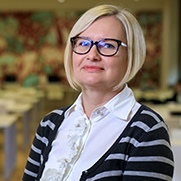
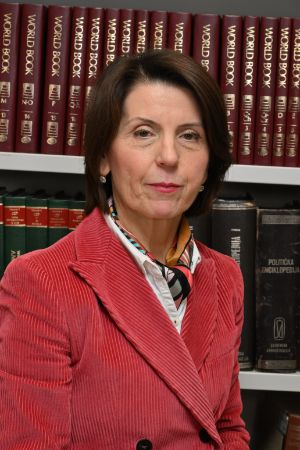
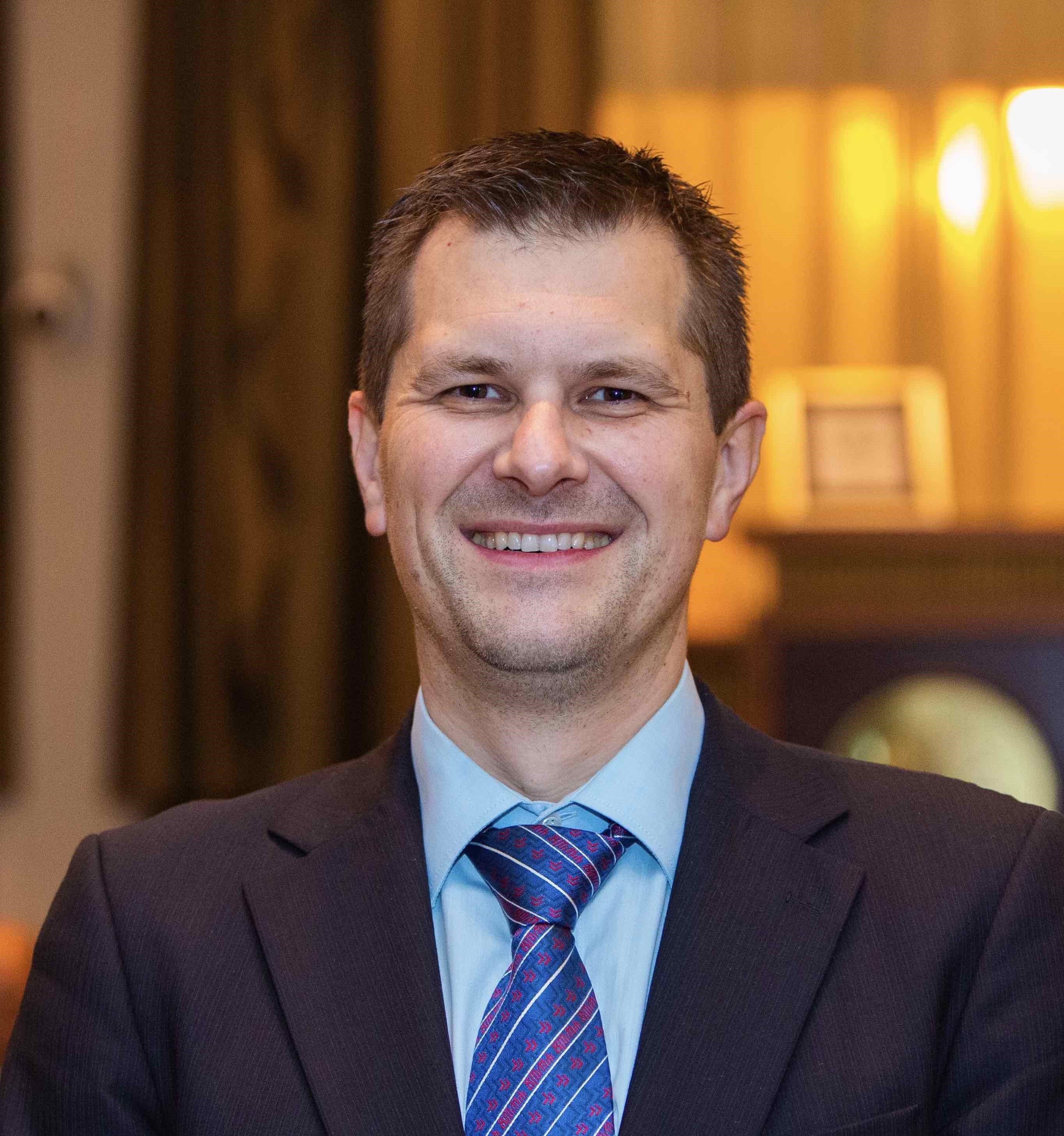
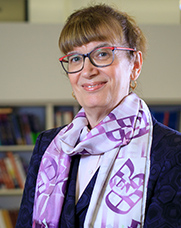
Kristina Bučar is a full Professor and head of the Department of Tourism at the Faculty of Economics and Business, University of Zagreb, Croatia. She holds a doctorate from the University of Zagreb and completed international study visits at Wirtschaftsuniversität Wien (Austria) and Faculty of Sport and Physical Education, Lille 2 (France). Professor Bučar teaches courses across all academic levels including Tourism Principles , Tourism Geography , and Resource Management in Sustainable Tourism . Her research focuses on sustainable tourism development with specific expertise in: Tourism environmental management and ecolabeling systems Spatial planning for tourism destinations Social responsibility frameworks in tourism operations Sports tourism development strategies Socio-economic aspects of Mediterranean tourism Her recent publications (2021-2024) demonstrate strong thematic consistency in sustainable tourism, with particular emphasis on environmental certification programs, gender equality in tourism employment, waste management in tourist economies, and financing models for protected areas. Over 85% of her recent work incorporates Croatian case studies examining practical implementation of sustainability principles. Professor Bučar maintains significant academic leadership roles as: Editorial board member of International Journal of Sustainable Development Research Founding member of IRNIST (International Research Network In Sport Tourism) Regular scientific committee participant for international tourism conferences
Vanja Bevanda is a Full Professor at the Faculty of Economics and Tourism, University of Primorska in Pula. She holds a PhD from 2002 and has been employed at the institution since 2005, contributing to the Department of Quantitative Methods. Her educational background includes a BSc (1989), MSc (1995), and PhD (2002). Research Interests : Her work focuses on decision analytics, business intelligence, artificial intelligence applications in SMEs, data mining for customer behavior analysis, tourism development strategies, and the integration of technology in education. She explores topics like AI-driven managerial journeys, microchip implant adoption, and post-pandemic technology use trends. Publications : Recent articles highlight her contributions to AI transformation in SMEs, sentiment analysis during the pandemic, and mobile BI adoption in SMEs. Her research spans both theoretical frameworks and practical case studies across Croatia and beyond. Teaching : She teaches courses including Business Decision-Making, IT Project Management, and Database Systems. She emphasizes bridging theoretical knowledge with practical skills in information systems education.
Dr. Violeta Šugar is an Associate Professor and Deputy Head of the Department of Organisation, Entrepreneurship and Law at the Faculty of Economics and Tourism, Juraj Dobrila University of Pula, Croatia. She specializes in entrepreneurship, innovation management, quality management, and sustainable tourism. Her academic roles include teaching courses such as Entrepreneurship, International Entrepreneurship, Lean Start-Up, and Quality Management. She leads the Student Entrepreneurial Incubator and managed the ISO 9001:2015 implementation project at her faculty. Prior to academia, she held roles in small business ownership, media (TV journalism), and banking, enriching her teaching with practical insights. Her research focuses on sustainable tourism practices, innovation ecosystems, and the interplay between economic growth and environmental factors. Notable projects include EDIH Adria, analyzing SME contributions to Adriatic economies, and studies on e-bike adoption in Slovenia. She has authored/co-authored books and papers on topics like metaverse integration in tourism economics, burnout economics in healthcare, and cultural heritage management. Her work bridges theoretical frameworks with practical implementations, emphasizing quality-driven strategies for competitiveness. Dr. Šugar’s academic contributions extend to EU-funded projects and Croatian Ministry initiatives, reflecting her commitment to fostering innovation and sustainability in economic and tourism sectors. She actively promotes entrepreneurial education and has pioneered quality management systems in higher education institutions.
Roberta Kontošić Pamić is an Assistant Professor at the Faculty of Economics and Tourism of the University of Primorska , based in Pula, Croatia. She holds the position of Lecturer in charge for undergraduate courses such as Basics of Organisation , The Basics of Entrepreneurship , and graduate courses like Innovation management and lean startup . Her academic activities focus on entrepreneurship, innovation, sustainable tourism, and SME development. Her research interests include the analysis of business performance in Croatian regions, innovation-driven wage dynamics, and sustainable tourism models such as indoor camping in heritage sites. She has explored topics like environmental reporting gaps in Croatian enterprises, contributions of SMEs to EU employment, and the economic impacts of entrepreneurial zones. Her publications reflect a strong emphasis on practical applications, including the valorization of cultural heritage sites and innovative accommodation models. She has contributed to studies on Croatian construction sectors and cross-country labor market comparisons between Croatia and Slovenia. While no scientific awards are explicitly mentioned in the text, her extensive publication record indicates significant contributions to her field. She currently advises on courses related to entrepreneurship and innovation but no specific student names are listed.
Prof. Dr. Sc. Dorotea Ćorić serves as a Professor at the University of Rijeka's Department of Maritime and General Traffic Law, where she has established herself as a leading authority in maritime legal frameworks with particular expertise in environmental protection and liability regimes. Her scholarly contributions span three decades, focusing on Croatia's implementation of international maritime conventions within domestic legislation. Her research interests encompass: Maritime pollution liability and compensation systems Legal frameworks for nautical tourism and cruise vessel operations Implementation of international conventions on hazardous substances Autonomous shipping and emerging maritime technologies Environmental protection in coastal zones and marinas Rights of persons with disabilities in transport law Analysis of her 15 most recent publications (2016-2024) reveals consistent focus on Croatia's adaptation of international maritime law, especially regarding pollution from ships, hazardous substances, and nautical tourism infrastructure. Her work demonstrates systematic examination of liability limitations, ecological damage compensation, and regulatory gaps in seabed activities, with increasing attention to autonomous vessels and accessibility standards in transport law. Professor Ćorić maintains active scholarly engagement through Google Scholar, CROBIS, and UNIRI portfolio platforms, regularly contributing to national legal discourse on maritime policy development and international treaty ratification processes.
Dr. Goran Oblakovic serves as Associate Professor in Management and Strategy at Luxembourg School of Business, teaching undergraduate, MBA, and executive programs. Concurrently, he holds leadership roles at Zagreb School of Economics and Management as Associate Dean for Undergraduate Programs and Executive MBA Program Director. His academic foundation includes a Ph.D. in Management from University of St. Gallen (Switzerland) focused on bank risk management, complemented by master's degrees in Strategic Finance and Business Administration from Indiana University (USA). His educational background spans: Ph.D. in Management, University of St. Gallen, Switzerland (Research: Risk Management in Banks) Master of Science in Strategic Finance (MSSF) and MBA, Indiana University, USA Bachelor of Science in Business Administration, Indiana University, USA Dr. Oblakovic's research centers on risk, strategic, and operations management with specialization in human-computer interaction, banking, and entrepreneurship. His work bridges theoretical frameworks with practical applications, examining technology adoption in organizations, crisis-induced consumer behavior, and sustainable business practices through interdisciplinary methodologies including bibliometric analysis and behavioral studies. Analysis of his 15 most recent publications (2018-2025) reveals evolving research trajectories from pandemic economic impacts toward generative AI's organizational implications. Key thematic clusters include technology adoption dynamics (particularly AI in workplaces), behavioral responses to crises (panic buying during pandemics), and sustainable management frameworks (Five Capitals, Value Chain Optimization). Methodologically, he combines bibliometrics for trend mapping with empirical studies on human factors in technology compliance. Dr. Oblakovic maintains extensive industry engagement through consulting projects with major corporations including Cargolux, Ericsson, Kaufland, Sparkasse, Grawe, and Novomatic. As Vice President of Platinum Invest's supervisory board, he contributes to investment fund governance while applying academic insights to real-world business challenges across logistics, banking, and technology sectors.
Damir Regvart is a lecturer at Algebra University of Applied Sciences , specializing in Cybersecurity , Network Protocols , and Cloud Computing . With a background in Electrical Engineering and a Master's in Electrical Engineering from the Faculty of Electrical Engineering and Computing in Zagreb (2002), he focuses on advanced network security protocols, Zero-touch technologies, and cloud infrastructure. Research Highlights : Zero Trust Architecture, Honeypot Deception Strategies, Machine Learning in Threat Detection, Microsoft Azure Security, and Infrastructure as Code hardening. Key Projects : Pan-European and national initiatives in network automation, cloud forensics, and IoT security. Recent Publications (2024-2025) explore cutting-edge topics like AI-driven security testing, forensic capabilities in cloud environments, and the intersection of SDN and cybersecurity. His work addresses vulnerabilities in cryptographic systems and the legal implications of digital signatures. Technology Focus : Zero-touch provisioning, Microsoft Sentinel automation, and RedFish/vSphere API integration.
Tomislav Rastovski is a Senior Lecturer at the University of Algebra with extensive expertise in Project Management. He serves as course holder for Project Management, Project Management Methodology, and Project Management across multiple study programs at the university. Additionally, he is a guest lecturer at the Faculty of Economics, University of Zagreb, and an external associate at the Faculty of Electrical Engineering and Computing, University of Zagreb where he teaches Portfolio and Program Management. Dr. Rastovski holds a PhD in Project Management from the University of Zagreb and has accumulated over 20 years of teaching experience. His research interests primarily focus on project management methodologies, competency frameworks, infrastructure projects, and EU-funded initiatives. He has developed specialized expertise in applying project management principles across construction, IT, and public administration sectors, with particular emphasis on virtual team management and sustainable project delivery. His publication record demonstrates a clear progression from foundational project management concepts to more specialized areas including competency modeling, infrastructure challenges, and sustainable development perspectives. Recent work shows increasing focus on virtual project environments and the role of certification in professional development. His research bridges academic theory with practical industry applications, particularly in Croatian and European contexts. As a certified complex project manager (IPMA Level B) and examiner for project manager certification, Dr. Rastovski maintains strong industry connections. He has conducted over 200 professional seminars for more than 100 companies, training over 2,000 participants from diverse economic sectors. His practical experience includes direct involvement in more than 30 projects as a project manager and expert in project planning, monitoring, and control.
Nevenka Čavlek is a Professor at the Tourism Faculty of the Faculty of Economics & Business - Zagreb (EFZG), where she maintains active teaching and research responsibilities. Her office is located in Room A 302, and she holds regular office hours on Mondays and Wednesdays from 15:00 to 16:00. Professor Čavlek's research interests focus on tourism, with particular expertise in accessible tourism, sustainable tourism development, tourism economics, and tourism policy. Her work demonstrates a strong commitment to inclusive tourism practices and destination management. Her recent scholarly contributions span a wide range of tourism topics, with a notable emphasis on accessible tourism development, destination climate adaptation, and the economic aspects of tourism including foreign exchange and balance of payments. Her publications reflect both theoretical and practical approaches to tourism challenges, particularly in the Croatian and Central European contexts. Professor Čavlek has contributed significantly to understanding educational tourism and experiential learning approaches, as well as the impact of emerging technologies like blockchain on tourism intermediation. Her work often addresses the practical implementation of tourism theory in real-world settings. As an active academic in the Tourism Faculty, Professor Čavlek contributes to the educational mission of the institution through her teaching and supervision activities, though specific student names were not provided in the available documentation.
Magdalena El Ghamari is an Assistant Professor at the Institute of Political Sciences and International Relations (INPISM) at Civitas University in Warsaw, Poland, where she serves as the Head of the Cultural Security Department. She holds a PhD in Social Sciences with a specialization in peace-keeping and conflicts in the Middle East and North Africa (MENA), focusing on analyses of the relationship between socio-religious and political factors in policymaking. Dr. El Ghamari is an expert in the radicalization process in diverse cultural environments, particularly in high-risk areas, with extensive research on Libya, migration, terrorism, and security issues in the MENA region. Her academic background includes completing her doctoral studies at the National Defence Academy in Warsaw, where she specialized in security and defense sciences with a focus on operations and operational techniques. Her educational journey has equipped her with a strong foundation in understanding complex security challenges in the contemporary international arena. Dr. El Ghamari's research interests span across several critical areas of contemporary security studies. She specializes in terrorism, migration processes, radicalization, and public policies during and after conflicts in the MENA area, with particular emphasis on Libya. Her work examines the intersection of cultural, religious, and political factors in conflict zones, with a special focus on how these dynamics affect security in multicultural European contexts. Her research on refugee camps, particularly concerning minors in Libyan refugee camps, has provided valuable insights into sustainable development challenges in conflict-induced migration scenarios. Dr. El Ghamari has established herself as a prominent scholar with 30 publications that have garnered 3,515 reads and 85 citations. Her recent work has focused on the Mediterranean migration crisis, EU activities in post-revolution Libya, security challenges in the MENA region, and radicalization processes in diverse cultural environments. Her research demonstrates a consistent trajectory examining the complex interplay between migration, security, and cultural dynamics in both European and Middle Eastern contexts. Member of the UN Peacekeeping Veterans Association (PL) Member of The Society for Libyan Studies (UK) Member of the Association of Veterans of UN Peace Missions Scholarship holder of the Minister of Science and Higher Education Expert in the field of Islamic extremism in the MIRAD consortium As Head of the Cultural Security Department, Dr. El Ghamari leads research initiatives examining the cultural dimensions of security challenges. Her department focuses on how cultural factors influence security perceptions, radicalization processes, and migration patterns, particularly in the context of European multicultural societies facing security challenges from destabilized regions. She collaborates extensively with international research networks and contributes to policy discussions on migration, security, and cultural understanding in conflict zones.
Karla Vukman is an Assistant Professor at the University of Zagreb's Faculty of Forestry and Wood Technology, affiliated with the Department of Wood Technology. She specializes in production management, ERP systems implementation, and wood industry optimization. Her academic role includes teaching Operations Management courses at both undergraduate and graduate levels. Dr. Vukman has held professional roles including Operations Manager at Conty plus d.o.o. and currently serves as project associate in EU-funded initiatives like the Development and Implementation of Professional Practice at the Faculty of Forestry studies (2020-2023). Her research focuses on integrating information systems (ERP, SQL databases) to enhance operational efficiency, with emphasis on wood processing companies and sustainable practices. Notable projects include analyzing FSC recycling certifications in Northern Europe and ERP adoption trends in the wood industry. She contributes to academic-industry collaborations through case studies in Croatian furniture manufacturing and wood waste management. Publications span technical publications like CROSBI and Google Scholar, addressing topics from FMEA frameworks in manufacturing to EU market trends in wood products. She actively participates in professional development initiatives such as the CPD4GB grant-funded program (2014–2020).
Dr. Ana-Marija Stjepić serves as a Researcher at the Department of Informatics , University of Zagreb Faculty of Economics , with over 9 years of teaching experience in business informatics and digital technologies. She actively contributes to research projects funded by the Croatian Science Foundation (HRZZ) and University of Zagreb , focusing on business intelligence systems, digital transformation, and technology adoption in SMEs. PhD in Business Informatics Specializes in Business Intelligence and Digital Literacy Research Interests : Her work bridges Business Process Management (BPM) with Business Intelligence (BI) , examining their alignment in organizational performance. She investigates technology adoption models (TOE framework) in SMEs, digital transformation strategies, and social media analytics in business contexts. Recent projects focus on IoT integration in BPM and green IT in education. Scientific Contributions : With 15+ peer-reviewed publications, her research spans: Senior 2030 Project : Digital solutions for elderly care PROSPER Project : Process intelligence for business performance Digital Literacy Studies : Generational differences in ICT adoption She teaches courses on database management , data warehousing , and digital governance across bachelor's, master's, and specialist degree programs.
Professor Vjekoslav Kovac is a full professor at the Department of Mathematics, Faculty of Science, University of Zagreb. He holds a PhD from UCLA (2011) under Christoph Thiele and was a Fulbright Scholar at Georgia Tech (2019-20). His research spans harmonic analysis, singular integrals, combinatorics, and number theory, with a focus on Fourier restriction problems and Erdős-type conjectures. Kovac leads the HRZZ-funded 'Fourier Analysis and Applications' grant (2023-2027) and has previously directed projects like 'Multilinear Harmonic Analysis' (2018-2023). Education: PhD, UCLA (2011); MSc, University of Zagreb (2006) Research Interests: Singular integrals, real harmonic analysis, geometric measure theory, additive combinatorics, ergodic theory He is renowned for solving longstanding open problems, including Erdős conjectures on unit fractions and irrationality. Kovac has authored/co-authored over 40 publications and mentored multiple PhD and diploma students. His awards include the Croatian National Science Award (2023) and the Brdo Award (2025 nomination). Teaching roles include courses on mathematical analysis, Fourier analysis, and competition mathematics. Grants: Current FANAP (HRZZ), Previous MUNHANAP (HRZZ), MZO/DAAD grants Media Highlights: Coverage in 'What's New' (Tao), 'TotalCroatia', and Croatian TV for resolving 40-year-old mathematical problems
Dag Hammarskjöld School of International Relations and DiplomacyCroatia
Amr Aljowaily is a Strategic Advisor to the Deputy Chairperson of the African Union Commission (Partnerships and Stakeholder Engagement) in Addis Ababa. He concurrently serves as a Visiting Professor at the UN Institute for Training and Research (UNITAR) and DiploFoundation since 2007. His academic focus spans multilateral diplomacy, international peace and security, and digital governance. Aljowaily holds advanced degrees from the American University in Cairo (Political Science, Middle East Studies), the London School of Economics (International Relations), and the University of Malta (Contemporary Diplomacy). Professionally, he has held senior diplomatic roles in Egypt’s Foreign Ministry, including postings in Belgrade, New York, Geneva, and Washington, D.C. He contributed to multilateral negotiations at the UN, AU, and LAS, and coordinated international relations for Egypt’s Ministry of Communications (2001–2003). His research emphasizes ICTs in diplomacy and peacekeeping, with publications analyzing Egypt’s multilateral engagement, R2P frameworks, and UN Security Council reform. Aljowaily’s writings include Serbia by Egyptian Eyes (2018/2019) and Quote Unquote (2020/2022), exploring diplomacy through literature and prose. He designs diplomatic training programs globally, addressing AI in diplomacy, conflict mediation, and digital diplomacy strategies, as seen in events like the Abu Dhabi Diplomatic Protocol training and Malta’s Tech Diplomacy workshops.
Dr. Danijela Rabar is an Associate Professor at the Faculty of Economics and Tourism 'Dr. Mijo Mirković' in Pula, University of Primorska. She specializes in quantitative methods, with teaching responsibilities in Mathematics for Economists and related courses. Her research focuses on efficiency analysis using Data Envelopment Analysis (DEA), applied to healthcare, regional economics, public administration, and industrial processes. Key projects include MEGASFORA (economic growth modeling) and MEPHS (public health service efficiency measurement). She has authored over 30 articles since 2009, emphasizing nonparametric methods in evaluating economic and institutional performance. Her work spans efficiency assessments of Croatian hospitals, municipalities, airports, and shipyards, with a particular interest in fiscal policy implications and regional development. Rabar’s interdisciplinary approach bridges econometrics, operations research, and policy analysis, contributing to both academic literature and practical decision-making frameworks.