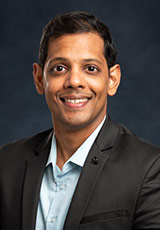
Shivam Saxena is an Assistant Professor in the Department of Electrical and Computer Engineering at the University of New Brunswick, located in Head Hall D65, Fredericton. His research focuses on smart grid technologies, including distributed energy resource integration, blockchain applications for energy trading, electric vehicle-grid interactions, and resilient microgrid design. This work addresses decarbonization challenges through technological and market innovations. Publications demonstrate a strong emphasis on real-world implementation, with field-tested solutions for V2X integration, blockchain-based transactive energy, and distributed control systems. Recent work explores novel applications in agricultural energy management and trust mechanisms for decentralized systems.
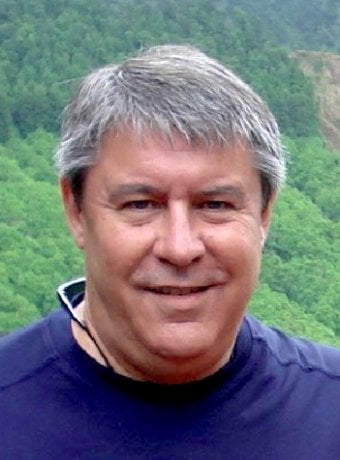
Dr. Rafid Al-Khannak is an Associate Professor in Computing at Buckinghamshire New University. He holds a PhD in Engineering and IT from the University of Bolton, completed in collaboration with Siemens AG. His research focuses on engineering and IT operational development, particularly in cloud computing, distributed systems, cybersecurity, and infrastructure automation. Al-Khannak maintains industry collaborations with Amazon and Siemens on cloud implementation and security projects. Key research areas include: Secure cloud migration frameworks using AWS hybrid models Infrastructure automation through CI/CD pipelines Penetration testing methodologies for cloud applications AI-enhanced education system transformation Healthcare application development for specialized needs
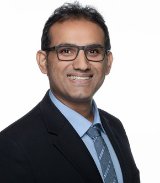
Kevin W. Hamlen is the Louis A. Beecherl, Jr. Distinguished Professor in the Department of Computer Science at the University of Texas at Dallas. He serves as Executive Director of UT Dallas' Cyber Security Research and Education Institute. His research focuses on language-based security , binary software hardening , cyberdeception , and formal program verification . He has received multiple grants from agencies like AFOSR, NSF, DARPA, and industry partners including Lockheed Martin and Intel. PhD and MS from Cornell University BS from Carnegie Mellon University His research explores automated approaches to software security through techniques like binary disassembly , control-flow integrity , and honey-patching . He has pioneered methods for malware defense and cloud/web/mobile security . Recent work examines adaptive cyberdeception and GPU-based security frameworks . His publications span binary code manipulation , malware mitigation , and blockchain security . Key awards include the NSF IUCRC Technology Breakthrough Award and two CSAW Best Paper 2nd Prizes . He advises numerous PhD students, many of whom now work at Google, IBM, and Microsoft. His book Autonomous Cyber Deception (Springer, 2019) with Ehab Al-Shaer and Cliff Wang provides comprehensive coverage of adaptive cyberdeception strategies.
Dr. Lei Fan is an Assistant Professor in the Department of Engineering Technology at the University of Houston, with a joint appointment in the Electrical and Computer Engineering (ECE) Department. His research focuses on power system operations, optimization algorithms, quantum computing, and energy storage systems. He holds a Ph.D. from the University of Florida and a B.S. from Hefei University of Technology. Education: Ph.D., University of Florida B.S., Hefei University of Technology Research Interests: Dr. Fan’s work bridges theoretical optimization and practical energy systems, including quantum algorithms for power grid management, battery storage planning, and distributed quantum computing architectures. His LORE (Learning & Operations Research & Energy) lab explores cutting-edge applications in teleoperation, satellite networks, and environmental monitoring. Publications: Recent work emphasizes quantum computing’s role in solving complex optimization problems, such as entanglement routing in satellite networks and distributed hydrogen-power systems. His research also integrates machine learning for methane plume detection and hyperspectral imaging. Labs/Teams: He leads the LORE lab, advancing interdisciplinary research in energy systems and quantum technologies.
Peter Avitabile is a Research Professor in the Mechanical and Aerospace Engineering Department at Michigan Technological University and a Professor Emeritus at the University of Massachusetts Lowell. With nearly five decades of experience, his expertise spans structural dynamics, vibrations, and modal analysis. He has contributed over 350 technical papers and authored Modal Testing: A Practitioner’s Guide . Dr. Avitabile holds a DEng from UMass Lowell and has led the Structural Dynamics and Acoustic Systems Laboratory. He is a Fellow of the Society for Experimental Mechanics (SEM) and served as its President in 2016. Education: DEng, Mechanical Engineering, University of Massachusetts Lowell (1998) MS, Mechanical Engineering, University of Rhode Island (1982) BS, Mechanical Engineering, Manhattan College (1974) Research Interests: Structural dynamic modeling techniques, experimental modal analysis, system modeling, reduced order modeling, and model correlation. Awards: SEM DeMichele Award (2004) Fellow, Society for Experimental Mechanics (2022) UMASS Lowell Pillars of Excellence Award (2016) Grants & Funding: Over $9.3 million in research funding since 2000, alongside substantial hardware/software donations. His work has been supported by industries and government agencies including NASA, the Department of Energy, and the Navy. Teaching & Mentorship: Taught over 30 semesters of graduate courses in structural dynamics and modal analysis at UMass Lowell. Advised 18 PhD and 19 MS students. Conducted international seminars on structural dynamics for companies like NASA, General Motors, and Siemens. Labs & Affiliations: Co-Director, Structural Dynamics and Acoustic Systems Lab (UMass Lowell) Director, Modal Analysis and Controls Lab (UMass Lowell)
Dr. Muhammad Azmat is a Lecturer and researcher at Aston University's School of Engineering and Applied Science, specializing in Engineering Systems & Supply Chain Management. He holds a PhD from Vienna University of Economics and Business, an MBA from Iqra University, and completed leadership programs at Oxford. His research focuses on disruptive technologies like autonomous vehicles, IoT, and their applications in supply chains and mobility. He has collaborated with organizations such as the Federal Procurement Agency of Austria and the Kühne Foundation, addressing challenges in logistics, urban mobility, and humanitarian aid. Education: PhD in Transport, Logistics & Supply Chain Management (Vienna University of Economics and Business, 2019) MSc in Supply Chain Management (Vienna University of Economics and Business, 2015) MBA in Supply Chain Management (Iqra University, 2013) Research Interests: Dr. Azmat explores innovation in mobility (autonomous/connected vehicles, shared platforms), logistics 4.0, and humanitarian supply chains. He examines how technologies like IoT and big data can enhance efficiency while addressing ethical and operational challenges. Recent work includes drone applications for disaster relief and blockchain for supply chain transparency. Publications Trends: His work spans urban logistics optimization, technological adoption barriers in SMEs, and cross-border humanitarian coordination. A common theme is leveraging emerging tech to solve real-world logistical and infrastructural problems. Awards: Best paper in Health and Environment (2019) PhD Distinction Award (2019) PhD Supervision & Collaboration: Actively supervises PhD candidates in mobility innovation and supply chain resilience. Leads industry-academia projects with highway authorities and tech firms, focusing on pilot testing autonomous vehicle infrastructure and IoT-based logistics solutions. Labs/Teams: Collaborates with Aston's Logistics Research Group and external networks like the Kühne Foundation to advance sustainable logistics systems and smart mobility frameworks.
Sudhakar Ganti is an Associate Professor in the Department of Computer Science at the University of Victoria, part of the Faculty of Engineering and Computer Science. He holds a PhD from the University of Ottawa. His research focuses on cloud computing resource management, software-defined networking (SDN), traffic management, quality-of-service optimization, and performance evaluation through queueing theory. His work bridges theoretical frameworks with practical applications in network efficiency and distributed systems. Dr. Ganti’s expertise includes optimizing resource allocation in fog-cloud systems, enhancing telehealth IoT energy efficiency, and developing dynamic defense frameworks for SDN security. His contributions span network traffic prediction, large file transport protocols, and formal verification of networking systems. He has published extensively in top-tier conferences and journals, addressing challenges in distributed computing, cyber security, and edge computing. His research trends emphasize leveraging reinforcement learning for fog-cloud resource allocation, multi-objective optimization in IoT, and SDN-driven network security. Earlier work includes foundational studies on optical router bypass, cloud workload characterization, and conversational agents for smart environments. Despite his prolific output, no academic awards or grants are explicitly mentioned in his profile.
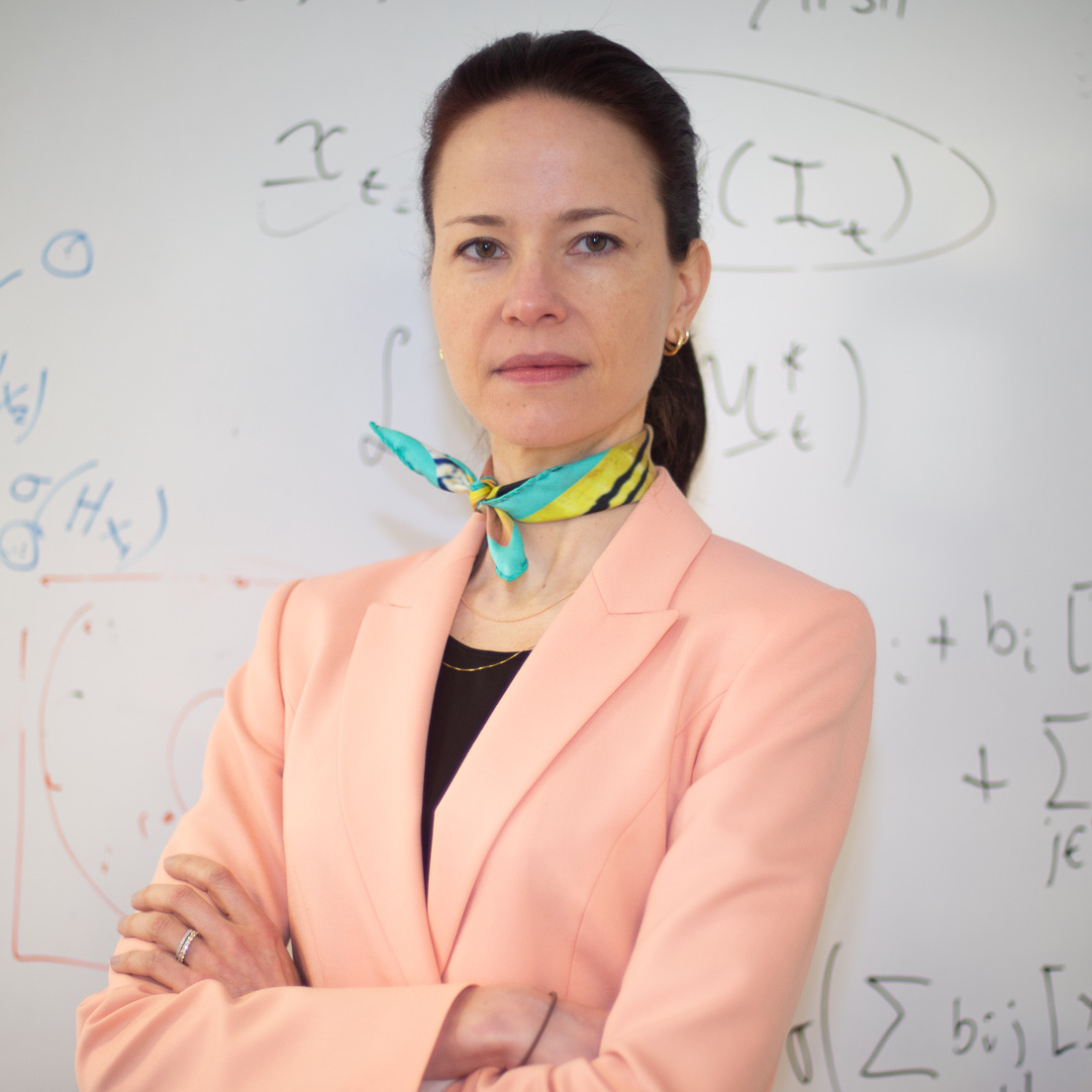
Dr. Reihaneh Bidar is a Lecturer in Business Information Systems at the University of Queensland (UQ) Business School, part of the Faculty of Business, Economics, and Law. She is also an Associate Investigator at the Automated Decision-Making and Society (ADM+S) Centre. She holds a PhD from Queensland University of Technology’s School of Information Systems. Her research focuses on how organizations manage AI, automation, and digital integration, particularly the role of human-AI hybrids in work redesign. She emphasizes mitigating negative consequences of emerging technologies while enhancing organizational readiness for AI adoption. Her teaching spans undergraduate and postgraduate Information Systems programs, including courses on Business Analytics, Enterprise Architecture, IoT Systems, and Mobile App Development. She has developed and coordinated courses that bridge theory and practice for both bachelor’s and master’s students. Dr. Bidar’s work addresses challenges in digital collaboration and value co-creation in online networks. Notable contributions include a thought-leadership report with SAP Institute for Digital Government, which classified tasks based on risk levels to redesign public sector work. These approaches were adopted by the NSW Department of Planning, Housing, and Infrastructure for invoice processing. Her research interests further explore digital collaboration dynamics, crowdsourcing challenges, and service innovation. She collaborates with industry to translate academic insights into actionable strategies for inclusive AI and sustainable digital practices.
Professor Amanda Prorok leads the Prorok Lab at the University of Cambridge's Department of Computer Science and Technology, focusing on multi-agent and multi-robot systems. Her work integrates machine learning, planning, and control to coordinate intelligent agents in shared environments, with applications in transport, environmental monitoring, and search-and-rescue. She is a Fellow of Pembroke College and holds editorial roles at IEEE Robotics and Automation Letters and Autonomous Robots. Education: Ph.D., EPFL (Switzerland); Postdoctoral Research, University of Pennsylvania (USA). Research Interests: The lab pioneers methods like differentiable communication between learning agents and develops decentralized algorithms for navigation, coverage, and coordination. Key themes include neural diversity in collective learning, resilient swarm systems, and environment-aware control. Notable Achievements: ERC Starting Grant, Amazon Research Award, EPSRC New Investigator Award ABB Prize for Best Thesis in Computer Science (EPFL) Teaching: Leads Computing for Collective Intelligence (MPhil/Part III) modules. Lab & Infrastructure: The Prorok Lab operates the Cambridge RoboMaster platform and develops testbeds for connected vehicles and robot swarms. Recent work emphasizes scalable reinforcement learning and graph neural networks for decentralized decision-making.
Dr. Dominic Williamson is a theoretical quantum physicist and DECRA Research Fellow at the School of Physics, University of Sydney. He specializes in quantum phases of matter and their applications to quantum error correction and computing. His work bridges condensed matter theory and quantum information science, focusing on fracton topological phases and fault-tolerant quantum architectures. Education: PhD in Physics from the University of Vienna (2017); Postdoctoral research at Yale University, Stanford University, and IBM Quantum. Current roles include faculty membership at the University of Sydney’s Quantum Science Group and prior industry experience at IBM and PsiQuantum. Research interests: Topological phases of matter, quantum error correction codes (e.g., fracton codes, QLDPC systems), fault-tolerant quantum computing architectures, and non-Abelian anyon systems. Recent breakthroughs include low-overhead quantum architectures and novel approaches to parallelized logical measurements. Grants: 2022 ARC Discovery Early Career Researcher Award for topological phases in quantum computation. Collaborations include projects on gauging logical operators and quantum code surgery. Professional activities: Editor for Quantum , frequent speaker at international conferences, and mentor for students at all levels (undergraduate to postdoctoral). Active in open-source research and public engagement through platforms like arXiv and Google Scholar.
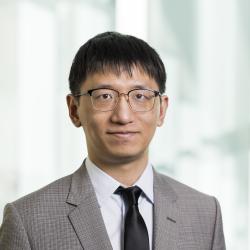
Zihao Qu is an Assistant Professor in the Department of Operations & Information Management at the Isenberg School of Management, University of Massachusetts Amherst. He holds a Ph.D. from The University of Texas at Dallas (2024) and a BBA from The Chinese University of Hong Kong, Shenzhen (2018). His research focuses on revenue management, emerging technologies, and operations optimization with applications in healthcare and cloud computing. Ph.D., The University of Texas at Dallas (2024) BBA, The Chinese University of Hong Kong, Shenzhen (2018) His work addresses challenges in real-time decision-making systems, cloud cost optimization, and spatial matching algorithms. Recent publications include advancements in postacute healthcare service algorithms and cloud resource provisioning models. He teaches courses on supply chain management and emerging technologies. His research demonstrates expertise in combining theoretical operations research with practical industry applications, particularly in healthcare and technology sectors. No specific awards or grants are listed in the provided materials.
Habiba Akter is a Lecturer in Networks and Digital Systems at Queen Mary University of London (QMUL), affiliated with the School of Electronic Engineering and Computer Science . She holds an MEng in Electronic Engineering and Computing (2016) and a PhD in Electronic Engineering (2021), both from QMUL. Her education prior to university was completed in Bangladesh. Her research focuses on Computer Networks , Evolutionary Algorithms , Fractal Patterns , and AI-Based Face Detection . She explores applications such as optimizing network routing, generating fractal patterns using genetic algorithms, and analyzing network tunneling protocols for enhanced security and efficiency. In teaching, she instructs undergraduate courses including Internet Protocols and Wireless Networks , integrating practical network design principles with theoretical foundations. No scientific awards or funded grants are explicitly listed. Her work includes collaborations on network topology analysis (e.g., the Fortaleza case study) and multi-constrained path optimization in tunnelled networks. No lab affiliations or team collaborations are mentioned in the provided information.
Ryan Henry is an Assistant Professor in the Department of Computer Science at the University of Calgary. His research focuses on applied cryptography, emphasizing the development of secure systems that prioritize user privacy. His work spans designing privacy-enhancing technologies, implementing cryptographic protocols, and analyzing number-theoretic attacks on cryptographic assumptions. He also explores theoretical aspects of cryptographic efficiency and practical deployment challenges. While specific educational background details are not provided in the text, his research contributions highlight expertise in cryptography, secure systems, and privacy-preserving technologies. His work has addressed topics such as Private Information Retrieval (PIR), secure messaging, and blockchain privacy. Key research interests include: Secure Multiparty Computation Privacy-Preserving Data Access Efficient Cryptographic Protocols Zero-Knowledge Proofs IoT Security Cryptocurrency and CBDC Design His recent publications emphasize advancements in distributed systems security, privacy in recommendation systems, and cryptographic efficiency. Notable contributions include the Grotto and Duoram frameworks for secure computation, and proposals for Canadian CBDC frameworks. Despite extensive research output, no scientific awards or grants are explicitly mentioned in the provided text. Collaborations and lab affiliations are not detailed, though his work suggests involvement in interdisciplinary projects on privacy and security technologies.
Associate Professor Liz Ratnam is a leading academic in the Department of Electrical and Computer Systems Engineering at Monash University, serving as Deputy Postgraduate Director of Education ECSE. Her expertise spans power systems control, energy optimization, and resilient grid design. She holds a BEng (Hons I) and PhD in Electrical Engineering from the University of Newcastle (2006 and 2016), with postdoctoral research at UC San Diego and Berkeley. She previously served as Senior Lecturer and Sub-Dean for Educational Programs at ANU's College of Engineering & Computer Science, supported by a Future Engineering Research Leader (FERL) Fellowship. Her current research focuses on advancing transactive energy markets, EV coordination in distribution networks, and secure grid operations. She leads major grants including the National Facility for Electricity Grid Security (ARC LIEF 2023) and projects on EV fast-charging infrastructure. Education Background: - BEng (Hons I) in Electrical Engineering, University of Newcastle (2006) - PhD in Electrical Engineering, University of Newcastle (2016) Research Interests: Resilient, carbon-neutral power grid design Control and optimization of energy systems Synchrophasor-based estimation for grid stability Transactive multi-agent systems for energy markets Electric vehicle integration and coordination in unbalanced grids Grants & Projects: ARC Linkage Infrastructure Grant LE23010058 (2023): National Facility for Electricity Grid Security ARC Discovery Project DP22010135 (2022): Neural Architecture Search for Deep Learning ARC Linkage Project LP21200473 (2022): Building Australia's EV Fast-Charging Infrastructure Awards & Memberships: Fellow of Engineers Australia Senior Member of IEEE FERL Fellowship (ANU)
Stephen Lee is an Assistant Professor in the Department of Computer Science at the University of Pittsburgh, affiliated with Pitt Cyber. His research focuses on distributed systems, cyber-physical systems, and sustainability, emphasizing energy efficiency and cost optimization. Dr. Lee holds a PhD from the University of Massachusetts Amherst, a Master’s from Chennai Mathematical Institute, and a Bachelor’s from St. Stephen’s College, Delhi. He actively seeks students for his research group. Education: PhD, Computer Science, University of Massachusetts Amherst Master’s, Chennai Mathematical Institute Bachelor’s, St. Stephen’s College, Delhi Research Interests: Dr. Lee’s work integrates distributed systems, machine learning, and optimization to enhance sustainability. Key areas include IoT-enabled energy systems, emission-aware computing, and privacy-preserving frameworks. He leads projects like GreenWhisk (serverless emission reduction) and Sat2map (3D building modeling from satellite imagery). Recent Achievements: Best Paper Award in IEEE TPS 2024 DOE-funded Cyber Energy Center (2024) MCSI Seed Grant for Pitt building sustainability (2024) NSF Grant on sustainable distributed infrastructures (2023) Grants & Advising: Secured over $2M in grants, including NSF and DOE funding. Advises on energy-efficient systems and IoT security. Teaches CS 2510 (Operating Systems) and CS 1699 (Systems & Sustainability). Labs & Teams: Directs the Sustainable Systems Research Group, focusing on decarbonizing IT and optimizing renewable energy systems. Collaborates with industry partners on smart grid solutions and edge-cloud systems.