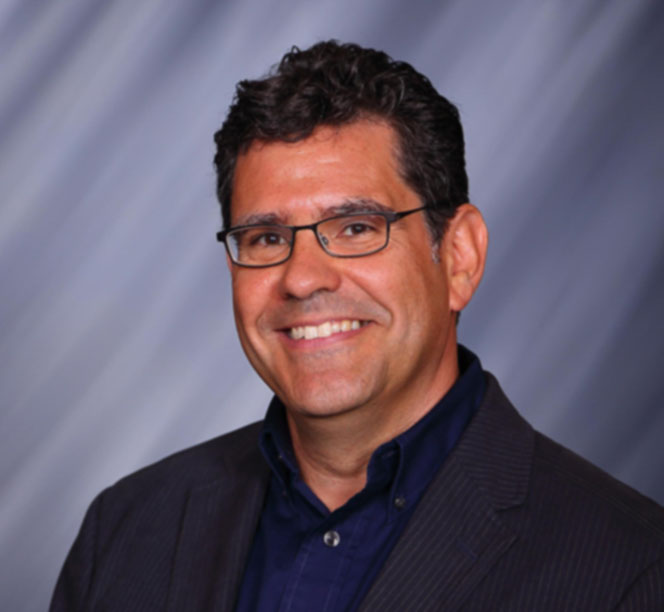
Professor Ahmet Bindal is a faculty member in the Department of Computer Engineering at San José State University . He earned his B.S. in Electrical Engineering from Bogazici University, Turkey, followed by M.S. and Ph.D. degrees from the University of California, Los Angeles. Industry Experience : 20 years at IBM, Intel, Philips, and Cadence Design Systems. Current Research : Nano-scale electron devices, silicon nanowire transistors, robotics, and VLSI architecture. Research Trends : His work focuses on silicon nanowire transistors for VLSI, FPGA, and robotics. Key themes include low-power/high-speed integrated circuits , dynamic logic design , neuromorphic engineering , and advanced semiconductor processing . Patents and Publications : He holds four U.S. patents (three with IBM, one with Intel). His 30+ journal and conference publications span nanowire transistors, FPGA architecture, robotics, and semiconductor process modeling. Teaching Contributions : Developed an undergraduate System-on-Chip (SoC) course and a MOSFET design laboratory at SJSU. Books Authored : Fundamentals of Computer Architecture and Design (Springer, 2017). Electronics for Embedded Systems (Springer, 2017). Silicon Nanowire Transistors (Springer, 2017).
Ahmed Saeed is an Assistant Professor in the School of Computer Science at Georgia Institute of Technology, specializing in scalable computer networks and systems. His research spans congestion control, operating systems, LEO satellite networks, and formal methods, with a strong record of publications and active mentorship. Education: PhD in Computer Science, Georgia Institute of Technology (2019) Bachelor's in Computer and Systems Engineering, Alexandria University (2010) Postdoctoral Associate, MIT (with Prof. Mohammad Alizadeh) Research Interests: Ahmed's work focuses on the theory, design, and implementation of scalable networked systems. Key themes include: Congestion control algorithms for datacenter and WAN traffic Overload control mechanisms for microsecond-scale RPCs Performance debugging tools for datacenter applications LEO satellite network modeling and policy analysis Formal verification of network protocols and resource schedulers Recent Publications Trend: His 2024-2025 papers emphasize LEO satellite resilience and datacenter performance , with contributions to emergency failover modeling, latency debugging tools, and congestion control protocols. These works combine empirical measurement, formal modeling, and policy recommendations. Awards & Funding: NSF CAREER Award (2024) – LEO satellite variability ($600k) NSF CNS Core Awards (2022) – Edge server stacks & formal verification (total $2.38M) Google Research Award (2022) – Scalable edge systems ($80k) DARPA Risers Top 5 Poster (2022) Spec Tech Award (2023) – Nanomodular electronics routing ($40k) Teaching & Service: He regularly teaches Computer Networking I (CS 3251) and Datacenter Networks & Systems (CS 8803) . Service includes PC roles for SIGCOMM, NSDI, CoNEXT, and Networking area co-chair for JSys. Lab & Students: Ahmed leads an active research group with PhD students Peidi Song, Bhaskar Pardeshi, Sherif Abdelrazek; MS students Dhyey Thummar, Pratyush Sahu, Sammy Kapoor; and undergraduate Demi Lei. Alumni have joined industry leaders like Juniper, Microsoft, and Snowflake.
George M. Church is a Professor of Genetics at Harvard Medical School and affiliated with MIT, where he directs PersonalGenomes.org, providing open-access genomic, environmental and trait data. His laboratory focuses on transformative technologies for reading and writing 3D/4D biological structures with attention to ethics, safety, and equitable access. Church has co-initiated major scientific initiatives including the BRAIN Initiative (2011) and multiple Genome Projects (GP-Read-1984, GP-Write-2016, PGP-2005). Church's research spans multiple cutting-edge domains including genome engineering, synthetic biology, aging reversal, and space genetics. His lab pioneered foundational methods for direct genome sequencing, molecular multiplexing and barcoding in 1984, leading to the first genome sequence in 1994. His innovations contributed to nearly all next-generation DNA sequencing methods and companies. Current research directions include machine learning for protein engineering, tissue reprogramming, organoids, gene therapy, and in situ 3D DNA/RNA/protein imaging. His work bridges fundamental biology with therapeutic applications across diverse fields from Alzheimer's disease to de-extinction biology. Church's recent publications reveal a remarkable breadth of scientific inquiry, spanning from fundamental genome editing techniques to applications in aging research, neuroscience, and space biology. His work increasingly integrates artificial intelligence with biological systems, as seen in papers on machine-guided cell-fate engineering and automation of systematic reviews with large language models. His research maintains a strong translational focus, with numerous papers addressing therapeutic applications in cancer immunotherapy, gene therapy, and diagnostics. The consistent theme across his diverse publications is the development and application of transformative technologies to address fundamental biological questions and medical challenges. National Academy of Sciences (NAS) membership National Academy of Engineering (NAE) membership Franklin Bower Laureate for Achievement in Science Co-initiator of the BRAIN Initiative (2011) Director of multiple NIH Centers for Excellence in Genomic Science (2004-2020) Church directs numerous research centers including the NIH-CEGS, Personal Genome Project (PGP), Lipper Center for Computational Genetics, and Wyss Institute Synthetic Biology center. His laboratory has trained PhD students across multiple Harvard and MIT programs including Biophysics, BBS, Biomedical Informatics, ChemBio, Chemistry, SSQB, MCO, Virology, HST, EE/CS, Physics and Applied Math. His commercial impact is extensive through companies spanning medical diagnostics (Knome/PierianDx, Alacris, Nebula, Veritas) and synthetic biology/therapeutics (AbVitro/Juno, Gen9/enEvolv/Zymergen/Warpdrive/Gingko, Editas, Egenesis). Church also pioneered new privacy, biosafety, ELSI, environmental and biosecurity policies. The Church Lab operates across multiple research domains including molecular multiplexing, next-generation sequencing, nanopore technology, and genome engineering. The lab maintains strong connections with the Personal Genome Project, Wyss Institute, and multiple commercial ventures. Current research directions include the Spatial Atlas of Human Anatomy (SAHA), human skin rejuvenation via mRNA, and space genetics research through the Consortium for Space Genetics and BioAstra. The lab's mission focuses on transformative technologies for reading and writing 3D/4D structures at any scale, inspired by but not limited by biology.
Amin Mesmoudi serves as Associate Professor in Data Engineering at the University of Poitiers' IUT (Institut Universitaire de Technologie), with dual laboratory affiliations at LIAS-ENSIP (Poitiers campus) and LIAS-ISAE-ENSMA (Chasseneuil campus). His research bridges theoretical database systems with practical large-scale data engineering challenges, particularly in semantic web technologies and machine learning applications. The laboratory maintains physical presences at both ENSIP's Bâtiment B25 in Poitiers and ISAE-ENSMA's Téléport 2 facility in Chasseneuil, facilitating cross-institutional collaboration. Mesmoudi's research program centers on scalable data management systems, with three interconnected pillars: (1) RDF and graph-based query optimization techniques for billion-triple datasets, (2) machine learning integration for spatial query performance and anomaly detection, and (3) explainability frameworks for complex black-box models. His work demonstrates consistent evolution from foundational database systems (2011-2016) toward contemporary AI-driven data engineering, particularly evident in his 2023-2025 publications on temporal dependency preservation and co-selection explainability. The Data Engineering team within LIAS laboratory provides the primary research context for these investigations. Publication analysis reveals strong methodological continuity in addressing scalability bottlenecks across database paradigms. Early work focused on SQL-on-MapReduce benchmarking for astronomy databases (2015-2016), transitioning to specialized RDF processing frameworks (2019-2021), and culminating in current hybrid approaches combining temporal modeling with machine learning (2023-2025). Key technical themes include fragmentation strategies for distributed data, optimizer feedback mechanisms, and graph-based query acceleration - all targeting real-world performance constraints in big data environments. As a core member of LIAS laboratory's Data Engineering team, Mesmoudi contributes to France's national research infrastructure in computer science and automation systems. The laboratory's dual-university structure enables unique cross-pollination between University of Poitiers' academic programs and ISAE-ENSMA's engineering specialization, with Mesmoudi's work exemplifying this synergy through applications spanning astronomy databases to wireless sensor networks.
Purab Sutradhar serves as an Assistant Professor in the Department of Electrical and Computer Engineering at Boise State University, contributing to academic programs and research initiatives within the institution. His educational background includes: PhD in Electrical and Computer Engineering from Rochester Institute of Technology (2024) Dr. Sutradhar's research program centers on innovative heterogeneous computing system design with a specialized focus on Memory-centric architectures. His work targets critical challenges in computational efficiency through low-power, energy-conscious processing solutions for Artificial Intelligence workloads, cryptographic operations, and data-intensive applications, addressing fundamental bottlenecks in modern computing where data movement dominates energy consumption. While specific details about laboratory infrastructure or research team composition are not provided in the source text, his technical focus demonstrates alignment with cutting-edge developments in computer architecture for next-generation computing demands.
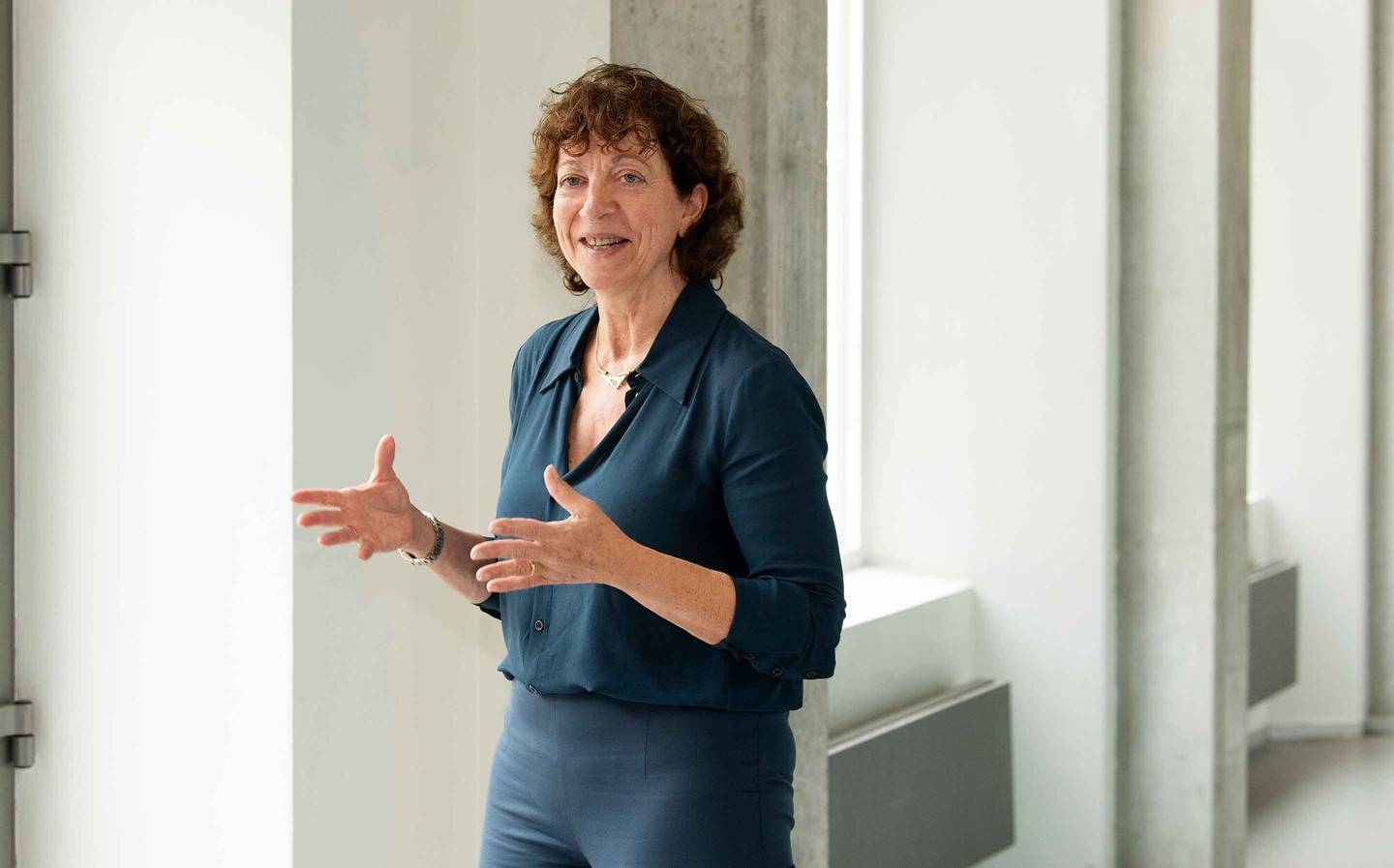
Ann Vereecke is a Full Professor and Partner at Vlerick Business School, concurrently serving as a Professor at Ghent University. She holds a Doctorate in Management from Ghent University, an MBA from Vlerick, and a Masters in Engineering. As Director of the Research Centre for People in the Smart Digitised Supply Chain, she focuses on Industry 4.0, digital technologies, and global supply chain strategies. Her expertise spans operations management, logistics, and strategic manufacturing networks. She teaches MBA, Master’s, and executive programs at Vlerick, emphasizing practical applications for industry. Her research explores supply chain digitization, international manufacturing strategies, and the integration of digital twins and Industry 4.0 technologies. Recent work highlights trends in smart supply chains and the transformative impact of AI-driven solutions. She actively advises companies across industries through executive education and research projects. Ann serves on corporate boards (WhatsCooking?, bpost, North Sea Port, Tessenderlo Group) and editorial boards (International Journal of Operations and Production Management). Her board roles reflect her expertise in operational excellence and strategic governance. Her articles analyze supply chain collaboration, social responsibility in logistics, and the dynamics of global manufacturing networks. Recent insights address digital twins in supply chain resilience and Industry 4.0 adoption strategies.
Enoch Yeung is an Associate Professor in the Department of Mechanical Engineering at the University of California, Santa Barbara (UCSB). His research focuses on systems biology, control systems, machine learning, and data mining, with a particular emphasis on understanding how mechanical forces in DNA regulate gene dynamics and cell fate. He leads projects on distributed biological computing, data-driven control architectures, and synthetic biological systems design, supported by funding from DARPA, NSF, and the U.S. Army. Yeung holds a PhD in Control and Dynamical Systems from the California Institute of Technology and a BS in Mathematics from Brigham Young University. His work integrates methods from DNA biophysics, synthetic biology, microfluidics, and control theory to study genome organization and cellular decision-making. Recent projects include the DARPA Living Foundries program, the NSF Molecular Programming Project, and the AFOSR Biological Research Initiative. He has received numerous awards, including the NSF Early CAREER Award and Young Investigator Award from the U.S. Army. His lab conducts interdisciplinary research, including a 2024 Summer Synthetic Biology Workshop for high school students. Key research themes include DNA supercoiling dynamics, biophysical feedback control in cells, and scalable Koopman operator methods for analyzing complex biological systems. Lab Focus: Biological Control Lab explores DNA mechanics, synthetic biology, and data-driven modeling. Grants & Collaborations: PI on multi-institutional programs involving PNNL, DARPA, and NSF. Advisory Roles: Served on panels for DARPA, NIST, and the National Defense University.
Juan Carlos Castillo is an Associate Professor of Spanish and Spanish Section Coordinator at the University of Northern Iowa. He is affiliated with the Department of Languages & Literatures within the College of Humanities, Arts, and Sciences. His academic background includes a Ph.D. from the University of Maryland, two M.A. degrees from the University of Iowa (in Linguistics and Spanish Linguistics/Literature), and a B.A. from Universidad de Deusto in Spain. Castillo's research interests span multiple disciplines: he explores syntax (particularly Spanish syntax), historical linguistics, old Spanish language studies, language acquisition, and the intersection of sports with Spanish culture and national identity. His teaching portfolio includes courses like Historical Linguistics, Spanish Civilization, and Introduction to Translation. He actively contributes to curriculum development and serves on the Transfer Council. His research often bridges linguistic theory with cultural analysis, such as examining how Spanish sports figures like Federico Martín Bahamontes and Manolo Santana shaped national identity. Recent work highlights the role of sports in promoting cultural narratives and historical memory. Castillo has also published extensively on syntax theory, phonology, and the pedagogical use of sports in language education. Though no specific awards are listed, his scholarly output reflects sustained contributions to both Spanish linguistics and cultural studies. He advises students in linguistics and literature tracks and has been involved in academic governance roles that enhance interdisciplinary collaboration.
Farshad Moradi is a Professor at the Department of Electrical and Computer Engineering at Aarhus University, specializing in neuromorphic engineering, spintronics, and biomedical device design. His work focuses on integrating advanced materials and circuits for applications in neural interfaces, energy-efficient computing, and wireless biomedical systems. Research Interests include: Spintronic-based neuromorphic computing architectures Ultra-low power analog/mixed-signal integrated circuits Ultrasonically powered implantable medical devices Neural signal processing and seizure detection systems Wireless energy transfer and structural health monitoring Key Projects (2016-2026): SPICE: Spintronic-Photonic Integrated Circuit Platform PHOTON-NeuroCom: Photonic-assisted Neuromorphic Computing Neuro-Sense: Flexible bioinspired neuroprostheses CorroSense: Self-powered corrosion monitoring HERMES: Hybrid Enhanced Regenerative Medicine Systems Recent innovations include: Ultrasonically powered optogenetic implants Low-power neural amplifiers for deep-brain interfaces Spin-torque nano-oscillator-based neuromorphic hardware Energy harvesting systems for structural monitoring
Shawki M. Areibi is a Professor and Area Head of Engineering Systems and Computing in the School of Engineering at the University of Guelph. His research focuses on VLSI Physical Design Automation, Reconfigurable Computing Systems, and Hardware/Software Co-design for Embedded Systems. He leads efforts in developing advanced algorithms for CAD tools, FPGA design, and machine learning applications. His work addresses challenges in VLSI layout optimization, parallel processing, and embedded systems design. Affiliations: AI Affiliated Faculty, Area Heads, Computer Engineering, Engineering Systems and Computing Research. Research Interests: VLSI Circuit Layout, Reconfigurable Computing, Machine Learning, and FPGA-based Accelerators. His research integrates meta-heuristics like Genetic Algorithms and Tabu Search to solve complex optimization problems. He has contributed to hardware acceleration frameworks for machine learning algorithms and embedded systems, with applications in domains like signal processing and data mining. His recent work includes congestion-estimation models for modern FPGAs and analytic placement tools for ultra-scale architectures. Publications span VLSI design, reconfigurable computing, and machine learning, emphasizing algorithmic innovation and hardware-software co-design. His students have explored topics ranging from FPGA placement to domain adaptation in remote sensing. Grants and Advising: Advises graduate and undergraduate students on projects involving FPGA acceleration, machine learning, and embedded systems. His labs focus on developing next-generation CAD tools and hardware accelerators.
Dr. Tan Wen Shan is a Lecturer in Mechatronics Engineering at Monash University Malaysia, specializing in power systems and renewable energy integration. He holds a PhD in Electrical Engineering from Universiti Teknologi Malaysia (2017), an MEng in Electrical Engineering (2013), and a BEng in Electrical and Electronics Engineering (2011). His research focuses on stochastic generation scheduling, energy storage systems, smart grids, and blockchain applications in energy markets. Education: BEng (Electrical and Electronics Engineering), Universiti Malaysia Sabah, 2011 MEng (Electrical Engineering), Universiti Teknologi Malaysia, 2013 PhD (Electrical Engineering), Universiti Teknologi Malaysia, 2017 Research Interests: Stochastic generation scheduling with renewable integration Power system flexibility and resilience Electricity market operations and blockchain Artificial intelligence in energy systems Publications and Projects: Recent work includes P2P energy trading, transportable energy storage, and resilience-based scheduling under natural disasters. Active projects include sustainable energy bike lanes in Kuala Lumpur and AI-assisted energy storage planning. His articles emphasize renewable energy forecasting, smart grid optimization, and decentralized energy systems. Awards: ITEX 2023 Prize (2023) IBM Call for Code 2022 Green Practice Challenge Accelerator Prize (2022) Teaching and Supervision: Unit Coordinator for TRC3500 (Sensors and Artificial Perceptions) and TRC3600 (Modelling and Control) Supervised multiple final-year projects on energy systems and smart grids (2023–2024).
Prof. Akash Kumar is a Professor at the Chair of Embedded Systems at Ruhr University Bochum, Germany. He previously held professorships at TU Dresden (2015–2024) and the National University of Singapore (NUS; 2011–2015). His research focuses on design automation of embedded systems, reliability optimization, and approximate computing, with a strong emphasis on FPGA and emerging technologies. He leads projects such as Lean-MICS (DFG-funded) and SecuREFET-II, addressing cross-layer reliability and secure circuits. Education: PhD in Multimedia Multiprocessor Systems from Eindhoven University of Technology (TUe) and NUS (2005–2009), Master of Technological Design (Embedded Systems) from NUS (2003–2004), and B.Eng (Computer Engineering) from NUS (1999–2002, First Class Honours). Research interests span embedded systems, reconfigurable architectures, and hardware-software co-design. His work includes optimizing energy efficiency, fault tolerance, and cross-layer approximation techniques. Recent publications highlight advancements in FPGA-based accelerators, machine learning optimizations, and mixed-criticality systems. Active in grants and leadership, Kumar is Principal Investigator on multiple DFG and industry-funded projects, emphasizing collaborative research in distributed computing and approximate architectures. His contributions bridge theory and practice, with applications in edge AI, IoT, and cybersecurity.
Lin Ma is an Assistant Professor in the Department of Electrical Engineering and Computer Science at the University of Michigan, Ann Arbor, since August 2023. His research focuses on advancing database systems through machine learning integration, with a particular emphasis on self-driving DBMS, query optimization, and GPU acceleration. He holds a PhD from Carnegie Mellon University, where he also served as a postdoctoral researcher, and previously worked as a Software Engineer at Databricks. Research Interests: Lin’s work bridges database management systems and machine learning, aiming to create autonomous systems capable of self-optimization. Key areas include workload forecasting, behavior modeling for self-driving DBMS, and leveraging GPU capabilities for large-scale analytics. His contributions have been recognized through publications in top venues like VLDB, SIGMOD, and CIDR. Service: He actively serves on program committees for major conferences including SIGMOD, VLDB, and CIDR, and has held roles such as Web/Information Chair for SIGMOD (2023). His contributions extend to academic service, including admissions and faculty search committees at CMU and UMich. Labs & Projects: Lin leads research initiatives in database systems, including the QueryBot5000 framework for workload forecasting, and collaborates on projects like Vortex and Database Gyms to advance GPU-accelerated analytics and self-driving system design.
Saibal Ray is a James McGill Professor of Operations Management and Vice-Dean, Faculty at the Desautels Faculty of Management, McGill University. He holds the Desautels Business Leadership Chair and has served in multiple academic leadership roles, including Vice-Dean, Research and Academic Director of the Bensadoun School of Retail Management. His expertise spans supply chain management, risk management, and retail operations, with a focus on agri-food and natural resources sectors. He has published extensively in top journals like Management Science and Operations Research, and holds editorial roles at journals such as Production and Operations Management. Ray earned a PhD from the University of Waterloo, an MEng from the Asian Institute of Technology, and a BEng from Jadavpur University. His research bridges operations and marketing, addressing challenges like supply chain risk, pricing strategies, and sustainability. He has secured major grants from NSERC, SSHRC, and Quebec agencies, and received awards including the Desautels Faculty Scholar and Quebec Teaching Excellence Award. His teaching focuses on operations and supply chain management at the MBA and graduate levels. Ray’s work integrates academic leadership with practical impact, advising on initiatives like the McGill Center for the Convergence of Health and Economics. His recent research explores behavioral retail tactics, health-conscious bundling, and supply chain resilience in dynamic markets.
Dr. Arash Adel is an Assistant Professor in the School of Architecture at Princeton University, where he serves as Director of the ARG laboratory and holds an Associated Faculty appointment in Computer Science. His interdisciplinary work bridges architectural design, computational systems, and robotics to pioneer sustainable, low-carbon construction methodologies through human-robot collaborative frameworks. His academic foundation includes a Doctorate in Architecture (Dr. sc.) from ETH Zurich and a Master of Architecture (M. Arch.) from Harvard University, establishing technical rigor in digital fabrication and structural innovation. Adel's research program investigates human-robot collaborative processes to transform construction practices, focusing on automated assembly, additive manufacturing with timber and clay, and computational design systems. His work targets resilient building cultures through precision robotics, extended reality interfaces, and STEM education initiatives that democratize access to advanced fabrication technologies. This research directly addresses industry inefficiencies and climate change imperatives by enabling novel architectural forms previously deemed economically or technically unfeasible. His publication trajectory (2018-2025) demonstrates consistent advancement in robotic construction, with evolving emphasis from timber frame systems to multi-robot coordination and adaptive clay formwork techniques. Key thematic threads include human-robot teaming for complex assembly, perception-driven uncertainty reduction, and sustainable material utilization through digital workflows. Major recognitions include: Architectural Research Centers Consortium (ARCC) New Researcher Award (2023) Canadian Wood Council’s Wood Design & Building Awards Architecture Press Release’s Global Future Design Awards Adel leads significant research initiatives including a $1.58M NSF grant (2021) for human-robot teams in construction, mentoring graduate students like Ruxin Xie and Daniel Ruan who contributed to award-winning projects. His ARG laboratory operates as an interdisciplinary nexus, integrating architects, computer scientists, and structural engineers to develop practical robotic solutions for industry adoption. The ARG laboratory currently drives research in multi-robot timber construction, perception modeling for adaptive fabrication, and clay-based formwork systems, with recent projects like the Robotically Fabricated Structure (RFS) pavilion demonstrating scalable applications of human-robot collaboration in sustainable building practices.