معرفی
Dr. Arash Adel is an Assistant Professor in the School of Architecture at Princeton University, where he serves as Director of the ARG laboratory and holds an Associated Faculty appointment in Computer Science. His interdisciplinary work bridges architectural design, computational systems, and robotics to pioneer sustainable, low-carbon construction methodologies through human-robot collaborative frameworks.
His academic foundation includes a Doctorate in Architecture (Dr. sc.) from ETH Zurich and a Master of Architecture (M. Arch.) from Harvard University, establishing technical rigor in digital fabrication and structural innovation.
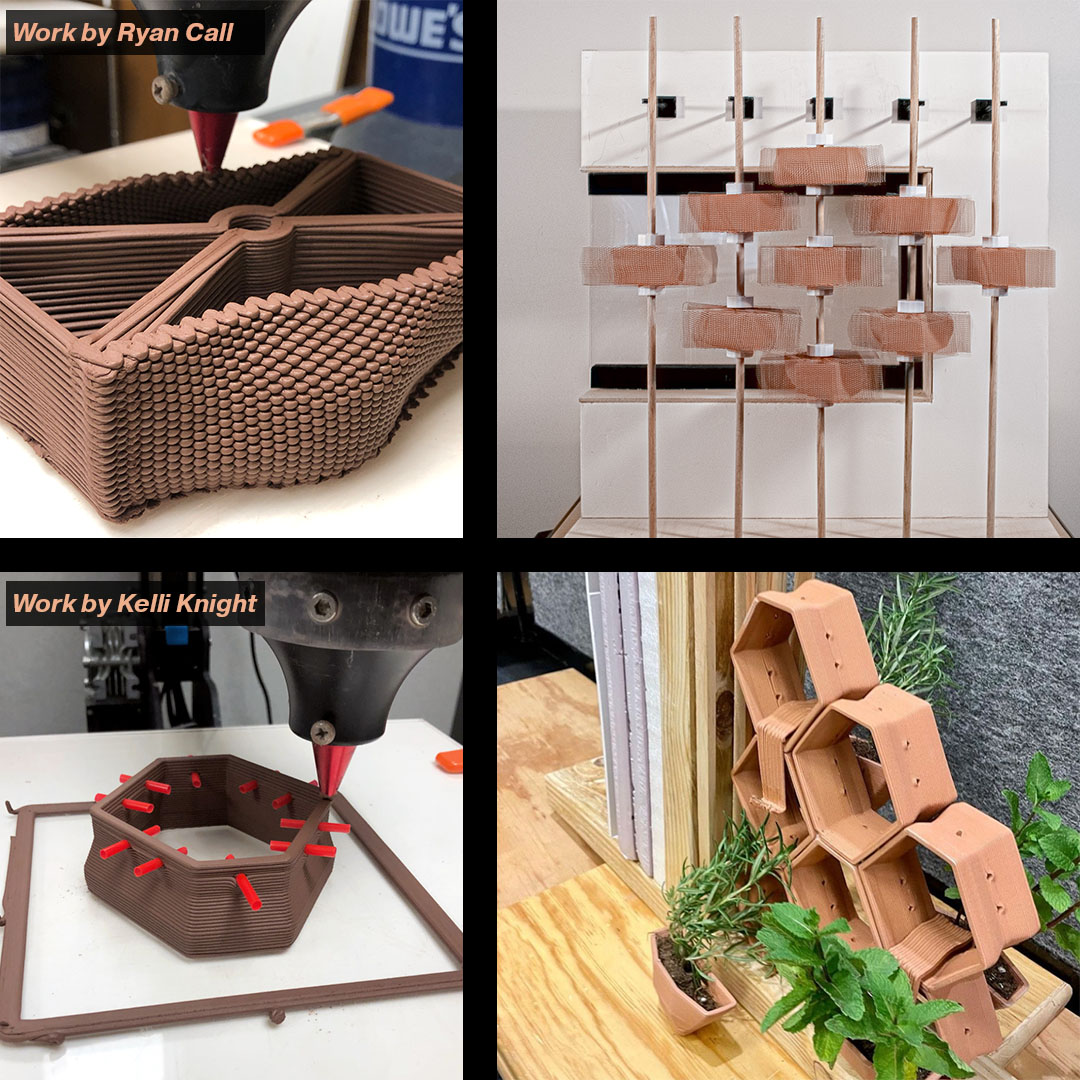
Adel's research program investigates human-robot collaborative processes to transform construction practices, focusing on automated assembly, additive manufacturing with timber and clay, and computational design systems. His work targets resilient building cultures through precision robotics, extended reality interfaces, and STEM education initiatives that democratize access to advanced fabrication technologies. This research directly addresses industry inefficiencies and climate change imperatives by enabling novel architectural forms previously deemed economically or technically unfeasible.
His publication trajectory (2018-2025) demonstrates consistent advancement in robotic construction, with evolving emphasis from timber frame systems to multi-robot coordination and adaptive clay formwork techniques. Key thematic threads include human-robot teaming for complex assembly, perception-driven uncertainty reduction, and sustainable material utilization through digital workflows.
Major recognitions include:
- Architectural Research Centers Consortium (ARCC) New Researcher Award (2023)
- Canadian Wood Council’s Wood Design & Building Awards
- Architecture Press Release’s Global Future Design Awards
Adel leads significant research initiatives including a $1.58M NSF grant (2021) for human-robot teams in construction, mentoring graduate students like Ruxin Xie and Daniel Ruan who contributed to award-winning projects. His ARG laboratory operates as an interdisciplinary nexus, integrating architects, computer scientists, and structural engineers to develop practical robotic solutions for industry adoption.
The ARG laboratory currently drives research in multi-robot timber construction, perception modeling for adaptive fabrication, and clay-based formwork systems, with recent projects like the Robotically Fabricated Structure (RFS) pavilion demonstrating scalable applications of human-robot collaboration in sustainable building practices.