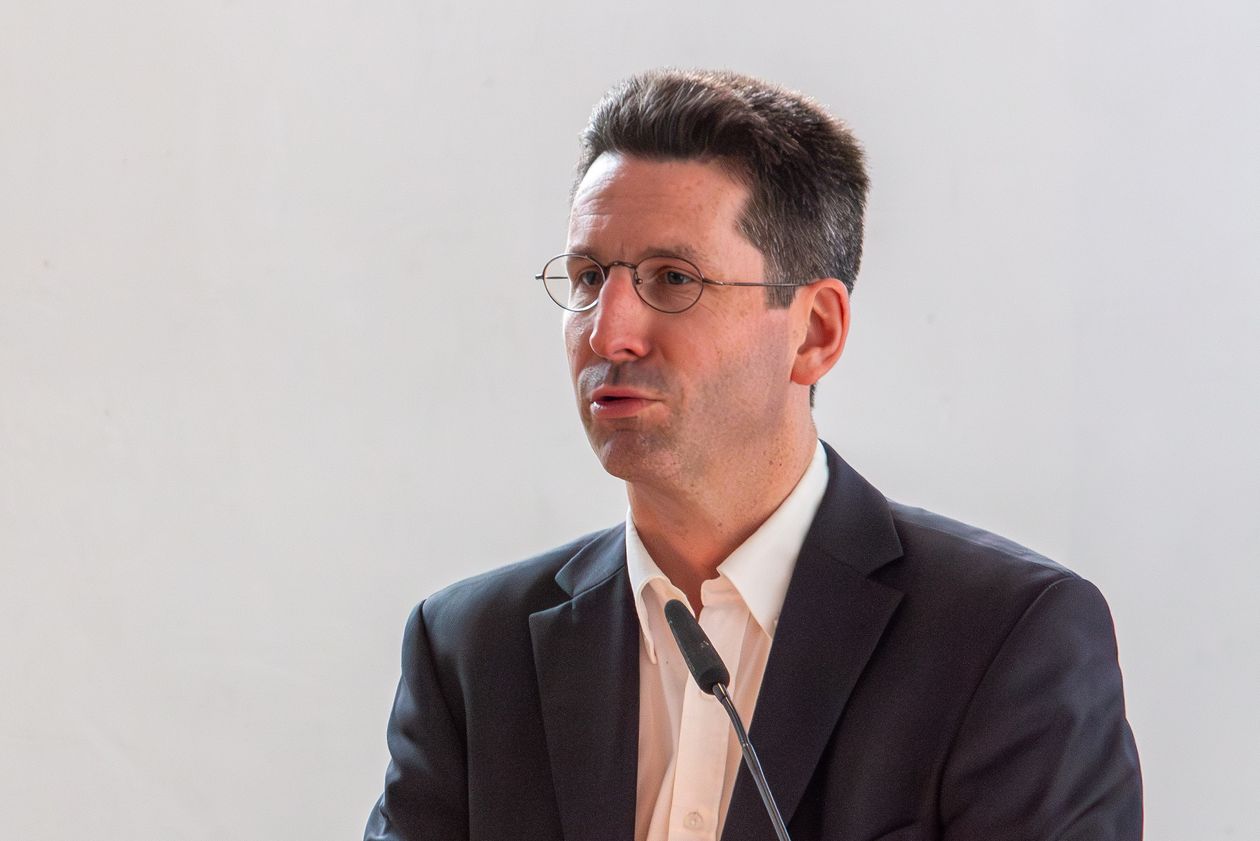
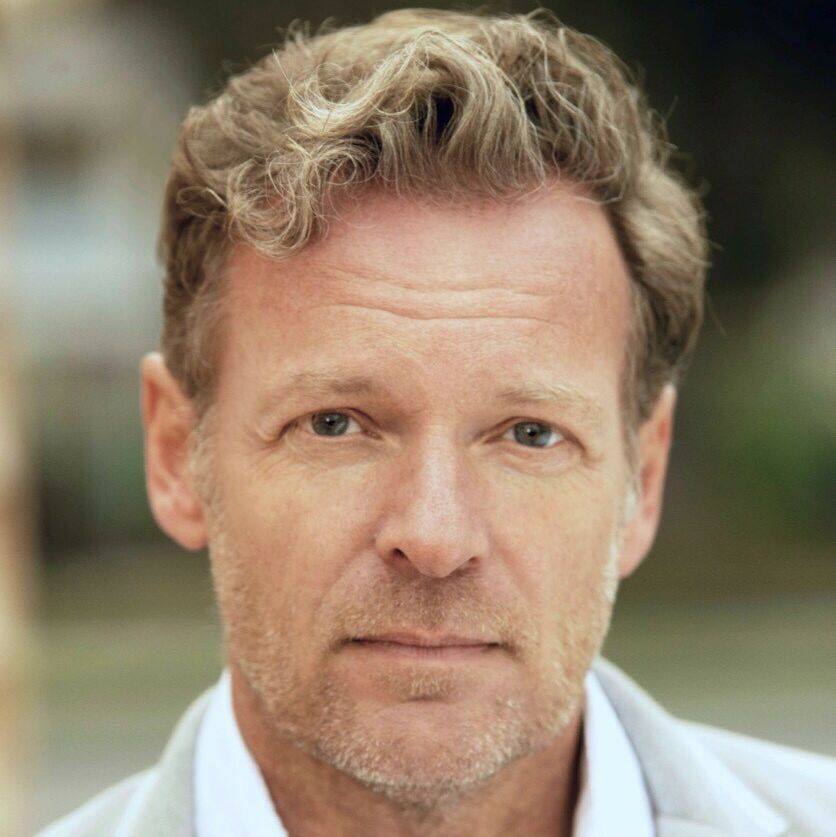
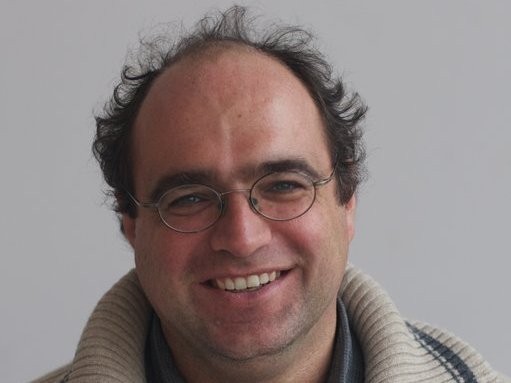
Jörg Rothkamm is a Professor at the University of Tübingen's Musicological Institute, with a focus on music-choreography relationships, 20th-century composers, and post-war musicological reconstruction. His roles include Deputy Director (2013–2017), member of editorial boards, and organizer of international symposia. Key Research Areas: Ballet music history, Mahler studies, post-war musicology, film music dramaturgy, gender in composition, genre-specific composition techniques Academic Collaborations: Co-edited Mahler-Gropius correspondence, led DFG projects on academic continuity, and VolkswagenStiftung ballet-choreography research Recent publications analyze Parsifal staging (2023), Russian ballet (2016), and Ligeti's polyrhythmic innovations. Articles emphasize interdisciplinary approaches, historical continuity, and genre-specific compositional strategies in ballet and opera. Notable Awards: Nominations for 'Best Book of the Year' (2024), Hermann-Abert-Preis (2012), Karl H. Ditze-Preis (2002) Students: Supervises/has supervised 12 PhD/Master's candidates, including Fabian Kurze and Angelo Pinto Current projects include the DFG-funded Alma Mahler-Walter Gropius annotated edition and digital teaching material development (BMBF). He leads a team of 6 postdocs, 7 doctoral candidates, and 4 research assistants.
Prof. Dr. Meinard Müller is a Professor at Friedrich-Alexander Universität Erlangen-Nürnberg (FAU), leading the Chair of Semantic Audio Signal Processing within the International Audio Laboratories Erlangen (a joint institute with Fraunhofer IIS). He specializes in Music Processing, Music Information Retrieval, Audio Signal Processing, and Motion Processing. His work bridges fundamental research and practical applications in music technology, including audio decomposition, source separation, and computational musicology. Research Interests: Focus on algorithmic methods for music analysis, audio feature extraction, and real-time audio processing. Teaching: Supervises a large group of doctoral and master’s students, offering courses on audio processing and music technology. Awards: Recognized as an IEEE Fellow (2020) and ACM Senior Member (2020). His research group develops open-source tools like the FMP Notebooks and libfmp, and maintains datasets such as the Wagner Ring Dataset and Dagstuhl ChoirSet. He actively contributes to conferences like ISMIR and ICASSP, with over 200 publications in top-tier journals and conferences.
Olaf Haye is a faculty member at the Hochschule für Musik und Theater Rostock, specializing in singing instruction. He holds a Diplom degree with distinction from the University of Music and Theatre Hamburg. His career spans extensive operatic performances across prominent European opera houses including Volksoper Wien, Komische Oper Berlin, and Oper Frankfurt. Haye's artistic engagements include roles such as Papageno in The Magic Flute , Don Giovanni, and Figaro. He has performed at festivals like Rossini auf Rügen and Handel Festival Halle, and his work has been broadcast on ZDF, NDR, MDR, and Radio Bremen. His awards include victories at the VdMK Competition Berlin and Richard Strauss Competition Munich, alongside a German Music Council scholarship. He served as ensemble member at Theater Kiel (1990–1992), Theater Dortmund (1992–1995), and Wuppertaler Bühnen (2005/06, 2009/10–2014/15), alongside freelance engagements through 2015. His repertoire reflects expertise in both classical and modern operatic roles.
Dr. Hansjörg Ewert is an academic councilor and researcher at the University of Würzburg , Faculty of Philosophy since 2003, and has been affiliated with the Department of Musicology since 2001. He teaches at the Würzburg University of Music (since 2020/2021) and contributes to ethnomusicology and music pedagogy research. His work bridges historical musicology with interdisciplinary approaches. Academic background: Freiburg University of Music (music education), University of Freiburg (German studies, philosophy), and University of Würzburg (musicology). Doctoral thesis: Robert Schumann's opera Genoveva . Research interests focus on 19th century music history (especially Schumann) and medieval music , with secondary expertise in: Opera dramaturgy (18th-19th century) Intermediality (music-literature relationships) Music theory and philosophical aesthetics Historical performance practices His 15 most recent publications (2001-2020) reveal consistent contributions to: Schumann studies (4 works) Music of ETA Hoffmann and Johann Friedrich Reichardt Wagner's music historiography and Goethe settings Enescu's quartets and 20th century avant-garde Cross-art analysis (Goya, Heinse, Reichardt) Würzburg musicology (local sound spaces, theater history) Prior career included opera direction , dramaturgical , and editorial projects before transitioning to academia.
Jan Golch is a Lecturer and study program coordinator at the Ludwig Maximilian University of Munich (LMU), affiliated with the Faculty of Fine Arts and the Institute of Musicology. He serves as Deputy Head of the BA/MA Musicology Examination Board, participates in selection committees, and acts as academic advisor for musicology. Beyond teaching, he contributes to collaborative projects with leading Munich institutions such as the Munich Philharmonic and Bavarian State Opera, focusing on concert programming, production accompaniment, and musicological applications. Education: Studied literature and musicology at LMU His research spans 19th-century lieder, opera, film music analysis, and broader contexts like 'Music and Sexuality' and 'Religion on the Opera Stage.' Collaborative projects emphasize bridging academia and performance, particularly through program booklets and concert introductions. His work also explores the intersection of music with literature (e.g., Goethe settings) and societal frameworks. As a founding member and pianist of the vocal ensemble Nostalphoniker since 2003, Golch combines performance with scholarly practice. He actively engages in adult education through concert introductions and holds a project management role at the Géza Anda Foundation in Zurich. Administrative roles include academic staff representation on the Department of Fine Arts management board, library representative for musicology (2020–2025), and former chairmanship (2008–2020) of the Association of Friends of Musicology in Munich.
Prof. Dr. Ulrike Vedder is a Full Professor at the Institute of German Literature , Humboldt University of Berlin, specializing in Modern German Literature from the 18th Century to the Present and Theories and Methods of Literary Gender Studies . Her research explores intersections between Literary Studies , Material Culture , and Gender Discourses . Chair of Humboldt University Council Speaker at Center for Transdisciplinary Gender Studies Co-editor, Journal of German Studies Her scholarly focus includes: Material Culture : Museum narratives, literary object culture, poetics of collecting Gender Studies : Interpassivity, intergenerational trauma, queer family models Cultural Theory : Archive practices, boundary discourses, historical transfers Recent publications analyze works by Thomas Bernhard, Henry James, and contemporary authors like Judith Schalansky. She leads projects on: Dramaturgies of archival memory German-Jewish women's life stories Translation practices in globalized contexts Literature and museum narratives International collaborations include institutions in Warsaw, Wrocław, and Sofia. She organized workshops on literary spatial orders and realism's challenges.
Filippo Tadolini is a Professor in the Department of Scenography for Opera and Musical Theater at ABABO, specializing in digital integration for theatrical productions. He holds a dual degree in Architecture and Musicology from the University of Bologna and maintains active international collaborations with major opera institutions since 2009. His educational foundation includes: Graduation in Architecture and Musicology from the University of Bologna Tadolini's research focuses on the critical intersection of physical and virtual stage design, with expertise in video projection mapping, augmented reality applications, and historical analysis of digital media in Baroque-to-modern scenography. He examines how technologies like projection mapping transform audience-performer relationships while preserving operatic tradition. Professionally, he coordinates cultural initiatives on opera history in Forlì and has directed productions for venues including Fondazione Arena di Verona, Teatro Carlo Felice (Genoa), Opéra National du Capitole (Toulouse), Shangyin Opera House (Shanghai), and Teatro Nacional Sucre (Quito). His 2023 teaching appointment at ABABO centers on bridging technical software proficiency with artistic interpretation in opera staging.
Prof. Michelle Breedt is a Professor of Vocals (mezzo-soprano) at the Frankfurt University of Music and Performing Arts, serving as Deputy Director of Vocal/Musical Theatre Training. An internationally recognized mezzo-soprano, her performance career spans 25+ years across Europe, North America, and Africa. Her artistic expertise includes: Oratorio repertoire from Bach to Verdi Operatic roles in Mozart and bel canto traditions Lieder recitals and concert performances Pedagogical activities feature: Master classes at international institutions Vocal technique development Performance coaching for opera and concert repertoire
Dagmar Birwe is a Professor of Artistic Music Production at the Robert Schumann University Düsseldorf's Institute for Music and Media. She holds diplomas in Sound Engineering (1994) and Piano Performance (1997) from the Detmold and Munich Academies of Music. Prior to academia, she worked as a recording engineer and producer for major labels including Decca, Deutsche Grammophon, and Sony Classical, collaborating with renowned orchestras and artists like Anne-Sophie Mutter and the London Symphony Orchestra. Her research and professional expertise spans artistic music production , sound engineering , digital editing , and remastering of classical recordings . She specializes in high-fidelity reproductions of orchestral, operatic, and chamber repertoire across historical and contemporary genres. Award highlights include multiple Echo Klassik awards for productions with Anne-Sophie Mutter (Bach/Gubaidulina concertos), Sol Gabetta's debut album, and Maximilian Hornung's "Jump!", plus a Grammy nomination .
Georg Högl, Ph.D. , is a researcher at the Institute for Music Research at the University of Würzburg. His work focuses on 19th-century musicology, particularly forest symbolism in Romantic opera, Richard Wagner's writings, and cross-cultural musical narratives. Education: Master's in Musicology (2015), Ph.D. in Musicology (2021) with a thesis on forest themes in 19th-century music. Dr. Högl's research explores the intersection of musical iconography , Romanticism , and environmental representation through publications analyzing Carl Maria von Weber's Der Freischütz and Wagner's critical writings. His recent work examines mythicization of forests in digital-age scholarship. His publications include interdisciplinary studies in journals like wagnerspectrum and edited volumes such as Dresden Studies in Music , with a focus on ecocritical analysis and musical adaptation . Dr. Högl contributes to the Richard Wagner Writings edition project as a research assistant. Current affiliation: Institute for Music Research, University of Würzburg
Amy Shoremount-Obra is an Adjunct Assistant Professor of Voice at the Conservatory of Music, Brooklyn College . A celebrated soprano, she has performed in prestigious venues such as the Metropolitan Opera , Carnegie Hall , and Lincoln Center , earning acclaim for her operatic and concert work. Her voice has been praised for its "sensitivity yet full-throated power" (Huffington Post) and "laser-like top notes" (Boston Classical Review.com). Education : Bachelor of Music, Manhattan School of Music Master of Music, Manhattan School of Music Artist Diploma, The Juilliard School Amy specializes in Classical Vocal Performance , with a focus on Opera , Art Song , and Collaborative New Music . She has premiered works by composers like Tarik O'Regan , Dan Visconti , and Paola Prestini , and participated in innovative projects such as the virtual reality video game opera "PermaDeath" . Scientific awards and honors include: Top Prize Winner, 2018 Gerda Lissner Foundation International Vocal Competition (Wagner Division) Richard F. Gold Career Grant, Shoshana Foundation 2016 Ursula Springer Award, Wagner Society of New York 2019 Second Prize Winner, Joy In Singing International Art Song Competition 2004 New York Regional Winner and National Semi-Finalist, Metropolitan Opera National Council Auditions Amy maintains an active performing career while teaching undergraduate and graduate students at Brooklyn College. She co-founded the Hawaii International Music Festival and has held artist residencies in Mexico and the U.S.
Camilla Bork serves as Professor of Musicology at the Institute for Theater Studies within the Department of Philosophy and Humanities at Free University of Berlin since 2021. Previously held positions include Professor of Musicology at Katholieke Universiteit Leuven (2015-2021), Acting Professor of Historical Musicology at Hannover University of Music, Theater and Media (2014-2015), and Acting Professor at Carl von Ossietzky University Oldenburg (2011-2012). Her academic trajectory also encompasses lecturing at Stanford Campus Berlin (2009-2011) and scientific assistance at Humboldt University Berlin's Musicological Seminar (2001-2009), including a DAAD-funded postdoctoral fellowship at Stanford University (2003-2005). Her educational background includes a PhD from Humboldt University Berlin (2002) with a dissertation on Paul Hindemith's compositions in Frankfurt's cultural context around 1920 (published 2006), and a Diplom in Instrumental Pedagogy (Violin major) from Johannes Gutenberg University Mainz (1998). She studied Musicology, Comparative Literature, Journalism, and Instrumental Pedagogy at Mainz (1994-1998) with support from the Studienstiftung des Deutschen Volkes scholarship. Her Habilitation was completed at Humboldt University Berlin in 2014. Professor Bork's research centers on historical and aesthetic dimensions of music from the 18th to 21st centuries, with particular emphasis on music theater , virtuosity , and performance interpretation . She investigates the cultural frameworks of listening practices, gender constructions in musical works, and the socio-technological implications of media like radio. Her scholarship bridges musicology with theater studies, analyzing how performance contexts transform compositional meaning and exploring the Weimar Republic's musical landscape as a critical period for media experimentation. Recent publications reveal consistent thematic trajectories: radio's role in decolonizing musical knowledge (2021-2019), gendered analysis of music theater (2019-2012), and virtuosity as cultural phenomenon (2018-2011). Her work frequently examines Hindemith, Chopin, and Sciarrino through interdisciplinary lenses, connecting technical musical analysis to broader social discourses on expression, noise, and embodiment across the 19th-21st centuries. Research funding includes multiple FWO grants: "Sound and Decolonized Knowledge" (until 2025 with Anna Vermeulen), "Radio play(s) Politics" (until 2026 with Janina Müller), and "Highland Bagpipe in Contemporary Art Music" (until 2024 with Cedric Feys). She previously led the DFG-funded "Das Ereignis des Virtuosen" (until 2022) and contributed to SNF's completed "Radiophonic Cultures" project. Her editorial leadership includes the "Analysis in Context" monograph series and "Operatheek" collaboration with Opera Ballet Vlaanderen. She maintains active teaching responsibilities including seminars on contemporary music theater and radiophonic composition, with upcoming office hours scheduled through October 2025. Her scholarly activities integrate the university's Media Lab & Media Archive resources while advancing historical and theoretical frameworks through ongoing international collaborations.
Prof. Stefan Ark Nitsche is an Associate Professor of Old Testament at Augustana University, specializing in biblical hermeneutics and exegesis. He holds a doctorate (1997) and habilitation (unspecified year) in theology, with interdisciplinary work on David and Goliath and prophetic genres. From 2006-2020, he served as Regional Bishop in Nuremberg. His research focuses on intertextuality, Old Testament ethics, and theological interpretation. He co-authored Literary Biblical Interpretation (2021) and collaborates with composers on biblical operas. Nitsche chairs the Bavarian Bible Museum and serves on church professional committees. Education: Studied theater (Mozarteum University, Salzburg), then theology at Tübingen and Erlangen. His academic roles include adjunct professorships and pastoral work. Awards: Not explicitly listed, but recognized for scholarly contributions in theology and biblical studies. Publications span monographs, edited volumes, and essays on biblical interpretation, with recent works addressing intertextuality (2022), Old Testament ethics (2020), and Luther’s translation (2016). He also creates artistic works like operas based on biblical narratives.
Assunta Piro-Krauth is a Lecturer in Italian Language at the University of Music Karlsruhe, affiliated with the Voice Department. She has been teaching Italian at various levels and providing linguistic support for opera productions since 2004. Her expertise bridges language pedagogy with musical performance, focusing on the interplay between the Italian language and its expression in opera. Education: Graduated from the European School in Karlsruhe and earned qualifications in German Philology, Linguistics, Literature, and Education from the University of Heidelberg. Her career has centered on language education with a specialization in opera-related linguistic training. Research Interests: Exploring the musicality of the Italian language in opera, linguistic coaching for singers, and the cultural dimensions of 'Italianità' in theatrical productions. She actively supports students' understanding of Italian language nuances through opera repertoire analysis. Professional Contributions: Served as a language coach in opera productions such as Le nozze di Figaro , La Bohème , and L'incoronazione di Poppea . Provides recitative training and masterclasses, emphasizing vocal and textual precision in operatic performance.
Prof. Henryk Böhm is a Professor of Singing at the Hanover University of Music, Drama and Media. He is a renowned baritone with extensive operatic, concert, and lieder performance experience. Born in Dresden, he studied singing under Prof. Christiane Junghanns and participated in master classes with Elisabeth Schwarzkopf, Peter Schreier, and Brigitte Fassbaender. His accolades include awards from the Robert Schumann Competition and Federal Vocal Competition, and he has held prestigious roles in operas such as The Magic Flute , The Marriage of Figaro , and Don Giovanni . Prof. Böhm's career spans major opera houses in Braunschweig, Leipzig, and Hanover, alongside concert performances at venues like the Berlin Philharmonic and Suntory Hall. He specializes in Bach’s Passions, Haydn’s oratorios, and lieder recitals. In 1998, he founded the DAS LIED IN DRESDEN series. His recordings include a CD of Jean Sibelius songs on Coviello Classics. Awards: Robert Schumann Competition First Prize, Federal Vocal Competition Second Prize, German Music Council Scholarship Teaching: Mentors students in singing at HMTMH, with notable alumni and current students in competitions. Prof. Böhm collaborates with leading ensembles like the Dresden Kreuzchor and orchestras such as the Seoul Symphony Orchestra. His artistic work also includes collaborations with conductors including Peter Schreier and Helmuth Rilling.