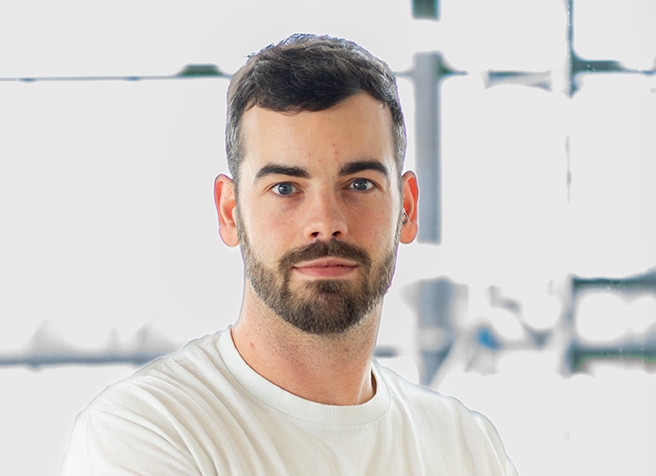
Candace Chanمشاهده پروفایل
دانشیار
Candace Chan is an Associate Professor in the Department of Materials Science and Engineering at Arizona State University’s Ira A. Fulton Schools of Engineering. She also holds affiliations with the Center for Renewable Energy Electrochemistry (CREE), the Adaptive Intelligent Materials and Systems Center (AIMS), and the Department of Civil and Environmental Engineering, reflecting her interdisciplinary research profile in advanced materials and sustainable energy systems. Her research focuses on next-generation battery technologies, including lithium-ion and solid-state batteries, with strong emphasis on materials for anodes, cathodes, and solid electrolytes. She investigates nanowire and silicon-based materials, clathrates, and interfacial phenomena in electrochemical systems. Her work spans fundamental materials synthesis and characterization to applied engineering solutions for battery recycling and upcycling, particularly through direct recycling processes and sustainable material regeneration. The recent publications highlight trends in battery sustainability, interfacial engineering, and mechanical reliability. Key themes include cobalt-nickel exchange in cathode recycling, lithium dendrite suppression in garnet electrolytes, surface treatment of solid electrolytes, and mechanical stress analysis in flexible batteries. These studies reflect a cohesive research direction toward safer, more sustainable, and higher-performance energy storage systems. Dr. Chan has secured significant research funding from the Department of Energy (DOE), National Science Foundation (NSF), and Sandia National Laboratories. Active projects include the development of the PRIME process for cathode recycling, understanding interfaces in lithium-sulfur solid-state batteries, and nano-inspired EV battery recycling to secure supply chains. She also contributes to major instrumentation initiatives, such as the acquisition of a Dual Transmission X-ray Diffractometer for in situ and operando materials analysis. She is actively involved in mentoring and research leadership, serving as Principal Investigator (PI) on multiple grants, indicating her role in advising graduate students and postdoctoral researchers. Her work is supported by collaborations across materials science, engineering, and earth sciences, and she contributes to open science through deposition of crystal structure datasets in the Cambridge Structural Database.