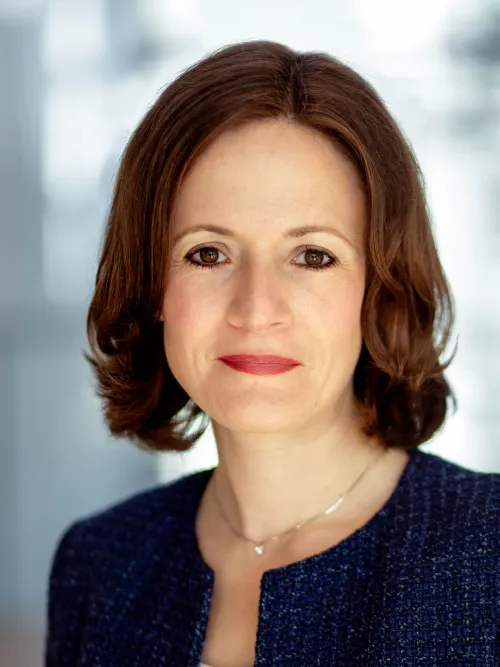
Robin Queen serves as Arthur F. Thurnau Professor and Professor of Linguistics, English Language and Literatures, and Germanic Languages and Literatures at the University of Michigan's College of Literature, Science, and the Arts. She holds a Ph.D. from the University of Texas at Austin (1996) and maintains a primary appointment in the Department of Linguistics with affiliations in Germanic Languages and Literatures and English Language and Literature, including as a program affiliate in Linguistic Anthropology. Her research spans sociolinguistics , language contact , language variation , language ideology , and sociolinguistic perception , with particular focus on language, gender and sexuality and language in the mass media . Professor Queen has conducted diverse research involving Turkish-German bilinguals, American lesbian communities, daytime television dramas, dubbed films, and even human-canine communication patterns. Her notable 2015 book Vox Popular: The Surprising Life of Language in the Mass Media explores language variation in fictional media contexts. Analysis of her recent publications reveals consistent exploration of language variation across multiple contexts, with particular attention to media representation, gender/sexuality connections, and cross-linguistic phenomena. Her work demonstrates methodological diversity spanning ethnographic fieldwork, experimental perception studies, and discourse analysis. Arthur F. Thurnau Professor (distinguished teaching award) Sarah G. Thomason Collegiate Professor of Linguistics Professor Queen has successfully mentored numerous graduate students who have secured positions in academia, research, and industry. Her service contributions include election to the University Faculty Senate, membership on multiple advisory boards (Center for Research on Learning and Teaching, Language Resource Center, University Libraries), and significant departmental leadership as Director of Graduate Studies, Director of Undergraduate Studies, Associate Department Chair, and Department Chair. She has also served the Linguistic Society of America as co-chair of the Committee on the Status of Women and as an Executive Committee member, plus co-directing the 2013 Summer Institute in Linguistics. As co-editor of the Journal of English Linguistics (2006-2012) and on multiple editorial boards, she maintains strong scholarly engagement across the field. Her research program includes ongoing projects on human-canine interaction with language (2010-present), language variation in media (1996-present), and psycholinguistic assessments of New Media errors (2013-present), demonstrating remarkable longevity and evolution in her scholarly contributions.