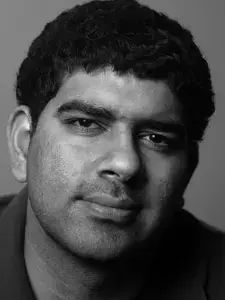
Anshuman Bhatia serves as Assistant Professor in the Department of Theatre & Dance at College of the Holy Cross, where he teaches design and production courses. Holding an MFA from New York University, he maintains an active professional career as a lighting and scenic designer for major performance institutions globally. Education MFA, New York University Artistic Expertise Professor Bhatia specializes in creating immersive visual environments for theatrical, operatic, and dance productions. His work bridges technical precision with narrative depth across classical and contemporary repertoire, demonstrated through collaborations with premier venues including Santa Fe Opera, The Juilliard School, and Beijing National Center for the Performing Arts. He focuses on translating textual and musical themes into spatial and atmospheric experiences through innovative lighting and set design. Professional Portfolio His designs have been featured in productions such as Eugene Onegin (The Juilliard School), The Barber of Seville (Opera Columbus), Ordinary Days (Keen Company), and Kept (Virginia Arts Festival). He has collaborated with over 25 major institutions including Arena Stage, Dublin Civic Theater, and The Park Avenue Armory, showcasing versatility across opera, musical theater, and experimental dance. Awards Recognition No scientific awards or fellowships were documented in the source materials.
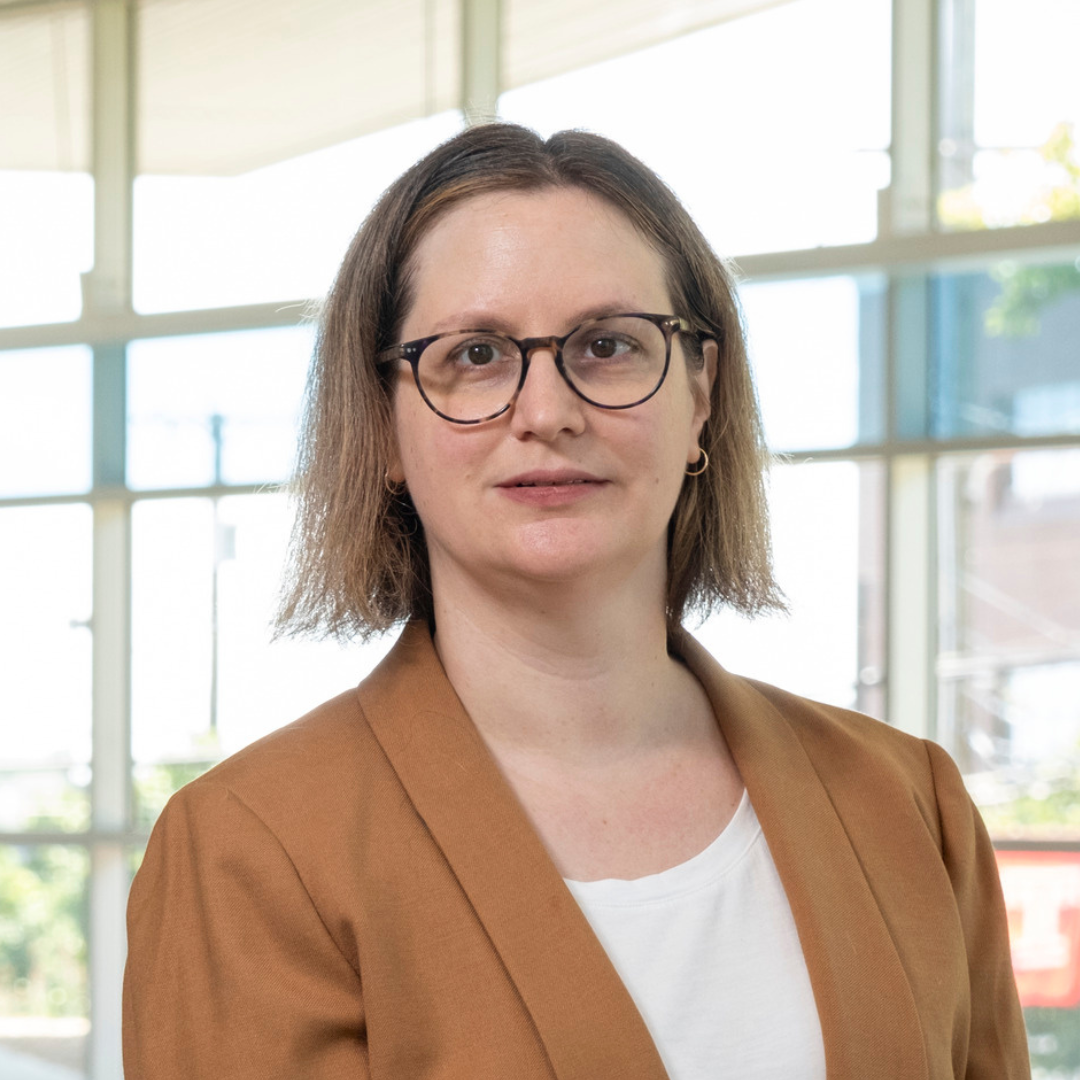
Sofia Pantouvaki is a Professor of Costume Design for Theatre and Film at Aalto University's Department of Film. Her research focuses on performance costume, particularly in opera and dance, costume technology, sustainability, and educational applications. She founded the Costume in Focus research group and led the Academy of Finland-funded 'Costume Methodologies' project (2014–2018). Her work bridges artistic practice and academic research, emphasizing interdisciplinary collaboration and ethical material practices. Education: PhD in Scenography from the University of the Arts London (2008). Research Interests: Costume materialities, sustainable design, historical costume analysis (e.g., WWII concentration camps), and educational uses of costume in youth integration. Her awards include the Gold Medal PQ2015 for Best Exposition and curatorial leadership in international events like the Prague Quadrennial. She has supervised 7 theses and contributed to over 139 research outputs, including exhibitions, conference papers, and books like Performance Costume: New Perspectives and Methods . Current projects include the EU Horizon-funded 'Technological Innovations in Costume Practice' (TICP). Grants & Projects: TICP (2024–2025), Costume Methodologies (2014–2018). Labs/Teams: Leads the Costume in Focus group and collaborates internationally on material innovation and sustainability.
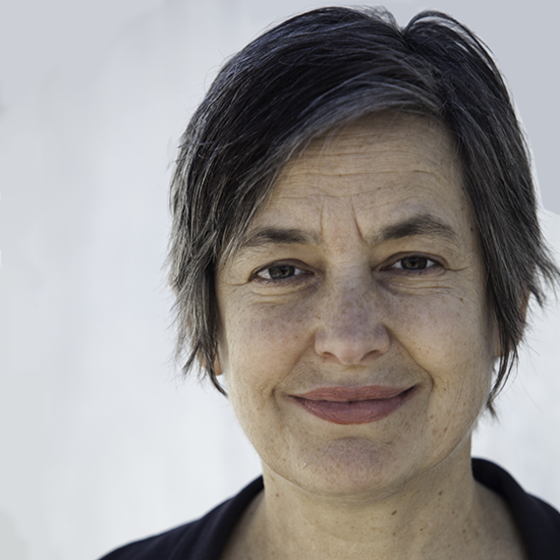
Linda Girard is a Distinguished Senior Lecturer in the Department of Theatre, Dance, and Performance Studies at Tufts University, based at the Aidekman Arts Complex in Somerville, MA. She has held this position since 2007, previously serving as Senior Lecturer (2016–2023) and Lecturer (2007–2016). Her academic background includes an MFA in Costume and Lighting Design from Brandeis University (1996) and a BA in Drama from Tufts University (1992). Her professional expertise focuses on costume design for theatre, dance, and film, with notable projects including collaborations with Tony Kushner on Homebody/Kabul , August Wilson’s Jitney , and the web series Old Guy . She has also contributed to lighting design, makeup artistry, and opera projects. Her work spans Broadway, regional theatres, and international stages, including London’s West End. Professionally, Girard has engaged in administrative roles such as the PT Barnum Alumni Awards Planning Committee and SMFA Academic Committee. She has participated in workshops on pedagogical practices like fostering inclusive classrooms and student well-being. Her teaching emphasizes interdisciplinary approaches to performance design. Notable performances she has designed include A Picasso , Bank Job , Mary Poppins , and The Rainmaker . She actively contributes to Tufts’ theatrical productions and local theatre companies like Newton Nomad Theatre and Salem Theatre Company.
Micaela Baranello is an Assistant Professor in Music Studies at Temple University's Boyer College of Music and Dance. Her research focuses on 19th-to-21st-century opera and musical theater staging, particularly intersections with social justice and identity. She holds a PhD from Princeton University, supported by a Mellon/ACLS fellowship and Fulbright grant. Her book The Operetta Empire: Music Theater in Early Twentieth-Century Vienna (UC Press, 2021) explores Austro-Hungarian operetta's role in national identity formation and was honored as a CHOICE Outstanding Academic Title in 2022. Baranello's academic journey includes prior faculty positions at the University of Arkansas and Swarthmore College. She has produced operas through Opera Fayetteville, including Arkansas premieres of Dark Sisters and Glory Denied . Her teaching spans Western art music, opera history, and musical theater, with advising focus on topics like Mahler's translation studies and gender diversity in clarinet repertoire. Education: PhD/MA (Princeton University, Musicology), BA (Swarthmore College, Music) Professional Roles: Reviews Editor for Opera Quarterly , Council Member of the American Musicological Society Research Interests: Weimar Berlin culture, Richard Strauss's operas, emigré composers in America Her scholarly work appears in Journal of the American Musicological Society , Cambridge Opera Journal , and Financial Times , alongside popular writings in New York Times covering major festivals like Bayreuth and Aix-en-Provence. She actively engages in cultural critique addressing contemporary opera's ethical and social dimensions.
Professor Beatriz Calvo Merino is a Cognitive Neuroscientist at City St George's, University of London, where she is affiliated with the Department of Psychology in the School of Health Sciences. She serves as Programme Director for the MSc Clinical, Social and Cognitive Neuroscience and the Joint PhD Programme in Psychology and Social Neuroscience with Sapienza University, Italy. Her academic journey includes training at University College London and Universidad Complutense de Madrid, with postdoctoral work at the Institute of Cognitive Neuroscience. Research Interests: Her research explores the neural basis of action observation, sensorimotor expertise, and emotion perception, with a strong emphasis on dance and performing arts. She investigates how sensorimotor experience modulates aesthetic and emotional processing, contributing significantly to the field of neuroaesthetics. Her work integrates EEG, TMS, behavioral, and physiological methods to study embodiment and social cognition. Recent Research Trends: Her recent publications (2020–2025) reflect a sustained focus on embodiment in autism, emotion perception, multisensory integration, and the cognitive neuroscience of dance. She employs ERP and SEP methodologies to dissect somatosensory contributions to social perception, particularly in clinical populations. Her editorial and review work also highlights her leadership in methodological advancements in dance neuroscience. Scientific Awards: Alexander Gottlieb Baumgarten Award (2018) British Association of Cognitive Neuroscience Early Career Award (2019) Grants and Collaborations: Her research has been supported by the ESRC, Leverhulme Trust, Wellcome Trust, Ramon y Cajal Fellowship, and City University funding schemes. She collaborates widely with the dance community, including the Royal Opera House Ballet, Laban Dance Centre, and choreographers such as Wayne McGregor, bridging science and the arts. Labs and Teams: She leads a research group focused on sensorimotor processing and neuroaesthetics within the Department of Psychology, contributing to the Cognitive and Social Neuroscience research theme at City St George's.
Yvette Janine Jackson is an Assistant Professor in the Music Department at Harvard University, serving as Graduate Advisor in Creative Practice and Critical Inquiry (2021-22) and teaching for Theater, Dance and Media (TDM). Her educational background includes: Studies at the RD Colburn School of Performing Arts BA in Music from Columbia University PhD in Music-Integrative Studies from the University of California, San Diego Her research and creative practice focus on electroacoustic music, narrative soundscape composition, and radio opera. She investigates the impact of darkness, spatial audio, and interactivity on audience engagement, creating immersive experiences that blend storytelling with sound. Her work often addresses social and historical themes, such as homophobia in African American communities and the transatlantic slave trade. Notable creative works include the radio operas 'Destination Freedom' (2018) and 'Invisible People' (2013), which exemplify her innovative approach to narrative in electroacoustic music and her exploration of profound societal issues through sound. Her achievements have been recognized with: San Francisco’s Dean Goodman Choice Award for Sound Design Theatre Bay Area’s Eric Landisman Fellowship As Graduate Advisor in Creative Practice and Critical Inquiry for 2021-22, she mentors graduate students in integrating creative practice with critical inquiry. Previously, she held the position of Joseph E. and Grace W. Valentine Visiting Assistant Professor of Music at Amherst College (2018–2019).
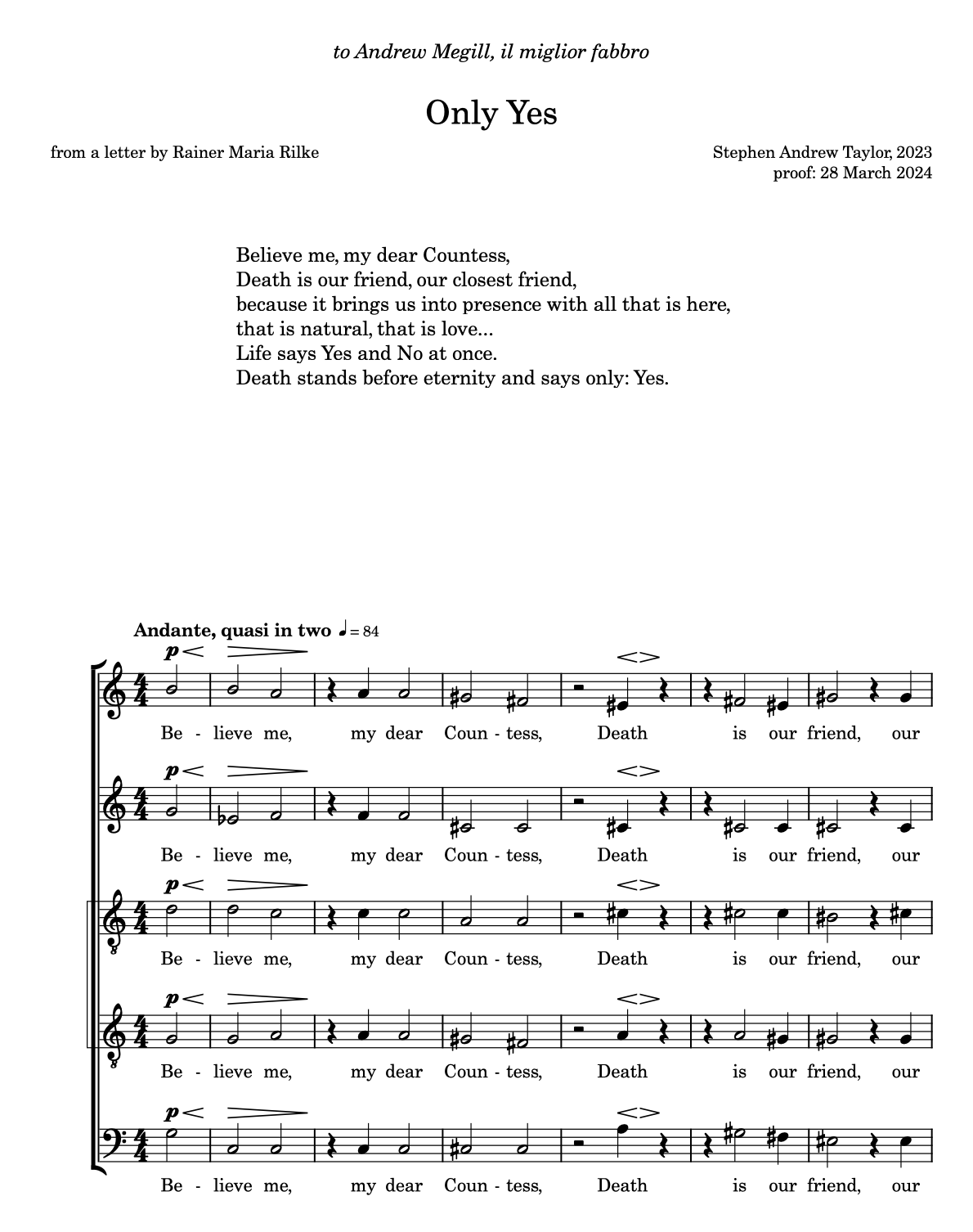
Stephen Andrew Taylor is Professor of Composition-Theory at the University of Illinois, Urbana-Champaign, where he co-directs the Illinois Modern Ensemble. His interdisciplinary work bridges music composition with scientific exploration, creating innovative works that transform complex data into compelling musical experiences. With a career spanning over three decades, Taylor has established himself as a significant voice in contemporary classical music. Northwestern University Cornell University California Institute of the Arts Taylor's research focuses on the intersection of music and science, particularly data sonification where he transforms genetic sequences, astronomical phenomena, and environmental data into musical compositions. His work spans multiple genres including orchestral, chamber, choral, and electronic music, often incorporating live electronics and multimedia elements. He has developed specialized techniques for representing DNA sequences, protein structures, and environmental data through sound, creating what he calls "data-driven music." His theoretical writings explore African rhythm, the music of György Ligeti, and popular artists like Björk and Radiohead. Taylor's recent compositions demonstrate a consistent exploration of scientific concepts through musical form. His works frequently engage with genetics (Winged Helix, Indian Hedgehog), astronomy (Piranesi, Ocean of Air), and environmental concerns (Maumee River Index). The composer employs sophisticated sonification techniques while maintaining strong musical integrity, creating works that are both scientifically informed and artistically compelling. His approach often involves direct collaboration with scientists, resulting in pieces that illuminate complex phenomena through musical expression. Guggenheim Foundation Fellowship (2014-15) American Academy of Arts and Letters Award Howard Foundation Award Conservatoire Américain de Fontainebleau Award Debussy Trio Composition Contest (First prize, 2000) Multiple ASCAP Foundation Awards As an educator, Taylor follows the philosophy of Olivier Messiaen, focusing on helping students develop their own musical personalities rather than imitating his style. His teaching emphasizes the importance of prolific composition as the path to mastery. Taylor has received numerous commissions from major institutions including the Chicago Symphony, Northwestern University, University of Illinois, Pink Martini, and the American Composers Orchestra. His collaborative work extends to popular music, with arrangements performed by orchestras worldwide including the Los Angeles Philharmonic, San Francisco Symphony, and Chicago Symphony. Taylor co-directs the Illinois Modern Ensemble, which serves as a laboratory for contemporary music performance and exploration. His creative partnership with visual artist Hua Nian (his spouse) has resulted in numerous multimedia works where visual elements complement his musical compositions. Through his work with data sonification projects and scientific collaborations, Taylor has established interdisciplinary connections between the School of Music and other departments across the University of Illinois campus.
Elizabeth Jochum is an Associate Professor at the Department of Communication and Psychology, Aalborg University, within the Faculty of Social Sciences and Humanities. She heads the Research Laboratory for Art and Technology (RELATE) and coordinates projects like the European ABRA initiative on Artificial Biology, Robotics, and Art, and the ImprovAIze project linking machine learning with dance and wearables. Her research bridges visual/performing arts with robotics and assistive technologies to foster human-centered, value-sensitive designs addressing societal needs. Education: PhD in Theatre (University of Colorado Boulder, 2013), MA in Theatre (2008), BA in Theatre and Italian (Wellesley College, 2001). Research focuses on transdisciplinary collaboration in human-robot interaction, health, and engineering. Notable projects include CRERoB (Center for Rehabilitation Robotics) and AHH (Arts, Health, and Humanities cluster). She also serves as a Part-Time Lecturer at IT University of Copenhagen (2016). Awards: Recognized among the Top 50 Women in Robotics by Robohub (2021). Key contributions span creative robotics in theatre, socially assistive robots for mental health, and AI-driven dance improvisation. Administrative roles include Semester Coordinator for Art and Technology, Study Board Member for KUNST (Art, Health, and Technology), and coordinator for Erasmus Mundus Joint Masters in Media Arts Cultures. Her work emphasizes ethical, inclusive, and artistic approaches to technology.
Sarah Drury is an Associate Professor and Director of Graduate Studies at Temple University’s School of Theater, Film and Media Arts (TFMA), specializing in interactive media art, performance, and digital installations. She holds a BA from Barnard College and advanced degrees from NYU’s Tisch School of the Arts and International Center of Photography. Her research explores narrative, play, and emergent subjects through video, sound, and sensing technologies. Notable works include Mechanics of Place (collaborative AR platform), Violet Fire (Tesla-themed multimedia opera), and The Walking Project (disability-focused sensor-based performances). Her work has been showcased globally at venues like BAM’s Next Wave Festival, ISEA International, and the Brooklyn Museum. Grants: Two NEA Fellowships Media Platforms: PBS broadcasts, gallery installations, and performance art Drury’s interdisciplinary projects bridge theater, technology, and public engagement, emphasizing interaction between audiences and digital mediums. Her academic roles include prior faculty positions at NYU’s Interactive Telecommunications Program and leadership in TFMA’s graduate programs.
Jody McAuliffe serves as Professor of the Practice of Theater Studies at Duke University's Trinity College of Arts & Sciences, with a joint appointment in Slavic & Eurasian Studies since 2005. She teaches across multiple disciplines including Theater Studies, English, Dance, Neuroscience, Russian, and Innovation & Entrepreneurship, reflecting her interdisciplinary approach that bridges artistic practice with academic scholarship. Her extensive course offerings include 'Writing Movies and Plays: Adaptation' and 'The Art of Improvising' taught across multiple semesters through Spring 2025. Her educational background features: M.F.A. from Yale University (1980) B.S. from Northwestern University (1976) McAuliffe's research integrates theater direction, film, documentary, literary adaptation, and dramaturgy with particular expertise in Slavic and Eurasian performance traditions. As an award-winning director, writer, adapter, dramaturg, translator, and scholar, her work spans theatrical productions at major venues including Abrons Arts Center, Mark Taper Forum, and South Coast Repertory. Her writing encompasses short fiction, film and literary criticism, cultural criticism, and literary non-fiction. Her publications reveal consistent exploration at the intersection of personal narrative, neurological conditions, and theatrical expression. Works like 'The Mythical Bill: A Neurological Memoir' demonstrate her unique approach to blending medical humanities with creative nonfiction, while her scholarship on Ibsen shows deep engagement with Scandinavian drama and its contemporary relevance across cultural contexts. Her notable achievements include: Gulag Follies Research grant from Josiah Charles Trent Memorial Foundation (2008-2009) McAuliffe actively mentors students through independent studies and has developed innovative cross-disciplinary courses that attract students from diverse academic backgrounds. Her artistic work demonstrates commitment to interdisciplinary collaboration across musical and theatrical forms, with recent projects including the 'Tapestry Room opera project' and adaptations of Don DeLillo's work.
Stephanie Petagno is a Professor of Production Design at the Savannah College of Art and Design (SCAD), specializing in costume design, immersive experiences, and cross-disciplinary production. Her career spans theater, film, opera, and music video projects with a focus on historical authenticity, avant-garde experimentation, and narrative-driven aesthetics. Education: M.F.A. in Costume Design from California Institute of the Arts (CalArts), B.F.A. in General Sculptural Studies from Maryland Institute College of Art (MICA). Professional training includes roles as co-instructor at CalArts' Community Arts Partnership (2020) and guest designer at Chavez Ravine (2019). Research interests include: 1) Costume design as narrative driver in theater/opera, 2) Immersive environments in music videos and installations, 3) Historical costume curation techniques, 4) Special effects makeup for film and theater. Notable projects include award-winning designs for The Day Shall Declare It (Stage Raw Awards), ZONA (2019 film), and Museum of America (30 Seconds to Mars collaboration). Recent work trends show increasing focus on interdisciplinary projects blending theater, film, and interactive media. Her 2016-2019 projects demonstrate expertise in dystopian narratives ( The Last Shift ), historical drama ( Chavez Ravine ), and avant-garde experimentation ( LORE immersive experience). Received Encore! Producer's Award (2016) for innovative production design Academy of Motion Picture Arts and Sciences Film Craft Grant (2014) Selected as guest instructor at multiple institutions including CalArts and LA Mission College Labs/Teams: Works closely with Moving Art Collective, Son of Semele Productions, and Wilderness Collective. Current projects emphasize collaborative approaches to costume design and immersive storytelling.
Michael Beckerman is the Carroll and Milton Petrie Professor of Music at New York University's Department of Music within the College of Arts and Science. His academic career includes roles such as Leonard Bernstein Scholar in Residence at the New York Philharmonic (2016-17) and Vice-President of the American Musicological Society (2010-12). He holds degrees from Hofstra University (B.A., 1973) and Columbia University (M.Ph. 1978, M.A. 1976, Ph.D. 1982). Beckerman's research focuses on Czech and Eastern European music, musical form, film music, and the intersection of music with war, disability, and Jewish culture. His work bridges scholarly analysis with cultural critique, particularly in exploring music’s role in national identity and historical memory. Notable publications include Janáček and His World (2003), New Worlds of Dvořák (2003), and edited volumes on Czech composers like Martinů and Smetana. His awards include two Honorary Doctorates (Masaryk and Palacký Universities), the Golden Dozen Teaching Award (NYU), and the Harrison Medal. He has served on international boards, including the Jerusalem Academy of Music and Dance and the Czech Center NY. His research extends to music in concentration camps, Roma/Gypsy musical traditions, and the ethical dimensions of memorializing Holocaust-era music.
Nathan Buonviri serves as Associate Professor of Music Education at Temple University's Boyer College of Music and Dance, where he teaches courses including Percussion Methods, Introduction to Music Teaching and Learning, and Jazz Education—Instrumental. His academic background includes a PhD in Music Education from Temple University, an MM in Percussion Performance from Southern Methodist University, and a BME in Music Education from Susquehanna University. His research centers on aural skills pedagogy, with significant publications examining melodic and rhythmic dictation techniques, technology integration in music instruction, and jazz education methodologies. Buonviri has authored two influential books— Building Better Dictation Skills (2015) and The Subtle Side of Teaching (2019)—and published extensively in journals including the Journal of Research in Music Education and Update: Applications of Research in Music Education . Analysis of his 15 most recent publications reveals a sustained focus on empirical approaches to aural skills development, particularly investigating how technology, singing interventions, and alternative teaching strategies impact student outcomes in music theory instruction. His work consistently addresses practical challenges faced by educators through evidence-based solutions while advancing theoretical understanding of music cognition. Beyond scholarship, Buonviri maintains an active performance career as a percussionist with the Utah Festival Opera and previously with the Dallas Symphony Orchestra and Empire Brass. His compositional output includes chamber works premiered internationally, demonstrating his commitment to both the theoretical and practical dimensions of music education.
Arnold Jacobshagen is a Professor and Chair of Musicology at the University of Music and Dance Cologne since 2006. His academic career includes lecturing at the University of Vienna (2006) and Bayreuth University (1997–2006), where he also completed his habilitation on 19th-century Italian opera semiseria in 2003. Education: Studied musicology, modern history, and philosophy in Berlin, Vienna, and Paris; PhD at Freie Universität Berlin (1996). Jacobshagen specializes in opera studies and the history of music from the 18th to 20th centuries, with a focus on cultural transfer, performance practice, and historiography. His work explores the Rhinelands' musical legacy and interdisciplinary intersections between music, politics, and visual culture. His recent publications span opera semiseria, Romanticism, and modernist compositions. Notable contributions include analyses of Rossini, Verdi, Wagner, and Berlioz, emphasizing cross-cultural dialogues and evolving performance paradigms. Scientific Awards: Deutsches Historisches Institut Rome Fellowship (2001–2002); Deutsches Studienzentrum Venice Fellowship (2002); Member of Academia Europaea (2015). Jacobshagen serves as editor of Die Musikforschung and has co-edited 18 books, fostering scholarly discourse on opera and music history. His research bridges historical analysis and contemporary cultural critique.
Lianne Arnold is a video and scenic designer, inter-disciplinary artist, and faculty member at The New School's College of Performing Arts. She teaches Video Design and Creative Technologies, integrating her expertise in theater, opera, dance, and experimental performance hybrids. Education: MFA from CalArts Her research and creative practice spans multimedia design for stage, film, and art installations, with notable projects including Houses of Zodiac (The Broad Museum), Fidelio (Austin Opera), and Love Heals All Wounds (CAP UCLA/Netflix). She is a member of Wingspace Design Collective and has contributed to productions like HBO's The Lady and the Dale and Opera Philadelphia's Let Me Die . Recent courses she teaches include Performing Arts Core: T&E and Foundations of Creative Technologies , reflecting her focus on merging classical training with cross-disciplinary innovation.