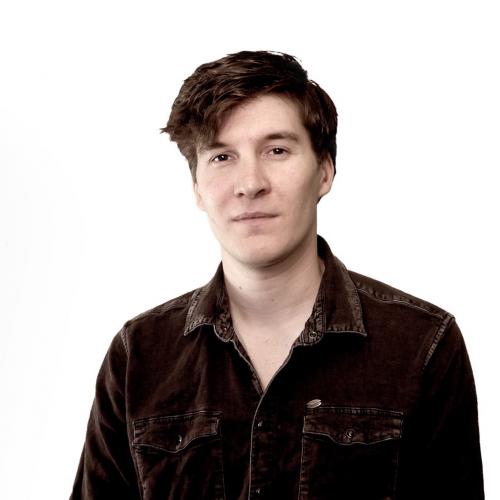
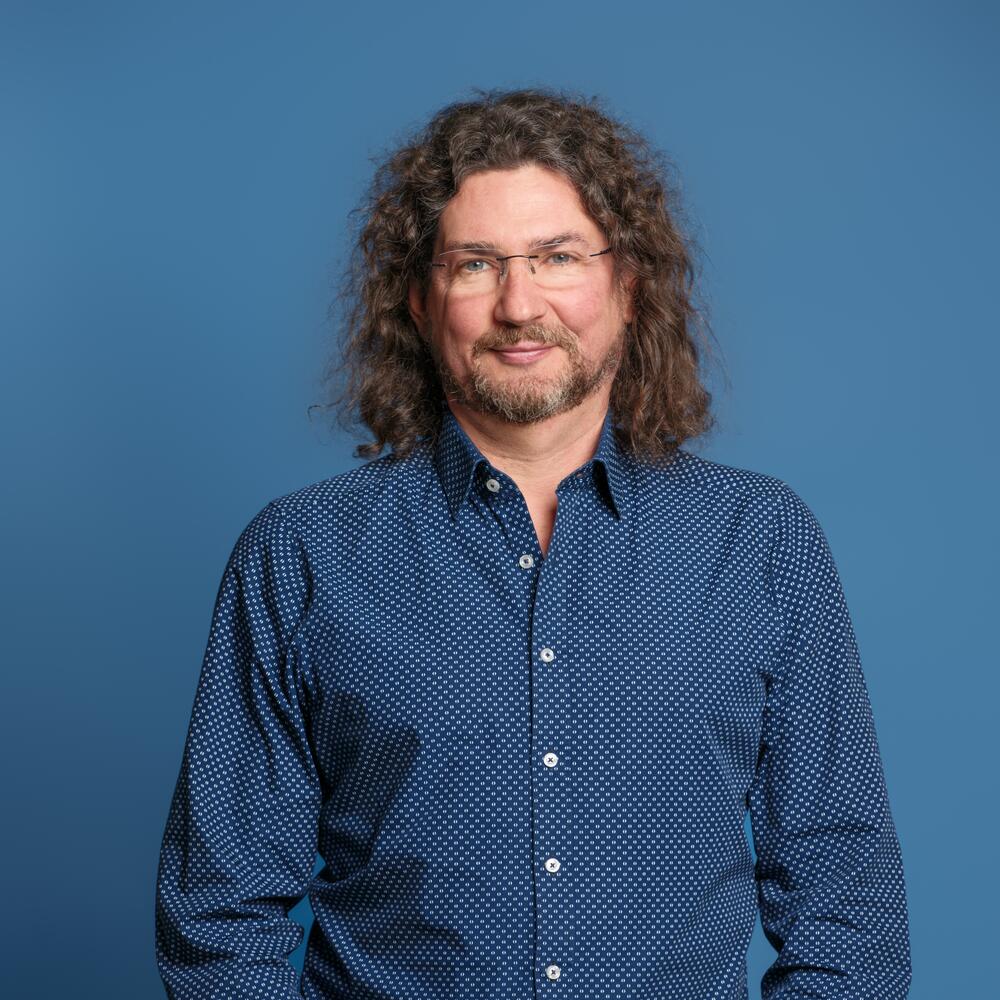
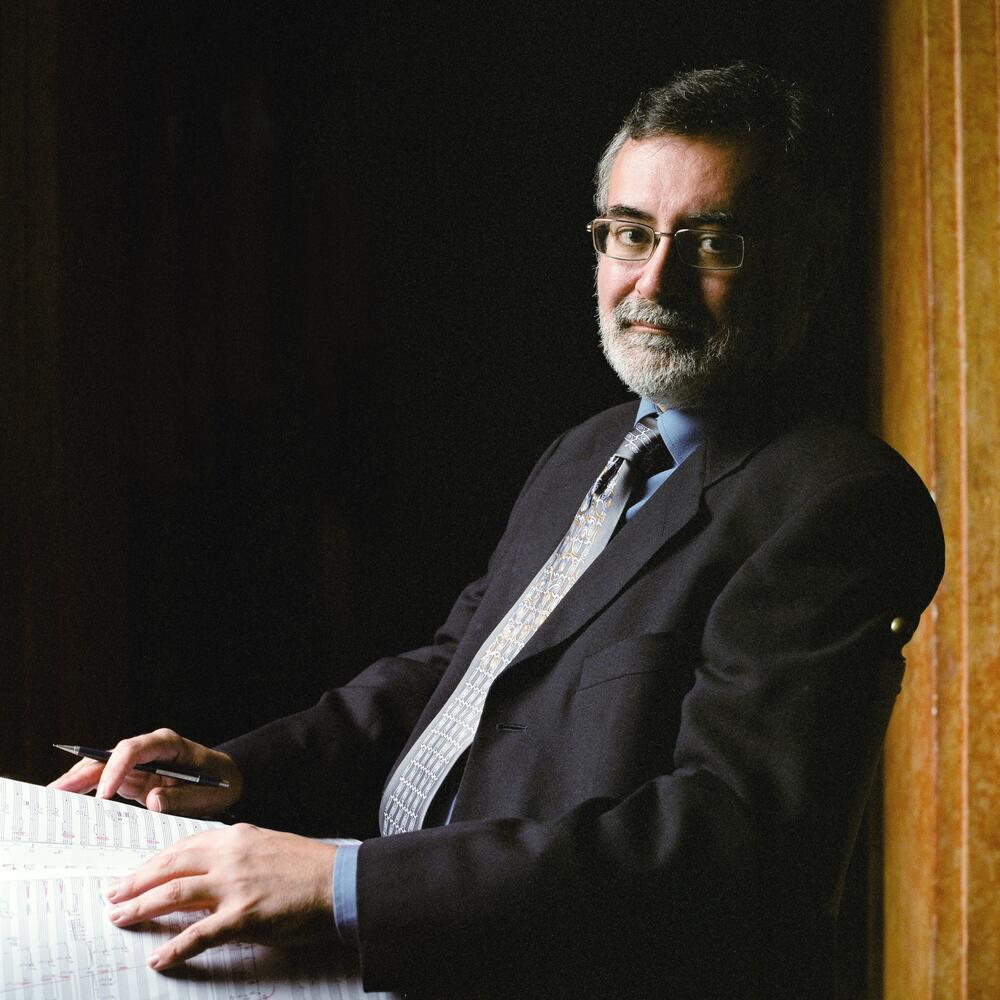
Michael Klimas is a Guest Lecturer in Media Music at JAM - Johannes Andrea Musica. He is a multi-faceted artist known for his roles as a singer, songwriter, producer, and collaborator in the music industry. His career spans over two decades, with notable work in pop, rock, and classical genres. Klimas has performed globally, including at the Tel Aviv Opera House and MTV Unplugged, and has collaborated with artists like Placido Domingo and Coldplay. Education: Artistic/Pedagogical training in singing with Dominik Müller and Wolfram Blank, private guitar lessons, and various workshops. His research interests focus on blending artistic expression with technical production in media music, emphasizing live orchestral collaborations and contemporary songwriting. Klimas has produced and written for numerous artists, including Söhne Mannheims, Die Mayerin, and Mii. His discography spans over 20 albums as singer, producer, or songwriter, including Miracle (2020), Die Ersten (2023), and New Fire (2023). Awards include the Echo Award (2005) and multiple platinum/gold certifications. Notable collaborations: Alvaro Soler, Clara Louise, and the Babelsberg Symphony Orchestra. Klimas has been a key figure in TV music, appearing on The Voice KIDS , Eurovision Song Contest , and Jose Carreras Gala . He remains active in charity initiatives like Künstler gegen Aids and RTL's Bachelorette .
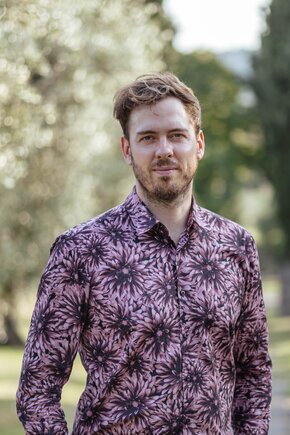
Gerald Peter is a Guest Lecturer in the Piano Department at JAM Music Lab University, blending his expertise in music performance, technology, and composition. He holds an MSc in Multimedia and Software Engineering from FH Technikum Wien and a BSc in Media Informatics from TU Wien, focusing on computer graphics and digital image processing. His research spans music technology innovation (e.g., MIDI-reactive visualizations, expressive digital instruments like ROLI Seaboard), genre fusion (progressive rock, jazz, cinematic scoring), and interdisciplinary multimedia art . Gerald pioneers hybrid approaches where algorithmic visualizations respond to live musical input, creating immersive audiovisual experiences. Recent creative works exhibit strong cinematic and progressive rock influences, often featuring complex arrangements and collaborations with vocalists/instrumentalists. Awards include placement in the Top 12 of the 2014 CINE Film Scoring Competition. As a performer and educator, Gerald has led international workshops for ROLI, Audio Modeling, and GeoShred across Europe and North America. He maintains active collaborations with industry innovators like Jordan Rudess (Dream Theater) and performs with projects including The Gerald Peter Project.
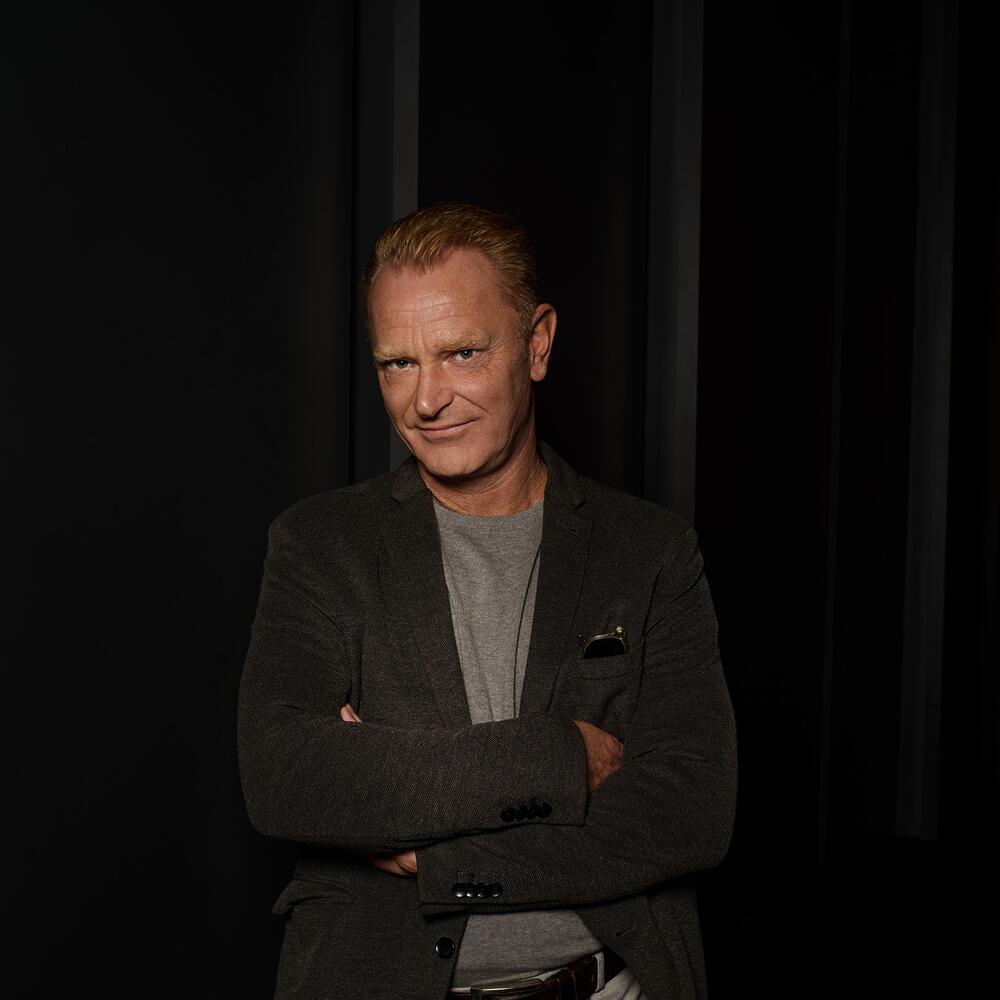
Samuel Penderbayne is a Professor at the Faculty of Performing Arts of the Music and Arts Private University of the City of Vienna . His career bridges modern and classical music, focusing on cross-genre composition to expand aesthetic and social traditions. He has collaborated with renowned opera houses and orchestras worldwide, including the Hamburg State Opera, Zurich Opera House, Ensemble Resonanz, and l'Orchestre Philharmonique de Radio France. Penderbayne earned his PhD from the Hamburg University of Music and Theatre in 2018 with a dissertation on cross-genre composition, receiving the highest grade summa cum laude (1.0) . He has secured grants from prestigious institutions like the German Music Council, Claussen-Simon Foundation, and GEMA Foundation, and is part of the German Research Foundation's "Artistic Music Research" network. His compositions span musical theater, concert music, and film scores, with a unique emphasis on works for young audiences. His children's opera The Snow Queen has been performed over 100 times in Germany and Switzerland. He co-founded the biennial NORDLIED Festival for progressive song art in Hamburg, exploring innovative recital formats.
Gernot Sahler serves as University Professor of Music Dramatic Performance and Head of Mozart:Forum at Mozarteum University Salzburg, where he has led the Department of Opera & Music Theatre since 2017 and directed the Mozart Forum since 2021. Born in Trier, Sahler studied piano and conducting at the Folkwang University of Music, Dance and Theatre in Essen. His academic career includes a professorship in orchestral conducting at Cologne University prior to joining Mozarteum in 2012. Specializing in musical theater direction, Sahler has produced major operatic works including La bohème , Le nozze di Figaro , Don Giovanni , Carmen , and La clemenza di Tito , demonstrating expertise across historical periods and styles. His artistic approach integrates precise musical interpretation with compelling dramatic presentation. Sahler's career features significant international engagements including an invitation to the Venice Biennale for Michaël Levinas's Les Nègres and guest conducting at Slovenia's National Theater Maribor. He has collaborated extensively with directors Hermann Keckeis, Eike Gramss, Karoline Gruber, and Alexander von Pfeil, building a reputation for innovative yet tradition-respecting productions.
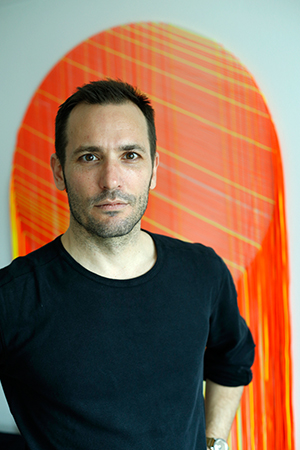
Dr. Marcel Bleuler is a postdoctoral researcher and co-director of the postgraduate program "Arts and International Cooperation" at Zurich University of the Arts, with affiliations at University of Salzburg and Harvard's Carpenter Center. His work bridges curatorial practice, art-historical research, and social/political art initiatives. PhD in Contemporary Art History (University of Bern, 2013) Master's in Art History (University of Zurich) Degree in Fine Arts (Zurich University of the Arts) Marcel focuses on dialogic aesthetics, participation, and cultural inequalities. His research spans conflict regions, with projects in Georgia, Armenia, and Burkina Faso, emphasizing collaborative practices and artistic strategies to address global disparities. Publications include edited volumes on border spaces, migration, and studies of artists like Marina Abramović and Christoph Schlingensief. Recent articles explore media representation of artists, cinematic mediation, and cultural identity constructions. He has led international symposia and educational programs, including "Meet Me Half Way" (2018) and "Working Across Divides" (2016). His roles involve third-party funded projects, research networking, and expert advisory work for the Swiss Art Prize.
Nils Grosch is a University Professor and Head of Department for Art, Music and Dance Studies at Paris Lodron University Salzburg. With an extensive research portfolio including 103 publications and leadership of 19 active research projects, he maintains a prominent position in contemporary musicology. His academic leadership is evidenced by his role as department head and his extensive project management responsibilities across multiple significant research initiatives. Grosch's research focuses on music history with particular emphasis on musical theater, operetta, and the complex relationship between music and historical contexts. His work examines music mobility, particularly the migration of musicians and musical ideas, with significant attention to the Glyndebourne Festival and émigré musicians during the 1930s-1940s. He investigates historical representation in musical theater, especially regarding how history is portrayed in English and German-language musicals since WWII. His scholarship also addresses the production of popular music in Germany and Austria between 1930-1950, including the challenging period of the Nazi regime and its impact on musical culture. Analysis of his recent publications reveals a strong thematic focus on cultural displacement, artistic migration, and the complex interplay between politics and musical production. His work on the Glyndebourne Festival examines how European musicians navigated exile and cultural adaptation, while his research on Nazi-era music explores the paradoxes of artistic production under dictatorship. Grosch demonstrates particular expertise in the historical analysis of popular musical theater forms and their sociopolitical contexts. Grosch actively contributes to the academic community through numerous lectures, conference presentations, and editorial work. His 170 documented activities demonstrate extensive engagement with both scholarly and public audiences, including specialized academic lectures and public-facing presentations. He serves on various committees including examination boards, habilitation committees, and appointment committees, reflecting his standing within the academic community. His current research projects indicate significant grant funding supporting his investigations into music history, particularly concerning the representation of history in musical theater and the production of popular music during politically turbulent periods.
Rainer Josef Schwob is a postdoctoral researcher and Deputy Director of the Institute for the History of Musical Reception and Interpretation at the Mozarteum University Salzburg. He has been researching and teaching at the institution since 2014, with previous academic positions at the University of Vienna where he worked as a university assistant from 2013-2014. His academic career includes significant research on Mozart reception, Monteverdi studies, and interpretation research. Dr. Schwob completed his education with a doctorate from the University of Vienna in 2004, with a dissertation on Claudio Monteverdi's 'L'incoronazione di Poppea' in the 20th century under Gernot Gruber. His academic training included studies in musicology and ancient history at Karl-Franzens-Universität Graz and the University of Vienna, with additional musical training in piano and organ at various conservatories in Austria. His educational background spans formal musical training, historical studies, and specialized musicological research. Schwob's research focuses on interpretation research and analysis, particularly regarding W.A. Mozart, early reception of Mozart and his contemporaries, canon and repertoire formation, Monteverdi reception, music databases, Alban Berg, Ernst Krenek, arrangement techniques, and the history of piano reduction. His work bridges historical musicology with practical performance considerations, examining how musical works have been understood and performed across different historical periods. He has developed expertise in digital musicology through his work on music databases and digital editions of historical music criticism. His scholarly output reveals consistent engagement with Mozart studies across multiple dimensions, from reception history to performance practice. The articles demonstrate a methodological approach that combines textual analysis of historical sources with practical examination of musical interpretation. Recent work shows increasing focus on interdisciplinary approaches, connecting musicology with media studies, cultural history, and digital humanities. Recognition Award for Outstanding Dissertation from the Institute for Musicology at the University of Vienna (January 2006) Dr. Schwob has supervised numerous bachelor's and master's theses at Mozarteum University Salzburg and previously at the University of Vienna. His grant activity includes significant third-party funded research projects, particularly the FWF-funded projects 'W. A. Mozart im Spiegel des Musikjournalismus bis 1828' and 'Towards Interdisciplinary, Computer-assisted Analysis of Musical Interpretation: Herbert von Karajan.' These projects demonstrate his ability to secure competitive research funding and lead substantial scholarly initiatives. As Deputy Director of the Institute for the History of Musical Reception and Interpretation, Schwob contributes to the institutional framework supporting research in musical interpretation and reception history. His work on digital editions and music databases represents an important contribution to creating accessible scholarly resources for the broader musicological community. The institute serves as a hub for interdisciplinary research connecting historical musicology with performance practice studies.
Mirjam Klebel is a Lecturer for Dance & Movement at the Thomas Bernhard Institute, University Mozarteum Salzburg. She is an active dancer, choreographer, performer, and teacher working internationally at the intersection of theater, opera, and dance. Her artistic practice focuses on the fluid translation of text into physical parameters and the relationships between movement, sound, and visual elements. Research Interests: Her work investigates the flow of information across disciplines, with emphasis on: Physical improvisation and contemporary dance techniques Interdisciplinary performance creation (theater/dance/opera) Kinesthetic relationships between facts, images, and sounds Choreography as embodied translation process Professional Engagements: She performs internationally with collaborators like Milli Bitterli, Theatercombinat, and Magdalena Chowaniec at venues including Impulstanz Festival, Burgtheater Vienna, and Steirischer Herbst. As a movement coach, she has collaborated with directors including Amelie Niermeyer and Laura Linnenbaum for productions at Bregenz Festival, Düsseldorf Schauspielhaus, and Residenztheater Munich. Teaching: Since 2010, she has taught contemporary dance and improvisation at Mozarteum Salzburg and guest-lectured at institutions like SEAD Salzburg, Impulstanz, and University of New Mexico.
Peter Schmidt serves as Head of the Digital Media Department and lecturer at Mozarteum University, bringing extensive expertise in music technology and digital media production to his academic leadership roles. His work bridges theoretical musicology with practical applications in performance spaces and multimedia environments. Engineering degree in image and sound engineering from Robert Schumann Hochschule and Düsseldorf University of Applied Sciences (1993) PhD in musicology from Mozarteum University (2017), dissertation: "Sound Engineer, Mediator between Art and Technology" Professor Schmidt's research focuses on the intersection of art and technology, particularly examining the sound engineer's role as creative mediator between artistic vision and technical implementation. His work integrates practical theater production experience with academic scholarship in digital media applications for performance arts. He has developed innovative approaches to multimedia production systems that support both traditional and experimental artistic expression. As department head since 2008 and lecturer since 2010, Schmidt oversees academic programs including the Multimedia Supplementary Study Program. He previously served as head of the sound department at Dortmund Theater (1994-2008), where he managed technical production for diverse theater, musical, and opera performances. His leadership combines industry experience with academic rigor in digital media education. Professor Schmidt directs the sound and video studio/MediaLab at Mozarteum University, which serves as a technical hub for interdisciplinary artistic research and production. The facility supports experimental work in audio-visual integration, interactive media, and performance technology development across multiple artistic disciplines.
Elisa Citterio serves as University Professor of Baroque Violin & Viola in the Department of Early Music at Mozarteum University. An internationally acclaimed period-instrument specialist, she previously held the position of Music Director at Tafelmusik (2017-2022) and concertmaster of Milan's Teatro alla Scala Orchestra (2004-2017). Her educational foundation includes violin and viola studies at Brescia's L. Marenzio Conservatory (graduating with highest honors), followed by postgraduate training with Franco Gulli, Pavel Vernikov, and Corrado Romano. She later specialized in Baroque violin through studies with Enrico Onofri at Schola Cantorum Basilensis and Luigi Mangiocavallo in Rome. Professor Citterio's artistic focus centers on authentic 17th-18th century performance practices, with particular expertise in Vivaldi, Bach, and Handel. Her interpretive approach emphasizes historical context through collaborations with ensembles like Europa Galante, Accademia Bizantina, and Il Giardino Armonico across Europe and North America. Her accolades include the 2019 Leonardo Award recognizing her cultural contributions to Canada. She remains active in pedagogy through masterclasses at institutions including Juilliard School and Italian conservatories in Udine, Florence, and Ferrara. Current activities feature recent conducting engagements including her July 2024 New York debut leading Teatro Nuovo's historical orchestra in Carolina Uccelli's 1835 opera, demonstrating ongoing artistic leadership beyond performance.
Heidelore Wallisch Schauer serves as a Lecturer at Mozarteum University Salzburg (since 2011), Mozarteum University Innsbruck (since 2020), and the Tyrolean State Conservatory (from February 2021). She is recognized as one of the most important contemporary representatives of the hammered dulcimer and salterio. Her educational background includes specialized studies in dulcimer, salterio, early music, and historical performance practice at the Anton Bruckner Private University Linz under Karl-Heinz Schickhaus and August Humer. Wallisch Schauer's artistic work spans multiple disciplines, with particular expertise in historical performance practice while simultaneously exploring contemporary interpretations across genre boundaries. Her innovative approach combines traditional folk elements with classical, jazz, and modern musical forms. Her significant contributions to music performance have been recognized through performances at prestigious venues including the Brucknerhaus in Linz, Festspielhaus in Salzburg, Konzerthaus in Vienna, Munich Philharmonic, and Vienna State Opera. She actively collaborates with diverse ensembles such as Franui, Concentus Musicus Wien, Bruckner Orchestra Linz, musica fiorita, Austrian Ensemble for New Music, and leads her own crossover projects KultUrig (with Alexander Maurer) and lila house (with jazz guitarist Thomas Wallisch-Schauer).
Simone Fontanelli is a Senior Lecturer in New Music at the Strings Department of Mozarteum University in Salzburg since 2000 and Director of the Institute for New Music. As a composer, conductor, and pedagogue, he has gained international recognition through commissions, performances, and masterclasses at prestigious institutions like Juilliard School, Royal Academy of Music, and Moscow Tchaikovsky Conservatory. His work spans contemporary music, opera, and interdisciplinary collaborations. Affiliations : Mozarteum University, Salzburg (2000–present) Accademia Chigiana, Siena (2023–present) Gamper Festival of Contemporary Music (2003–2009) Education : Composition, Conservatorio of Milano (1989) Philosophy, University of Milan Research & Performance : Focuses on contemporary music, blending composition, conducting, and pedagogy. His 2011 children's opera Es war einmal ein Stück Holz (based on Pinocchio) achieved global acclaim, with sold-out performances and a 2019 CD release. Awards : VI. Salzburg International Mozart Composition Competition (1995) Pedagogy & Collaborations : Conducted masterclasses at Juilliard School, Royal College of Music, and Yehudi Menuhin School. Directed the Gamper Festival of Contemporary Music and co-led the Bowdoin Summer Music Festival. Collaborates with institutions worldwide, including Quasar Teatro (Spain) and Dutch Eurythmy Dance Ensemble.
Martin Eybl is a Lecturer in the Department of Music History at the University of Music and Performing Arts Vienna, specializing in contemporary musicology with particular focus on 20th and 21st century composition practices. His academic work is situated within research centers dedicated to Arnold Schoenberg and Viennese Modernism, reflecting the institution's strong connection to Austria's musical heritage. His research interests include: Contemporary Classical Music Composition Processes Viennese Music Scene 20th Century Music History Musical Interpretation Analysis of his published work shows a consistent focus on contemporary composers and their creative processes, with particular attention to the Viennese context. His interview with Beat Furrer demonstrates methodological approaches centered on in-depth dialogue with living composers to understand contemporary musical creation. Martin Eybl contributes to the academic community through: Scholarly publications in music journals Potential supervision of Master's theses in Musicology Participation in research projects related to music history Within the institutional framework, Eybl is associated with research initiatives including 'Musikerfamilien,' 'GOING VIRAL,' 'A World Within a Room?,' 'New Senfl Edition,' and 'Performers as Commissioners,' though specific leadership roles are not detailed in the available information.
Anita Mayer-Hirzberger is an Associate Professor at the Institute for Analysis, Theory and History of Music, University of Music and Performing Arts Vienna. Her research focuses on socio-cultural aspects of music, music and politics, and music identity across historical periods. She completed her habilitation in historical musicology at the same institution. Her 2008 book ... ein Volk von alters her musikbegabt. Der Begriff ‘Musikland Österreich’ im Ständestaat explores national identity through music history. In 2014, she published an article analyzing the 200th anniversary of the Second Turkish Siege of Vienna, highlighting tensions between patriotic narratives and entertainment in 19th-century music-drama works. Her academic work bridges historical analysis with contemporary political discourses, emphasizing how music reflects and shapes cultural identities during periods of social conflict.
Guido Mancusi is a faculty member at the Music and Arts Private University of the City of Vienna (MUK), affiliated with the Faculty of Music since 1994. His academic role aligns with his expertise in conducting and composition. Education: Studied conducting and composition at MUK. Professional Experience: Assistant to Riccardo Muti at La Scala, Milan; Adam Fischer at Bayreuth Festival; guest conducting in New York, Buenos Aires, Tel Aviv, Valencia, and Sweden/Turkey with Schönbrunn Palace Orchestra; Chief Conductor at Klagenfurt City Theatre. Research Interests: Focus on Conducting, Composition, and Classical Music, with a career bridging academic and professional orchestral/opera realms.