Akiko Nakajima is a Japanese soprano and academic faculty member at the Music and Arts University of the City of Vienna (MUK) in the Faculty of Performing Arts , where she has taught since February 2016. She serves as General Director of the Gunma Opera Academy 'Noura-Juku' and Artistic Advisor at the Mozarthaus Vienna . Her career spans international opera stages and artistic direction. Specialization in classical and early music opera roles Founder and director of innovative cross-cultural productions like Mugen Noh - Pierrot Lunaire Active in music festivals and recording projects at venues such as the Musikverein Scientific Awards & Recognitions: Australian Singing Competition (1990) - First Prize European Broadcasting Union Award for Alcina production Opernwelt Best Young Artist of the Year nomination Her academic contributions focus on vocal pedagogy, operatic performance, and bridging European classical traditions with Japanese artistic concepts. She continues to shape opera education while maintaining her performance career.
Alberto Sana serves as a Lecturer of Italian at the Music and Arts Private University of the City of Vienna (MUK) since 2013 and concurrently at the Romance Studies Institute of the University of Vienna since 2004. He delivers language courses, subject-specific didactic workshops, and instruction in Italian and French across general and vocational secondary schools (AHS/BHS) in Vienna. His academic foundation includes distinguished studies in Italian and French at the University of Vienna (2000-2003), culminating in a thesis on vocabulary didactics in Italian language education. This work was condensed into a published chapter within a didactics-focused volume edited by Prof. Dr. Tanzmeister. Sana specializes in the intersection of Italian language pedagogy and operatic arts, with deep expertise in Italian librettos and vocal repertoire. His research integrates linguistic theory with practical music education, emphasizing vocabulary acquisition strategies for opera-focused language learners and the cultural dimensions of Italian musical heritage. This dual focus bridges linguistic scholarship and performance practice. His sole documented publication (2008) examines vocabulary teaching methodologies within Italian language instruction, reflecting his commitment to innovative didactic frameworks. The work establishes connections between linguistic theory and applied educational contexts, particularly relevant for students engaged with Italian operatic literature. Professionally, Sana maintains active involvement in Vienna's musical ecosystem beyond academia. As a tenor in the Vienna Singverein choir under Johannes Prinz's direction, he embodies the practical application of his scholarly interests in Italian opera. His career trajectory—from international business to language education—demonstrates a unique synthesis of commercial experience and artistic scholarship.
Rainer O. Brinkmann serves as Guest lecturer in the Department of Music Education at Mozarteum University Salzburg. An "ExOperTe" and dramaturge, he specializes in making music theater accessible to children and youth through innovative scenic interpretation methodologies. Current academic affiliations: Mozarteum University Salzburg: Head of "Music Theater Education" course (since 2014) HMTMH Hannover: Project manager for n[o]ice! - contemporary opera development (since 2022) Past institutional roles: Berlin State Opera: Built mediation department and directed Young State Opera (2001-2018) Salzburg Festival: Curator/dramaturge for youth program "jung&jede*r" His research centers on cultural education through music theater, with emphasis on youth engagement and scenic interpretation. Brinkmann founded the Institute for Scenic Interpretation of Music Theater and anchors opera in cultural education through children's/youth projects. Professional trajectory spans theater teaching, acting, and directing (KonzerTheater, Theatercompanie Voland). Since 1984, he has published extensively on music theater mediation while developing curricula that harness young audiences' energy for cultural institutions' future vision.
Christiane Büttig is a Professor for Choir and Ensemble Conducting at the Mozarteum University's School of Music & Art Education. She holds a dual background in music and sports sciences from Rostock and Greifswald universities, with advanced conducting training in Dresden and masterclasses under Simon Halsey. Her career spans over 200 concerts worldwide with prestigious ensembles like the Berlin Philharmonic and Israel Philharmonic Orchestra. Key roles include leadership of the Dresden University Choir (2012–2024), artistic director of KlangVerwaltung Choir (since 2019), and choral preparations at Semperoper Dresden for productions like *Turandot* and *Lohengrin*. She has guest-conducted across Europe and directed the 'In terra pax' international choral academy (2017–2021). Notable collaborations include Mahler's Symphony No. 3 with Riccardo Minasi and Kent Nagano's Brahms project at Hamburg Elbphilharmonie. Teaching positions included Munich University of Music (2022–2024) and Vienna's University of Music and Performing Arts.
Laszlo Gyüker is a Hungarian-born conductor and lecturer specializing in operetta. Since September 2018, he has been a Lecturer for the Operetta course at the Musik und Kunst Privatuniversität der Stadt Wien (MUK). His career includes extensive work in operetta performance and direction, spanning festivals and theaters across Europe. He studied at the Graz University of Arts (Magister der Künste, 2008). From 2010–2012, he served as Kapellmeister for Bühne Baden, managing a broad operetta repertoire. He directed operettas at the Lehár Festivals Bad Ischl (2009–2017), including *Das Land des Lächelns*, *Die Csárdásfürstin*, and *Die Fledermaus*. In 2018, he debuted at the Volksoper with *Die Csárdásfürstin* and led a production of *Die Fledermaus* at Tirana Opera. As Musical Director of the Budapest Operetta World Theater and Operettenbühne Wien, he toured Germany with productions like *Die Zauberflöte* and *Gräfin Mariza*. Since 2014–2019, he was Artistic Director of the Luisenburg Festspiele. Recent engagements include conducting *My Fair Lady* at the Volksoper during the 2019/20 season.
Univ.-Prof. Dr. Eva Tacha-Breitling is a Professor at the Music and Arts University of the City of Vienna (MUK), affiliated with the Faculty of Performing Arts. Her roles include teaching breath, voice, and speech formation, as well as leading pedagogical initiatives in expression and stage presence. She has held a permanent position since 2005 and serves on the Study and Research Commission of the Faculty of Performing Arts. Education: Studied German and Theater Studies at Ludwig Maximilian University of Munich Certified speech therapist (LKH Graz) Master's in Rhythmics/Music and Movement Education (University of Music and Performing Arts Vienna) Training with renowned figures like Lauren Newton, Martin Klietmann, and Ferdinand Kaspar Research & Artistic Work: Focuses on word-sound-speech scores and artistic research. Her projects include music recitation programs with institutions like the Gustav Mahler Society. She has contributed to an anthology (2021) on interdisciplinary performance methodologies. Performance & Pedagogy: Acting in major festivals (Salzburg Festival, Steirischer Herbst) Speech coaching for opera productions (e.g., Faust I & II directed by Peter Stein) Pedagogical leadership at the Max Reinhardt Seminar (1996–2005) Developed the spiral(e) dance/theater project as artistic director Committee & Outreach: Active in curriculum development and artistic research advocacy within MUK. Provides speech training for actors, conductors, and dancers internationally.
Univ.-Prof. Manfred Schiebel is a Professor at the Music and Arts University of the City of Vienna, specializing in conducting, choir leadership, and musical coaching. Since 1991, he has held roles as repetiteur, chorus leader, and educator. His career includes leadership positions with the Chorvereinigung Jung-Wien and Wiener Männergesang-Verein, alongside collaborations with renowned artists like Grace Bumbry and Edita Gruberová. Teaching roles: Korrepetition (coaching) at the Universität für Musik und darstellende Kunst Wien since 2002. Artistic activities: Musical assistance at Festspielhaus St. Pölten (2000), accompanist for lied concerts, and international masterclasses (e.g., Wiener Meisterkurse, Musikforum Stift Viktring). His expertise spans opera coaching, choral direction, and historical performance practices, with a focus on fostering young talent through pedagogical work in music education.
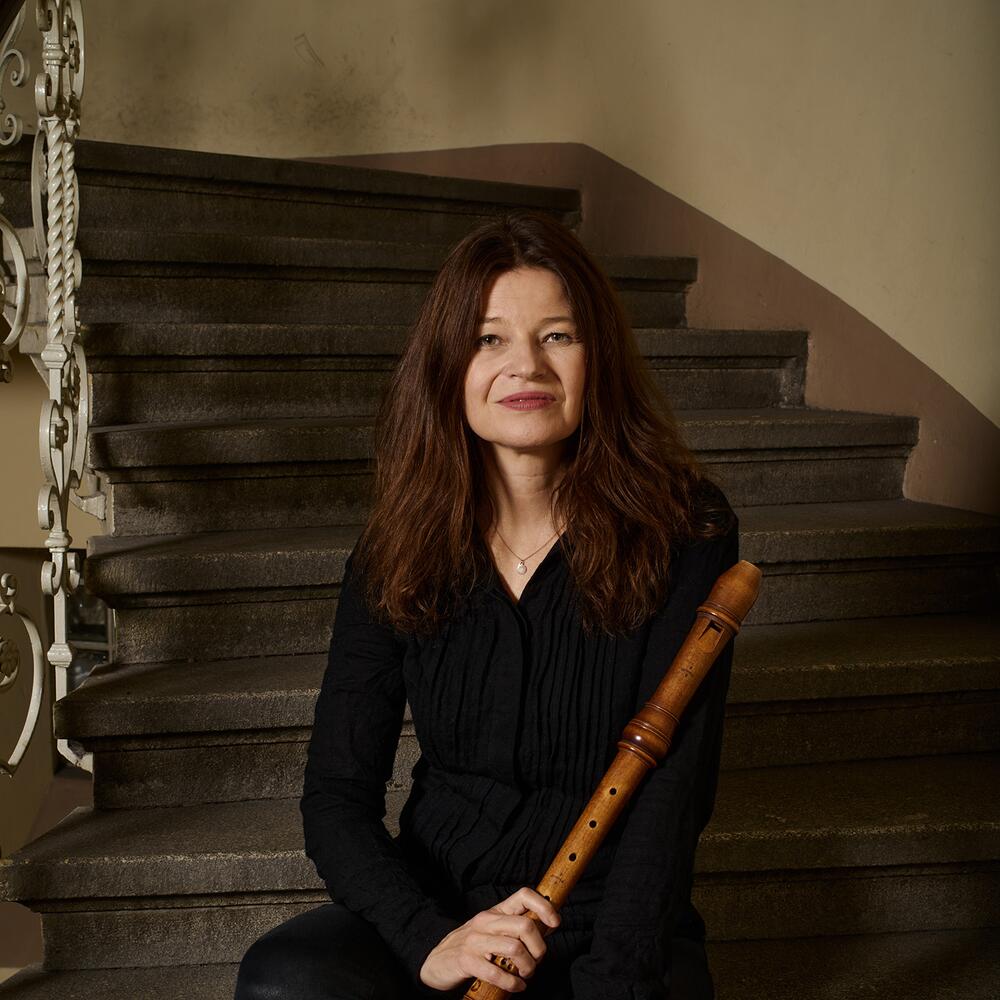
Univ.-Prof. Dorothee Oberlinger is a globally influential figure in early music, serving as Professor of Recorder at Mozarteum University. She leads the Institute for Early Music and co-founded Ensemble 1700. Her roles include Deputy Department Head, Deputy Head of Institute, and Festival Director for the Potsdam Sanssouci and Bad Arolsen Baroque Festivals. She has conducted operas such as Handel’s Lucio Cornelio Silla and Scarlatti’s Il giardino d'amore . Education: Recorder, School Music, and German studies in Cologne, Amsterdam, and Milan. Awards: Opus Klassik, Echo Klassik, Federal Cross of Merit. Her research focuses on Baroque performance practices and contemporary collaborations, such as the album Touch with Yello. She directs major festivals and has been funded by NEUSTART KULTUR and NRW Ministry for opera projects (2022–2024). Operas conducted include Polifemo (Bononcini, 2019), Pastorelle en musique (Telemann, 2021), and Scarlatti’s I portentosi effetti (2022). She is an honorary citizen of Simmern and actively promotes early music through teaching and performance.
Gernot Sahler serves as University Professor of Music Dramatic Performance and Head of Mozart:Forum at Mozarteum University Salzburg, where he has led the Department of Opera & Music Theatre since 2017 and directed the Mozart Forum since 2021. Born in Trier, Sahler studied piano and conducting at the Folkwang University of Music, Dance and Theatre in Essen. His academic career includes a professorship in orchestral conducting at Cologne University prior to joining Mozarteum in 2012. Specializing in musical theater direction, Sahler has produced major operatic works including La bohème , Le nozze di Figaro , Don Giovanni , Carmen , and La clemenza di Tito , demonstrating expertise across historical periods and styles. His artistic approach integrates precise musical interpretation with compelling dramatic presentation. Sahler's career features significant international engagements including an invitation to the Venice Biennale for Michaël Levinas's Les Nègres and guest conducting at Slovenia's National Theater Maribor. He has collaborated extensively with directors Hermann Keckeis, Eike Gramss, Karoline Gruber, and Alexander von Pfeil, building a reputation for innovative yet tradition-respecting productions.
Rainer Josef Schwob is a postdoctoral researcher and Deputy Director of the Institute for the History of Musical Reception and Interpretation at the Mozarteum University Salzburg. He has been researching and teaching at the institution since 2014, with previous academic positions at the University of Vienna where he worked as a university assistant from 2013-2014. His academic career includes significant research on Mozart reception, Monteverdi studies, and interpretation research. Dr. Schwob completed his education with a doctorate from the University of Vienna in 2004, with a dissertation on Claudio Monteverdi's 'L'incoronazione di Poppea' in the 20th century under Gernot Gruber. His academic training included studies in musicology and ancient history at Karl-Franzens-Universität Graz and the University of Vienna, with additional musical training in piano and organ at various conservatories in Austria. His educational background spans formal musical training, historical studies, and specialized musicological research. Schwob's research focuses on interpretation research and analysis, particularly regarding W.A. Mozart, early reception of Mozart and his contemporaries, canon and repertoire formation, Monteverdi reception, music databases, Alban Berg, Ernst Krenek, arrangement techniques, and the history of piano reduction. His work bridges historical musicology with practical performance considerations, examining how musical works have been understood and performed across different historical periods. He has developed expertise in digital musicology through his work on music databases and digital editions of historical music criticism. His scholarly output reveals consistent engagement with Mozart studies across multiple dimensions, from reception history to performance practice. The articles demonstrate a methodological approach that combines textual analysis of historical sources with practical examination of musical interpretation. Recent work shows increasing focus on interdisciplinary approaches, connecting musicology with media studies, cultural history, and digital humanities. Recognition Award for Outstanding Dissertation from the Institute for Musicology at the University of Vienna (January 2006) Dr. Schwob has supervised numerous bachelor's and master's theses at Mozarteum University Salzburg and previously at the University of Vienna. His grant activity includes significant third-party funded research projects, particularly the FWF-funded projects 'W. A. Mozart im Spiegel des Musikjournalismus bis 1828' and 'Towards Interdisciplinary, Computer-assisted Analysis of Musical Interpretation: Herbert von Karajan.' These projects demonstrate his ability to secure competitive research funding and lead substantial scholarly initiatives. As Deputy Director of the Institute for the History of Musical Reception and Interpretation, Schwob contributes to the institutional framework supporting research in musical interpretation and reception history. His work on digital editions and music databases represents an important contribution to creating accessible scholarly resources for the broader musicological community. The institute serves as a hub for interdisciplinary research connecting historical musicology with performance practice studies.
Peter Schmidt serves as Head of the Digital Media Department and lecturer at Mozarteum University, bringing extensive expertise in music technology and digital media production to his academic leadership roles. His work bridges theoretical musicology with practical applications in performance spaces and multimedia environments. Engineering degree in image and sound engineering from Robert Schumann Hochschule and Düsseldorf University of Applied Sciences (1993) PhD in musicology from Mozarteum University (2017), dissertation: "Sound Engineer, Mediator between Art and Technology" Professor Schmidt's research focuses on the intersection of art and technology, particularly examining the sound engineer's role as creative mediator between artistic vision and technical implementation. His work integrates practical theater production experience with academic scholarship in digital media applications for performance arts. He has developed innovative approaches to multimedia production systems that support both traditional and experimental artistic expression. As department head since 2008 and lecturer since 2010, Schmidt oversees academic programs including the Multimedia Supplementary Study Program. He previously served as head of the sound department at Dortmund Theater (1994-2008), where he managed technical production for diverse theater, musical, and opera performances. His leadership combines industry experience with academic rigor in digital media education. Professor Schmidt directs the sound and video studio/MediaLab at Mozarteum University, which serves as a technical hub for interdisciplinary artistic research and production. The facility supports experimental work in audio-visual integration, interactive media, and performance technology development across multiple artistic disciplines.
Guido Mancusi is a faculty member at the Music and Arts Private University of the City of Vienna (MUK), affiliated with the Faculty of Music since 1994. His academic role aligns with his expertise in conducting and composition. Education: Studied conducting and composition at MUK. Professional Experience: Assistant to Riccardo Muti at La Scala, Milan; Adam Fischer at Bayreuth Festival; guest conducting in New York, Buenos Aires, Tel Aviv, Valencia, and Sweden/Turkey with Schönbrunn Palace Orchestra; Chief Conductor at Klagenfurt City Theatre. Research Interests: Focus on Conducting, Composition, and Classical Music, with a career bridging academic and professional orchestral/opera realms.
Matthias Schorn is a Professor at the Music and Arts Private University of the City of Vienna, where he teaches clarinet and contributes to musical pedagogy. An acclaimed principal clarinettist for the Vienna State Opera and Vienna Philharmonic since 2007, his career spans orchestral performance, solo engagements with ensembles like the London Mozart Players and Berlin Philharmonic orchestras, and chamber music collaborations with artists including Daniel Hope, Vilde Frang, and the Danish String Quartet. He regularly performs under conductors such as Gustavo Dudamel and Christian Thielemann. His research focuses on contemporary clarinet repertoire, ethnomusicological practices, and innovative music dramaturgy. Schorn founded the festival 'PalmKlang' and ensemble 'Faltenradio,' and has served as Artist-in-Residence at major European festivals. He actively commissions new works, with compositions dedicated to him by Friedrich Cerha, Georg Breinschmid, and Bob Mintzer. Schorn directs master classes globally at institutions including the Manhattan School of Music, Mozarteum University Salzburg, and Singapore's YST Conservatory. Beyond academia, he operates 'Stop for Art from All Directions'—a multidisciplinary arts space in Lower Austria featuring performance venues and recording facilities.
Wolfgang Gratschmaier , born in 1960 in Styria, is a tenor, director, and lecturer active at the Music and Arts Private University of the City of Vienna since 2015. His career spans performing and directing roles at institutions like the Vienna Volksoper (since 2003), Graz Opera House, and international guest engagements in Berlin, Prague, Seoul, and the USA. He studied singing under Prof. Gerhard Kahry at the Vienna University of Music and Performing Arts and acting with Georg Tabori at Vienna’s Schauspielhaus. Co-founder of Vienna’s independent opera scene Founder of Theatergarten , pioneering collaborative directing with female co-directors Co-founder of neueoper.at (since 1989) Artistic director of SCHLOSS THALHEIM CLASSIC (since 2017) Gratschmaier’s research interests intersect opera performance, theatrical innovation, and scenic design, informed by his interdisciplinary career. He has directed productions of Tosca , I Pagliacci , Don Giovanni , and others, blending classical and modern approaches. His work emphasizes collaborative frameworks in opera staging.
Federico Celestini is a Professor of Musicology at the University of Innsbruck and Director of the Institute of Musicology. A full member of the Austrian Academy of Sciences (elected 2021), he previously served as President of the Austrian Society for Musicology (2017-2022) and co-editor of Acta Musicologica (2011-2022). His research integrates music history, aesthetics, and cultural studies, with specializations in Viennese Modernism, Nietzsche's philosophy, and performativity theories. Education: Violin studies at Giulio Briccialdi Music Academy, Terni Doctorate (1998) and Habilitation (2004) in Musicology from Karl-Franzens-University Graz Studies in musicology, literature, and aesthetics at La Sapienza University, Rome His research examines music from the 17th to 21st centuries through interdisciplinary lenses, particularly exploring intersections between sound, notation, and cultural identity. Key areas include: German idealism's impact on musical aesthetics; deconstruction of collective identities in Central European modernism; and medieval notation as embodied practice. Recent work analyzes performative dimensions of musical writing and intercultural dialogues in post-war avant-garde. Publications demonstrate consistent engagement with Mahler, Haydn, and Scelsi, evolving from historical analysis toward theories of musical materiality. Recent articles explore notation as performative act, grotesque aesthetics in theater music, and philosophical contradictions in Wagner/Nietzsche reception. Monographs like Nietzsche's Philosophy of Music (2016) establish frameworks for understanding music as epistemic practice. Awards & Fellowships: Tyrolean State Prize for Science (2022) Alexander von Humboldt Fellowship (2005-2007) Mellon Foundation Visiting Professorship (2010) British Academy Visiting Fellowship (2002) Martha Goldsworthy Arnold Fellowship He has led major research initiatives including the FWF project Scelsi and Austria (2010-2012) and co-directed the DACH project Towards a Theory of Musical Notation (2018-2021). As founding head of the Gustav Mahler Research Centre (2021-present), he oversees archival studies and performance partnerships. Current projects examine satirical strategies in musical modernism and ancient Greek sound politics. At Innsbruck, he coordinates graduate studies in musicology and mentors early-career researchers. His leadership extends to the Gustav Mahler Music Weeks in Toblach, where he curates scholarly-performance dialogues since 2016.