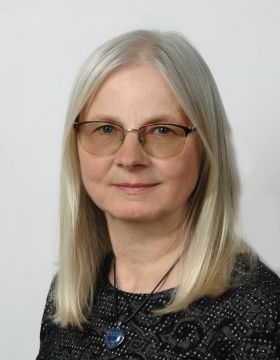
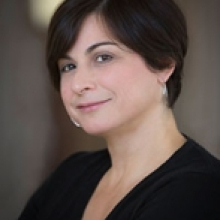
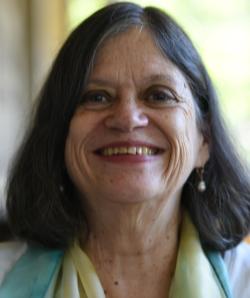
Barbara Pazur is a Professor at the Department of Choral Studies and Vocal Education, Faculty of Arts, Maria Curie-Skłodowska University. She specializes in Edwin E. Gordon's Music Learning Theory, focusing on audiation, choral improvisation, and early childhood music education. She leads the "Teoria uczenia się muzyki E.E. Gordona" scientific circle and serves as treasurer of the Lublin Division of Polish Choral Conductors' Association. Completed music education at Wrocław Music Academy (1985) Postgraduate studies in Vocal Emission and Choral Conducting Habilitated in Music Arts (Choral Conducting) at Fryderyk Chopin University (2014) Her research focuses on musical creativity development through Gordon's methodology, autism-friendly music approaches, and Polish folk/popular song adaptation for choral education. She pioneered the "Lubelski Festiwal Chórów Parafialnych" and co-developed national choral programs. Key awards include the Srebrny Krzyż Zasługi (2018), multiple Rector's Awards, and the Pro Maris Medal (2016). She has published numerous books and articles on Gordon-based pedagogy and choral arrangements.
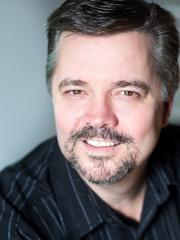
Dr. Shaun Brown is the Director of Performance and Voice Performance Fellow at The University of Queensland's School of Music, within the Faculty of Humanities, Arts and Social Sciences. He holds a Doctor of Musical Arts from the University of North Texas and a Master's from UQ. His career spans over three decades with Opera Queensland, where he has performed in over 50 productions, including Don Giovanni, Carmen, and Così fan Tutte. Internationally, he has collaborated with institutions like Opéra de Lyon and the Center for Contemporary Opera in New York. His research focuses on vocal performance practices, particularly Erich Korngold's early Lieder. Notable performances include roles in Britten’s War Requiem, Bach’s St Matthew Passion, and Handel’s Messiah. Recent engagements include OQ’s Festival of Outback Opera productions and recitals with Brisbane Music Festival. He actively participates in workshops, masterclasses, and community arts initiatives. Education: Doctor of Musical Arts, University of North Texas Masters (Coursework), The University of Queensland Research interests emphasize historical vocal performance techniques, interpretation of 20th-century Lieder, and contemporary opera. His 2016 thesis on Korngold’s works highlights interdisciplinary approaches to vocal pedagogy and musical analysis. Though no explicit awards are listed, his critical acclaim and long-term institutional contributions reflect professional recognition. He oversees performance training at UQ, mentoring emerging artists through Opera Queensland’s Young Artist program. Collaborations include Brisbane Chorale, Queensland Youth Orchestras, and festivals like Jimbour’s Outback Opera. Key venues include Queensland Performing Arts Centre, Lyric Theatre, and St John's Cathedral, showcasing his versatility across operatic, concert, and recital formats.
Dr Andrew Killick is a Reader in Ethnomusicology at the University of Sheffield’s School of Languages, Arts and Societies, and Director of the MA in Traditional and World Music (distance learning). His research focuses on Korean traditional music, global notation systems, and world music analysis. He holds a BMus from the University of Edinburgh, an MA from the University of Hawaii, and a PhD from the University of Washington, with extensive fieldwork in Korea. His work emphasizes holistic musicological approaches, including the development of Global Notation , a universal music transcription system. He has published widely on topics such as Korean musical theatre (Ch’angguk), Hwang Byungki’s compositions, and cross-cultural musical analysis. Killick has supervised over 20 PhD students, covering diverse topics from Nigerian popular music to Cretan flute adaptations. Key research areas include ethnomusicological methodology, the interconnectedness of global musical traditions, and the role of notation in preserving cultural heritage. His recent projects explore how musical ideas spread through cultural contact and aim to challenge Eurocentric narratives in world music studies. Education: PhD in Music (Ethnomusicology), University of Washington, 1998 MA in Music (Ethnomusicology), University of Hawaii, 1990 BMus in Music, University of Edinburgh, 1984 Professional Roles: Co-editor, Yearbook for Traditional Music (2007–2010) President, Association for Korean Music Research (2000–2002) Notable Publications: Hwang Byungki: Traditional Music and the Contemporary Composer (2013) In Search of Korean Traditional Opera: Discourses of Ch’angguk (2010) Co-author of Garland Encyclopedia of World Music, Vol. 7: East Asia (2002) Labs/Initiatives: Founder of Global Notation , a project promoting culturally inclusive music transcription
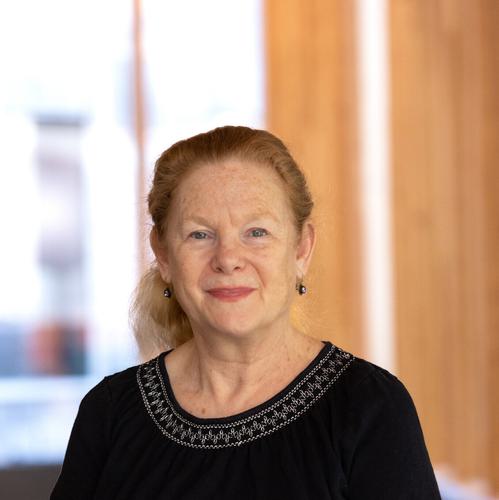
Rhonda S. Hackworth is an Associate Professor of Music Education at the University of Mississippi, where she serves as Head of Music Education and Graduate Program Coordinator. She holds a Ph.D. in Music Education from the University of Missouri-Kansas City Conservatory of Music and an M.M. in Vocal Performance. Current role: Associate Professor of Music Education Key responsibilities: Graduate Program Coordinator, thesis/dissertation director Previous institutions: Rutgers University, Syracuse University, University of Missouri-Kansas City Research Interests Dr. Hackworth specializes in vocal health for music educators and students, with a secondary focus on music perception. Her work examines vocal hygiene practices, the impact of teaching experience on vocal health, and musical tension in Debussy’s compositions. She has published extensively in journals like the Journal of Research in Music Education and International Journal of Music Education , and her research spans both empirical studies and literature reviews. Publications Trends Her scholarship bridges music education and vocal health, particularly addressing how pedagogical practices affect vocal wellness. Subfields include behavioral intervention strategies, multilingual text analysis in vocal works, and choral participation models. Professional Engagement Dr. Hackworth presents research at international and national conferences, with presentations in Greece, China, and Italy. She also performs as an alto soloist in concert, opera, and musical theater settings.
Christof Weiß is a Professor for Computational Humanities at the CAIDAS / Institute of Computer Science, Julius-Maximilians-Universität Würzburg (JMU), Germany. He serves as Head of the DFG-funded Emmy Noether group on Computational Analysis of Music Audio Recordings: A Cross-Version Approach. His academic journey includes previous positions as Visiting Researcher at University Télécom Paris (2021), Visiting Lecturer at Karlsruhe University of Music (2020, 2021), and Research Assistant at International Audio Laboratories Erlangen (2015-2022) and Fraunhofer Institute for Digital Media Technology (2012-2015). His educational background encompasses a PhD in Media Technology from University of Technology Ilmenau (2017), Concert Diploma in Composition from Würzburg University of Music (2012), Physics Diploma from University of Würzburg (2012), and Music Diploma in Composition from Würzburg University of Music (2011). This unique combination of technical and artistic training forms the foundation of his interdisciplinary research approach. Weiß's research operates at the critical intersection of computer science and musicology, developing novel computational methods for analyzing musical structures in audio recordings. His work bridges technical audio processing with musicological insights, creating methodologies for tonal analysis, key estimation, and cross-version comparison of musical performances. His approach combines deep learning techniques with music theory to extract meaningful patterns from large music corpora, enabling new forms of musicological corpus studies that were previously impossible. His recent publications reveal a clear research trajectory toward integrating advanced machine learning with fundamental musicological questions. The consistent theme across his work involves analyzing classical music structures through computational lenses, with particular emphasis on cross-version consistency in performances, tonal complexity measurement, and developing datasets that support computational musicology. His publications span both highly technical audio processing journals and musicology-focused venues, demonstrating his commitment to bridging these disciplines. Best paper award at the 4th conference on Computational Humanities Research (CHR), 2023 KlarText award for science communication of the Klaus Tschira Foundation, 2018 2nd prize at Festival Pablo Casals composition competition, Prades (France), 2013 Youth Cultural Advancement Award (Kulturförderpreis) of the city of Amberg, Germany, 2011 As principal investigator of the DFG Emmy Noether group, Weiß leads a multidisciplinary research team investigating computational analysis of music audio recordings through a cross-version approach. His research has secured significant funding including the prestigious Emmy Noether program, supporting doctoral and postdoctoral researchers working on various aspects of music information retrieval and computational humanities. His collaborative network spans institutions across Europe, including University Télécom Paris, Queen Mary University of London, and multiple German research centers. Weiß leads the Computational Humanities research group at CAIDAS, which focuses on developing computational methodologies for music analysis with particular emphasis on classical repertoire. The lab creates specialized datasets (including the Wagner Ring Dataset and Schubert Winterreise Dataset), develops algorithms for structural music analysis, and applies these tools to address musicological questions that require computational scale and precision. Their work bridges the gap between technical audio processing capabilities and humanities research questions, creating new pathways for understanding musical structure and evolution.
Claire Fontijn is the Phyllis Henderson Carey Professor of Music at Wellesley College. Her research and teaching focus on Early Music , Women Composers , and J.S. Bach , with a particular emphasis on medieval to baroque periods. Education: B.A. from Oberlin College, Certificate from Royal Conservatory of The Hague, and Ph.D. from Duke University. Her scholarly work explores the contributions of women composers like Hildegard of Bingen, Barbara Strozzi, and Fanny Hensel, alongside historical performance practices and the synthesis of image, text, and notation in medieval music. Recent publications analyze solmization puns and chorales from the Seicento Venice and Romantic periods. Fontijn’s research has been supported by prestigious organizations including the American Musicological Society , the Andrew W. Mellon Foundation , and the National Endowment for the Humanities . She teaches courses such as Italian Popular Song and the Calderwood Seminar in Public Writing: The Power of Music , which trains students to communicate music scholarship to non-specialist audiences. Scientific Awards : Nicolas Slonimsky Award for Classical Music Biography (2007) Fontijn’s collaborations with Susan Parisi and her editorship of Uncovering Music of Early European Women highlight her dedication to expanding the canon of music history. Grants from the Gladys Krieble Delmas Foundation and the Institute for Citizens & Scholars further enable her interdisciplinary work.
Dominic Broomfield-McHugh is a Professor of Music at the University of Sheffield and the current Visiting Professor of Film and Theatre Music at Gresham College (2023–present). His work bridges academic research and public engagement through lectures, media appearances, and documentary production. Education: Graduate of King's College London His scholarship centers on the American musical across stage and screen, examining cultural and historical intersections in works like *My Fair Lady* and Cole Porter’s legacy. He explores themes such as gender representation (e.g., ‘I Am What I Am’), holiday music traditions (e.g., Irving Berlin’s ‘White Christmas’), and iconic composers like Stephen Sondheim. As an author, he has published eight books, including The Oxford Handbook of the Hollywood Musical (2022), The Letters of Cole Porter (2019), and Loverly (2012). His lectures at venues like Lincoln Center and Sydney Opera House highlight his expertise in theatrical and cinematic music.
Donald Crockett is a Professor and Chair of the Composition Department at the University of Southern California (USC) Thornton School of Music, and Senior Composer-in-Residence with the Bennington Chamber Music Conference. He has held significant roles in contemporary music composition and conducting, including Assistant Dean for Faculty Affairs at USC. His research and creative work spans orchestral and chamber music, opera, and instrumental compositions. Notable projects include conducting and composing for ensembles like SAKURA, HOCKET, and Xtet, with a focus on ecological themes and interdisciplinary collaboration. Major compositions include Carving an Alphabet (2020) for cello quintet, And the River (2018) for piano duo and chamber orchestra, and Night Scenes (2017) for piano trio, alongside a diverse portfolio of chamber operas and concertos. Arts and Letters Award in Music (2013), American Academy of Arts and Letters Guggenheim Fellowship (2006) Grants: Barlow Endowment, Bogliasco Foundation, Copland Fund, National Endowment for the Arts Active as a conductor, Crockett has premiered over a hundred orchestral works by student composers and collaborated with renowned ensembles like the Los Angeles Chamber Orchestra and Hilliard Ensemble. His music is published by Keiser Classical and recorded on labels including Albany, ECM, and New World Records.
Lars Berglund is Professor of Musicology at Uppsala University's Department of Musicology, where he serves as Director of Studies for the doctoral program. He earned his PhD from Uppsala in 2002 with a thesis on German musician Christian Geist and has held progressive academic positions since 2003, becoming Professor in 2015. Berglund chaired the department from 2012-2018 and currently leads the Swedish Research Council's Humanities and Social Sciences Subject Council (2025-2027). He is a board member of HERA (Humanities in the European Research Area) and holds memberships in the Royal Swedish Academy of Letters and Royal Swedish Academy of Music. His research specializes in 17th-century music history, combining philology, music analysis, and reception studies with focus on: Italian-Scandinavian cultural exchange Court and church music patronage systems Performance theory and vocal traditions Scandinavian modernist music Recent publications (2019-2025) demonstrate strong emphasis on transnational music transfer, archival reconstruction of Baroque repertoires (particularly the Düben Collection), and ceremonial music analysis. Key themes include royal patronage networks, contrafactum techniques, and music's role in early modern diplomacy. Awards & Honors: Member, Royal Swedish Academy of Letters Member, Royal Swedish Academy of Music Major Funded Projects: "Translatio musicae: French and Italian Music in Northern Europe" (Riksbankens Jubileumsfond 2019-2023) Swedish Church Music History monograph (2020-2024) Digitization of court/university music (Riksbankens Jubileumsfond 2020-2025) STINT network on Early Modern musical exchange (2012-2016) He supervises doctoral candidates and teaches advanced courses in historical musicology and analysis.
Dr Mark-Anthony Turnage CBE FRCM serves as Senior Research Fellow in Composition and RCM Research Fellow in Composition at the Royal College of Music. He is a composer of truly international stature whose orchestral and operatic music is often forthright and confrontational, unafraid to mirror the realities of modern life, yet its energy is exhilarating. With his flair for vivid titles and complete absorption of jazz elements into a contemporary classical style, Turnage produces work with strong appeal to an enquiring, often young audience while expressing deep tenderness, especially emotions associated with loss. Turnage's research interests focus on the intersection of contemporary classical music with jazz elements. His work explores: Innovative approaches to orchestral composition Jazz-classical fusion techniques Opera and theatrical music composition Music that addresses contemporary social issues Expressive techniques for conveying emotional depth Vivid musical imagery through descriptive titles An analysis of Turnage's extensive publication record reveals a consistent exploration of emotional depth and technical innovation across more than four decades. His works frequently engage with themes of loss, memory, and social commentary while maintaining a distinctive musical voice that incorporates jazz sensibilities within contemporary classical frameworks. The titles of his compositions often provide vivid imagery that guides the listener's interpretation, reflecting his belief in music's ability to communicate directly with audiences through both confrontation and tenderness. Turnage has received significant recognition for his contributions to music: Commander of the Order of the British Empire (CBE) Fellow of the Royal College of Music (FRCM) As a senior figure in composition at the Royal College of Music, Turnage contributes to the institution's research profile through his creative practice and by serving as a role model for emerging composers. His extensive body of work spanning from 1981 to the present demonstrates remarkable consistency in artistic vision while evolving with contemporary musical developments. Turnage maintains an active creative practice through his composition process, which continues to produce significant works that push the boundaries of contemporary classical music while remaining accessible to diverse audiences. His recent compositions continue to explore emotional depth and technical innovation within the contemporary classical framework.
Anne Piéjus is a CNRS Researcher specializing in Early Modern Music, with a focus on interdisciplinary approaches integrating literature, theater, history, and digital humanities. She leads the Mercure galant program, producing enriched editions of music, text, and images while advancing digital methodologies in musicology. Her research includes studies on Italian Renaissance music, French Baroque theater, and music's role in education and devotion. Positions: 1st Class Research Director at CNRS-IReMus (2021–present) Formerly at the Paris Philharmony (2001–2002) and University of Fribourg (2001–2002) Fellowships: Villa Medici (Rome, 1998–2000), Thiers Foundation (1995–1998) Research Interests: Music in early modern press, theater, and education; sacred music in Renaissance Rome; digital humanities; music and politics; interdisciplinary performance studies. Awards: Thorlet Prize (2015), Alfred Verdaguer Prize (2015) Prime d'Encadrement de Recherche (2016, 2020) Prix des Muses (2001) Advising & Grants: Supervises graduate students in the Doctoral School “Concepts et langages”; led ANR-funded research on school spectacles under the Ancien Régime. Labs/Teams: Heads the Mercure galant program and co-founded the European seminar Building Relationships in a Changing World .
Luca Zoppelli is a Professor of Musicology at the University of Fribourg, Switzerland, since 2000. Previously, he held academic positions at the University of Salento (1993–1998 as Lecturer, then Associate Professor) and taught at several Italian conservatories including Padua, Vicenza, and Lecce. His research focuses on 19th-century opera, Venetian music history, musical dramaturgy, and the aesthetics of Baroque music. He co-directs the critical edition of Vincenzo Bellini's works and served as editor of the Schweizer Jahrbuch für Musikwissenschaft / Annales Suisses de Musicologie (2008–2019). Education: Studied Musicology and Literature at Ca' Foscari University in Venice (B.A., 1984 under Giovanni Morelli). Specialized in Baroque music aesthetics, operatic narrative structures, and the interplay between music and drama. His work bridges historical analysis with contemporary musicological methodologies. Research interests prominently feature operatic composition processes, the role of narrative in music, and the socio-political dimensions of 19th-century Italian opera. His publications critically analyze composers like Rossini, Verdi, Wagner, and Bellini, with notable contributions to understanding musical dramaturgy and the evolution of operatic forms.
Professor Lisa Barg serves as Associate Dean of Graduate Studies and Associate Professor of Music at McGill University's Schulich School of Music. Her research focuses on gender, race, and sexuality in 20th-century music, with notable work on Duke Ellington, Billy Strayhorn, and Melba Liston. She co-edits the Women and Music: A Journal of Gender and Culture . Education: B.A. (Antioch College, 1987), M.A. and Ph.D. (SUNY Stony Brook, 1994/2001). Research Interests: Jazz studies, feminist musicology, modernist histories, opera/music-theater, cultural theory, and collaboration. Her work intersects queer theory, Black music history, and critical race studies. Recent Research: Her book Queer Arrangements: Billy Strayhorn and Midcentury Jazz Collaboration (2023) examines Strayhorn’s music at the intersection of jazz and Black queer history. Funded projects include SSHRC grants on collaborative creativity in music recording. Awards: Kurt Weill Prize (2000), Philip Brett Award (2013) Grants: SSHRC Principal Investigator for “Collaborative Creativity: Sound Recording and Music Making” Teaching includes undergraduate courses on 20th/21st-century music and opera, alongside graduate seminars on gender and jazz, feminist musicology, and avant-garde performance.
Susan McClary is the Fynette H. Kulas Professor of Music at Case Western Reserve University’s Department of Music (College of Arts and Sciences). A globally influential scholar, she has held professorships at the University of Minnesota, McGill University, UCLA, and the University of Oslo. Her work redefines music analysis by addressing its cultural, social, and gendered dimensions, challenging traditional aesthetic frameworks. Education : PhD in Music (Harvard University, 1976). Earlier degrees include a B.Mus. from Southern Illinois University (SIU). Research Focus : McClary’s interdisciplinary research spans the European classical canon and contemporary popular music. Key themes include gender in music, musical form’s socio-political content, and the intersection of music with identity, particularly in Renaissance and Baroque eras. Her approach emphasizes music as a dynamic social practice rather than an abstract art form. Publications & Impact : She authored landmark books such as Feminine Endings (1991) and Conventional Wisdom (2000), translated into 20+ languages. Her writings bridge musicology with feminist theory, cultural studies, and critical social analysis. Awards : 1995 MacArthur “Genius” Fellowship Advising : Oversaw over 50 doctoral dissertations Courses Taught : Music History, Music Theory, Early-Music Performance Practices Her work remains foundational in redefining music’s role in sociocultural contexts.
Katherine R. Larson is a Professor at the University of Toronto Scarborough (UTSC) and Vice-Dean of Teaching, Learning, and Undergraduate Programs. Her academic work bridges Early Modern Literature, Gender Studies, and Musicology through groundbreaking research on 16th-17th century women’s writing, embodiment, and song culture. Current projects: Special issue of Sidney Journal , The Post-Pandemic University (Routledge), and Cambridge Companion to Mary Wroth Collaborative initiatives: Co-developer of Early Modern Songscapes digital platform with Sarah Williams and Scott Trudell Research Focus: Integrates feminist theory with textual analysis of early modern poetry, drama, and musical practices. Key themes include gendered soundscapes, spatial production of songs, and critical pedagogy innovations. Awards: John Charles Polanyi Prize for Literature Rhodes Scholarship 2014 Co-Editor Recognition from Society for the Study of Early Modern Women Grant Support: Funded by SSHRC, Connaught Foundation, Folger Shakespeare Library, and Jackman Humanities Institute.