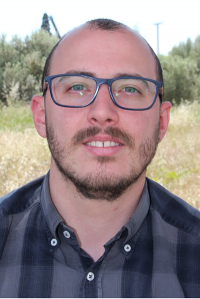
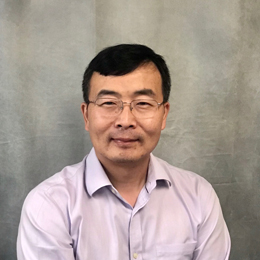
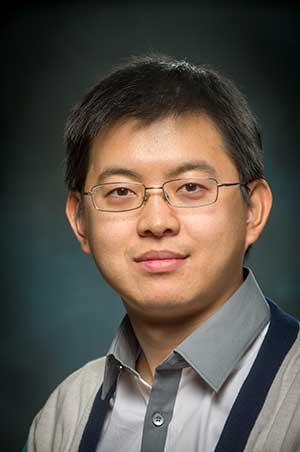
Devdatta Kulkarni is an Assistant Professor in the Department of Computer Science at The University of Texas at Austin. He received his PhD in Distributed Systems from the University of Minnesota, Minneapolis, and has extensive industry experience in cloud computing. Research Interests: Multi-tenancy on Kubernetes CI/CD on OpenStack Provenance in Platform-as-a-Service (PaaS) and NoSQL systems Access control in non-relational key-value stores Teaching: Courses such as Modern Web Applications, Cloud Computing, and Elements of Web Programming. Education: PhD in Distributed Systems, University of Minnesota, Minneapolis MS in Computer Science, University of Minnesota, Duluth BE in Computer Engineering, College of Engineering, Pune, India Professional Experience: Founder of CloudARK (2017–present), former Rackspace employee (2009–2016). He leads the OpenStack Solum project and mentors for Outreachy and UT Austin's Bridging Disciplines Program.
Tommaso Cucinotta is an Associate Professor at the Real-Time Systems Laboratory (ReTiS) within the TECIP Institute of Scuola Superiore Sant'Anna, Pisa, Italy. He earned a MSc and PhD in Computer Engineering from University of Pisa and Scuola Superiore Sant'Anna, respectively. His career spans academic and industrial roles, including researcher positions at Alcatel-Lucent Bell Labs (2012-2014) and Software Development Engineer at Amazon DynamoDB (2014-2016). He coordinates real-time and embedded systems research at ReTiS since 2019. Born in 1974, Potenza, Italy MSc in Computer Engineering, University of Pisa (2000) with 110 cum laude PhD in Computer Engineering, Scuola Superiore Sant'Anna (2004) His research focuses on real-time systems in cloud environments, including adaptive resource management, AI-driven performance monitoring, secure computing, and scalable NoSQL databases. He explores operating system innovations for many-core architectures, network function virtualization (NFV) optimization, and kernel-level enhancements for latency control. His work integrates formal methods with practical implementations, such as autonomic QoS control and high-performance container communication frameworks. Recent publications analyze predictive elasticity in cloud infrastructures, real-time DAG optimization on heterogeneous platforms, and AI applications for system-level performance tuning. He actively contributes to open-source tools like ARSim and AQuoSA, while mentoring MSc thesis projects on topics like Kubernetes optimization, fault-tolerant replication logs, and machine unlearning techniques for LLMs. Collaborations with industry leaders (Ericsson, Red Hat, Vodafone) bridge academic research with real-world scalability challenges. Scientific awards include the Best Paper Award at CLOSER 2020 for his work on high-performance inter-container communication frameworks. He participates in program committees of major conferences and contributes to the evolution of Linux real-time scheduling mechanisms through projects like SCHED_DEADLINE enhancements for multimedia applications.
Pasi Sarolahti is a University Lecturer at the Department of Information and Communications Engineering, Aalto University, School of Electrical Engineering. His research focuses on web performance, quality of service, information-centric networking, and wireless communication protocols. Education: Doctoral degree in Engineering and Technology from University of Helsinki (awarded 21 Sept 2007) Research trends: Analysis of web latency and rendering performance, optimization of content delivery networks, adaptive congestion control for wireless systems, and design of information-centric networking protocols. Keywords include Computer Science, Networking, Web Technologies, Cloud Computing, and Wireless Communication. Professional activities: Visiting researcher at foreign institutions (2016) Chair and committee member for IEEE Global Internet Symposium (2012) Conference presentations and contributions (2012)
Larry Rudolph is a Research Professor at the Massachusetts Institute of Technology (MIT), affiliated with the Computer Science and Artificial Intelligence Laboratory (CSAIL). He holds the role of Principal Research Scientist and has been a key contributor to projects like the Oxygen Research Group and the Computational Structures Group (CSG). His academic journey includes roles as a Full Professor at the Hebrew University of Jerusalem and postdoctoral research at the University of Toronto. Rudolph specializes in pervasive computing, mobile systems, and virtualization, with notable contributions to Bluetooth technology and location-aware computing. He has advised numerous students and pioneered courses such as MIT's 6.883 Pervasive Human-Centric & Mobile Computing. Education: PhD in Mathematics, Courant Institute, NYU (1977-1981) Postdoc in Computer Science, University of Toronto (1981-1982) Research Faculty, Carnegie-Mellon University (1982-1986) Full Professor, Hebrew University (1986-1997) Research Interests include mobile device virtualization, privacy in pervasive systems, and adaptive algorithms for personal data management. He co-founded Redigi, a marketplace for digital music resale, and led VMware's Mobile Virtualization Project. His work emphasizes experimental approaches to computer science, integrating hardware and software innovations. Notable Projects: Bluetooth Essentials for Programmers (book, 2007) Oxygen Research Group (2000-2005) Virtualization and pervasive computing systems Advising and Collaborations: Guided over 15 students to completion of Master’s and PhD theses Co-organizer of DOE Supercomputer Valuation and Workshop on Job Scheduling Contributions to CSAIL and NECSI (New England Complex Systems Institute) Labs/Teams: Active in CSAIL's Pervasive Computing initiatives and Oxygen sub-projects. Current focus includes mobile phone security, privacy-aware systems, and adaptive learning frameworks for personal data tagging.
Davide Bacciu is a Professor at the University of Pisa, associated with the Department of Computer Science within the School of Engineering. His research focuses on advancing artificial intelligence, particularly in deep learning for graphs, continual learning, and neural networks. He leads projects such as TEACHING (Trustworthy autonomous cyber-physical applications) and CLaaS (Continual-Learning-as-a-Service), emphasizing human-centered AI and edge computing solutions. His work bridges theoretical advancements with practical applications in robotics, healthcare, and smart systems. Key research interests include graph representation learning, federated learning, and generative models. He has contributed to frameworks like PyDGN for graph deep learning and Avalanche for continual learning. His interdisciplinary projects involve collaborations with institutions like the University of Trento and the Institute for Bioengineering of Catalonia. Publications reflect his expertise in domains like molecular property optimization, causal inference, and swarm intelligence. He has advised on grants related to edge computing, autonomous systems, and human-AI collaboration. His work is disseminated through top venues such as AAAI, ICLR, and IEEE Transactions.
Michael G. Xevgenis is a Researcher and DevOps Engineer at the Department of Electrical & Electronics Engineering, University of West Attica (UniWA). He leads the CONSERT’s Cloud Computing team and holds a post-doctoral position in Secure Resource Management in Next Generation Networks, emphasizing Blockchain technology. With a PhD in Industrial Design and Production Engineering from UniWA (2023), his research spans Networking, Cloud Computing, and Blockchain applications in cybersecurity and infrastructure. He has contributed to EU projects like TRILLION, STORM, and FASTER, and actively organizes OpenStack meetups in Athens. Education: PhD in Industrial Design and Production Engineering (UniWA, 2023); prior qualifications not detailed here. Courses taught include Data Centers and Infrastructure for AI. Research focuses on blockchain-enabled solutions for network security, resource management, and decentralized systems. His work bridges academia and industry through projects like the STORM cultural heritage initiative and the VLAB cloud solution. Recent NVIDIA certification in AI Data Center infrastructure highlights his expertise in GPU-accelerated cloud environments. Awards include the NVIDIA Certified Associate: AI in the Data Center. His publications explore blockchain applications in NGNs, supply chain management, and crowdsourcing platforms. He advocates for open-source cloud technologies like OpenStack and promotes interdisciplinary collaboration through EU initiatives. Labs/Teams: CONSERT Cloud Team, OpenStack Athens Meetup Group, STORM Project Team.
Luca Abeni is an Associate Professor at the ReTiS Lab (Real-Time Systems) of Scuola Superiore S. Anna , Pisa. He graduated in Computer Engineering from the University of Pisa in 1998 and earned his PhD at Scuola Superiore S. Anna (1999-2002), focusing on real-time operating systems, scheduling algorithms, and QoS management. His career includes a visiting researcher role at Carnegie Mellon University (2000) and Oregon Graduate Institute (2001), followed by a full-time researcher position at the University of Trento's DISI department (2006-2017). Research Interests include real-time systems, cloud computing, virtualization, containerization (e.g., RT-Kubernetes), Linux kernel optimization, fault tolerance, and scheduling algorithms. His work addresses temporal isolation in cloud/edge environments, energy-efficient real-time computing, and adaptive resource management. Scientific Awards 2021 RTSS Influential Paper Award for 1998 paper on real-time scheduling Notable Contributions involve Xen/KVM latency analysis, deadline-based scheduling, ARM big.LITTLE partitioning, and kernel bypass mechanisms. He developed tools like PROSIT for probabilistic real-time analysis and artifacts for reproducing experiments.
NAKAZATO, Hidenori is a Professor at the Waseda University, School of Fundamental Science and Engineering , specializing in Computer Science . His research focuses on Information Centric Networking (ICN) , Distributed Systems , and Communication Quality optimization. Education: Ph.D. and MS in Computer Science from University of Illinois (1993) Professional Memberships: IPSJ, IEICE, ACM, IEEE His work explores advanced networking paradigms like Named Data Networking (NDN) , IoT virtualization via platforms such as VirIoT , and edge cloud computing for multimedia workflows. Key contributions include optimized cache replacement algorithms and service function chaining frameworks to enhance resource utilization and reduce latency. His scientific awards include: Fellow , Institute of Electronics, Information and Communication Engineers (2018) Chairman's Award , IEICE Communication Systems Committee (2013) NAKAZATO's publications (94 papers, h-index 10) address topics like blockchain performance , NDN mobility support , and energy-efficient computing . His research projects involve collaborations with international teams on smart city applications and container orchestration using Kubernetes.
Prof. Dr. Thomas Michael Bohnert is a faculty member at ZHAW School of Engineering, specializing in distributed systems and cloud computing. He has led multiple projects including: Bringing FIWARE to the NEXT step (completed), Enterprise Cloud Robotics Platform (completed), Apache Cloudstack for NFV (completed), Solidna cloud storage (completed), T-NOVA NFV services (completed), and Mobile Cloud Network (completed). Research Focus: Cloud robotics Network Functions Virtualization (NFV) Software-Defined Networking (SDN) Mobile cloud networking Resilient cloud systems Energy-efficient cloud platforms Publications Trends: His work spans 2012-2024 with consistent focus on cloud-native application design, NFV orchestration, SDN implementation, and mobile cloud integration. Key themes include self-managing systems, distributed computing frameworks, and infrastructure optimization. Collaborations: Frequently collaborates with Andrew Edmonds, Giovanni Toffetti Carughi, Piyush Harsh, and Sandro Brunner across EU projects and industry partnerships.
Eleni Constantinou is an Assistant Professor at the University of Cyprus (UCY), affiliated with the Software Engineering and Internet Technologies (SEIT) group. Previously, she held an Assistant Professor position at the Eindhoven University of Technology (TU/e) from 2019–2022. She obtained her B.Sc., M.Sc., and Ph.D. from Aristotle University of Thessaloniki, Greece. Her research focuses on software ecosystems, mining software repositories, software evolution, and cybersecurity in software development. Key research interests include analyzing software health, dependency vulnerabilities in open-source ecosystems, and automated tools for developer collaboration. She has coordinated projects like SECOHealth, investigating interdisciplinary methodologies for software ecosystem health. Her work often bridges technical and social aspects of software development. Eleni’s scholarly contributions span over two decades, with notable studies on Docker security, Dependabot vulnerability mitigation, and bot activity in GitHub. She has also explored API evolution, library feature extraction, and developer practices in open-source platforms like OpenStack. No scientific awards are explicitly listed in the provided text. Her advisory role details and grant funding remain unspecified, though her involvement in interdisciplinary projects suggests active engagement in collaborative research. Eleni is part of the SEIT group at UCY and has contributed to initiatives like the Special Issue on Software Health of Software Ecosystems. Her research often leverages data from GitHub and Stack Overflow to understand developer behaviors and ecosystem dynamics.
Mengyuan Zhang is an Assistant Professor in Computer Systems at the Faculty of Science, Vrije Universiteit Amsterdam, and a member of the Network Institute. Her research focuses on cybersecurity, network security, vulnerability analysis, and network function virtualization. Specific interests include zero-day attacks, attack surface reduction, and security mechanisms for embedded systems and IoT devices. Her work explores cross-regional security practices, router configuration habits, and firmware vulnerabilities. Notable contributions include analyzing default router settings, developing vulnerability assessment tools (e.g., VIET), and studying cross-platform authentication mechanisms. She has published widely in top venues like IEEE Internet of Things Journal, CHI, and NordSec. Current courses taught include Network Security, Security and Safety Engineering, and Software Threat Analysis. Collaborations span international teams, with a focus on improving network resilience against emerging threats.
Dr. Yong Wang is a Professor and Associate Dean of Beacom Graduate Programs at Dakota State University's Beacom College of Computer & Cyber Sciences. He holds a Ph.D. in Computer Science from the University of Nebraska-Lincoln (2007) and prior industry experience as a senior software engineer and team leader in telecommunications. His research focuses on IoT security, cyber-physical systems, machine learning security, and privacy preservation. He has secured over $2.5 million in grants as PI/Co-PI, including NSF-funded projects on IoT security and agricultural cybersecurity. Dr. Wang teaches graduate courses in cybersecurity, network security, and parallel programming. He received the 2015 Merrill Hunter Award for Excellence in Research and serves as an ABET Commissioner and IEEE Senior Member. His work spans secure cyberinfrastructure design, malware analysis, and privacy impact assessments, with over 200 peer-reviewed publications. Education: Ph.D., Computer Science, University of Nebraska-Lincoln, 2007 M.Eng., Wuhan University, China B.S., Computer Science, Wuhan University, 1995 Research Interests: IoT and Cyber-Physical Systems Security Machine Learning Threat Modeling and Defense Cyberinfrastructure for Precision Agriculture Network Security and Privacy Cloud and Big Data Security Key Contributions: Developed the MobiSec Lab through SD Performance Fund grants Launched NSF-funded IoT Security REU Site (2019) Designed secure LPWAN solutions for agricultural IoT Published in IEEE Computer, IEEE Globecom, and IEEE Access Awards: Merrill Hunter Award for Excellence in Research (2015) Professional Roles: ABET Computing Accreditation Commission Commissioner NSF Proposal Reviewer Technical Program Committee Member for 40+ Conferences
Sonia Ikken Benali is a Researcher-Lecturer at CESI (Lille, France), affiliated with the Engineering and Numerical Tools research team. Her work focuses on Big Data, Machine Learning, Distributed Systems, Business Intelligence, and Optimization Problems. She teaches courses in Data Storage/Processing, Business Intelligence, and Operations Research at the Integrated Preparatory Program and Engineering Program levels. Education : Ph.D. in Efficient Placement Design for Big Data in Clouds (Télécom SudParis - Institut Mines-Télécom - Pierre and Marie Curie University, 2018) M.Sc. in Networks and Distributed Systems (Abderrahmane Mira University, Algeria, 2011) State Engineer in Advanced Information Systems (Abderrahmane Mira University, 2010) Her research emphasizes optimizing cloud storage efficiency, cost reduction in distributed systems, and scheduling algorithms for big data workflows. Key contributions include collaborative cloud storage frameworks and Markov model-based I/O scheduling for MapReduce tasks. Lab/Team : Part of the Engineering and Numerical Tools research group at CESI, focusing on practical applications of advanced computational methods.
Kaikai Liu is an Associate Professor and Cisco Corporate Chair Professor in the Department of Computer Engineering at San José State University, Charles W. Davidson College of Engineering. He is actively engaged in research, teaching, and leadership in intelligent and autonomous systems, cyber-physical systems, and AIoT. His work bridges academia and industry, with collaborations involving NSF, Intel, Cisco, Arista, and the Department of Health of Hawaii. Research Interests: Intelligent and Autonomous Systems Mobile and Cyber-Physical Systems (CPS) Artificial Intelligence of Things (AIoT) Smart Sensing and Data Mining Edge Computing and Next-Generation Communication Systems His research spans both theoretical and applied domains, focusing on real-world deployments in smart cities, emergency response, behavioral health, and assistive technologies. He emphasizes system prototyping, data-driven analytics, and human-centered design. Recent Research Trends: His recent publications and projects show a strong focus on integrating AI with edge computing and sensing, particularly in cooperative perception (RINGS), mental health (OHANA), disaster communication, and intelligent urban infrastructure. There is a clear trajectory toward multi-modal, data-intensive systems that operate in real-time and support societal resilience. Scientific Awards: IEEE SWC 2017 Best Paper Award IEEE SECON 2016 Best Paper Award ACM SenSys 2016 Best Demo - Runner-up 2020 College of Engineering Award for Excellence in Scholarship Faculty Mentoring Award for CSU Student Competition 2018 Apple WWDC Scholarship (2013, 2014) National Scholarship of China Multiple University of Florida and SJSU Research Professor Awards Advising and Grants: Dr. Liu has mentored student teams to national recognition, including a first prize in the 2017 Juniper SDN Throwdown. He has secured significant research funding as Principal Investigator from the National Science Foundation (NSF), Knight Foundation, Intel, Cisco, Arista, and the U.S. Department of Health. Notable grants include the five-year OHANA Center (SAMHSA), RINGS (NSF), and multiple industry-funded projects on edge AI and smart infrastructure. Labs and Teams: He leads a research group focused on intelligent systems and edge computing, with a history of developing full-stack prototype systems like the SJGateway. He has led teams in the NSF Big Learning Center and the OHANA Center of Excellence, fostering interdisciplinary collaboration across engineering, public health, and social sciences.
Mojca Ciglarič is an Associate Professor at the Faculty of Computer and Information Science, University of Ljubljana. Her work focuses on ubiquitous computing, cloud technologies, and sustainable ICT solutions. P2-0359 - Ubiquitous computing (ARRS research program, 2023-2027) KATARINA - Promoting fundamental computing education (National project, 2023-2026) GI Teams - Global Innovation Teams (International collaboration, 2022-2024) She leads projects in cloud-assisted services, healthcare IT, and smart city ecosystems, with significant contributions to virtual laboratories and OpenStack architecture. Her research bridges technological innovation with environmental sustainability.