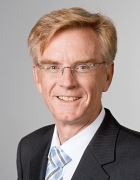
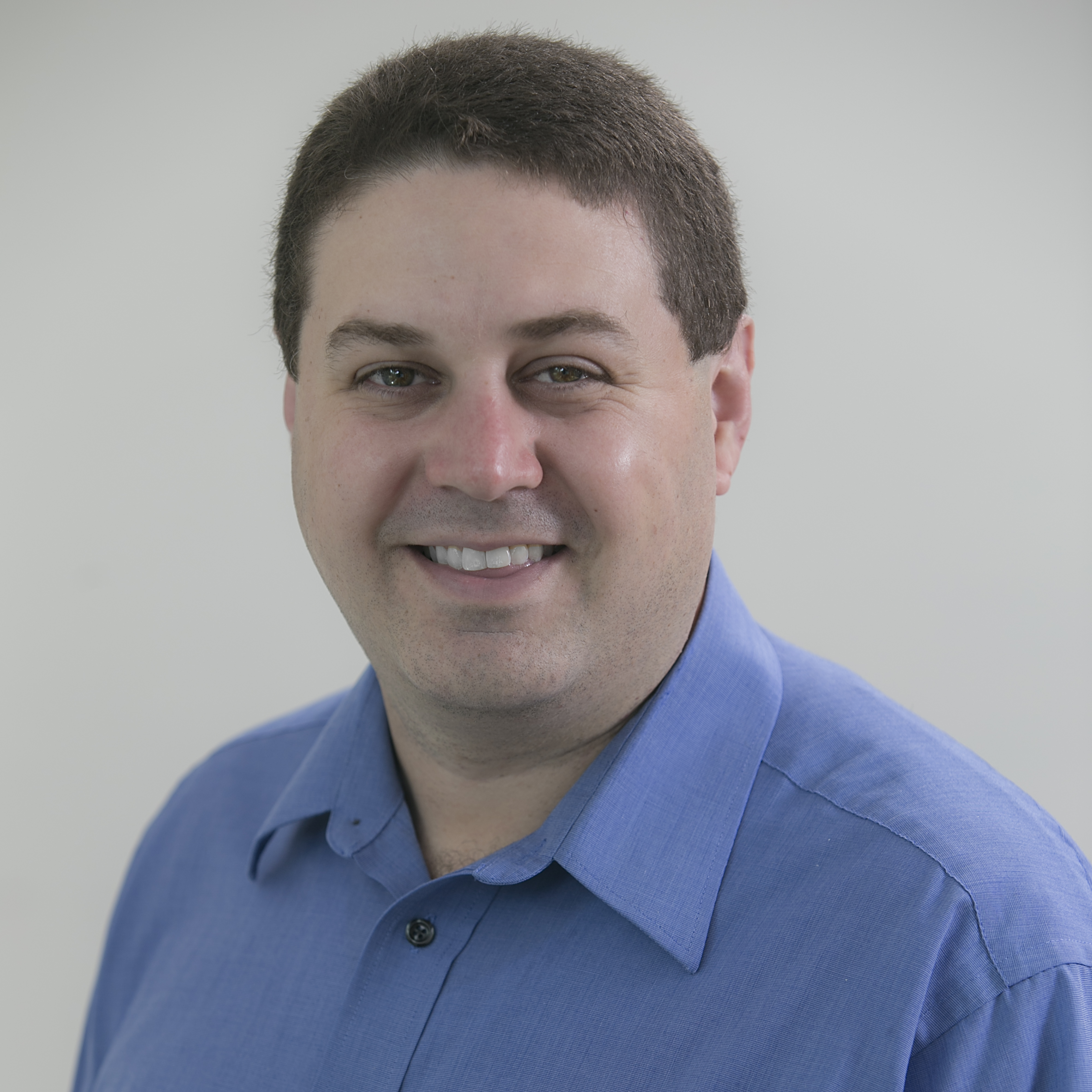
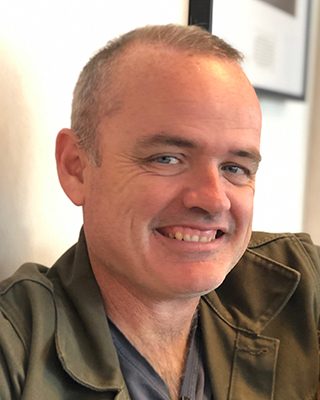
Prof. Dr. Andreas Herkersdorf is a Full Professor and Chair of Integrated Systems at the Technical University of Munich (TUM) School of Computation, Information and Technology. His research focuses on application-specific multicore processors (MPSoC), FPGA-based prototyping, fault-tolerant systems, and energy-efficient architectures, with applications in IP packet processing, automotive systems, and visual computing. He has received multiple IBM innovation awards and serves on editorial boards including the DFG Review Board for computer architecture. Education: Dipl.-Ing. Electrical Engineering (TUM, 1987), Dr. techn. Electrical Engineering (ETH Zurich, 1991) Research: MPSoC architectures, autonomic computing, NoC resilience, FPGA acceleration, and self-optimizing systems. Awards: IBM Master Inventor (1998), IBM Outstanding Technical Achievement Award (2001), multiple IBM Innovation Achievement Awards (1996-2003) His recent publications emphasize hardware/software co-design, machine learning integration for runtime optimization, and network-on-chip innovations. He collaborates on projects involving 6G systems, smartNICs, and automotive communication protocols.
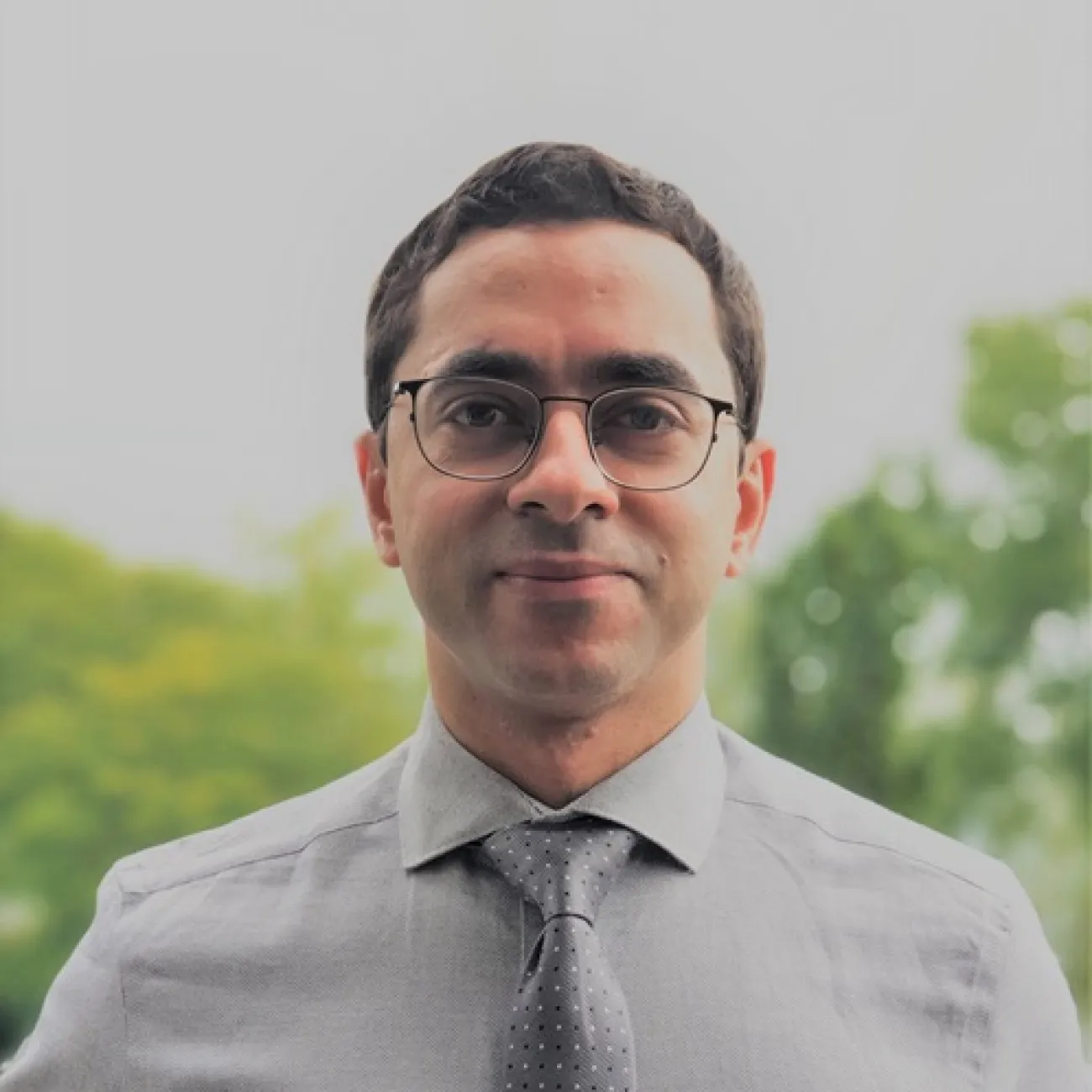
Dr. Ahmed Elkady is an Associate Professor in Structural Engineering at the University of Southampton's Faculty of Engineering and Physical Sciences, Department of Civil, Maritime and Environmental Engineering. His research focuses on structural performance under seismic hazards with specialization in steel and composite structures. He leads the Infrastructure Research Group and actively supervises PhD students while developing innovative computational tools for structural analysis. Elkady's research interests center on Performance-Based Earthquake Engineering, Collapse Risk and Loss Assessment of Steel and Composite Buildings, and Resilience-based design of Existing Structures. His work combines advanced numerical modeling with large-scale experimental testing to develop robust predictive models for structural behavior under extreme loading conditions. He has made significant contributions to the understanding of structural connections, particularly steel endplate and bolted connections. His recent publications demonstrate a strong trend toward integrating machine learning with traditional structural engineering methods, particularly in modeling steel connections and predicting structural behavior. The research spans both fundamental mechanics and practical applications for seismic risk assessment, with several of his 2023-2025 publications focusing on data-driven approaches to structural analysis. Raymond C Reese Research Prize (2022) Multiple Outstanding Reviewer awards from ASCE Journal of Structural Engineering (2019-2020) First Place Award in NIST-ATC Blind Prediction Contest (2018) Alexander Graham Bell graduate scholarship from NSERC Canada (2014) Multiple best presentation awards at engineering conferences (2012-2015) Elkady currently supervises three PhD students (Weiran Li, Zizhou Ding, and Aran Naserpour) and leads the EPSRC-funded project 'Seismic Resilience of Egypt's Built Environment: A GIS-Based Framework for Assessment and Mitigation.' He has also secured funding from Research England for the 'EGYGIS: GIS Mapping in Support of Egypt's Disaster Risk Management' project. His research has resulted in several open-source software tools including EaRL (Earthquake Risk, Loss & Lifecycle Assessment), FM-2D (Frame Modeler 2D), and SCRonED (Semi-Rigid Connections Experimental Database), which are widely used in the structural engineering community for performance-based earthquake engineering.
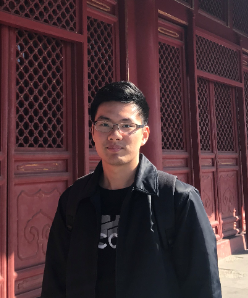
Heyuan Shi is an Associate Professor at the School of Electronic Information, Central South University since 2023. He earned his B.S. (2015) and Ph.D. (2020) from Central South University and Tsinghua University respectively. His research focuses on software quality assurance with emphasis on kernel fuzz testing , open source software security , and AI application security . Presided over 10+ projects including NSFC General Program (No.62472448) and National Key R&D Sub-Project Published 30+ CCF-A/B papers across software security, machine learning, and quantum testing Supervised 15+ graduate students in software quality assurance areas His recent 2024-2025 publications demonstrate expertise in: LLM-enhanced patch classification Quantum neural network verification Hypergraph adversarial attacks RTOS fuzzing techniques Scientific recognition includes: 2024 Beijing Science & Technology Progress Award (First Prize) Hunan Province Xiaohe Sci-Tech Talent (2023) China Association for Science & Technology Young Talent (2025-2027) Active in academic service as PC member for FM2024 and reviewer for IEEE Transactions journals. Leads industry collaborations with Alibaba and Beijing Institute of Aerospace Metrology.
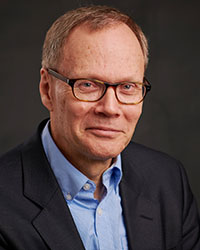
Jan G. Bjaalie is Professor of Neuroinformatics and Dean of Research and Innovation at the University of Oslo Faculty of Medicine . Since 2023 he heads the faculty’s research and innovation strategy, while directing the Neural Systems and Graphics Computing Laboratory at the Institute of Basic Medical Sciences. Education: 1990 Ph.D. in Neuroanatomy, University of Oslo 1986 M.D., University of Oslo Research interests revolve around collaborative and open neuroscience, digital brain atlasing, and the cyber-infrastructures that enable data sharing. He leads efforts to build next-generation atlases that integrate multi-scale brain architecture and connectivity data, and to develop ontologies and FAIR-compliant platforms for global neuroscience. Recent work emphasizes in silico integration of rodent and human imaging datasets, leveraging machine-learning registration tools and cloud-based services such as EBRAINS. The goal is to transform how brain data are stored, visualised and reused across laboratories worldwide. Scientific output & impact: A scan of publications from 2023-2025 reveals a strong focus on digital atlas frameworks, automated image registration (DeepSlice, DeMBA), open data standards (AtOM ontology), and large-scale analyses of genetic influences on brain structure in Alzheimer’s models. These works collectively advance reproducible, high-throughput neuroanatomy and cross-species translation. Grants & leadership roles: Coordinator/Partner in EU Flagships EBRAINS 2.0, BRAIN Health, Human Brain Project (2013-2026) Infrastructure Director, Human Brain Project (2018-2023) Leader of Neuroinformatics Platform & EBRAINS Data Services (2017-2023) Head of Institute of Basic Medical Sciences (2009-2016) Executive Director, International Neuroinformatics Coordinating Facility (INCF) (2006-2008) Chair, International Brain Initiative (2021-) Editorial & governance service: Founding Chief Editor Frontiers in Neuroinformatics (2007-), Section Editor Brain Structure and Function (2002-2020), member of the INCF Governing Board and EBRAINS AISBL Management Board, and numerous international advisory panels on data governance and ethics. His laboratory hosts the Norwegian Neuroinformatics Node and collaborates closely with global consortia to deliver open-access atlases, software pipelines and FAIR data standards that underpin modern neuroscience.
Jeffrey Young is a Principal Research Scientist at Georgia Institute of Technology, working with the Partnership for Advanced Computing Environments (PACE) and leading Georgia Tech’s Open Source Program Office. His research focuses on high-performance computing (HPC), computer architecture, and novel accelerators including GPUs, FPGAs, and Arm/RISC-V processors. He leads next-generation computing strategy at PACE and directs the NSF-funded CRNCH Rogues Gallery testbed, which explores post-Moore accelerators like neuromorphic and near-memory systems. His work bridges hardware-software co-design and scientific software engineering. Recent research trends show expertise in quantum programming (Qwerty/ASDF), heterogeneous computing (Cupbop), and memory system optimization across GPUs, FPGAs, and CPUs. He has contributed to exascale workflows (HIPLZ), safe HPC libraries, and UAV co-simulation frameworks. Scientific Awards: NSF-funded CRNCH Rogues Gallery testbed (2020-2024) Education: Ph.D. in Computer Architecture (2013), advised by Dr. Sudhakar Yalamanchili Labs & Initiatives: Director, CRNCH Rogues Gallery testbed Co-Director, Georgia Tech Center for Scientific Software Engineering Director, Georgia Tech Open Source Program Office
Carolin Müller is a Juniorprofessor for the Theory of Electronically Excited States at the Friedrich-Alexander University Erlangen-Nuremberg since November 2023. Previously, she was a Feodor Lynen Postdoctoral Researcher at the University of Luxembourg (June 2022-October 2023) and a Postdoctoral Researcher at Friedrich Schiller University Jena (March 2021-May 2022). Dr. Müller received her B.Sc. (2016) and M.Sc. (2018) in Chemistry from Friedrich Schiller University Jena, followed by her Ph.D. (Dr. rer. nat) in 2021 from the same institution. Her doctoral research focused on "Towards Operando Spectroscopy of Supramolecular Photocatalysts – A Case Study on Ru-dppz-derived Systems" under the supervision of Prof. B. Dietzek-Ivanšić. Dr. Müller's research focuses on the theoretical understanding of photoinduced processes in molecules and materials. Her group (CPC Group) investigates electron transfer processes, isomerization reactions, and excited-state dynamics with the goal of controlling and optimizing light-driven processes for increased reactivity and efficiency. Her work combines computational chemistry, spectroscopy, and machine learning approaches, specifically utilizing methods like TD-DFT, CASSCF, molecular/quantum dynamics, and cheminformatics techniques including SVD, MCR, and global/target lifetime analysis. Her recent publications demonstrate a strong interdisciplinary approach spanning computational chemistry, spectroscopy, and machine learning. Key themes include nonadiabatic molecular dynamics, excited-state simulations, photoswitch design, photocatalysis, and the development of computational tools like KiMoPack for kinetic modeling. Her work often bridges theoretical predictions with experimental validation through close collaboration with spectroscopy research groups. Feodor Lynen Research Fellowship (Alexander von Humboldt Foundation) Thuringian Research Award 2023 for Applied Research Albert-Weller Award (German Chemical Society) Dissertation Award (Faculty of Chemistry and Earth Sciences) FCI Kekulé PhD fellowship As a Juniorprofessor, Dr. Müller leads the CPC Group at FAU, where she mentors students in computational chemistry research. She has developed expertise in combining spectroscopic techniques (resonance Raman, transient absorption, and time-resolved emission spectroscopy) with computational methods and cheminformatics approaches. She also actively contributes to the scientific community through service roles including co-organizing the ESTML 2023 Workshop and serving as an active member in the yPC organization of the German Bunsen Society. Dr. Müller is actively developing the CPC Group research program at the Computer Chemistry Center, focusing on light-induced physical processes and chemical reactions. Her group combines quantum chemistry, chemoinformatics, and experimental spectroscopy to reveal mechanisms behind photoinduced phenomena and optimize light-driven processes.
Maurits Haverkort is a Professor at the Institute for Theoretical Physics, Heidelberg University (Germany). His research focuses on quantum many-body systems , strongly correlated electrons , and X-ray spectroscopy of complex materials under strong fields. University of Cologne (PhD in Physics, 2005) University of Groningen (M.Sc. in Physics, 2002) Research Interests : He investigates orbital and magnetic properties in heavy fermion systems , actinide materials , and correlated oxides using resonant inelastic X-ray scattering (RIXS) , ARPES , and computational tools like Quanty . His work spans crystal field theory , spin-orbit coupling , and ultrafast electron dynamics . Scientific Awards & Activities : 2018 – Editorial Board Member, Physical Review Letters 2017 – Beam Time Allocation Panel, ESRF Grenoble 2016–2018 – Swedish Research Council Panel NT-4 2012–2016 – Scientific Selection Panel, Helmholtz-Zentrum Berlin Recent Publications highlight 5f electron counting , photon-modulated bonding , and precision neutrino mass experiments , reflecting his expertise in quantum materials and advanced spectroscopy .
Abolfazl Simorgh is a researcher at Charles III University of Madrid's Department of Aerospace Engineering, specializing in climate-optimized aviation systems. His work bridges mathematical control theory with practical climate impact mitigation, focusing on robust trajectory optimization under environmental and operational uncertainties. He leads development of open-source tools for sustainable flight planning while contributing to major European aviation initiatives. Education: B.Sc. in Control Engineering (2017) M.Sc. in Control Engineering (2020) Ph.D. in Aerospace Engineering from Charles III University of Madrid Dr. Simorgh's research centers on developing mathematical frameworks that reconcile aircraft trajectory optimization with climate impact reduction. His expertise spans robust control systems, optimization under uncertainty, and climate modeling integration, with particular emphasis on non-CO₂ emissions. His methodology addresses both CO₂ and non-CO₂ climate forcing mechanisms through computationally efficient algorithms that account for weather variability and climate metric uncertainties. This work directly supports aviation's decarbonization by providing operational strategies that reduce environmental footprint without prohibitive cost increases. Analysis of his 15 most recent publications reveals a cohesive research trajectory focused on operationalizing climate-optimal flight planning. His work consistently integrates climate science with aerospace engineering through robust optimization frameworks, demonstrating particular innovation in handling multiple uncertainty sources (weather, climate models, emissions). The publications cluster around three interconnected themes: 1) Development of open-source computational tools (ROOST, CLIMaCCF), 2) Network-scale implementation of climate-aware air traffic management, and 3) Risk analysis of climate mitigation strategies. This body of work establishes new methodological standards for quantifying and minimizing aviation's total climate impact. Scientific Awards: Luis Azcárraga Aeronautical Innovation Award for collaborative research impact Best Paper Award (2022) from a high-impact aerospace journal Dr. Simorgh secures significant research funding through European Commission projects including FlyATM4E (climate-optimized flight planning), ALARM (aviation emissions reduction), and RefMAP (sustainable aviation pathways). His grant portfolio emphasizes practical implementation of climate mitigation strategies, with strong industry-academia collaboration. He mentors junior researchers through project teams and has developed three major open-source Python libraries (CLIMaCCF, ROOST, ROC) that have become community standards for climate impact assessment in aviation research. His current work focuses on scaling climate-optimized trajectories to continental airspace while addressing operational constraints and economic viability. He leads a research group focused on climate-aware air traffic management, developing the ROOST simulation framework for GPU-accelerated trajectory optimization and the CLIMaCCF library for standardized climate metric calculations. His team collaborates with European air navigation service providers and aircraft manufacturers to transition research into operational practice, with current projects emphasizing real-time implementation and regulatory compliance frameworks.
Arthur Trembanis is a Professor at the School of Marine Science & Policy at the University of Delaware , where he conducts interdisciplinary research in coastal and marine geoscience. His work bridges oceanography, sediment dynamics, and autonomous systems, with a focus on understanding coastal morphodynamics, hydrodynamics, and seafloor mapping. Coastal & Estuarine Morphodynamics Sediment Transport Modeling Autonomous Underwater Vehicles (AUVs) Seafloor Mapping & Geoacoustics Trembanis leads the Coastal Sediments, Hydrodynamics, and Engineering Lab (CSHEL) , which explores the intersection of marine technology and environmental science. His recent publications highlight advancements in AI-driven seafloor mapping, autonomous survey platforms, and coastal response to extreme weather. He is also active in open-source tools for geological feature detection and educational outreach. The 15 most recent papers reflect trends in machine learning for coastal geology (e.g., AI for Carolina Bay detection), autonomous robotics in marine surveys, and storm impact analysis on coastal systems. Key subfields include LiDAR processing, bedform dynamics, and multi-platform data integration for environmental monitoring. Fulbright Fellowship (University of Sydney) SERDP Project MR20-1480 (Munition mobility in estuarine environments) Follow his work via the CSHEL website , Instagram , or YouTube for fieldwork and lab updates.
Tijs Slaats is an Associate Professor in the Software, Data, People & Society section at the Department of Computer Science, University of Copenhagen. His research focuses on Business Process Management with particular emphasis on declarative and hybrid process notations to provide flexible workflow support for knowledge workers, funded by the Danish Council for Independent Research. His educational background includes: M.Sc. in Information Technology from IT University of Copenhagen Ph.D. in Computer Science from IT University of Copenhagen (supervised by Thomas Hildebrandt) Dr. Slaats specializes in declarative process modeling, particularly Dynamic Condition Response (DCR) graphs which enable flexible workflow systems. His work bridges theoretical foundations with practical applications in cross-organizational settings. Recent research extends into blockchain technologies, smart contracts, and applications in sensitive domains like asylum processing and refugee law. He combines formal methods with empirical evaluation to ensure both correctness and usability of workflow systems. His publication pattern shows increasing application of process mining techniques to blockchain technologies and socially impactful domains, while maintaining core research in Business Process Management. Notable trends include integration of DCR graphs with smart contracts, privacy-preserving techniques for asylum data, and object-centric approaches to process discovery. Research funding includes: Hybrid Business Process Management Technologies project (Danish Council for Independent Research) Technologies for Flexible Cross-organizational Case Management Systems (FLExCMS) industrial Ph.D. project Alongside his academic work, Dr. Slaats maintains strong industry connections through Exformatics A/S where he developed the DCR Graphs workflow solution (www.dcrgraphs.net), and previously worked as a software engineer in the Dutch e-commerce sector. His dual expertise in academia and industry ensures his research addresses real-world workflow challenges while maintaining theoretical rigor.
Lauren Tompkins is an Associate Professor of Physics in the School of Humanities and Sciences at Stanford University, holding appointments in the Physics Department. Her research focuses on fundamental particle interactions through participation in major international experiments including the ATLAS experiment at CERN's Large Hadron Collider, the Light Dark Matter Experiment (LDMX) at SLAC, and the Heavy Photon Search (HPS) at Jefferson Laboratory. Her research interests span particle physics , dark matter detection , and advanced trigger systems . She investigates the Higgs boson's properties, searches for evidence of dark sectors through heavy flavor fermions, and develops FPGA-based real-time processing systems for particle detectors. Her group specializes in custom electronics for high-rate collision environments, particularly focusing on identifying rare events like Higgs boson production and potential dark matter signatures. Professor Tompkins' recent publications demonstrate strong focus on dark matter searches, Higgs boson physics, and advanced computing techniques. Her work bridges experimental particle physics with cutting-edge computational methods, particularly in deep learning applications for vertex reconstruction and FPGA-based trigger systems for the High Luminosity LHC upgrade. CAREER Award, National Science Foundation (2016-2021) Terman Fellow, Stanford University (2014-2017) US ATLAS Education and Public Outreach Award (awarded to group member Rocky Bala Garg) She actively mentors doctoral students and postdoctoral researchers, currently advising Elizabeth Berzin, Noe Gonzalez, Sadaf Kadir, and Rory O'Dwyer as Doctoral Dissertation Advisor. Her group participates in multiple collaborative projects including the NSF Institute for Research and Innovation in Software for High Energy Physics (IRIS-HEP) and contributes to the development of the ACTS open source software project. The Tompkins Group maintains active research programs across three major experimental facilities in Switzerland, California, and Virginia.
Michael L. Rustad is the Thomas F. Lambert Jr. Professor of Law and Co-Director of Suffolk University Law School's nationally ranked Intellectual Property Concentration. A member of the American Law Institute and former ABA Business Law Section Subcommittee chair, he has shaped legal discourse through extensive publications and empirical research. BA - University of North Dakota MA - University of Maryland PhD - Boston College JD - Suffolk University LLM - Harvard University His research focuses on tort law's evolution in the digital age, including: Platform liability under CDA Section 230 Global data privacy frameworks Software licensing and cloud computing contracts Medical malpractice and gender bias in awards Cybercrime and negligent enablement theories Empirical analysis of arbitration clauses Article trends reveal expertise in: • Digital contract enforceability • AI liability frameworks • Cross-border data governance • Tort reform and empirical studies • Cybersecurity legal standards Scientific Recognition: Four-time recipient of Suffolk's teaching excellence awards Published in top journals like Harvard Journal of Law & Technology and Wake Forest Law Review Cited as authority in U.S. Supreme Court amicus briefs Rustad's work combines theoretical innovation with practical applications, influencing both academic debates and real-world legal reforms.
Mark Oskin is an Adjunct Professor at the School of Computer Science and Engineering , University of Washington , focusing on Software & Hardware Systems . He leads the Sampa Group and collaborates on projects like HammerBlade and BlackParrot. University: University of Washington School: School of Computer Science and Engineering Department: Department of Electrical & Computer Engineering His research spans Computer Architecture , Parallel Computing , and Graph Processing , with additional expertise in Quantum Computing , Open Source Hardware , and Distributed Shared Memory . Ongoing work includes custom manycore devices for graph execution and open-source RISC-V designs. Past projects like Grappa and WaveScalar advanced distributed memory and dataflow execution. Recent publications include BlackParrot: An Agile Open Source RISC-V Multicore for Accelerator SoCs (IEEE Micro 2020) and Perceptual Compression of Video Storage and Processing Systems (SoCC 2019), reflecting trends in hardware-software co-design, quantum systems, and energy-efficient video processing. Best Paper Award , USENIX ATC 2015 IEEE Micro Top Picks , 2009 Mark has advised numerous students, including Amrita Mazumdar (IoT video compression startup), Brandon Lucia (CMU), and Steve Swanson (UC San Diego). He co-founded Corensic, a startup exploring deterministic multithreaded execution.
Dr. Roza Gunes Bayrak is a Senior Research Engineer and Research Assistant Professor in the Department of Electrical and Computer Engineering at Vanderbilt University, with secondary appointments in the Department of Computer Science. She leads the Neuroimaging & Brain Dynamics Lab (NEURDY Lab) and is affiliated with multiple interdisciplinary institutes including the Vanderbilt Institute for Surgery and Engineering (VISE) and the Vanderbilt University Institute of Imaging Science (VUIIS). PhD in Computer Science from Vanderbilt University (2023) MS in Electrical Engineering from Tufts University BS in Electronic and Communication Engineering from Çankaya University, Turkey Her research focuses on advancing neuroimaging methodology for studying brain dynamics and brain-body interactions. Key areas include: Temporal modeling of neuroimaging data Development of open-source tools like PRAGMA and PhysioPy Graph-based machine learning for brain connectomics Reconstruction of physiological signals from fMRI data Interactive visualization techniques for functional brain parcellation Her recent publications emphasize: Graph neural networks for analyzing brain connectivity networks (Neurograph 2023) Deep learning approaches to decode respiration and heart rate from fMRI (DeepPhysioRecon 2023) Subject-specific functional brain mapping techniques (2022-2024) Reproducibility studies in white matter tractography (2021-2022) Roza actively promotes open science through leadership roles in initiatives like BrainHack Vanderbilt and the Organization for Human Brain Mapping's Open Science Special Interest Group.
Filiberto Chiabrando is an Associate Professor at the Department of Architecture and Design (DAD) of Politecnico di Torino, with a secondary appointment as Adjunct Associate Professor at Michigan Technological University (USA). He serves as Deputy Coordinator of the Doctoral College for Architectural and Landscape Heritage and is Secretary of the ISPRS Working Group on UAS & Small Multi-sensor Platforms. His work bridges geomatics, photogrammetry, and cultural heritage preservation. Academic Affiliations Politecnico di Torino (Main Institution) Michigan Technological University (Adjunct Appointment) Research Leadership Coordinator of PIC4SeR Interdepartmental Center Principal Investigator for HERITALISE, Common Grounds, POSEIDON, ARCHIM3DES, and ResCult projects Chiabrando's research focuses on 3D modeling , UAV photogrammetry , underwater cultural heritage documentation , and HBIM-GIS integration . He specializes in SLAM systems , laser scanning , and rapid mapping for architectural conservation. His work aligns with SDGs 9 (Innovation), 11 (Sustainability), and 17 (Partnerships). His recent projects emphasize multitemporal marine vegetation mapping (POSEIDON), cloud-based heritage digitization (HERITALISE), and advanced 3D metric surveying in marine environments (ARCHIM3DES). He has developed open-source education platforms like POSER for underwater photogrammetry training. Scientific Awards Licinio Ferretti Award (ASITA, 2009 & 2010) Best Paper Awards: Sensors (2013), CIPA (2013) Editorial Roles Editorial Board: Geomatics Journal (2021-), ISPRS International Journal (2019-) As a PhD advisor, he has mentored 7 doctoral students in architectural heritage, including Alessio Calantropio (2019-2023) on underwater heritage and Alessandra Spreafico (2019-2023) on the Turin 1911 Exposition. He leads commercial contracts with organizations like DJI GmbH, World Food Programme, and UNICEF for UAV and geospatial applications.