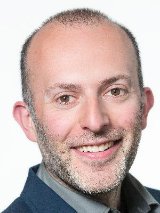
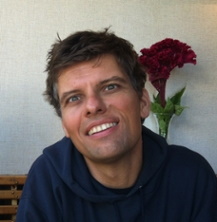
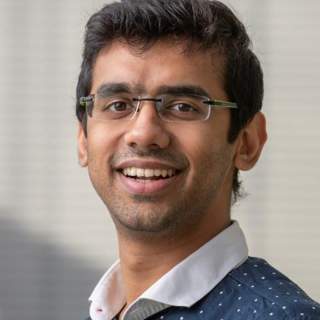
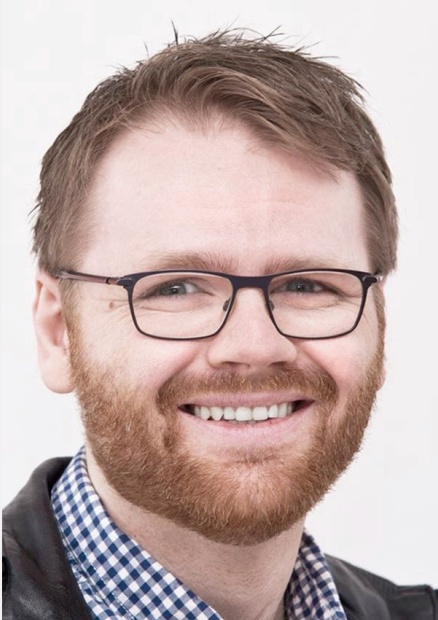
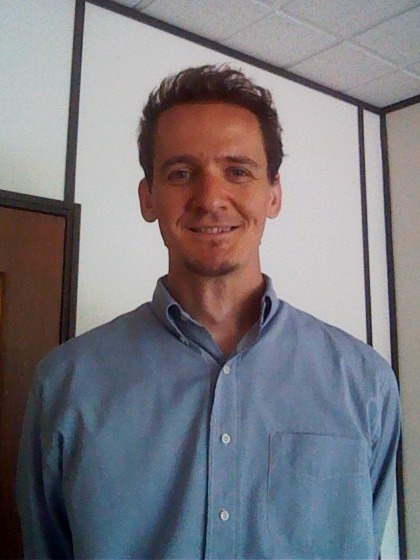
Joeri van der Velde is a researcher at the Faculty of Medical Sciences , University of Groningen , affiliated with the Groningen Institute for Gastro Intestinal Genetics and Immunology (3GI) . His work spans genetics, genomics, bioinformatics, and data science, focusing on rare diseases and autoinflammatory conditions. Key research areas include variant interpretation, FAIR data principles, and multi-omics analysis. He contributes to open-source software development and data stewardship frameworks for biomedical research. Recent publications highlight his role in creating DNA variant interpretation pipelines (e.g., Molgenis Vip ), advancing FAIR data infrastructures (e.g., FAIR Data Cube ), and curating ontologies for autoinflammatory diseases. His collaborations extend to international consortia like SOLVE-RD and European reference networks. No scientific awards are explicitly mentioned in the provided data, and details about advisees or formal grants are absent. He actively participates in academic presentations, such as at BioSB 2020, and contributes to datasets like the 1000IBD project and GAVIN software tools.
Roland Schmehl is an Associate Professor at the Department of Aerospace Engineering, Delft University of Technology (TU Delft). He is a founding member of Airborne Wind Europe (since 2019) and serves on the advisory board of Kitepower (since 2016). His work focuses on airborne wind energy (AWE) systems, including their application in Martian habitats, noise analysis, and aero-structural modeling. Key Research Areas: Wind energy innovation, aerospace engineering, Martian habitat power systems, and robotics-assisted design. The 15 most recent articles highlight his contributions to AWE system design, flight pattern optimization, noise annoyance studies, and extraterrestrial energy applications. His scientific awards include the 2021 Innovation stamps and the 2021 Rhizome project prize for off-Earth habitat development. Schmehl’s projects include MERIDIONAL (multi-scale wind farm design), Rhizome (autonomous Mars habitats), and EFRO (unmanned systems research). He has led editorial activities for journals like Wind Energy Science and Energies and participated in international conferences.
Annisa Puspa Kirana is a Ph.D. candidate and researcher at the Department of Geo-information Processing (ITC-GIP), Faculty of Geo-Information Science and Earth Observation (ITC), University of Twente. She is a Lecturer in the Department of Information Technology at State Polytechnic of Malang, currently on study leave to focus on her Ph.D. research. Her work integrates Artificial Intelligence , Computer Vision , and Geospatial Analytics to analyze satellite/aerial imagery for Climate Change Mitigation , Disaster Monitoring , and Resource Management . PhD in Geo-Information Science @ University of Twente (Netherlands) Master of Computer Science @ IPB University (Indonesia) Her research emphasizes Deep Learning applications in Earth Observation, including Vision-Language Models and Agentic AI for multimodal data analysis. She collaborates with interdisciplinary teams , government agencies , and industry partners . Selected Publications Trends: Focus on AI agents , LLMs , VLMs , and Vision Transformers for geospatial and environmental applications Technical tutorials on Streamlit , TalkToEBM , and LangChain integration Conceptual breakdowns of agentic vs. agent-based systems , interpretability in AI , and prompt engineering Scientific Awards: LPDP Awardee (Indonesian Endowment Fund for Education) Microsoft Certified Educator She actively mentors students in AI/geospatial fields and advocates for open-source science and ethical AI practices in environmental decision-making. Her work bridges academic research and practical policy tools .
A.E. Zaidman is a Professor in the Software Technology department at Delft University of Technology's Faculty of Electrical Engineering, Mathematics and Computer Science. His research focuses on software testing, code quality, and developer tooling, with recent emphasis on socio-technical factors, environmental impacts of testing, and GitHub Actions workflows. Key Research Areas Test amplification (developer interactions with automated testing) Code smell detection and its impact on software quality Empirical studies in open-source software testing AI/ML applications in test generation and analysis Scientific Awards Best Artifact Award (2022) Best Emerging Results Paper Award (2018) Best ERA paper award (2015) Best tool demo paper award (2017) ICPC 2009 Best Paper Award Recent Publications 2025: Systematic mapping of qualitative software testing methods 2025: Industrial language engineering case studies using Spoofax 2024: Environmental impact analysis of Java testing 2024: GitHub Actions workflow smell investigations
Hilde J.P. Weerts is an Assistant Professor at Eindhoven University of Technology , affiliated with the Department of Data Mining within the School of Mathematics and Computer Science . Her research focuses on algorithmic fairness, machine learning ethics, and mitigating discrimination in AI systems. She obtained her MSc and PhD (2025 thesis) from TU/e, with a background in interpretable machine learning and fraud detection systems. Her research interests include fairness-aware AutoML, legal frameworks for algorithmic accountability, and interdisciplinary approaches to understanding bias in decision-making systems. She teaches the Responsible Data Science course and has supervised over 10 academic works, including her own Master's thesis on interpretable machine learning for fraud alerts. Key contributions include frameworks for subgroup harm assessment, unlawful proxy discrimination analysis, and guidelines for fairness in automated machine learning. Her work bridges computer science, law, and ethics, addressing real-world implications of AI systems.
Dr. Bernd Ensing is an Associate Professor at the van 't Hoff Institute for Molecular Sciences (HIMS) within the University of Amsterdam's Faculty of Science. He directs the AI4Science Laboratory, focusing on integrating artificial intelligence with molecular simulations. His research spans computational chemistry, catalyst design, and biophysical systems, emphasizing bio-inspired materials and electron/proton transfer mechanisms. Key research areas include: molecular simulations of catalytic processes (e.g., hydrogenase enzymes), multiscale modeling of soft materials, and machine learning-enhanced data analysis. He develops advanced algorithms like Path-metadynamics and FABULOUS for free energy exploration and reaction coordinate identification. Notable contributions include studies on polyether solubility in water, light-activated proteins' signaling mechanisms, and adaptive resolution simulations (Hybrid-atomistic/coarse-grained methods). His group collaborates on AI-driven material discovery and sustainable chemistry solutions. He has supervised numerous student projects at bachelor/master levels, requiring expertise in quantum chemistry, thermodynamics, or programming. The AI4Science Lab promotes open-source tools via GitHub and community-driven initiatives like PLUMED tutorials.
Hans van der Kwast is an academic affiliated with IHE Delft Institute for Water Education since 2012. He previously worked as a researcher at the Flemish Institute for Technological Research (VITO) between 2007 and 2012, focusing on spatial dynamic environmental modeling. His teaching emphasizes Free and Open Source Software (FOSS) and open data for professionals in the Global South, fostering innovative entrepreneurship. At IHE Delft, he coordinates eLearning support for partners and leads research on spatial data infrastructure (SDI), Citizen Observatories, and remote sensing for water productivity. He is a QGIS Certified Lecturer, developing OpenCourseWare, online courses, and training programs in GIS, remote sensing, and hydrological modeling. He initiated the GIS OpenCourseWare platform and authored the book QGIS for Hydrological Applications . He contributes actively to the QGIS and FOSS4G communities, serves on the Dutch QGIS User Group board, and developed the PCRaster Tools plugin for QGIS. His YouTube channel, with over 17k subscribers, provides tutorial videos on GIS and remote sensing. His research spans water resource management, climate change impacts, and environmental modeling, with a focus on tropical regions. He has collaborated on projects addressing nitrogen dynamics in rivers, floodplain inundation mapping, and uncertainty analysis in remote sensing-derived evapotranspiration estimates. Van der Kwast’s work integrates technology and education to enhance capacity building in water management, particularly leveraging open data and collaborative platforms. His contributions bridge academic research with practical training, emphasizing sustainability and innovation in developing contexts.
Rogier de Jonge is a researcher at Erasmus MC, affiliated with the Department of Neonatal and Pediatric Intensive Care within the Faculty of Medicine. His work is centered on improving outcomes in critically ill children, particularly those who have experienced cardiac arrest or traumatic brain injury. His research interests span pediatric intensive care , neurocritical care , resuscitation science , and the application of machine learning in clinical monitoring. He investigates prognostic markers such as brain MRI findings and physiological parameters (e.g., oxygen, carbon dioxide, cerebral autoregulation) to predict long-term outcomes in children after critical events. His work often involves large-scale collaborations, including national registries and international research groups like the pediRES-Q Collaborative. The recent publications indicate a strong trend toward data-driven approaches in pediatric critical care, integrating advanced monitoring techniques with computational models to enhance clinical decision-making. His studies frequently employ cohort designs, retrospective analyses, and algorithm validation using real-world patient data. Rogier de Jonge has contributed to high-impact journals such as Resuscitation Plus , Pediatric Neurology , and Journal of Clinical Monitoring and Computing . His collaborative network includes key figures in pediatric critical care across the Netherlands and internationally. He supervises research, as evidenced by contributions to doctoral theses and supervised works, though specific advisees are not named. His research is supported through institutional and collaborative funding, evident from multicenter and nationwide study designs. He is actively involved in developing clinical tools and guidelines, particularly in prognostication after pediatric cardiac arrest. Rogier de Jonge is part of a dynamic research team at Erasmus MC focused on neonatal and pediatric intensive care, contributing to both clinical innovation and academic scholarship in pediatric critical medicine.
José Zofio is a Professor of Economics at the Universidad Autónoma de Madrid and a visiting scholar at the Erasmus University Rotterdam. He is affiliated with the Rotterdam School of Management (RSM) through the Department of Technology and Operations Management and the Erasmus Research Institute of Management (ERIM), collaborating with scholars on productivity and efficiency analysis. Role: Professor, Universidad Autónoma de Madrid Visiting Affiliation: Erasmus University Rotterdam, RSM Research Focus: Microeconomics, Productivity, Efficiency Analysis, Transport Economics Research Interests: His work spans Economic Measurement (Index Numbers, Duality Theory), Productivity and Efficiency Analysis (Data Envelopment Analysis, Stochastic Frontier Analysis), and Spatial Economics (New Economic Geography, Transport Networks). He applies these to Environmental Economics , Regional Development , and Industrial Organization , using Operations Research and Econometrics as empirical tools. Recent Publications highlight trends in economic inefficiency decomposition , transport infrastructure impacts , and machine learning integration into productivity models. His collaborations extend to European Commission and World Intellectual Property Organization, though no specific scientific awards are listed here. Advising and grant activity are not explicitly detailed in available texts, but his leadership in national research projects and consultancy roles indicate significant contributions. He has also developed open-source DEA toolboxes for mathematical optimization in economic analysis.
Irfan Refai is an Assistant Professor at the University of Twente, leading the HARMONI Lab (Human-Actuated Robotics and Modeling for Occupational and Space Tasks) within the Chair of Neuromuscular Robotics. His research bridges biomechanics, machine learning, and wearable robotics to develop assistive technologies for occupational and space environments. Research Interests: Human-machine interfacing, wearable exosuits, musculoskeletal modeling, sensor fusion, and edge computing for biomechanical applications. Education: Ph.D. in Electrical Engineering (2021), M.Sc. with Research Honors in Electrical Engineering (2017), and B.E. in Biomedical Engineering (2012). Projects: Key contributions to EU-funded SOPHIA and S.W.A.G. projects focused on exoskeleton optimization, fatigue modeling, and industrial applications. Publications: Specializes in EMG-driven models, soft robot design, and minimal-sensor biomechanical systems, with recent work on space-ready exosuits and adaptive assistance algorithms. Leadership: Organizes workshops on digital twins in rehabilitation and industrial exoskeleton challenges; frequently invited to speak at international conferences.
Constant C.J.M. Hak is an Assistant Professor in the Building Acoustics research group within the Department of the Built Environment at Eindhoven University of Technology (TU/e). His work focuses on reducing adverse health effects from human-induced noise and promoting positively perceived sound environments through computational and experimental acoustic methods. Specializing in room and hall acoustics, Hak develops advanced acoustic measurement techniques based on impulse responses. His research includes analyzing orchestra members' influence on stage acoustics across five concert halls and developing methods for impulse response measurements in open-air theaters. Software and equipment he has developed are used globally for research and engineering applications. His publication trends reveal consistent contributions to architectural acoustics, with recent work emphasizing sensor-based environmental quality assessment, plasma-acoustic interactions, and stage/orchestra pit acoustics optimization. Key research areas span reverberation physics, sound energy engineering, impulse response analysis, and theater acoustics, reflecting his fingerprint in Room Acoustics (100%), Reverberation (78%), and Directivity (75%). Hak teaches courses including Acoustic Awareness, Architectural Acoustics, and Masterprojects in Building Performance Systems. His supervised work encompasses 41 projects, including the 1987 master's thesis De grote zaal in het auditorium van de Technische Universiteit Eindhoven co-authored with J.P.M. Hak. His research contributes to UN Sustainable Development Goals related to sustainable cities and communities, with applications in noise pollution reduction and built environment optimization.
Daniel Strüber is an Associate Professor in Software Engineering at the joint Interaction Design and Software Engineering Division of Chalmers University of Technology and the University of Gothenburg, Sweden. He is also affiliated with the Department of Software Science at Radboud University Nijmegen, Netherlands. His research focuses on model-driven engineering, AI engineering, and variability management to enhance software quality, security, and collaborative development across domains like robotics and web systems. Education : Diplom (M.Sc. equivalent) in Computer Science from Philipps University Marburg (2011, with distinction), Ph.D. (summa cum laude) from Philipps University Marburg (2016). His research bridges empirical, formal, and engineering approaches to address developer challenges in ML-enabled systems. Key trends in his work include model-driven methods for ML deployment, variability management in robotics, and empirical studies of tool usability. He has co-edited a Journal of Systems and Software special issue on software product lines. Scientific Awards : Best Reviewer Awards (SoSyM 2025, GPCE 2024), Transformation Tool Contest Awards (2017, 2020), Best Paper Awards (VAMOS 2019, ICMT 2016), and multiple conference nominations. As a supervisor, he guides current Ph.D. students like Vladislav Indykov and Weixing Zhang, while his former advisees include Shayan Ahmadian and Samuel Idowu. Grants include a VR Open Call Grant (2022-2024) for SEMLA and a DFG Individual Fellowship (2019) for EUphORia. His teaching spans courses on Software Engineering for AI Systems and Software Product Lines , often integrated with real-world projects via GiPHouse.
Aldert Zomer is an Associate Professor at the Faculty of Veterinary Medicine , Utrecht University, specializing in Infectious Diseases & Immunology . He is affiliated with the WHO Collaborating Centre for Campylobacter and Antimicrobial Resistance and serves as a Bioinformatics Consultant for Janssen Pharmaceuticals . His research focuses on bacterial (meta)genomic analysis for comparative genomics , molecular epidemiology , and genotype-phenotype associations in pathogens like Salmonella , Escherichia coli , and Campylobacter . PhD in Molecular Genetics from University of Groningen (2007) Postdoctoral work at University College Cork and Radboud University Medical Centre His research integrates bioinformatics , microbiome analysis , and machine learning to study antimicrobial resistance mechanisms, host-pathogen dynamics, and microbial ecology in veterinary and public health contexts. Current projects include Visiting Scientist at Quadram Institute (Norwich, UK) Leadership in Utrecht University's Research IT Committee He has developed open-source tools like RFPlasmid and Kaptive for genomic analysis and is actively involved in WHO's One Health AMR initiatives OIE Reference Laboratory for Campylobacter Teaching microbial genomics courses at Utrecht University
Andrea Capiluppi is an Associate Professor at the University of Groningen's Faculty of Science and Engineering, Department of Software Engineering — Bernoulli Institute. His research focuses on open source software, software development processes, natural language processing, and machine learning applications in software engineering. He holds roles including Member of the Board of Examiners and Member of the Governing Board of the Thematic Digital Competence Centre (TDCC) for NES. Research interests span open source technologies, software component analysis, software maintenance, and applying NLP to software traceability. His work bridges empirical studies with practical software engineering challenges, such as developer sentiment analysis and legacy code refactoring. He has published over 110 papers, contributing to areas like technical debt detection, code obfuscation impact, and academia-industry collaboration models. No awards are explicitly mentioned, but his leadership roles reflect academic and institutional contributions. He advises on software ecosystems and innovation dynamics, with ongoing projects involving automated software classification and traceability in DevOps environments.
Sergio Gabiel Petralia is an Assistant Professor in Economic Geography at the Faculty of Geosciences, Utrecht University. His research focuses on the spatial dimensions of economic development, technological change, and innovation systems. He teaches courses including Advanced Methods and Techniques, Advanced Methods in Economics and Geography, Economics of Cities, and Economics of Networks. His work examines how technological capabilities evolve across regions and how this affects economic disparities and spatial inequality. Dr. Petralia's research spans economic geography, technological change, and spatial inequality. He investigates how regions develop technological capabilities over time, examining patterns of innovation, patenting activity, and industrial evolution. His work often employs network analysis and historical datasets to understand long-term regional development trajectories and the factors that lead to economic divergence between places. He has developed expertise in analyzing complex economic activities, regional development traps, and the geography of innovation systems across different historical periods. His publication record reveals a progression from historical patent analysis to contemporary issues of economic complexity and disruptive innovation. Starting with studies of US patent geography from 1836-1975, his work evolved to examine technological ladders and complex economic activities in cities, culminating in recent research on disruptive innovation, spatial inequality, and future occupational geographies in Europe. His research consistently bridges economic geography with innovation studies, using sophisticated quantitative methods to explain spatial patterns of economic activity and technological development. Dr. Petralia has published in high-impact journals including Nature Human Behaviour, Research Policy, and Scientific Data. His 2020 paper in Nature Human Behaviour on complex economic activities in large cities has received significant attention with 296 citation indexes and 32 policy citations. His work demonstrates strong engagement with both academic and policy communities, with several publications referenced in policy sources and picked up by news outlets. As an educator, Dr. Petralia contributes to the Department of Economic Geography at Utrecht University, teaching advanced methods courses that likely incorporate his research expertise in economic networks and spatial analysis. His office is located in the Vening Meinesz Building on the Utrecht Science Park campus.