Dr. Steffany Bennett is a Professor in the Department of Biochemistry, Microbiology and Immunology at the University of Ottawa , with a cross-appointment to the Department of Cellular and Molecular Medicine . Her academic background includes a BA (Carleton University), MSc (Carleton University), and PhD (University of Ottawa). Professor, Department of Biochemistry, Microbiology and Immunology Cross-appointment, Department of Cellular and Molecular Medicine Research Interests Dr. Bennett leads the Neural Regeneration Laboratory , focusing on neurodegeneration and neurolipidomics . Her work explores: Regulation of neural stem cell fate by connexin proteins Glycerophospholipid neuromodulators in neurodegenerative diseases Development of lipidomic bioinformatics tools Super-resolution microscopy in neural systems Systems biology approaches to neurodegeneration Publications Trends Recent lab publications highlight interdisciplinary work in lipidomics, metabolomics, and data analysis techniques. Key themes include improving imputation methods ( ImpLimet ), standardizing lipid measurement protocols, and mapping plasma interactomes. Labs & Teams Dr. Bennett directs the Neurolipidomics Laboratory , which includes the India Taylor Lipidomics Research Platform . The lab develops computational tools for lipidomic data analysis and collaborates on neurodegenerative disease research.
Benjamin De Leener is an Associate Professor in the Department of Computer Engineering and Software Engineering at Polytechnique Montréal. He holds the TransMedTech Research Chair in Pediatric Neuroimaging and serves as Co-director of the Neuroimaging Research Laboratory (NeuroPoly). His work bridges engineering and medical research through multiple institutional affiliations including the Sainte-Justine University Hospital Research Center, the Groupe de recherche en gestion et mondialisation de la technologie (GMT), and the Union Neuroscience et Intelligence Artificielle - Québec (UNIQUE). Dr. De Leener's research focuses on developing advanced technologies for pediatric neuroimaging, particularly open-source image analysis tools for brain and spinal cord MRI. His work integrates techniques from image segmentation and registration, neurodevelopmental templates and atlases, and machine learning. His research spans both biomedical technology and artificial intelligence applications, with particular emphasis on pediatric populations. His recent publications demonstrate a strong trajectory in developing computational methods for spinal cord and brain imaging, with increasing focus on pediatric applications and machine learning approaches. The research shows consistent growth in methodological sophistication, moving from basic image processing to advanced deep learning applications for medical imaging. Dr. De Leener actively supervises doctoral and master's students, with current projects focusing on neonatal brain imaging, spinal cord quantification, and advanced MRI techniques. His laboratory maintains strong collaborations between engineers, researchers, psychologists, radiologists, and physicians through its connections with the TransMedTech Institute and Sainte-Justine University Hospital.
Nikolas Provatas serves as an Adjunct Professor in the Department of Materials Science and Engineering within the Faculty of Engineering at McMaster University. His academic career spans over three decades with extensive contributions to computational materials science, particularly in phase-field modeling techniques. Provatas' research focuses on phase-field modeling, solidification phenomena, microstructure evolution, and computational materials engineering. His work bridges theoretical modeling with practical applications in additive manufacturing, metallurgy, and materials processing. He has developed advanced computational frameworks for simulating solidification processes, phase transformations, and microstructural development in various materials systems including metals, alloys, and nanomaterials. His research has significant implications for understanding fundamental materials phenomena and improving industrial manufacturing processes. Analysis of Provatas' extensive publication record reveals a strong trend toward increasingly sophisticated computational modeling approaches, particularly the phase-field crystal method. His work spans fundamental theoretical developments to practical applications in additive manufacturing, welding, and casting processes. The research shows particular emphasis on understanding microstructure evolution during solidification, phase transformations, and the relationship between processing conditions and final material properties. Provatas has mentored numerous students and collaborated extensively across the materials science community, though specific details of his advising record are not provided in the available information. His research has attracted significant attention, as evidenced by the substantial readership metrics across multiple platforms. His laboratory work centers on computational materials science, developing advanced simulation frameworks to model solidification phenomena, phase transformations, and microstructure evolution across multiple length and time scales. These computational approaches enable detailed investigation of materials behavior that would be challenging to observe experimentally.
Christopher Strickland is an Associate Professor in the Mathematics Department with an adjunct appointment in the Department of Ecology and Evolutionary Biology at the University of Tennessee, Knoxville. His research bridges mathematical theory and ecological applications through interdisciplinary collaboration. His primary research interests include mathematical ecology, with specific focus on modeling complex systems in ecology and substance use epidemiology (particularly opioids and alcohol). He utilizes diverse mathematical tools including mathematical modeling, dynamical systems, statistical inference, and scientific computing. His work brings mathematical methods to organismal ecology, especially in the context of behavior, dispersal, and social interaction. Specific research areas include addiction epidemiology, individual-based modeling of collective behavior (both on land and in fluid environments around immersed structures), and novel approaches in population ecology. Dr. Strickland has developed Planktos , an open-source agent-based modeling software in Python designed for 2D and 3D fluid environments with immersed structures. This framework enables scientific exploration and quantification of collective and emergent behavior in fluid environments. He collaborates extensively with Oak Ridge National Lab and the Veterans Administration to develop and mathematically analyze population-level and individual-based models of the opioid epidemic based on location-specific data. These models help predict epidemic trajectories for specific communities and quantify risk factors that inform patient treatment decisions. Dr. Strickland is scheduled to present at the SIAM Activity Group on Dynamical Systems conference (DS25) in May 2025 in Denver, Colorado, reflecting his active engagement in the mathematical sciences community.
Jia Hu is a public health physician and medical lead of the prevention and health promotion team within Population and Public Health at the British Columbia Centre for Disease Control (BCCDC). He also holds a position as a Clinical Assistant Professor at the University of British Columbia's School of Population & Public Health, where he contributes to academic training and research in public health disciplines. Dr. Hu's educational background includes medical training at the University of Alberta, followed by residency training in family medicine and public health and preventive medicine at the University of Toronto. During his residency, he earned a Master of Science in Health Policy, Planning, and Finance from the London School of Economics and the London School of Hygiene and Tropical Medicine. His research interests span multiple critical areas in modern public health, with particular focus on social determinants of health, housing and health, climate change and health, food security, mental wellness, and cancer prevention and screening. Dr. Hu has also developed significant expertise in behavior change and marketing strategies specifically tailored for public health interventions such as vaccination programs and cancer screening initiatives. His work bridges clinical practice with population-level health promotion strategies. Analysis of Dr. Hu's recent publications reveals a strong interdisciplinary research profile that spans public health, epidemiology, and increasingly, computational approaches to health data. While his earlier work focused on traditional public health domains, his recent publications show a growing engagement with artificial intelligence, natural language processing, and speech technology applications in healthcare contexts. This evolution demonstrates his ability to adapt to emerging technological paradigms while maintaining focus on core public health challenges. Dr. Hu's professional journey includes diverse experiences that have shaped his interdisciplinary approach: working at McKinsey advising large organizations on health-related issues, serving as a Medical Officer of Health in Alberta where he contributed to the COVID-19 response, and founding and leading a public health non-profit organization focused on increasing uptake of preventive health behaviors. As medical lead of the prevention and health promotion team at BCCDC, Dr. Hu oversees initiatives that address a wide range of public health concerns across British Columbia. His work integrates evidence-based approaches with practical implementation strategies to improve population health outcomes through prevention-focused interventions and health promotion activities.
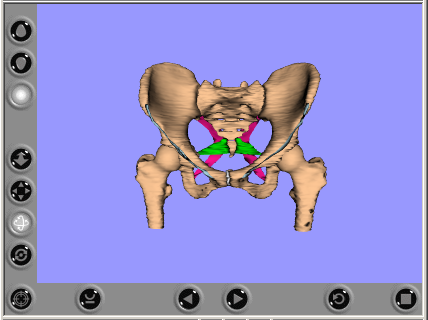
Robert Funnell, PhD is an Investigator at the Research Institute of the McGill University Health Centre (RI-MUHC) and a Professor in the Department of Otolaryngology - Head and Neck Surgery at McGill University's Faculty of Medicine. His research is conducted within the Child Health and Human Development Program at RI-MUHC, where he applies engineering principles to understand auditory mechanics and improve diagnostic tools for hearing assessment. Dr. Funnell's research focuses on the mechanics and acoustics of hearing, with particular emphasis on developing novel measurement techniques in experimental animals and infants, and creating computational models of the ear. His work combines experimental measurements with sophisticated modeling approaches to better understand middle ear function. He has developed specialized software for creating 3D models of complex anatomical structures, including his notable Thrup'ny 3D viewer application. His research has significant clinical applications, particularly in improving newborn hearing screening protocols and developing better diagnostic tests for middle ear conditions. Analysis of Dr. Funnell's recent publications reveals a consistent trajectory in middle ear biomechanics research spanning several decades. His work demonstrates increasing sophistication in computational modeling techniques, with recent publications integrating optical coherence tomography, X-ray microCT data, and finite element analysis to create increasingly accurate representations of middle ear function. A significant portion of his recent work focuses on newborn hearing assessment, reflecting the clinical importance of early hearing detection. His research bridges engineering principles with clinical audiology, creating practical applications for hearing screening and diagnosis. Dr. Funnell has developed several notable software tools including Thrup'ny, a free open-source 3D viewer for VRML models designed for both anatomy teaching and finite-element pre- and post-processing. His website hosts various educational resources including interactive 3D models of the ear, finite-element simulation tools, and teaching materials on middle ear mechanics. These resources have been widely used for both research and educational purposes in the field of otolaryngology and biomedical engineering.
Dr. Roger A. Petry is a Professor of Philosophy at Luther College at the University of Regina in the Department of Philosophy and Classics. He serves in multiple leadership capacities including Coordinator of the Philosophy, Politics, and Economics (PPE) Program, Co-coordinator of the U of R Certificate in Sustainability, and Co-coordinator of the Regional Centre of Expertise on Education for Sustainable Development in Saskatchewan (RCE Saskatchewan). Appointed Regional Advisor for RCEs in the Americas by the United Nations University (UNU) starting in 2020, Dr. Petry also serves as the institutional lead on 'Responsible Consumption and Production' for the International Association of Universities (IAU) Thematic Cluster on Higher Education for Sustainable Development (HESD), supporting UN Sustainable Development Goal #12. As a Rhodes Scholar, Dr. Petry earned degrees in philosophy and mathematics from the University of Regina, philosophy, politics, and economics (PPE) and philosophical theology from the University of Oxford, and an interdisciplinary Ph.D. in 2008 through the Canadian Plains Studies Program at the University of Regina. His doctoral research examined university innovation for sustainable development in relation to commercialization and open source licensing strategies. Dr. Petry's research spans multiple interdisciplinary areas connecting philosophy with sustainability challenges. His work investigates the ethics of autonomous equipment, free software and commercialization strategies for prairie innovation in sustainability, processes of transition to new production systems including transformational technologies, education for sustainable development, philosophy of empire and the early Christian church, arguments from religious experience, natural histories of religion, and connections between ancient philosophy, religion, and mathematics. His recent publications and presentations demonstrate a consistent focus on how educational institutions can lead in implementing the UN Sustainable Development Goals through institutional transformation and innovative pedagogical approaches. Rhodes Scholar Regional Advisor for RCEs in the Americas (UNU, 2020-present) Institutional lead for IAU Thematic Cluster on SDG #12 Co-coordinator of RCE Saskatchewan As an educator, Dr. Petry teaches across the philosophy curriculum from introductory to graduate levels, with specialized courses in sustainable development, ethics, and philosophy of religion. His teaching extends into interdisciplinary contexts through the PPE program, global citizenship courses, and collaborations with mathematics and religious studies. Dr. Petry's leadership in sustainability education initiatives provides unique opportunities for students to engage with global networks and practical sustainability projects that bridge academic theory with real-world application. Dr. Petry leads multiple initiatives focused on sustainable development education and research. As Co-coordinator of RCE Saskatchewan, he works with one of over 180 Regional Centres of Expertise recognized globally by the United Nations University to advance the UN Sustainable Development Goals. His leadership in the IAU Thematic Cluster specifically supports institutional transformation toward Responsible Consumption and Production (SDG #12) through a whole-institution, cultural approach to campus sustainability.
Dominique Orban is a Full Professor in the Department of Mathematics and Industrial Engineering at Polytechnique Montréal. He holds a Ph.D. from FUNDP Namur and INP Toulouse and has established himself as a leading researcher in numerical optimization. His academic affiliations include the Institute for Data Valorization (IVADO) and the Decision Analysis Study and Research Group (GERAD). Professor Orban's research focuses on numerical mathematics, particularly continuous nonlinear optimization, nonlinear systems of equations, and numerical linear algebra. His work involves designing specialized numerical algorithms for optimization problems, with particular interest in degeneracy and ill-posed problems. His research spans theoretical development of algorithms, their implementation in software, and applications to real-world problems such as image reconstruction, optimal structure design, and optimization under differential constraints. Analysis of his recent publications (2021-2025) reveals a strong focus on developing practical optimization algorithms with theoretical guarantees. His work spans multiple areas including nonsmooth optimization, iterative methods for linear systems, regularization techniques, and software implementation in Julia. A notable trend is his increasing focus on developing open-source software tools that make advanced optimization methods accessible to practitioners. Over 160 publications including journal articles, conference papers, and technical reports Multiple publications in top optimization journals each year through 2025 Strong emphasis on both theoretical foundations and practical implementation Increasing focus on Julia-based optimization software development Professor Orban has successfully supervised 9 doctoral students and 13 master's students to completion, demonstrating his commitment to mentoring the next generation of researchers. His supervision style appears to balance theoretical depth with practical implementation skills, preparing students for both academic and industry careers. His research has been supported through various institutional and collaborative grants, enabling him to maintain an active research program with multiple ongoing projects. His contributions to the field include significant software developments such as Krylov.jl, JSOSuite.jl, and DCISolver.jl, which have made advanced optimization techniques more accessible to the broader scientific community. These tools reflect his philosophy of bridging theoretical optimization with practical computational implementation.
Marcelo Reggio is a Full Professor in the Department of Mechanical Engineering at Polytechnique Montréal, where he has established a significant research career spanning fluid dynamics and computational methods. He is an active member of the Fluid Dynamics Laboratory (LADYF), focusing on cutting-edge simulations of complex fluid phenomena. His educational background includes: Baccalaureate from Chile Master of Applied Science (M.Sc.A.) from Polytechnique Montréal Ph.D. from Polytechnique Montréal Research Focus: Professor Reggio's work centers on Computational Fluid Dynamics (CFD) with specialization in the Lattice Boltzmann Method (LBM). His research addresses fundamental and applied challenges in: Turbomachinery design optimization Wind turbine aerodynamics and icing effects Rarefied gas flows through porous media Multicomponent and multiphase flow modeling River current dynamics This work bridges theoretical fluid mechanics with industrial applications in energy and manufacturing. Publication Trends: Analysis of his 15 most recent articles (2016-2024) reveals dominant themes: advanced LBM techniques for non-equilibrium gas flows, validation of open-source CFD codes, multiphase interactions, and stochastic modeling of porous materials. His methodological innovations consistently target improved accuracy in complex physical scenarios. Academic Supervision: Professor Reggio maintains an active research group, having supervised: 12 doctoral students 20 master's students Student theses frequently explore LBM applications, turbomachinery, and numerical method development. Laboratory Leadership: At the Fluid Dynamics Laboratory (LADYF), he contributes to developing computational frameworks for fluid simulation, emphasizing GPU acceleration and industrial problem-solving.
Olivier Gendreau serves as a Lecturer in the Department of Computer Engineering and Software Engineering at Polytechnique Montréal, where he has established himself as an accomplished educator and researcher in software engineering and virtual reality applications. His work spans both theoretical research in knowledge management within software development processes and practical applications in engineering education. Department of Computer Engineering and Software Engineering, Polytechnique Montréal Primary research center: New Frontiers in Information and Communications Technologies Secondary research centers: Modeling and Artificial Intelligence; Industry of the Future and Digital Society Professor Gendreau's research focuses on the intersection of software engineering practices, knowledge management, and virtual reality applications. His work examines how knowledge flows and is converted during software development processes, with particular attention to quality control practices, documentation validation, and the application of virtual reality technologies. He has published extensively on integrative learning approaches that bridge academic theory with professional practice in software engineering. Analysis of Professor Gendreau's publication record reveals a consistent focus on knowledge management in software development, with significant contributions to understanding knowledge acquisition, flow, and conversion processes. His work frequently employs case study methodology to examine practical applications in quality control, component reuse, and verification/validation techniques. More recently, his research has expanded into virtual reality applications and ecological identity in workplace contexts, showing an evolving research trajectory that maintains its core focus while expanding into new application areas. 2020 - Excellence in Teaching Award from Polytechnique Montréal ($10,000) Professor Gendreau has developed and supervised numerous integrative projects for computer and software engineering students at Polytechnique Montréal, including both second-year and third-year projects designed to facilitate students' transition to the professional workforce. His teaching emphasizes practical, industry-relevant experiences that prepare students for real-world challenges in software development. His work with student teams participating in competitions like Laval Virtual demonstrates his commitment to providing students with opportunities to apply their knowledge in competitive, real-world settings.
Mariam Guizani serves as an Assistant Professor in the Department of Electrical and Computer Engineering at Queen's University, where her research bridges Software Engineering and Human-Computer Interaction to advance Diversity and Inclusion in Open-Source Software ecosystems. Education: PhD from Oregon State University Second MSc from Oregon State University BSc in Software Engineering MSc in Software Engineering Her work focuses on designing processes and tools to help Open-Source communities dismantle cognitive barriers, improve inclusivity, and retain contributors. Through multi-year collaborations with Google, Apache Software Foundation, Microsoft Research, and Wikimedia, she has directly influenced real-world platforms including GitHub's Discussion Dashboard and GitHub Blocks. Her research methodology combines socio-technical analysis with empirical studies of contributor experiences across large-scale OSS projects. Scientific Awards: Fulbright fellowship Dr. Guizani actively disseminates her findings through invited presentations at premier academic conferences including ICSE and CSCW, as well as industry forums such as GitHub, ApacheCon, and the Linux Foundation Open-Source Summit, demonstrating significant cross-sector impact of her work on community-driven software development practices.
Carmen Bernier serves as Full Professor and Dean of the Faculty of Music at Laval University, with additional affiliation to the Department of Organizational Information Systems in the Faculty of Business (FSA). Her academic career bridges music administration and business information systems, reflecting in her cross-disciplinary research and leadership roles. Her educational background includes: Doctorate in Information Systems and Strategies (Ph.D.) from HEC Montréal Master of Business Administration (MBA) in Information Systems from Laval University Bachelor of Business Administration (BBA) from Laval University Professor Bernier's research examines critical intersections of technology and organizational management, with particular expertise in IT project leadership, ERP implementation challenges, and open source software adoption. Her work analyzes how contractual relationships, geographic distance, and agile methodologies interact in system development contexts. She investigates leadership dynamics in technology sourcing decisions and the governance frameworks required for effective information resource management across multinational organizations. Her publication record demonstrates consistent scholarly output from 1989-2016, characterized by practical case study analyses of real-world business technology implementations. This research trajectory reveals evolving focus from foundational system development uncertainty studies to contemporary challenges in distributed agile projects and open source business adoption. As Dean of the Faculty of Music, she applies her organizational expertise to academic leadership while maintaining active research engagement in information systems. Her dual appointment exemplifies the growing integration of technology management principles across diverse academic disciplines and administrative functions.
Morten Rand-Hendriksen serves as Sessional Faculty at Emily Carr University of Art and Design and Senior Staff Instructor at LinkedIn Learning, with additional roles as Director of Pink & Yellow Media Inc. and active contributor to the WordPress open-source ecosystem. His professional focus centers on web standards, interaction design, and digital solutions for diverse clients including multinational corporations and government entities. His research interests emphasize: Philosophical applications of information theory to interaction design Standards-based coding practices and clean design principles Open-source software development and community engagement Ethical implications of technology in society Digital media production and archiving systems Recent publications reveal consistent exploration of technology's societal impact, particularly in education policy, digital ethics, and platform governance, with practical guides complementing theoretical analyses of web evolution and user experience. No scientific awards were documented in available sources. While no formal academic advising relationships were specified, his industry leadership manifests through WordPress community organization and professional training at scale via LinkedIn Learning. He actively contributes to the Vancouver WordPress Meetup Group and the global WordPress open-source project, fostering collaborative development practices while maintaining independent digital studio operations.