Chujun Lin is a researcher at the University of California, San Diego (UCSD) within the College of Letters and Science. Their work focuses on understanding how humans form impressions of others through social perception mechanisms. Key Affiliation: Department of Psychology, UCSD Methodologies: Computational modeling, cross-cultural studies, neuroimaging Research Interests center on spontaneous impression formation from limited cues like facial appearances. They investigate how stereotypes and biases influence social judgments, and how these perceptions affect real-world outcomes including: Voting behavior Courtroom sentencing Misinformation spread Science communication Climate action decisions Their publication trends reveal expertise in facial perception analysis, algorithmic bias detection, and neuroimaging of social cognition. Current work examines trait inference dimensions and develops computational frameworks for understanding bias formation.
Tobias Bonhoeffer is Director of the Department of Synapses - Circuits - Plasticity at the Max Planck Institute for Biological Intelligence (formerly Max Planck Institute of Neurobiology) in Martinsried, Germany, and Professor at the Ludwig Maximilian University of Munich since 2002. He also serves as Associate Professor at the Norwegian University of Science and Technology (NTNU) since 2014. His research spans multiple levels of analysis, from molecular studies to systems neuroscience, with a primary focus on synaptic plasticity mechanisms and visual system organization. Born January 9, 1960 in Berkeley, California, Bonhoeffer earned his Physics diploma from Eberhard-Karls University of Tübingen (1984) and completed his neurobiology doctorate at the Max Planck Institute for Biological Cybernetics (1988). His postdoctoral work at Rockefeller University with Amiram Grinvald and Torsten Wiesel (1989-1990) was followed by research with Wolf Singer at the Max Planck Institute for Brain Research (1991-1992). He led a research group at the Max Planck Institute of Psychiatry (1993-1998) before becoming Director at the Max Planck Institute in 1998. Bonhoeffer's lab has made seminal contributions to understanding how synaptic plasticity relates to structural changes in the brain. They demonstrated that growth and retraction of dendritic spines underlies synaptic plasticity, that these structural changes facilitate relearning of previously acquired information, and how experience shapes cortical maps. His current research employs advanced imaging techniques to study neural circuits at unprecedented resolution, examining how visual experience drives representational changes in cortical organization and how these relate to memory processes. Analysis of his recent publications reveals a strong emphasis on mouse visual cortex organization, dendritic spine dynamics, and the relationship between structural and functional plasticity. His work increasingly incorporates computational approaches and advanced imaging methods to bridge cellular mechanisms with systems-level understanding of brain function. Member of the Academia Europaea (2003) Ernst Jung Prize for Medicine (2004) EMBO member (2006) Member of the German National Academy of Sciences Leopoldina (2010) Member of the National Academy of Sciences (NAS) (2020) Bonhoeffer has held significant advisory roles including Governor of the Wellcome Trust (2014-2021) and Scientific Advisor to the Chan Zuckerberg Initiative (since 2016). His lab continues to pioneer new methodologies for studying neural plasticity, with recent work focusing on synaptic changes during learning, structural correlates of memory, and how neural circuits adapt to changing environmental demands in both virtual and real-world contexts. The Bonhoeffer Lab maintains extensive international collaborations and trains the next generation of neuroscientists. Their research program integrates multiple approaches including two-photon imaging, virtual reality behavioral paradigms, and computational modeling to unravel the complex relationship between structural and functional plasticity in neural circuits.
Professor Jürgen Menthe serves as Department Head of Chemistry at the University of Hildesheim within the Faculty of Mathematics, Natural Sciences, Economics and Computer Science. With expertise spanning chemistry education research, assessment competence development, and inclusive teaching methodologies, he has established himself as a leading figure in science education. His research interests focus on Education for Sustainable Development , Inclusive Chemistry Teaching , and Assessment Competence . Menthe develops context-based learning approaches that connect chemistry concepts to real-world issues like nanotechnology applications, environmental chemistry, and sustainable resource management. His work emphasizes bridging theoretical frameworks with practical classroom implementation through student laboratories and socio-scientific issues. Analysis of his recent publications reveals consistent focus on developing students' judgment competence through innovative teaching methods including decision-making games, technology assessment activities, and context-rich learning environments. His research demonstrates how chemistry education can address societal challenges while developing critical thinking skills. Menthe's work frequently explores the intersection of chemistry content knowledge with broader educational goals related to citizenship and sustainability. Wissenschaftliche Leitung KHI (Kompetenzzentrum Regionale Lehrkräftefortbildung Hildesheim) Vorstand Zentrum für Lehrerbildung (Celeb) Stellvertretender Vorsitzender im Verein Open MINT (Schülerforschungszentrum XPLORE) Menthe actively contributes to teacher education through his leadership roles and research on effective teaching practices. He has developed numerous educational materials and laboratory activities that support teachers in implementing innovative approaches to chemistry instruction. His administrative work focuses on strengthening university-school partnerships and enhancing teacher professional development opportunities.
Dr. Steffen Pötzschke is a researcher at GESIS – Leibniz Institute for the Social Sciences in Mannheim, serving as Deputy Team Leader of the GESIS Panel since May 2021. He has been a corresponding member of the Institute for Migration Research and Intercultural Studies (IMIS) at the University of Osnabrück since October 2018. His academic background includes a Dr. phil. in Social Sciences from the University of Osnabrück (2015-2018), an M.A. in International Migration and Intercultural Relations from the University of Osnabrück (2010), and a B.A. in Cultural Studies from the European University Viadrina Frankfurt (Oder) (2006). His research focuses on Migration and Integration , Transnationalism , Survey Methodology , and Refugee Research . He has contributed to advancing survey recruitment methods using social media platforms like Facebook and Instagram, particularly for hard-to-reach populations such as migrants and refugees. His work includes empirical studies on Ukrainian refugees, Turkish and Romanian migrants in Europe, and methodological innovations in cross-national migration surveys. Dr. Pötzschke has authored numerous publications in journals such as International Journal of Intercultural Relations , International Journal of Social Research Methodology , and Comparative Migration Studies . He has also contributed chapters to edited volumes like Migration Research in a Digitized World and How to Do Migration Research . His recent projects include Experiences of Refugee Youth and Families in Hard-to-Survey Areas (ERYF-HAS) , Online Survey of Ukrainians (OneUA) , and Comparing Samples of Ukrainian Forced Migrants Over Time (comUAsam) . He is a founding member of the IMISCOE Standing Committee Methodological Approaches and Tools in Migration Research (Meth@Mig) and has served on its steering committee. He has held visiting scientist positions at the Max Planck Institute for Demographic Research (2019) and Western University (2022). His methodological expertise includes mitigating bias in migration surveys, digitization of research tools, and innovative sampling techniques.
Johannes Michalak is a Professor and Chair holder of Clinical Psychology and Psychotherapy II at the University of Witten/Herdecke's Faculty of Health, where he also serves as the Ombudsperson for Good Scientific Practice and heads the study program in the Department of Psychology and Psychotherapy. His academic roles include leadership in research, education, and ethical oversight. Education and Career: Doctorate in Psychology, Ruhr University Bochum (1999) Habilitation, Ruhr University Bochum (2006) Professor at University of Witten/Herdecke (2014–present), University of Hildesheim (2011–2014), and visiting positions at University of Zurich, Queen's University (Canada), and Ruhr University Bochum Research focuses on mindfulness-based psychotherapy , embodiment in clinical contexts , and psychotherapy for people with disabilities . His work integrates posture, movement, and fascial health into mental health interventions, with emphasis on depression treatment and accessibility for vulnerable groups. Publications (2024–2025) cluster around mindfulness efficacy, embodiment mechanisms, disability-inclusive psychotherapy, and refugee mental health. Trends include meta-analyses of MBCT, posture-behavior studies, and interventions for sensory impairments. Awards: Open Science of Religion Award (2023) Klaus Grawe Lunchtime Lecture (2019) Leads a research team including Dr. Johannes Graser (Acting Professor), Dr. Franziska Kessemeier, Dr. Maria Velana, Aaron Mroß (Research Associates), and Agatha Dampc (Secretariat). Current projects investigate fascia therapy for depression.
Dr. Lubna Ali is a Researcher at the Teaching and Research Area Computer Science 9 (Learning Technologies) within the Department of Computer Science at RWTH Aachen University, Germany. Based at the Informatikzentrum (Ahornstraße 55, Aachen), she contributes to the Learning Technologies Lab (LTI Lab) under Prof. Dr. Ulrik Schroeder's leadership. Her work focuses on advancing Open Educational Resources (OER) through technological innovation and practical implementation in educational contexts. Dr. Ali's research centers on OER conversion tools, quality assurance frameworks, and digital learning solutions. She pioneered the convOERter system for semi-automatic conversion of educational materials, developed evaluation methodologies for OER tools, and designed educational games to facilitate OER adoption. Her work spans higher education and secondary school settings, addressing challenges in OER integration, teacher training, and multimedia resource quality assessment. Her publication trajectory (2018-2025) reveals consistent innovation in OER technologies, with emphasis on automating conversion processes, establishing quality metrics, and creating user-centered tools. Key contributions include comparative analyses of manual versus automated OER conversion, evaluation systems for tracking tool usage, and frameworks for OER practice in online workshops. Scientific Awards: No awards documented in available sources. Dr. Ali has supervised eight theses at RWTH Aachen University: Muhammad Waseem Khalid - Master Thesis (2025): Quality assurance model for convOERter Thea Schmitz - Bachelor Thesis (2023): OER module for secondary education via web application Deekshith Radhakrishna Shetty - Master Thesis (2023): Evaluation system for convOERter Vu Nhat Quang Phung - Bachelor Thesis (2022): OER cycle framework using digital games Patrick Aufdermauer - Bachelor Thesis (2022): Web-based media analysis tool Majd Al Kayyal - Bachelor Thesis (2021): Mobile application for OER perception Faraji Abdolali - Master Thesis (2021): Quality evaluation model for OER repositories Vu Tuan Tran - Bachelor Thesis (2021): OER editing framework for online workshops As a core member of the LTI Lab, Dr. Ali collaborates on projects developing OER conversion tools, educational games, and teacher training initiatives. The lab operates within RWTH Aachen's Computer Science ecosystem, focusing on practical applications of learning technologies in real-world educational settings.
Tianmin Shu is an Assistant Professor in the Department of Computer Science at Johns Hopkins University's Whiting School of Engineering, with a secondary appointment in the Department of Cognitive Science. He directs the Social Cognitive AI (SCAI) Lab and is a member of the Data Science and AI Institute. Dr. Shu's educational background includes: PhD in Statistics, University of California, Los Angeles (2019) BS in Electronic Engineering, Fudan University (2014) Dr. Shu's research pioneers machine social intelligence to build human-centered AI systems. His work integrates: Embodied AI for physical-world human-robot collaboration Neurosymbolic methods for multimodal social reasoning Computational models of human social cognition Theory of Mind frameworks for mental state inference Continual learning for adaptive social agents Recent publications (2024-2025) reveal three dominant research thrusts: (1) Multimodal Theory of Mind systems like MMToM-QA for mental state reasoning, (2) Embodied assistance frameworks such as GOMA for goal-oriented human-robot alignment, and (3) Human feedback learning methods including pragmatic feature preferences. His work increasingly bridges language models with world models while exploring neural correlates of social cognition through fMRI studies. Dr. Shu's scientific contributions have been recognized with prestigious awards: Cognitive Science Society’s 2017 Computational Modeling Prize 2020 NeurIPS Best Paper Award (Cooperative AI Workshop) 2022 IROS Workshop Excellent Paper Award 2024 ACL Outstanding Paper Award (MMToM-QA) As director of the SCAI Lab, Dr. Shu leads research on socially intelligent systems through open-source platforms including VirtualHome 2 (multi-agent household simulator) and SimWorld (photorealistic interaction simulator). His lab develops computational frameworks that enable machines to perceive social dynamics, infer intentions, and provide context-aware assistance in complex environments.
Stan Erraught is a Lecturer in Music Management, Popular Music, and Aesthetics at the University of Leeds , School of Music. He joined Leeds in 2018 after serving as Senior/Principal Lecturer at Bucks New University (2013–2017). His academic background includes a PhD in Philosophy (NUI/UCD, 2010) focusing on Critical Theory and Kantian Idealism, an MA in Philosophy (Essex, 2003), and a BA in Humanities (Open University, 1999). Research Interests include the political economy of the music industry, aesthetic judgment in popular music, the impact of technological reproduction on listening, and the application of Critical Theory (Adorno, Kant) to contemporary musical practices. He explores connections between music and postcolonial Ireland, streaming's datafication of subjectivity, and the utopian potential in non-autonomous art forms. Publications highlight his analysis of streaming's ontological effects ('On the Redundancy of Music', 2023) and Irish musical conflicts ('Rebel Notes', 2025). He investigates how algorithmic taste ('Outsourcing Taste', 2019) and silent musical experiences ('I Was Listening…', 2021) reflect broader cultural anxieties. Supervision includes postgraduate researchers working on projects related to music, culture, and politics. He is a member of the International Association for the Study of Popular Music (IASPM) and contributes to academic discourse through conference presentations and book reviews.
Dr. Marijn Struiksma is an Assistant Professor in Language and Communication at the Department of Languages, Literature and Communication, Utrecht University. She holds a prominent position within the Institute for Language Sciences and serves as the Humanities ambassador for Utrecht Brain. Her interdisciplinary work bridges cognitive neuroscience, psycholinguistics, and social sciences. Her research focuses on the intricate interplay between language and emotion, investigating how readers emotionally engage with narratives using EEG, facial EMG, skin conductance, and behavioral measures. Her groundbreaking work has demonstrated that frowning muscle activity reflects both the simulation of characters' emotions and readers' moral evaluations, providing crucial insights into affective language processing. Her research has received significant media attention, with studies on verbal insults triggering 'mini slap to the face' responses featured in numerous international outlets including Neuroscience News, Science Times, and Frontiers Science Communications. Dr. Struiksma coordinates the interdisciplinary minor Brains & Bodies and the Language module in the RMa Neuroscience & Cognition. As manager of the ILS Biolab (1.5 days per week), she develops analysis procedures for biosignals and trains researchers in biosignal methodologies. She is an active member of the Open Science Community Utrecht and serves as a resource for faculty members interested in incorporating neuroscientific methods into their research. Extensive expertise in psychophysiological methods including EEG, fEMG, and skin conductance Active contributor to Open Science principles and FAIR data practices Specialist in interdisciplinary research connecting humanities and neuroscience Her work demonstrates consistent engagement with both theoretical frameworks in embodied cognition and practical applications in real-world contexts, including legal language interpretation as evidenced by her presentation 'Taal in de rechtszaal' (Language in the courtroom).
Professor John Towse is a distinguished academic in the Department of Psychology at Lancaster University, with expertise spanning cognitive psychology, cybercognition, and metascience. His research investigates the intricate relationships between working memory, executive functions, and real-world cognitive performance, as well as the psychological aspects of cybersecurity and software development. His research interests include: Working memory and executive functions - examining how active maintenance of transient information influences cognitive development and skills Cybercognition - studying how cognitive systems interact with online environments and digital interfaces Metascience - exploring ways to enhance research credibility and optimize research processes Psychology of computer security - investigating human factors in secure software development Professor Towse's recent publications reveal a strong focus on the intersection of cognitive psychology and cybersecurity, with particular attention to working memory mechanisms, data sharing practices in psychological research, and cognitive factors influencing susceptibility to email fraud. His work bridges theoretical cognitive science with practical applications in digital security and research methodology. Notable contributions include investigations into theoretical foundations of working memory systems, psychological predictors of vulnerability to cyber fraud, security perceptions among software developers, and ethical frameworks for digital behavioral data research. Professor Towse actively supervises postgraduate research, currently guiding PhD student Matthew Ivory in research related to protecting ordinary people from deepfakes. He has led significant research projects including 'Why Johnny doesn't write secure software? Secure Software development by the masses' (2017-2021), funded by EPSRC with £518,783.44, where he served as Co-Investigator. His professional activities include membership in the Experimental Psychology Society, editorial roles for journals including the Journal of Numerical Cognition and Psychologia, and participation in the ESRC Peer College Review. He also serves on the Expert Group on Open Science (EGOS).
Maja Becker is a Professor at Université Toulouse Jean Jaurès, where she is affiliated with the Cognition, Langues, Langage, Ergonomie (CLLE) research unit. She serves as co-responsible for the master's program in Psychology and the Master PEPSCO track, and teaches advanced social psychology courses at the undergraduate level. Her research focuses on cross-cultural social psychology, with particular emphasis on self/identity processes and their behavioral consequences. Becker investigates how individuals form attitudes and beliefs related to high-stakes societal issues including environmental concerns, political radicalization, gender equality, moral judgment, and well-being. A significant portion of her work explores the factors that reinforce or weaken prejudice and stereotypes toward various social groups. Her methodological approach typically combines theoretical frameworks from social identity theory with large-scale cross-cultural data collection. Becker's recent publications demonstrate a strong commitment to multinational research design, with studies conducted across dozens of countries. Her work on populism examines how identity threat mediates the relationship between economic distress and populist attitudes, while her environmental research investigates how self-construals relate to environmental values across cultural contexts. She has developed measurement tools like the POPulist Thin Ideology Scale (POP-ThIS) and has contributed to understanding how cultural values (honor, face, dignity) moderate responses to social issues like migration. As an active researcher, Becker collaborates with international teams across multiple continents, contributing to our understanding of how universal psychological processes interact with culturally specific contexts. Her work appears in high-impact journals including Nature Human Behaviour, Proceedings of the National Academy of Sciences, and Journal of Personality and Social Psychology.
Leslie Kaelbling serves as the Panasonic Professor in MIT's Department of Electrical Engineering and Computer Science (EECS) and Director of Research for the MIT Quest for Intelligence, while also holding an investigator position at the Computer Science and Artificial Intelligence Laboratory (CSAIL). Her academic background includes a BA in philosophy and PhD in computer science, both earned at Stanford University. Professor Kaelbling's research centers on building intelligent robots capable of operating in uncertain environments through advanced learning, state estimation, and planning techniques. Her work bridges theoretical AI foundations with practical robotics applications, focusing on creating systems that adapt to complex real-world scenarios through probabilistic reasoning and decision-making under uncertainty. Analysis of her recent publications reveals a strong trajectory toward integrating foundation models with robotic planning systems, particularly leveraging vision-language models for constraint inference and diffusion models for task-motion planning. Her research increasingly emphasizes uncertainty quantification, neuro-symbolic representations, and sample-efficient learning methods for long-horizon manipulation tasks. Key scientific recognitions include: Fellow of the Association for the Advancement of Artificial Intelligence (AAAI) Founder and inaugural Editor-in-Chief of the Journal of Machine Learning Research As Director of Research for the MIT Quest for Intelligence, she leads strategic initiatives advancing human and machine intelligence research, fostering cross-laboratory collaborations between CSAIL, neuroscience, and cognitive science groups to develop next-generation AI systems. Her leadership extends to shaping research directions in embodied intelligence and foundational learning algorithms.
Joel S. Snyder, Ph.D., is a Professor in the Department of Psychology at the University of Nevada, Las Vegas (UNLV), where he also directs the Auditory Cognitive Neuroscience Laboratory (ACNL). His research integrates cognitive psychology and neuroscience to explore how humans perceive and remember complex auditory environments, with a special focus on musical rhythm, groove, and emotional responses to sound. Education: While specific degrees are not listed in the provided text, Dr. Snyder holds a Ph.D. and is a tenured Professor at UNLV, indicating extensive academic training in psychology and neuroscience. Research Interests: Auditory Scene Perception: How listeners parse and remember real-world auditory environments. Musical Rhythm and Groove: Neural and cognitive mechanisms underlying beat perception, rhythm production, and emotional responses like groove and chills. Memory for Natural Sounds: Long-term memory for auditory and visual stimuli in naturalistic contexts. Misophonia and Musicality: The relationship between sound sensitivity disorders (e.g., misophonia), musical training, and brain function. Cognitive Neuroscience Methods: Use of EEG, fMRI, and brain stimulation to study auditory cognition. Publication Themes: Dr. Snyder’s recent work spans consciousness theory critique, replication studies in EEG and rhythm perception, auditory scene analysis in natural environments, and the psychological impact of sound in both neurotypical and clinical populations (e.g., autism, misophonia). His collaborative output includes theoretical reviews and empirical studies in high-impact journals like Nature Neuroscience , Nature Reviews Psychology , and Philosophical Transactions B . Scientific Contributions & Recognition: Dr. Snyder has co-authored open letters critiquing prominent theories of consciousness, participated in large-scale replication efforts (e.g., #EEGManyLabs), and contributed to public science communication through interviews with The New York Times and podcasts. His lab’s work has been featured in international conferences (e.g., Neurosciences and Music, ICMPC, Timing Research Forum). Teaching & Mentorship: He teaches undergraduate and graduate courses in Perception and Cognitive Neuroscience. His lab has mentored students including Maggie McMullin, Solena Mednicoff, Dan Berkowitz, and Karli Nave, some of whom have gone on to medical school or presented at international venues. Labs & Collaborations: The Auditory Cognitive Neuroscience Laboratory (ACNL), founded in 2007, collaborates with scholars worldwide on projects exploring auditory cognition, rhythm, and consciousness. The lab uses state-of-the-art EEG, behavioral, and neuroimaging techniques to study auditory perception in both natural and controlled settings.
Recep Firat Cekinel is a Turkish NLP researcher who recently obtained his Ph.D. in Computer Engineering from Middle East Technical University (METU). He spent 13 months as a visiting predoctoral researcher at the University of Tübingen and is currently a researcher on the EU-funded EXA4MIND project, where he develops NLP pipelines that convert natural language into database queries using large language models. His research focuses on responsible, scalable AI systems and bridges foundational NLP work with real-world applications. Education: Ph.D. in Computer Engineering, Middle East Technical University (METU), Türkiye Visiting Predoctoral Researcher, University of Tübingen, Germany (13 months) Research Interests: Dr. Cekinel’s work spans natural language processing , multimodal fact-checking , explainable AI , and large language models . He is particularly interested in building responsible and scalable AI systems that integrate foundational research with practical deployments, such as natural-language interfaces for high-performance computing environments. Recent Publication Trends: His 2025 publications reveal a concentrated effort on multilingual and multimodal fact-checking , satire-style debiasing , and NL-to-database-query generation . Earlier work explores graph-based event extraction , Turkish irony detection , and cultural-heritage text mining , demonstrating a trajectory from low-resource Turkish NLP toward globally applicable, responsible-AI systems. Contact & Code: Email: rfcekinel@ceng.metu.edu.tr Office: METU Computer Eng. Dept. A-206, 06800 Ankara, Turkey Phone: +90-(312)-210-5593 GitHub: firatcekinel Google Scholar: profile available
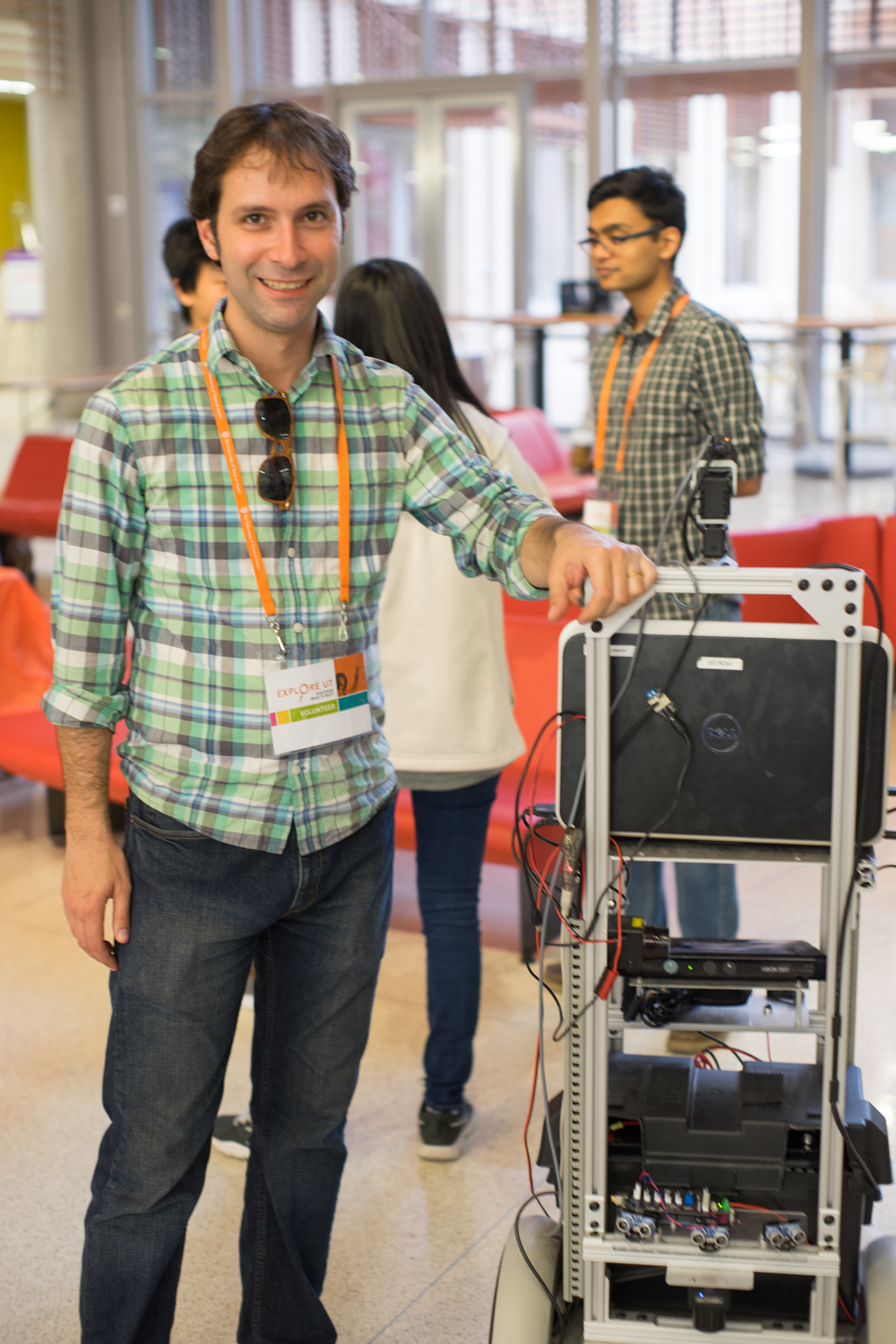
Jivko Sinapov is an Associate Professor with dual appointments in the Department of Computer Science and Department of Mechanical Engineering at Tufts University's School of Engineering. He also serves as a CEEO Fellow at the Center for Engineering Education Outreach. His research focuses on enabling physical robots to operate and learn in human-inhabited environments through developmental approaches. Education: PhD in Computer Science and Human-Computer Interaction, Iowa State University (2013) BSc in Computer Science and Mathematics, University of Rochester (2005) Professor Sinapov's research centers on Artificial Intelligence, Developmental Robotics, Computational Perception, and Human-Robot Interaction . His work addresses fundamental questions about implementing intelligence in physical robots, with emphasis on enabling extended operation in human environments. His laboratory develops methods for behavioral object exploration, multi-modal perception, and knowledge transfer between robots, with applications ranging from educational robotics to space exploration. Current research directions include neurosymbolic approaches for handling novelty in open worlds, multimodal object property learning, and augmented reality interfaces for improved human-robot collaboration. Scientific Awards and Recognition: Winner of the Verizon 100K 5G EdTech Challenge (Spring 2019) for AR-based robotics education NSF CAREER Award: "Learning and Sharing Transferable Grounded Object Knowledge for Collaborative Robots" (2023) CEEO Fellow at the Center for Engineering Education Outreach Professor Sinapov actively mentors graduate students in the Multimodal Learning, Interaction, and Perception (MLIP) Lab, currently advising five PhD students across Computer Science and Mechanical Engineering departments. His research has been supported by significant grants including his NSF CAREER award. He has co-organized prominent symposia including the AAAI Spring Symposium on "Interactive Multi-Sensory Perception for Embodied Agents" (2017) and the AAAI Fall Symposium on "AI for Human-Robot Interaction" (2019). He directs the Multimodal Learning, Interaction, and Perception (MLIP) Lab , which develops cognitive robotics systems capable of learning through environmental interaction. The lab's research spans robot learning, computational perception, and human-robot interaction, with applications in education, space technology, and collaborative robotics systems operating in complex human environments.