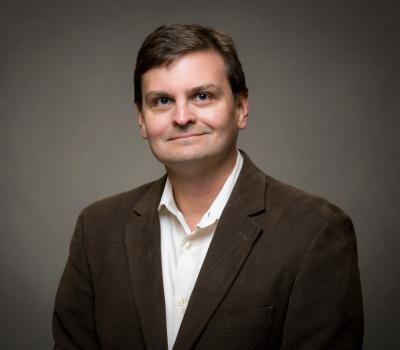
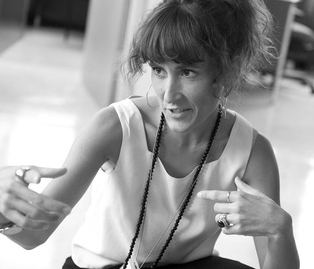
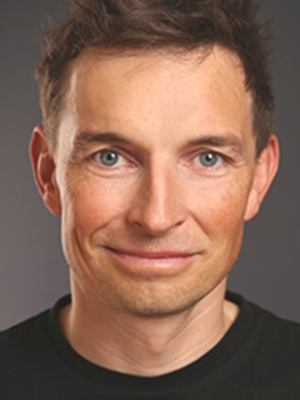
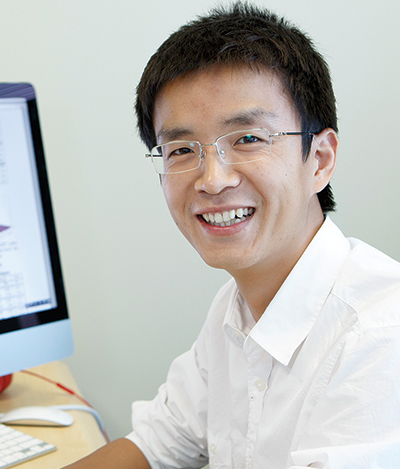
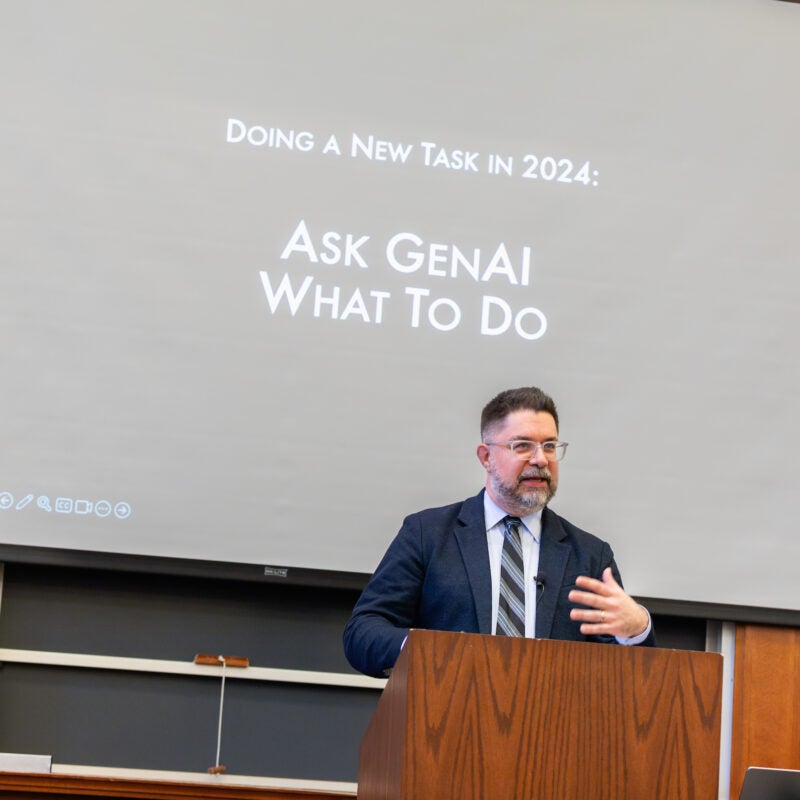
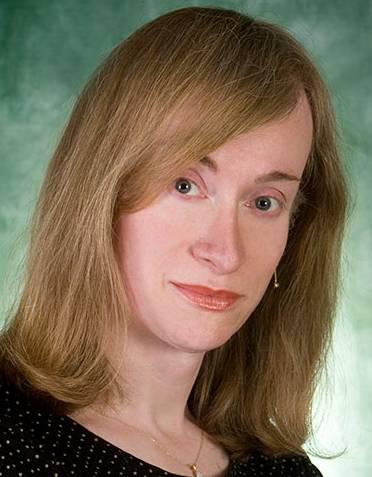
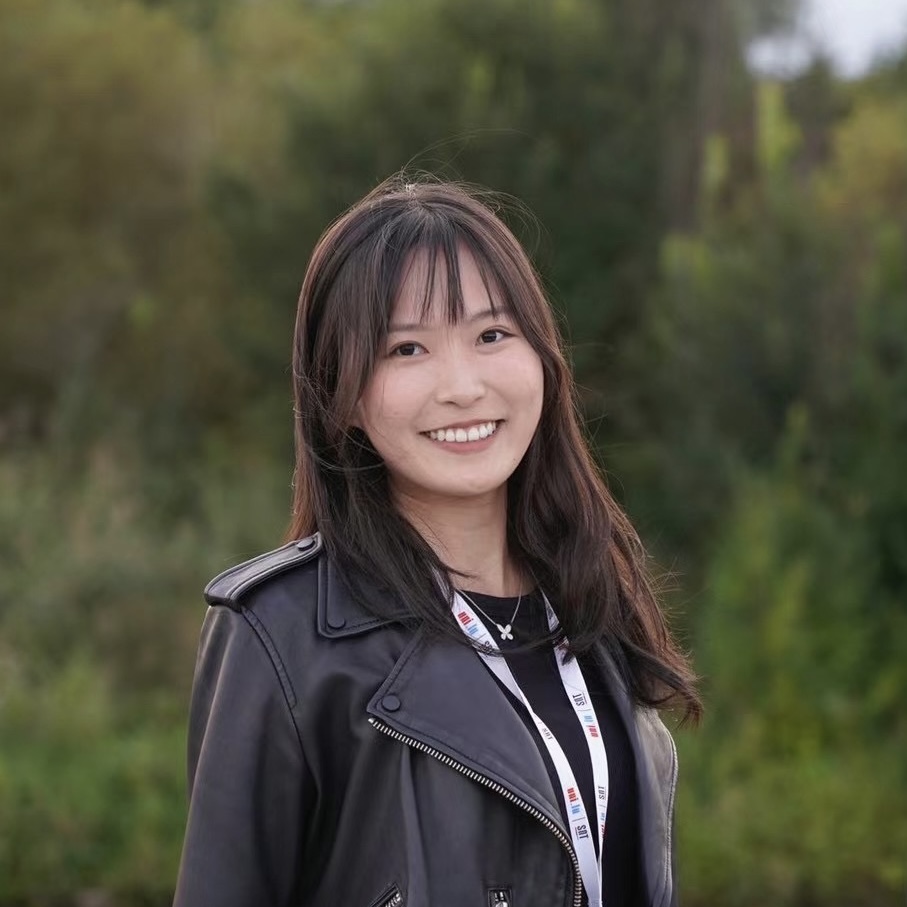
Geoff Hollinger is a Professor in the Department of Mechanical, Industrial, and Manufacturing Engineering at Oregon State University, and a Ron and Judy Adams Faculty Scholar. His research focuses on robotic decision-making, planning, and coordination for autonomous systems, particularly in underwater and multi-robot environments. He leads the Robotic Decision-Making Laboratory and has expertise in mission planning, control systems, and marine robotics. Dr. Hollinger holds a PhD in Robotics from Carnegie Mellon University (2010), an MS in Robotics (2007), and a BS in General Engineering and BA in Philosophy from Swarthmore College (2005). His work spans theoretical advancements and practical applications, including underwater docking systems, autonomous exploration, and soft robotics for hazardous environments. Research Interests: Autonomous underwater vehicle (AUV) systems and docking Multi-robot coordination and task assignment Probabilistic planning and decision-making Behavior trees and formal grammars for task planning Underwater manipulation and grasping Energy-efficient trajectory planning Key Achievements: Recipient of the 2017 ONR Young Investigator Award 2017 Celebrate Excellence Awards and Engelbrecht Young Faculty Award Developed frameworks like Angler for intervention tasks and Wave for underwater emulation Labs/Teams: Robotic Decision-Making Laboratory, Collaborative Robotics and Intelligent Systems Institute (CRIS).
Roy CHUA is a Professor of Organisational Behaviour & Human Resources and Associate Dean for Post-Experience Postgraduate Programmes at the Lee Kong Chian School of Business, Singapore Management University. He holds a Ph.D. in Management (Organizational Behavior) from Columbia University and has held academic positions at Harvard Business School and Singapore Management University since 2008. His research focuses on creativity, cross-cultural management, leadership, and innovation in organizational contexts, particularly in Asian business ecosystems. Education: Ph.D., Management (Organizational Behavior), Columbia University (2008) M.A., Philosophy, Columbia University (Year not specified) B.Sc., First Class Honors, Computer and Information Services, National University of Singapore (1998) Research Interests: Dr. Chua's work examines how cultural factors influence creativity and innovation, including studies on cultural tightness, intercultural collaboration, and trust dynamics in global business environments. He has conducted groundbreaking research on gender disparities in creative processes and the impact of cultural diversity on organizational outcomes. His empirical studies often combine quantitative analysis with qualitative insights from multinational corporations and institutional data. Awards: Best Reviewer Award - Academy of Management Journal (2017) Multiple teaching awards including 'Mind Opener' MBA Award (2016) Academic excellence scholarships including Asia Life Gold Medal (1997) Research grants from Columbia University CIBER and other institutions Advising & Grants: Supervises doctoral candidates in General Management and DBA programs Lead researcher on projects funded by Singapore Management University and international grants Collaborations with institutions like MIT Sloan and Harvard Business School Labs/Teams: Leads research initiatives in organizational creativity and cross-cultural management at Lee Kong Chian School of Business, with active participation in global academic networks focused on Asia-Pacific business strategies.
Shao-Fang Wen is an Associate Professor at the Department of Information Security and Communication Technology, Faculty of Information Technology and Electrical Engineering, Norwegian University of Science and Technology (NTNU). Their work focuses on integrating artificial intelligence with cybersecurity, secure software development, and socio-technical systems. Research Interests: Artificial Intelligence and Cybersecurity Secure Software Development Semantic Web and Ontology Socio-Technical Systems System Security Assurance Publications and Contributions: Shao-Fang Wen has contributed significantly to developing frameworks for AI security assurance, quantitative security evaluation models (e.g., SAEOn metamodel), and contextualized learning systems for software security. Their work spans journal articles, conference papers, and book chapters, emphasizing ontology-based approaches and open source community dynamics. Teaching: IIKG2001 - Software Security
Ranjit Lall is an Associate Professor of International Political Economy at the University of Oxford's Department of Politics and International Relations, and a Fellow of St John's College. His research focuses on international cooperation, development, technological change, and methodological innovations in machine learning and missing data analysis. He holds a PhD from Harvard University and a BA from Oxford, and has been recognized with the Merze Tate Award and Leamer-Rosenthal Prize for his work. Education : PhD in Government (Harvard University), BA in Philosophy, Politics, and Economics (University of Oxford) Affiliations : St John's College Fellow, Oxford's International Relations Network His research explores how international institutions function, leveraging computational tools like MIDASpy for missing data imputation. Key interests include civil society influence on global governance, accountability mechanisms, and the political economy of technological change. He previously worked at the Bank of England and Financial Times before academia. Recent Research Trends : Articles emphasize institutional performance metrics, pandemic-era voting behavior, and AI governance frameworks. His work bridges theoretical political science with practical computational methods. Awards : 2020 Leamer-Rosenthal Prize, 2018 Merze Tate Award Advising : Supervises six graduate students in international relations and political economy Lall collaborates on open-source projects such as the MIDAS software for data imputation and actively contributes to debates on transparent social science research practices.
Brenna D. Argall is an Associate Professor of Computer Science, Mechanical Engineering, and Physical Medicine & Rehabilitation at Northwestern University, and a Faculty Research Scientist at the Shirley Ryan AbilityLab. Her research focuses on assistive and rehabilitation robotics, with an emphasis on human-robot interaction, shared autonomy, and intelligent control systems. She holds a PhD in Robotics from Carnegie Mellon University and has held postdoctoral fellowships at EPFL (Switzerland) and the NIH. Education: PhD in Robotics, Carnegie Mellon University (2009) Postdoctoral Fellow, EPFL (2009–2011) B.S. in Mathematics, Carnegie Mellon University (2002) Affiliations: Director, Argallab (Assistive & Rehabilitation Robotics Laboratory) Member, Northwestern Center for Robotics and Biosystems Advisor, Northwestern MS in Robotics Program Her research explores dynamic autonomy allocation , shared control systems , and interface-aware robotics , with applications in rehabilitation and assistive devices. Key projects include wheelchair automation, robotic arm control, and body-machine interfaces for users with motor impairments. Research Highlights: NSF CAREER Award (2016) AIMBE Fellow (2020) "40 under 40" Innovator (Crain’s Chicago Business) Publications emphasize human-centered robotics, including over 50 peer-reviewed articles on topics like intent inference, assistive autonomy, and teleoperation assistance. Current lab efforts prioritize interface-aware systems and customizable shared control to enhance accessibility for users with disabilities.
Michael Grabe is a Professor in the Cardiovascular Research Institute (CVRI) at the University of California San Francisco (UCSF). He holds a joint appointment in the Department of Pharmaceutical Chemistry. His work focuses on computational methods to study biological phenomena, particularly ion transport across membranes and the molecular mechanisms of ion channels/transporters. He has pioneered theoretical approaches to understand membrane protein function and organelle acidity regulation. Education: PhD in Physics, University of California, Berkeley (2002) ScB in Mathematics-Physics, Brown University (1996) Research Interests: Dr. Grabe’s lab investigates ion channel function, membrane remodeling by TMEM16 proteins, lysosomal pH regulation, and computational modeling of membrane-associated processes. Key themes include: Mechanics of ion transport and lipid flipping Protein-induced membrane deformations Simulations of organelle microphysiology Development of computational tools for membrane protein analysis Recent Research Trends: Recent work emphasizes dynamic protein design using AI (e.g., Science 2025), structural studies of K2P channels, and functional insights into TMEM16 scramblases. His team also explores SARS-CoV-2 protein interactions and mitochondrial uncoupling mechanisms. Awards: NSF CAREER Award (2009-2014) Alfred P. Sloan Research Fellowship (2009-2011) Shining Star Community Service Award (2012) Grants & Advising: Principal Investigator of NIH grants studying TMEM16 proteins (R01GM137109) and lysosomal physiology (R21GM100224). His lab trains graduate students and postdocs in computational biophysics and membrane biology. Labs/Teams: Leads the Grabe Lab at UCSF, which collaborates with experimental groups to bridge theory and experiment in membrane systems. Active in developing open-source tools like APBSmem for electrostatic calculations.
Dr. David Cock is a Senior Lecturer and Senior Researcher at ETH Zürich's Department of Computer Science, affiliated with the Systems Group. He holds a PhD from UNSW (2014) and a B.Sc. (hons) from UNSW (2004). His research focuses on formal verification, trustworthy systems, and hardware-software co-design, with notable contributions to projects like Enzian (a CPU/FPGA platform) and seL4 (formally verified kernel). He teaches Advanced Operating Systems and Informal Methods courses. Key achievements include the ACM Software System Award (2022) for seL4 and leadership in projects addressing hardware complexity and security. Research interests include formal methods for hardware modeling (Sockeye project), runtime verification, and mitigating timing channels. His work bridges theoretical foundations with practical systems, emphasizing secure and reliable computing platforms. Projects like Trustworthy BMC aim to enhance baseboard management systems' assurance. Collaborations span academia and industry, with open-source contributions to hardware designs and formal tools. Publications span formal verification, hardware modeling, and secure systems, with recent focus on heterogeneous computing and declarative hardware specifications. Teaching emphasizes practical formal techniques and OS design, leveraging real-world hardware (e.g., Barrelfish). His lab, the Systems Group, explores cutting-edge challenges in systems software and architecture.
Dr. Christoph Leitner is a Research Fellow at ETH Zurich's Integrated Systems Laboratory under Prof. Luca Benini, focusing on biomedical and IoT applications. His work integrates printed piezoelectric transducers and flexible electronics with energy-efficient systems. He holds a PhD in Biomedical Engineering from TU Graz (2022) and has collaborated with institutions like Sant'Anna School of Advanced Studies and KTH Stockholm. Notable achievements include the Josef Krainer Young Researcher Award and Motorik Scholarship. Leitner's research spans ultrasonics, machine learning, and wearable devices, with contributions to muscle-tendon dynamics and real-time biofeedback systems. Education: PhD in Biomedical Engineering, TU Graz (2022), Advisor: Prof. Christian Baumgartner Previous roles: University Assistant (2006–2011) and R&D Engineer at Virtual Vehicle GmbH Research Interests: Convergent technologies merging biomedical engineering and IoT Ultrasound-based monitoring for musculoskeletal systems Energy-efficient embedded systems for wearable applications Collaborations & Awards: Recipient of Josef Krainer Young Researcher Award (2023) and Motorik Scholarship (2018) Active collaborations with University of Zurich, Veterinary University of Vienna, and Queensland University of Technology Labs & Projects: Integrated Systems Laboratory at ETH Zurich Developed a patented ultrasound-transparent tattoo-based SEMG system with Prof. Francesco Greco
Lingming Zhang is an Associate Professor at the Department of Computer Science, University of Illinois Urbana-Champaign, affiliated with the Grainger College of Engineering. His research focuses on the intersection of Software Engineering, Programming Languages, and Machine Learning, with a particular emphasis on automated program repair, compiler testing, and large language model (LLM) applications in software engineering. He has published over 100 papers, achieving an h-index of 50+, and holds an ACM Distinguished Member status. Research Interests: LLM-based software testing, repair, and synthesis Fuzzing of deep-learning libraries and compilers Open-source code LLMs (e.g., StarCoder2, Magicoder) with over 1M downloads Automated program repair systems (e.g., AlphaRepair, ChatRepair, Agentless) Recent Contributions: Developed TitanFuzz for coverage-guided compiler fuzzing Released Agentless , an LLM-based coding tool adopted by OpenAI and DeepSeek Proposed SWE-RL to enhance LLM reasoning via reinforcement learning Service Roles: Program Co-Chair for ASE 2025 and LLM4Code 2025 Associate Chair for OOPSLA 2024 and Area Chair for ICSE 2025/2026 Recipient of NSF CAREER Award and ACM SIGSOFT Early Career Award Lab/Teams: Develops open-source tools like UniAPR for efficient patch validation Active in releasing industry-adopted LLM-based software engineering tools
Gaël Thomas is a Senior Researcher at Inria Saclay and a part-time Professor at École Polytechnique. He leads the Benagil team, a joint initiative between Inria and Telecom SudParis/IP Paris. His research focuses on virtualization, operating systems, concurrency, and runtime systems, with an emphasis on improving system performance and safety. He holds a PhD and Habilitation from Sorbonne Université and has extensive academic experience, including roles as a Professor at Telecom SudParis (2014–2023) and an Associate Professor at UPMC (2006–2014). Education: PhD in Computer Science, 2005, UPMC Sorbonne Université Habilitation à Diriger les Recherches (HDR), 2012, UPMC Sorbonne Université MSc in Computer Science, 2001, MIAIF Program Research Interests: Gaël’s work spans virtualization techniques, NUMA architecture optimization, garbage collection scalability, lock-free algorithms, and persistent memory systems. He has pioneered solutions like J-NVM for Java NVMM and NumaGiC for big data systems. Grants & Awards: Principal Investigator of DiVA (PEPR Cloud, 868k€) and Maplurinum (ANR PRC, 184k€) Contributions to VMKit and infra-web-cours development Labs/Teams: Benagil Team (Inria/Telecom SudParis) focuses on systems and runtime optimization.
Christopher T. Bavitz is the WilmerHale Clinical Professor of Law and Vice Dean for Experiential and Clinical Education at Harvard Law School. He serves as Managing Director of the Cyberlaw Clinic at the Berkman Klein Center for Internet & Society and is a Faculty Co-Director of the Center. His expertise spans intellectual property, media law, AI governance, and technology policy. Bavitz teaches courses like Music & Digital Media and Counseling and Legal Strategy in the Digital Age . His research focuses on algorithmic fairness, intermediary liability, and regulatory frameworks for emerging technologies. Bavitz holds a B.A. from Tufts University and a J.D. from the University of Michigan Law School. Before joining HLS, he was Senior Director of Legal Affairs at EMI Music and practiced litigation at Sonnenschein Nath & Rosenthal. Key initiatives include work on the Lumen Database for transparency in content takedowns, the AGTech Forum for state attorneys general, and policy analysis on AI ethics, facial recognition, and algorithmic risk assessment tools. He advises on startup legal strategy, digital finance, and generative AI accountability.
Andrea Santilli is a Research Scientist at Nous Research and holds a PhD in Computer Science from GLADIA at Sapienza University of Rome. His research focuses on large language models (LLMs), robustness, reliability, and multimodal learning. He previously worked at Apple MLR, Hugging Face’s BigScience, and Pi School. He earned his MSc and BSc in Computer Science from Tor Vergata University and Sapienza. Education: PhD in Computer Science, Sapienza University of Rome (2024) MSc in Computer Science, University of Roma Tor Vergata (2020) BSc in Computer Science, University of Roma Tor Vergata (2018) Research Interests: Santilli’s work spans LLM robustness , mechanistic interpretability , multimodal neural databases , and instruction-tuning . He introduced Parallel Jacobi Decoding and contributed to projects like BLOOM, Camoscio, and Fauno. His research bridges syntax-aware NLP, privacy-preserving LLMs, and cross-modal alignment. Publications: His work includes advancements in 3D-text latent space alignment (CVPR 2025), evolutionary merging (ICML 2025), and efficient decoding (ACL 2023). Over 15+ peer-reviewed papers span venues like ACL, CVPR, and ICLR. Awards: Received the Emanuele Pianta Award for his MSc thesis on continual language learning with syntax-based episodic memory. Grants & Projects: Winner of ‘Machine Learning Algorithms for Translation’ grant (2022), developing Parallel Decoding Co-PI for ‘Multimodal AI for 3D Analysis’ (2021) with Ecole Polytechnique Labs & Teams: Active in GLADIA (Sapienza), Apple MLR, and Hugging Face’s BigScience initiative. Core contributor to open-source projects like PromptSource and BLOOM.
Jessica J. Fridrich is a Distinguished Professor in the Department of Electrical and Computer Engineering at Binghamton University, part of the State University of New York (SUNY) system. She is affiliated with the T. J. Watson School of Applied Science and Engineering. Her research focuses on steganography, steganalysis, digital forensics, and machine learning, with notable contributions to secure data hiding and patented camera fingerprinting techniques approved for legal evidence. Education: PhD in Electrical and Computer Engineering from Binghamton University Her research interests include steganography and steganalysis of digital images, digital forensics for linking photos to cameras via sensor fingerprints, signal estimation and detection, and applications of machine learning. Earlier work explored chaotic nonlinear dynamical systems and encryption. Her methods have led to over 150 refereed publications and seven successfully commercialized patents. Her articles emphasize advancements in batch steganography, JPEG compatibility, and adaptive embedding strategies. Recent work leverages machine learning for steganalysis and explores security trade-offs in high-dimensional feature spaces. 2006-2007 Chancellor's Award for Excellence in Scholarship and Creative Activities 2002 Chancellor's Award for Outstanding Inventor Narrative on advising and grants: She mentors graduate students and leads projects funded by AFOSR, NSF, and AFRL. Her research addresses challenges in data hiding security, forensic analysis, and optimizing steganographic algorithms. The Digital Data Embedding Lab, which she directs, focuses on algorithmic innovation and empirical validation in steganography and forensics. Labs/Teams: Digital Data Embedding Lab
Yintong Huo is a tenure-track Assistant Professor in the Department of Computer Science at Singapore Management University (SMU), School of Computing and Information Systems. He joined SMU in early 2024 after completing his PhD at The Chinese University of Hong Kong (CUHK) under Prof. Michael R. Lyu. His academic journey includes a Bachelor's degree from the University of Electronic Science and Technology of China. Education: PhD in Computer Science and Engineering, The Chinese University of Hong Kong (2024) Bachelor's degree, University of Electronic Science and Technology of China Huo's research focuses on intelligent software engineering , particularly empowering AI models (especially LLMs) for software development, testing, and operations. His work spans AI4SE, LLM4SE, AIOps, code intelligence, and multimodal software engineering . Two flagship projects define his current research: LogPAI - an open-source AI platform for automated log analysis adopted by leading tech companies, and WebPAI - a multimodal intelligence project for automatic webpage development. His research addresses critical challenges in software reliability, log analysis, and UI code generation through innovative applications of AI. His recent publications reveal a strong trend toward multimodal approaches in software engineering , combining vision and language models for UI code generation, and increasingly sophisticated applications of LLMs for log analysis and software reliability. Huo's work demonstrates exceptional impact, with multiple papers accepted at top-tier venues including ASE, ICSE, and FSE with high acceptance rates (e.g., 9.5% for ASE'25). Scientific Awards: ICSE Distinguished Reviewer Award (2025) ISSRE Distinguished Reviewer Award (2024) IEEE Open Software Services Award (2022, for LogPAI with 3k+ GitHub stars and 70k+ downloads) ACM SIGSOFT CAPS Travel Grants (ASE'23, ICSE'24, FSE'24) Nomination for Best Teaching Assistant Award (2022) National Scholarship (2019) Huo actively mentors students at multiple levels, currently supervising PhD students Shi Ying Chang and Dan Huang (co-supervised with Prof. David Lo), research engineer Minxing Wang, and visiting students including Shiwen Shan. His undergraduate mentee Truong Hai Dang will intern at Apple Inc. He maintains strong industry connections, with his LogPAI project adopted by world-leading tech companies. Huo serves on program committees for major conferences including ASE'25, ICSE'26, and FSE'26, and is recruiting fully-funded PhD students and research assistants for projects in AI4SE and multimodal software engineering. Huo leads the LogPAI and WebPAI research initiatives, which have evolved into substantial open-source projects with significant industry adoption. His team focuses on practical applications of AI in software engineering, with particular emphasis on reliability and usability in real-world systems. The research environment benefits from SMU's strong position in software engineering research, where the university ranks No. 2 globally in Software Engineering according to CSRankings (2020-2025).
Lisa Yan serves as a Teaching Professor in the Department of Electrical Engineering and Computer Sciences at the University of California, Berkeley, appointed in Spring 2022. She teaches core computer science education courses including CS 195 (Social Implications of Computer Technology), CS H195 (Honors variant), CS 294-189 (Teaching Process Design), and CS 375 (Teaching Techniques), holding regular office hours in Soda Hall for student engagement. Her academic credentials include: PhD in Electrical Engineering from Stanford University (2019) MS in Electrical Engineering from Stanford University (2015) BS in Electrical Engineering and Computer Science from UC Berkeley (2013) Dr. Yan's research centers on data-driven analysis of student learning in large-scale computer science courses, with significant contributions to computing ethics pedagogy and teaching assistant development programs. Her work develops innovative methodologies for assessing student earnestness in interactive lectures, creating flexible learning extensions, and designing integrity-focused assessments. Earlier research focused on software-defined networking and network switch performance optimization, demonstrating technical depth before her pivot to educational innovation. Current projects emphasize scalable teaching techniques and mastery learning frameworks that address challenges in modern CS education. Analysis of her 14 publications (2013-2024) reveals a strategic shift from computer networking (pre-2018) to computer science education research (2018-present). Recent work (2020-2024) dominates in venues like SIGCSE, featuring tools such as Otter-Grader for Jupyter notebook grading and the Earnest Insight Toolkit for lecture participation analysis. This evolution highlights her commitment to solving practical educational challenges through data analysis and tool development, particularly for large undergraduate courses. She received recognition through: The Faculty Award for Outstanding Mentorship of GSIs (2024) Lisa actively mentors Graduate Student Instructors and collaborates with educational technology initiatives. Her research team includes dedicated support staff like Taylor Kaserman (taylor.kase@berkeley.edu), reflecting structured collaboration in developing teaching innovations. She contributes to curriculum design committees within EECS, focusing on assessment integrity and scalable pedagogical methods for growing student populations. Her work operates through the EECS department's educational infrastructure, utilizing Soda Hall resources for both teaching coordination and research development, with strong connections to Berkeley's broader computing education ecosystem.