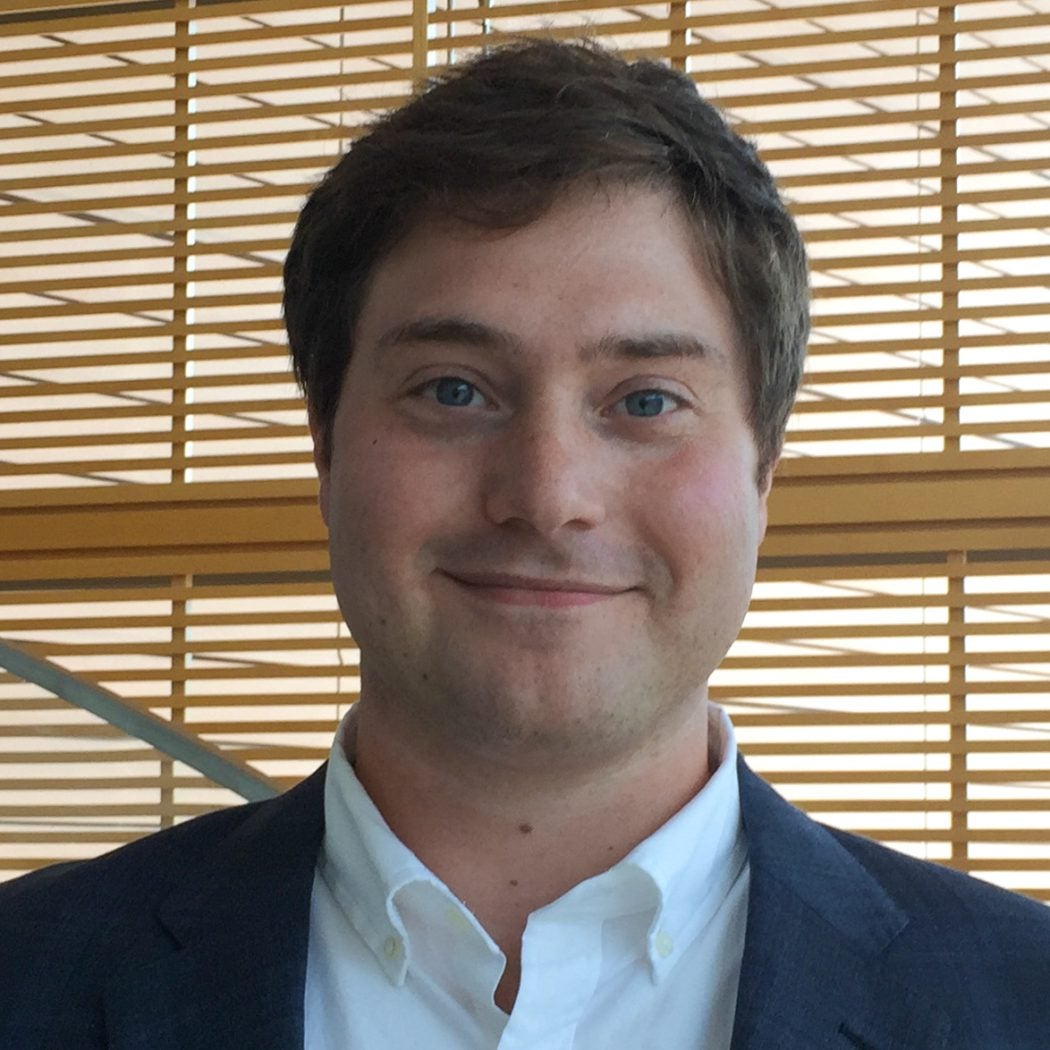
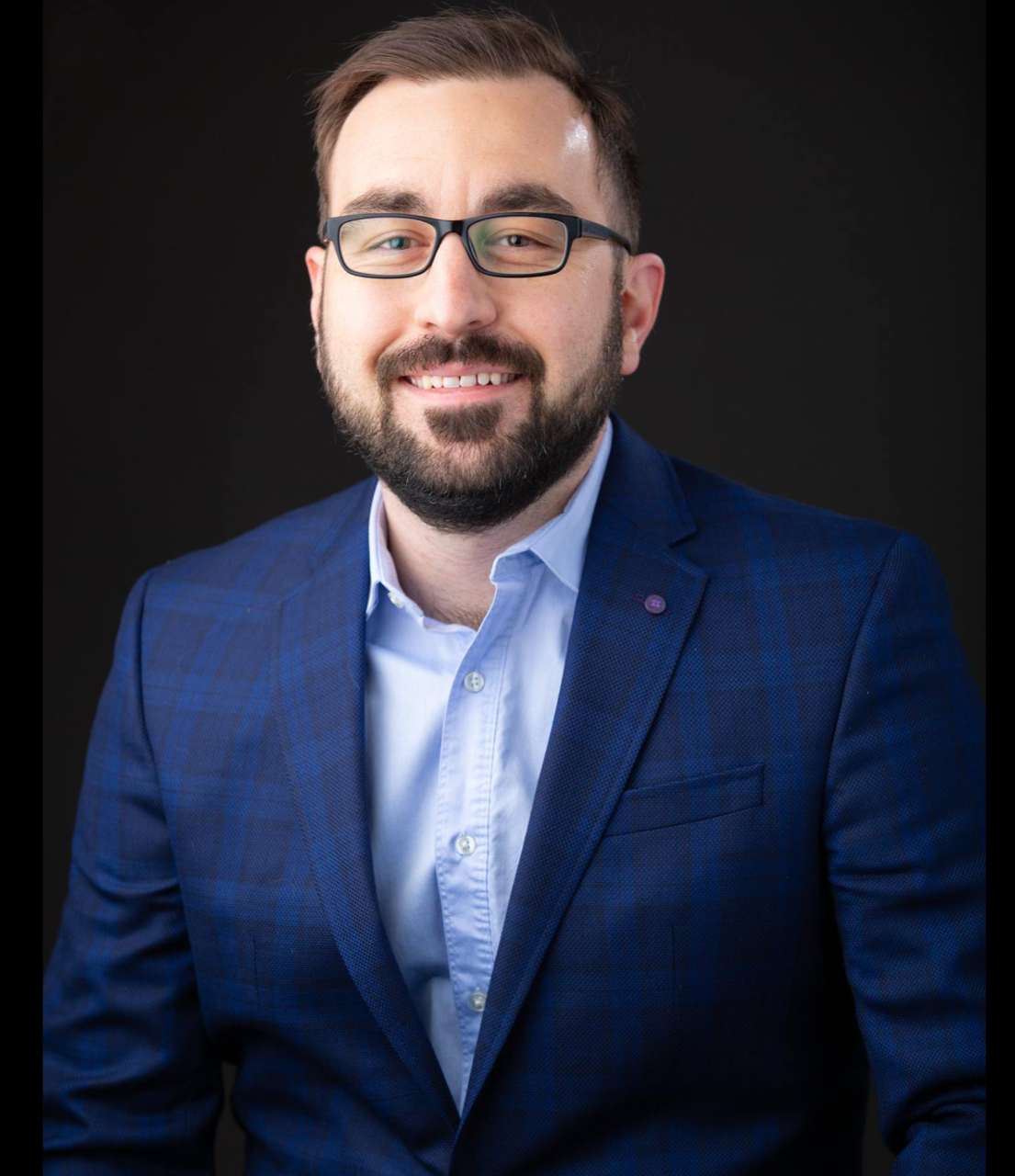
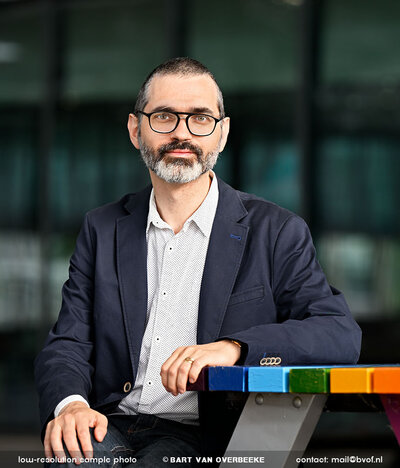
Mathieu Jacomy is an Assistant Professor at Aalborg University's Department of Culture and Learning, affiliated with The Techno-Anthropology Lab and MASSHINE. His work focuses on network visualization, digital methods, and the socio-technical dimensions of AI tools. He leads and participates in projects like CD4T (Co-Design for Transitions) and GE-AI (Generative Ethnographic AI), exploring sustainability design, generative AI applications, and Arctic sustainability research. His research emphasizes critical technical practice through tools like Gephi and Gephisto, addressing issues of algorithmic transparency, network interpretation, and human-AI collaboration. Notable contributions include developing the Hyphe web corpus curation tool and analyzing AI self-consistency in LLMs. He has received awards including the Ziman Award (2020) and the ICWSM19 Test of Time Award for foundational network visualization work. Key Projects : Generative Ethnographic AI, Co-Design for Transitions, Arctic Sustainability Mapping Tools Developed : Gephi, Gephisto, Hyphe Awards : Ziman Award (2020), ICWSM19 Test of Time (2019) His work bridges computer science, anthropology, and critical theory, emphasizing ethical and epistemological dimensions of digital tools. Current projects explore LLM ethics, transdisciplinary design, and the role of networks in public discourse.
Dr. Fernando Benitez-Paez is a Lecturer in Spatial Data Science at the University of St Andrews' School of Geography & Sustainable Development. He holds a PhD in Geoinformatics from the University of Jaume I (Spain), supported by Marie Sklodowska-Curie actions, with a background in Catastral and Geodesic Engineering. His research focuses on developing spatially enriched computational methods to understand human-environment interactions, emphasizing urban analytics and data fusion. Key roles include: Research Associate at The Alan Turing Institute (2021) – Urban Analytics Team & Shocks and Resilience Research Fellowship at University of Jaume I (2020) – Urban mobility patterns via machine learning Postdoctoral Researcher at University of St Andrews (2019) – MagGeo project (magnetic field data fusion) Former Development Manager at Esri-Colombia – Geographic Innovation Team His research interests span Urban Analytics, Geography, and Computer Science, with a focus on integrating spatial data to inform policymaking. Notable work includes: Fusion of satellite and terrestrial data for animal migration studies Spatiotemporal interpolation of geomagnetic data Open geodata frameworks for smart cities Recent publications highlight applications in antibiotic resistance modeling, synthetic population simulations, and geomagnetic navigation modeling. He supervises six PhD students and contributes to interdisciplinary projects at the Turing Institute and university collaborations. His work bridges GIScience with environmental and urban science, emphasizing policy-relevant outcomes and open data practices.
Thomas Robinson is an Assistant Professor in the Department of Methodology at the London School of Economics (LSE). Previously, he held positions at Durham University's Centre for Institutions and Political Behavior and collaborated with Meta's Core Data Science team. He earned his DPhil in Politics from the University of Oxford in 2020. His research focuses on machine learning applications in political methodology, including neural network modeling, causal inference, and experimental design. Key themes include voter behavior, money in politics, and pandemic-related policy preferences. Collaborations span education policy and tech sectors, with ongoing projects on synthetic data and missing-data imputation using deep learning. Notable works include analyzing voter responses to campaign finance disclosures and studying pandemic impacts on global economic preferences. He develops open-source tools like MIDASpy and rMIDAS for data imputation. Affiliations include LSE's Data Science Institute.
Sophie Smout is a Senior Lecturer in the School of Biology at the University of St Andrews. She is affiliated with the Sea Mammal Research Unit, Scottish Oceans Institute, and the Centre for Research into Ecological & Environmental Modelling. Her research focuses on marine mammal ecology, ecological modeling, fisheries management, and climate change impacts. Dr. Smout leads projects like ACTNOW (Cumulative Impacts on European marine biodiversity) and SEAwise (Ecosystem-based fisheries management), addressing challenges in marine conservation and sustainable resource use. Her work integrates diverse datasets, including animal tracking and environmental data, to inform policy and management. Key research interests include species distribution modeling, predator-prey interactions, and the application of particle algorithms for animal movement analysis. Dr. Smout collaborates internationally on initiatives such as the ICES/NAMMCO seal modeling workshops and the North Sea ecosystem studies. Her recent publications emphasize spatial ecology, fisheries data integration, and biomarker analysis in seals. Notable contributions include frameworks for passive acoustic telemetry and studies on multi-decadal environmental changes recorded in seal teeth. Dr. Smout also supervises PhD students in topics like marine mammal energetics and elasmobranch conservation. She actively participates in policy advisory roles, including ICES and NAMMCO committees, ensuring science-informed marine management decisions.
Prof. Dr. Barbara Hammer is a full professor of Machine Learning at Bielefeld University, Faculty of Engineering, and leads the Machine Learning Group at the Center for Cognitive Interaction Technology (CITEC). She is actively involved in multiple interdisciplinary research centers including the Bielefeld Center for Data Science (BiCDaS), the Research Institute for Cognition and Robotics, and the Institute for Bioinformatics Infrastructure (BIBI). She holds leadership roles in major research initiatives such as the TRR 318 'Constructing Explainability', the graduate school Data-NinJA on Trustworthy AI, and the research network SAIL on sustainable AI systems. Her research focuses on intelligent data analysis , explainable and trustworthy AI , and machine learning in dynamic environments . She investigates foundational algorithms for learning from complex, non-Euclidean, and evolving data streams, with applications in urban infrastructure (especially water systems), life sciences, and socio-technical systems. Her work bridges algorithmic innovation with societal impact, particularly in fairness, ethics, and human-AI interaction. The recent publications highlight a strong trend towards explainability in dynamic environments , concept drift detection and explanation , fairness in streaming data , and real-world applications in critical infrastructure . Her team develops both theoretical frameworks and practical tools, such as EPyT-Flow for water network simulation, and contributes to high-impact AI challenges in health, environment, and industry. ERC Synergy Grant – Smart Water Futures LAMARR Fellow She advises several PhD and Master’s students and leads numerous funded projects from the European Union, DFG, and national agencies. Her leadership extends to editorial roles, including on the IEEE TPAMI editorial board. She is also deeply involved in academic governance, serving on examination boards, habilitation committees, and interdisciplinary research centers, reflecting her central role in shaping AI research and education at Bielefeld and beyond.
Pirkko Liisa Raudaskoski is a Professor in the Department of Communication and Psychology at Aalborg University, Faculty of Humanities and Social Sciences. She is affiliated with the Mediated Communication research group and the Center for Cultural Psychology, where she leads the VILA - Video Research Lab. Her research spans practical studies, discourse analysis, and sociomaterial approaches, with a focus on intelligibility-in-practice through video-based methods. Her research interests center on how people make sense of and accomplish actions in everyday and institutional settings. She employs ethnomethodological conversation analysis, multimodal interaction analysis, and membership categorization analysis to study social practices. Her theoretical framework is grounded in sociomaterialism, linking micro-level interactions to broader societal issues such as public participation, healthcare, and environmental sustainability. She contributes to the UN Sustainable Development Goals through work in communication, pedagogy, media research, and professional discourse. Her recent publications and projects reflect a strong trend in methodological innovation, particularly in the use of 360-degree video, immersive analytics, and software tools for qualitative research. Themes include assemblage theory, affective orientation in learning, healthcare interaction, and social robotics. She has contributed to major publications such as The Cambridge Handbook of Analysing Discourse and developed open-source tools like 360mash. Research leader of the Velux-funded HUMpraxis project How to talk about medicines? (2024–2027) Co-investigator in Touch and Affect in Health Care Interaction (2021–2025) Participant in Environmental Humanities Cluster and SIMVIDIA projects Active peer reviewer and academic contributor, including service for the Swiss National Science Foundation She supervises PhD students and teaches methodological courses in communication and psychology, covering ethnomethodology, discourse analysis, and qualitative research design. She has been involved in organizing conferences and workshops internationally and has contributed to academic discourse through public engagement and media appearances on topics such as propaganda and research freedom. Her research is supported by multiple grants from national and international bodies, and she collaborates across disciplines and institutions. She leads and participates in labs and research groups including VILA - Video Research Lab and DigHumLab, focusing on digital tools for qualitative inquiry and immersive analytics.
Carla Florencia Griggio is a Tenure Track Assistant Professor in the Department of Computer Science at Aalborg University, Denmark. She specializes in Human-Centered Computing, focusing on how communication technologies impact interpersonal relationships. Her work explores messaging app ecosystems, software customization, and alternative digital communication models. She actively collaborates internationally, particularly in Latin America-centric research initiatives. Her research emphasizes empirical studies and prototyping to enhance user control over digital expression. Notable projects include studying WhatsApp’s privacy policy impact, designing inclusive emoji systems for screen reader users, and fostering Latin American-driven computing research. She has received a conference prize for her work on messaging app ecosystems. Griggio has published extensively in top venues like CHI and CSCW, with a focus on CSCW, HCI, and communication technologies. Her articles highlight themes like AI-assisted collaboration, chatbot data collection, and cultural values shaping technology use. She advocates for inclusive design practices and decentralized software models to address fragmentation in digital communication.
Harry Oppenheimer is a political scientist specializing in technology and international security. He is currently a Postdoctoral Fellow at the UC Institute on Global Conflict and Cooperation (IGCC) in Washington, D.C., and will join the Georgia Tech School of Public Policy as an Assistant Professor in August 2024. His research focuses on digital globalization, economic statecraft, cybersecurity, and digital interdependence. Current Affiliation: UC Institute on Global Conflict and Cooperation (IGCC) Future Faculty Position: Georgia Tech School of Public Policy Postdoctoral Role: Technology and International Security Former Role: GPEP Affiliate Fellow (2023–2024) Harry Oppenheimer holds a B.A. from New York University and earned both an A.M. and Ph.D. from Harvard University. His interdisciplinary academic background bridges political science and computer science, positioning him at the forefront of policy-relevant technological research. His research centers on how geopolitical competition shapes digital openness and interdependence. He investigates economic statecraft in digital networks, public opinion on cybersecurity, and the governance of emerging technologies. His work engages with themes of digital sovereignty, supply chain resilience, and international cooperation in cyber norms. By combining quantitative analysis with policy insights, his scholarship contributes to both academic and practical debates on global technology governance. His publications appear in top journals across political science and computer science, including Public Opinion Quarterly , Journal of Peace Research , and USENIX Security . The research trends show a consistent focus on the intersection of technology, security, and international political economy, with increasing attention to non-state actors, open-source ecosystems, and comparative policy frameworks. His interdisciplinary approach enables novel insights into how digital systems are shaped by and shape global power dynamics. Harry Oppenheimer has received significant recognition for his research, including the 2024 Best Dissertation Award from the APSA International Collaboration Section. This honor underscores the originality and impact of his doctoral work on digital interdependence. 2024 Best Dissertation Award, APSA International Collaboration Section As a postdoctoral fellow and incoming assistant professor, Harry Oppenheimer is actively building his research program and mentoring network. While no formal students are currently listed, he is expected to advise graduate students at Georgia Tech. His research has been supported by institutions such as IGCC and GPEP, reflecting strong grant acquisition capacity in interdisciplinary security studies. Future work is likely to expand on digital governance, techno-economic competition, and international collaboration in cybersecurity. Harry Oppenheimer is affiliated with research initiatives focused on global conflict and technology policy, including IGCC and GPEP. These networks provide collaborative platforms for interdisciplinary research involving political scientists, computer scientists, and policy experts. His future lab at Georgia Tech is anticipated to focus on technology and international security, fostering a team-based approach to digital policy challenges.
Dr. Matthew Hale is an Associate Professor of Cybersecurity and Director of the School of Interdisciplinary Informatics at the University of Nebraska at Omaha (UNO) College of Information Science and Technology. With a PhD from the University of Tulsa, he specializes in the intersection of cybersecurity, software engineering, behavioral psychology, and compliance certification. Since 2014, he has secured $5.7 million in grants (including $1.4M as PI) from NSF, NSA, DARPA, USDoT, and others. Director, School of Interdisciplinary Informatics (2018–present) Co-Chair, UNO-UNMC Faculty Senate Coordination Committee (2019–2021) Chair, IS&T Advisory Committee (2017–2021, 2023–present) Research Interests: Focus on cybersecurity training platforms, phishing prevention, IoT security, cloud compliance frameworks, and behavioral analysis of trust-propensity in digital environments. Article Trends: Recent work emphasizes crowd-sourced phishing detection, wearable device security, and multimodal behavioral analysis. Earlier studies explore compliance standards (e.g., SecAgreement), software self-adaptation, and agile team dynamics. Service Summary: Active in university governance, including Faculty Senate President (2019–2020), Diversity & Inclusion Task Force, and multiple sustainability and safety committees. Personal: Interests include cooking analogies to software engineering, philosophy, and Dungeons & Dragons.
Alexander Serebrenik is a Full Professor of Social Software Engineering at Eindhoven University of Technology (TU/e), within the Department of Mathematics and Computer Science. He specializes in empirical software engineering, focusing on the socio-technical aspects of software development. His research bridges computer science and organizational psychology, emphasizing observation and experimentation. Serebrenik holds a PhD from KU Leuven and an MSc from the Hebrew University of Jerusalem. He has held academic positions across Europe, including postdoctoral roles in Belgium and France. Notably, he served as a part-time visiting researcher at CWI until 2017. His work includes over 100 publications, including co-authoring the book Evolving Software Systems . He actively contributes to conference organization and editorial boards, receiving multiple best paper and distinguished reviewer awards. Current teaching includes courses on empirical methods and software engineering. His research explores developer interactions with bots, gender diversity in GitHub teams, and strategies for veteran women developers. He advocates for integrating human factors into software tools and workflows. Education Background: PhD in Computer Science (KU Leuven), MSc in Computer Science (Hebrew University), with postdoctoral and visiting roles at Ecole Polytechnique (France), University of Mons, and University of Bari. Research Interests: Social Software Engineering, Human-Computer Interaction in Development, Empirical Methods, Technical Debt, Diversity in Tech, Bot Integration, and Open Source Communities. Key Publications Trends: Recent works focus on GitHub bots' autonomy preferences, veteran women developers' experiences, and dependency security tools like Dependabot. Themes emphasize human factors, collaboration dynamics, and ethical software practices. Scientific Awards: Best Paper Awards, Distinguished Reviewer Awards, IEEE Senior Membership Advising & Grants: Active in mentoring and securing grants for empirical software engineering projects Labs/Teams: Leads the Social Software Engineering group at TU/e, collaborating on projects like PerfBot for performance assessment and LaMa for thematic labeling.
J. Eduardo Vera-Valdés is an Associate Professor in Mathematics-Economics at the Department of Mathematical Sciences, Aalborg University, and Research Group Leader for the Time Series Analysis and Econometrics Group. He holds a PhD in Econometrics from Aarhus University (2016) and is affiliated with the CoRE Center for Research in Energy: Economics and Markets. His expertise spans econometrics, climate modeling, and statistical learning, with a focus on long memory processes and their applications in climate and financial systems. Education: PhD in Econometrics (2016, Aarhus University), Certified GitHub Campus Advisor (2020). Research interests include climate econometrics, financial volatility, and energy systems. He has published in top journals like the Journal of Econometrics and organizes events such as the Earth Day Climate Change Research conferences. His projects include analyzing climate policy impacts (e.g., Paris Agreement), energy optimization (FOREFRONT), and the economic repercussions of pandemics. Key activities include serving as a referee for major journals, organizing the Long Memory Conference, and leading research on sustainable energy systems. He collaborates on datasets like the Residential Household Dataset (Zenodo, 2025) and contributes to open-source tools like LongMemory.jl.
Terry Hannan serves as Associate Professor and Visiting Fellow at the Centre for Health Informatics within Macquarie University's Australian Institute of Health Innovation. His 48+ research outputs and international collaborations position him as a key contributor to health informatics and electronic health record systems globally. Education: MBBS (Hons Div. II), Bachelor of Medicine, Bachelor of Surgery (1971) Research Focus: Hannan's work centers on Electronic Medical Records (100% fingerprint match), Health Information Systems (61%), and Patient Care optimization. His research spans clinical implementation challenges, international open-source health software adoption, and oncology informatics, with significant emphasis on low-resource settings and system interoperability. Publication Trends: Recent works (2013-2024) reveal consistent focus on open-source healthcare solutions, electronic record system sustainability, and physician engagement in e-health. Key themes include international case studies in LMICs, post-hospitalization care pathways, and structural barriers to digital health adoption. Scientific Recognition: Fellow of International Academy of Health Sciences Informatics (FIAHSI) Fellow of American College of Medical Informatics (FACMI) Fellow of Australasian Institute of Digital Health (FAIDH) Fellow of Royal Australasian College of Physicians (FRACP) Collaborative Impact: Hannan drives global initiatives through the IMIA Open Source Working Group, demonstrating extensive international networks in health informatics. His research connects clinical medicine with information systems engineering, particularly in oncology and patient safety domains. Institutional Role: As core faculty at Macquarie's Centre for Health Informatics, he bridges academic research with practical healthcare system implementations, maintaining active engagement in both Australian and global health informatics policy discussions.
Matti Rossi is a Professor of Information Systems at Aalto University School of Business. He holds affiliations at the Department of Information and Service Management. His career includes roles as a Research Fellow at Erasmus University Rotterdam, Visiting Assistant Professor at Georgia State University, and Visiting Researcher at Claremont Graduate University and NYU Stern School of Business. He has led major research projects funded by芬兰's Technological Development Center and the Academy of Finland. His 2013 Millennium Distinction Award recognizes contributions to open source and data research. Education background includes advanced studies in information systems and business management, though specific degree details are not provided. His research focuses on digital economy innovations, design science, open data strategies, and ethical implications of emerging technologies. Recent work explores AI ethics, blockchain applications, virtual reality training systems, and gig economy dynamics. Publications emphasize methodological advancements in information systems research, including multimethod frameworks, topic modeling with domain knowledge, and design science contributions. His work bridges academic theory with practical business challenges, particularly in digital transformation, data monetization, and platform governance. Awards: 2013 Millennium Distinction Award Grants: Multiple Academy of Finland grants for digital innovation projects Labs: Active in Aalto's digital services innovation ecosystems and virtual reality training platforms Research teams collaborate internationally on projects like citizen digital twins, cybersecurity education systems, and sustainable urban development using Minecraft-based platforms. Current work addresses AI-generated content ethics, metaverse security training, and equitable labor practices in digital gig economies.
Tobias Dickbreder is a Researcher in the Department of Physical Chemistry, Faculty of Chemistry, specializing in atomic-scale surface characterization of minerals. His work integrates scanning probe microscopy, temperature programmed desorption, and computational modeling to investigate water-mineral interactions critical for atmospheric ice nucleation and weathering processes. His educational qualifications include: Bachelor of Science (B.Sc.) Master of Science (M.Sc.) Doctorate (Dr.) Dickbreder's research spans Physical Chemistry, Earth Sciences, and Materials Science with emphasis on mineral surface reactivity. Key focus areas include water adsorption/desorption thermodynamics on feldspar and calcite, ice nucleation mechanisms on atmospheric dust particles, and nanoscale surface reconstruction phenomena. His experimental approach combines ultrahigh vacuum techniques with environmental interfaces to simulate atmospheric conditions. Analysis of his publication record reveals consistent investigation of K-feldspar microcline (001) surfaces since 2021, evolving from fundamental surface characterization (2021-2023) to atmospheric implications (2024-2025). Recent work demonstrates how atomic-scale water organization governs ice nucleation efficiency, with direct relevance to climate modeling. His development of unDrift software addresses critical instrumentation challenges in nanoscale imaging. No scientific awards were documented in the provided information. While student advising and grant details remain unreported, Dickbreder's collaborative publications indicate active mentorship within his research team. His 2025 presentation activity demonstrates knowledge dissemination through international conferences focused on mineral-water interface science. He operates within Angelika Kühnle's research ecosystem, collaborating closely with Florian Schneider, Lea Klausfering, and Ralf Bechstein on feldspar surface projects. The team utilizes advanced scanning probe facilities to resolve atomic structures of mineral interfaces under controlled humidity conditions, with recent expansion into calcite surface studies.
Javier Arroyo Gallardo is an Associate Professor at the Department of Computer Science (Ciencias de la Computación) at Universidad de Alcalá (UAH), Spain. His research focuses on machine learning applications in finance, blockchain technologies, cryptocurrency analysis, and decentralized autonomous organizations (DAOs). He holds a PhD from Universidad Pontificia Comillas with a thesis on time series prediction methods. Research Interests: His work spans predictive modeling for interval/histogram time series, credit risk assessment using machine learning, blockchain governance structures, cryptocurrency market dynamics, and open collaboration platforms. Notable contributions include developing automated correction systems for programming practices (UnitJudge) and analyzing DAO ecosystems' power dynamics. Recent Trends in Publications: Recent work emphasizes interdisciplinary applications combining AI with financial systems, including P2P lending risk modeling, cryptocurrency portfolio optimization, and blockchain-based governance mechanisms. Over 50% of his 2020+ publications focus on blockchain-related topics. Awards & Recognition: No specific awards mentioned, though his work has been presented at high-profile events like the International Symposium on Open Collaboration. Grants & Advising: Advised multiple research projects on DAOs, crypto markets, and agent-based modeling. Active in collaborative frameworks with industry partners in financial technology and blockchain ecosystems. Labs & Teams: Associated with CSRG-UAH and the Cognitive Science Research Group, focusing on computational methods applied to complex systems analysis.