Jamie Foster McMaster is an Adjunct Associate Professor in the Department of Mathematics and Statistics at McMaster University. His scholarly activity integrates mathematical modeling, computational physics, and interdisciplinary applications in energy storage, biomedical engineering, and astrophysical phenomena. He has collaborated extensively on studies related to lithium-ion battery optimization, perovskite solar cells, and respiratory disease research. Key Research Areas: Mathematical modeling of electrochemical systems, computational fluid dynamics, astrophysical jets, and biomedical applications. Notable Contributions: Development of fast solvers for battery models, studies on adherence behavior in asthma patients, and experimental-validation frameworks for energy materials. Recent Publications: Focused on lithium-ion battery degradation, espresso brewing dynamics, and perovskite solar cell performance optimization. While no explicit awards or student advisement information is available in the provided data, his extensive publication record across diverse fields highlights his interdisciplinary expertise. His work bridges theoretical mathematics with practical applications in renewable energy and healthcare diagnostics.
Robert Andersen is a Professor in the Department of Sociology at Western University, cross-appointed to the Department of Statistical and Actuarial Sciences and the Department of Political Science. He previously held the Distinguished Professor of Social Science and Chair position at the University of Toronto and has served at McMaster University, the University of Oxford, and Brock University. Ph.D., McMaster University MA, University of Western Ontario BA, University of Western Ontario His research focuses on political economy , social stratification , and social statistics , particularly how economic inequality interacts with national economic conditions to influence democratic support , civic engagement , and redistributive attitudes . He has published extensively on class politics, tolerance, and statistical methods. Recent publications analyze topics such as methodological bias , brain health metrics , cross-national inequality , and political behavior . His work spans disciplines including political science, sociology, and quantitative methodology. Andersen has secured over $1,000,000 in research grants and authored 1 book. His methodological contributions include robust regression techniques and effect displays for statistical models.
Lei Sun is a Professor in the Department of Statistical Sciences at the Faculty of Arts and Science, University of Toronto. She holds a cross-appointment in the Division of Biostatistics, Dalla Lana School of Public Health. Her research lies at the intersection of statistics and genetics, with a focus on developing robust and scalable methods for analyzing complex human traits. Her educational background includes a B.Sc. in Mathematics from Fudan University and a Ph.D. in Statistics from the University of Chicago (2001). Since then, she has remained at the University of Toronto, contributing significantly to statistical genetics methodology. Lei Sun's research interests include statistical genetics and genomics, multiple hypothesis testing, selective inference, robust association methods, and multivariate analysis. Her work emphasizes open-source implementation and reproducible research, with tools and materials shared via GitHub. She actively develops statistical methodologies to address challenges in genetic studies, particularly in high-dimensional and correlated data settings. The trend in her recent scholarly outputs shows a strong emphasis on education, method dissemination, and open science. Her publications and materials focus on teaching statistical genetics, guiding GWAS practices, and promoting polygenic risk score applications, reflecting both methodological innovation and a commitment to training the next generation of researchers. CRM-SSC Prize in Statistics (2017) NSERC Discovery Accelerator Supplement (2018) Lei Sun has been continuously funded by major Canadian agencies including NSERC and CIHR, supporting her research program in statistical genetics. She mentors students and early-career researchers through direct supervision and leadership in the CANSSI-Ontario STAGE training program. Her grants support the development of novel statistical tools for genetic epidemiology and genomic data analysis. She leads the Statistical Methods for Genetics and Genomics (SMG) seminar series and is involved in the CANSSI-Ontario Strategic Training for Advanced Genetic Epidemiology (STAGE) program, fostering collaborative research and training in statistical genetics across Ontario.
Dr. Daniel Chung is an Associate Professor of Building Science at the University of Toronto's John H. Daniels Faculty of Architecture, Landscape, and Design. A registered architect and professional engineer with over 20 years of experience, he focuses on improving building performance and resilience through hygrothermal envelope analysis and material testing. His educational background spans architecture, civil engineering, and environmental design from Yale, Drexel, Princeton, and the University of Pennsylvania. Ph.D., Architectural Engineering, Drexel University (2019) M.Arch., Yale University (2006) M.S.E., Civil & Environmental Engineering, Princeton University (2000) B.A. & B.S.E., University of Pennsylvania (1998) Chung's research examines building envelope performance under climate change, emphasizing stochastic modeling, degradation analysis, and biogenic material properties. His lab investigates moisture dynamics in retrofitted assemblies and develops simulation tools like HAM-Tools. Current projects include NSERC-funded retrofit solutions, equitable low-carbon housing initiatives, and Canada Mortgage and Housing Corporation collaborations. Dr. Chung teaches advanced building envelope systems, architectural design studios, environmental systems, and materials/construction courses. He actively mentors graduate students in physical sciences, building physics, and engineering disciplines.
Daniel Billett is a space physicist specializing in magnetosphere-thermosphere-ionosphere coupling dynamics, currently holding the prestigious ESA Living Planet Fellowship. His research leverages the Super Dual Auroral Radar Network (SuperDARN) alongside Fabry-Perot Interferometers, Incoherent Scatter Radars, and all-sky imagers to investigate energy transfer during space weather events. His educational foundation includes: PhD in Space Physics from Lancaster University (2016-2019), thesis: "The great space weather washing machine: Examining the dynamics of high-latitude ionosphere-thermosphere coupling" PGCE in post-compulsory education from Cardiff University (2015-2016) MPhys in Astrophysics from Aberystwyth University (2011-2015) Billett's research centers on quantifying energy pathways between solar wind drivers and Earth's upper atmosphere, with particular focus on aurorally driven conductivity enhancements and thermospheric wind dynamics . His work examines how geomagnetic storms redistribute energy through frictional heating and Poynting flux, addressing critical questions about atmospheric responses to charged particle bombardment and implications for space weather forecasting. Analysis of his 15 most recent publications reveals consistent emphasis on ion-neutral coupling mechanisms, with recurring methodological themes in multi-instrument validation (SuperDARN with satellite data), high-resolution mapping techniques, and quantification of under-sampled energy transfer scales. Key topical threads include GNSS scintillation during cusp events, thermospheric responses to extreme storms like the 2022 Starlink incident, and turbulence characterization around auroral arcs. His scientific recognition includes: ESA Living Planet Fellowship (2021) JSPS Fellowship for Research in Japan (2019) Lancaster University Dean's Award for PhD excellence (2018) Billett has secured competitive research funding through major international fellowships, with the ESA Living Planet Fellowship supporting his current work on global thermospheric responses. His publications demonstrate extensive collaboration across North American, European, and Japanese institutions, reflecting deep integration within the space physics community. He contributes to infrastructure development through projects like Borealis radar systems and pyDARN software, enhancing community-wide observational capabilities. As a core SuperDARN collaboration member, Billett participates in global networks of radar facilities and complementary instrumentation teams. His recent work with the 2022 Starlink storm response highlights growing focus on space weather impacts on commercial space assets, indicating strategic expansion toward applied space climate research while maintaining fundamental ionospheric physics investigations.
Dr. Sarah Anne Ganter is an Associate Professor at Simon Fraser University's School of Communication and a Research Associate at the Reuters Institute for the Study of Journalism (University of Oxford). Her research focuses on media governance, digital policy transformations, and cosmopolitan academic approaches. She holds a Ph.D. in Communication and Journalism from the University of Vienna (2017), with academic experience across South America, Austria, and the UK. Her work integrates interdisciplinary perspectives from diverse cultural, linguistic, and geographical contexts. Recent projects include studies on independent journalism resilience in Brazil, platform power dynamics, and pandemic-era media consumption. She leads the Trans-Atlantic Partnership Grant-funded project exploring independent journalism and co-authored Media Governance: A Cosmopolitan Critique (2022). Awarded the SFU FCAT Excellence Award (2023), Ganter advises on editorial boards for journals like the Global Media Journal and collaborates on policy tools such as the DocuLens automated analysis platform. Her research emphasizes global media policy challenges, decolonizing academic frameworks, and digital intermediaries' societal impact.
Julien Arino is a Professor in the Department of Mathematics at the University of Manitoba , specializing in Mathematical Epidemiology and Mathematical Population Dynamics . He is an active member of the Mathematical Biology group and focuses on the role of movement in disease transmission, with applications to both human and animal health. Department of Mathematics Faculty of Science University of Manitoba His research spans: Metapopulation dynamics with explicit movement Multi-pathogen and multi-species transmission modeling Computational epidemiology with data science integration Evaluation of travel control measures for disease variants Recent work includes publications on: Cholera transmission in Chad Multi-species bovine tuberculosis dynamics Measles resurgence patterns Software tools for R compilation and data visualization He maintains a public YouTube channel with lecture videos on Mathematical Epidemiology and contributes open-source code for scientific computing in R and Python. His methodological contributions include novel approaches to plot formatting and computational efficiency in epidemic modeling.
Dr. Steffany Bennett is a Professor in the Department of Biochemistry, Microbiology and Immunology at the University of Ottawa , with a cross-appointment to the Department of Cellular and Molecular Medicine . Her academic background includes a BA (Carleton University), MSc (Carleton University), and PhD (University of Ottawa). Professor, Department of Biochemistry, Microbiology and Immunology Cross-appointment, Department of Cellular and Molecular Medicine Research Interests Dr. Bennett leads the Neural Regeneration Laboratory , focusing on neurodegeneration and neurolipidomics . Her work explores: Regulation of neural stem cell fate by connexin proteins Glycerophospholipid neuromodulators in neurodegenerative diseases Development of lipidomic bioinformatics tools Super-resolution microscopy in neural systems Systems biology approaches to neurodegeneration Publications Trends Recent lab publications highlight interdisciplinary work in lipidomics, metabolomics, and data analysis techniques. Key themes include improving imputation methods ( ImpLimet ), standardizing lipid measurement protocols, and mapping plasma interactomes. Labs & Teams Dr. Bennett directs the Neurolipidomics Laboratory , which includes the India Taylor Lipidomics Research Platform . The lab develops computational tools for lipidomic data analysis and collaborates on neurodegenerative disease research.
Benjamin De Leener is an Associate Professor in the Department of Computer Engineering and Software Engineering at Polytechnique Montréal. He holds the TransMedTech Research Chair in Pediatric Neuroimaging and serves as Co-director of the Neuroimaging Research Laboratory (NeuroPoly). His work bridges engineering and medical research through multiple institutional affiliations including the Sainte-Justine University Hospital Research Center, the Groupe de recherche en gestion et mondialisation de la technologie (GMT), and the Union Neuroscience et Intelligence Artificielle - Québec (UNIQUE). Dr. De Leener's research focuses on developing advanced technologies for pediatric neuroimaging, particularly open-source image analysis tools for brain and spinal cord MRI. His work integrates techniques from image segmentation and registration, neurodevelopmental templates and atlases, and machine learning. His research spans both biomedical technology and artificial intelligence applications, with particular emphasis on pediatric populations. His recent publications demonstrate a strong trajectory in developing computational methods for spinal cord and brain imaging, with increasing focus on pediatric applications and machine learning approaches. The research shows consistent growth in methodological sophistication, moving from basic image processing to advanced deep learning applications for medical imaging. Dr. De Leener actively supervises doctoral and master's students, with current projects focusing on neonatal brain imaging, spinal cord quantification, and advanced MRI techniques. His laboratory maintains strong collaborations between engineers, researchers, psychologists, radiologists, and physicians through its connections with the TransMedTech Institute and Sainte-Justine University Hospital.
Nikolas Provatas serves as an Adjunct Professor in the Department of Materials Science and Engineering within the Faculty of Engineering at McMaster University. His academic career spans over three decades with extensive contributions to computational materials science, particularly in phase-field modeling techniques. Provatas' research focuses on phase-field modeling, solidification phenomena, microstructure evolution, and computational materials engineering. His work bridges theoretical modeling with practical applications in additive manufacturing, metallurgy, and materials processing. He has developed advanced computational frameworks for simulating solidification processes, phase transformations, and microstructural development in various materials systems including metals, alloys, and nanomaterials. His research has significant implications for understanding fundamental materials phenomena and improving industrial manufacturing processes. Analysis of Provatas' extensive publication record reveals a strong trend toward increasingly sophisticated computational modeling approaches, particularly the phase-field crystal method. His work spans fundamental theoretical developments to practical applications in additive manufacturing, welding, and casting processes. The research shows particular emphasis on understanding microstructure evolution during solidification, phase transformations, and the relationship between processing conditions and final material properties. Provatas has mentored numerous students and collaborated extensively across the materials science community, though specific details of his advising record are not provided in the available information. His research has attracted significant attention, as evidenced by the substantial readership metrics across multiple platforms. His laboratory work centers on computational materials science, developing advanced simulation frameworks to model solidification phenomena, phase transformations, and microstructure evolution across multiple length and time scales. These computational approaches enable detailed investigation of materials behavior that would be challenging to observe experimentally.
Christopher Strickland is an Associate Professor in the Mathematics Department with an adjunct appointment in the Department of Ecology and Evolutionary Biology at the University of Tennessee, Knoxville. His research bridges mathematical theory and ecological applications through interdisciplinary collaboration. His primary research interests include mathematical ecology, with specific focus on modeling complex systems in ecology and substance use epidemiology (particularly opioids and alcohol). He utilizes diverse mathematical tools including mathematical modeling, dynamical systems, statistical inference, and scientific computing. His work brings mathematical methods to organismal ecology, especially in the context of behavior, dispersal, and social interaction. Specific research areas include addiction epidemiology, individual-based modeling of collective behavior (both on land and in fluid environments around immersed structures), and novel approaches in population ecology. Dr. Strickland has developed Planktos , an open-source agent-based modeling software in Python designed for 2D and 3D fluid environments with immersed structures. This framework enables scientific exploration and quantification of collective and emergent behavior in fluid environments. He collaborates extensively with Oak Ridge National Lab and the Veterans Administration to develop and mathematically analyze population-level and individual-based models of the opioid epidemic based on location-specific data. These models help predict epidemic trajectories for specific communities and quantify risk factors that inform patient treatment decisions. Dr. Strickland is scheduled to present at the SIAM Activity Group on Dynamical Systems conference (DS25) in May 2025 in Denver, Colorado, reflecting his active engagement in the mathematical sciences community.
Jia Hu is a public health physician and medical lead of the prevention and health promotion team within Population and Public Health at the British Columbia Centre for Disease Control (BCCDC). He also holds a position as a Clinical Assistant Professor at the University of British Columbia's School of Population & Public Health, where he contributes to academic training and research in public health disciplines. Dr. Hu's educational background includes medical training at the University of Alberta, followed by residency training in family medicine and public health and preventive medicine at the University of Toronto. During his residency, he earned a Master of Science in Health Policy, Planning, and Finance from the London School of Economics and the London School of Hygiene and Tropical Medicine. His research interests span multiple critical areas in modern public health, with particular focus on social determinants of health, housing and health, climate change and health, food security, mental wellness, and cancer prevention and screening. Dr. Hu has also developed significant expertise in behavior change and marketing strategies specifically tailored for public health interventions such as vaccination programs and cancer screening initiatives. His work bridges clinical practice with population-level health promotion strategies. Analysis of Dr. Hu's recent publications reveals a strong interdisciplinary research profile that spans public health, epidemiology, and increasingly, computational approaches to health data. While his earlier work focused on traditional public health domains, his recent publications show a growing engagement with artificial intelligence, natural language processing, and speech technology applications in healthcare contexts. This evolution demonstrates his ability to adapt to emerging technological paradigms while maintaining focus on core public health challenges. Dr. Hu's professional journey includes diverse experiences that have shaped his interdisciplinary approach: working at McKinsey advising large organizations on health-related issues, serving as a Medical Officer of Health in Alberta where he contributed to the COVID-19 response, and founding and leading a public health non-profit organization focused on increasing uptake of preventive health behaviors. As medical lead of the prevention and health promotion team at BCCDC, Dr. Hu oversees initiatives that address a wide range of public health concerns across British Columbia. His work integrates evidence-based approaches with practical implementation strategies to improve population health outcomes through prevention-focused interventions and health promotion activities.
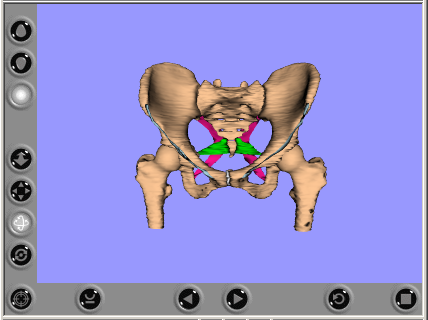
Robert Funnell, PhD is an Investigator at the Research Institute of the McGill University Health Centre (RI-MUHC) and a Professor in the Department of Otolaryngology - Head and Neck Surgery at McGill University's Faculty of Medicine. His research is conducted within the Child Health and Human Development Program at RI-MUHC, where he applies engineering principles to understand auditory mechanics and improve diagnostic tools for hearing assessment. Dr. Funnell's research focuses on the mechanics and acoustics of hearing, with particular emphasis on developing novel measurement techniques in experimental animals and infants, and creating computational models of the ear. His work combines experimental measurements with sophisticated modeling approaches to better understand middle ear function. He has developed specialized software for creating 3D models of complex anatomical structures, including his notable Thrup'ny 3D viewer application. His research has significant clinical applications, particularly in improving newborn hearing screening protocols and developing better diagnostic tests for middle ear conditions. Analysis of Dr. Funnell's recent publications reveals a consistent trajectory in middle ear biomechanics research spanning several decades. His work demonstrates increasing sophistication in computational modeling techniques, with recent publications integrating optical coherence tomography, X-ray microCT data, and finite element analysis to create increasingly accurate representations of middle ear function. A significant portion of his recent work focuses on newborn hearing assessment, reflecting the clinical importance of early hearing detection. His research bridges engineering principles with clinical audiology, creating practical applications for hearing screening and diagnosis. Dr. Funnell has developed several notable software tools including Thrup'ny, a free open-source 3D viewer for VRML models designed for both anatomy teaching and finite-element pre- and post-processing. His website hosts various educational resources including interactive 3D models of the ear, finite-element simulation tools, and teaching materials on middle ear mechanics. These resources have been widely used for both research and educational purposes in the field of otolaryngology and biomedical engineering.
Dr. Roger A. Petry is a Professor of Philosophy at Luther College at the University of Regina in the Department of Philosophy and Classics. He serves in multiple leadership capacities including Coordinator of the Philosophy, Politics, and Economics (PPE) Program, Co-coordinator of the U of R Certificate in Sustainability, and Co-coordinator of the Regional Centre of Expertise on Education for Sustainable Development in Saskatchewan (RCE Saskatchewan). Appointed Regional Advisor for RCEs in the Americas by the United Nations University (UNU) starting in 2020, Dr. Petry also serves as the institutional lead on 'Responsible Consumption and Production' for the International Association of Universities (IAU) Thematic Cluster on Higher Education for Sustainable Development (HESD), supporting UN Sustainable Development Goal #12. As a Rhodes Scholar, Dr. Petry earned degrees in philosophy and mathematics from the University of Regina, philosophy, politics, and economics (PPE) and philosophical theology from the University of Oxford, and an interdisciplinary Ph.D. in 2008 through the Canadian Plains Studies Program at the University of Regina. His doctoral research examined university innovation for sustainable development in relation to commercialization and open source licensing strategies. Dr. Petry's research spans multiple interdisciplinary areas connecting philosophy with sustainability challenges. His work investigates the ethics of autonomous equipment, free software and commercialization strategies for prairie innovation in sustainability, processes of transition to new production systems including transformational technologies, education for sustainable development, philosophy of empire and the early Christian church, arguments from religious experience, natural histories of religion, and connections between ancient philosophy, religion, and mathematics. His recent publications and presentations demonstrate a consistent focus on how educational institutions can lead in implementing the UN Sustainable Development Goals through institutional transformation and innovative pedagogical approaches. Rhodes Scholar Regional Advisor for RCEs in the Americas (UNU, 2020-present) Institutional lead for IAU Thematic Cluster on SDG #12 Co-coordinator of RCE Saskatchewan As an educator, Dr. Petry teaches across the philosophy curriculum from introductory to graduate levels, with specialized courses in sustainable development, ethics, and philosophy of religion. His teaching extends into interdisciplinary contexts through the PPE program, global citizenship courses, and collaborations with mathematics and religious studies. Dr. Petry's leadership in sustainability education initiatives provides unique opportunities for students to engage with global networks and practical sustainability projects that bridge academic theory with real-world application. Dr. Petry leads multiple initiatives focused on sustainable development education and research. As Co-coordinator of RCE Saskatchewan, he works with one of over 180 Regional Centres of Expertise recognized globally by the United Nations University to advance the UN Sustainable Development Goals. His leadership in the IAU Thematic Cluster specifically supports institutional transformation toward Responsible Consumption and Production (SDG #12) through a whole-institution, cultural approach to campus sustainability.
Dominique Orban is a Full Professor in the Department of Mathematics and Industrial Engineering at Polytechnique Montréal. He holds a Ph.D. from FUNDP Namur and INP Toulouse and has established himself as a leading researcher in numerical optimization. His academic affiliations include the Institute for Data Valorization (IVADO) and the Decision Analysis Study and Research Group (GERAD). Professor Orban's research focuses on numerical mathematics, particularly continuous nonlinear optimization, nonlinear systems of equations, and numerical linear algebra. His work involves designing specialized numerical algorithms for optimization problems, with particular interest in degeneracy and ill-posed problems. His research spans theoretical development of algorithms, their implementation in software, and applications to real-world problems such as image reconstruction, optimal structure design, and optimization under differential constraints. Analysis of his recent publications (2021-2025) reveals a strong focus on developing practical optimization algorithms with theoretical guarantees. His work spans multiple areas including nonsmooth optimization, iterative methods for linear systems, regularization techniques, and software implementation in Julia. A notable trend is his increasing focus on developing open-source software tools that make advanced optimization methods accessible to practitioners. Over 160 publications including journal articles, conference papers, and technical reports Multiple publications in top optimization journals each year through 2025 Strong emphasis on both theoretical foundations and practical implementation Increasing focus on Julia-based optimization software development Professor Orban has successfully supervised 9 doctoral students and 13 master's students to completion, demonstrating his commitment to mentoring the next generation of researchers. His supervision style appears to balance theoretical depth with practical implementation skills, preparing students for both academic and industry careers. His research has been supported through various institutional and collaborative grants, enabling him to maintain an active research program with multiple ongoing projects. His contributions to the field include significant software developments such as Krylov.jl, JSOSuite.jl, and DCISolver.jl, which have made advanced optimization techniques more accessible to the broader scientific community. These tools reflect his philosophy of bridging theoretical optimization with practical computational implementation.